With the October 2012 edition, West Papua Report changed format: The Report now leads with “Perspective,” an opinion piece; followed by “Update,” a summary of some developments during the covered period; and then “Chronicle” which lists of statements, new resources, appeals and action alerts related to West Papua. Anyone interested in contributing a “Perspective” or responding to one should write to edmc@msn.com. The opinions expressed in Perspectives are the author’s and not necessarily those of WPAT or ETAN.Contents:
Perspective: Reflections on The New York Agreement by Dr. John Saltford
Update:
- UN High Commissioner for Human Rights Expresses Concerns about West Papua During Jakarta Visit
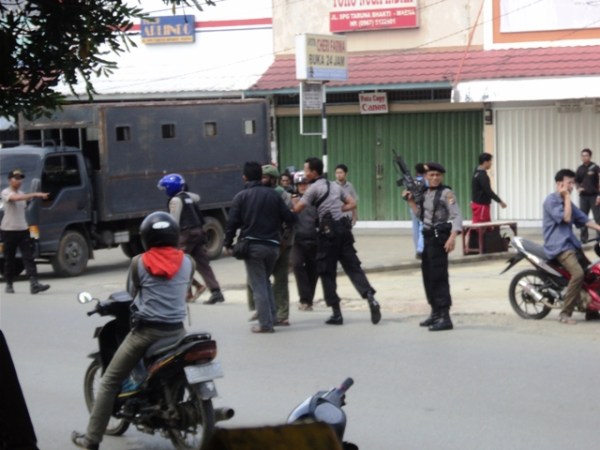
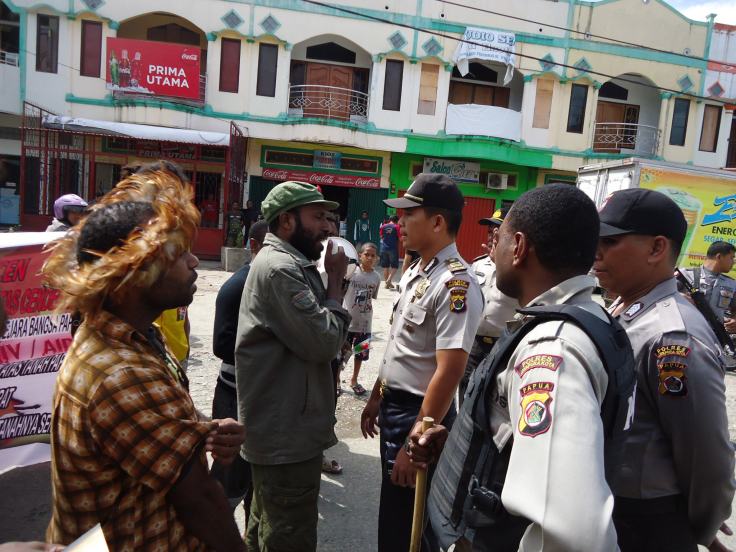
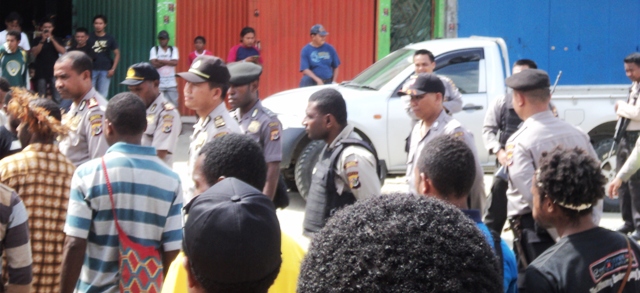
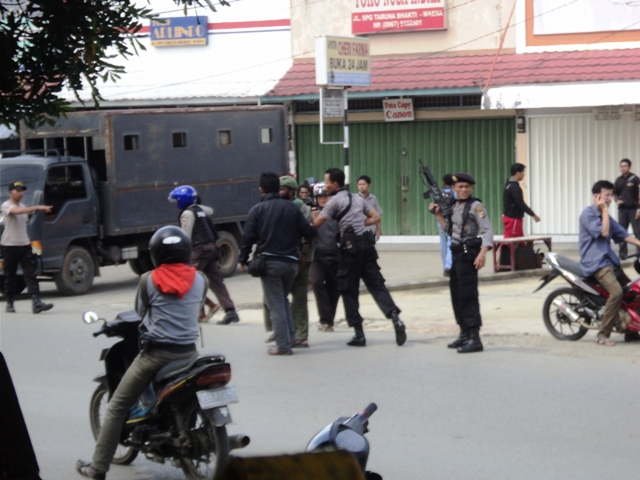
- Indonesian Security Authorities Disrupt Peaceful December 1 Rallies
- US Ambassador Visits West Papua – Lauds Indonesian Military
- Papuans Marginalized in Employment
- Sweep Operations Drive More Papuans into Papuan Forests
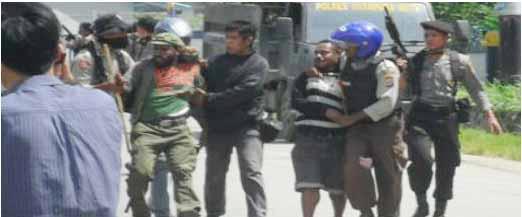
- Security Forces Target Peaceful Dissidents
- Calls for Security Force Accountability in West Papua Multiply
Chronicle:
To mark the 50th anniversary of the signing of the “New York Agreement” (September 1962) which led to Indonesian annexation of West Papua, we offer below a reflection regarding that agreement’s implications for West Papua. Dr. John Saltford, who has authored this Perspective, is an internationally respected scholar and author of The United Nations and The Indonesian Takeover of West Papua 1962-1969: The Anatomy of Betrayal.
Reflections on the 1962 New York Agreement
In October 1962 Dutch rule in West Papua ended and was replaced by a temporary UN administration (UNTEA). This was established as part of the UN-brokered New York Agreement [1], signed between The Netherlands and Indonesia to resolve their dispute over the territory. For all its flaws, this agreement guaranteed the Papuans the right to self-determination in accordance with international practice, but this never happened. Indonesia took over from the UN seven months later and never left.
In October 2012 Indonesian security forces attacked peaceful political rallies in several West Papuan cities and intensified sweep operations in the Central Highlands forcing hundreds of villagers to flee [2]. These were not isolated incidents. According to Amnesty International, fifty years after the New York Agreement, Indonesia continues to deny Papuans their rights to freedom of expression and peaceful assembly [3]. A good reason therefore to re-examine the origins of this agreement, its content and implementation.
In 1949 the Dutch ceded sovereignty of the Netherlands East Indies to the new Indonesian Republic but kept West Papua, not least because they reasoned that the Papuans were ethnically and culturally completely different to the Indonesians. Over the next thirteen years preparations for West Papuan independence progressed in the face of increasingly strong opposition from Jakarta which claimed the territory for itself.
But arguments over who should determine West Papua’s future were superseded by the August 1962 signing of the New York Agreement, and its acknowledgement that it was for the Papuans, and no one else, to decide whether the territory should become an independent state or a province of Indonesia.
The transfer of administration from Dutch to UN control was the first stage of the agreement. But from the start, instead of safeguarding Papuan political and human rights, UNTEA’s priority was simply to hand the territory over to Indonesia as quickly as possible. As one senior UN administrator privately reported:
“I have yet to meet any thinking, sober, generally responsible Papuan who sees any good in the coming link with Indonesia. Unwelcome as the anxiety and resistance of thinking Papuans maybe it is of course hardly surprising if one is not under pressure to close one’s eyes to what is in fact happening to this people at the hands of the three parties to the Agreement.” [4]
Once UNTEA had withdrawn, Article 16 specified that some UN experts were to remain to advise and assist the Indonesians in preparations for Papuan self-determination that was to take place before the end of 1969. But these experts were never deployed because Indonesia objected.
Under Article 17, one year prior to self-determination, the Secretary-General was to appoint a representative to lead a team of UN officials, including those already stationed in the territory. Their task was to continue to build on the work outlined in Article 16 and remain until the act of self-determination was complete.
A Bolivian, Ortiz Sanz, was appointed but, as he made clear in his official report [5], the non-implementation of Article 16 meant that there were no experienced UN staff in the territory for him to lead. Instead he was left with a newly arrived team of 16 who were supposed to advise and participate in an act of self-determination covering a territory roughly the size of California.
Under Article 22, the UN and Indonesia had to guarantee fully the rights, including the rights of free speech, freedom of movement, and of assembly of the Papuans. These rights were not upheld and the official 1969 UN report concedes that “the (Indonesian) Administration exercised at all times a tight political control over the population.” [6]
Under Article 18, all adult Papuans had the right to participate in an act of self-determination to be carried out in accordance with international practice.
This central tenet of the agreement was never implemented. Instead, with no genuine involvement by the population, the UN effectively stood by as Indonesia hand-picked, bribed and threatened 1,022 Papuans to take part in the 1969 “Act of Free Choice” – a series of theatrical ceremonies in which the selected Papuans stood up on command to indicate unanimous consent for integration with Indonesia. The final wording of the UN report says only that the procedure had been carried out in accordance with “Indonesian” and not “international” practice as required by the agreement.
One could argue “International Practice” is too vague a term here to have any meaning. But in fact, acceptable international practice had been set out in UN General Assembly Resolution 1541 of December 1960. This specified the circumstances under which a non-self governing territory (which West Papua was) could integrate with an independent state.
In particular, Principle IX states:
“The integration should be the result of the freely expressed wishes of the territory’s peoples acting with full knowledge of the change in their status, their wishes having been expressed through informed and democratic processes, impartially conducted and based upon universal adult suffrage.” [7 ]
Clearly the “Act of Free Choice” did not even begin to fulfill these conditions.
This all happened decades ago and some claim there is little point arguing about the past. It is the future that matters. But I believe a proper acknowledgement of the truth, by Jakarta, the Netherlands, and the UN, is a necessary step towards finding a just and lasting solution to the tragedy of West Papua. [8]
[1] General Assembly Official Records United Nations, 17th Session, Annexes Agenda item 89, Doc A/5170, Annex of 20 August 1962, Agreement between the Republic of Indonesia and the Kingdom of the Netherlands concerning West New Guinea (West Irian).
[2] WPAT/ETAN, West Papua Report, November 2012
[3] Amnesty International. Annual Report, Indonesia, 2012
[4] Report by G. Rawlings (Divisional Commissioner, Biak) to Somerville, UNTEA Internal Affairs Director, 12 December 1962, UN Archives, DAG 13/2.1.0.1:3
[5] Twenty-Fourth Session, Agenda item 98: Report of the Secretary-General Regarding the Act of Self-determination in West Irian. A/7723, 6 November 1969. [Including Annex I, Report by Ortiz Sanz, and Annex II, Report of the Indonesian Government].
[7] General Assembly Official Records United Nations, 15th Session, 948th plenary meeting, Resolution 1541, 15 December 1960, Principles which should guide members in determining whether or not an obligation exists to transmit the information called for under Article 73e of the Charter, Annex Principle ix.
[8] These topics are addressed in more detail in the author’s book: John Saltford, The United Nations and the Indonesia Takeover of West Papua, 1962-1969: The Anatomy of Betrayal(London: RoutledgeCurzon, 2003).
Update
UN High Commissioner for Human Rights Expresses Concerns about West Papua During Jakarta Visit
At a November 13 press conference in Jakarta, United Nations Commissioner for Human Rights Navanethem Pillay called on the Indonesian government to implement international human rights standards legislatively at local and national levels
She publicly encouraged the government “to move forward with setting up ad hoc human rights courts, as envisaged under law No. 26/2000, to investigate the enforced disappearances of student activists in the late 1990s and serious violations in Aceh and Papua.” She said that she had learned more about the “extent and egregious nature of past violations of human rights, from the killings of communists in 1965 and of students in the late 1990s, to later crimes in the Aceh region and what is now Timor-Leste.” She called for “credible prosecutions of perpetrators.”
In meetings with senior Indonesian officials she also raised concerns about increased violence in Papua this year. Pillay said that she “recommended that the Government take further steps to ensure criminal accountability. I was also concerned to hear about activists being imprisoned for the peaceful exercise of freedom of expression.”
Pillay welcomed the Indonesian government’s decision to invite the UN Special Rapporteur on Freedom of Expression to Indonesia.
(WPAT Note: It is unclear whether the Special Rapporteur’s visit to Indonesia will include West Papua. Given the extensive violations of freedom of expression in West Papua, particularly over the peaceful display of symbols such as the morning star flag, no visit to Indonesia by this Special Rapporteur could be considered meaningful or complete without a visit to West Papua.)
see also Human Rights Watch: I ndonesia: UN Rights Visit Can Challenge Discrimination, Impunity, Plight of Religious Minorities and Papua Abuses Are Serious, Ongoing Problems
Indonesian Security Authorities Disrupt Peaceful December 1 Rallies
Security forces arrested several people who sought to peacefully mark the 51st anniversary of West Papua’s independence. Initial reports indicate Indonesian security authorities employed tear gas to break up a demonstration in Jayapura (Port Numbay). Rallies were also planned to be held in Sorong, Nabire, Fak Fak, Manokwari, Wamena,, Timika and Serui.
U.S. Ambassador Visits West Papua – Lauds Indonesian Military
U.S. Ambassador Scot Marciel visited West Papua in early November in what State Department officials described to West Papua Report as one of a series of periodic visits by the Ambassador to West Papua. Marciel met with members of the Papuan Provincial Assembly (DPRP), the Papuan Peoples Council (MRP), senior members of the Provincial Military Command and the Inspector General of the Police Force. State Department officials told WPAT Marciel also met with civil society groups.
According to a November 7 report in Bintang Papua, translated by TAPOL, Marciel told senior military officials that the US was very impressed by the developments that the TNI (the Indonesian army) had achieved including its “reforms.”
(WPAT Comment: It is unclear what reforms Marciel was referring to nor is there any indication that the US Ambassador raised the TNI’s ongoing military sweep operations that jeopardize the lives of Papuan civilians.)
In response to the ambassador’s question as to why the duties of the military command in West Papua were so much greater there than elsewhere and required such a different approach, the chief of staff said that the military were acting in accordance with their “duties” as ‘Noble Protectors of the People’ (Ksatria Pelindung Rakyat).
(WPAT Comment: The military, under the Suharto dictatorship and since, has drawn upon its role as so-called “Noble Protectors of the People” as the basis for its intrusion into civilian affairs and to justify its substantial commercial interests. See The Role of ABRI in the Post-Suharto Era [PDF])
In his meeting with DPRP (Papuan Parliament) members, Marciel raised the two-year delay in holding of elections for Governor. DPRP members acknowledged that because of the continued absence of an elected governor, no budget had been produced and there was no one who could take responsibility for finances. This was described by DPRP members as having “serious consequences for the people.”
In his meeting with senior police officials, the Ambassador reportedly urged that the police pursue a lenient approach. The police should not be seen as solely involved in arresting and detaining people, and the police should put a priority on activities which bring them close to the people. The Ambassador spoke positively about US cooperation with the police in future years.
Papuans Marginalized in Employment
According to the November 20 Tabloid Jubi(translated by TAPOL), the acting governor of Papua province Constan Karma, spoken about the marginalization of Papuans in employment: “In the competition for jobs, the people with better qualifications always succeed. Indigenous Papuans are not yet able to compete with people who have come from elsewhere because they have better qualifications. The result is that more and more indigenous Papuans are unemployed and this is causing social tensions.”
Sweep Operations Drive More Papuan Civilians into Papuan Forests
A report by Elsham revealed that 38 civilians who fled their village of in Keerom District in July remain in the forest. They fled because of five-month sweep operation conducted by the Indonesian military and police in the area. The displaced are subsisting on sago and worms, and children have been unable to attend school.
Security Forces Target Peaceful Dissent
Indonesian security authorities, especially Indonesian Special Forces (Kopassus) and the U.S.-backed police unit Detachment 88 are continuing to persecute leading members of the West Papua National Committee (KNPB). In October, Indonesian special forces sought in vain to detain prominent women’s and environmentalist activist Fanny Kogoya who, earlier this year, was elected to head the Papua desk for the WALHI, Indonesian branch of Friends of the Earth. The security forces also targeted students associated with her work. Kogoya, also a women’s rights defender from the grassroots Papuan Women’s Network TIKI, has been placed on a Papua wide wanted persons list (Daftar Pencarian Orang or DPO) by the U.S. and Australian-trained and funded Detachment 88 anti-terror investigators.
Calls for Security Force Accountability in West Papua Multiply
A number of prominent human rights organizations and prominent civil society figures have recently called for human rights accountability in West Papua.
The human rights watchdog Institute for Research and Advocacy (Elsam) has once again urged the government to prosecute unfinished human rights violation cases. According to Elsam executive director Indriaswati D. Saptaningrum, most of the perpetrators involved in human rights violations “still walk free, as the government has kept silent.” (The Elsam comments were made during the commemoration of International Day to End Impunity. The international commemoration day is observed by human rights activists to call on governments to bring justice for those who were killed or kidnapped when they tried to defend their freedom of expression.)
Budi Setyanto, a lawyer who is the director of the Institute for Civil Strengthening. Setyanto called “extremely serious” the fact that many human rights violations against the indigenous Papuan people have never been resolved. “‘This matter needs to be resolved by the government which should make an inventory of all the cases that have occurred so that the general public is aware of the many cases that have not be resolved,” he said.
He also said that the Papuan provincial governors and provincial administrations should participate in this work, by setting up a special team to draw up a comprehensive list of all the violations that have occurred. “This is a matter,” he said, “that needs the full attention of the government and should not be dealt with in a half-hearted way.”
Separately, Suciwati, the widow of the murdered human rights champion Munir Said Thalib, visited the Jayapura grave of Papuan political leader Theys Eluay on the anniversary of his November 10, 1991 murder by Kopassus. Suciwati used the occasion to speak out against the many inadequately resolved murder cases in West Papua. “Our society is too forgiving, too easy to forget. We must change this. They can kill Munir, Theys for speaking out the truth but they can’t kill the truth itself,” Suciwati said.
Boy, Eluay’s son, said Papua desperately needs support from activists in Jakarta and elsewhere. Security officials in Papua always view human rights protests as separatist, he said. Law enforcers “always have a stigma and when we do any activity related to human rights they come and attach that stigma…. Support from friends outside of Papua is needed for the state to put that stigma away. He added that “If a big person like Theys can be murdered what would happen to the rest of us? We don’t want our children to be future victims of such atrocity,” he said. “It is time for the victims’ families to do a more organized act for justice and human rights in Papua.”
(WPAT Comment: The Indonesian government’s failure, over many decades, to address security force impunity for human rights violations throughout the archipelago, but especially in West Papua, exacerbates the climate of fear and intimidation that engulfs target populations such as the Papuans.)
Chronicle
Article Reveals Absence of Government Services in Much of West Papua
Inside Indonesia, November 25, published a highly revealing account of the reality of life in West Papua, particularly in rural areas where the majority of Papuans live. The author, Bobby Anderson, writes in “Living without A State,” that West Papua ranks last out of all 33 Indonesian provinces according to Human Development Indicator measurements. He observes that in most places outside of the towns, Papuans do not reject the Indonesian state. Rather, the state simply plays little or no role in their lives, for better or for worse. Across large parts of the highlands, there is little evidence of the state other than empty schools, health clinics, and hospitals. Civil servants, police, and military are few and far between. “The essential problem of health and education services in the highlands is not lack of physical structures, but poor management of human resources in these areas. New buildings remain empty, and although civil servants are theoretically assigned to work in these areas, the vast majority of them are not present in their duty stations. This is the norm across the highlands.”
Anderson describes one subdistrict in particular, Lolat, created in 2002, where there are almost no government services. Visibly malnourished children in the area show bloated stomachs and stunted growth. “A local NGO, Yasumat, runs five parallel schools, 19 health clinics, and four health posts. While paid teachers and health care workers are absent, a cadre of local volunteers strives to provide needed service,” Anderson writes.
Immunization programs do not exist in remote areas. No immunizations have been provided by the district government outside of intermittent offerings in the town of Dekai in the last ten years. “TB and HIV rates in Lolat are unknown, but the number of young men, women, and children dying of unknown causes is out of proportion to the already abysmal provincial averages. It seems likely that men working in the cities as part of the construction boom caused by the proliferation of new districts are contracting HIV and bringing it home with them. Just as HIV infection levels are unknown, so are condoms, which have never been seen in the area,” reports Anderson.
The end of the Suharto dictatorship in 1998 brought new hardships. A planned takeover of local governance by new state institutions effectively never happened. Instead, the “takeover” resulted in the breakdown of the established system. According to Anderson, “There was no period of transition and no handover.” He also reveals the failure of “Special Autonomy,” introduced in 2001 as a way to relieve pressures for independence, address Papua’s underdevelopment and improve service delivery. The policy, he notes, led to “a dramatic increase in government funds available for development purposes. However, an overstaffed and under-performing provincial bureaucracy absorbs the majority of Special Autonomy funds.”
Link to this issue: http://etan.org/issues/wpapua/2012/1212wpap.htm
Related articles
- A History of the Morning Star Flag of West Papua (westpapuamedia.info)
- KNPPB A Rival Organization Created By Indonesia To Compete With KNPB (westpapuamedia.info)
- Victor Yeimo and others arrested as police crackdown on December 1 protests in Jayapura (westpapuamedia.info)
- Is West Papua being split up to marginalise the Papuan people? (westpapuamedia.info)
- Breaking News: Knpb Leader Victor Yeimo Among Arrests on December 1 Flagraising Day (westpapuamedia.info)
- Arrested Papuan leader still missing – KNPB to question Indonesian police (pacific.scoop.co.nz)
- Indonesia cannot kill our spirit for freedom: West Papuan leader (westpapuamedia.info)
- End the violence against Papuan journalists: Oktovianus Pogau (westpapuamedia.info)
- Open Letter from Forkorus in Abepura prison to PNG Prime Minister (westpapuamedia.info)





 West Papua Media Alerts