All the ingredients for genocide: is West Papua the next East Timor?


By Jim Elmslie, University of Sydney

September 21, 2012

Allegations that Australia is funding death squads in West Papua have brought the troubled province back to Australian attention.

Blanket denials by both Indonesian and Australian governments – standard policy for such reports in the past, no longer cut the mustard.

The players respond

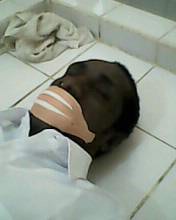
The killing of Papuan activist Mako Tabuni by Indonesian police was for Jakarta a legitimate operation against a violent criminal shot while evading arrest. That Tabuni bled to death from his untreated wounds while in police custody did not rate a mention.

The Australian response was more measured. Foreign Minister Bob Carr took the allegation that Tabuni had been assassinated seriously because the partially Australian funded and trained elite anti-terrorist organisation, Densus 88, was accused of playing a role in the killing.

Bob Carr raised the issue of human rights with foreign minister Marty Natalegawa in June this year in his first official visit to Indonesia EPA/Adi Weda

For once there was a direct Australian connection to the human rights abuses that have been happening in West Papua for decades. Australian taxpayers may indeed be helping to fund Indonesian death squads. Carr called on the Indonesians to make a full enquiry into the affair.

The Indonesian response was to appoint Brigadier General Tito Karnavian as Papua’s new Police Chief. This sends the clearest possible message that Jakarta intends to deal with the Papuan separatists’ insurgency with lethal force, rather than diplomacy and negotiation.

Many activists have been arrested and a concerted effort is underway to break the back of the urban based, non-violent Papuan rights organisations, such as Tabuni’s KNPB (Komite Nasional Papua Barat).

Independence

Most Papuans would favour independence over Indonesian occupation. This is a recipe for ongoing military operations, repression and human rights abuse as the Indonesian military and police hunt down “separatists”.

This seems to suit most players. West Papua is the Indonesian military’s last zone of exclusive control after the loss of Aceh and East Timor. It’s a fabulous prize to control as extensive (legal and illegal) logging, huge mining projects and massive development funds provide rich pickings for those in control, while incoming migrants are drawn in by economic opportunities unavailable elsewhere. It is really only the Papuans who are suffering in this massive free-for-all.

The plight of the Papuans is slowly but surely seeping into the global consciousness. While modern technology allows West Papua’s riches to now be exploited, it also allows the stories and images of Papuan suffering to emerge. Increased Indonesian militarisation and repression only exacerbate this trend.

A new East Timor?

This is the same trajectory that East Timor’s long struggle for freedom followed: an overwhelmingly dominant military on the ground but a growing sense of outrage within the international community, especially in the Western nations. This led Indonesia to be treated almost as a pariah nation and underpinned East Timor’s rapid shift to independence in the wake of Suharto’s fall.

While no other nation supports West Papuan independence, except Vanuatu sporadically, and the rule of the Indonesian state appears unassailable, a dangerous dynamic is developing.

As the situation in West Papua deteriorates, human rights abuses will continue, with the very real prospect of a dramatic increase in violence to genocidal levels.

The ingredients are there: stark racial, religious and ideological differences coalescing around a desire for Papuan resources and Papuans’ land, on one hand, and independence on the other. Indeed many Indonesians, as well as the Indonesian state, already view Papuan separatists as traitors.

This should rightly concern Australians: we are in a quasi-military alliance with Indonesia through the 2006 Lombok Treaty. We are a player, albeit minor, in these events. When there is a divide in the opinion of the political, military and bureaucratic elite, and that of the wider population, as occurred in Australia over Indonesia’s occupation of East Timor, the majority view tends to eventually prevail. And the majority view, formed by such programmes as the ABC 7.30 report, is moving to one of sympathy for the Papuans and antipathy towards Indonesia for what many see as a re-run of East Timor’s disastrous occupation. This does not bode well for relations between the two countries.

Words or bullets?

Indonesia runs the risk of having its widely heralded democratisation process stained by the Papuan conflict. There is also the fact that while West Papua remains a military zone the Indonesian army will continue to be unaccountable and largely outside of civilian control, stymieing anti-corruption efforts not just in Papua but through out the country. The consequences for the Papuans are abundantly clear: no basic rights and a life lived in fear.

While there are no quick or easy solutions to this conundrum, one choice is manifestly clear: does the answer lie in more words or more bullets?

Jakarta has so far rejected meaningful dialogue in favour of a beefed up security approach. Australia, and Australians, should forcefully criticise this as being against our own, and Indonesia’s (let alone the Papuans’) long-term interests.

If the West Papuan conflict continues to follow the East Timor trajectory this problem will continue to grow, relations will become strained and tensions rise. It’s worth remembering that Australia and Indonesia very nearly came to blows over East Timor. Let’s learn from the past and encourage, and promote, meaningful dialogue between all parties.

Jim Elmslie does not work for, consult to, own shares in or receive funding from any company or organisation that would benefit from this article, and has no relevant affiliations.

The Conversation

This article was originally published at The Conversation.
Read the original article.


No terrorists in Papua, says governor


Bintang Papua,
9 September 2012
Manokwari: The governor of the province of West Papua, Abraham O. Atururi, said that there are no terrorists operating in Papua. He said that there are groups in Papua who are demanding independence for Papua, such as the OPM/TPN but these groups are quite different from the terrorists who are conducting acts of terror and shootings and bombings that are occurring  in Java and other parts of Indonesia.’If people say that there are Papuans who want independence, that is indeed true, but there are no terrorists.’

The governor was speaking at a public meeting in Manokwari.

The governor made this statement in order to contradict statements by political commentators  in the local press in Jayapura, claiming that terrorists are operating in Papua.

The paper also reported that the deputy chief of police in Papua, Brigadier-General Paulus Waterpauw recently denied that members of Densus 88 were operating in Papua.

(This is in contrast to the fact that the commander of Detachment 88, Tito Karnavian, was last week made the new Papua Police Chief, and repeated statements by police claiming Detachment 88 credit for apprehending so-called “terror suspects” across Papua in recent years – and significant video and photographic evidence of their presence at both armed raids, and against non-violent gatherings).[Translated by Carmel Budiardjo]


So, who is the real terrorist? West Papua Responses to Australia, U.S. and Indonesia

Opinion

By Victor F. Yeimo
Chairman of the West Papua National Committee [ KNPB ]

September 9, 2012

(text edited/retranslated by West Papua Media for linguistic clarity)

Last week, Australia, the United States and Indonesia strengthened their economic, political and security ties while the people of West Papua were lamenting their oppression. That’s a sure sign that the practice of colonialism and capitalism will continue in West Papua. We do not know how much more blood will be shed as the people of West Papua will fall victim to the Indonesian military.

The world seems blind and deaf to the repression in West Papua. The world does not care about the Papuan struggle in upholding truth, justice, honesty and humanity. Instead, the world (community seems to be) trampling human values, truth, justice, honesty and all the rules of its international law.  The world only cares about its political and economic interests.

West Papua has become the object of economic transactions and political interests of U.S and Indonesia.  This dirty practice is still applied in the so-called “open era”. The lust of economic and political expansion of the states, without feeling of guilt, continues to increase the suffering of the West Papuans. The people of West Papua are not stupid.

People of West Papua fully understand how colonialism and exploitation scenarios work in this modern century.  Labelling and stigmatisation of indigenous people as terrorists, and then kill and take control of land and its natural resources are the ways that are always used by the colonial countries and capitalists.  Australia, Britain, the U.S. and Indonesia are implementing those ways in West Papua.

The peaceful resistance movement in West Papua is being silenced by the Indonesian military forces.  The space of peace and democracy has closed and Indonesia has opened a space of violence, so that they can easily kill and destroy the West Papuan peoples’ struggle with the stigma of terrorism.  Using that stigma to cement military cooperation between Indonesia, the U.S., Australia and other countries is considered essential.  For them, it is important to kill Papuans and to occupy the land of West Papua.

Violence has been created by rulers who oppress and exploit the people and the land of West Papua.  Terrorism is created for global rulers who have an interest in mastering the fields of exploitation.  Terrorism was created by the colonial rulers who invaded to take control of someone else’s land.  The territory of West Papua is controlled by Indonesia. The people of West Papua were massacred by Indonesia. Military power is funded, supported and trained by Australia, the U.S. and other pro-colonial and capitalist countries.

This is evidenced by the attitude of the Australian government and the presence of three ministers from Australia during the visit of the U.S. Secreatary of State Hillary Clinton to Indonesia while increasing support for the Indonesian defense forces. Meanwhile, thousands more Indonesian troops are being deployed to West Papua, and police in West Papua, led by the former head of Detachment 88 Anti-Terrorism Tito Karnavian, and detectives at the Criminal Investigation Unit of Papua Police are now controlled by members of Detachment 88.
Their goal is only one, to kill all members of the peaceful resistance movement in West Papua, to eliminate the people of West Papua, and to rule the roost on this land for the benefit and prosperity of colonialism and global capitalism.

So, who is the real terrorist?

Greens condemn mixed messages on West Papua


Media Release

  PRESS RELEASE – AUSTRALIAN GREENS

September 7, 2012

The Australian Greens have today questioned the mixed messages the Australian Government is sending Indonesia about human rights in West Papua.

“The Australian Government needs to take a consistent stance in defence of human rights in our region, not just pay them lip service,” said Australian Greens Leader and Foreign Affairs spokesperson, Senator Christine Milne.

“Why is Stephen Smith signing a new ‘Defence Co-operation Agreement’ with Indonesia this week, when just last week Bob Carr was calling for an inquiry into the alleged involvement of the Indonesian military in the assassination of an indigenous West Papuan leader?”

The Australian Greens spokesperson for West Papua, Senator Richard Di Natale, questioned how Stephen Smith could have ‘no concerns’ about West Papua.

“The human rights abuses in West Papua were exposed on ABC’s 7:30 Program just last week. For Minister Smith to say that he has no concerns regarding West Papua is a clear case of wilful ignorance,” said Senator Di Natale.

“How can Australia turn a blind eye to the allegations that troops we have funded and trained are carrying out human rights abuses against the indigenous peoples of West Papua?

“Australia should require assurances that our military support will not lead to further violations of human rights. And we must call for West Papua to be opened up to foreign journalists and human rights monitors so that we can hold those assurances to account.

“The lives and human rights of our West Papuan neighbours should be a priority in our dealings with Indonesia. And it should certainly warrant a lot more attention and respect from Australia’s Foreign and Defence Ministers than just a discussion ‘in passing’.”

Media contact: Andrew Blyberg 0457 901 600


Kopassus intelligence officer murders Boven Digul man accused of sexual assault: reports

by West Papua Media from sources in Merauke.

September 7, 2012

A local Papuan man has been murdered by an elite Kopassus special forces officer in a village in the remote district of Boven Digul, near the Fly River area adjacent to the West Papua – PNG border, after a local man was accused of sexual assault of a military officer’s wife, according to local human rights sources.

The shooting on Monday September 3, occurred after the victim, Januarius Kimko, was accused by a TNI officer (from the Boven Digul Koramil company of the Merauke 755 Battalion) of sexually assaulting his wife, despite protestations of innocence from the accused man.

West Papua Media has been unable to fully and independently verify the claims from human rights sources, due to the extreme difficulty of communication in these remote areas under military control, however, he investigating sources have been highly reliable in the past.

According to local human rights sources and witnesses interviewed on the grounds by Merauke-based media activists from the West Papua National Committee (KNPB), Kimko was arrested by “Buser” commandos from a joint military/police team in Boven Digul after the military couple reported the alleged sexual assault to the local Police.

The special BUSER ( BU = Berburu (hunting); and SER – serangan (attack))  is a joint “search and destroy” joint SatGas (taskforce) squad between Brimob and Kopassus, whose role is replicated by  part of the “anti terrorist” Detachment 88, funded by Australia.  All sections of this unit receive training and supplies by the Australian Defence Forces.  No information has been received that show if serving members of D88 are present in the Boven Digul unit.

The joint taskforce was immediately activated and conducted house to house raids across the town on Monday night whilst trying to capture the man accused of sexual assault, terrorising local residents.  An ambush was set on the house of Kimko, who was in his home in Ememes Ambonggo complex.  He was arrested and emerged with police without resistance, as he was to be conveyed to the police station for questioning, according to witnesses.

As he reached the street, a Kopassus intelligence officer from the Satuan Gagas Intelijen (Strategic Intelligence Unit) rushed the victim and pressed the muzzle of his weapon (type unknown) against Kimko’s side.  He then shot the victim four times, with the bullets penetrating the victim’s thigh and left wrist.

Witnesses reported to the investigators that as soon as Kimko was shot, members of the Buser Commando and TNI officers at the scene immediately threw his body in to a car, and conveyed him to an unknown location.

Januarius Kimko’s body was discovered by human rights sources at the emergency room of Merauke District l, over 120km from Boven Digul, late on Wednesday September 5.  His body had been in the custody of the TNI of Koramil Kabupaten Digoel from his shooting until the victim’s burial, preventing an independent assessment of his injures.  Kimko’s family were not informed of his death until after his burial.

Create a website or blog at WordPress.com

Up ↑