West Papua Political Prisoner Dominikus Sorabut amongst writers honoured for commitment to Free Expression

English: Human Rights Watch logo Русский: Лого...

From Human Rights Watch

http://www.hrw.org/node/112138

41 Facing Persecution Win Hellman/Hammett Grants

December 20, 2012 (WEST PAPUAN POLITICAL PRISONER DOMINIKUS SORABUT AMONGST WINNERS – SEE BELOW)
(New York) – Forty-one writers from 19 countries have received 2012 Hellman/Hammett grants for their commitment to free expression and their courage in the face of persecution.The award-winners have faced persecution for their work, generally by government authorities seeking to prevent them from publishing information and opinions.  Those honored include journalists, bloggers, essayists, novelists, poets, and playwrights. They also represent numerous other writers worldwide whose personal and professional lives are disrupted by repressive policies to control speech and publications.

“The Hellman/Hammett grants help writers who have suffered because they published information or expressed ideas that criticize or offend people in power,” said Lawrence Moss, coordinator of the Hellman/Hammett grant program at Human Rights Watch. “Many of the writers honored by these grants share a common purpose with Human Rights Watch: to protect the rights of vulnerable people by shining a light on abuses and building pressure for change.”

Governments have used arbitrary arrest and detention, politically motivated criminal charges, and overly broad libel and sedition laws to try to silence this year’s Hellman/Hammett awardees. They have been harassed, threatened, assaulted, indicted, jailed on trumped-up charges, or tortured for peacefully expressing their views or informing the public. When abusive governments target writers, it intimidates others to practice self-censorship.
Free expression is a central human right, enshrined in article 19 of the Universal Declaration of Human Rights, which declares that “everyone has the right to freedom of opinion and expression; this right includes freedom to hold opinions without interference and to seek, receive, and impart information and ideas through any media and regardless of frontiers.” On July 21, 2011, the Human Rights Committee, the expert body established under the International Covenant on Civil and Political Rights, reiterated the central importance of freedom of opinion and expression, stating that these freedoms “are indispensable conditions for the full development of the person. They are essential for any society. They constitute the foundation stone for every free and democratic society.”

The Hellman/Hammett grants are given annually to writers around the world who have been targets of political persecution or human rights abuses. A distinguished selection committee awards the cash grants to honor and assist writers whose work and activities have been suppressed by repressive government policies.

The grants are named for the American playwright Lillian Hellman and her longtime companion, the novelist Dashiell Hammett. Both were both questioned by US congressional committees about their political beliefs and affiliations during the aggressive anti-communist investigations inspired by Sen. Joseph McCarthy in the 1950s.  Hellman suffered professionally and had trouble finding work. Hammett spent time in prison.

In 1989, the trustees appointed in Hellman’s will asked Human Rights Watch to devise a program to help writers who were targeted for expressing views that their governments oppose, for criticizing government officials or actions, or for writing about subjects that their governments did not want reported.

Over the past 23 years, more than 750 writers from 92 countries have received Hellman/Hammett grants of up to US$10,000 each, totaling more than $3 million. The program also gives small emergency grants to writers who have an urgent need to leave their country or who need immediate medical treatment after serving prison terms or enduring torture.

Of the 41 winners this year, six remain anonymous to prevent further persecution. A list and brief biographies of the award-winners, including just the countries of the anonymous grantees, is below.

A concentration of grantees in certain countries points to especially severe repression of free expression by those governments. Twelve of this year’s grantees come from the People’s Republic of China; four of them are Tibetan and remain anonymous for security reasons. Five grantees are from Vietnam, four from Ethiopia, and three from Iran.

“The compelling stories of the Hellman/Hammett winners illustrate the danger to journalists and writers around the world,” Moss said.

2012 Hellman/Hammett Awardees (Full list at http://www.hrw.org/node/112138 )

Dominikus Sorabut (Indonesia/Papua)
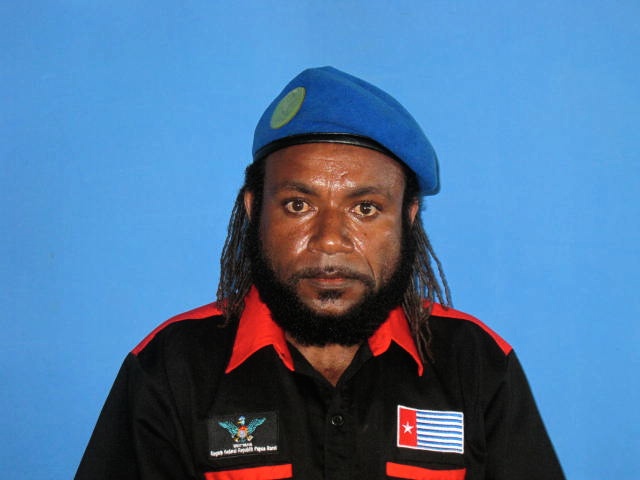
Dominikus Sorabut (photo: PW/West Papua Media)

Dominikus Sorabut is a Papuan activist who also produced a number of film documentaries on issues such as deforestation, illegal mining, and Indonesian government efforts to eradicate Melanesian Papuan cultures. In 2010, he interviewed a Papuan farmer who was tortured by Indonesian soldiers, helping to provide international exposure of torture and suffering of the farmers. Sorabut has written several op-ed articles and a number of book manuscripts on the Papuan people. While attending a peaceful demonstration for Papuan independence in October 2011, Sorabut was arrested when Indonesian police and soldiers fired into the crowd and detained more than 300 protesters. Sorabut was convicted of treason along with four other Papuan figures and sentenced to three years in prison. He is in the Abepura prison in Jayapura, Papua.

ELSHAM: Reverting to the DOM era: Papua back to being a Zone of Military Operations

PRESS RELEASE FROM ELSHAM PAPUA

December 19, 2012

ELSHAM PAPUA
Lembaga Studi dan Advokasi Hak Asasi Manusia
(Institute for Human Ri ghts Study and Advocacy of Papua)

Reverting to the DOM era: Papua back to being a Zone of Military Operations

There was a significant increase in the intensity of the conflicts and violence in Papua between August 2011 and December 2012. ELSHAM Papua reported on several incidents that had resulted in serious casualties and although the growing severity of the incidents was disturbing, these did not prompt the Government to react.  These events include the overwhelming offensive called “Operasi Aman Matoa I 2011”, terror actions and shootings by unidentified perpetrators (OTK), cases of internal displacements,  as well as cases of extrajudicial killing of civilians by the police.

“Operasi Aman Matoa I 2011” is the designation for an armed crime prevention operation that was set up in the areas of Puncak Jaya and Paniai. This operation was under direct command  of the Chief of Police, and was run by the Operations Task Force (Satgas Ops) through police telegram letter No. STR/687/VIII/2011 dated 27 August 2011.

The Operations Task Force for Operasi Aman Matoa I 2011 was led by Drs. Leo Bona Lubis, the Commissioner of Police. During the execution of Operasi Aman Matoa I 2011 in the Paniai Regency, a number of grave human rights violations were perpetrated, which include:

(a) the taking of the lives of two civilians, Salmon Yogi (20) and Yustinus Agapa (30) who died as a direct result of the armed conflict,
(b) the inflicting of injuries to at least four civilians: Yulian Kudiai (22), Melkias Yeimo (35), Yohanis Yogi (25) and Paskalis Kudiai (21), who became victim as a result of the armed conflict,
(c) great material loss due to the armed conflict in Eduda District which includes 78 houses that were burnt by the Operations Task Force; educational activities at 8 elementary school (SD) and 2 Junior High School (SMP) that had to be halted; religious and worship services could no longer be ensured in eight Catholic churches, seven Kingmi churches and four GKII churches; hundreds of machetes, knives, saws, hammers, bows and arrows were confiscated;
(d) villagers no longer felt secure in their own homes and they fled. As many as 37 people perished while in displacement: 13 toddlers, 5 children, 17 adults and 2 elders;
(e) communities from the Districts of Komopa, Keneugida, Bibida, East Paniai and Kebo have endured material loss due to their displacement.  The villagers were forbidden from going to their gardens by the members of the Operations Task Force. As a result, this primary source of livelihood for the communities was left neglected and unattended. Prior to the evacuation, 1581 heads of livestock were forcibly slaughtered, including  as many as 478 pigs, 3 cows, 11 goats, 132 rabbits, 381 ducks, and 576 chickens. After returning to their homes and villages, the residents experienced severe food shortage. Members of the Operations Task Force had also damaged the fences built by the residents, as they used those as firewood.

Violent acts committed by the security forces, both the military and the police, are still common and they are in flagrant violation of a number of international humanitarian standards and principles. Some of the cases that we note are as follows:

a. The heavy-handed assault carried out by the police against Persipura fans at Mandala Stadium on 13 May 2012, which led to 18 people suffering from respiratory problems due to tear gas that had been fired indiscriminately and six others being detained arbitrarily.
b. The shooting of four people in Degeuwo by the police on 15 May 2012, by which one person was killed and the other three were seriously wounded.
c. The assault against civilians in Honai Lama Wamena on 6 June 2012, by members of the Indonesian army (TNI) Battalion 756 Wimane Sili, which resulted in one person dead and 14 others seriously injured.
d. The arbitrary arrest and torture by the police of 10 people in the town of Serui, as they were commemorating the International Day for Indigenous People on 9 August 2012.
e. The forced disbanding by the police of a KNPB-led demonstration that was about to start in front of the campus of the State University of Papua in Manokwari on 23 October  2012. A total of 15 people were detained by the police, nine of them were tortured, and 2 others suffered gunshot wounds.

Summary executions by the police of pro-democracy activists who are active within the West Papua National Committee (KNPB) continue to occur. The extrajudicial shooting of Mako Tabuni (34), First Chairman of the KNPB on 14 June 2012, is clear evidence of acts of police brutality against civilians. A similar killing occurred in Wamena on 16 December 2012, when the police shot dead Hubertus Mabel (30), militant KNPB Chairman for the Baliem region.

Other violent acts such as terror acts and shootings by unknown assailants increased, both in 2011 and 2012. From 5 July to 6 September 2011, there were 28 shooting incidents where 13 people were killed and at least 32 people were wounded. Meanwhile, throughout 2012, there were 45 attacks by unknown assailants, killing 34 people, injuring 35 people and causing severe trauma to 2 people.

One of the worrisome events that received very little attention from the Government was the crisis which lasted from July to November 2012 in the Keerom where villagers fled their homes as they no longer felt secure because of activities conducted by the security forces. A joint effort between ELSHAM Papua and the Keerom Catholic Church enabled the return to their homes of 38 internally displaced people (IDPs) who had fled into the jungle.

Various cases of violence and human rights violations that occurred in Papua totally escaped the attention of the central Government and that of local Papuans. Conditions such as these indicate that the status of Papua as an autonomous region has turned into a status of “Special Operations Region”, similar to what was experienced in the decades between 1970 and 2000 when Papua was designated as a Military Operations Area (DOM). Legal impunity for the perpetrators of the violence becomes flagrantly visible as the perpetrators of such violence are practically never brought to justice, nor do they receive fitting sentences.

Prohibiting international humanitarian organizations, international journalists and foreign researchers from accessing the Papuan region inevitably gives way to the increasing acts of violence by security forces in that region. Elite units, such as Anti-Terror Special Detachment 88, are conducting activities that are contrary to their mandate as they themselves are the ones creating terror against activists of the pro-democracy movement in Papua.

Bearing in mind the socio-political conditions faced by Papuans today, ELSHAM Papua is calling for:

1. the Indonesian Government, to open access to international humanitarian agencies, international journalists and foreign researchers to the region so they can freely visit and monitor the human rights situation in Papua;
2. the police of the Republic of Indonesia, to immediately reveal to the public the identity of those responsible for the numerous attacks and mysterious shootings that have occurred lately in Papua;
3. the Indonesian Government and groups opposing the Government, to choose dialogue as a way to end the conflict and the ongoing violence in Papua;
4. the military and the police, to uphold and respect the universal principles of human rights that have been ratified by the Government of the Republic of Indonesia.


Baptist leader calls for unconditional release of Forkorus

Bintang Papua
11 December 2012
The Indonesian government has been urged to free all political prisoners in Papua, including Forkorus Yaboisembut and Filep Karma. On the occasion of World Human Rights Day,  the human rights defender Socrates Sofyan Yoman spoke about the activities throughout 2012 of organisations such Polri (the police force), the TNI (the Indonesian military) and vicious armed civilian groups. He said 90  incidents of violence had been committed by these groups in all parts of Papua during the year so far.’As we celebrate Human Rights Day,’ he said, ‘we defenders  of human rights urge the Indonesian government to take the following actions:

‘Firstly, in accordance with its constitutional responsibility to safeguard its citizens, the government should acknowledge that the way it treats prisoners, convicts and the citizens in general is brutal, inhumane and demeaning. This includes the way it treats Papuan civil society and Papuan political prisoners. Such activities  should be prohibited, along with all practices that violate the law. Torture must be clearly identified  and criminalised. This would be seen as a concrete sign of Indonesia’s commitment to the International Covnention Against Torture which it officially ratified  by enactment of Law 5/1998

Secondly, the government should agree to adopt a policy that recognises Papuan citizens as victims. In those cases where legal processes have been resorted to, rehabilitation not imprisonment should be the method  chosen. The government should also adopt measures to  inform the general public about the many civilian victims in Papua.

His next point was to ensure that whenever the law on treason is used in a court of law, this should be non-discriminatory and concrete action should be taken to put an end to all criminal activities by the security forces, including judges, public prosecutors and all those people who are in charge of the prisons.

Furthermore,  the rights of all Papuan political prisoners must be safeguarded, including ending all illegal detentions. In cases where confessions were made under duress and without the presence of legal counsel, they should not be accepted as evidence in a court.of law.

The government should create mechanisms for people to be able to initiate charges. Such mechanisms should be available everywhere and in all places of detention and imprisonment.And in cases where charges are brought by detainees, this must be followed through by independent investigations by law-enforcement institutions as well as the National Human Rights Commission.

His next point  was to urge the National Human Rights Commision, the National Commission to End Violence Against Women and the Ombudsman  of the Indonesian Republic, to establish a mechanism  for a fully independent National Protection Unit to visit all places of detention, especially places of detention where persons charged with treason (/makar/) or other political prisoners  are being held as part of the state’s responsibility to act in accordance with the Anti-Violence Optional Convention.

The seventh point was to press the Indonesian government to enter in peaceful dialogue on the problem of Papua, mediated by a third party, one of the aims of which would to end torture and other forms of violence throughout the Land of Papua.

The eighth point was to press the Indonesian government to invite  the UN Special Rapporteur against Torture and Arbitrary Detentions to visit Papua.

The ninth point was to press the Indonesian government  to allow foreign journalists to visit Papua.

The tenth point was that the Indonesian government should accept responsibility for incidents of gross violations of human rights such as the incident in Abepura on 7 December 2000, the Wasior 2001 incident, the Wamena  2003 inicident and other incidents that have already been investigated by the  National Human Rights Commission, and to ensure that  the results of these investigations  are considered at the human rights court and dealt with in accordance with the principles of justice.

With regard to the role of the churches in Papua, it should be acknowledged that their main mission  has been paralysed by the state and governmental system in Indonesia.

Moreover, its prophetic voice is hardly ever heard in Papua, particularly since Papua was integrated into the Indonesian republic by military means and this the integration was preceded by the bloody events surrounding the Act of Free Choice, which continue to the present day.

‘The churches have forgotten or refused to recognise that Christianity arrived in Papua three centuries ago, on 5 February 1855.’

These thoughts were expressed by Socrates Sofyan Yoman during his opening address of the Congress of the Alliance of Baptist Churches in Papua at the Baptist Church in Wamena in October 2012.

He pointed out that his church  has supported the Papuan people with education, religious belief, healthcare and in the economic sphere, and has helped to improve access to the most remote areas by establishing small airfields which cater for small aircraft, with alll the risks this involves.

The church’s  missionaries live in close proximity with the Papuan people and help to foster the dignity of the Papuan people.in sharp contrast to what Indonesia has done since Papua’s integration, when it became a colonial power, a fact that is rarely criticised by the churches.

As a church leader, Yoman said that he not only studies the Bible but also learns from the history of Papua.  He has learned a great deal from this history, in particular the many untruths that have been told.  It is the role of the churches to insist on correcting these untruths, he said

Until now the churches talk about  ‘peace and well being’ but God’s people are continually  stigmatised as treasonous and accused of being part of the OPM.

As a church leader, he rejects all these allegations  and believes that Christians  must reflect of God’s will, as is stated in Genesis 1:26.  For all these reasons, he said in conclusion:

‘I will continue to speak out and will do everything I possibly can to share in the sufferings of God’s people. There is no future for Papua if it continue to remain a part of Indonesia. Papuans cannot live normal lives The churches must speak out about this and integrate themselves with those people whose very identity has been destroyed. It must speak out about  justice, equality  and the freedom  of all humankind regardless of race, ethnicity, culture or religion.

[Translated by TAPOL]


Indonesian government to act on Papuan political prisoners

via Tapol
5 Dec 2012
Indonesian government to act on Papuan political prisoners
By: KBR68H, translated by TAPOL

Names of 23 Papuan political prisoners submitted to Komnas HAM

3 December 2001

Solidarity for Humanitarian and Human Rights Violations has submitted information regarding 23 political prisoners to Komnas HAM (the National Human Rights Commission).

Earlier, Komnas HAM planned to set up a team to resolve the cases of political detainees and convicted political prisoners in Papua. The spokesman for SKP Papua, Mathius Murib, said that information regarding the prisoners, including their arrest, the time they have spent in custody and their conditions in prison was submitted. He said that in many cases, there was no legal basis for their being charged for treason and that their imprisonment was in violation of their human rights

“We have supplied data relating to a number of prisoners being held in prisons in Papua. Detailing how many prisoners there are and for how many years they have been held. Altogether, we have submitted such information regarding 23 political prisoners. We greatly appreciate this support and the action.”

Earlier on, Komnas HAM planned to set up a team to resolve the cases of political detainees and convicted political prisoners in Papua. The purpose was to review the status of those being held in prison. This would include considering a reduction in the length of their sentences.

To read the article in Indonesian on the KBR68H website, click here.

Komnas HAM is seeking Clemency for Papuan Political Prisoners

4 December 2012

Komnas HAM, the National Human Rights Commission intends to struggle to ensure that all political detainees and convicted political prisoners in Papua are granted clemency or a reduction in sentence.

The chairman of Monitoring and Investigating Human Rights Violations, Natalius Pigai, said that Komnas HAM plans to set up a special team next January to identify the cases of political detainees and convicted political prisoners in Papua, together with the Ministry of Law and Human Rights.

“This special team will also be entrusted with the task of granting clemency or reduction of sentences for political detainees and convicted political prisoners in Papua. We will be undertaking this in collaboration with the Ministry of Law and Human Rights,” said Natalius.

He went on to say that this special team would do everything possible to improve the general environment and facilities in all the prisons in Papua. This will include ensuring that every tapol/napol receives whatever healthcare is required.

To read the article in Indonesian on the KBR68H website, click here.

Law and Human Rights Ministry to check status of around 20 Papuan political prisoners

4 December 2012

The Ministry of Law and Human Rights plans to check the status of around twenty political prisoners in Papua. This decision follows their intention to resolve the cases of political detainees and convicted political prisoners.

A spokesman of the Ministry of Law and Human Rights, Martua Batubara, said that those who are serving sentences will be given remissions (a reduction of sentence) in accordance with the law.

As for the Komnas HAM, it can only make recommendations.

“We intend to check in the prisons as well as to check with the Ministry of Law and Human Rights to find out which prisoners are serving sentences and which are prisoners whose cases are still being processed. We don’t know which prisoners they are talking about (gap with question mark perhaps indicating something that is illegible) or whether it is true that Komnas HAM  only has the authority to investigate and then make recommendations to the authorities in charge of the prisoners.”

Previously, Solidarity for Humanitarian and Human Rights Violations in Papua submitted information about 23 political prisoners to Komnas HAM. This was done to complete the information available to Komnas HAM, following a plan to set up a team to resolve the cases of political detainees and convicted political prisoners in Papua. The purpose is for there to be a review of the status of all those who are currently being held in detention. This would also include seeking a reduction in the sentences now being served by all those who are currently being held in prison in Papua.

To read the article in Indonesian on the KBR68H website, click here.

Lanny Jaya KNPB leader arrested and maltreated

4 December 2012 Local KNPB activist arrested and maltreated

KNPBNews

Another activist of the KNPB (National Committee of West Papua) has been arrested by Indonesian Police. This time, it was the secretary-general of the Lanny Jaya branch of the KNPB.Athys Wenda was arrested while sitting in the waiting room of Wamena Airport. He was arrested at 7am on 1 December.  He was seized by the police,  taken to the police station in Lanny Jaya and maltreated there.

Dules Wamimbo, the chairman of the KNPB in the district of Lanny Jaya, said that Athys was also badly mistreated while in a cell of the local police command in Jayawijaya.

In a short message, Dules said  that while being held by the Wamena police, Athys  ‘was beaten until he was black and blue all over.’

Athys had been trying to peacefully mediate a conflict among the people of Lanny Jaya.

Athys and several of his KNPB colleagues  are being closely watched by Densus88 (Detachment 88, the Australian, US, And UK funded elite counter-terror unit that is being used against peaceful political activists outside its funding mandate).  Dules said that when an armed conflict broke out between the TPN (the military wing of the OPM) and the Indonesian military, KNPB activists tried to mediate this conflict but they were treated as if they were the military.

Dules said: ‘ We very much hope that the police will stop arbitrarily arresting people without clear evidence.’

[Translated by TAPOL]


Create a website or blog at WordPress.com

Up ↑
