Troop deployment to Paniai must stop

JUBI, 3 January 2012
Responding to reports from the community in Paniai that additional troops are still arriving in Paniai, the deputy chair of the Majelis Rakyat Papua said that this must stop

Venetina Koyoga said that according to the most recent information from Paniai, additional troops continue to arrive there while local people are reported to be evacuating from the area.

‘According to information we have received from the people there, the inhabitants of two kampungs have already evacuated. We are checking these reports but if they are indeed true, I would like to stress that no more troops should be sent there,. This must stop so as to ensure that the people there can live in peace, instead of what is happening now. Let us all sit down together, the Governor, the MRP and the DPRP, and agree to a good solution.’

If there is any increase in the number of troops, there should be coordination between representatives of the people in the province, such as the governor, the DPRP and the MRP. If there is no such coordination, the people there will continue to feel threatened,’ she said.

‘I very much regret the fact that there have been acts of violence against people living in Nabire, Puncak Jaya, Ttimika and other places in Papua. We should all sit down together and find the best solution to the problems there. The deployment of troops should end and those troops already there should be withdrawn.’

Sound of gunfire greets Christmas in Paniai

JUBI, 23 December 2011
[Slightly abridged in translation from Indonesian]Illustration: Group of Paniai residents who left their homes because they were afraid of the shooting

There’s no sound of church bells or people singing Christmas carols. Just the sound of gunfire has been heard in Eduda every evening. The sound of gunfire in the dark of night spreads fear among the people, including those living in Enarotali which is 8 kms away

‘For the past week, we have been hearing gunfire from the direction of Eduda. Is this the sound of open warfare between the TPN/OPM and the Indonesian police? It should stop when people want to celebrate Christmas,’ said Yafeth Kayame, the head of the Mee people in Enarotali.

It is now just two days to Christmas, a time when people are preparing to celebrate the birth of Jesus Christ. ‘We should be singing sacred songs. But this is not what we are hearing, just the sound of gunfire as Christmas approaches. Please, help us to stop the fighting between the TPN/OPM and the Indonesian army. People want to celebrate Christmas,’ he said.

Hearing the sound of shooting around Eduda only spreads fear among the people. Some people who wanted to return to their kampungs even though things are not yet tranquil have decided not to return.

The gunfire was heard one day after an operation against Eduda, the headquarters of the TPN/OPM, by the police command in Paniai. ‘On Tuesday evening at around 6pm till late at night, gunfire could be heard, lasting for about two hours until one or two in the morning. Then it stopped but began again at 5 in the morning,’ he said.

During the day, a helicopter flew here from Madi and landed in Eduda.They said they were bringing logistics for the Matoa special unit, now operating from the former TPN/OPM base. The helicopter also encircled the area above Mount Wegeuto, possibly making observations from the air about the presence of John Magai and Yogi who have both fled into the forests.

‘The sound of gunfire made the people even more panic-stricken and they fled their homes,’ said Yafeth Kayame.

A Papuan human rights activist, Yosias Yeimo, has called on both sides to stop the fighting ahead of Christmas. ‘Among the people of God Almighty, there should be no more fighting so that people can celebrate Christmas in peace,’ he said.

The people living in Eduda and several nearby kampungs cannot celebrate Christman in their homes like they were able to do last year. The Protestant and Catholic communities have been disrupted by military operations that have been going on for the past month.

The local police chief also spoke about the security situation because of the military operations.’ It isn’t true. The situation is conducive. The situation in Paniai is calm. Stop spreading issues that only create panic,’ Jannus Siregar told journalists two days ago.

‘ I call on the people to return to their daily activities because the situation here is quite normal and people can celebrate Christmas. We are not hunting for civilians, still less are we shooting anyone dead. We are just doing our duty which is to chase the OPM, and this has led to the capture of John and Salmon,’ he said.

Translated by TAPOL

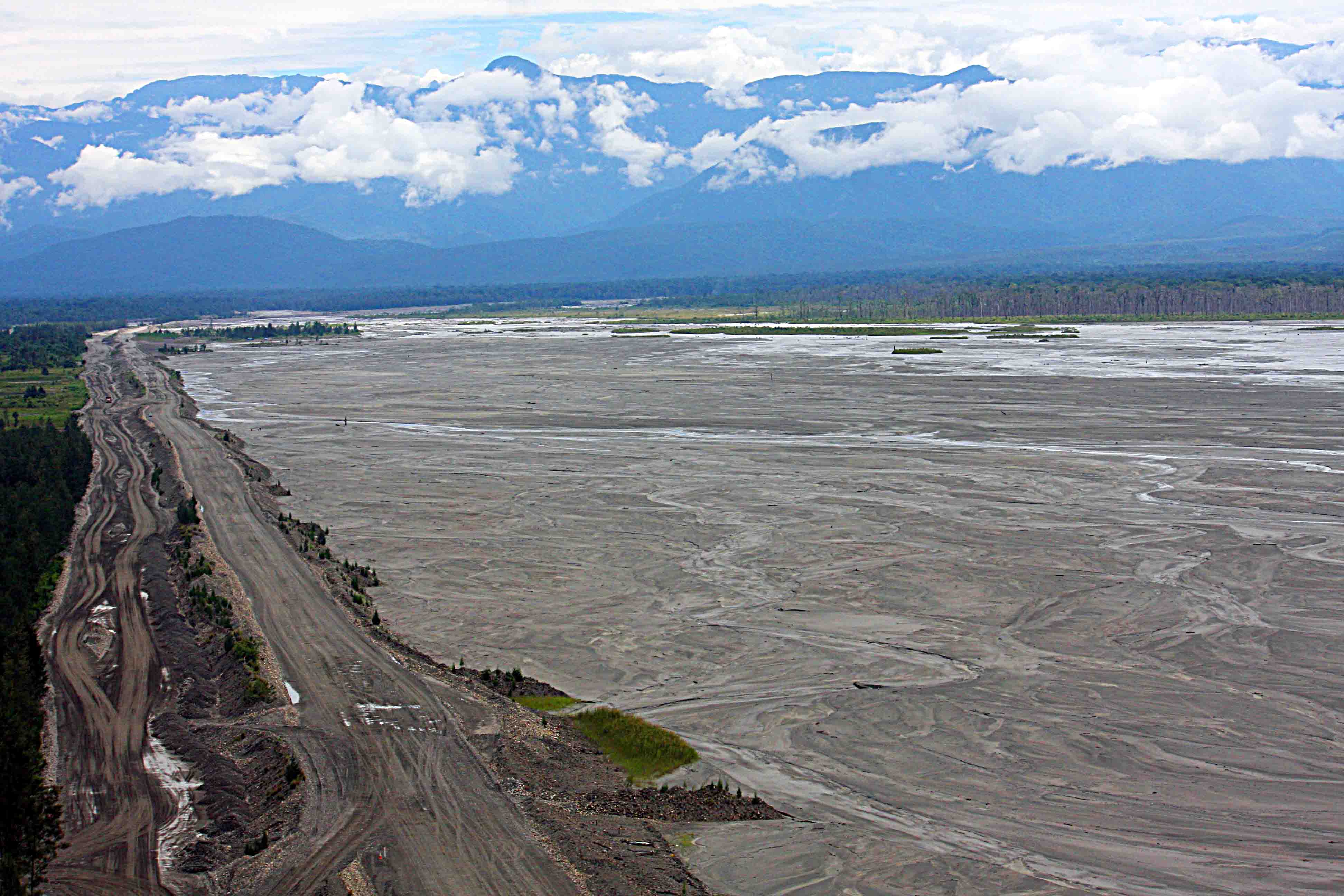
RA: Freeport mine strike ends (interview with West Papua Media)

”]
  • Updated December 28, 2011 07:58:41

Thousands of workers at Freeport mine in Indonesia have ended their three-month strike for better wages, after a signing a pay-rise deal with the company.

Production at Freeport‘s giant gold and copper mine in Papua has been at a standstill since workers began their industrial action. The workers are expected to return to work this week, but there are reports the Papuan police chief will charge protest organisers with sedition.

Presenter: Melanie Arnost
Editor of West Papua Media Nick Chesterfield

CHESTERFIELD: It’s seen to be a bit of a bitter sweet victory because whilst there have been ceremonies to enable peaceful resolution, the company, Freeport has given very little ground on the original demands and the Indonesian police in Papua have decided that they’re also going to charge the union leaders and the organisers with sedition.
ARNOST: What does this mean for the workers?
CHESTERFIELD: Well sedition is basically the charge under which everyone in West Papua gets charged if they raise the Morning Star flag. What it means is basically between 10 to 15 years in prison, and it’s not exactly a good faith act by the police. So there’s a lot of people who are going to be fearful. It’s designed by the police to stop anyone from taking legitimate industrial action by making out that it’s treasonous.
ARNOST: And how many workers are we talking about that look like they’ll be charged?
CHESTERFIELD: Well at the moment it’s looking at the union organisers, certainly the heads of the union and key organisers who’ve been manning the blockades and doing the education out there and doing what union organisers do on the ground during strikes. Whether or not they charge everyone, this is a question that the workers certainly want to have answered, and also one of their conditions in returning to work is there’s going to be no sanction on them for going on strike. There’s no real gains in wage justice for any of the workers there, I mean they were initially going for quite a significant pay rise, and in the end they’re getting less than seven dollars an hour for their efforts.
ARNOST: So why did they decide to end the strike?
CHESTERFIELD: At the end of the day companies like Freeport and the Freeport mine which is the most profitable mine on earth, it’s the largest gold and copper mine on earth. It doesn’t want to pay its workers, not its indigenous workers anyway. There’s an understanding simply that there was no willingness on behalf of management to even budge even a few cents. So any money is better than no money.
ARNOST: So these seven dollars, is that what they were originally being paid in the first place?
CHESTERFIELD: Look they were originally being paid about a dollar 50 to three dollars an hour. So certainly there have been a few increases but it’s far less than what they’re asking for and there’s no real guarantees of safety and security, and especially security from these ongoing attacks by unknown forces, which the police and military seem to not want to solve.
ARNOST: When do you expect the workers will return to work?
CHESTERFIELD: It could be any day but nothing is entirely guaranteed until we get the pictures from the ground really.
ARNOST: It’s said to be the longest in recent Indonesian history this strike, so do you predict something like this happening again?
CHESTERFIELD: Look certainly there’s an appetite for industrial action in Indonesia and certainly in West Papua. Certainly the Freeport Mine’s got to be separated in some way obviously from the independence struggle in West Papua, but there’s certainly issues of corporate behaviour and corporate impact on surrounding environments and surrounding social dislocation that workers have really switched on to. You can’t unlearn what you’ve gone through in a situation like that, so certainly there’s more of a willingness to take this kind of action. And they’ve certainly learnt a lot of lessons from it.

West Papua- December 1 2011 – Breaking the Media Blackout

50 years ago on the 1st of December 1961, West Papuans flew their flag for the first time in preparation for their independence from the Dutch.

In 2011, despite ongoing repression, the Morning Star flag was once again flown across the country. The non-violent demonstrations and gatherings, as well as the military crackdown against them, were reported to the world via a network of citizen media journalists, breaking through the media blackout of West Papua.

This short wrap-up shows how the West Papuan people would not let outrageous threats of Indonesian state violence suppress their desire to declare their independence.

[vimeo http://vimeo.com/34163958]

Time to change Australia’s involvement in West Papua offensive

PRESS RELEASE: ACT FOR PEACE

Act For Peace
http://www.actforpeace.org.au/Be_Informed/Latest_News/Time_to_change_Australia_s_involvement_in_West_Papua_offens.aspx?cat=West%20Papua

23/12/2011 11:03:39 AM

Reports are emerging this week that the helicopters from which 17 West Papuans were recently shot are those of an Australian-owned mining company, Paniai Gold. Further, this ongoing Indonesian offensive involves counter-terrorism unit Detachment 88, which has been trained by Australia.

This Indonesian joint military-police offensive reportedly also burned down the villages of Toko, Badawo, Dogouto, Obayoweta, Dey, and Wamanik, with 20,000 people now displaced. Images reported in Australian and international media show more troops being deployed to West Papua.

Act for Peace is calling on the Australian Government to urgently request that the Indonesian authorities cease any attacks impacting civilians, and that Indonesia and Paniai Gold account for their alleged actions relating to the civilian deaths and forced displacement.

Media is strictly controlled in the region, making the need to pursue a full account more important. The large-scale offensive is in retaliation to the killing of two Indonesian police by Papuan guerrillas in Paniai.

Prior to this operation, in October six unarmed protesters were reportedly killed and many more injured at the Third Papuan People’s Congress.

Act for Peace, the international aid agency of the National Council of Churches in Australia, is also concerned at the targeting of church leaders and communities and the occupation of church buildings, in particular the Kingmi Theological College in Paniai, harassment of Kingmi Church of Papua Moderator the Rev. Benny Giay, and the attack on staff, students and destruction of property at the Catholic Church’s Fajar Timur Theological College in Abepura by the Indonesian police and military on October 19.

We also call on the international community to ensure the Indonesian authorities allow church and Congress leaders in West Papua freedom of expression of their views and rights without fear of persecution.

Act for Peace has supported programs in West Papua including training young community leaders, raising awareness of and helping to prevent the spread of HIV/AIDS and growing small businesses to help strengthen the West Papuan economy.

West Papua is the western half of the island of New Guinea, with an indigenous Melanesian population. December 1, 2011 marks the 50th anniversary of the declaration of West Papuan independence from Holland. It was forcibly taken over by Indonesia a year later.

Reports show more than 100,000 Papuans are estimated to have died from military operations since Indonesia took control. State-sponsored migration from other parts of Indonesia has now left the indigenous Melanesians a minority in West Papua.

It is time Australia, as a good international citizen concerned about the protection of civilians, did more to ensure the safety of our neighbours.

Alistair Gee
Executive Director, Act for Peace

Create a website or blog at WordPress.com

Up ↑