Take Care of Our Rivers and Give Us Back our Land

Sawit Watch / SKP KAMe

Press Release

December 20, 2012

West Papua’s natural resources are being exploited by extractive industries, especially around Merauke. When it was launched in August 2010, the MIFEE mega-project was described as an initiative to meet the world’s food needs, a response to the world food crisis. As well as this, there are the current global concerns that the diminishing reserves of fossil fuel globally are bringing about a energy crisis.

https://i0.wp.com/sawitwatch.or.id/wp-content/uploads/2012/12/Sawit-Papua.jpg

With an area of over 1.2 million hectare earmarked for the project, the Merauke Regency Government hoped to turn Merauke into a centre of urban agriculture, agribusiness and agrotourism. Many companies welcomed the government’s offer and saw it as a great opportunity to expand their operations in eastern Indonesia. Merauke Regency’s Investment Planning Board (Badan Perencanaan Investasi Daerah or BAPINDA) has recorded that 46 companes have obtained permits, and some of which have already commenced operations. (data from Bapinda, September 2012).

The extent of concessions for large-scale oil-palm plantations in Indonesia currently exceeds 11.5 million hectares (Sawit Watch, 2011), stretching over all of Indonesia’s island groups both large and small, from Sabang at the westernmost tip of Aceh, to Merauke in South-East Papua.  The first palm-oil plantation in Merauke was started in 1997 by Pt Tunas Sawa Erma, a subsidiary of the Korindo Group. There are currently six oil palm plantation companies which have begun operations on Malind Anim land in Merauke: PT Dongin Prabhawa (Korindo Group), PT Bio Inti Agrindo (Korindo Group) [awasMIFEE note: PT Bio Inti Agrindo was actually bought by Daewoo International in 2011, and still belongs
to that company as far as we know], PT Central Cipta Murdaya (CCM), PT Agriprima Cipta Persada, PT Hardaya Sawit Papua and PT Berkat Citra Abadi (Korindo Group). Hundreds of thousands of hectares of indigenous people’s land will be appropriated, the forest destroyed and replaced with large-scale oil palm plantations.

Oil-palm plantations along the shores of the Bian and Maro Rivers have already brought serious problems for the indigenous people and clans that live in the area and own the land.  Oil-palm companies have been clearing land by burning, which has polluted water in the rivers and swamps, damaged and wiped out cultural sites and caused irreplaceable damage to the natural environment.  This is aggravated by a lack of information about companies’ status and plans, wrongful identification
of which clans own or have rights over which land, insufficient payment of compensation and deception and manipulation of data.  As a result the clans and tribes living along the Maro and Bian rivers have been dispossessed of their customary lands.

On the 31st July2011, 13 civil society organisations signed and delivered a letter to the UN Committee on the Elimination of Racial Discriminaton (CERD), accusing the MIFEE Mega-Project of bringing about the destruction of indigenous societies in Papua and in Merauke in particular.  A response to this letter was received from Anwar Kemal, Chairperson of the Committee on the Elimnation of Racial Discrimination, on the 2nd September 2011.  It requested that the Indonesian Government, which became a party to the International Convention on the Elimination of All Forms of Racial Discrimination 1965 when it ratified Law number 29 of 1999, to give a swift response and clarification before 31st January 2012.   Until now, the government has still not given its response. The government is showing neglect and disregard and it’s not for the first time – previously in 2007 they had planned to fell the forest along the whole Indonesia-Malaysia border for oil palm plantations.

Seeing the conditions that indigenous communities in the villages along the Bian and Maro rivers are currently facing, with their land already allocated to large scale oil palm plantation concessions, we strongly advocate the following:

1. Companies must be responsible and make restorations, as well as giving compensation to people living along the Bian River as far as Kaptel and the Maro River for the environmental damage and pollution caused by oil palm plantation operations.

2. The government must carry out a review and evaluation of the permits which have been given to oil palm plantations on indigenous land belonging to the clans and tribes which live in Merauke Regency, revoke and cancel location permits and withdraw all commercial cultivation rights from customary lands in Merauke Regency.

3. The government must stop issuing new permits in Merauke Regency before all current problems are resolved, as well as repairing the damage that has already been done to the various communities.

4. As a party which has ratified the International Convention on the Elimination of All Forms of Racial Discrimination 1965 through Law number 29 of 1999, the government must immediately respond to the Chairperson of the Committee on the Elimination of Racial Discrimination Anwar Kemal’s letter dated 2nd  September 2011 (which was a response to the concerns raised to the UN CERD on 31st July 2011).

Source: Sawit Watch http://sawitwatch.or.id/2012/12/1047/
Translated and posted on awasMIFEE: https://awasmifee.potager.org/?p=302

West Papua Political Prisoner Dominikus Sorabut amongst writers honoured for commitment to Free Expression

English: Human Rights Watch logo Русский: Лого...

From Human Rights Watch

http://www.hrw.org/node/112138

41 Facing Persecution Win Hellman/Hammett Grants

December 20, 2012 (WEST PAPUAN POLITICAL PRISONER DOMINIKUS SORABUT AMONGST WINNERS – SEE BELOW)
(New York) – Forty-one writers from 19 countries have received 2012 Hellman/Hammett grants for their commitment to free expression and their courage in the face of persecution.The award-winners have faced persecution for their work, generally by government authorities seeking to prevent them from publishing information and opinions.  Those honored include journalists, bloggers, essayists, novelists, poets, and playwrights. They also represent numerous other writers worldwide whose personal and professional lives are disrupted by repressive policies to control speech and publications.

“The Hellman/Hammett grants help writers who have suffered because they published information or expressed ideas that criticize or offend people in power,” said Lawrence Moss, coordinator of the Hellman/Hammett grant program at Human Rights Watch. “Many of the writers honored by these grants share a common purpose with Human Rights Watch: to protect the rights of vulnerable people by shining a light on abuses and building pressure for change.”

Governments have used arbitrary arrest and detention, politically motivated criminal charges, and overly broad libel and sedition laws to try to silence this year’s Hellman/Hammett awardees. They have been harassed, threatened, assaulted, indicted, jailed on trumped-up charges, or tortured for peacefully expressing their views or informing the public. When abusive governments target writers, it intimidates others to practice self-censorship.
Free expression is a central human right, enshrined in article 19 of the Universal Declaration of Human Rights, which declares that “everyone has the right to freedom of opinion and expression; this right includes freedom to hold opinions without interference and to seek, receive, and impart information and ideas through any media and regardless of frontiers.” On July 21, 2011, the Human Rights Committee, the expert body established under the International Covenant on Civil and Political Rights, reiterated the central importance of freedom of opinion and expression, stating that these freedoms “are indispensable conditions for the full development of the person. They are essential for any society. They constitute the foundation stone for every free and democratic society.”

The Hellman/Hammett grants are given annually to writers around the world who have been targets of political persecution or human rights abuses. A distinguished selection committee awards the cash grants to honor and assist writers whose work and activities have been suppressed by repressive government policies.

The grants are named for the American playwright Lillian Hellman and her longtime companion, the novelist Dashiell Hammett. Both were both questioned by US congressional committees about their political beliefs and affiliations during the aggressive anti-communist investigations inspired by Sen. Joseph McCarthy in the 1950s.  Hellman suffered professionally and had trouble finding work. Hammett spent time in prison.

In 1989, the trustees appointed in Hellman’s will asked Human Rights Watch to devise a program to help writers who were targeted for expressing views that their governments oppose, for criticizing government officials or actions, or for writing about subjects that their governments did not want reported.

Over the past 23 years, more than 750 writers from 92 countries have received Hellman/Hammett grants of up to US$10,000 each, totaling more than $3 million. The program also gives small emergency grants to writers who have an urgent need to leave their country or who need immediate medical treatment after serving prison terms or enduring torture.

Of the 41 winners this year, six remain anonymous to prevent further persecution. A list and brief biographies of the award-winners, including just the countries of the anonymous grantees, is below.

A concentration of grantees in certain countries points to especially severe repression of free expression by those governments. Twelve of this year’s grantees come from the People’s Republic of China; four of them are Tibetan and remain anonymous for security reasons. Five grantees are from Vietnam, four from Ethiopia, and three from Iran.

“The compelling stories of the Hellman/Hammett winners illustrate the danger to journalists and writers around the world,” Moss said.

2012 Hellman/Hammett Awardees (Full list at http://www.hrw.org/node/112138 )

Dominikus Sorabut (Indonesia/Papua)

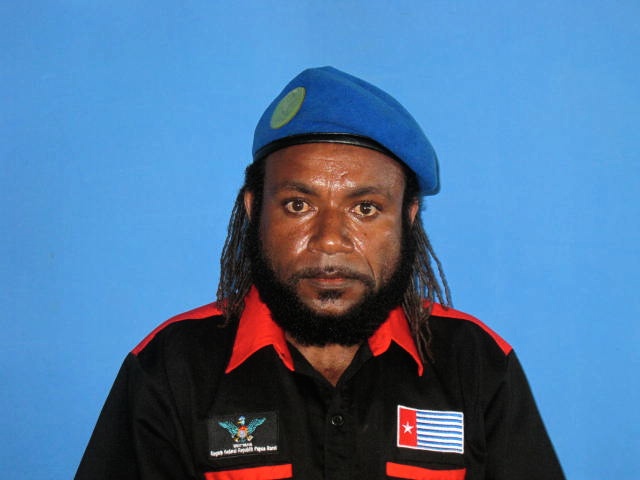
Dominikus Sorabut (photo: PW/West Papua Media)

Dominikus Sorabut is a Papuan activist who also produced a number of film documentaries on issues such as deforestation, illegal mining, and Indonesian government efforts to eradicate Melanesian Papuan cultures. In 2010, he interviewed a Papuan farmer who was tortured by Indonesian soldiers, helping to provide international exposure of torture and suffering of the farmers. Sorabut has written several op-ed articles and a number of book manuscripts on the Papuan people. While attending a peaceful demonstration for Papuan independence in October 2011, Sorabut was arrested when Indonesian police and soldiers fired into the crowd and detained more than 300 protesters. Sorabut was convicted of treason along with four other Papuan figures and sentenced to three years in prison. He is in the Abepura prison in Jayapura, Papua.

ELSHAM: Reverting to the DOM era: Papua back to being a Zone of Military Operations

PRESS RELEASE FROM ELSHAM PAPUA

December 19, 2012

ELSHAM PAPUA
Lembaga Studi dan Advokasi Hak Asasi Manusia
(Institute for Human Ri ghts Study and Advocacy of Papua)

Reverting to the DOM era: Papua back to being a Zone of Military Operations

There was a significant increase in the intensity of the conflicts and violence in Papua between August 2011 and December 2012. ELSHAM Papua reported on several incidents that had resulted in serious casualties and although the growing severity of the incidents was disturbing, these did not prompt the Government to react.  These events include the overwhelming offensive called “Operasi Aman Matoa I 2011”, terror actions and shootings by unidentified perpetrators (OTK), cases of internal displacements,  as well as cases of extrajudicial killing of civilians by the police.

“Operasi Aman Matoa I 2011” is the designation for an armed crime prevention operation that was set up in the areas of Puncak Jaya and Paniai. This operation was under direct command  of the Chief of Police, and was run by the Operations Task Force (Satgas Ops) through police telegram letter No. STR/687/VIII/2011 dated 27 August 2011.

The Operations Task Force for Operasi Aman Matoa I 2011 was led by Drs. Leo Bona Lubis, the Commissioner of Police. During the execution of Operasi Aman Matoa I 2011 in the Paniai Regency, a number of grave human rights violations were perpetrated, which include:

(a) the taking of the lives of two civilians, Salmon Yogi (20) and Yustinus Agapa (30) who died as a direct result of the armed conflict,
(b) the inflicting of injuries to at least four civilians: Yulian Kudiai (22), Melkias Yeimo (35), Yohanis Yogi (25) and Paskalis Kudiai (21), who became victim as a result of the armed conflict,
(c) great material loss due to the armed conflict in Eduda District which includes 78 houses that were burnt by the Operations Task Force; educational activities at 8 elementary school (SD) and 2 Junior High School (SMP) that had to be halted; religious and worship services could no longer be ensured in eight Catholic churches, seven Kingmi churches and four GKII churches; hundreds of machetes, knives, saws, hammers, bows and arrows were confiscated;
(d) villagers no longer felt secure in their own homes and they fled. As many as 37 people perished while in displacement: 13 toddlers, 5 children, 17 adults and 2 elders;
(e) communities from the Districts of Komopa, Keneugida, Bibida, East Paniai and Kebo have endured material loss due to their displacement.  The villagers were forbidden from going to their gardens by the members of the Operations Task Force. As a result, this primary source of livelihood for the communities was left neglected and unattended. Prior to the evacuation, 1581 heads of livestock were forcibly slaughtered, including  as many as 478 pigs, 3 cows, 11 goats, 132 rabbits, 381 ducks, and 576 chickens. After returning to their homes and villages, the residents experienced severe food shortage. Members of the Operations Task Force had also damaged the fences built by the residents, as they used those as firewood.

Violent acts committed by the security forces, both the military and the police, are still common and they are in flagrant violation of a number of international humanitarian standards and principles. Some of the cases that we note are as follows:

a. The heavy-handed assault carried out by the police against Persipura fans at Mandala Stadium on 13 May 2012, which led to 18 people suffering from respiratory problems due to tear gas that had been fired indiscriminately and six others being detained arbitrarily.
b. The shooting of four people in Degeuwo by the police on 15 May 2012, by which one person was killed and the other three were seriously wounded.
c. The assault against civilians in Honai Lama Wamena on 6 June 2012, by members of the Indonesian army (TNI) Battalion 756 Wimane Sili, which resulted in one person dead and 14 others seriously injured.
d. The arbitrary arrest and torture by the police of 10 people in the town of Serui, as they were commemorating the International Day for Indigenous People on 9 August 2012.
e. The forced disbanding by the police of a KNPB-led demonstration that was about to start in front of the campus of the State University of Papua in Manokwari on 23 October  2012. A total of 15 people were detained by the police, nine of them were tortured, and 2 others suffered gunshot wounds.

Summary executions by the police of pro-democracy activists who are active within the West Papua National Committee (KNPB) continue to occur. The extrajudicial shooting of Mako Tabuni (34), First Chairman of the KNPB on 14 June 2012, is clear evidence of acts of police brutality against civilians. A similar killing occurred in Wamena on 16 December 2012, when the police shot dead Hubertus Mabel (30), militant KNPB Chairman for the Baliem region.

Other violent acts such as terror acts and shootings by unknown assailants increased, both in 2011 and 2012. From 5 July to 6 September 2011, there were 28 shooting incidents where 13 people were killed and at least 32 people were wounded. Meanwhile, throughout 2012, there were 45 attacks by unknown assailants, killing 34 people, injuring 35 people and causing severe trauma to 2 people.

One of the worrisome events that received very little attention from the Government was the crisis which lasted from July to November 2012 in the Keerom where villagers fled their homes as they no longer felt secure because of activities conducted by the security forces. A joint effort between ELSHAM Papua and the Keerom Catholic Church enabled the return to their homes of 38 internally displaced people (IDPs) who had fled into the jungle.

Various cases of violence and human rights violations that occurred in Papua totally escaped the attention of the central Government and that of local Papuans. Conditions such as these indicate that the status of Papua as an autonomous region has turned into a status of “Special Operations Region”, similar to what was experienced in the decades between 1970 and 2000 when Papua was designated as a Military Operations Area (DOM). Legal impunity for the perpetrators of the violence becomes flagrantly visible as the perpetrators of such violence are practically never brought to justice, nor do they receive fitting sentences.

Prohibiting international humanitarian organizations, international journalists and foreign researchers from accessing the Papuan region inevitably gives way to the increasing acts of violence by security forces in that region. Elite units, such as Anti-Terror Special Detachment 88, are conducting activities that are contrary to their mandate as they themselves are the ones creating terror against activists of the pro-democracy movement in Papua.

Bearing in mind the socio-political conditions faced by Papuans today, ELSHAM Papua is calling for:

1. the Indonesian Government, to open access to international humanitarian agencies, international journalists and foreign researchers to the region so they can freely visit and monitor the human rights situation in Papua;
2. the police of the Republic of Indonesia, to immediately reveal to the public the identity of those responsible for the numerous attacks and mysterious shootings that have occurred lately in Papua;
3. the Indonesian Government and groups opposing the Government, to choose dialogue as a way to end the conflict and the ongoing violence in Papua;
4. the military and the police, to uphold and respect the universal principles of human rights that have been ratified by the Government of the Republic of Indonesia.


Papuan Baptist Church: “Indonesian Security Forces Must STOP Committing Crimes Against Humanity in Papua”

Fellowship of Baptist Churches in Papua

PRESS RELEASE

1 November 2012

The Central Body for the Fellowship of Baptist Churches are very concerned about Indonesian security forces towards God’s people in Papua. The cause for this concern came after General Kelly Kwalik killed in Timika on December 16, 2009 by Joint TIM – TNI, Indonesian Police, BRIMOB and Detachment 88, and Musa Mako Tabuni, Chairman of the West Papua National Committee (KNPB) were killed by Detachment 88 on June 14, 2012 at Waena, Jayapura,  Papuans are confronted with strange and uncivilised events such as a bomb discoveries, bombings, and the arrest of Papuan civilians on suspicion of possessing ammunition throughout the entirety of Papua.

Examples include:

  • The bombing of the parliament Jayawijaya building on 1 September 2012 at 02:15 WIT by OTK;
  • the throwing of bombs at the Jayawijaya police station traffic on 18 September 2012 at 20:55 WIT;
  • the discovery of a bomb in Timika, Friday, October 19, 2012,
  • the discovery of three bombs in Manokwari on October 9, 2012.
  • Explosion of three homemade bombs in Sorong on Sunday, October 28, 2012 at 22.00.

As of October 30, 2012 there has been the discovery of 7.62 calibre ammunition in as many as 9 points, 5 TJ 5.6 bullets in as much as 121 points,  5.6 servant bullets in 20 points and the arrest of four youths known by the initials DIH (26), a resident of Organda, YP (28), a resident Sampan Timika, AK (24) a woman, a resident of Organda, and YJW (27) a Karubaga citizen. (Cenderwasih Pos News, Wednesday, October 31, 2012).

On Wednesday, October 31, 2012 and the Papua Regional Police arrested a civilian with the initials OG (27) for the alleged possession of Jayapura PTC ammunition.

From the whole combination of “scenarios” and engineered changes that feature indigenous Papuans as owners of ammunition and bomber gives the VERY clear impression of a SYSTEMATIC STRATEGY being applied by the Government of the Republic of Indonesia through the power of the security apparatus with multiple objectives, agenda and targets, namely:

  • A systematic effort to thwart the Papuan demands to work towards a peace dialogue;
  • Systematic efforts to destroy and criminalize peaceful struggle for self-determination rights (the right to self-determination) of the people of Papua;
  • A systematic effort to make the peaceful struggle for independence of Papuans become known as “terrorists”, so that the international community does not support the struggle of the people of Papua, and the Indonesian security forces instead become supported with funding from the Government of the United States and Australia, which has been instrumental in training and sponsorship of Detachment 88 to fight against “terrorists” in Indonesia.

All ammunition and bombs which have been found and detonated were not owned and operated by indigenous Papuans, but there are several false owners, suppliers and urgers of young Papuans to give truth to the “justification” that those involved in the  struggle of the people of Papua are in fact criminals and “terrorists”.

Recommendations:

  • The entire Papuan society, migrants and indigenous Papuans, do not easily believe that the bombs which were detonated and found, and ammunition recovered from the hands of indigenous Papuans is not true. because the struggle to find justice and political rights for the people of Papua is found through peace, which has already been shown to be true, and not through violence, which would only be a backwards change.
  • The security forces of the Republic of Indonesia must stop committing crimes against humanity by an engineered situation of bombs and ammunition discovery at the houses of indigenous Papuans.
  • The Government of the Republic of Indonesia immediately open a space for an unconditional peace dialogue between the Government of Indonesia and the Papuans, mediated by a neutral third party, as a political solution to the Special Autonomy has FAILED to answer the complexity of the issue of Papua. Peaceful dialogue with the following conditions:
    • Immediately release all political prisoners such as Filep Karma, Forkorus Yaboisembut and friends unconditionally.
    • Immediate withdrawal of all non-organic troops, which are not balanced by the number of indigenous Papuans.
    • The Government of the Republic of Indonesia immediately allow access for foreign journalists and humanitarian workers to visit Papua.
    • The Government of the Republic of Indonesia immediately inviting and allow the United Nation Special Rapporteur to visit Papua.

Chairman

The Central Body for the Fellowship of Baptist Churches in Papua,

Sofyan Yoman Socratez

Tapol: Britain and Indonesia – Too close for comfort?

TAPOL Press release
President’s visit prompts fresh concerns about arms sales and training of anti-terror police

30 October 201

British-funded training of Indonesia’s anti-terror police, Special Detachment 88, should be reviewed in the light of serious concerns about the unit’s human rights record and its operations in Papua, says TAPOL ahead of a state visit to London by Indonesian President Susilo Bambang Yudhoyono from 31 October to 2 November 2012.

In the run-up to the visit TAPOL, which promotes human rights, peace and democracy in Indonesia, is also appealing for an immediate ban on the sale to Indonesia of any military equipment that may be used for internal repression.

“While British businesses are no doubt eagerly anticipating the President’s visit, victims of human rights abuses will derive little comfort from the prospect of increased arms sales and ongoing training of Indonesian security forces,” says Paul Barber, Coordinator of TAPOL.

As the UK government prepares a state welcome for President Yudhoyono, rights groups from the UK and beyond are organizing an alternative welcome at a demonstration on behalf of the victims of human rights abuses outside Downing Street from 13:00 to 14:30 on Wednesday 31 October.

While Indonesia has made substantial progress in its transition from dictatorship to democracy since the downfall of former President Suharto in May 1998, serious human rights concerns remain.

“The news that the President is to receive a prestigious honour from the Queen is a gross affront to those who have suffered violations at the hands of successive Indonesian governments,” said Barber [1].

Special Detachment 88, known as ‘Densus 88’ was formed after the Bali bombings in 2002 to combat terrorism, but is reportedly being deployed to tackle other issues, such as alleged separatism in Indonesia’s conflict-affected provinces. Local civil society monitors say Densus 88 is being used to crack down on the Papuan independence movement, and the unit has been implicated in the assassination of its leaders, such as Mako Tabuni who was shot dead in June this year.

The unit is trained at the Jakarta Centre for Law Enforcement Cooperation, JCLEC, which received a minimum of £400,000 in funding from Britain in the financial year 2011/12, as well as training provided by British officers. These include the UK’s South East Asia Counter Terrorism & Extremism Liaison Officer Detective Superintendent Phil Tucker; former Metropolitan Police Commander Bob Milton, and David Gray, an officer from the Counter Terrorism Command at New Scotland Yard who sits on JCLEC’s Board of Supervisors and has been teaching on the course since August 2009.

In July this year, leading Indonesian human rights NGO, KontraS, published research which stated that Densus 88 operations commonly involved arbitrary arrest and detention, torture, physical abuse and injury causing death [2].

Indonesia has been identified by the UK as a priority market for defence sales, with Prime Minister David Cameron boosting the export effort when he visited Jakarta with arms company executives in April 2012. The value of approved arms export licences has risen dramatically under the coalition government. The use of British equipment such as Hawk jets, armoured personnel carriers and water cannon for internal repression has been widely documented over the years and was acknowledged by the British Government in the 1990s. UK Tactica vehicles have been used to crush protest on the streets of Jakarta as recently as March this year, and are used by Indonesia’s notorious paramilitary police unit Brimob.

During the President’s visit, groups including TAPOL, Down to Earth, Survival International, Progressio and Christian Solidarity Worldwide will be highlighting these and other key issues, including Human Rights in Papua; The Need for Dialogue in Papua; Freedom of Expression; Rights, Livelihoods and Climate Justice; Religious Intolerance; and Timor-Leste and Impunity.

Information on these issues is set out in a briefing available here.

ENDS

Contact: Paul Barber on 01420 80153 / 07747 301 739 or Esther Cann on 07503 400 308.

Notes:

1. President Yudhoyono will reportedly be awarded the Knights Grand Cross of the Order of Bath by the Queen during his visit.

2. KontraS report on Densus 88 available from TAPOL on request

Create a website or blog at WordPress.com

Up ↑