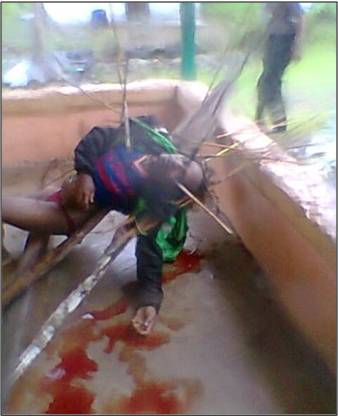
KNPB pleads for international security (force) to prevent ongoing conflict in Timika

October 8, 2012

Timika Conflict Report by Steven Itlay [Chair KNPB Mimika]

Analysis – edited by West Papua Media

Since the civil war broke out on June 2, 2012 in Timika,West Papua the number of victims among the indigenous people continues to grow. Freeport Indonesia Pty Ltd, the army, police and Government of Indonesia have not been able to resolve this insignificant dispute. They have allowed and indeed fostered this civil war.

As a result, at the time of this report (5/10), scores of lives have been lost and many (people) wounded. According to monitoring, the majority of the victims were hit by arrows; however a number were also shot dead by Indonesian Police. Yet others have disappeared as the result of “lightning” (speedy) killings by certain criminal elements. The Government of Indonesia and Freeport have not been able to resolve the conflict; therefore the (local) people are demanding an international security force to protect their lives.

The West Papua National Committee (KNPB) Mimika has been monitoring this situation, and has come to the conclusion that the civil war between clans has been allowed (to occur) by the Indonesian government and Freeport. The situation is trending towards genocide, and the Indonesian authorities – with the American corporation which is established on the Amungsa land – are deliberately permitting genocide in Timika, West Papua.

Chronology of the civil war

The civil war began from a misunderstanding which occurred since May 20, 2012 in Timika, Papua. In the beginning an incident occurred between Ronny Ongomang and Aroki Komangal. (Ronny Onggomang was the son of Hosea Onggomang and Aroki Komangal was the son of Atimus Komangal). At 4.00 p.m. Aroki called Ronny at his house and invited him to go for an evening ride, and .took the streets in the afternoon. The two went out, each using his own motorcycle heading along Old Freeport Street, next to Timika Airport. They sat down and began drinking (liquor).

Not long after that, a youth named Oni Kerembo who had just finished bathing at the side of Old Freeport Street was starting up his motor cycle, was suddenly hit by Ronny Ongomang who was crossing the road with his friend Mickieto while giving a ride on the back of his bike at high speed, despite being affected by alcohol.

After the collision with Oni, Ronny could still stand, and panicking, mounted his motorcycle and sped off about 1 kilometre, stopping at the side of a ditch by the road. According to police information, Ronny fell (from his bike) there and died suddenly (from his injuries). At the same time Oni Kerembo suffered broken bones and was rushed to Mitara Community Hospital RSMM Karitas for treatment.

The following day (21 May 2012), around 8.00 a.m, a citizen discovered the body of Ronny Onggomang in the ditch at the side of the road where he had fallen. The citizen immediately contacted the police, Polantas (traffic) section, and the body was removed to the District of Mimika General Hospital (RSUD Mimika). His parents were notified and identified Ronny Onggomang’s body at RSUD.

On 22 May 2012, his body was buried at the house of his father Hosea Ongomang at Kwamki Narama, Mimika.

On 24-26 May 2012 in Mimika, the victim’s family together with police from Polantas carried out an investigation into Ronny’s death. The police from Polantas said that it was clearly an accident, but the victim’s family did not accept this because there were no signs of scratches or lacerations on the body.

On 29 May 2012, the family of the victim (who) were making accusations everywhere, invited all the elders (including) the father of Aroki Komangal to go at once to the Police, Polantas Section and request clear information on the case. Polantas stated that from their viewpoint it was clearly an accident and there was no perpetrator. However the family of the victim were not satisfied with the police explanation. As a result of this dissatisfaction the family accused Aroki Komangal as the murderer without evidence.

Atimus Komangal and Benyamin Kiwak head of the large Damal clan apologised to the victim’s family but they rejected the apology from the side of the accused, and they wanted to “seek proof in the field” with a traditional physical confrontation or war between the clans, according to traditional custom.

In this small case the police let things be and did not complete the handling of the matter in order that a civil war did not occur. But (by failing to intervene with conflict resolution before violence broke out) it was as if the police provided an opportunity for this war to happen in Timika.

On 2 June 2012 in Mimika Papua, a civil war broke out, The clan of Hosea Ongomang fought against the clan of Atimus Komangal. Finally there was a victim on the Hosea Ongomang side, identified as Deminus Ongomang.

On 5 October 2012, around 8.24 a.m., community leaders, church leaders and womens’ leaders, forcibly chased away the Indonesian police because the police only watched and deliberately encouraged the conflict in Kwamki Narama, even though victims were dying. One Amungme community leader said, “The government of Indonesia, and TNI/POLRI only come to show off in the in an area of conflict like this, because of the political and economic interests of their office. They never truly resolve problems in Papua, especially in the gold mine region of Timika.”

At 09.00 a.m. local time, all the police who were serving in the war area left that war area in shame. All members of community organisations, church groups NGOs and elders regard the Indonesian government army and police (TNI/POLRI) as being incapable, and have failed totally to calm the civil war in Timika.

To the present moment the war is continuing. The Indonesian police have not yet succeeded in calming the civil war. In fact the police are just busy providing security for Freeport Indonesia. They carry out arrests of KNPB activists in the streets. This war which has been encouraged prevents the people from engaging in (peaceful and legitimate free expression) activism. The citizens are afraid to oppose the arbitrary activities of the police.

This slideshow requires JavaScript.

Above: Images from the horizontal conflict of 2012 in Mimika (Courtesy KNPB Mimika)
List of names of the victims (of the war) from 20 May to 5 October 2012
A. From the side of Hosea Onggomang
1. Roni Onggomang (16), died in ditch at side of the road, after motorcycle collision with Oni Kerombo .
2. Deminus Onggomang (30). Killed by an arrow, fired mistakenly by one of his friends.
3. Dominus Ongomang (32) shot dead by police officer in Mimika. Perpetrator: Brimob AKBP Denny Siregar S.IK of Batak descent.
4. Doni Onggomang (28). Shot dead by police. Doni had just seen his older brother Dominus shot by Kapolres (Police). Doni was angry and wanted to attack the Kapolres but he was also shot, by Adjutant Kapolres Abram, native of Jayapura.
5. Antelius Ongomang (24), Killed by arrow.
6. Aroki Tabuni (29). Killed by an arrow.
7. Pak Enos Murib (35). Killed by an arrow
8. Ibu (Mrs) Medina Wenda (24). Killed by an arrow in a plantation outside the battlefield.
9. Seki Tabuni (36). Killed by an arrow.
10. Kamoro Tabuni (30). Killed by an arrow.
11. Herry Tabuni (25). Chased and killed in the street.

B. Victims from Atimus Komanggal’s side
1. Parael Alom
2. Yanuarius Misimbo, killed in a plantation.
3. Nike Misimbo (10). killed in a plantation.
4. Ince Komangal (15). killed in a car.
5. Eterikus Beanal. Killed in a car.
6. Jhon Beanal (29). Disappeared, abducted by person unknown
7. Frans Beanal, (30). Disappeared, abducted by person unknown.
8. Pdt. (Reverend) Barnabas Komangal (57). Killed in family fight.
9. People seriously wounded; 12 men and 2 women, names not yet known.
10. Filemon Hagabal, (35). seriously wounded by an arrow.
11. Head of the Dama clan, Victim of bashing carried out by member of the police force, is now left with paralysis in his left leg and has broken ribs. At present still in detention in Polres Mimika Mil 32.
12. Other victims outside the warring clans, Bapak Tom Yarangga (45 years), Yaranggawas burned in a car (fire) carried out by a specially trained group. (Kelompok yang di lati Khusus?), up to now the murderer has not been identified by the police.
Bapak Nasyum killed by a specially trained person. To date police have not identified the murderer.

(WPM Comment: The “Specially Trained Group” or Orang Terlatih Khusus is a euphemism for terror squads of the Indonesian special forces Kopassus, who are believed to responsible for a massive campaign of shootings, stabbings, muggings and bombings against a variety of targets, blamed on highland Papuans, and engineered by design to discredit the civil resistance movement in Papua. Indonesia, and Kopassus, have used proxy militia and jihadist groupsthis as their standard operating procedure since the bloodbaths of the 1965 Coup.)

Statements from Indon parliamentarians on Papua should greatly concern Australian Govt, international community

Australia West Papua Association (Sydney)

Media release

5 October 2012

Statements coming out of the Indonesian House of Representatives should be of great concern to the Australian Government and the international community . Joe Collins of AWPA said that statements reported in an article in the Jakarta Globe “House bangs drum of war in Papua” , must create fear in the West Papuan people who have already suffered so much from Indonesian military operations. Statements from the deputy chairman of Commission 1, Tubagus Hasanuddin such as “To keep Papua integrated with the country we must encourage the TNI to do what they have to do in Papua” And ” that the House was yet to give political support for any TNI offensive against the separatist movement in Papua, but it would not hesitate to back it if the occasion demanded”.

Joe Collins of AWPA said that “these statements indicate a new crackdown is likely to occur against so called separatists in West Papua and as usual the Indonesian authorities are trying to blame the problems in West Papua on overseas groups”. “Certain pro-
independence figures, who are living overseas, use this opportunity to nurture opposition against the government. The people have obviously welcomed [the idea of independence]. Therefore, we must seriously do something about it,” Tubagus said.

AWPA is calling on the Australian Government to raise concerns about these statements and follow the lead of PNGs Prime Minister Peter O’Neill who said he will raise concerns over human rights abuses committed by the Indonesian Military in West Papua with the government of Indonesia.

The ABC 7.30 program reported last night that Detachment 88 had launched a fresh crackdown in West Papua detaining eight men who they accuseof bomb making. However the KNPB said the explosives were planted and they are been framed to justify the squad’ activities.

Detachment 88 is trained and funded by Australia.

From Joe Collins, Australia West Papua Association.

7.30 Report (ABC): West Papua arrests highlight Australian Detachment 88 links

Australian Broadcasting Corporation

Broadcast: 04/10/2012

Reporter: Hayden Cooper

An Australian-funded police unit in West Papua has again been implicated in a crackdown on the region’s independence movement.

(Note:  Syndicated here as this story was produced by ABC with the assistance of West Papua Media, after we originally broke this story at https://westpapuamedia.info/2012/10/01/wamena-arrests-as-australian-funded-anti-terror-troops-conduct-raid-amid-increasing-repression-on-knpb-political-activists/ )

Transcript

LEIGH SALES, PRESENTER: An Australian funded counter-terrorism unit in West Papua is facing new accusations of abusing its power in the troubled Indonesian province.

The notorious squad known as Detachment 88 has launched a fresh crackdown on independence activists, in the wake of an expose by this program in August.

Eight men have been detained and accused of bomb-making.

Separatist leaders claim the explosives were planted and they’ve been framed to justify the squad’s activities.

Hayden Cooper has this report.

HAYDEN COOPER, REPORTER: Jayapura, West Papua is a city marred by violence and tension, where independence leaders have been arrested, beaten, killed. And where police have been confronted by unruly and angry demonstrations.

When 7.30 travelled to the province in August, the crackdown on the independence movement was already severe, resulting in several deaths, including of this man, independence leader Mako Tabuni, shot in this street, witnesses say, by the Australian trained and funded police unit Detachment 88.

ERSON WENDA, RELATIVE (last month, voiceover translation): Clearly, it was them who killed him because we saw them shoot him and take him to their hospital.

HAYDEN COOPER: Since then, the crackdown has worsened. Victor Yeimo succeeded Tabuni as leader of the West Papuan National Committee, KNPB. This week, he sent this video to 7.30.

VICTOR YEIMO, CHAIRMAN, KNPB: We are the non-violent activists in West Papua. We will fight for our right of freedom according to the peaceful means in West Papua. We demand our right of self-determination to a referendum to be held in West Papua by UN peacefully and democratically.

HAYDEN COOPER: But the Indonesian authorities don’t believe his claim of non-violence and they’re pursuing KMPB like never before. In June, Indonesian soldiers went on a rampage in the highlands town and KNPB stronghold of Wamena, and now in a new development, police have raided the homes and offices of KNPB members in the area. Last weekend eight were arrested and witnesses say once again Detachment 88 was involved.

VICTOR YEIMO: When they arrest the KNPB brothers in Wamena, we saw Detachment 88 with one car, and another car with police, joined in by TNI.

HAYDEN COOPER: Indonesian police accuse the eight KNPB members arrested of making bombs and claim to have found explosives during the raid. Victor Yeimo rejects that and says his group is being framed as terrorists to justify Detachment 88’s presence.

VICTOR YEIMO: This is how Indonesia is now making a scenario with the terrorist issue in West Papua. As you know that in West Papua we never know how to make a bomb, how to create bomb.

HAYDEN COOPER: Some international observers and West Papuan advocates back that view

CAMMI WEBB-GANNON, SYDNEY UNI: I don’t think that the KNPB has any reason to be making bombs because they believe in a peaceful approach to pursuing independence. They want a referendum on independence in West Papua.

HAYDEN COOPER: In West Papua the Institute for Human Rights Advocacy, known as ELSHAM, has studied the arrests and suspects the explosives recovered by police were part of an elaborate set-up.

CAMMI WEBB-GANNON: They don’t have the capacity to gain the materials, so ELSHAM has actually said that the materials were probably planted in the KMPB members’ houses where they found the explosives and that’s not an unusual thing for security forces to do.

HAYDEN COOPER: The weekend raids follow the appointment of a new police chief in Papua, Brigadier General Tito Karnavian. His background as the former head of Detachment 88 generates serious unease among some Papuans, despite his assurances of a new inclusive approach.

CAMMI WEBB-GANNON: They will be opposed to his former role as the head of Densus 88, and as a police chief this just – it doesn’t seem to mesh with his new approach of working – to win the hearts and minds of Papuans.

RONNY KARENI, WEST PAPUAN EXPATRIATE: I have no doubt there’ll be definitely more crackdowns on KNPB members and those who are very active and very vocal in pursuing and calling for independence for West Papua, and that is for sure, that that’s one thing that Jakarta is aiming to shutting down political activists in West Papua.

HAYDEN COOPER: Ronny Kareni is one of many West Papuans living in Australia. He uses music to promote the independence cause on behalf of his friends at home.

RONNY KARENI: Every day, like, I got SMS coming through my phone and then the information is that their lives are under intimidation and they always live in state of fear and they’re being followed and it’s sad, but this is the reality in West Papua.

HAYDEN COOPER: 7.30 put several questions to the Indonesian Government but received no reply. Attempts to contact the new Papuan police chief were also unsuccessful.

As for Victor Yeimo, he is pushing for the release of the eight activists arrested on the weekend, and with his supporters here, he’s pressuring Australia to rethink its funding for Detachment 88.

RONNY KARENI: The Papuans will be pretty much living like prisoners in our own land where our movement, what we do, will be censored, will be monitored, will be followed, and as I said, there’s no room for democracy at all.

LEIGH SALES: Hayden Cooper reporting.

Original URL http://www.abc.net.au/7.30/content/2012/s3604232.htm

Indonesian police fire shots, tear gas after 100s of Morning Star flags fly at peaceful demo in Manokwari


By West Papua Media and local sources

October 4, 2012

Over a thousand people who had gathered  in Manokwari on Tuesday (2/10) to demonstrate in support of the independence movement in Papua were attacked  by police who fired tear gas and live ammunition in the air, after hundreds of banned  Morning Star independence flags were unfurled.

The rally, called by the West Papua National Authority (WPNA) under the auspices of the national Federal Republic  of West Papua (NRF-PB), was to show support for an observer mission to the General Assembly of the United Nations in New York by WPNA diplomat Herman Wainggai, and to reject the failed implementation of Special Autonomy (OTSUS) in West Papua.

A pamphlet released by the WPNA Governor Markus Yenu  explained that the rally was to  “address the increase in OTSUS presence and UP4B as a form of “development”, which only extends Papua Political Status by affecting (increasing) marginalization and duping people of Papua, in all aspects of life on the land of Papua.”  It also said that “Papuan People should be sold on (support) the terms of independence and sovereignty (as per the) results at the KRP III (3rd Papuan People’s Congress of 2011).”

The rally was held at Sanggeng sports stadium from about 10 am local time, where about 700 people were joined by a long march of about 300 demonstrators who proceeded towards the town.  Banned Morning Star flags, which were hidden whilst the rally was under guard at Sanggeng stadium, were provocatively unfurled in their hundreds during the march, and police reacted quickly and brutally at 1039 local time.

This slideshow requires JavaScript.

West Papua Media stringers at the rally reported that Brimob paramilitary police stormed the gathering, firing their weapons both in the air allegedly with live ammunition and at rally participants with rubber bullets.  Three tear gas canisters were also fired into the crowd to disperse them, and police conducted a baton charge at around 1045am.  Witnesses however claimed that security forces, including soldiers from the Indonesian army (TNI) were firing indiscriminately, however no live gunshot wounds have so far been reported.  However, several live bullet casings were recovered by West Papua Media stringers.

Scores of demonstrators were savagely beaten, with several reportedly seriously injured by Brimob police who were seizing the 150 Morning Star flags.  Several of these included elderly people, who tried to intervene whilst Police were brutally beating a speaker named Zet Tata.  Ibu Pendeta (a Priest’s wife) Mathelda Maniani – one of the rally speakers  – , Ibu  Anis (75 years old), Petu Worabay, Vebi Wanma and Edo Kamesfle were all beaten by police.  Zet Tata reportedly sustained serious injuries but his condition in currently unknown.

3 rally participants remain unaccounted for, though sources on the ground have unverified reports that they were taken by Police, and grave concerns are held by WPNA activists for their safety.  The names of those disappeared are unknown at this stage.

After the brutal intervention by police to seize the Morning Star flags, demonstrators dispersed, but regrouped to hold another long march in defiance of police and close the rally peacefully at 1pm.

westpapuamedia


TPN denies involvement in “unknown persons” terror plot in Wamena


from West Papua Media

October 4, 2012

A commander from the West Papua National Liberation Army (TPN) has categorically denied any responsibility or involvement in an alleged bombing campaign against security force targets in Wamena and Jayapura, joining a chorus of Papua observers raising doubts about the Indonesian police allegations against pro-independence activists

Troops from the Indonesian army (TNI) and Australian-trained Detachment 88 counter-terror unit conducted a violent raid on September 29 against activists from the West Papua National Committee (KNPB) in Wamena, arresting 8.  The eight have been charged with various offences, including  possession of explosive devices and Makar (treason).

Citizen journalists from SuaraPapua .com made contact with the Commander of the Kodap (Liberation Command Area) I  of TPN, Colonel David Darko on Tuesday (2/10) afternoon, who confirmed the bombs in  Jayapura, Wamena and throughout Papua, had no connection to the TPN OPM.

“So (the) TPN OPM states assertively, that we are not responsible for any action with bombs, because OPM is not a terrorist organisation, but an organisations of national struggle for Papua, (and for) basic rights to self-determination as any other nation on earth, ” Darko told SP.  He said it was a struggle for the liberation of the people, and “The struggle by TPN-OPM is dignified and with  full responsibility for the rights of the national struggle,” he said.  This unequivocal statement, according to David Darko, is to give notice to all parties not to associate the OPM with bombs or terror.

The non-violent activists were allegedly arrested in connection with a small bomb blast at a Wamena police station.  Detachment 88 anti-terror police claim they found explosive materials at the KNPB offices, but human rights observers across Papua have suggested the police themselves planted the materials and questioned the truthfulness of police claims.

Ferry Marisan, the director of the Institute for Human Rights Study and Advocacy in Papua (Elsham) told the Jakarta Globe, “It [the evidence] must have been fabricated by police, they placed the explosives in the office so the police would have a reason to arrest them.”

Victor Yeimo, the international spokesperson for KNPB currently in hiding after threats of arrest for subversion,  ridiculed the police assertion that the arrested activists were involved in the attack on the police station, or in making or using bombs, or engaging in acts of terror.  “West Papuan people are not involved with these bombs, and still do not know how to make bombs,”  Yeimo told West Papua Media on September 30.  KNPB has previously and publicly pledged its commitment to non-violence, saying that it is committed to the use of “civil power”

Members of the KNPB have also been subject to an escalating wave of repression by Indonesian security forces across Papua, since the beginning of an anti-violence civil resistance campaign earlier in 2012, in response to a series on mysterious “unknown persons” (OTK) shootings that had killed over 20 people since 2011. These shootings, widely believed across Papuan civil society to be the work of Kopassus Indonesian special forces creating violence to be used as a pretext for a declaration of martial law, peaked with the brazen daylight execution by Detachment 88 officers of KNPB Jayapura Chairman Mako Tabuni on June 6 this year.

Papuan civil society sources have claimed by SMS and email to West Papua Media that the current campaign of bombings and explosions is connected to the October visit of Indonesian President, General Yudhoyhono, to the UK.  SBY, as the president is known, is believed to be signing off on major defence deals with UK arms corporations, and will be pressing for increased anti-terror cooperation.  SBY is also being targeted currently by human rights activists connected with the KNPB in the UK, who have offered a GBP£50,000 bounty for a citizen’s arrest of the Indonesian President for Crimes Against Humanity.  Civil society sources believe that the campaign of crackdown of KNPB activists accused of terror acts is being orchestrated to shut down Papua rights campaigning in the UK.

The TPN Commander Darko stated that the TPN was not allied with the West Papua National Committee (KNPB) in any political or organisational sense. “We also had nothing to do with the Committee at all as we are different from them,” Darko told SP.

The new Papua Police Chief,  Inspector General Tito Karnavian – the former head of Detachment 88, conceded the TPN-OPM claim to not engage in terrorist bombings, but said to wait for the court process.

“This case is being handled, and let us see it in court. Whether they are involved or not. Let the court decide, ” he said.  Honesty awaited the court because the reverse case would cause turmoil with the grassroots people of Papua, Karnavian explained to assembled journalists.

However, with Papua still closed to international journalists or independent human rights observers, few West Papuan activists believe that the flawed court system in Papua will be able to deliver a legitimate and fair trial.


westpapuamedia


Create a website or blog at WordPress.com

Up ↑
