BREAKING NEWS: WAR IN TINGGINAMBUT, WEST PAPUA

REPORTS OF 600 TNI SURROUNDING VILLAGES IN TINGGINAMBUT

by Nick Chesterfield @ Westpapuamedia.info

Monday July 10, 2011

Confirmed reports emerged on Sunday from Puncak Jaya, West Papua, that over 600 Indonesian Army (TNI) troops have been conducting daily full combat operations since July 4 in and around villages in the Tingginambut area.  Troops have reportedly attacked a series of villages said to be the refuge of the West Papuan Guerrilla leader Goliat Tabuni.

Troops from the notorious 753 Nabire battalion have reportedly surrounded the General Headquarters area of the West Papua National Liberation Army (TPN-PB) faction led by Tabuni, and have occupied several villages including Kalome, where three soldiers were shot by unknown assailants last Tuesday.  The Indonesian government news agency Antara reported that armed men stopped TNI soldiers from carrying out what it described as a “routine patrol” in Kalome village.  An exchange of fire occured – it is unclear who shot first – and three TNI were all struck by bullets to their arms sustaining non-life-threatening gunshot injuries.

According to reliable human rights activists in the immediate area, villagers in Kalome were rounded up and subject to harsh treatment by returning soldiers from 753Btn, and reportedly forced to watch as several houses were torched.  West Papua Media has been unable to verify these reports, but 753Btn has a well documented history of burning villages suspected of sympathies or harbouring TPN-PB.  (Extensive video footage of previous village burnings is available to any interested party).

Firefights have been occurring daily between TPN and TNI forces, with local sources describing it as “a 7-day shootout”.  “The current death toll, according to our intelligence data, is that Indonesia have killed 20 TPN fatalities, and according to reports from the field in Puncak Jaya, TPN have claimed five Indonesian military casualties”, said the source upon condition of anonymity.  Several civilian casualties have been reported, though exact figures are unconfirmed.  West Papua Media cannot at this stage confirm exact numbers.

Battalion 753, the battalion responsible for the well documented torture of West Papuan civilians and village burnings across Puncak Jaya in 2010 (including the infamous Tunaliwor Kiwo torture video), has been recently engaged in a much publicised heart-and-minds Bakti (Service) campaign, gardening and house-building cynically named “Love and Peace are Beautiful”, to mend the bridges damaged by the Army’s human rights abuses, torture and village burnings.  It was unclear whether this campaign was mending the houses that 753 had previously burnt down.

Puncak Jaya has been the scene of regular human rights abuses on civilians, with major combat operations ongoing since 2009.  TNI and BRIMOB paramilitary Police, as well as the Australian trained Detachment 88 counter-terrorist unit, have regularly targeted civilians whom they accuse of supporting the guerrilla TPN-PB of Tabuni.

Local sources have expressed fear to West Papua Media that their villages are being targeted for pacification and punitive operations after the failure of a much touted Social service campaign to heal the image of brutality that surrounds the 753 battalion.  It is feared by local activists that civilians are especially at risk as collective punishment for the potential escape of Tabuni’s forces, in a strategy by the TNI designed to flush out the TPN.

According to the adjutant of General Tabuni in a statement sent to West Papua Media, the purpose of the social activities by the TNI was to create a trojan horse for the eradication of armed resistance from Tabuni and his men.  “TNI’s Bakti social mission in Puncak Jaya is really a guise to avoid gross violations of human rights because the TNI Papua Commander was in the area and needed good press”.  According to the Jakarta Globe, the head of the Cenderawasih Military Command, Maj. Gen. Erfi Triassunu, said the TNI would provide psychiatrists to help residents traumatized by the widespread violence in the area.  The campaign was due to run from 2 May to 28 August, but almost all the troops who were building houses are now burning them down again, according to local sources.

Local human rights activists described the failure of this program being caused by the simple issue of trust.  “All their talk of caring for our human rights and welfare is shown to be a lie by this latest operation.  We have never trusted them, but now we trust them even less,” said the human rights worker, who cannot be named for his safety.

The TPN spokesperson was more blunt.  “People doubted the presence of top military who were proclaiming their victory in Puncak Jaya.  The TNI social service campaign is merely a shield.  It was evident from July 6,  that (these) military forces ….suddenly stopped and all directed to Tingginambut to conduct  military sweeps.  All TNI Bakti activities stopped completely. Since July 6 to the 8th all military forces here, with full combat equipment, have surrounded the headquarters of  TPN / OPM…. Tabuni is currently under siege”.

Reports of major abuse by Indonesian security forces in the West Papuan highlands are notoriously difficult to verify, as international human rights monitors and journalists are banned by the Indonesian government from travel to West Papua.

Please stay tuned to West Papua Media for more updates.

westpapuamedia.info

for media enquiries, please call +61450079

Leaked Letter Reveals Indon Army Scare Tactics

Exclusive Copies of the Scanned Letter are available for download at the end of this article. (Please note, any attempts to block access will result in significant multiplication across the internet)

at NewMatilda.Com

By Alex Rayfield

EXCLUSIVE: A leaked letter from an Army General reveals Indonesia’s attempts to disband a West Papuan church with threats of “assertive action”

From the outside looking in, the latest church conflict in West Papua might look like just another example of factional Protestant politics. A little sordid perhaps, but irrelevant to all but the parties involved.

Dig a little deeper, however, and one finds something far more disturbing.

A leaked letter from the head of the Indonesian Army in Papua obtained by New Matilda reveals that far from being an internal church matter, the conflict between Kingmi Indonesia, a Protestant church that has parishes across Indonesia, and the breakaway Kingmi Papua Church, goes to the heart of the Indonesian government’s attempt to repress movements for cultural pride and autonomy in the country’s restive Pacific periphery.

In a nutshell, the conflict turns on whether Kingmi Papua has the right to separate from Kingmi Indonesia and set up an autonomous synod, reverting to an arrangement that existed prior to 1982.

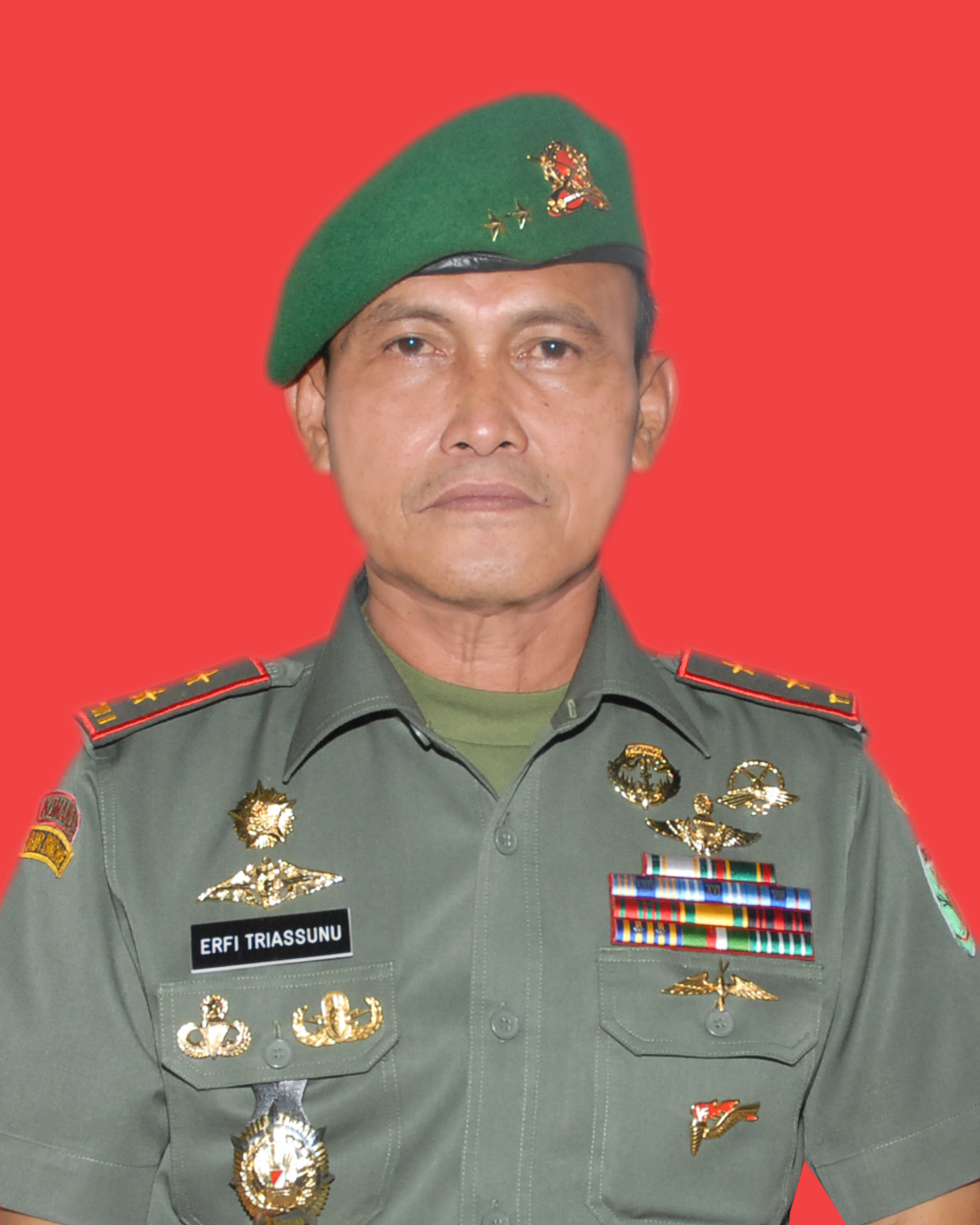
Major General Erfi Triassunu, TNI Chief, Kodam 17 (Papua) (photo discourtesy of TNI)

The question is this: why has the Indonesian Army become involved? Major-General Erfi Triassunu has waded into a conflict that he himself acknowledges is an internal church matter. In the letter (File Number: R/773/IV/2011) addressed to the Governor of Papua, Barnebus Suebu, dated 30 April 2011 and marked “secret”, Triassunu “respectfully requests” the Governor to arrange a meeting between Kingmi Indonesia and Kingmi Papua. The General also offers himself as a mediator.

The letter continues: “if the conflict cannot be resolved through discussion then assertive action must be taken”.

Let me translate “assertive action”. In East Timor when the Indonesian Army took “assertive action” against the Church, they murdered church workers, massacred parishioners, raped women and burnt churches to the ground. In West Papua too the Indonesian Army has a history of killing pastors from the Kingmi Papua Church, as well as other churches. This dates back to 1 May 1963 when the Indonesian government took administrative control of the territory and has continued up to the present.

Last October a video filmed on soldiers’ mobiles phones and circulated widely on the internet, showed several soldiers from Kostrad, the Indonesian Army’s Strategic Command — Triassunu’s own division — torturing a Papuan church worker by burning his genitals with a stick.

In the letter, Triassunu, who previously served in Aceh, makes a number of accusations. He accuses Kingmi Papua of trying to access as much money as they can from the government’s Special Autonomy programme in order to create new churches. However, the real purpose of building a network of churches, Triassunu insists, is “to strengthen Papuan civil society aspirations for freedom”. He then argues that the Kingmi Papua Church’s desire to be independent of the Indonesian Church is “just an excuse” for “the church to become a political vehicle” that supports Papuan independence.

Triassunu then goes on to make a number of recommendations. He specifically says that Kingmi Papua pastors should stick to Biblical “dogma” and not stray into politics. The General is on solid ground here, following in the footsteps of numerous dictators from Marcos to Pinochet, all notorious for their attempts to stifle meddlesome priests. Triassunu specifically names Reverends Benny Giay (the current moderator of the Kingmi Papua Church), Seblum Karubaba (the former moderator) and Noakh Nawipa (the Rector of the Pos 7 Theological College) as malcontents, mentioning several seminars organised by the trio where “Papua Merdeka” (freedom) was discussed.

All this has echoes of Suharto who systematically depoliticised (read: violently repressed and disbanded) all independent organisations, including religious ones, for fear they could become bases for organised opposition against the regime. Indonesian democrats may have overthrown Suharto but West Papua is not part of a new democratic Indonesia. What is deeply concerning is that in the Papuan context the label “separatist” is regularly applied to Papuan leaders as a pretext for justifying extra-judicial action by security forces.

This is where the plot thickens.

According to the letter, the General decided to become involved in the Kingmi conflict after a Kingmi Indonesia pastor, Reverend Karel Maniani, personally asked the Army to protect his parishioners. But Reverend Maniani himself was previously a member of “Group Nine” of the Papuan Freedom Movement (or OPM). In the 1980s Maniani was jailed for four years in the notorious Kalisosok Prison. What happened to Maniani on the journey from freedom fighter to Army petitioner?

To make things stranger, the conservative US-based evangelical Christian Missionary Association backs Maniani and Kingmi Indonesia against Kingmi Papua. At stake is not only valuable church property and access to Special Autonomy funds, it is also over influence of a broad Papua base. Kingmi Papua has half a million members. Virtually all of them are indigenous Papuans from the fractious Highlands, around a third of the entire Papuan population.

When I asked Benny Giay about all this his reply was revealing. For years he said he was part of a church that was more concerned with “saving souls” than the day-to-day oppression of the Papuans. “The Kingmi church has been complicit with the suffering of the Papuans. We need to confess our sins and follow the narrow path of Jesus. This Gospel is very clear; we must stand with the oppressed and work to alleviate their suffering. I hope we can cast off our fear and stay firm to this path.”

Giay has a vision for an independent Papuan church; a uniquely Papuan church that makes space for Papuans to begin to articulate their own theology, one that sees God present in Papuan history and culture. Giay and his colleagues are slowly building up a church that commits itself to solidarity with the poor and oppressed; one that is led by the Papuans themselves. That may not sound much to a reader unfamiliar with Papuan politics, but in West Papua it is a big deal.

Just ask the General.

SCAN OF ORIGINAL LETTER SIGNED BY MAJ-GEN ERFI TRIASSUNU


SMH: Chipping away at paradise (Report on Australian mining in Raja Ampat)

http://www.smh.com.au/environment/conservation/chipping-away-at-paradise-20110701-1gv3s.html

Tom Allard

July 2, 2011

Turquoise waters ... the Kawe Island coral reef.Turquoise waters … the Kawe Island coral reef.

Australia’s lust for minerals threatens a marine wilderness, writes Tom Allard in Jakarta.

About once a month, a ship from Townsville makes the long journey to Raja Ampat, a seascape of astonishing beauty and diversity.

In the far western reaches of the island of New Guinea, where the westerly currents of the Pacific flow into the Indian Ocean, hundreds of improbable, domed limestone pinnacles rise from the sea, encircling placid, turquoise lagoons.

Fjord-like bays cut deep into the hinterland of mountainous islands, framed by vertiginous jungle-clad cliffs that drop steeply into the water. There are oceanic atolls, shallow bays with fine white sand beaches, snaking rivers and mangrove swamps.

Wayag Island is one of the islands within the Raja Ampat district in the province of West Papua. The island is known for its beautiful atolls and amazing underwater life covering a total area of 155,000 hectares. Click for more photos

The beauty of Raja Ampat

Wayag Island is one of the islands within the Raja Ampat district in the province of West Papua. The island is known for its beautiful atolls and amazing underwater life covering a total area of 155,000 hectares.

  • Wayag Island is one of the islands within the Raja Ampat district in the province of West Papua. The island is known for its beautiful atolls and amazing underwater life covering a total area of 155,000 hectares.
  • Even though this photo was taken in southern Raja this scene could easily be from Wayag. Photo: Jones/Shimlock
  • Beautiful scenery at Raja Ampat. Photo: Jones/Shimlock.
  • A turtle at Raja Ampat. Photo: Jones/Shimlock.
  • A wrasse in the waters of Raja Ampat. Photo: Jones/Shimlock.
  • A typical bommie in northern Raja Ampat. Photo: Jones/Shimlock
  • Local children enjoying the reef in front of their village. Photo: Jones/Shimlock.
  • Schooling anthias (basslets) at Raja Ampat. Photo: Jones/Shimlock
  • Two bannerfish. Photo: Jones/Shimlock.
  • Even though these animals are from a region just south of Kawe, mantas are often seen at Eagle Rock a Kawe Island divesite. Photo: Jones/Shimlock.
  • A school of fish poses for the camera. Photo: Jones/Shimlock.
  • The sweetlip is a signature species in northern Raja. Photo: Jones/Shimlock

If the numerous islands and countless shoals and reefs of Raja Ampat take the breath away, they only hint at the treasures below. This remote part of West Papua province in Indonesia is the world’s underwater Amazon, the hub of the world’s marine biodiversity, home to 75 per cent of its coral and 1500 fish species, including huge manta rays; epaulette sharks that walk on the sea floor with their fins; turtles and an array of weird and wonderful fish.Yet the vessel that makes the regular trip to and from Townsville does not bring tourists or divers. There are no scientists on board to study this marine wonderland.

Rather, the vessel carries tens of thousands of tons of the red clay soil, rich in nickel and cobalt, which is destined for the Yabulu refinery owned by one of Australia’s richest men, Clive Palmer.

Sediment run-off from mining on Kawe Island.Sediment run-off from mining on Kawe Island.

Conservationists and marine scientists say this mining activity and the prospect of more exploitation puts one of the world’s most precious ecosystems under threat.

As the environment is imperilled, the impact on local communities has been devastating. Once close-knit villages are divided as competing mining companies offer financial inducements to residents for support. And, in a sadly familiar tale for the Papua region, where separatist sentiments linger, the benefits of exploiting its resources are largely flowing outside the region. Derisory royalties go to landowners and minuscule salaries are paid to locals who gain employment.

”I’m appalled by what’s going on,” says Charlie Veron, the former chief scientist from the Australian Institute of Marine Sciences, who has surveyed the region on many occasions.

Sediment from mining.Sediment from mining.

”If you had a rainforest with the most diverse range of species in the world and people started mining there without doing any kind of proper environmental impact study, there would quite rightly be outrage … Well, that’s what’s happening here.”

The vessels sent to collect the nickel and cobalt for Palmer’s Queensland Nickel company dock at Manuran Island, where the mining has continued unabated despite a decree by the West Papua governor, Abraham Atururi, banning all mining activity in Raja Ampat.

”The mining started in 2006. There were protests but the military and police came and they stopped them,” says Yohannis Goram, from Yayasan Nazareth, a local group that opposes mining.

The operator of the mine, PT Anugerah Surya Pratama (PT ASP), has promised environmental safeguards, but according to one local from nearby Rauki village they are ineffective.

”When it rains the sea turns red and sometimes even yellow,” a village elder says in a phone interview. ”The runoff is supposed to go into a hole but they come out [into the sea].”

Yosias Kein hails from Kapidiri, another island near Manuran that claims customary ownership. ”The mining waste damaged the coastal areas and covered up the coral reefs. Besides, it is difficult for people to get fish now. Fishermen in Kabare village, also in Rauki village, saw the waste went down into the seas near Manuran. Now they have to go fishing a bit further to the east or west.”

The strip mining for nickel leaves the landscape barren and the steep cliffs of Raja Ampat’s islands mean heavy rainfall overwhelms the drainage systems and sends the heavy soil into the water.

The impact is twofold and ”really nasty” for coral, Veron says. ”Sedimentation sinks on to the coral and smothers it. But worse is ‘clay fraction’, where very fine particles are suspended in the water, blocking the sunlight.”

Photos taken from Manuran and supplied to the Herald show murky water and dead coral after heavy rain.

PT ASP, based in Jakarta, owns PT Anugrah Surya Indotama (PT ASI), another mining outfit that operates on Kawe Island in Raja Ampat, despite a court order to desist due to a conflict over mining rights with a West Papua-based company.

The ultimate ownership of the companies are a mystery, although West Papua is rife with speculation that senior politicians and military figures have a stake in them. That is easy to understand, as the Jakarta firm seems to have extraordinary pull at the highest levels of government in Jakarta and Raja Ampat.

The rival mining company PT Kawei Sejahtera Mining (PT KSM) is owned by a local man, Daniel Daat. When it began loading its first shipload of nickel at Kawe in 2008, PT ASI, which also claims a mining licence for Kawe, complained. Three gunships and a plane were deployed to stop the consignment and Daat was thrown into prison.

The mines at Manuran and Kawe are guarded by military and police who locals say are on the company payroll. And while 15 mining companies have been pushed out of Raja Ampat after the governor’s decree, PT ASP and PT ASI have stayed.

Korinus Ayelo is the village chief of Selpele, which has customary ownership of Kawe, and supports Daat’s PT KSM. But PT ASI engineered the highly contested elevation of another chief, Benyamin Arempele, who endorsed its right to mine. Repeated legal cases have found in favour of Daat, but PT ASI continues to develop its mine and conduct exploration.

”They are still working today, guarded by the police,” Ayelo says. Villagers who were previously close now don’t talk to each other.

”There’s a distance between our hearts,” he continues. ”The people are uneasy. PT ASI uses the military. There are TNI [armed forces] everywhere. People must face the presence of TNI every day.”

Daat says high level political and military support from Jakarta is behind PT ASI’s continued operations. ”It is impossible to get such support for nothing. I believe the profits from Manuran Island are shared by several parties, parties that support this company. I won this case at the district court, at the provincial court and at the Supreme Court. How great is the Indonesian law system? They are still in Kawe doing exploitation despite the court’s rulings.”

At the very least, the two companies appear to have a cavalier approach to doing business in Raja Ampat. Police documents obtained by the Herald reveal the company allegedly bribed the bupati (regency head) of Raja Ampat, Marcus Wanma, to gain mining licences.

Wanma was paid $36,000 to issue the licences in 2004, and a further $23,270 for ”entertainment” purposes, the report said, citing police interviews with 16 witnesses, including Wanma’s staff and Yos Hendri, a director of PT ASI and PT ASP.

The report finds that about 670 million rupiah (then worth about $122,000) was paid to Wanma in 2004 for nine mining licences and only 197 million rupiah deposited in the regency’s bank accounts.

”The rest of the 500 million was used for the personal interest of [official] Oktovanius Mayor and Marcus Wanma” the report says.

Wanma escaped prosecution and remains the regency head. He has been incapacitated with a serious illness and is believed to be recuperating in Singapore. He was unavailable for interview and Raja Ampat officials declined to comment.

Whether the licences were corruptly obtained or not, the sum paid for them is derisory.

The open-cut mining undertaken on Manuran is cheap and low tech. After clearing the vegetation, workers simply dig up the soil, haul it into trucks and take it to the docks, where it is sent for processing to extract pure nickel, used in stainless steel. The mine’s wharf is nothing more than a tethered barge with no cranes. Costs for the company consist of little more than maintaining about 40 trucks, heavy moving equipment and the simple wharf.

Villagers and employees say most of the mine’s labourers earn between $170 and $200 a month. Customary landowners receive a royalty, but an investigation by the Herald has discovered that it is tiny.

Soleman Kein, an elder from Kapidiri, a village with customary rights over Manuran Island, says a new deal was negotiated last year increasing landowners’ share of the mine’s income from 1000 rupiah (11¢) a tonne to 1500 rupiah a tonne.

An industry expert with knowledge of Raja Ampat’s high-grade nickel laterite ore deposits says PT ASP would have been getting between $US40 ($37) and $US100 a tonne, depending on the fluctuating world price. The average would be about $US60 a tonne, he says.

At that price, a single 50,000-tonne shipload earns the miner $US3 million. The mine at Manuran Island typically sends at least two shiploads a month. On those figures, the locals are getting less than a 0.3 per cent share.

”These companies want a lot of money for not much effort,” says one miner with two decades of experience in Papua. ”They pay as little attention as they can to environmental standards and take the money and get out … The amount the locals get is pitiful.”

Hendri, a director of both PT ASI and PT ASP, pulled out of an interview at the last minute and declined to respond to detailed questions.

But one source intimate with the Manuran operation and the compensation deal says the local government gets another 3000 rupiah a tonne, and a further 2000 rupiah per tonne was devoted to infrastructure. All up, the insider says, about $200,000 has been spent on local villagers in royalties and infrastructure since 2007.

In that period the company has earned more than $150 million from sales, although between 4 per cent and 5 per cent of that revenue should flow back to the central government’s coffers.

Some of the villagers are happy with the arrangement. Soleman Kein is delighted with his new house, paid by the infrastructure fund.

”My house used to be made of sago leaves, but now the company has renovated it, our walls now are made of bricks, we have a roof made of zinc and the interior part of the house is beautifully painted,” he says.

But villagers from Rauki say only 10 of 76 homes promised in 2009 have been built. And disputes rage between clans over who gets the money offered by the company.

”Conflicts emerge because certain groups of families claim ownership of Manuran Island, while others reject their claims,” Yosias Kein says. ”Sometimes, there have been physical conflicts, sometimes an exchange of arguments. The problem is that the company does make some payments but the amount is not equal.”

The squabbles have torn apart what were once tight-knit communities. The simmering discontent is ”like a volcano” that ”will erupt one day”, one Rauki native says.

”Corporations are the ones that get the profits,” says Abner Korwa, a social worker from the Belantara charity who has tracked the mining closely. ”Once the deposit is exhausted, once it is gone, the big corporation leaves and we will be left alone with the massively damaged environment.”

Queensland Nickel has a sustainable development policy that strives for ”minimising our impact on the environment” and commits to ”pursue honest relationships” with communities. The company declined to respond to questions. ”We don’t comment on the business of our suppliers,” says Mark Kelly, Queensland Nickel’s external relations specialist.

Korwa says companies such as Queensland Nickel should not shirk their responsibilities for the behaviour of their suppliers, given they make considerable profits from the arrangement. ”They don’t have to invest too much in Raja Ampat. They don’t have to be troubled by mining concessions, the way business is done here,” he says. ”But they can still get the nickel”.

Oxfam Australia, which runs a mining ombudsman, says there is a clear obligation for companies that process raw minerals to be held accountable for their suppliers.

Oxfam Australia’s executive director, Andrew Hewett, says: ”Australian companies need to make sure that they are only buying minerals from other companies that respect workers’ rights, community rights and the environment. If there’s a good reason to believe that a supplier is causing harm, the company should undertake a thorough assessment.

”If any issues are found, the company should in the first instance work with the supplier to try to rectify the problem. If this doesn’t work, the company should reconsider its business relationship with the supplier.”

Queensland Nickel should be well aware of the issues in Raja Ampat.

It bought the Yabulu refinery from BHP Billiton in 2009 when the mining giant pulled out of Raja Ampat, selling its mining rights for the region’s Gag Island, amid concern about the ecological and social impacts of mining. The simmering discontent is not restricted to the villages around Manuran, but is ripping apart others that have been the custodians of Raja Ampat’s wonders for centuries, nourishing the sea and jungle with animist ceremonies.

For them Raja Ampat – literally Four Kings – was created by eggs that descended from heaven to rest in the water.

Many villagers and conservationists want mining stopped at Kawe and throughout Raja Ampat.

Kawe has huge environmental significance. It is close to the stunning Wayag archipelago of karst limestone pinnacles and hosts 20 world class diving sites, as well as breeding grounds for green and hawksbill turtles, and shark pupping grounds.

Photos obtained by the Herald show earlier mining activity at Kawe led to the heavy red soils flushing into the sea, covering the reefs, a problem that will get worse once full operations resume.

Dr Mark Erdmann, a senior adviser to Conservation International’s marine program in Indonesia, says: ”We are very concerned about the potential for sedimentation and metal deposits to be transported by Kawe’s strong currents and moved up to Wayag and down to Aljui Bay.”

Raja Ampat is theoretically protected by seven marine parks and a shark conservation zone. Controls on illegal fishing are actively enforced, but land-based threats such as mining on nearby islands continues unabated.

Indonesia’s government has recognised the extraordinary habitats in Raja Ampat. It put the region on the ”tentative list” to become a UNESCO world heritage area, like the Great Barrier Reef, in 2005. But the application has stalled due to government inaction. Many suspect that is because it wants to exploit the area’s natural resources through mining and logging.

In a deeply worrying development for conservationists, nickel and oil exploration restarted this year after the local government issued new exploration permits

Raja Ampat’s significance to the world is immense. It is the heart of the famed coral triangle and the strong currents that rush between its islands help seed much of the 1.6 billion hectares of reefs and marine life that spreads from the Philippines across to the Solomon Islands.

”There is tremendous wealth in the natural environment from fishing, pearling and tourism,” Erdmann says, citing a State University of Papua survey that found the long-term benefits from these eco-friendly economic activities outweighed the short-term gains from mining.

”Mining and this precious, pristine eco-system can’t coexist in the long term.”

Read more: http://www.smh.com.au/environment/conservation/chipping-away-at-paradise-20110701-1gv3s.html#ixzz1QrbX0MHv

Dogiyai villagers still in shock after Moanemani incident

JUBI, 28 June 2011Following the shooting of four civilians by members of the security forces in Dogiyai, Paniai, the people there are still in a state of shock.

A local man, Eli Petege said that all the inhabitants of four kampungs have fled their homes after being traumatised by the incident which led to the death of two inhabitants of Dogiyai.

‘Three kampungs evacuated but have now returned home, but they  are still in a state of shock.’ He said that the four kampungs that had been affected by the incident were Ikebo, Kimupugi, Muniyopa and Ekemani.

During the tragedy in Moanemani which  happened because a group of people were gambling, there were four casualties. The two men who died were Dominikus Auwa, 24 years, and Aloysius Waine, 24,  while three others were seriously injured, Otniel Yobee, 26, Agus Pigai, 24, and Wilibrodus Iyai.

The material losses included three pigs, the destruction of six homes along with the furniture and two motorbikes.

AHRC (INDONESIA): Delayed Criminal Code reform prolongs institutional use of torture

FROM ASIAN HUMAN RIGHTS COMMISSION

FOR IMMEDIATE RELEASE
AHRC-STM-083-2011
June 24, 2011

A Statement by the Asian Human Rights Commission on the Occasion of the International Day in Support of Victims of Torture, June 26, 2011

INDONESIA: Delayed Criminal Code reform prolongs institutional use of torture

Has the video showing military torture in Indonesia in October last year created any serious concern for torture in that country? In the video, members of the Indonesian military tortured two indigenous Papuans to obtain information about alleged separatist activities. While some of the perpetrators got a few months of imprisonment for disobeying the orders of their superior, nobody was punished for the torture committed, nor did the victims receive any compensation or medical treatment. The extreme practices shown in the video shocked the public even though numerous cases of torture had been documented by NGOs and the National Human Rights Commission for years.

Torture is frequently used by the Police and the Military to force confessions, intimidate or to obtain information. The infliction of severe pain by public officials for the above and certain other purposes is prohibited in the UN Convention against Torture and Other Cruel, Inhuman or Degrading Treatment or Punishment (full text in English, Bahasa Indonesia). This definition of torture and its prohibition also applies to Indonesia. Experts in and outside the country have repeatedly pointed out the neglect for institutional reform that the government has shown so far to effectively end this medieval practice.

Indonesia decided to ratify the Convention in 1998 and make it thus fully applicable into its legal and institutional system. While this may have appeared as a dedicated choice towards human rights, this promise from 1998 has never been kept. After 13 years, the government and parliament have failed to take even the basic key steps to end torture. As a result, torture continues to be applied.

What are the next steps to end torture? To make torture a crime! Amending the Criminal Code to make an act as defined in the international Convention punishable by law is a minimum requirement. Instead of fulfilling this requirement the government makes reference to maltreatment articles that actually only cover some parts of the problem as well as conduct guidelines for the police, which are neither promoted nor effectively enforced within the service.

Torture can be a convenient methodology for unprofessional members of the police force or the national military to “get things done”. Obtaining confessions, intimidating protesters, threatening minorities, producing quick case reports or to increase the income through bribes. Many dedicated staff in the national police, the national police commission and other related bodies have made considerable efforts to end this practice in their institutions but to support their efforts, more needs to be done.

Moreover, many see the use of torture as a legitimate and necessary mean to deal effectively with any wrongs ranging from petty crimes like theft up to organised terrorism. “Tough crimes need tough responses”, some may respond while forgetting that punishment is not part of the role of the police and military. Punishment for crimes is to be applied after a judicial process has established the guilt of the perpetrator and may then include imprisonment or other forms of non-violent punishments. But leaving an entire justice process in the hands of a police officer cannot be further away from fair trial and a just society.

Sunday June 26, 2011 is the International Day in Support of Victims of Torture. Indonesia has thousands of victims, probably more. Many of them have not committed any crime and the majority of them is poor or from marginalised groups. Persons undergoing serious torture often suffer from the post traumatic stress disorder syndrome, cannot sleep well, relate personally to society and are violated and broken in their heart and soul. Decades of medical research have shown how tremendous and long lasting the impact of torture for the body and mind are for the victims and often also for the perpetrator.

Justice does not need torture as the eradication of the practice proofs in other countries. In fact as long as torture continues in a society, violence prevails. This practice can end if the use of torture is effectively punished and fully prohibited. To fulfil the promise Indonesia made in 1998 to the Indonesian people the Criminal Code needs to be reformed immediately. The victims of torture need our support.

# # #

About AHRC: The Asian Human Rights Commission is a regional non-governmental organisation that monitors human rights in Asia, documents violations and advocates for justice and institutional reform to ensure the protection and promotion of these rights. The Hong Kong-based group was founded in 1984.

Create a website or blog at WordPress.com

Up ↑