Indon military open fire on vehicles carrying KNPB activists, arrests ahead of Aug 20 gathering

from Westpapuamedia.info and Local Sources

Indonesian Police and Army from a joint taskforce opened fire on a car of West Papua independence activists in Abepura, West Papua, on August 18, after arresting three other activists from the West Papua National Committee (KNPB) for distributing pamphlet in support of demonstrations planned for August 20.

The shooting occurred when KNPB (Komite Nasional Papua Barat) members attended the Jayapura police headquarters to check on the welfare of detainee Octovianus Mayor.   Mayor was arrested by members of the joint TNI/POLRI taskforce at 1000am local time at Expo Waena, for distributing pamphlets for a planned announcement on August 20 of resolutions from the Oxford ILWP “Road to Freedom” conference, at the grave of the late Theys Hiyo Eluay in Sentani.  Mayor is the Secretary General of the Timika Region KNPB.

Colleagues of Mayor went by car to Abepura police station upon hearing of his arrest to ensure his safety.  Demi Asso, Soni Kosa and several friends asked police guarding a post at Abepura of the whereabouts of their friend, whose location was given by police at District Police Jayapura.   After they left the  police station and drove towards PolRes Jayapura.   According to witnesses, police followed the activists from the police station, and began to shoot at their car, a black Avansa.

Police quickly pursued the KNPB activists vehicle, which was fired on by police officer Bripka Numberi at 12.000 midday, at Abepura circle, Jayapura, Papua.

Bripka Numberi allegedly fired indiscriminately in pursuit of the vehicle,shooting 10 rounds into the rear of the car, 4 rounds through the windscreen, 6 rounds into the rear bumper and 1 round in the wheel, causing the Avansa to stop.  The vehicles occupants panicked and ran, according to a a KNPB witness report and chronology obtained by West Papua Media.  The police continued to open fire on the unarmed group, shooting Demi Asso, Soni Kosay in the feet.  The three other unidentified activists did not sustain bullet wounds, and police arrested all immediately.  At around 13:00 the two shot KNPB activists and three others were taken to the Jayapura Police for further processing.

KNPB have appealed for support from international human rights observers, lawyers and NGOs to press for a credible investigation into the circumstances of this arrest and the excessive force used by Police to capture unarmed activists.

Nick Chesterfield, local sources

MIFEE project violates human rights: Joint press release

Joint Press Release,

14 August 2011

Walhi, Pusaka, Sajogyo Institute, Sorpatom, Papuan NGOs Working Group, Sawit Watch, Aman, Huma,  JKPP, KPA, Kontras, Green Peace Indonesia, DtE

MIFEE Project Violates Human Rights

[Translated by TAPOL]

One year after the MIFEE (Merauke Integrated Food and Energy Estate) Project was launched by the central government, the situation of the people in Merauke  has become a matter of grave concern.  The indigenous Malind  people and the inhabitants in Merauke in general have been threatened and marginalised as a result of the conversion of their land and their ancestral forests by the MIFEE Project.

Research undertaken by Pusaka, called  ‘MIFEE does not reflect the aspirations of the Malind people’ drew the conclusion that the MIFEE Project was launched as the illegitimate offspring of the global food crisis for Food, Feed, Fuel and Climate Change (3F and 2C).  MIFEE is called the ‘illegitimate offspring’ because it is not a solution that serves the interests of the majority of the people but is the result of a conspiracy between capitalists and the government in search of economic rent side by side with cramped living conditions for the majority of the people. In the words of Emillianus Ola Kleden, a researcher for Pusaka Foundation, the MIFEE programme will have a number of negative impacts on the social and cultural fabric, the demographics, the social and economic conditions and the environment of the people. These negative impacts  will also worsen the living conditions of many groups living in the areas affected by the project.

Laksmi A Savitri, a researcher for the Sajogyo Institute, came across facts showing that MIFEE is a development model which makes no provision for improving the living standards  of the indigenous people in Merauke and is only focussed on the accumulation of corporate profits. There are three reasons for this, according to Laksmi:  firstly, it fails to respect the concept of land and identity  which is inseparable from the identity and dignity of the Malind people; secondly, it fails to understand the close links between the Malind people’s system of living and the natural resources and the forests, and assumes that the loss of forestry resources will be replaced by opportunities to work as day labourers for the companies; and thirdly, it pays no attention to the process of meaningful social transformation for the Malind people towards a better life in ways and forms that are defined by the Malind people themselves.

According to Billy Metemko, chairman of Sorpatom Merauke, the Merauke Project  has already caused significant damage  to  the social structure of the customary groups who have lost land where they are able to look for food and fulfil their social  needs, like what has happened in Zanegi Kampung in the operational area of PT Medco or Domande Kampung in the operational area of PT Rajawali and Nakias Kampung in the operational area of PT Dongin Prabhawa.  The destruction of these forests has resulted in the destruction of traditional symbols, the source of their livelihood, while in the longer term, it will lead to the wholesale destruction and extermination of traditional communities in Merauke.

Since 2010, Sawit Watch and the Justice and Peace Commission of the Diocese of Merauke (SKP-Merauke) have held a number of meetings in kampungs along the border region between Indonesia and Papua New Guinea in South Papua and have discovered that land has been allocated for palm oil plantations on a massive scale. In the district of Merauke, at least 380,887 hectares have been allocated to ten companies, and 320,000 hectares in the district of Boven Digoel where licences have been issued to eight palm oil plantation companies. Opening up the land to palm oil plantations  on such a large scale has resulted in forest areas in the south of Papua having been turned into mono-cultural  plantations  leading to ecological destruction and the permanent and irreversible loss of its vitally important diversity. The presence of traditional communities  and indigenous Papuan people whose lives still depend on the forests will eventually be uprooted and marginalised as a consequence of development schemes that fail to take account of local wisdom and culture.

Bearing these conditions in mind, civil society in Indonesia has warned the Indonesian government and parliament, the DPR RI, that this project is more harmful than beneficial. Nevertheless the government  seems to have refused to listen to reports about the destruction of the environment, the food culture of the traditional communities and their life spaces and the destruction of Merauke’s forests. Sorpatom (Solidarity of Papuan People Rejecting MIFEE) has on numerous occasions organised activities to reject the  presence of MIFEE. Komali (the Community of Traditional Communities) wrote to the Indonesian president last year expressing the same views about MIFEE.

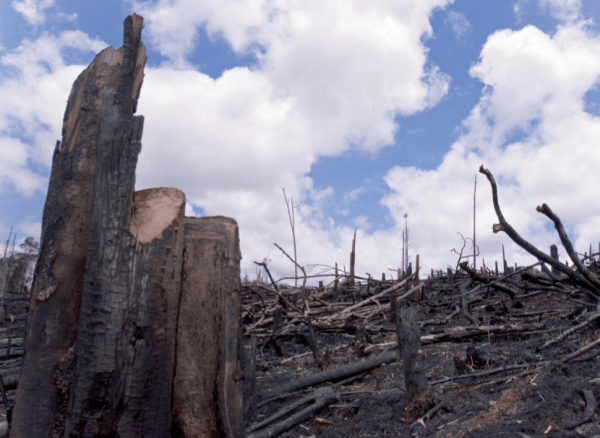
A field visit to Merauke by the environmental NGO WALHI in June 2011 discovered that during the course of the past year, at least one hundred thousand hectares of natural forest in Merauke have been cleared, including sago hamlets which protected food security  at all times, regardless of the season, and are very adaptable to changes in the climate. The marshlands are threatened  by drought, as a result of which  fish, birds  and deer  that have provided the local people with their source of protein will find it increasingly difficult to enjoy the necessary living space. Eventually, the Economic, Social and Cultural (ECOSOC)  rights will become ever more inaccessible to protection and provision by the state. Berry N. Forqan, the national executive director of WALHI, has stated that it is reasonable to say that the Indonesian government should be regarded as having caused the violation of basic human rights with the MIFEE Project.

Sinal Blegur, a member of the Working Group of NGOs in Papua, said that the violation of these ECOSOC rights will ultimately lead to the violation of  civil and political rights because MIFEE could potentially pave the way for the security forces  to enter the region on a massive scale to protect the operations of the companies.

In view of the above, dozens of local, national and international NGOs  have in the past month jointly produced a report to be submitted  to the Special Rapporteur of the UN on the Right to Food, drawing attention to threats to the right to food  of the traditional communities in Merauke. According to Abet Nego Tarigan, executive director of Sawit Watch, 22 NGOs  have so far signed  this document, representing the traditional communities in Merauke who are the victims or potential victims of the MIFEE Project The report has also been sent to the Committee on the Elimination of Racial Discrimination at the Office of the UN High Commissioner for Human Rights, and the Committee on Economic, Social and Cultural Rights  of the Human Rights Treaties Division.

This means that all civil society organisations which are concerned with the rights and living space for indigenous Papuan people should call on the government to immediately halt all MIFEE activities and Food Estates in general  in Indonesia that are  damaging the environment and forcing the  removal of traditional communities from their traditional land  and areas which they manage. The national, provincial and district governments must stop granting location licences  to companies and hold an inclusive dialogue, in which the Malind people are central, to discuss the allocation of land, the provision of space and development capital for agriculture, in conformity with social transformation that can bring the Malind people self-reliance and dignity.

All this is intended to ensure that similar operations that have resulted in the massive destruction of the environment which have occurred in Sumatra, Java, Kalimantan and Sulawesi  should not be repeated in Papua.

Contacts:

Islah, Manager   of the Water and Food Campaign, WALHI;

Frangky Samperante, Director of Psaka;

A Karlo Nainggolan, staff member of Advocacy, Policy and Legal Defence, Sawit Watch;

Laksmi Savitri, Sajogyo Institute;

Sinal Blegur, member of the Working Group of NGOs in Papua.
KomnasHAM-Papua condemns recent violence and makes recommendations

Bintang Papua. 15 August 2011

Jayapura: Komnas HAM, the National Human Rights Commission has condemned the brutal actions by unidentified people against innocent civilians as well as members of the security forces.that have occurred since June in
the province of Papua.

The chairman of Komnas HAM’s office in Papua, Julles R.A Onggen SH, together with other members of the commission called a press conference to discuss the security situation in Papua. They said that the significant increase in acts of violence was very worrying indeed, particular because of its impact on the need to safeguard peace in Papua.

They made the following points and recommendations:

First, they strongly condemned the many acts of violence perpetrated by unidentified persons towards the civilian population and members of the
armed forces acting in the course of their duties.

Second, they called on the police to take action speedily and objectively in accordance with the laws in force regarding acts of violence, while at the same time not forgetting to use the cultural approach in accordance with the terms of special autonomy to minimise these acts of violence.

Third, the Commission has set up a joint team consisting of the Komnas HAM, the DPRP, the provincial government of Papua, local governments, the churches and NGOs to investigate these acts of violence, each making their own specific contribution.

Fourth, it called upon all sections of the community to remain calm, not to be provoked, to live peacefully together, respecting each other in order to safeguard security.

Fifth, to request the military commander of Kodam XVII to clarify the issue of the KINGMI Church and it will set up a team to investigate the matter.

Sixth, in accordance with the provisions of article 34 of the Constitution, the Commission will seek the commitment of the national government as well as local governments to provide social security for the dispossessed, the poor, the street children and the unemployed people.

Seventh: in connection with the sixth point, to call upon the provincial government to put this into practice in accordance with the special autonomy law.

Other points dealt with the recognition of collective rights, including the need for peace, for development and for a healthy and clean environment. The provincial government should also ensure that civil and political rights are safeguarded, such as the right to compensation for those whose rights have been violated, freedom of thought and freedom of religion.

It also called on the provincial government to safeguard people’s economic, political and social rights, freedom from fear and impoverishment and from racial discrimination, the right to get a job with a decent wage.

AlertNet: Indonesia re-thinks Papua food project – report

http://www.trust.org/alertnet/blogs/alertnet-news-blog/indonesia-re-thinks-papua-food-project-report

By Thin Lei Win

A member of the Koroway tribe walks up a ladder to his house at a forest near Merauke city in Indonesia's Papua province in this May 18, 2010 handout photo.A member of the Koroway tribe walks up a ladder to his house at a forest near Merauke city in Indonesia’s Papua province in this May 18, 2010 handout photo.

BANGKOK (AlertNet) –Indonesia’s government is considering moving its controversial food security project from Merauke, on the island of Papua, to East Kalimantan province, on Borneo island, due to lack of progress in the past two years, the Jakarta Globe reported.

Under MIFEE (Merauke Integrated Food and Energy Estate) plans, 1.63 million hectares of forest which form the basis of life for some 200,000 indigenous people in the Merauke area would be used to grow rice, palm oil, soya bean and corn among other crops.

Earlier this month, AlertNet reported criticism from rights activists that MIFEE threatens indigenous people and the forests and ecosystems in the area.

They also said the government has failed to sufficiently consult the native residents over the impact, which will include losing their customary lands, an influx of migrants from the rest of Indonesia and decreased quality of the ecosystems which people rely on for food and for their livelihood.

The minister of agriculture, Suswono, said on Monday that 200,000 hectares of land available in East Kalimantan could be used for agriculture, according to the Globe.

“The principle of the food estate is finding enough land for an agricultural zone. It doesn’t have to be in Papua,” the Globe quoted the minister as saying.

“[The East Kalimantan site] may not as big as Merauke, but it is more feasible. It has been two years since we floated the plan, but there has been no progress at all.”

Indonesia annually imports 2 million tonnes each of rice and soybean, and the nation needs to be able to feed its people without importing food, he added

Acts of violence are damaging the Papuan people, says DPD member

Bintang Papua, 8 August. 2011

Sofia Popy Maipauw, a member of the DPD, the Council of Regional
Representatives, said that the recent upsurge in acts of violence that
have been occurring in the Land of Papua can be very damaging for the
Papuan people and called on those who are responsible for all this
violence to stop.

She said she doesn’t want to mention any names but insists that all
those involved in violence should stop. The incident in Ilaga, district
of Puncak Jaya and the Nafri incident in Jayapura have been very
harmful for indigenous Papuan people. These incidents have had damaging
consequences for the economy. People living in the kampungs are afraid
to come to the markets to sell their products, which can result in an
increase in the price of these products, she told journalists in Jayapura.

She went on to say that the indigenous Papuan people are much weaker
economically than other people in the province which means that these
acts of violence can be very burdensome for them.

‘I would like to know what the state intelligence agency, BIN, has been
doing all this time. The recent shootings in Papua are not the first
time such things have happened. They keep on happening but no action has
been taken against those responsible,’ she said.

She said that in November last year, a similar incident occurred in
Nafri but no one has been arrested and held to account for this
incident. Incidents like this, she said, give the Papuan people a very
bad reputation. Such stigmas must end so that Papuans can feel
comfortable as part of Indonesia.

She went on to say that SBY, the president, should not keep silent about
problems in Papua but should take action to prevent these incidents from
occurring and ensure that these incidents are dealt with seriously. She
said that this was a huge challenge for the new chief of police who
should take action regardless of who is involved. ‘The acting governor
of Papua should take responsibility for safeguarding the forthcoming
local elections. He should cooperate with the Elections Commission (KPU)
of the province of Papua to deal with any violations that occur during
the elections,’ she said.

Create a website or blog at WordPress.com

Up ↑
