KNPB: ‘When one is shot dead, a thousand will rise up!’

December 18, 2012
Bintang Papua
(see important editorial note below)

Jayapura: The fatal shooting of an activist of the KNPB, Hubertus Mabel, has been condemned by his family and by the KNPB – National Committee of West Papua – as unlawful. According to the law, if a person is deemed to be engaged in unlawful acts, he should be arrested and charged before a court of law but this did not happen in the case of Mabel and his colleague.

A spokesman for the KNPB, Wim Medlama, said that Hubertus had been immobilised by being shot in the legs. The security forces then pushed him into a police van where he was tortured and stabbed.

When he was arrested along with Natalis Alua, the two of them did nothing to resist arrest yet nevertheless they were shot.

‘We understand,’ said Medlama, ‘that Hubertus was severely beaten and stabbed in the chest. Natalis was also badly injured and is now being treated in hospital,’ said Medlama. He accused the security forces of acting without having any thought for the lives of their victims. ‘The security forces behaved like sadists and won’t even allow members of his family or his KNPB colleagues to see his body or demand an autopsy.’

Hubertus and his colleagues were not involved in the attack on Pirime Lanny Jaya. His activist colleagues believe that the police were feeling very frustrated and had opened fire on Hubertus and his colleague out of a sense of revenge for the deaths of three members of the police force who died during an attack on the Pirime police station.

‘The scenario was to convict Hubertus for showing resistance but this is simply not true.’ According to the law, a person should be taken into custody and brought before the court, not shot dead.’

‘When taking someone’s life, the police should be able produce powerful evidence before taking the law into their own hands like this,’ said Medlama.

If Hubertus did violate the law, he should be tried, not shot dead as happened to Mako Tabuni.

‘What the security forces are trying to do is to stamp out the issue of Papua Merdeka but the way they behave is having precisely the opposite effect, making Papuans more determined than ever to achieve an independent Papua.’

‘For every single Papuan who is murdered, a thousand Papuans will rise up and struggle for their freedom,’ said Medlama

‘They have accused us of being terrorists but we don’t have any bombs yet the allegations still persist. We have no idea what other tricks the security forces have up their sleeves in order to discredit us and the people of Papua, he said.

[Translated by TAPOL]

(West Papua Media Note: despite WPMs article yesterday on the fake journalism (allegedly done by a staff member with connections to Indonesian intelligence agencies) that made it through Bintang Papua’s editorial process, WPM can verify each and every statement made in this report is accurately reported, as we have received independent statements from the KNPB that verify this, and of course WPM broke the original story.  All our syndicated articles from Papuan media outlets must go through the same verification standards as our other sources, and we must take the time to point out that the majority of reporters at Bintang Papua are professional journalists and are not Indonesian intelligence agents.  We do believe there needs to be a tightening of their editorial process however to eliminate fake journalism – same as any media outlet.)


AMNESTY STATEMENT: Security forces block peaceful demonstration in Papua

AMNESTY INTERNATIONAL
PUBLIC STATEMENTIndex: ASA 21/031/2012
10 August 2012

Indonesia: Security forces block peaceful demonstration in Papua

Amnesty International calls for an independent and impartial investigation into reports that police used unnecessary and excessive force to disperse a peaceful demonstration in Papua province commemorating International Day of the World’s Indigenous People on 9 August 2012.

If the investigation finds that the security forces committed human rights violations, then those responsible, including persons with command responsibility, should be prosecuted in proceedings which meet international standards of fairness, and victims provided with reparations.

At least seven people were arbitrarily arrested during and after the demonstration and are being held at the Yapen District police station. They should be released immediately and unconditionally if they have been arrested solely for the peaceful exercise of their right to freedom of expression.

Police Mobile Brigade (Brimob) and military from the 1709 District Military Command (Kodim) led by the Yapen District Police Chief blocked hundreds of peaceful protesters as they marched on the morning of 9 August 2012 in Serui, Yapen Island.

According to local sources, the Indonesian security forces then fired their guns into the air to disperse the protesters, causing many to flee in fear. At least six protesters were arbitrarily arrested during the demonstration and some were reportedly beaten by security forces during their arrest. The police then travelled to Mantembu village to arrest one of the demonstration organizers, a local political activist. When they could not find him they arrested his wife, who is reportedly eight months pregnant.

The actions of the security forces fly in the face of statements made by President Susilo Bambang Yudhoyono in February 2012 that he wanted an end to repressive actions by the military and police in Papua.

The rights to freedom of expression and peaceful assembly are guaranteed in Articles 19 and 21 of the International Covenant on Civil and Political Rights (ICCPR), to which Indonesia is a state party. Moreover, these rights are protected under Indonesia’s Constitution. However, Amnesty International has documented dozens of other cases of arbitrary arrest and detention in past years of peaceful political activists in Papua.

Amnesty International continues to receive credible reports of human rights violations committed by the security forces in the provinces of Papua and West Papua, including torture and other ill-treatment, unnecessary and excessive use of force and firearms by the security forces and possible unlawful killings. Investigations into reports of human rights violations by the security forces are rare and only a few perpetrators have been brought to justice.

During a 2008 gathering to commemorate International Day of the World’s Indigenous People in Papua, peaceful demonstrator Opinus Tabuni was discovered dead with a bullet wound clearly visible in his chest, after police opened fire at the crowd. Despite a police investigation, to date no one has been held to account for his death.

Security measures escalate in Papua

Bintang Papua, 20 August 2011

KNPB, the National Committee for West Papua, is scheduled to announce
the results of the meeting organised by ILWP, International Lawyers for
West Papua in Oxford, at 9am this morning , at the tomb of Theys Hiyo
Eluay.

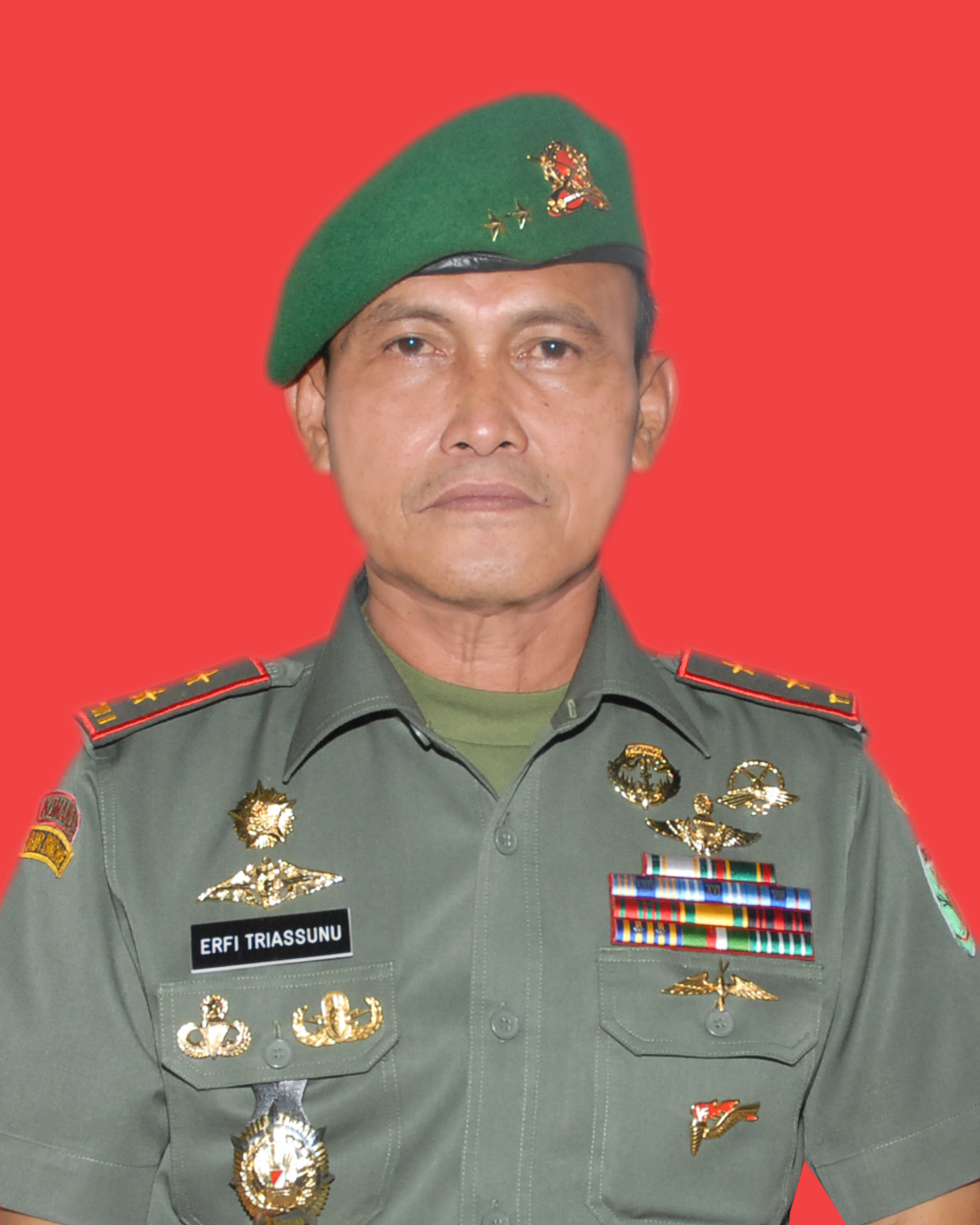
Bintang Papua also reported that Major-General Erfi Triassumu, commander
of the XXVII/Cendrawasih Military Command, said he has not yet had any
reports about the results of the ILWP meeting in Oxford, but said that
the ILWP event has triggered events affecting the security situation,
especially in Papua.

In a meeting with the press, he said that promises made by various
groups were causing confusion among the population. It was not only
because of the armed activities of civilian groups that had occurred
before and after the ILWP meeting. The security situation had indeed
intensified throughout Papua recently, which had happened both before
and after the ILWP meeting.

Other factors were the election of the governor of Papua as well as the
special autonomy law – OTSUS. People were hoping that OTSUS funds would
be evenly distributed among the communities, although some of the funds
could not yet be released.

He said that he along with the police chief in Papua had together
committed to doing what they could to restore a conducive situation in
Papua.

Meanwhile, the district chief of Puncak Jaya, Lukas Emenbe. called on
everyone whatever their differing opinions to hold a dialogue in order
to agree on peaceful solutions. ‘ All these problems can be resolved,’
he said, ‘as long as we publicly express our opinions.’

The military commander, asked whether there would be an increase in the
number of troops in preparation for the forthcoming Idul Fitri [the last
two days of Ramadan] said that organic troops may carry out routine
movements because the Korem under Battalion 751 in Sentani does not
have special units available for security purposes.

Asked about the manoeuvres by armed groups which had been involved in
fighting in urban areas such as in Nafri, he said because of the current
civil emergency status, the police would be in the front line together
with the local government, because the govrnor, the district chief and
the city mayor are the ones who are responsible for security.’

‘I will assist if there is a request from the police for additional
personnel to help the police,’ he said.

Indon military open fire on vehicles carrying KNPB activists, arrests ahead of Aug 20 gathering

from Westpapuamedia.info and Local Sources

Indonesian Police and Army from a joint taskforce opened fire on a car of West Papua independence activists in Abepura, West Papua, on August 18, after arresting three other activists from the West Papua National Committee (KNPB) for distributing pamphlet in support of demonstrations planned for August 20.

The shooting occurred when KNPB (Komite Nasional Papua Barat) members attended the Jayapura police headquarters to check on the welfare of detainee Octovianus Mayor.   Mayor was arrested by members of the joint TNI/POLRI taskforce at 1000am local time at Expo Waena, for distributing pamphlets for a planned announcement on August 20 of resolutions from the Oxford ILWP “Road to Freedom” conference, at the grave of the late Theys Hiyo Eluay in Sentani.  Mayor is the Secretary General of the Timika Region KNPB.

Colleagues of Mayor went by car to Abepura police station upon hearing of his arrest to ensure his safety.  Demi Asso, Soni Kosa and several friends asked police guarding a post at Abepura of the whereabouts of their friend, whose location was given by police at District Police Jayapura.   After they left the  police station and drove towards PolRes Jayapura.   According to witnesses, police followed the activists from the police station, and began to shoot at their car, a black Avansa.

Police quickly pursued the KNPB activists vehicle, which was fired on by police officer Bripka Numberi at 12.000 midday, at Abepura circle, Jayapura, Papua.

Bripka Numberi allegedly fired indiscriminately in pursuit of the vehicle,shooting 10 rounds into the rear of the car, 4 rounds through the windscreen, 6 rounds into the rear bumper and 1 round in the wheel, causing the Avansa to stop.  The vehicles occupants panicked and ran, according to a a KNPB witness report and chronology obtained by West Papua Media.  The police continued to open fire on the unarmed group, shooting Demi Asso, Soni Kosay in the feet.  The three other unidentified activists did not sustain bullet wounds, and police arrested all immediately.  At around 13:00 the two shot KNPB activists and three others were taken to the Jayapura Police for further processing.

KNPB have appealed for support from international human rights observers, lawyers and NGOs to press for a credible investigation into the circumstances of this arrest and the excessive force used by Police to capture unarmed activists.

Nick Chesterfield, local sources

Leaked Letter Reveals Indon Army Scare Tactics

Exclusive Copies of the Scanned Letter are available for download at the end of this article. (Please note, any attempts to block access will result in significant multiplication across the internet)

at NewMatilda.Com

By Alex Rayfield

EXCLUSIVE: A leaked letter from an Army General reveals Indonesia’s attempts to disband a West Papuan church with threats of “assertive action”

From the outside looking in, the latest church conflict in West Papua might look like just another example of factional Protestant politics. A little sordid perhaps, but irrelevant to all but the parties involved.

Dig a little deeper, however, and one finds something far more disturbing.

A leaked letter from the head of the Indonesian Army in Papua obtained by New Matilda reveals that far from being an internal church matter, the conflict between Kingmi Indonesia, a Protestant church that has parishes across Indonesia, and the breakaway Kingmi Papua Church, goes to the heart of the Indonesian government’s attempt to repress movements for cultural pride and autonomy in the country’s restive Pacific periphery.

In a nutshell, the conflict turns on whether Kingmi Papua has the right to separate from Kingmi Indonesia and set up an autonomous synod, reverting to an arrangement that existed prior to 1982.

Major General Erfi Triassunu, TNI Chief, Kodam 17 (Papua) (photo discourtesy of TNI)

The question is this: why has the Indonesian Army become involved? Major-General Erfi Triassunu has waded into a conflict that he himself acknowledges is an internal church matter. In the letter (File Number: R/773/IV/2011) addressed to the Governor of Papua, Barnebus Suebu, dated 30 April 2011 and marked “secret”, Triassunu “respectfully requests” the Governor to arrange a meeting between Kingmi Indonesia and Kingmi Papua. The General also offers himself as a mediator.

The letter continues: “if the conflict cannot be resolved through discussion then assertive action must be taken”.

Let me translate “assertive action”. In East Timor when the Indonesian Army took “assertive action” against the Church, they murdered church workers, massacred parishioners, raped women and burnt churches to the ground. In West Papua too the Indonesian Army has a history of killing pastors from the Kingmi Papua Church, as well as other churches. This dates back to 1 May 1963 when the Indonesian government took administrative control of the territory and has continued up to the present.

Last October a video filmed on soldiers’ mobiles phones and circulated widely on the internet, showed several soldiers from Kostrad, the Indonesian Army’s Strategic Command — Triassunu’s own division — torturing a Papuan church worker by burning his genitals with a stick.

In the letter, Triassunu, who previously served in Aceh, makes a number of accusations. He accuses Kingmi Papua of trying to access as much money as they can from the government’s Special Autonomy programme in order to create new churches. However, the real purpose of building a network of churches, Triassunu insists, is “to strengthen Papuan civil society aspirations for freedom”. He then argues that the Kingmi Papua Church’s desire to be independent of the Indonesian Church is “just an excuse” for “the church to become a political vehicle” that supports Papuan independence.

Triassunu then goes on to make a number of recommendations. He specifically says that Kingmi Papua pastors should stick to Biblical “dogma” and not stray into politics. The General is on solid ground here, following in the footsteps of numerous dictators from Marcos to Pinochet, all notorious for their attempts to stifle meddlesome priests. Triassunu specifically names Reverends Benny Giay (the current moderator of the Kingmi Papua Church), Seblum Karubaba (the former moderator) and Noakh Nawipa (the Rector of the Pos 7 Theological College) as malcontents, mentioning several seminars organised by the trio where “Papua Merdeka” (freedom) was discussed.

All this has echoes of Suharto who systematically depoliticised (read: violently repressed and disbanded) all independent organisations, including religious ones, for fear they could become bases for organised opposition against the regime. Indonesian democrats may have overthrown Suharto but West Papua is not part of a new democratic Indonesia. What is deeply concerning is that in the Papuan context the label “separatist” is regularly applied to Papuan leaders as a pretext for justifying extra-judicial action by security forces.

This is where the plot thickens.

According to the letter, the General decided to become involved in the Kingmi conflict after a Kingmi Indonesia pastor, Reverend Karel Maniani, personally asked the Army to protect his parishioners. But Reverend Maniani himself was previously a member of “Group Nine” of the Papuan Freedom Movement (or OPM). In the 1980s Maniani was jailed for four years in the notorious Kalisosok Prison. What happened to Maniani on the journey from freedom fighter to Army petitioner?

To make things stranger, the conservative US-based evangelical Christian Missionary Association backs Maniani and Kingmi Indonesia against Kingmi Papua. At stake is not only valuable church property and access to Special Autonomy funds, it is also over influence of a broad Papua base. Kingmi Papua has half a million members. Virtually all of them are indigenous Papuans from the fractious Highlands, around a third of the entire Papuan population.

When I asked Benny Giay about all this his reply was revealing. For years he said he was part of a church that was more concerned with “saving souls” than the day-to-day oppression of the Papuans. “The Kingmi church has been complicit with the suffering of the Papuans. We need to confess our sins and follow the narrow path of Jesus. This Gospel is very clear; we must stand with the oppressed and work to alleviate their suffering. I hope we can cast off our fear and stay firm to this path.”

Giay has a vision for an independent Papuan church; a uniquely Papuan church that makes space for Papuans to begin to articulate their own theology, one that sees God present in Papuan history and culture. Giay and his colleagues are slowly building up a church that commits itself to solidarity with the poor and oppressed; one that is led by the Papuans themselves. That may not sound much to a reader unfamiliar with Papuan politics, but in West Papua it is a big deal.

Just ask the General.

SCAN OF ORIGINAL LETTER SIGNED BY MAJ-GEN ERFI TRIASSUNU


Create a website or blog at WordPress.com

Up ↑