Tragic Bloodshed in Waghete, Papua – Suspected Serious Human Rights Violations

Analysis/ Opinion

by Selpius Bobii

Abepura Prison,  27 September 2013

Ever since West Papua was annexed into the Republic of Indonesia on 1 May 1963, it has been nothing other than a land smeared with blood, and at every moment the blood of Papuans has been shed by continuous killings.   On 23 September 2013 there was yet again bloodshed with a tragic incident in Waghete, Tigi district, in Deiyai Regency of the Central Highlands.  The incident started from ‘sweeping’ (house to house searches) carried out by joint armed forces of BRIMOB (an Indonesian National Police special operations unit), and a special unit of the Indonesian Military (TNI) unit 753, the Paniai District Police and local police from the Sub-District Units of Tigi and the Paniai Koramil.  The following article looks in detail at the background to why this incident occurred and at the impact of the incident on the local community.

When asked why the joint armed forces were carrying out sweepings in the area in the first instance, the High Commissioner for Police in the District of Paniai responded that they were making the area safe for civilians from the practices of gambling, drunkenness and the carrying of sharp objects (www.tempo.co/read/news/2013/09/23/058515978). However the facts clearly indicate that the sweepings were being carried out not to make the area safe for civilians against the said vices of drunkenness and gambling, but rather to:

  1. Confiscate any sharp instruments including all types of smaller knives, large machete like knives, axes and bows and arrows
  2. Confiscate shovels
  3. Confiscate mobile phone memory cards with photos of those active in the Papuan Freedom Movement
  4. Confiscate traditional woven dillybags (nukens) with patterns of the Morning Star flag, and to
  5. Target community members with dreadlocks and long beards.

Of course the very items that the armed forces confiscated during the sweeping – small knives, larger machete type knives, axes and shovels – are those used by the community for maintaining their gardens which is their source of food.  As in the Deiyai regency most civilians are farmers who farm the mountain slopes. The forces even confiscated any traditional darts, which are something which by customary beliefs cannot be separated from the life of the Mee Tribe as they are symbolic and special to that tribe. That they would even consider confiscating the peoples carrying bags and mobile phone memory cards with Papuan photos is a shameful reflection of the police and military, as those are symbols of Papua that are widely available and have been published in many books, media and other publicly available forms.
The TNI and police are well aware the people need those tools in particular to survive and they well know those items are widely accessible, so the question begs why did they really intentionally undertake operations to confiscate these items?

The targeting of civilians with dreadlocks and long beards –  based on the false perception of the police and military that anyone of that appearance is a member of the TPN /OPM – is also a shameful reflection of the thinking of the armed forces, as long beards and dreadlocks are an age-old tradition of Papuans.  The Indonesian police and military should understand and respect something of the cultural and social ways of the people of Papua such that they don’t recklessly carry out arbitrary actions which can lead to the sacrifice of innocent civilians’ lives. Reckless and improper actions which  also destroy the image of the police and Indonesian army in the public eye. Throughout the many years of Indonesia’s presence in Papua police, TNI and National Intelligence (BIN) have always assumed that Papuans with dreadlocks and long beards are all TPN OPM members. Whenever met with people with those physical characteristics the armed forces always act with improper and cruel actions intended to make life hard for those individuals. This is absolutely unreasonable! We could just as much say that every Papuan who longs for liberation from the cruel oppression of Indonesia could be called OPM!  When is Indonesia going to wake up to the reality that that no action whatsoever of the Indonesian military and police against the people of Papua will ever be able to destroy the Mambruk (Papuan) ideology in their hearts; that their cruel actions will never be able to stifle the political aspirations embodied by the Papuan movement for freedom.  Reckless,  cruel and improper actions by the armed forces such as occurred at Waghete must stop!  The forces instead need to adopt persuasive approaches (with dialogue and non-violent means)  in facing up to civilians in all circumstances and not use repressive measures such as has been evidenced at Waghete.

The events that led to the killing and wounding of civilians that day in Waghete started with the above stated sweepings which were being conducted in a manner that was far too excessive and abusive.  A particular activist present at the time (who cannot be named for safety reasons ) told the armed forces at the time that the community didn’t accept their excessive sweeping actions, but to no effect. They testified that before the shootings on 21 September 2013 the joint armed forces had carried out sweepings and detained 15 Papuans who had dreadlocks and long beards. Then on 23 September 2013 the forces returned to the same location where those persons had been arrested and carried out sweepings yet again with excessive abusive behaviour.

It was the second aggressive sweeping according to the witness that was just too much, and some in the community couldn’t keep silent.  He testified that it was not the adults who voiced the community’s protest but rather high-school and upper secondary school students together with a number of other youth. The armed forces had also confiscated some of the young peoples’ phone memory cards then according to the witness the young people protested in particular after seeing two Papuan mothers on their way to  their gardens having their gardening shovels confiscated then an adult male’s koteka (penis sheath) being checked by forces.  The witness stated: “The protest came from the school children and no adults were involved.  Then the police responded to their protest with excessive violence. The Head of the Paniai District Police a number of times shouted out a command to those under his command to shoot the children.  I was there at the time and saw myself the Head of the District Police together with police officers under his command, chasing and shooting at the school children with their weapons. That day I also heard there were 4 civilians detained.”

The Police spokesperson claimed that the disturbance occurred due to provocation by a group of supporters of a particular failed candidate in the local government elections. However another activist at Waghete (who also cannot be named for security reasons) testified that “the tragedy at Waghete was entirely due to the actions of the joint Indonesian police and military forces and cannot be said to be connected in any way to a problem of the local elections.”

This accusation by the police was just a strategy to try and  turn criticism back towards the local civilian population.

The facts are clear that it was the military and police that provoked the civilians into carrying out some type of protest in response to their excessively abusive treatment of the people  during the sweeping and their arbitrary arrest and detention of a number of community members. The forces then met the young people’s opposition with extremely excessive violence including shooting, killing, arbitrary arrest, and torture of civilians. If there had not been excessively abusive sweeping by the joint armed forces in the first instance then of course there would never have been opposition from the young people. Secondly if the response from the civilians had not been dealt with so repressively by the police and military then of course there would also not have been victims of  shooting, torture, intimidation and arbitrary arrest. In summary it was precisely the excessively abusive sweepings by the military and police that triggered the reaction from the civilians; It was precisely the repressive reaction from the armed forces to the civilians’ opposition which caused the tragic killing and serious shooting injuries of civilians in Waghete.

In considering whether there is any element of truth in the police’s accusation that civilians attacked them with rocks, or pieces of timber or arrows, a human rights activist Yohanes Mote who was present at the time of the shooting stated to the magazine Selangkah, “At the moment the incident occurred I was there. The community didn’t take up arrows. We were really disappointed that they were checking the penis sheaths of the men (traditional clothing of males). As there’s nothing inside penis sheaths but male genitals is there. We asked them why if they wanted to carry out sweeping because of gambling and drinking (alcohol), had they not stopped the drinking and gambling.  The gambling and drinking had been allowed to continue by the police so that through that we Papuans could be killed and shot like this.”, (www.majalahselangkah.com/content/penembakan-pelajar-di-deiyai-aktivis-ham-minta-kapolri-copot-pelaku-dan-evaluasi-polisi-di-papua).

Another activist who also can’t be named for security reasons testified “The students didn’t attack the armed forces with arrows. I only saw two or three students throw rocks in the direction of the armed forces but the rocks didn’t even hit them. Rather the police and military brutally shot those children. The one that shot Alpius Mote was an aide of the Paniai Head of Police. Alpius died on the spot as the bullet went right through his right side and came out his back. He didn’t die whilst being taken to the Paniai hospital (as the police claimed). Whilst regarding Alex Mote (another victim), the bullet entered the right side of his chest. After Alpius was shot dead the police gathered up all the bullet cartridges. I couldn’t take a photo at that moment as it would have been impossible.”

From the explanations of these two activists who were present at the time of the sweepings and shooting, it is clearly evident that the accusation of the police that the community attacked them was merely words to try and justify their own repressive actions of wounding and killing unarmed civilians. It is most ironic that the Papuan Provincial Police spokesperson also tried to legally justify the police and TNI’s actions, stated that the shooting by their forces was in line with their procedures since the citizens were becoming increasingly anarchist. He tried to justify the shootings on the basis that if the forces hadn’t fired then the situation would have escalated (www.news.viva.co.id/news/read/446352-bentrok-aparat-dan-warga-di-papua–1-tewas).

Returning to the initial action of the forces – being the sweeping – one must ask the question why were the police and TNI carrying sweepings out in such an excessively abusive manner in the first place. From the facts provided by witnesses as stated above, it would seem that the sweeping was intentionally carried out in such a way so as to give rise to some type of conflict in Waghete. The sweeping was not intended to make the community safe from vices of drinking and gambling as the police claimed, but rather to give rise to a conflict that would enable the armed forces to do away with those in the community with long dreadlocks and beards who were considered by the forces to be OPM/TPN members. The sweepings also provided an opportunity for them to confiscate any items that were symbolic of the freedom struggle. It was an intentional act carried out to make people terrified and to torture, kill and injure innocent civilians at that location.

Witnesses testified that on 21 September around 15 people with dreg locks and long beards were violently arrested and detained at the Paniai District Police Command headquarters. Then on 23 September one student was shot dead and another shot in the chest. An English teacher from the local Deiyai upper secondary school Yance Pekey who voiced opposition to the treatment by the armed forces, was also inhumanely ‘dealt with’ at his office. It is understood he was also detained together with the other 3 civilians at the Paniai District Police Station. From data available to date it is understood that the total of civilians detained over these few days was 19. To the date of writing their names have not been made available by the police and neither has access been allowed  to visit any of them. (For the preliminary report to this incident  see: www.westpapuamedia.info/2013/09/27/preliminary-report-into-waghete-deaths-and-sweepings/).

From the above stated detail the Writer concludes that the tragic events from 21 – 23 September 2013 in Waghete involved a number of serious human rights violations. Violations which commenced with the excessively abusive sweeping and harassment by the military and police; followed by the arbitrary arrests, torture,, shooting dead and wounding of citizens and the general terrorising of the local community in Waghete. The actions of the police and military cannot be justified with any reason whatsoever! The tragic killing and wounding of unarmed civilians that occurred fall within the category of serious human rights violations and the culprits must face legal processes and be held responsible (1).

Footnotes

 1)To that end the Writer puts forward the following recommendations to those parties involved:

i) That the TNI and Police in the land of Papua must cease carrying out excessive sweepings and terrorising/ intimidating the people, must cease all torture and other brutal treatment of civilians, all shootings, killings and arbitrary arrests.

ii) That the culprits of the acts at Waghete must be brought to justice in the human rights court or general court to hold them responsible for their actions.

iii) That the Head of the Indonesian Police is strongly urged to immediately remove from office the Head of Police in the Sub-District of Tigi, The Head of the District Police in Paniai and Head of the Papuan Provincial Police. As all three persons have acted irresponsibly and are not capable of ensuring the safety of citizens.

iv) That the Head of the Paniai District Police immediately and unconditionally release all citizens (believed to be 19 in number) who are being arbitrarily detained at the Paniai District Police Station.

v) That the Investigation Team appointed by the Papuan Legislative Council (DPRP) on 25 September 2013 to look into the tragedy in Waghete,  immediately be sent to the location of the events  to commence investigations.

vi) That the Indonesian Republic National Human Rights Commission (Komnas HAM RI) immediately form an adhoc team to follow up the early findings that will be reported by the independent DPRP Investigation Team.

vii) That all parties and in particular the local government, leaders of the church and  traditional customary leaders in that region, act immediately to restore security and order in Deiyai.

viii) To all those who are concerned and who work in the field of humanitarianism, your help is requested at this immediate time in advocacy, monitoring and publishing of information regarding this case and in organising assistance for those civilians who have been detained at the cells of the Paniai District Police Station.

ix) The excessively abusive sweepings, the terrorising and intimidation, the torture, shootings, killings and arbitrary arrests of indigenous Papuans by both the Indonesian military and police in the land of Papua will never bring an end to the problems in Papua. The Indonesian Government needs to instead enter into dialogue / unconditional negotiations with the nation of Papua facilitated by a neutral third party and held in a neutral location in order to find a dignified solution to the problems in Papua.

Selpius Bobii is the General Chairperson of Front PEPERA & a Papuan Freedom Political Detainee in  Abepura Prison, Jayapura


Preliminary report into Waghete deaths and sweepings

Report compiled by Selpius Bobii in Abepura

September 26, 2013

On Monday 23 September 2013 in the town of Waghete which is the main town of the region (kabupaten) Deiyai (district Tigi) at 11.30 am local time, an action of violence by the Indonesian armed forces causing death and bloodshed of unarmed civilians occurred. The incident arose as a result of arbitrary sweeping carried out by joint forces of Paniai based BRIMOB (‘Mobile Brigade’ being an Indonesian National Police special operations force unit), Paniai regional Police together with Indonesian military Unit Timsus 753 (TNI) based at the Paniai Koramil (Regional military headquarters). The sweeping was carried out under the command of the Head of the Paniai Regional Police High Police Commissioner Sammy Rony.

The target of the sweeping which included confiscation of items was as follows:

  1. Sharp weapons including smaller knives, larger (machete type) knives, axes and bows and arrows;
  2. Hand shovels;
  3. Mobile phone cards for checking of any activist photos or other photos related to the Papuan Freedom movement such as the Morning Star Flag;
  4. Civilians with long dreadlocks or long beards, who are all suspected by the Indonesian armed forces of being members of the TPN/OPM (these persons were to be detained).
Waghete villagers mourning the police murder of priest’s son Alpius Mote

During the sweeping the Police detained 15 people based on nonsensical reasons, and at this time they are all incarcerated in the jail cells at the Paniai District Police Command headquarters. These include a female by the name of Alfrida Dogopia. They were detained under conditions of torture, intimidation and insult carried out by the TNI Timsus (Tim Khusus or Special Team unit from Kopassus special forces)unit, BRIMOB and Paniai regional police.

The local community responded to the above by protesting to the local police. The Head of the District Police commanded those under him to shoot any civilians that protested to the operation. Accordingly BRIMOB, ordinary police and the TNI joint forces responded to any behaviour of protest by civilians with extremely excessive violence by shooting civilians. The consequence was 3 civilians were shot by members of BRIMOB in the Waghete field (open grassed area in the town) at approximately 11.30 am local time.

The shooting victims were as follows:

  1. Alpius Mote, a student at the Deiyai Upper Secondary State School in Waghete, child of the local Church Minister Daud Mote. He was shot dead. The bullet entered on the right side of his chest and went through exiting his back.
  2. Alex Mote, a youth from Deiyai was shot. He is presently being treated at the Paniai Hospital.
  3. Yance Pekey, an English Teacher from the Deiyai State Upper Secondary School. News is that he was shot and beaten at the school offices and at this time is being detained at the Paniai Police District Headquarters.

The local community didn’t accept the actions of the joint armed forces and considered them to be extremely excessive. The body of the shooting victim was taken to the police offices by community members  at 19.00 hours and the police were asked to take responsibility for the death.  Until this moment the Waghete community is still struck by fear by the events that occurred.

According to the Head of the Paniai District Police High Police Commissioner Sammy Rony, the sweeping was carried out to make the area safe for civilians and intended against those who were in the practice of gambling, getting drunk and carrying sharp instruments. According to Rony property of local government was damaged as a result of the drunkenness. He said the disturbance had started five days before the shooting incident. “Since last Wednesday a group of people  have done damage to a number of houses of government officials in the town of Waghete, including that of the Deiyai Region Bupati (i.e. Head of the local regional (kabupaten) government) Dance Takimai and of the Kabupaten Secretary Basilius Badii” stated Rony.  He claimed that the damage to the officials’ houses was suspected to have been carried out by a group of supporters of a certain candidate for the bupati position that failed to be elected in the recent elections for the head of the Deiyai Kabupaten. “So in this there is an influence from alcohol and also problems regarding local elections” Rony stated to a journalist from Tempo, Jerry Amona.

According to the Head of the District Police Command the alleged culprits of the damage to the officials’ houses who were also suspected of intentionally starting the commotion at the time of the mobilisation of the joint police and Indonesian military armed forces to carry out the sweepings through the town of Waghete. “ Suddenly a group of people arrived and attacked our forces, hitting them with pieces of wood. I immediately gave the order to shoot” he stated (source: m.tempo.co/read/news/2013/09/23/058515978).

According to the spokesperson for the Papuan Provincial Police AKBP Sulityo Pudjo Hartono, the conflict between the civilians and the joint armed forces occurred at the moment the sweeping was being carried out to “make the area safe from a number of social sicknesses including gambling, drunkenness and carrying of sharp implements”. According to Hartono, the civilians didn’t accept the raids and there was even provocation with civilians throwing rocks at the armed forces, who responded by shooting into the air.  However according to Hartono, the civilians were becoming increasingly anarchist even to the point that one of the military was hit, so the joint forces fired in the direction of the civilians shooting one civilian. Hartono stated that the citizen shot critically aged 25 years was evacuated to the Paniai hospital, however he died before arriving at the hospital.

The spokesperson for the Papuan Provincial Police tried to justify the act of the police from a legal perspective, stating that the shooting of the forces was in accordance with procedure as the civilians were increasingly anarchist. He said if they hadn’t fired the actions of the civilians would have developed into something bigger (source: www.news.viva.co.id/news/read/446352-bentrok-aparat-dan-warga-di-papua–1-tewas).

However the a local activist at Waghete, Yohanes Mote, contradicted the statement of the Police that the community attacked the joint armed forces.  According to Mote, the community did not attack the police (BRIMOB and ordinary regional police) and TNI with arrows, wood or otherwise, but rather it was the police and TNI carrying out the sweeping with excessive use of agression that caused the disturbance amongst the community.

“I was there at the location at the time it happened. The community was not using arrows and did not attack in any way.  We were disappointed about the way the police were carrying out the checking operation to the point that they were even checking inside the koteka (i.e. traditional penis sheath worn by males) of men.   As there can be nothing possibly inside a koteka other than the male genitals. So why did they have to check inside the koteka? We want to ask why did the police not confiscate and ban the drinking of alcohol and gambling! It’s the alcohol and gambling that kills Papuans but they (armed forces) didn’t ban those, but rather acted to annihilate our people”  Yohanes Mote, human rights activist in Waghete.

To respond to this bloody tragedy, youth and students of Papua in Jayapura have united to form ‘In Solidarity and Concern for the Shooting of the State Upper Secondary School’ and carried out a demonstration on the office of the Papuan Parliament (DPRP) on 25 September 2013.  The student demonstration was received by the Chairperson of Parliamentary Commission (A) Ruben Magai together with a member of Parliamentary Commission (D) Nason Utty, where the students demanded the Head of the Indonesian National Police to remove from office the Head of the Papuan Provincial Police, the Head of the District Police in Paniai and the Head of the Sub-District Police Command, being those 3 persons being responsible for the Waghete incident. The students also demanded that those responsible for the shooting be forced to face transparent legal process and strongly urged the Papuan Parliament to immediately form an Investigative Team to look into the case at hand.  Together with a number of representatives from the student demonstration the DPRP this date formed an Investigative Team for the Bloody Tragedy at the Kabupaten of Deiyai.  It is planned that in the immediate future that this team will travel to Deiyai to gather accurate data from all parties involved at Deiyai (source; www.sindonews.com/read/2013/09/25/26/787221/gedung-dprd-papua-diduduki-mahasiswa).

In regard to this same incident, the community demanded that the Head of the Paniai Kabupaten Police who gave the instruction to shoot at the civilians and the member of BRIMOB who carried out the fatal shooting be required to face legal process as they have both committed serious human rights violations. It was requested that the Head of the Indonesian National Police that the Head of the Tigi Kecematan (i.e. Sub-District) Police, the Head of Paniai Kabupaten Police and the Head of Papuan Provincial Police all be stood-down from their positions as they were all assessed as not acting responsibly.

It is also hoped by the community together with the youth and students that the Deiyai Case Investigative Team that has been formed by DPRP in Jayapura would go immediately to the District of Tigi in Waghete to gather accurate data that can be trusted in relation to this incident.

Reported by: Selpius Bobii, General Chairperson – Front PEPERA –

(NOTE: WPM HAS CONFIRMED ALL FACTS IN THIS REPORT)


West Papua Report September 2013

from West Papua Advocacy Team

This is the 113th in a series of monthly reports that focus on developments affecting Papuans. This series is produced by the non-profit West Papua Advocacy Team (WPAT) drawing on media accounts, other NGO assessments, and analysis and reporting from sources within West Papua. This report is co-published by the East Timor and Indonesia Action Network (ETAN). Back issues are posted online at http://www.etan.org/issues/wpapua/default.htm. Questions regarding this report can be addressed to Edmund McWilliams at edmcw@msn.com. If you wish to receive the report directly via e-mail, send a note to etan@etan.org. Link to this issue: http://etan.org/issues/wpapua/2013/1309wpap.htm

The Report leads with “Perspective,” an opinion piece; followed by “Update,” a summary of some developments during the covered period; and then “Chronicle” which includes analyses, statements, new resources, appeals and action alerts related to West Papua. Anyone interested in contributing a “Perspective” or responding to one should write to edmcw@msn.com. The opinions expressed in Perspectives are the author’s and not necessarily those of WPAT or ETAN. For additional news on West Papua see the reg.westpapua listserv archive or on Twitter.

CONTENTS

This month’s PERSPECTIVE is by retired U.S. Foreign Service Officer (and West Papua Report editor) Edmund McWilliams. His analysis assesses the implications of the U.S. government “pivot” to Asia for U.S. policy regarding Indonesia and West Papua. The U.S. re-focus toward Asia and the Pacific involves closer U.S. political, security and economic ties to countries of the region. These enhanced security ties, in particular, will mean diminished U.S. government attention to human rights violations, corruption, and undemocratic behavior by regional militaries the U.S. seeks as “partners,” including Indonesia.

In “UPDATE,” we note the U.S. government’s decision to proceed with the sale of eight Apache helicopters to the Indonesian military. More than 90 NGO’s had urged the sale not go forward, due in part the likelihood that it will employed in West Papua. A “freedom flotilla” has left Australia for West Papua. Indonesian officials have threatened to arrest participants. Jakarta may renege on it pledge to invite Foreign Ministers of the Melanesian Spearhead Group nations to visit Jakarta and West Papua. Indonesian security forces have arrested scores of Papuans who sought peacefully to assert their cultural identity.

In this month’s “CHRONICLE,” we note an open letter by the Australia West Papua Association to the Pacific Islands Forum to take up the issue of West Papua and link to an interview with Benny Wenda carried by Democracy Now!

PERSPECTIVE

Implications of the “Asia Pivot” for U.S. Policy on Indonesia
by Ed McWilliams


The U.S.’s determination to “partner” with the TNI is reminiscent of previous administration’s partnering with corrupt and abusive militaries in the service of earlier geopolitical strategies, notably during the cold war. U.S. support for rightwing military dictatorships, delayed democratic evolution in many countries and perpetuated extraordinary suffering.


Senior U.S. administration officials continue to emphasize U.S. determination to pursue a greater focus on Asia and the Pacific. The “Asia Pivot,” according to senior Pentagon and State Department officials, reflects a growing realization in Washington of burgeoning trade opportunities presented by the economic dynamism of the region. At the same time, Washington is increasingly conscious of security challenges posed by the growing power of the Chinese military, as well as territorial disputes, notably in the South China Sea.

The Obama administration has sought to implement the pivot by strengthening existing security, political and economic ties with states in the region. In the security sector, the Obama administration has built upon relationships with regional forces established during the previous administration in the context of anti-terrorism.

The Obama administration’s expansion of ties to regional military forces, in Indonesia, but also in Vietnam, the Philippines, and Burma (Myanmar) have proceeded notwithstanding well-founded concerns that these security “partners” have well-documented histories of human rights violations, corruption, and undemocratic behavior. A number of these prospective security “partners” have records of repression of minorities. Vietnamese security forces played a key role in Hanoi’s policy of ethnic cleansing of the Montagnards, who have been forcibly displaced from much of their Central Highland homelands to make way for government-subsidized Vietnamese migrants. In Burma, despite significant democratic progress, Burmese security forces continue to carry out repressive measures against tribal groups.

U.S. Defense Secretary Chuck Hagel, second from left, meets with Indonesia President Susilo Bambang Yudhoyono, in Jakarta, Aug. 26, 2013. DOD photo by U.S. Marine Corps Sgt. Aaron Hostutler

The Indonesian military (TNI) is Southeast Asia’s largest military. Thanks to a sprawling commercial empire of both legal and illegal businesses and a long history of a lack of accountability before Indonesia’s civilian court system, it remains largely beyond the control of the civilian government. It also continues to violate human rights with near impunity, as documented by the UN Human Rights Commission, international NGO human rights monitors, and even the U.S. State Department’s own annual human rights reports.

The TNI’s human rights record is most egregious in West Papua, the troubled region forcibly annexed by Indonesia in the 1960’s. That annexation proceeded absent any opportunity for the Papuan people to exercise their right of self-determination. The TNI has been the principal agent through which the Indonesian government has sought to enforce its control of the resource-rich region. The brutality of the TNI-backed occupation of West Papua, the ethnic cleansing entailed by decades of “transmigration” — government subsidized migration from within Indonesia to West Papua which has displaced Papuan peoples from their homes — and policies of malign neglect in the areas of health, education and development have raised credible charges of genocide.

The U.S. administration’s determination to partner with the TNI is reminiscent of previous administration’s partnering with corrupt and abusive militaries in the service of earlier geopolitical strategies, notably in the context of the cold war. U.S. support for the anti-communist Suharto dictatorship and with rightwing military dictatorships in Central and South America, Iran, and elsewhere, delayed democratic evolution in many countries and perpetuated extraordinary suffering.

The Obama administration’s Asia Pivot inevitably must be seen in the context of these earlier strategies which sacrificed human rights concerns, democratization, and principles of civil control of the military on the altar of security objectives. As in the past, the U.S. administration contends that closer U.S. cooperation encourages reform among its security “partners.” The military-to-military relationship with the Indonesian military during the 30-year Suharto dictatorship remained extremely close despite egregious the TNI’s human rights crimes and corruption. Indonesia’s illegal invasion of East Timor in 1975 and the subsequent occupation of that small country remained largely irrelevant to Washington’s pro-Suharto and pro-Indonesian military stance.

The saga of East Timor (now Timor-Leste), in the context of U.S. policy toward Indonesia includes a particular irony. The United States, throughout the Indonesian occupation of East Timor, accepted the occupation, maintaining that East Timor was “an integral part of Indonesia” with the caveat that “no genuine act of self-determination had taken place.” The U.S. consistently ignored Indonesia’s crimes in the territory, except when it was compelled to address them as a consequence of international media attention, such as the in the case of the 1991 Santa Cruz massacre. U.S. Congressional outrage and public pressure over that crime forced restrictions on U.S. military cooperation with Indonesia.  

The sad saga of West Papua contains parallels with that of East Timor. West Papua was also invaded and occupied by the Indonesian military with the backing of the U.S. The West Papuan people, like the East Timorese, have suffered extraordinary repression under Jakarta’s rule. The United States, echoing its previous stance on East Timor, has consistently stated that it regards West Papua as an “integral part” of Indonesia. The U.S. public stance on West Papua, however, differs from its previous position regarding East Timor insofar as the U.S. refuses to acknowledge that Papuans have not been afforded their right to self-determination.

It appears that this long-denied right, along with the Papuan’s right to live free from Indonesian repression, can not be accommodated in the context of Washington’s Asia Pivot. The recent sale of attack helicopters to Indonesia (see below) is the latest example of human rights concerns and fundamental civil rights, including the right to self-determination, being sacrificed on the altar of geo-political expediency.

UPDATE

U.S. Approves Sale Of Apache Helicopters to the TNI

Secretary of Defense Chuck Hagel announced the sale of a squadron of eight Apache attack helicopters to the Indonesian military (TNI),  during a visit to Indonesia. The sale, which includes pilot training, associated radar, and maintenance support, is worth half a billion dollars over 10 years.


The new Apache attack helicopters will greatly augment the capacity of the TNI to pursue “sweeping” operations, extending TNI capacity to stage operations after dark and in ever more remote areas.


According to Indonesian officials, the sale includes no conditions governing how the aircraft are to be used. In the past, the U.S. government has imposed restrictions on the sale of weapons systems to the TNI as a means of reducing the possibility that those systems would be employed against civilians.

Last year, more than 90 international non-governmental organizations wrote to oppose the sale. Long standing U.S. congressional concern over the extremely poor human rights record amassed by the TNI appears not to have been taken into consideration by the U.S. administration. For over a decade, the U.S. sought to build a partnership with the Indonesian military notwithstanding that institution’s abysmal human rights record, corruption, and unwillingness to subordinate itself to civilian government control. An August 27 Jakarta Post report quotes Hagel as stating that he “welcomed the progress Indonesia has made in improving transparency and the protection of human rights.”

The East Timor and Indonesia Action Network (ETAN) and the West Papua Advocacy Team issued a joint statement condemning the sale. The groups said that “The new Apache attack helicopters will greatly augment the capacity of the TNI to pursue “sweeping” operations, extending TNI capacity to stage operations after dark and in ever more remote areas.” The sale of the helicopters “demonstrates that U.S. concern for greater respect for human rights and justice in Indonesia are nothing more than hollow rhetoric.”

Freedom Flotilla to Sail from Australia to West Papua

Police surrounding event in Sorong just prior to arrests of organizers (Photo: NFRPB/WPM sources)

Australian activists are sailing from Australia to Merauke in West Papua to demonstrate international concern over the denial of human and civil rights by Indonesia. The Freedom Flotilla is also as a cultural mission aimed at re-establishing millennia-old ties between the aborigine population of Australia and Papua.

Indonesia has threatened to block the flotilla by force. The flotilla, which has permission from local Papuans to land in their area, has been delayed by mechanical problems. Papuans in Merauke and elsewhere in West Papua have staged massive “welcome” demonstrations in support of the mission. In Sorong, police arrested four West Papuan leaders who organized a welcome ceremony for the flotilla.

Flotilla spokesperson Ruben Blake called Indonesian threats of arrest, force and naval interception “heavy-handed.” He noted that in the past the Indonesian government has gone to great lengths to prevent people from witnessing conditions in West Papua. He expressed concern for the safety of those participating in the peaceful mission:

“We believe that safety of a group of peaceful protesters who are going there on a cultural mission as well as a human rights mission should be respected. These threats that haven’t been ruling out the use of guns and force is a big concern. People around the world should be absolutely concerned about the safety of the people on board the boats.”

The Australian government has warned that it will not extend consular protection or assistance to flotilla participants.

Indonesia Accused of Reneging on Pledge to Invite MSG Delegation

Solomon Islands PM Lilo meets Indonesia President Susilo Bambang Yudhoyono. Photo: Prime Minister’s Office.

Rex Rumakiek, Secretary-General of the West Papua National Coalition for Liberation, accused the Indonesian government of reneging on its promise to invite a delegation of Foreign Ministers of the Melanesian Spearhead Group (MSG) to visit Jakarta and West Papua. Rumakiek, whose group petitioned the recent MSG summit for West Papuan membership, told Radio Australia that rather than inviting an MSG delegation, Jakarta has resorted to inviting the MSG nations to visit individually. Rumakiek noted that the Indonesian government is seeking to divide the group, which has been seeking to formulate a united MSG position on the question of West Papua’s status. Indonesia refunded the US$171,000 cost of a recent state visit by Solomon Islands prime minister to Indonesia.

Security Forces Stage Widespread Arrests as Papuans Assert Cultural Identity

West Papua Media has reported scores of arrests of Papuans who sought to organize peaceful demonstrations commemorating August 15, “a day intended to celebrate Papuan cultural identity and demand rights to free expression be respected.” The demonstrations were billed as “cultural parades,” assertions of Papuan cultural identity in the face of what West Papua Media sources described as a “deliberate campaign of cultural suppression by the Indonesian colonial security forces.”

The parades were held on the anniversary of the 1962 New York Agreement which began the process of Indonesia’s formal take over of West Papua. The parades were also to celebrate the opening of a new Free West Papua Campaign office in The Netherlands.

Despite widely-reported police statements that they would allow the parades to go forward, waves of arrests and other intimidation prevented several from taking place. Nevertheless, the events went ahead in Jayapura, Wamena and Biak.

Opposition to ConocoPhillips

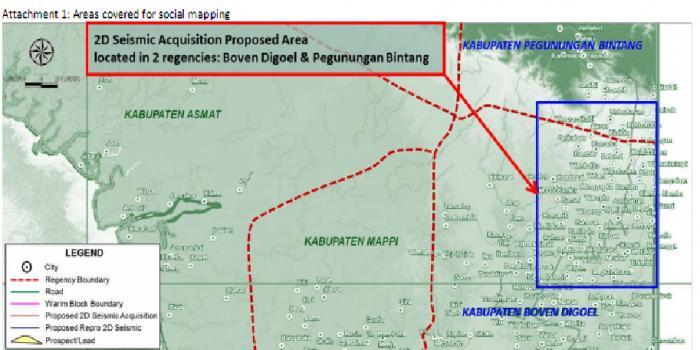
The Forum to Care for Papua’s Natural Resources is opposing plans by ConocoPhillips to explore for oil and gas in West Papua. In a press release issued in Yogyakarta, August 31, the group said that ConocoPhillips “will only aggravate symptoms of social breakdown and environmental damage, as such corporations are only interested in their own profits, and do not care about the environment and Papuan indigenous people.” According to media reports the company reiterated its plan to carry out seismic testing in Boven Digoel and Pegunungan Bintang in 2014.

CHRONICLE

Open letter to Pacific Islands Forum Leaders

The Australia West Papua Association (Sydney) (AWPA) has written an open letter to the Pacific Island Forum (PIF) leaders urged them to discuss the human rights situation in West Papua at the upcoming Pacific Islands Forum in Majuro. Joe Collins of AWPA said, “We would like the Forum Leaders to follow the example of the MSG leaders who at their summit in Noumea, raised concerns about the human rights abuses in West Papua in their official communiqué. They also recognized the right of the West Papuan people to self-determination.”

Guardian Reviews West Papua History

The Guardian, August 29, published an article by Marni Cordell which offered a candid review of West Papua’s history. The article, “The West Papuan independence movement – a history,” notes that the Papuan struggle for self-determination continues, 40 years after a “sham ballot” through which Indonesia annexed West Papua.
 
Benny Wenda Interview

Benny Wenda, human rights defender and advocate for Papuan self-determination now living in exile in the United Kingdom, was interviewed on Democracy Now! in February, 2013. The video and full transcript of the interview were recently made available.

Link to this issue: http://etan.org/issues/wpapua/2013/1308wpap.htm

Back issues of West Papua Report

Forum to Care for Papua’s Natural Resources Opposes ConocoPhillips Seismic Testing in Boven Digoel

AwasMifee

September 5, 2013

It is not just plantations – oil and gas companies are also threatening to turn Southern West Papua into an industrial landscape. ConocoPhillips is planning to restart exploration (seismic testing) in the Warim block in the near future, a remote forest area mostly located in Boven Digoel regency, several hundred kilometres inland from Merauke. The Forum to Care for Papua’s Natural Resources drew attention to this latest threat in a recent press release, summarised in this article from Majalah Selangkah:


Forum to Care for Papua’s Natural Resources Opposes ConocoPhillips’ Papuan Operations

https://awasmifee.potager.org/uploads/2013/09/20130903_075222_7180_l.png.jpeg

The Forum to Care for Papua’s Natural Resources has stated its clear opposition to ConocoPhillips commencing operations in West Papua.  In a press release issued in Yogyakarta, 31 August 2013 the forum explained various past, present and potential future impacts that arise when giant corporations move in and start operations anywhere in the land of Papua.

If ConocoPhillips moves in, they say, this will only aggravate symptoms of social breakdown and environmental damage, as such corporations are only interested in their own profits, and do not care about the environment and Papuan indigenous people.

As with other corporations in Papua, they claim that ConocoPhillips will only destroy the land which was used for extraction, destroy agricultural land, convert forest into an industrial area and reducing the land available for hunting and gathering peoples. In the long term, mining (including oil and gas exploitation) is a main contributor to turning land into wasteland, which is then almost impossible to restore.

According to the forum, mining in West Papua has caused land, water and air pollution such as dust, poisonous gases and noise. Coastal fish enclosures and coral reefs have been destroyed, floods and landslides have wiped out biodiversity. Acidic water flows into rivers and eventually to the sea, where it has destroyed coastal and marine ecosystems and resources. Mining causes various health problems, and local infrastructure such as roads are severely damaged. Mining also means new migrants move in to the area, either working for the company or starting their own business in the mining area.

They also say that mining creates symptoms of social distress such as prostitution, strong alcohol, gambling, and billiards. Land conflicts can occur, bringing with them a shift in socio-cultural values. Food sources such as forest gardens are polluted or damaged, meaning harvests fail. These are just some examples of the complex problems which the Papuan people in general suffer.
An Overview of ConocoPhillips

ConocoPhillips, according to data collected by the Forum to Care for Papua’s Natural Resources, is the third biggest US integrated energy company after Exxon and Shell based on market capitalisation and reserves. It operates in the oil and gas sector and is the USA’s second largest refiner, the fourth biggest globally.

ConocoPhillips has the fifth largest oil and gas reserves in the world. The company is known worldwide for its technological expertise in deep-sea exploration and production, reservoir management and exploitation, 3D seismic technology, high-grade petroleum coke upgrading and sulphur removal.

Operating in more than 40 countries, the company has around 38,300 employees worldwide and assets worth 164 billion US dollars. The company has four main activities around the world: Oil exploration and production; Refining, oil marketing, supply and transport; collecting processing and marketing natural gas; production and distribution of chemicals and plastics.

source: http://majalahselangkah.com/content/forum-peduli-sda-papua-tolak-conoco-philips-masuk-ke-papua

Since the report is somewhat short on details on ConocoPhillips’ actual plans in Papua, here’s a short article published by news website tempo.co in March with some more background information. In July the company reiterated its plans to carry out seismic testing in Boven Digoel and Pegunungan Bintang in 2014.
Govt Revises Conoco Phillips’ Contract in Papua

TEMPO.CO, Jakarta – The government will reimburse the standstill period of the exploration in Block Warim, Papua, to oil and gas company Conoco Phillips. The block, a sharing contract for which was signed in 1987, had not been worked on since 1997 because most of the area has been used as Lorentz National Park.

Head of public relations at the Upstream Oil and Gas Special Task Force (SKK Migas) Elan Biantoro said the Warim block has about 14,000 square kilometers left, some 30 percent of the block’s original size. Other than being used as a national park, some areas in the block were returned to the state because no reserves were found there.

“This block has actually been explored; the initial commitment has been fulfilled and wells have been drilled. After the contract revision is signed, seismic studies may be done this year or next year,” Elan said.

He added that the Warim Block is believed to have considerable amount of hydrocarbon potential. Other oil and gas contractors, he said, are developing areas near the block.

“Around (Block Warim) there are plenty of oil and gas blocks owned by Exxon Mobil,” he said.

BERNADETTE CHRISTINA

Source: http://en.tempo.co/read/news/2013/03/25/056469265/Govt-Revises-Conoco-Phillips-Contract-in-Papua

Sorong Police arrest Papuan customary leaders at Freedom Flotilla ceremony

West Papua Media

August 29, 2013

Indonesian police in Sorong, West Papua, yesterday arrested four leading Papuan customary leaders for organising a welcome celebration and prayer for the safe arrival of the Aboriginal-led Freedom Flotilla, currently sailing from Australia.

2000 people gathered in Sorong for prayers for the West Papua Freedom Flotilla (Photo: NFRPB/WPM sources)
2000 people gathered in Sorong for prayers for the West Papua Freedom Flotilla. *note – men in blue berets are from Petapa, West Papua’s community security / police force guarding West Papuan civilians against Indonesian police violence. (Photo: NFRPB/WPM sources)

The four were arrested after over 200 armed police surrounded a peaceful prayer gathering at Marantha Church in central Sorong yesterday afternoon, after thousands of local people joined with religious and adat (customary) leaders, and leaders of the self-declared National Federated Republic of West Papua (NFRPB) alternative government, to  express their solidarity with the aims of the Freedom Flotilla.  The Freedom Flotilla is  a journey being conducted with Aboriginal and West Papuan elders and Australian activists to highlight internationally the human rights situation in West Papua and is currently enroute sailing from Australia to West Papua.

Internationally renowned environmental defender, researcher and customary leader, NFRPB Sorong secretary Yohanis Goram,  was arrested together with  Apolos Sewa (Vice chair of Dewan Adat Papua, Greater Sorong),  Amandus Mirino (NFRPB State Secretariat senior worker), and  Samuel Klasjok (NFRPB’s alternative Chief of Police (Security) for  region 3, Doberay).  Sorong Police Chief Harry Goldenhad met with the organisers of the gathering, and initially “approved the activities with the proviso that they did not disturb the peace, and maintained security,” according to witnesses statements provided by established credible sources to West Papua Media.

sorong freedom flotilla congregation police
Police surrounding event just prior to arrests of organisers (Photo: NFRPB/WPM sources)

Over 2000 people had gathered for the solidarity event that spilled outside the large church compound.

About 45 minutes after the prayer meeting had finished, as participants were preparing for a press conference with local media including such as Radar Sorong, West Papua Post, and Fajar Papua, Police Chief Goldenhad took ten heavily armed officers into the church and arrested the four activists.

According to local sources who spoke with police and activists, Based on information collected on site, the arrests were made in connection with the unfurling of the Morning Star, Aboriginal, and Torres Straits flags inside the church.

Apolos Sewa in the Police interrogation room (Photo: West Papua Media)
Apolos Sewa in Police interrogation room (Photo: West Papua Media)

The four activists are still being held at Sorong Police headquarters according to local sources, and their condition is unknown.  However grave fears are held for their safety, as these are the first West Papuans to be arrested over a connection to the Freedom Flotilla, which has attracted significant international media interest, and ignited major controversy and comment from Indonesian and Australian government ministers.

International human rights organisations have reacted quickly to the arrests, with Amnesty International (AI) in London expressing concern about the arrests of the four Papuan political activists.  AI’s Indonesia and Timor-Leste Campaigner, Josef Benedict said that AI “believes they have been arrested and detained solely for their peaceful political activism and call for their immediate and unconditional release.”

Activists raise the banned West Papuan Morning Star flag during the ceremony, prompting the arrests of the organisers under makar (treason) provisions Photo: West Papua Media sources)
Activists raise the banned West Papuan Morning Star flag together with the Aboriginal and Torres Strait Islands flags, during the Flotilla ceremony, prompting the arrests of the organisers under makar (treason) provisions Photo: West Papua Media sources)

textsecure-1571866598-1 “Amnesty International calls on the Indonesian authorities to respect the rights of Papuans to freedom of expression and peaceful assembly which are guaranteed in Article 19 and Article 21 of the International Covenant on Civil and Political Rights (ICCPR), to which Indonesia is a state party. Our organisation is concerned that the Indonesian government has consistently failed to make a distinction between violent armed groups and peaceful activists, and between peaceful expression of opinion and acts of physical violence, ” Benedict told West Papua Media by email.

textsecure-1857961604-1Activists on board the  Freedom Flotilla have reacted with dismay at the news of their supporters being targeted inside West Papua, but say this highlights the daily denial of Freedom of Expression for Papuan people, that originally motivated their plans for direct action.

sorong freedom flotilla congregation  2
The Maranatha Church in Sorong during the prayer service (Photo: NFRPB/WPM sources)

Ronny Kareni, the spokesperson for the Freedom Flotilla said “It is shocking and yet not surprising, but completely unacceptable in this day and age that peaceful demonstrations of basic freedom of expression is censored in such an extreme way. We demand the immediate release of the 4 prisoners in Sorong.”

Kareni explained, “The asorong freedom flotilla congregation  1rrests yesterday of the four Papuan leaders are a reflection of the reality that there is no space for democracy in Papua and West Papua Province under the Indonesian occupation, and yet foreign governments are complicit to these ongoing abuses. The Freedom Flotilla to West Papua is aiming to highlight this entrenched long-term brutality that is demonstrated by these arrests.

Arabunna elder, Uncle Kevin Buzzacott, the elder who inspired the journey, said in a statement to West Papua Media, “Indonesian government – you must immediately release those 4 prisoners and not to harm them in any way. They need to be released and not to be harmed because they have not committed a crime. We felt very sad when we seen it in the news today. We are waiting for the other mob to turn up here on Horne Island so we can work out how to respond a bit more but for now we need to ask all Australians to take a firm position on this issue, to be strong for Human Rights in West Papua. They are hurting them everyday, for years and regardless of the Freedom Flotilla this is happening, but we having a go, tryin’ to get the World to see, to look and listen and take a stand for these people. The Papuans have had it rough for too long with Indonesia there and this can’t keep going on. The prisoners must be released immediately”.

Izzy Brown, one of the organisers of the Freedom Flotilla said: “We are dismayed to hear that the peaceful act of prayer has resulted in such extreme actions by the police and military in West Papua, highlighting once more the lack of basic human rights and freedoms that we in Australia take for granted every day. We need immediate international pressure to be placed on the Indonesian government to ensure that no harm comes to these good people who have simply undertaken to express themselves in a democratic way.:

Kareni sums up the feeling of Flotilla members: “This is the time Australia, to stand up for people who are being militarily controlled and attacked for simply trying to have a voice.”

West Papua Media, with local sources

Create a website or blog at WordPress.com

Up ↑