Papua, a Thorn in the Side of Indonesia

Opinion / Analysis

by Selpius Bobii in Abepura Prison

written 25 September 2013

“The Republic of Indonesia is quite capable of removing a thorn in the side of another nation but is not capable of removing the thorn in its own side” were the words of a certain Indonesian commenting on the State of Indonesia at this time.

For some time now Indonesia has been busily involving itself in finding solutions for problems of other nations, as if it had no domestic problems of its own.  Yet there are still many extremely serious problems within Indonesia that need the Indonesian Government’s urgent attention and Papua is one that’s most obvious.  For the last 50 years Papua has been a ‘thorn in the side’ of Indonesia . Indeed the Indonesian Government has tried to ‘fix’ the problem by applying a range of strategies and approaches, however all have been according to Indonesia’s agenda and so each has failed to remove the thorn. The reality is that as long as the thorn remains buried deep in Indonesia’s flesh that there will continue to be problems.

Indonesia has been using its charm in a number of both official and non-official forums held around the world, talking of its commitment to being involved in handling various issues of conflict currently being faced around the world. Problems such as that in Palestine, Egypt and the Moro Islamic tribal issue in the Philippines to name but a few. However the Indonesian Government is not ready to face up to addressing the situation in its own backyard when it is Indonesia that is under the spotlight by the international community.

Indonesia has continued until this time to accuse foreigners of meddling in the internal affairs of Indonesia, however Indonesia for some reason doesn’t seem to recognise that Indonesia itself has meanwhile continued to interfere in the affairs of another nations. The Indonesian Government has for instance had a hand in the affairs of Israel and Palestine with Indonesian having stepped forward to the front line to defend the acknowledgement of the world community regarding the independence of the Palestinians. Yet despite Indonesia giving attention to these various problems overseas it has not addressed the matter of that thorn in the side back home in Indonesia. Not only have the problems in Papua remain unaddressed, but in fact there has never even been any efforts made to find a solution to bring an end to the problems in Papua, such as through dignified unconditional dialogue between the nations of Indonesia and Papua.

Following the launch of the branch of the Free West Papun Campaign in Oxford in the United Kingdom (UK) for example, the Indonesian Government at both the legislative and executive level were infuriated. Even Indonesian civilians became involved with the upset and it was talked about at every level of society. The UK Government was criticised and even accused of meddling in the affairs of another nation. The Deputy Chairperson of the Indonesian Legislative Assembly (DPR) Priyo Budi Santoso  stated “ The Indonesian Government must officially convey its protest to the UK Foreign Affairs Minister with a copy to the Queen of England. There should be mutual respect.”(www.merdeka.com/peristiwa/dpr-inggris-terlalu-mencampuri-urusan-indonesia.html).

Then there was the most recent issue with the Freedom Flotilla from Australia entering Indonesia waters. An incident that attracted harsh and high level criticism from a number of parties within Indonesia. The Coordinating Minister for Politics, Law and Security was most concerned at the time of the Flotilla’s expected arrival and stated that the Indonesian Navy and Airforce were both on alert in anticipation of its arrival. Even the Indonesian President made a severe warning to other nations  at the time stating that other nations must not violate the sovereignty of Indonesia and in so doing create international friction (www.majalahselangkah.com). Through its Foreign Affairs Minister Marty Natalegawa, Indonesia diplomatically sought the Australian Government’s assistance to interrupt the Flotilla’s journey. However as a democratic nation Australia could not interfere as no law had been broken and they were obliged to allow the allow freedom of expression and opinion and accordingly the convoy to continue. The Australian Government however through its Foreign Minister Bob Carr made quite clear that they would give no assistance to, and were in no way responsible for the Australian citizens on the Flotilla, if they entered Indonesian or PNG rterritory and were arrested by Indonesian or PNG armed forces and legally charged (www.republika.co.id/berita/internasional/). Tony Ervianto even made accusations that there was some foreign interests behind the Freedom Flotilla. (www.news.detik.com).

Internationally, Indonesia has always stressed that the problems in Papua are domestic business and not the business of foreign nations, however the circumstances are clearly proof that the Indonesian Government is not in fact capable of handling and bringing an end to that so called ‘domestic business’. In the Indonesian President’s state speech on 16 August 2011, he promised that the problems in Papua would be finalised through an approach of dignified dialogue. However until this time SBY’s promises have yet to be realised. Indeed fine words but words with no actions.

If Indonesia could bring a dignified end to the problems in Papua, then of course those in the international community who are concerned about Papua would not feel a need to interfere in the internal affairs of Indonesia. However as Indonesia is only capable of the talk and there is no realisation, whilst meanwhile human rights violations continue unceasingly, so that ‘thorn in the side’ of Indonesia will continue to  attract the international spotlight.

Until this time Indonesia has undertaken a range of strategies and means to stem the spread of support for Papuan independence aspirations, yet all their efforts have failed totally. One of those strategies was the implementation of Special Autonomy in Papua but that also failed to achieve Indonesia’s objective of repressing Papuans independence aspirations. Special Autonomy was not something born out of the desires of the Papuan community but rather something was based on Jakarta’s agenda with the hidden goal of repressing Papuan’s desire for independence.

Following the failure of Special Autonomy in Papua, Indonesia is now in the process of planning to pass certain Papuan Governance legislation. The fact that the draft of that legislation is but a copy of the Aceh Governance legislation has attracted concern from a number of circles. The Executive Director of the Organisation for Research, Investigation and the Development of Legal Assistance (LP3BH), Yan Christian Warinussy, commented that the draft was the work of a few people around President SBY acting recklessly and unconstitutionally in allowing the draft Papuan Governance legislation to slip through. That this draft legislation is but a copy and paste of Aceh’s legislation is indeed an embarrassment and poor reflection of the Presidency(www.majalahselangkah.com).

Indonesia has also tried the welfare (illusion) approach in its efforts to face up the movement of the Struggle of the Papuan nation. Then there has been the security approach, the legal and then the social-cultural approaches.  Not one of these approaches however will ever be successful in removing that ‘Papuan thorn’ in Indonesia’s flesh.  Indonesia must change its paradigm and undertake an approach based on wisdom to handle and bring an end to the Papuan problem.  As long as Indonesia has an attitude that the issue of Papua was finalised back in 1969 with the ‘Act of Free Choice’ and continues to defend its hold on Papua through a number of approaches that are but one of the same, so the problems of Papua will continue without cease, like a thorn that irritates Indonesia.

To avoid the Papuan issue attracting the constant spotlight of the international community, Indonesia should have taken real steps before now to deal with the problems in Papua, one of which should have been the mechanism of dignified dialogue between the nations of Indonesia and Papua.  As long as Indonesia continues NOT to take real steps to bring an end to the problems in Papua, the international community in turn will continue to keep the spotlight on Papua.

Or is Indonesia is actually waiting for the international community to intervene to sort out the Papuan problem? If Indonesia is not capable of sorting out the Papuan problem, then Indonesia should be honest about that before the international community including the UN. So that others can handle and bring an end to the problems. Indonesia has not only allowed the problems in Papua to continue too long already without any real steps or solutions to make’ Papua a land of peace’ but in fact  Indonesia has continuously taken actions intended to delay the time when the problems in Papua will be brought to an end.  Allowing the problems in Papua to continue will only lengthen the list of victims; And not only loss of human lives but also the loss of earthly things, time, and endless thoughts and feelings as a consequence of the oppression.

The international community including the USA, have again and again requested Indonesia to bring an end to the problems in Papua through means of dialogue between Jakarta and Papua. However until this time Indonesia has constantly  ignored pressure from the international community. Perhaps because Indonesia considers the matter of Papua was already finalised back in 1969. However this perception is so very wrong! If the problem of Papua had already been finalised why are there still constantly people in Papua losing their lives? Why is there relentless marginalisation and discrimination? And why are Papuans intentionally being increasingly made a minority on their ancestor’s land? All of which are amounting to an annihilation of the ethnic Papuan race.

These things have continued without ceasing from the origin of this political conflict commencing with the annexation of the nation of Papua into the Republic of Indonesia through a military and political invasion by Indonesia. It’s time that Indonesia left its longtime paradigm that closes the door on finding a solution and rather undertakes a democratic and dignified approach through dialogue and negotiations, to give rise to a dignified solution – as the first step towards bringing peace and prosperity to the land of Papua and its people.

 ‘Humans which value basic human rights are those who will protect and respect the rights of their fellow beings.’

Selpius Bobii is the General Chairperson of Front PEPERA West Papua & is a Papuan Freedom Political Detainee held in Abepura State Prison


PMW: Activists ‘forced’ to leave consulate, call for greater press freedom

by Daniel Drageset, Pacific Media Watch

October 7, 2013

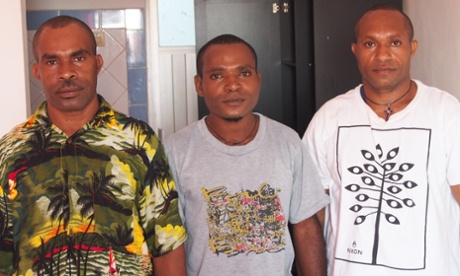
West Papuan student activists Rofinus Yanggam (left), Yuvensius Goo and Markus Jerewon (right) left the Australian consulate in Bali Sunday. Image: Marni Cordell

AUCKLAND (Pacific Media Watch): Three West Papuan student activists entered the Australian consulate in Bali this weekend with calls on Australian Prime Minister Tony Abbott to open up for greater press freedom and push Indonesia to release at least 55 political prisoners jailed in the Indonesian-ruled region.

“We want the Indonesian government to lift the 50 year restriction it has imposed on West Papua.

“We want foreigners, including journalists, diplomats, observers and tourists to be able to visit West Papua freely without asking for special permits,” the West Papuans wrote in an open letter addressed to the Australian people.

The student activists said in the letter they wanted to deliver a message to the leaders attending the 25th Asia-Pacific Economic Cooperation (APEC) summit in Bali this weekend.

Several organisations have asked Australia to give sanctuary to the three West Papuans, but according to Australian Trade Minister Andrew Robb the West Papuans did not seek asylum.

“They left [the consulate] voluntarily so the matter’s been resolved,” Robb said, according to Radio Australia.

The Guardian, however, reported that the consul-general had warned the three West Papuans that the Indonesian army would be called if they did not leave the consulate.

One of the students, Rofinus Yanggam, told the newspaper the group left in fear of their lives.

Calls for sanctuary
Australian independent senator Nick Xenophon called on Foreign Minister Julie Bishop to give sanctuary to the three West Papuans.

“These three young men were not asking for West Papuan independence from Indonesia. All they were asking for is entirely consistent with the Lombok Treaty of 2006, signed by both Australia and Indonesia,” he said, according to AAP.

“Instead of getting sanctuary and help, the Australian government effectively threatened them and now there is serious concern over the activists’ safety,” Xenophon said.

Professor Clinton Fernandes at the University of New South Wales backed Xenophon’s call.

He said when the media circus had moved on after APEC, the trio “may be tried, most certainly they will be beaten, and at some point might be disappeared”.

Rinto Kogoya, co-ordinator of the Alliance of Papuan Students, said it was time the world understood what was happening inside the province, which was officially acquired by Indonesia in 1969.

“The international community doesn’t know the reality in Papua. The military oppresses the civil society – we’re not free to do anything – and I think this is the moment to open democracy to Papua,” he said in The Guardian.

‘Great concern’
Joe Collins, of the Australia West Papua Association (AWPA), was alarmed by the events at the Australian consulate in Bali.

“It’s of great concern that they [the West Papuan students] may have been coerced to leave as the students would have great reason to fear the Indonesian security forces.

“There are ongoing human rights abuses in West Papua and the security forces have been banning and cracking down on recent rallies to try and stop international attention being focused on the territory,” he said in a statement.

AWPA wrote a letter to the consul-general Brett Farmer in Bali yesterday asking for “clarification” regarding the students.

“We understand that they have now left the consulate and we would like clarification from you if they left voluntarily or as some media reports have indicated that they were told that they would be handed over to the Indonesian military if they did not leave,” AWPA wrote in the letter.

Australian Green senator Dr Richard Di Natale has also joined those who have called for Australia to give sanctuary to the three West Papuans.

“By speaking out in this way, these brave West Papuans have put their lives in serious danger.

“If Australia fails to offer them protection, I have grave fears for their safety,” he said in a statement.

‘Stand up to Indonesia’
Yet another senator to voice his support for West Papua this weekend was John Madigan.

“It is about time our government had the courage to stand up to Indonesia, instead of ignoring the issue of West Papuan oppression and the human rights abuses that occur there on a daily basis,” he said in a statement.

He also said he demanded that the Australian government provided sanctuary for the three West Papuans.

The issue of the West Papuan students came just days after pleas from several organisations that Australia should not deport seven West Papuans who arrived in the Torres Strait Islands in northern Queensland recently.

The group of seven, who took part in the recent West Papua Freedom Flotilla sought asylum in Australia, but were deported to Papua New Guinea under a memorandum of understanding between Australia and Papua New Guinea, Radio New Zealand International reported.

Refugee advocates in Australia said the deportation failed to abide by the Refugee Convention that Australia was a party to.

Spokesperson for the West Papua Freedom Flotilla Izzy Brown said she wanted to draw the United Nations’ attention to Australia’s commitment to the Refugee Convention.

“It’s really unfortunate that Australia thinks it can send asylum seekers offshore without due process or just blatantly illegally deported like in this case here, and we really want to try and draw the world’s attention and especially the UN’s attention to Australia’s behaviour in this matter,” she said.

Read the West Papuan students letter to “the people of Australia”

Creative Commons Licence

About the author

PMW contributing editor

Daniel Drageset is a Norwegian radio journalist enrolled in the Master in Communication Studies degree at AUT University.

Tragic Bloodshed in Waghete, Papua – Suspected Serious Human Rights Violations

Analysis/ Opinion

by Selpius Bobii

Abepura Prison,  27 September 2013

Ever since West Papua was annexed into the Republic of Indonesia on 1 May 1963, it has been nothing other than a land smeared with blood, and at every moment the blood of Papuans has been shed by continuous killings.   On 23 September 2013 there was yet again bloodshed with a tragic incident in Waghete, Tigi district, in Deiyai Regency of the Central Highlands.  The incident started from ‘sweeping’ (house to house searches) carried out by joint armed forces of BRIMOB (an Indonesian National Police special operations unit), and a special unit of the Indonesian Military (TNI) unit 753, the Paniai District Police and local police from the Sub-District Units of Tigi and the Paniai Koramil.  The following article looks in detail at the background to why this incident occurred and at the impact of the incident on the local community.

When asked why the joint armed forces were carrying out sweepings in the area in the first instance, the High Commissioner for Police in the District of Paniai responded that they were making the area safe for civilians from the practices of gambling, drunkenness and the carrying of sharp objects (www.tempo.co/read/news/2013/09/23/058515978). However the facts clearly indicate that the sweepings were being carried out not to make the area safe for civilians against the said vices of drunkenness and gambling, but rather to:

  1. Confiscate any sharp instruments including all types of smaller knives, large machete like knives, axes and bows and arrows
  2. Confiscate shovels
  3. Confiscate mobile phone memory cards with photos of those active in the Papuan Freedom Movement
  4. Confiscate traditional woven dillybags (nukens) with patterns of the Morning Star flag, and to
  5. Target community members with dreadlocks and long beards.

Of course the very items that the armed forces confiscated during the sweeping – small knives, larger machete type knives, axes and shovels – are those used by the community for maintaining their gardens which is their source of food.  As in the Deiyai regency most civilians are farmers who farm the mountain slopes. The forces even confiscated any traditional darts, which are something which by customary beliefs cannot be separated from the life of the Mee Tribe as they are symbolic and special to that tribe. That they would even consider confiscating the peoples carrying bags and mobile phone memory cards with Papuan photos is a shameful reflection of the police and military, as those are symbols of Papua that are widely available and have been published in many books, media and other publicly available forms.
The TNI and police are well aware the people need those tools in particular to survive and they well know those items are widely accessible, so the question begs why did they really intentionally undertake operations to confiscate these items?

The targeting of civilians with dreadlocks and long beards –  based on the false perception of the police and military that anyone of that appearance is a member of the TPN /OPM – is also a shameful reflection of the thinking of the armed forces, as long beards and dreadlocks are an age-old tradition of Papuans.  The Indonesian police and military should understand and respect something of the cultural and social ways of the people of Papua such that they don’t recklessly carry out arbitrary actions which can lead to the sacrifice of innocent civilians’ lives. Reckless and improper actions which  also destroy the image of the police and Indonesian army in the public eye. Throughout the many years of Indonesia’s presence in Papua police, TNI and National Intelligence (BIN) have always assumed that Papuans with dreadlocks and long beards are all TPN OPM members. Whenever met with people with those physical characteristics the armed forces always act with improper and cruel actions intended to make life hard for those individuals. This is absolutely unreasonable! We could just as much say that every Papuan who longs for liberation from the cruel oppression of Indonesia could be called OPM!  When is Indonesia going to wake up to the reality that that no action whatsoever of the Indonesian military and police against the people of Papua will ever be able to destroy the Mambruk (Papuan) ideology in their hearts; that their cruel actions will never be able to stifle the political aspirations embodied by the Papuan movement for freedom.  Reckless,  cruel and improper actions by the armed forces such as occurred at Waghete must stop!  The forces instead need to adopt persuasive approaches (with dialogue and non-violent means)  in facing up to civilians in all circumstances and not use repressive measures such as has been evidenced at Waghete.

The events that led to the killing and wounding of civilians that day in Waghete started with the above stated sweepings which were being conducted in a manner that was far too excessive and abusive.  A particular activist present at the time (who cannot be named for safety reasons ) told the armed forces at the time that the community didn’t accept their excessive sweeping actions, but to no effect. They testified that before the shootings on 21 September 2013 the joint armed forces had carried out sweepings and detained 15 Papuans who had dreadlocks and long beards. Then on 23 September 2013 the forces returned to the same location where those persons had been arrested and carried out sweepings yet again with excessive abusive behaviour.

It was the second aggressive sweeping according to the witness that was just too much, and some in the community couldn’t keep silent.  He testified that it was not the adults who voiced the community’s protest but rather high-school and upper secondary school students together with a number of other youth. The armed forces had also confiscated some of the young peoples’ phone memory cards then according to the witness the young people protested in particular after seeing two Papuan mothers on their way to  their gardens having their gardening shovels confiscated then an adult male’s koteka (penis sheath) being checked by forces.  The witness stated: “The protest came from the school children and no adults were involved.  Then the police responded to their protest with excessive violence. The Head of the Paniai District Police a number of times shouted out a command to those under his command to shoot the children.  I was there at the time and saw myself the Head of the District Police together with police officers under his command, chasing and shooting at the school children with their weapons. That day I also heard there were 4 civilians detained.”

The Police spokesperson claimed that the disturbance occurred due to provocation by a group of supporters of a particular failed candidate in the local government elections. However another activist at Waghete (who also cannot be named for security reasons) testified that “the tragedy at Waghete was entirely due to the actions of the joint Indonesian police and military forces and cannot be said to be connected in any way to a problem of the local elections.”

This accusation by the police was just a strategy to try and  turn criticism back towards the local civilian population.

The facts are clear that it was the military and police that provoked the civilians into carrying out some type of protest in response to their excessively abusive treatment of the people  during the sweeping and their arbitrary arrest and detention of a number of community members. The forces then met the young people’s opposition with extremely excessive violence including shooting, killing, arbitrary arrest, and torture of civilians. If there had not been excessively abusive sweeping by the joint armed forces in the first instance then of course there would never have been opposition from the young people. Secondly if the response from the civilians had not been dealt with so repressively by the police and military then of course there would also not have been victims of  shooting, torture, intimidation and arbitrary arrest. In summary it was precisely the excessively abusive sweepings by the military and police that triggered the reaction from the civilians; It was precisely the repressive reaction from the armed forces to the civilians’ opposition which caused the tragic killing and serious shooting injuries of civilians in Waghete.

In considering whether there is any element of truth in the police’s accusation that civilians attacked them with rocks, or pieces of timber or arrows, a human rights activist Yohanes Mote who was present at the time of the shooting stated to the magazine Selangkah, “At the moment the incident occurred I was there. The community didn’t take up arrows. We were really disappointed that they were checking the penis sheaths of the men (traditional clothing of males). As there’s nothing inside penis sheaths but male genitals is there. We asked them why if they wanted to carry out sweeping because of gambling and drinking (alcohol), had they not stopped the drinking and gambling.  The gambling and drinking had been allowed to continue by the police so that through that we Papuans could be killed and shot like this.”, (www.majalahselangkah.com/content/penembakan-pelajar-di-deiyai-aktivis-ham-minta-kapolri-copot-pelaku-dan-evaluasi-polisi-di-papua).

Another activist who also can’t be named for security reasons testified “The students didn’t attack the armed forces with arrows. I only saw two or three students throw rocks in the direction of the armed forces but the rocks didn’t even hit them. Rather the police and military brutally shot those children. The one that shot Alpius Mote was an aide of the Paniai Head of Police. Alpius died on the spot as the bullet went right through his right side and came out his back. He didn’t die whilst being taken to the Paniai hospital (as the police claimed). Whilst regarding Alex Mote (another victim), the bullet entered the right side of his chest. After Alpius was shot dead the police gathered up all the bullet cartridges. I couldn’t take a photo at that moment as it would have been impossible.”

From the explanations of these two activists who were present at the time of the sweepings and shooting, it is clearly evident that the accusation of the police that the community attacked them was merely words to try and justify their own repressive actions of wounding and killing unarmed civilians. It is most ironic that the Papuan Provincial Police spokesperson also tried to legally justify the police and TNI’s actions, stated that the shooting by their forces was in line with their procedures since the citizens were becoming increasingly anarchist. He tried to justify the shootings on the basis that if the forces hadn’t fired then the situation would have escalated (www.news.viva.co.id/news/read/446352-bentrok-aparat-dan-warga-di-papua–1-tewas).

Returning to the initial action of the forces – being the sweeping – one must ask the question why were the police and TNI carrying sweepings out in such an excessively abusive manner in the first place. From the facts provided by witnesses as stated above, it would seem that the sweeping was intentionally carried out in such a way so as to give rise to some type of conflict in Waghete. The sweeping was not intended to make the community safe from vices of drinking and gambling as the police claimed, but rather to give rise to a conflict that would enable the armed forces to do away with those in the community with long dreadlocks and beards who were considered by the forces to be OPM/TPN members. The sweepings also provided an opportunity for them to confiscate any items that were symbolic of the freedom struggle. It was an intentional act carried out to make people terrified and to torture, kill and injure innocent civilians at that location.

Witnesses testified that on 21 September around 15 people with dreg locks and long beards were violently arrested and detained at the Paniai District Police Command headquarters. Then on 23 September one student was shot dead and another shot in the chest. An English teacher from the local Deiyai upper secondary school Yance Pekey who voiced opposition to the treatment by the armed forces, was also inhumanely ‘dealt with’ at his office. It is understood he was also detained together with the other 3 civilians at the Paniai District Police Station. From data available to date it is understood that the total of civilians detained over these few days was 19. To the date of writing their names have not been made available by the police and neither has access been allowed  to visit any of them. (For the preliminary report to this incident  see: www.westpapuamedia.info/2013/09/27/preliminary-report-into-waghete-deaths-and-sweepings/).

From the above stated detail the Writer concludes that the tragic events from 21 – 23 September 2013 in Waghete involved a number of serious human rights violations. Violations which commenced with the excessively abusive sweeping and harassment by the military and police; followed by the arbitrary arrests, torture,, shooting dead and wounding of citizens and the general terrorising of the local community in Waghete. The actions of the police and military cannot be justified with any reason whatsoever! The tragic killing and wounding of unarmed civilians that occurred fall within the category of serious human rights violations and the culprits must face legal processes and be held responsible (1).

Footnotes

 1)To that end the Writer puts forward the following recommendations to those parties involved:

i) That the TNI and Police in the land of Papua must cease carrying out excessive sweepings and terrorising/ intimidating the people, must cease all torture and other brutal treatment of civilians, all shootings, killings and arbitrary arrests.

ii) That the culprits of the acts at Waghete must be brought to justice in the human rights court or general court to hold them responsible for their actions.

iii) That the Head of the Indonesian Police is strongly urged to immediately remove from office the Head of Police in the Sub-District of Tigi, The Head of the District Police in Paniai and Head of the Papuan Provincial Police. As all three persons have acted irresponsibly and are not capable of ensuring the safety of citizens.

iv) That the Head of the Paniai District Police immediately and unconditionally release all citizens (believed to be 19 in number) who are being arbitrarily detained at the Paniai District Police Station.

v) That the Investigation Team appointed by the Papuan Legislative Council (DPRP) on 25 September 2013 to look into the tragedy in Waghete,  immediately be sent to the location of the events  to commence investigations.

vi) That the Indonesian Republic National Human Rights Commission (Komnas HAM RI) immediately form an adhoc team to follow up the early findings that will be reported by the independent DPRP Investigation Team.

vii) That all parties and in particular the local government, leaders of the church and  traditional customary leaders in that region, act immediately to restore security and order in Deiyai.

viii) To all those who are concerned and who work in the field of humanitarianism, your help is requested at this immediate time in advocacy, monitoring and publishing of information regarding this case and in organising assistance for those civilians who have been detained at the cells of the Paniai District Police Station.

ix) The excessively abusive sweepings, the terrorising and intimidation, the torture, shootings, killings and arbitrary arrests of indigenous Papuans by both the Indonesian military and police in the land of Papua will never bring an end to the problems in Papua. The Indonesian Government needs to instead enter into dialogue / unconditional negotiations with the nation of Papua facilitated by a neutral third party and held in a neutral location in order to find a dignified solution to the problems in Papua.

Selpius Bobii is the General Chairperson of Front PEPERA & a Papuan Freedom Political Detainee in  Abepura Prison, Jayapura


Buchtar Tabuni’s house raided by Indonesian Police & Military for no apparent reason

Report from KNPB sources – independently verified by WPM

Jayapura,

26 SEPTEMBER 2013

Indonesian police and military forces on September 26 conducted a sweep of the home of Buchtar Tabuni ( Leader of the PNWP/West Papua National Parliament ) in Kamwolker Housing III Waena , Jayapura. Sweeping operation was led by the Jayapura Police Chief Commissioner Alfred Papare and Deputy Commissioner Kiki Kurnia, and the Police Chief Abepura sector, together with the Indonesian military forces in Abepura .

This slideshow requires JavaScript.

The  raid occurred at 14.00 at Tabuni’s house as fully armed Indonesian police and military forces arrived with  4 cars and a truck.  The objectives and motivations of the sweeping operation is unknown, as is the reasons for searching the home Buchtar Tabuni.  This (type) of operation is normally done up in the forests to seek Tabuni .

By 14.30, a number of KNPB board members and its secretariat, led by the General Secretary and National Spokesman of KNPB Central together with a number of members, arrived at the scene of the raid.  The demanded to know the reasoning behind the sweeps and raids, but the police refused to answer and continued to perform the search and sweep at the PNWP Chairman’s  home.   Finally the KNPB Central members and administrators only could watch the security forces,  because the managers KNPB leadership were unsure about the performance of the security apparatus, after some police threatened members of the KNPB Board.

Still without knowing the cause of the search, at 16.00WPB the police and TNI members left the scene and went to the city of Jayapura ,  so at 16 .15 KNPB members of the board and left at the scene to the attend the secretariat of KNPB Central in Waena “Vietnam” village.

From this chronology, the question is raised: What happens to Buchtar Tabuni if they saw him? Fortunately Buchtar was not in there when the operation was conducted.KNPB, edited by West Papua Media


Edison Kendi re-arrested in Yapen by Kopassus as police crackdwon on Flotilla rally

September 27, 2013

Compiled by West Papua Media stringers and reports from  West Papua National Authority:

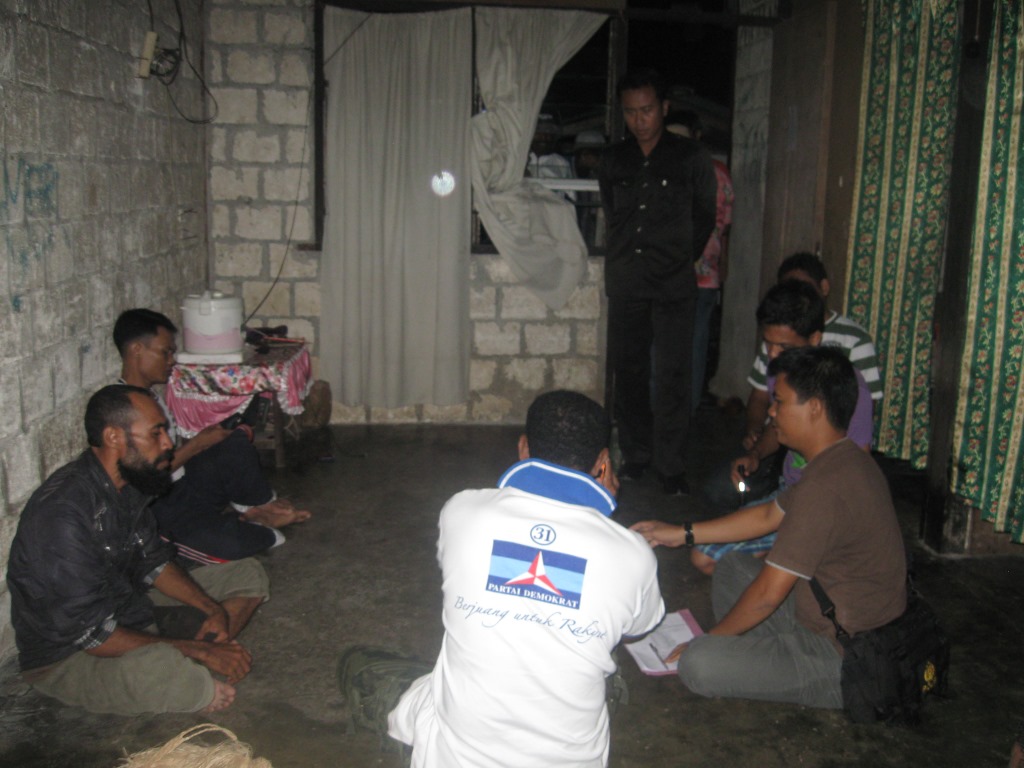
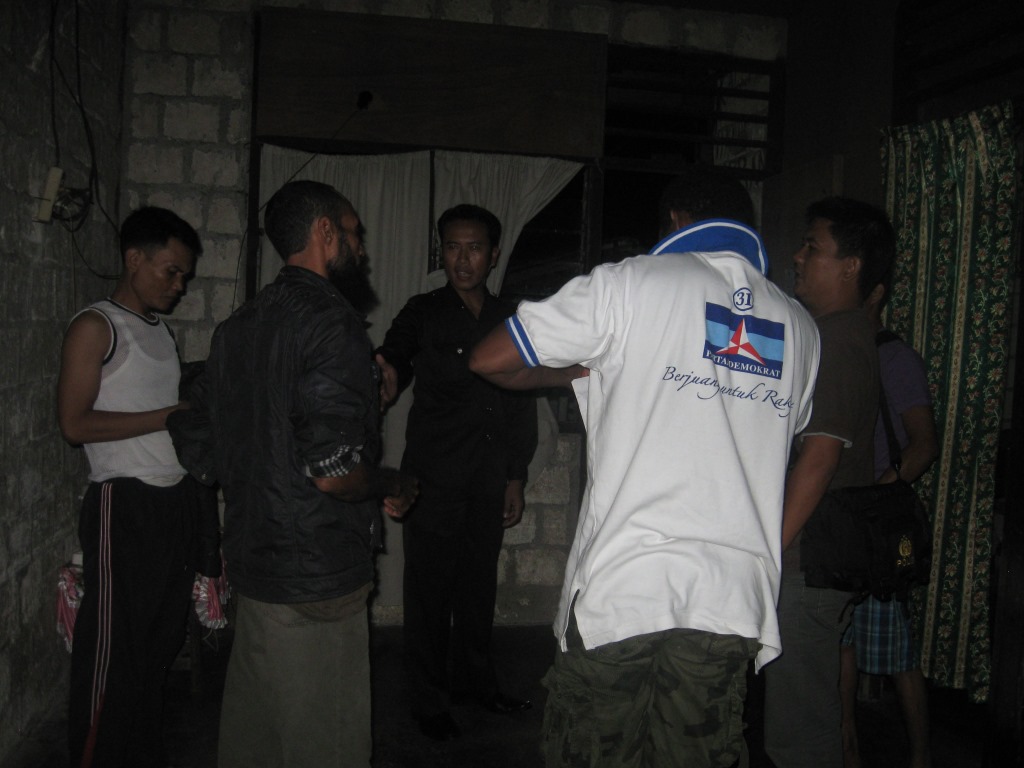
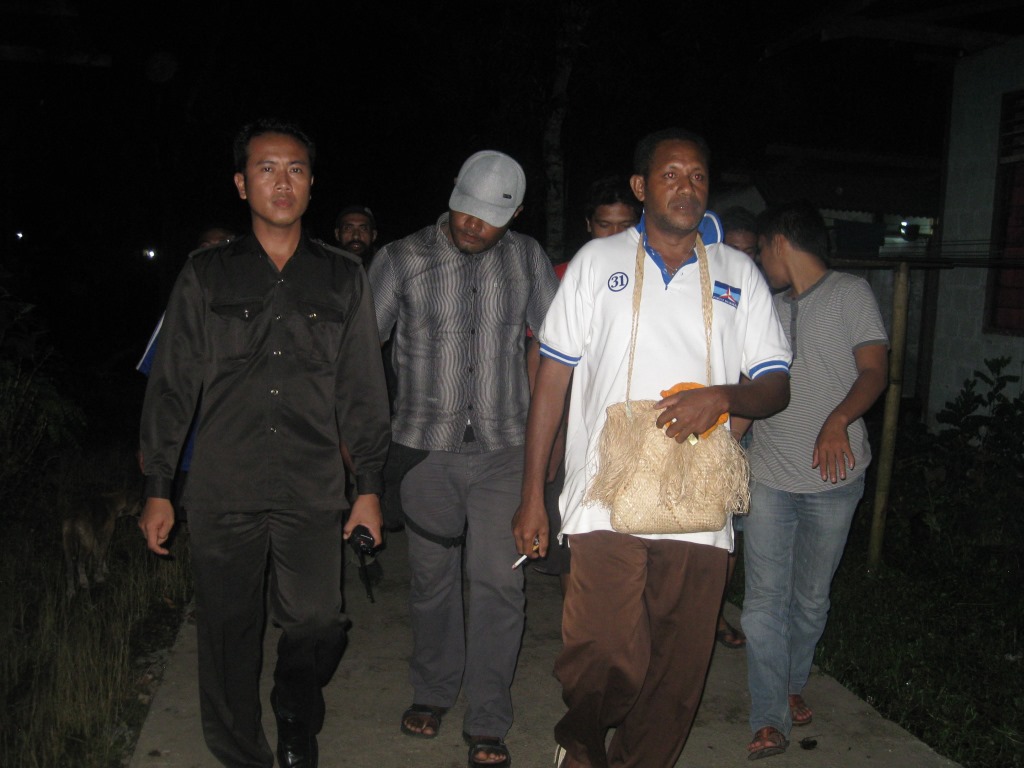
At 8pm on the 25th of September 2013 in Serui, Yapen Island, members of police, mobile brigade, military and Detachment 88 complete with weapons made a forceful arrest of former Papuan political prisoner and organsiser, Edison Kendi. Edison’s family watched on, unable to do anything but witness the brutality carried out by the security personnel against Kendi.  He was taken to the Serui Police station and interrogated.  At 11pm police continued to destroy property around Kendi’s house while looking for documents thought to be related to the Freedom Flotilla,  however nothing was found.

The next day, 26th September 2013 several thousand people did a pick-up at the Serui airport, and walked to Mantembu, as a thanksgiving worship to welcome the arrival of ashes and water that were taken to Yapen Island by Frans Kapisa. Two people who intended to come and participate in the thanksgiving were Demmiamus Brumi and Nataneal Karubaba, however they were prevented from exercising their freedom of expression and obstructed by security personnel, forcefully arrested and taken to the Serui Police Station, according to credible but anonymous sources.

As the thanksgiving was taking place, the security forces forcefully dispersed the crowd, threw away all the food that was provided by the community in Serui, according to witnesses.  The situation escalated into panic according to organisers, several of the participants and organisers protected Frans Kapisa and brought him to a place which they judged to be safe.

According to sources for West Papua Media, “Not only the participants were victims of the police brutality but also the whole community of Yapen Island. At that point in time the people where not able to carry out any activities whatsoever. The District Police Chief (Kapolres) also instructed his forces to fire should there be any resistance from the people.  After 8pm, 3 of the people arrested where released, namely Edison Kendi, Demianus Burumi and Natanael Karubaba.

The following people are still on the run from the police, and grave fears are held for their long term safety;

1. Drs . Frans Fredrik Kapisa
2. Markus Yenu
3. Martinus Wondamani
4. Marselus Daimboa
5. Yani Manyamboi
6. Piter Tiowai
7. Agus Ayamseba
8. Herman Warmetan
9. Ruben Bonay
10. Asalon Wanggori

Eduard Paririe, a Papuan activist in Yapen told West Papua Media, “that whatever the security forces (do) against the people does not diminish their will to struggle and demand justice in the land of Papua.


IMG_0001 IMG_0002 IMG_0004 IMG_0005 IMG_0008 IMG_0009 IMG_0018

This slideshow requires JavaScript.

The following is information direct from West Papua National Authority:

The situation has begun un 25 September 2013 as West Papuan National Authority activists heard on Radio Republik Indonesia that the chief of police in Yapen had prohibited all Papuans in Yapen from taking part in a demonstration planned for 26 September.

The police under the command of the head of Criminal Investigation [Kabag Reskrim Polres] arrested Edison Kendi (40 years old), a political leader of Papua Merdeka at his home at 8 pm. This action involved twenty policemen who were not dressed in their uniforms, together with two members of Kopassus. Some of the police were armed with M16s and pistols and were travelling in Avansa 2 vehicles, one of which was black and the other two were white, together with a patrol vehicle.

The police said that these people had been arrested because they had not been granted permission to undertake this action and moreover, the group in question is not registered  with the National and Political Unit as is required by the Law on Mass Organisations (Ormas) . They were intending to hand over the holy waters to the Aboriginal People from Torres  Straits and were accompanied by Drs Frans Kapisa.

Edison Kendi was arrested in accordance with a warrant issued by the police in Yapen and signed by the head of the unit.

Edison Kendi was  taken to police headquarters to be interrogated. This interrogation is still continuing.

Following the arrested of Edison Kendi, more police arrived in two trucks to search Edison’s home, hoping to find evidence against him such as documents of Papua Merdeka. This happened late at night, at 10.22.

Furthermore:

On 26 September at 7.12 in the morning, the Yapen police force carried out sweepings and arrested  Demianus Buruni while he was on his way to the Serui Airport where he was intending to take part in welcoming Drs Frans Kapisa while was bringing the holy waters and dust from the Aboriginal people. The other reason for Demianus’ arrest was that he was carrying a Morning Star flag. At the time of writing this report, Demianus was still being interrogated.

At 11.34, a joint force of the army and the police in Yapen led by the chief of the military unit and the chief of the police force went to the place where  the proceedings to hand over the holy waters and dust from Aboriginal people  in Mantembu were due to take place. The army and police also ordered the people there to disperse and to vacate the area where these activities were taking place. They also ordered the arrest of Dra Frans Kapisa  and Markus Yenu. Subsequently however, the local people were able to free these two men.

At the time of writing, the security forces were  on guard in the area where the command post of Papua Merdeka  in Kampung Mantebu is located.

[Translated by TAPOL]

Create a website or blog at WordPress.com

Up ↑