Komnas HAM calls for harshest punishment for killing civilian

In a statement issued today, 25 July, the Papuan branch of Komnas HAM, the National Human Rights Commission, has called on the authorities to mete out the harshest possible punishment for the member of the army who murdered the Rev. Ginderman Gire and wounded Gembala Pitinius in Tingginambut on 17 March 2011.Deputy chairman of Komnas HAM, Mathius Murib,  said he appreciated the decision of the Indonesian army to launch legal proceedings against  those who tortured and killed Rev Ginderman and wounded Gembala Pitinius. The latter man survived after being tortured. in Tingginambut, Puncak Jaya district. ‘We very much hope that the perpetrators  will be punished as harshly as possible according to the law so as to act as a deterrent, to ensure that such a crime doesn’t happen again.’

This was in connection with the forthcoming trial of the three army officers  who had committed acts of violence against two civilians

As has been reported, the trial is now under way before a military tribunal of three officers: First Sergeant  Torang Sihombing, NCO Hery Purwanto and NCO  Hasirun. The three are charged with using violence and torture according to articles 351 and 103 of the Military Code for causing the death of Ginderman Gire.

The crime againt Ginderman occuurred on 17 March 2010, At the time, First Lieutenant  Sudarman as commander of Post Illu Puncak Jaya had ordered the three accused to go on patrol in Pos Illu Post, in the Mulia area  in Puncak Jaya. The three men followed a convoy of vehicles which were transporting foodstuffs. After reaching Pintu Angin Alome, one of the drivers of the trucks reported to First Sergeant Saut Torang Sihombing that a local man named Ginderman Gire had asked for fuel. whereupon the sergeant asked why  he was asking for fuel, when another man Pitinius Kogoya also asked for fuel. When they said nothing, Sergeant Sihombing became very angry and struck Ginderman in his chest and hit Pitinus in the face.

After being struck, Ginderman said: ‘I’m not afraid of the army and I have friends up in the mountains who are well armed.’

The sergeant then handed the two men over  to another soldier, Hery Purwanto for questioning. During the questioning, the two men were beaten. Pitinus was able to escape  and jumped into a ravine. One of the soldiers fired shots into the air as a warning while Ginderman tried to grab a weapon from Hery Puwanto.  The officer fired his SS3 V-1 hitting him in the chest. The soldiers looked down and realised that the man they had shot was dead.

The soldiers then reported the incident to their  superior and were ordered to get rid of the body. The body of Ginderman was then loaded onto a truck and driven away. When they reached the Tingginambut bridge,they threw the body into the river.

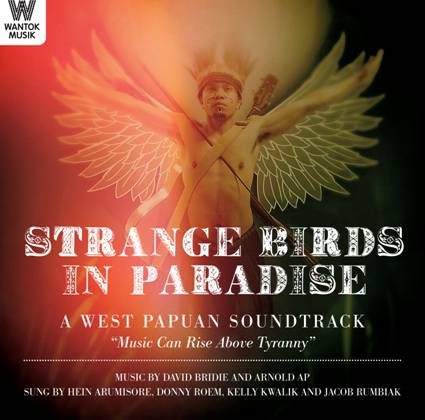
Strange Birds in Paradise Album / DVD launch (Melbourne, Australia) Northcote Social Club. Sunday August 14.

STRANGE BIRDS IN PARADISE

A West Papuan Soundtrack.

ALBUM LAUNCH. NORTHCOTE SOCIAL CLUB

SUNDAY 14 AUGUST 2011

Buy Tickets Here

“Music can rise above tyranny”

“Art is a weapon and culture is life, as long as they can sing they will prevail.”

Film-maker Charlie Hill-Smith on the plight of the West Papuans

in their fight for independence from Indonesia

 “The music of West Papua is unique and intoxicating in and of itself; having it on our radars is a true privilege. And Bridie’s always interesting western-meets-world interweaving commands rapt attention regardless, but in the context here that is all important… For the recording of Strange Birds, five West Papuan singers and musicians joined Bridie in Melbourne, and it’s difficult not to listen to their haunting renditions of these outlawed songs without wondering what the consequences might be for them. Try to imagine, if you possibly can, The Drones making a record overseas and then never being able to return to their native country under penalty of death because of it. As outlandish as that sounds, this is probably the fate that awaits the performers here, and, naturally enough the record takes on a complete new dimension because of it. Bridie has been quoted as saying that this record “stands alone as an album of cultural and political significance”. In any other situation, this might sound immodest. Here, though, it has the ring of absolute, undisputable truth. Will there be a more important record made this year? I highly doubt it.”

(Tony McMahon, Inpress)

On Sunday August 14 from 1-5pm, the soundtrack and DVD to the powerful and award winning political feature documentary Strange Birds in Paradise will be launched at The Northcote Social Club.

The afternoon of music will include performances from Vika and Linda Bull, The Black Orchid String Band (featuring Leah, Petra and Rosa Rumwaropen), David Bridie, Phil Wales, Black Cab, El Witeri (The Red Eyes), with appearances by MC’s Lehmo and Greg Fleet. These and other acts yet to be announced  join a distinguished line up of Melanesian performers, showing their support for the freedom movement in West Papua – an issue that garners less international attention than that given to the fate of Indonesian livestock.

While the Indonesian army continues to dominate the indigenous inhabitants of West Papua, the making of this album saw five West Papuan musicians and singers gather in Melbourne to record the outlawed folk songs of West Papuan freedom fighter and musician Arnold Ap with Australian musician and film composer David Bridie.

In Strange Birds in Paradise, David Bridie interweaves his original score with the songs of Ap, carried by the remarkable voices of West Papuan performers Hein Arumisore, Jacob Rumbiak and Gillius Kogoya, and features musical collaborations with Airi Ingram and Phil Wales. These artists will also come together for the launch, joined onstage by West Papuan musicians Ronny Kareni, Frederick Yawandare, Adrianus Birif, Anselmus Pisakai and led by West Papuan leader Jacob Rumbiak.

The launch will celebrate and recognise of the work of Arnold Ap, as well as political hero Kelly Kwalik – both assassinated for bringing controversial folk songs to the people of West Papua and the world. The day will shed light on the rich musical history intrinsic to West Papuan culture, simultaneously raising awareness of the struggle faced by West Papuans, our closest neighbours, and the atrocities occurring daily in a political climate of greed, corruption and genocide.

Of the CD, Bridie says “Not just a soundtrack, Strange Birds in Paradise stands alone as an album of cultural and political significance, putting West Papua’s extraordinary music talent firmly on the contemporary music map, in the Pacific region and beyond. There are a lot of political refugees from West Papua living in Australia, and this launch is for them as much as it is for those residing in West Papua.”

Strange Birds in Paradise is an album which engages with the unique music of West Papua and champions a community who will fight to keep their cultural traditions alive in the face of extreme political oppression and widespread genocide.

Watch video from Strange Birds in Paradise soundtrack here


What: Strange Birds in Paradise Album Launch (alongside official DVD release)

When: August 14, 1-5pm

Where: Northcote Social Club, Victoria

Tickets: $18 Presale / $22 on Door / (Concession available at door only – $15)

www.wantokmusik.org / www.strangebirds.com.au


Purchase on ITunes

Sorry: Indon Army Backs Down Over Threats

via NewMatilda.com

By Alex Rayfield

The chief of the Indonesian Army in West Papua has taken the unprecedented step of issuing a public apology to the Kingmi Papua Church over a leaked letter first published in New Matilda, reports Alex Rayfield

In an extraordinary media statement dated Monday 18 July the chief of the Army in Indonesian occupied West Papua, Major-General Erfi Triassunu, issued a very public apology to the leadership and congregation of the Kingmi Papua Church.

In the statement, a copy of which has been obtained by New Matilda, the general writes, “if I caused any offence to the Kingmi Papua Church I am sorry”.

Reverend Benny Giay, the moderator of the embattled Kingmi Papua Church, and a subject of the general’s initial ire, said that “this is perhaps the first time in West Papuan history that an Indonesian Army Chief has apologised to the West Papuan church”.

A copy of the original letter was also obtained by New Matilda who published an exclusive story on 7 July. The article was then republished in Open Democracy, written about in daily newspaper Bintang Papua and discussed extensively in blogs, Facebook and email lists inside and outside West Papua.

In the original letter (marked “secret” and dated 30 April 2011) Triassunu repeats claims made by representatives of Kingmi Indonesia, an Indonesian-wide church, that Kingmi Papua is a separatist organisation. In his letter, the general weighed into a conflict that he himself notes is an internal church matter.

The most disturbing phrase in the original letter is a veiled threat by the chief of the Army to take “assertive action” if the conflict between Kingmi Indonesia and Kingmi Papua is not resolved. What is implied here is that the Kingmi Papua Church must cease all efforts to establish an autonomous church in West Papua or risk violent retaliation from the state. It is these kinds of statements that can encourage Indonesian nationalist militias to take the law into their own hands, says Benny Giay.

However, in the three-page apology to Kingmi Papua Church, the general claims that the military command in Papua has never stated that Kingmi Papua is a separatist organisation. He also clarifies the meaning of the phrase “assertive action”, insisting that he did not mean to imply “repressive action” but rather wanted to encourage the civil authorities in Papua to resolve the internal church conflict “on the basis of peace and mercy”.

If true, it marks a seismic policy shift for the Indonesian Army in West Papua — news that will certainly be welcome to Giay. Kingmi Papua’s pastors have been killed at the hands of the Indonesian Military since they first occupied West Papua in 1963. Papuan Church leaders and their congregations across Papua are regularly harassed and intimidated by Indonesian security forces. Public beatings and torture by the security forces is also systemic in Papua, meted out on the basis of race and often conducted in public view, reports ANU based academic Br. Budi Hernawan.

While welcoming the apology, Giay urges the civilian and military authorities in Indonesia to go further. In an open letter to the Susilo Bambang Yudhuyono dated 16 July, Giay asks the President to guarantee Kingmi Papua’s right to exist. An apology from the chief of the Army in Papua after all, is no guarantee of religious freedom.

Giay maintains that the real cause of the conflict, whether between Kingmi Indonesia and Kingmi Papua or the Indonesian government and the Kingmi Church, is political and fundamentally connected to the history of Papua. To break the impasse Giay repeats the call for “dialogue” and an end to “stigmatising” the Papuan people for wanting to address the root causes of state violence in Papua.

Recognition of the right of the Church in Papua to speak out on behalf of the oppressed and to take nonviolent action in protection of their congregations is an acid test for freedom of speech in West Papua.

To date the Indonesian Government has failed that test.

While the general seeks to reassure Papuans that the Army wants to resolve problems on the basis of “peace” and “mercy”, their approach has been inconsistent at best. Papuans are still not allowed to raise the Morning Star flag or sing their national anthem “Hai Tanahku Papua“. Filep Karma, who has been sentenced to 15 years for nonviolent action remains in jail along with scores of other Papuan political prisoners. A press conference by the West Papua National Committee earlier this month concerning current military operations in Puncak Jaya had to be cancelled because of police and military intimidation of the both the organisers and invited journalists.

The Indonesian constitution ostensibly guarantees the right to free speech but it looks a lot like that freedom does not reach West Papua. Until that changes any claim that Indonesia is a democracy rings hollow.

For now, however, Benny Giay and Kingmi Papua are claiming the apology as a “small victory”.

Whether that victory can be defended and extended remains to be seen.

Murdoch Refugee Bashing – ROCKING THE BOAT: THE FACTS & REBUTTAL

Louise Byrne, Australia West Papua Association (Melbourne)


This article was twice presented, twice ignored to The Australian Weekend Magazine ‘Letters’ section.

The 43 West Papuan asylum seekers canoe after landingnear Weipa, Cape York, Jan 2006 (Photo: Damien Baker, theangle.org)

Rocking the boat (The Weekend Australian Magazine 9/7/2011) attempts to bolster the legal case for diluting the post-asylum rights of unaccompanied minors to family reunion. The Murdoch journalist and her angry informants prosecute the offensive by nit-picking the effort of one West Papuan parent—whose sons arrived in a traditional outrigger canoe in 2006—to remove his twelve-year-old daughter from the war zone as well. This 3,500-word construct will be no doubt bower-birded by lawyers involved in the Supreme Court case in September. The reading public however needs to be aware that it is full of unfounded generalizations and misleading information, and succeeds, with Machiavellian ease, in lampooning the West Papuans long and costly struggle for human rights and democracy … and yes, indeed, their very survival.

The Papuan parent cited is heavily misrepresented as a ‘savvy, middle-class immigrant aided by lawyers’ who sent his sons to Australia as an ‘advance party to enhance the prospect of family reunion’. In fact, the documented intent of this parent in putting his children on the boat was to ensure their survival. He is a leading Protestant priest and independence leader who after years of incarceration as a political prisoner will never—short of independence—be free of the republic’s notorious intelligence agents. He and his wife, also a pastor, run a Christian college in the highlands, providing indigenous adolescents with a curriculum and standard of education otherwise unattainable. Their sons, on their own initiative, called upon family reunion principles to deliver their teenage sister from a militarized hellhole where the rape of Indigenous girls is almost a rite of passage. None of the other West Papuan refugees from 2006—whether unaccompanied minor or adult—have made application for family reunion.

The article imputes that the West Papuan who organized the canoe of asylum seekers in 2006 is a people smuggler (‘parents of children as young as 11 had paid for them to make the crossing’), and furthermore ‘coached’ them on how to report to Australian immigration officers. This Papuan is, in fact, another committed activist and independence leader, also with years of experience as a political prisoner. The article conveniently ignores the Howard Government’s People Smuggling Taskforce, which met on thirteen occasions between 16 January and 13 April 2006 before closing its investigation, satisfied that no money was paid to any organizers of the trip. (Hansard, 22 May 2006, which also mentions the taskforce included the Prime Minister and Cabinet, Australian Federal Police, Attorney-General’s Dept, Customs, Defence, Foreign Affairs and Trade, Immigration and Multicultural Affairs, Office of National Assessments). To the allegation of ‘coaching’, the fact of 564,126 West Papuans ‘missing’ since 1962 (Jim Elmslie, University of Sydney, 2007) would mean that few of the living need advice about persecution and human rights violations. (Any foreigners who do should consult the independent media portal www.westpapuamedia.info, or New York based blog West Papua: exposing a massacre (www.theactivistwriter.com), or the recent Australian documentary Strange Birds in Paradise).

Even if The Australian isn’t interested in the plight of the West Papuan people (who in 2010 have an annual growth rate of 1.84% compared to the non-Papuan of 10.82%), it should address issues that intersect with Australia’s national interest. The militarized Islamisation of the territory as a tool of intensifying colonization, for example, correlating with unprecedented levels of Wahabbist cash and Islamic investment that criss-crosses a nexus of radical Islam, the military-intelligence ‘security’ network, and clandestine cells of fundamentalism in the Indonesian civil service. Should we also not be concerned by the refusal of the Australian Federal Police to release its report into the assassination in July 2009 of Drew Grant, a young Australian employed at the Freeport mine? What about the AFP community-training squadron getting kicked out of Indonesia in 2009 (despite Australia’s contribution of $36.8m to the development of the Jakarta Centre for Law Enforcement Co-operation)? Then there’s the Indonesian government’s supply and training of PNG police and military since 2006, and its own commandos training in the jungles of Fiji since 2010.


—–

ROCKING THE BOAT

Rebuttal, Pam Curr, Asylum Seekers Resource Centre in Melbourne

 The article that appeared in this weekend’s The Australian is yet another negative asylum seeker story in typical Murdoch media fashion. I would like to straighten the record on a few factual errors. Murdoch media do not worry about such things but since they quote me, I do.

 I did not ring Frances Walton immediately after The Age published her letter on 8 June. I read the letter and thought—what a pity to write about a small group and one individual experience as if it was emblematic of all child asylum seekers experience. I knew how the letter would be received by those who wish to believe it or those who do not know otherwise, but it is a free country and we all have the write to speak our minds. End of episode.

Kate Legge rang me on the 20th June. At the same time I was alerted that the Australian was looking at running a story about boat children following a letter to The Age. I knew then that The Australian, never likely to overlook a potential negative line on refugees, had run Frances Walton to earth to run the boat children exposé and it was unlikely to be favourable.

It was only at this point that I rang Frances and asked her if she was aware that The Australian had a particular negative line on refugees and that her experience with a few children and families from one background would be likely to be written in such a way that it would generalise the experience of all unaccompanied minors.   I knew that Frances had experience only with the West Papuan children and none with Afghan Hazara teenagers or others. I made a point of saying that it was her right to say what she liked but to be aware that her words could be used against a broader group.

I told Kate Legge that I knew many teenagers who had come here as unaccompanied minors, particularly from Afghanistan, and that most of the boys I knew had no fathers and some no parents at all after Taliban and Pashtun attacks. I explained that they had come here after Mothers, Uncles or Family friends had helped them to escape because they were at risk. Clearly, since they were not reported, the experiences of this group of kids were not as interesting.

AFP: Languages of Papua Vanish Without a Whisper

(Comment from West Papua Media:  A very sad indictment of the policy of cultural genocide and Indonesianisation practiced in West Papua.  Deliberate refusal of allowing birth languages to be spoken at school, and persecution of people speaking traditional languages by security forces is contributing to this.  As any indigenous person knows, loss of language means loss of place, and is the last step of cruel dispossession.)

Agence France-Presse
July 21, 2011

Who will speak Iniai in 2050? Or Faiwol? Moskona? Wahgi? Probably no
one, as the languages of New Guinea — the world’s greatest linguistic
reservoir — are disappearing in a tide of indifference.

Yoseph Wally, an anthropologist at Cendrawasih University in Jayapura,
keeps his ears open when he visits villages to hear what language the
locals are speaking.

“It’s Indonesian more and more,” he said. “Only the oldest people
still speak in the local dialect.”

In some villages he visits, not a single person can understand a word
of the traditional language.

“Certain languages disappeared very quickly, like Muris, which was
spoken in an area near here until about 15 years ago,” he said.

New Guinea is home to more than 1,000 languages — around 800 in Papua
New Guinea and 200 in Indonesian Papua — but most have fewer than
1,000 speakers, often centered around a village or a few hamlets.

Some 80 percent of New Guinea’s people live in rural areas and many
tribes, especially in the isolated mountains, have little contact with
one another, let alone with the outside world.

The most widely-spoken language is Enga, with around 200,000 speakers
in the highlands of central PNG, followed by Melpa and Huli.

“Every time someone dies, a little part of the language dies too
because only the oldest people still use it,” said Nico, Cendrawasih
University’s museum curator.

“In towns but also eventually in the forest, Indonesian has become the
main language for people under 40. Traditional languages are reserved
for celebrations and festivals,” said Habel M. Suwae, the regent of
Jayapura district.

In PNG, under the influence of nearby Australia, English has spread,
though it has made little headway with some tribes, particularly those
in the isolated highlands.

The authorities are sometimes accused of inaction, or even of favoring
the official language to better integrate the population, particularly
in Indonesian Papua.

But according to Hari Untoro Dradjat, an adviser to the Indonesian
ministry of culture, “it is almost impossible to preserve a language
if it is no longer spoken in everyday life.”

Despite his pessimism about the future, anthropologist Wally believes
art and culture can stop Papuan languages being forgotten.

Papuans love to sing and celebrate and they must do these things in
their traditional languages, Wally says — this way, young people “will
want to discover the language to understand the meaning of the songs.”

Instead of saving languages on the way to extinction, some researchers
want to preserve a record of them — a difficult task when many are
exclusively oral.

Oxford University has launched a race against the clock to record
Emma, aged 85, Enos, 60, and Anna, also 60, who are the three last
Papuans to speak Dusner.

More than 200 languages have become extinct around the world over the
last three generations and 2,500 others are under threat, according to
a Unesco list of endangered languages, out of a total of 6,000 in the
world.

Create a website or blog at WordPress.com

Up ↑