—————
Indonesia Human Rights Committee,
Box 68-419,
Auckland
7 December, 2010
Media Information:
IHRC has written to Minister of Foreign Affairs, Murray McCully, and to Minister of Defence Hon Wayne Mapp to urge them to act over the West Papua torture scandal, a high profile issue at the time of the Foreign Minister’s October visit toJakarta. A widely distributed video clip of Indonesian military personnel perpetrating shocking torture on two men in the highlands of Indonesian controlled West Papua has put Indonesia’s lack of military reform under the spotlight. However,Indonesia has opted to try personnel involved in a separate less serious case of videoed abuse, in a blatant attempt to defuse international criticism.
“Mr McCully has an absolute obligation to follow this up as he was given personal assurances at the time of his visit that those responsible for the grave crimes depicted on the video would be investigated and held responsible. He should now act with the Minister of Defence to suspend military training ties with Indonesia in the face of this evidence of ongoing abuse and military impunity.
The letter to the Ministers follows: Maire Leadbeater: 09-815-9000 or 0274-436-957
Indonesia Human Rights Committee,
Box 68-419,
Auckland.
Hon Murray McCully,
Minister of Foreign Affairs,
Hon Wayne Mapp,
Minister of Defence,
Parliament Buildings,
Wellington.
7 December, 2010
Dear Mr McCully and Mr Mapp,
You are aware that there has been international consternation over the case of the Indonesian security personnel shown inflicting brutal torture on two highland Papuan men. The video clip, recorded in May 2010, depicted one of the men having a smouldering stick applied to his genitals while his companion was repeatedly threatened with a knife.
Minister McCully was visiting Indonesia at the time that the torture video was circulating and was assured by Indonesian Foreign Minister Natalegawa that the Indonesian government was ‘deeply concerned’ and would conduct a thorough investigation. I understand that a personal undertaking was given that the findings of the investigation would be presented ‘transparently.’
The Indonesian authorities accepted that the video was genuine, but instead of acting to investigate and try those responsible, they moved quickly to charge and tried military personnel who were responsible for a separate case of videoed abuse. This separate event took place in March and involved the beating and kicking of a number of bound villagers. The charges meted out to the military personnel responsible were relatively light – terms of imprisonment of seven and five months, scarcely commensurate with these brutal crimes against civilians.
The ploy has been described by some as a classic ‘bait and switch’ operation clearly timed and planned to deflect international scrutiny of the human rights record of the Indonesian security forces. Not only is there no indication by Jakarta of any intention to investigate and try the military officers involved with the more serious case of abuse, but a spokesperson from the Indonesian Defence Ministry told the Australian media that the case is now closed.
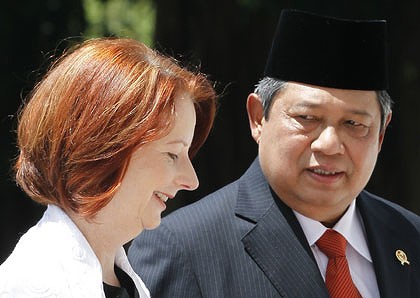
We understand that the Australian Government is continuing to put the case that the more serious torture case should be investigated in line with assurances given to Prime Minister Julia Gillard prior to her recent visit to Indonesia.
The Indonesia Human Rights Committee urges that New Zealand support Australia in its appeal for a full investigation and for those responsible for these grievous abuses to be held accountable. New Zealand should suspend its military training ties withIndonesia, in the face of such clear evidence of military abuse and ongoing military impunity
Tragically the events depicted in the videos are not isolated or unusual cases of abuse.
In the past week there has been an escalation of violence and several disturbing reports of security forces injuring and killing civilians. On November 28 a farmer, Wendiman Wenda was killed in Yambi, Puncak Jaya as he returned home from Church. The report we received said that he did not hear when the security forces called out to him, and when he did not respond he was shot.
On December 3, near Jayapura an escaped prisoner was killed in a violent police raid. Komnas Ham, the Indonesian Human Rights Commission has criticised the conduct of the raid which it described as ‘extra-procedural’. There are also other reports of recent violence including two Papuans being shot in Bolakme on December 1 and on December 4, a young peace activist, Sebby Sembon, was summarily arrested as he was about to board a plane.
In West Papua the right to dissent is not respected. Those who take part in peaceful demonstrations risk charges of ‘makar’ or rebellion and lengthy jail terms. Meanwhile those responsible for a documented case of extreme torture are escaping sanction.
New Zealand must not stand apart and we look forward to your response,
Yours sincerely,
Maire Leadbeater
(for the Indonesia Human Rights Committee)




 West Papua Media Alerts