Current condition of tapol Kimanus Wenda and funds needed for operation and travel costs

Received from Solidaritas Korban Pelanggaran HAM Papua (Solidarity for Victims of Human Rights in Papua)
[Translated by TAPOL]

Papuan prisoners continue to be subject to discrimination in a number of ways such as the lack of finance, the lack of access to health facilities and racist insults against Papuan people. There are no NGOs, church groups or individuals who are regularly monitoring the situation of Tapols/Napols [this differentiates between political and non-political prisoners in Papua] who are currently in prison in Papua.

Take the example of Filep Karma who was for nine months left unattended in Dok II Hospital in Jayapura, in 2010. Ferdinan Pakage was tortured and sustained permanent injuries in his right eye from a prison official in Abe Prison, Abepura, in 2008. And most recently, Kimanus Wenda who, according to the recommendation of a doctor, needs to have operation for a tumour in the abdomen, but there has been no response from the prison officials in Nabire prison. He was even shackled with handcuffs and kept in an isolation ward in May 2011

The condition of Kimanus Wenda in Nabire Prison is now critical; he has been vomiting because of the tumour. Last Thursday at 12 midnight, he was vomiting and so dizzy that he urged an official to be transferred to hospital but this was refused. [precise meaning of a sentence in the text here is unclear]. Although he had asked to be transferred to Jayapura a number of times as recommended by the doctor, there was no response from the officials at the prison.

In view of the present condition of Kimanus Wenda, the SKPHP had a meeting with the Kanwil (?) and then with the Papua department of law and human rights [Depkum HAM Papua] on 19 September. However, the head of Depkum HAM, Daniel informed his family of a number of conditions:

* A guarantee from the family
* A formal request from the family
* A statement from Nabire Hospital
* Confirmation from the doctor
* A request for police to provide guards.

Solidaritas Korban said that it was prepared to find all these documents and that his family would provide the funds but only for a ticket for Kimanus to make the journey from Nabire to Wamena, meaning that funding for the guards was the responsibility of the state.

On 19 September, Solidaritas Korban had a meeting with Kontras Papua at which the following was agreed:

A division of tasks regarding the documents required.
We would need to raise money for the journey by two persons to Nabire
We would find the money for the stay in hospital, the operation and other requirements after Kimanus was in Jayapura
Information about these decisions would remain confidential.

Once the money for the tickets was available, Solidaritas Korban would:

Lobby the doctor.
Issue a press release
Seek contributions from the general public out in the streets
Lobby for funds to cover the costs of the hospital stay, the operation, the tickets to Nabire and so on.

The amount of money required is as follows:

Rp 1,347,000 x 2 for a total of Rp 2,694,000 for one-way tickets.
Airport tax and local transport, Rp 1,000,000
Solidaritas Korban transport costs incurred to handle arrangements for Kimanus
The total amount of money needed: is Rp 4,694,000

Jayapura, 19 September 2011
Solidaritas Korban Pelanggaran HAM Papua

West Papua: A history of exploitation -Opinion – Al Jazeera English

West Papua was taken over by Indonesia in 1969, and a legacy of oppression and environmental devastation has followed.
Listen to this page using ReadSpeaker
”]

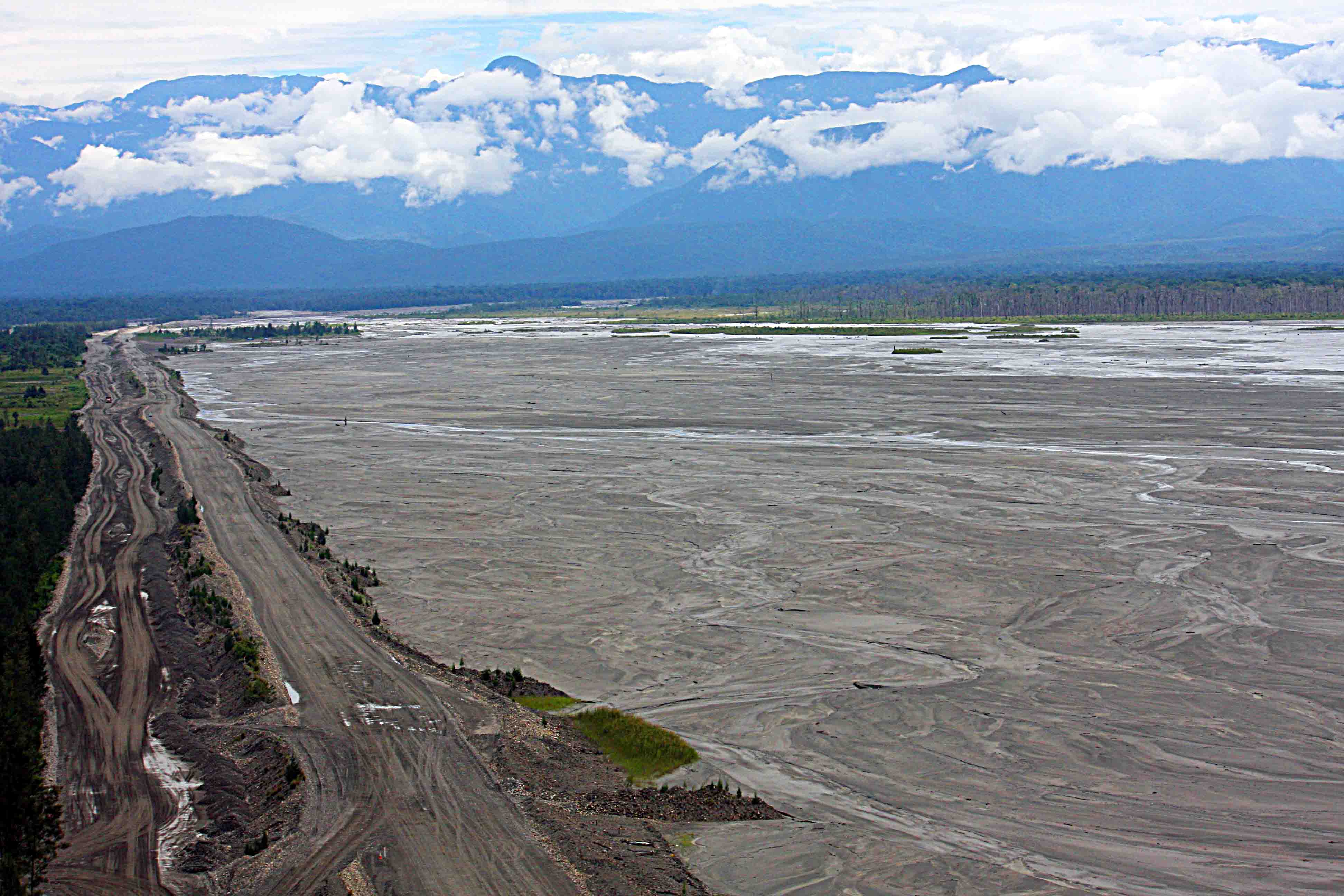
The Grasberg mine has damaged surrounding river systems, such as the Ajikwa river above [West Papua Media]

Investing in conflict-affected and high-risk areas is a growing concern for responsible businesses and investors. Companies based in developed countries often operate in lesser-developed foreign markets, where governance standards are lax, corruption is high and business practices are poor.

These pieces focus on one specific Anglo-Australian company and their American partner that jointly operate a mine in West Papua, one of the poorest provinces of Indonesia. The risks for the company include the potential to contribute to environmental and social damage in a foreign market. The risks for investors include financing a company that does not get its risk management right.

This is the second chapter of a four-part essay that examines how the Norwegian Pension Fund came to blacklist the mining giant Rio Tinto. The first part can be found here.

Part 2: A history of exploitation

New Guinea, geographically as well as historically, is Australia’s closest relative. Separated from the mainland during the last glacial period, the waters filled in what now separates them: about 152km of the Torres Strait.

While Australia and New Guinea both have enviable mineral stores, economic and political exploitation has left the latter as home to many of the poorest people on Earth. New Guinea is also an island of two histories.

The eastern half forms the independent state of Papua New Guinea – a status it has enjoyed since breaking from Australia in 1975. With its natural resources of oil and industrial metals, Papua New Guinea has long been exploited for its minerals at places like Ok Tedi and Bougainville.

Both projects ended in social and environmental disaster. The environmental impact of Ok Tedi was so great that, in 1999, Paul Anderson, then chief executive of Australian mining company BHP, conceded that the mine was “not compatible with our environmental values”. But it did serve the company’s pursuit of profit. It was not until the Ok Tedi environmental disaster three years later that the true impact of BHP’s mining practices came to the attention of the global public. BHP subsequently sold its interest, established a fund to restore the sustainable development of the affected people, and received immunity from further prosecution.

The western half of New Guinea has had a lesser-known but equally tragic history centred around the Jayawijaya Mountain, home to the Amungme, and farther downstream, the Kamoro people. As with much of East Asia, the indigenes were under Dutch rule when a geological expedition in 1936 located a significant ertsberg (ore mountain) deep in the southwestern highlands. World War II intervened, and the Japanese claimed Indonesia and some of the western parts of New Guinea.Following defeat in the war, the Japanese were marshalled back to their home territory, and Dutch colonialism resumed. Importantly, when Indonesian independence was obtained from the Dutch in 1949, few knew of the ertsberg (mineral ore) hidden deep in West Papua’s wilderness.The Dutch began a ten-year Papuanisation programme in 1957 that would see West Papua handed back to the indigenes, and would create the independent state of West Papua around 1972.Despite multiple territorial claims, the ore mountain lay dormant for over 20 years.On March 6, 1959, the New York Times reported the presence of alluvial gold in the Arafura Sea just off the coast of West Papua. Reminded of their earlier discovery, Dutch geologists were said to be returning to the ore mountain, now simply known as Ertsberg.Independence deniedThe indigenes, meanwhile, as part of their programme toward independence, established a Papuan National Council and provisional government as well as their own military, police force, currency, national anthem, and flag. At the time, West Papua’s independence was due before the United Nations Decolonisation Commission, and representatives took part in various cultural and political activities throughout the region. By December 1, 1961, the West Papuan “Morning Star” flag had been raised alongside the Dutch for the first time. Many assumed that independence was imminent.Unbeknown to both the indigenes and the Dutch, US mining company Freeport-McMoRan Copper and Gold was negotiating directly with Suharto – at the time an Indonesian army general – for a small group of its experts to prospect this ore mountain. The path into West Papua through Suharto promised to be fruitful for Freeport, since its board was stacked with the Rockefeller’s Indonesian oil interests who already were versed in the general’s way of doing business. An exploration agreement was reached, and soon after a geologist from Freeport was forging his way through the wilderness toward Ertsberg.West Papua was about to change hands again.Armed with Chinese and Soviet weapons, as well as an increasingly public friendship with the communists, Indonesia declared war on the Netherlands. To protect Western interests from the threat of communism, on August 15, 1962, the United Nations and the United States orchestrated a meeting between Dutch and Indonesian officials during which interim control of West Papua was signed over to Indonesia.Six years of UN interregnum followed, after which a plebiscite would decide whether to form a separate nation or integrate into Indonesia. All 815,000 West Papuans were to vote in an Act of Free Choice.To ensure a favourable outcome, the Indonesians worked to suppress Papuan identity. Raising the West Papuan flag and singing of the national anthem were banned, and all political activities were deemed subversive. Indonesia ruled through force, for self-interest. Alarmed by ongoing media reports, on April 5, 1967, in the British House of Lords, Lord Ogmore called for a UN investigation. By early 1968, with Suharto having assumed the presidency of Indonesia, a US consular visit almost unanimously agreed that “Indonesia could not win an open election” in West Papua.West Papua still wanted its independence.In a desperate attempt to secure West Papua’s right to self-determination, two junior politicians crossed the border into Australian-administered Papua and New Guinea on May 29, 1969. They carried damning evidence of Indonesian repression; the hopes of a yet-unformed nation rested on the politicians reaching the UN. As Australia and its allies were amenable to Indonesian control of West Papua, the two were imprisoned upon crossing the border until after the referendum. Their brave plea was silenced.Between July and August 1969, less than a quarter of one per cent of the population – some 1,026 West Papuans – signed the country’s freedom over to Indonesia. The election, held under the aegis of the UN, was far from an act of free choice. The following day West Papua was declared a military operation zone, the local people’s movement was restricted, and expression of their national identity banned under Indonesian law.Poor, neglected West Papua.Selling West PapuaControl of West Papua proved a lucrative business deal for the Indonesians. Two years prior to the Act of Free Choice – coincidentally on the same day the plight of Papua was raised in the House of Lords – Freeport signed a contract of work with the Suharto government entitling a jointly owned company, PT Freeport Indonesia (Freeport-Indonesia), full rights to the Ertsberg mine. In return, Indonesia would derive significant tax revenues and fees as well as a minority 9.36 per cent shareholding. Without the authority to do so, Indonesia nevertheless cut itself into a deal that sold large tracts of West Papua to the US company, intent on sifting it for copper and gold.Although Ertsberg fulfilled its promise, as production slowed in the mid-1980s, Freeport-Indonesia began to explore surrounding mountains and ridges for other reserves. As is often the case, the best place to establish a new mine is next to another. Sure enough, significant copper and gold reserves were located at Grasberg only a couple of miles southwest of Ertsberg.Grasberg has the largest recoverable reserves of copper and gold in the world. It’s also Indonesia’s economic beachhead.Observing the Grasberg mine via Google Earth, one sees a scar like no other: Located about 13,000 feet (4,000 meters) above sea level, open-pit (above ground) mining has bored a hole through the top of the mountain more than half a mile (1 km) wide. What they’re digging for is more than $40bn worth of copper and gold. Every day the operation discharges 230,000 tons of tailings (waste rock) into the Aghawagon River. This process is expected to continue for up to six more years, at which point exploration will go underground until there’s no value left. Freeport estimates that will occur by 2041.The operation is so large that it has shifted the borders of the adjacent Lorenz National Park. Listed as a World Heritage site by the UN’s Educational, Scientific, and Cultural Organisation (UNESCO) in 1999, the park is “the only protected area in the world to incorporate a continuous, intact transect from snowcap to tropical marine environment, including extensive lowland wetlands”. For the Amungme and Kamoro indigenes, corporate imperialism had replaced European colonialism.The ramifications are both environmental and social.‘Slow-motion genocide’The social and economic condition of the indigenous Amungme and Kamoro poses fundamental human rights concerns. Although Freeport-Indonesia directly or indirectly employs a large number of West Papuans and is regularly Indonesia’s biggest taxpayer, in 2005, the World Bank found that Papua remained the poorest province in Indonesia. With a marked rise in military personnel and foreign staff has come a number of social issues, including alcohol abuse and prostitution such that Papua now has the highest rate of HIV/AIDS in Indonesia.Indonesian control of West Papua has been characterised by the ongoing and disproportionate repression of largely peaceful opposition. Few sustained violent interactions have occurred; however, in one major conflict in 1977, more than 1,000 civilian men, women, and children were killed by the Indonesian military in Operasi Tumpas (“Operation Annihilation”) after a slurry pipe was severed and partially closed the Ertsberg mine.More recently, in 1995, the Australian Council for Overseas Aid reported that the Indonesian army and security forces killed 37 people involved in protests over the mine in the preceding seven-month period. While the level of violence is difficult to establish, academics at the Centre for Peace and Conflict Studies at the University of Sydney maintain that up to 100,000 West Papuans may have been killed since Indonesian occupation. They call what’s happening to West Papua “slow-motion genocide”.There are also two primary environmental concerns over Grasberg. The first is that the mine discharges 230,000 tons of waste rock a day into surrounding waterways; given the escalating rate of processing, this rate is arguably above that allowed by national law. Secondly, acid rock drainage – the outflow of acidic water – has resulted from the disposal of a further 360,000 to 510,000 tons a day of overburden and waste rock in two adjacent valleys covering 4 miles (6.5 km), up to 975 feet (300 metres) deep. The mine operators dispute both claims.Riverine methods of waste disposal are banned in every developed country on Earth. The World Bank no longer funds projects that operate this way, due to the irreversible ecological devastation, and the International Finance Corporation requires that rock be treated prior to disposal, which is not a practice carried out at Grasberg. Since the mid-1990s, a number of independent environmental assessments have found unacceptably high levels of toxicity and sediment as far as 140 miles away.Freeport and Rio Tinto maintain that riverine tailings disposal is the best solution, given the difficult terrain, the threat of earthquakes, and heavy rainfall.Grasberg’s reserves are so vast that extracting them is expected to create 6 billion tons of industrial waste.President Suharto, who is now recognised as one of the most corrupt and tyrannical leaders in history, renewed Freeport-Indonesia’s exclusive mining rights in 1991 for a further 30 years with an option of two 10-year extensions. The license included an option to prospect another 6.5 million acres (2.6 million hectares), as far as the Papua New Guinea border. “The potential is only limited by the imagination,” Freeport’s chairman, James Moffett, remarked to shareholders in March 1995. “Every other mining company wants to get into Irian Jaya [West Papua]. Bougainville and Ok Tedi don’t hold a candle to Grasberg.”Part 3 to follow next week.This is an extract of a chapter from the book, Evolutions in Sustainable Investing: Strategies, Funds and Thought Leadership, to be published by Wiley in December 2011. NAJ Taylor is a PhD candidate in the School of Political Science and International Studies at the University of Queensland, and casual lecturer in the Faculty of Law and Management at La Trobe University.Follow NAJ Taylor on Twitter: @najtaylordotcomThe views expressed in this article are the author’s own and do not necessarily reflect Al Jazeera’s editorial policy.Related articles

BHP Billiton acknowledged that its mine at Ok Tedi was ‘not compatible with our environmental values’ [GALLO/GETTY]
“Grasberg’s reserves are so vast that extracting them is expected to create 6 billion tons of industrial waste.”

Indonesia: Recent outbursts of violence underscore dire need for a rights-based approach to conflict resolution in Papua

http://www.fidh.org/Recent-outbursts-of-violence

Indonesia: Recent outbursts of violence underscore dire need for a rights-based approach to conflict resolution in Papua


Paris-Jakarta-Bangkok, 21 September 2011. The recent spike in violent incidents in Papua in July and August underscore the urgent need for Jakarta to re-assess its military approach to solve the situation of unrest in the region and to place the respect for human rights at the heart of conflict resolution policies and practices, said the Asian Forum for Human Rights and Development (FORUM-ASIA), the Commission for the Disappeared and Victims of Violence (KontraS), the Indonesian Human Rights Monitor (Imparsial) and the International Federation for Human Rights (FIDH) today.


Kontras recorded at least ten violent clashes between 5 July to 3 August, 2011[1], involving members of the state security forces and local armed groups. Civilians were injured and killed in some of these clashes. Thirteen Papuans were arrested by the police on 31 August in Kampung Nafri, Abepura, for allegedly causing unrest during a religious ceremony. There were also allegations that these 13 individuals were involved in a shooting incident on 3 August, in which three civilians and one TNI soldier were killed. However, local rights groups pointed out that the police made the arrests without properly investigating and substantiating these allegations. These detainees were reportedly tortured while in police custody.

“Freedoms of expression, association and assembly are routinely violated in Papua, which seriously fuels tensions. Besides, gross human rights abuses, such as acts of torture, remain unaccounted for.” said Poengky Indarti, Executive Director of Imparsial.

“While the use of violence to achieve political and other goals is unacceptable, the heavy military presence and the military-centered approach by Jakarta to Papua’s demand for autonomy serve to sideline human rights and do not provide a viable and peaceful solution to the conflict,” said Souhayr Belhassen, FIDH President.

Another element of Jakarta’s security-centered approach is the strict restriction to access to Papua. As a result, peaceful activities of civil society groups and human rights actors operating in Papua are known to be under extensive surveillance by the Indonesian military. This form of intimidation goes against the United Nations Declaration on the Right and Responsibility of Individuals, Groups or Organs of Society to Promote and Protect Universally Recognized Human Rights and Fundamental Freedoms, and oversteps the lawful limit of intelligence gathering. Internal documents of the Indonesian military recently obtained and publicized by the media revealed both the extent of this kind of surveillance and the military authorities’ mistrust towards peaceful civil society and human rights activities, which they perceive as a threat to national security.

“Monitoring human rights work is seen by the military as threatening to national security and this bodess ill for the safety of human rights defenders and other peaceful activists in Papua, as they could bear the brunt of harassment and physical intimidation by state security forces under the pretext of fighting separatism,” said Yap Swee Seng, Executive Director of FORUM-ASIA.

Some of the activists and individuals named in the leaked military documents have already faced arrest, detention, and intimidation, such as independence activists Filep Karma and Buchtar Tabuni, who were both arrested and convicted for their role in organizing peaceful demonstrations during which the Morning Star flag, a banned symbol, was raised.

A recent report released by Imparsial estimates that there are more than 14,000 military personnel deployed to Papua. The report identifies the key features of such a military-centered approach by the central government, including the continuous military operations in Papua without adequate parliamentary oversight, deployment of a large number of non-organic troops to Papua, and the addition of new territorial command structure in the region.

In sum, accountability for human rights abuses perpetrated by state security forces is still lacking in Papua. In addition, in the few rare cases in which perpetrators were brought to court, they were either acquitted or convicted on lesser charges that do not reflect the gravity of their crimes, such as acts of torture.

The four organizations call on the Indonesian government to:

  • Instruct its military to immediately cease all unlawful surveillance activities in Papua and revise its current draft intelligence bill by incorporating recommendations by civil society and bringing it into line with the Indonesian Constitution and Criminal Procedure Code, as well as international human rights law;
  • Take steps to reduce the heavy presence of non-organic military personnel and their involvement in civil administration in Papua and seriously implement security sector reform;
  • Fully and credibly investigate all past and new allegations of human rights abuses, especially those perpetrated by state security forces, and promptly bring perpetrators to justice;
  • Strengthen civilian oversight and rigorous parliamentary scrutiny of military policies, operations and budget; and
  • Respect the role of human rights defenders and ensure unfettered access to Papua by civil society groups and actors, including foreign and domestic journalists and independent human rights monitors.

[1] The documented violent incidents occurred in Kampong Kalome, Tingginambut district, Puncak Jaya (5 July and 12 July); Mulia, Puncak Jaya (13 July and 21 July); Timika, Mimika (30 July); Illga district, Puncak (30-31 July); Kampung Nafri, Abepura (1 August and 3 August); and Mulia, Puncak Jaya/Wamena (3 August). See documentation by KontraS: http://www.kontras.org/index.php?hal=siaran_pers&id=1339.

Alleged OPM members may be charged with Nafri and Skyland incidents

(West Papua Media Note:  despite reams of evidence available to the contrary that indicated clearly that the Nafri attacks were the work of “unknown persons”, Indonesian police are still refusing to investigate the connections with Indonesian military operations.  The only credible way these trials can proceed is with the presence of international legal observers.  )
See the following Related articles:

Bintang Papua, 19 September 2011

Jayapura: Two Papuans who are allegedly mmbers of TPN/OPM and who are
facing charges in connection with the burning of a taxi and shootings
that occurred in Kampung Nafri as well as at Skyland and were arrested
on 31 August, are now at the stage of processing by the police force in
Jayapura. In order to obtain more documentation about the case, the
police have questioned two further witnesses. The results of these
investigations cannot yet been reveal.

The public relations officer of the police said that other witnesses
were likely to be summoned which may hopefully speed up the handling of
the case. These witnesses were being summoned as they may have seen
people who fled when a group of armed criminals opened fire on local people.

He said that one of the accused has been identified as PK who is alleged
to have been involved in the killing of the driver of the taxi that was
burnt and the other accused, EK was only allegedly involved in the
burning and killing of the taxi driver in Skyland.

‘It is hoped that the questioning of the witnesses will lead to the
identification of other suspects.,’ the official said.

The police say that they intend to continue their investigations and
hunt down other possible perpetrators in the case of the shootings in
Kampung Nafri.

Report on wrongful arrest of 15 civilians n Wahno-Varia, W Papua

Report on wrongful arrest and torture of 15 civilians in Wahno-Vuria hill, Kotaraja, Jayapura town, Papua Province, 31 August 2011

Produced by: Investigation team comprising KomnasHAM Papua, a student or representative of Cendrawasih University Jayapura, and representatives
and members of the Baptist, Kingmi and Catholic churches

Published by: the Fellowship of Baptist Churches of Papua

September 2011

This is a TAPOL summary

The report is based on the results of an investigation by the Fellowship of Baptist Churches in Papua, including witness statements from the victims and their families, in an aim to publish the facts from the ground.

During July and August 2011, there have been a number of events affecting the security situation in Papua.   These include a number of mysterious murders for which the perpetrator(s) remain unknown, civilian deaths and injuries caused by security forces, repressive actions by security forces, clashes between the security forces and OPM/TPN, election unrest including demos and violence, an attack on the 5-7 July “Papua Peace Conference” at Cenderawasih University, a simultaneous murder at Skyline Jayapura, and a series of events accompanying and following on from the seminar in Oxford, England organized by the International Lawyers for West Papua.   A common feature seems to be that on several occasions the murders and other acts of violence occurred simultaneously across different locations. In most cases the perpetrators appear to remain unknown.

Background to the event on 31 August 2011

According to Biben Kogoya, Chair of RT 08 (RT is the smallest unit of neighbourhood governance), following a meeting of all RT/RW chairs last year, all sharp weapons kept in houses of the local population under the area of their jurisdiction should be collected and kept in the houses of the RT/RW chairs, which Biben Kogoya duly did.   He had heard shortly before the incident that there was going to be a sweeping.   He states that in the week leading up to the incident he had been trying to call the local police in Abepura to inform them of some new TNI members who had been hanging around the area each night between 25-29 August, providing alcohol and encouraging the young people to drink, and asking
them to point out the houses of people they were looking for, including Danny Kogoya, Panius Kogoya, Ekimar Kogoya, Etra Yanengga, and Gidi Wenda.

However, the police did not answer the phone or respond to his reports as chair of RT 08.  On 29 August, Biben had decided to sort this out, but he did not get the chance to do so as he was then arrested.

The events of 31 August 2011:

At 05:00-06:00 on 31 August 2011 a combined unit of 115 members of the army and police carried out sweeping and a siege of 4 houses in the Wahno hill area, RT 08 in Kotaraja Luar, Jayapura.  One of the houses targeted was that of Biben Kogoya (Chair of RT 08). The combined forces arrived in 6 Avanza cars and a police truck, with two of the units equipped with black batons.   They parked 500 meters from the houses in question and placed the area in question under siege, firing a volley of shots towards the houses.

A total of 15 people, including Biben Kogoya, were beaten, tortured, interrogated and exhorted to confess to having committed the Skyline and Nafri murders. Victims were beaten with rifle butts, kicked, slapped, and forced to lie on the ground for a number of hours.   Biben Kogoya was particularly singled out for beatings, and was confronted with an apparently unearthed bullet and some documents, and told to confess to owning these items or be murdered and buried. He was then forced to dig a hole whilst surrounded by security forces who had their guns aimed at him.   He was frightened and thought that he was digging his own grave, but managed to escape into the open.   The combined unit also brought a photograph of the soldier who was murdered on Jalan Baru, Camp Wolker (23/08/11) and asked Biben Kogoya if he had killed him.   The photo was put inside his family photo album and taken out of the family room –  he said he had never put that photograph of the soldier in the photo album.

Then the soldiers said it was Kogoya who killed him, this is the proof, look, it’s in his album. Meanwhile, Ekimar Kogoya was tortured until, unable to withstand the pain any longer, he confessed to the murders.   When pushed to name an accomplice he then named Panius Kogoya.

The houses were ransacked and a number of items such as handphones, money, shoes, a watch, wallets and a bank card were seized.

Throughout the experience, the victims were subjected to degrading treatment, being called variously “dog, pig, cow, animals, murderers, cannibals.” They were also stigmatized as OPM members.

As Biben Kogoya escaped from digging the hole/grave, the Vicar Metius Kogoya arrived, shortly followed by the arrival of the Head of Abepura Police and the provincial Head of Police (Kapolda).  According to the witness statement of the Vicar, the leaders said to their staff “don’t hit them anymore, what’s happened here is already enough.”

Between 12 and 13:00 on 31 August the 15 people were brought to the Polresta.  They were left in the locked truck for some time in the full sun, finding it hard to breath and hurting from their wounds.  They complained, and the truck was moved to the shade.  Then they were taken one by one to sign a notice, without having a lawyer present.  They were each photographed, then sat in front of the door of the investigation unit and interrogated. They were put back in the truck around 23:00-24:00 to sleep except Ekimar and Panius who were detained separately.   They reportedly waited for hours in the truck without food or drink until 06:00 on 1 September. 3 of them became ill and were laid on the floor of the truck.  One policeman helped us, giving us a litre of water (between 13 of us) and a packet of cigarettes.  When they woke in the morning they were not allowed to go to the toilet to urinate or defecate but were told to go to the toilet in the open yard of the police station.

On 1 September at 11:40, the leaders of the Baptist church and human rights activists, accompanied by Matius Murib arrived to visit the detainees, who were sitting in front of the investigation unit of the police station, with the others lying asleep as they had malaria.  13 detainees were released and were taken home at 15:00, arriving at their house at 17:00.  Ekimar and Panius remained in custody.

On 2 September, the 13 victims who had been sent home were taken to the hospital for a medical check up to be given the OK.  It turned out three of them were sick with malaria, so were not given the all clear.  They were:

1. Uwne Kogoya (23) malaria tertian +4

2. Yawenus Kogoya (21) malaria tropika +2

3. Nusman Kogoya (19) high leukosits.

On 3 September the Vicar was called by the police station to come and collect the arrest and detention notices for Panius Kogoya and Ekimar Kogoya, who were both charged with murder and/or violence in a public place against a person or object.

Condition of the victims

Following the incident, the victims suffered internal bruising and were traumatized. They were not able to carry out normal activities or travel very far.  Biben Kogoya’s ability to remember, hear and see properly was reportedly impaired, and his control over his emotions was abnormal.  On 6 September Uwen Wenda was reportedly still in Abepura hospital with malaria tropika and tersiana.

Key recommendations

· Intelligence should be good, accurate and accountable.

· Those currently imprisoned should be released as they are not guilty for the Nafri and Skyline cases.

· The central and Papuan provincial governments should sit down together and discuss the security situation across Papua, which is increasingly unstable.

· The Head of Jayapura Police must be accountable for the arrest and torture of 15 civilians on 31 August, which took place without due legal process.

· Those police and soldiers involved should be punished in accordance with the law.

· The torture, humiliation and stigmatization which happened during the arrests are considered to be grave human rights violations (pelanggaran HAM yang berat).

· The police are responsible for reparations for both material damage and for the psychological recovery of the victims.

· A formal and public apology is needed from the Indonesian police to the victims and their families within ten days.

Create a website or blog at WordPress.com

Up ↑