This month marks the 30th anniversary of the Lacluta massacre in East Timor by battalions of the Indonesian military, or TNI.
One of the enduring horrors of the occupation of East Timor was the “fence of legs” campaign of 1981 where civilians were rounded up and forcibly marched across the island to flush out resistance fighters – including Xanana Gusmao, now the fledgling nation’s Prime Minister.
Many died along the way. The campaign led to “very serious humanitarian consequences,” including famine as it took place during planting season and many of those press-ganged were subsistence farmers.
The march headed to Lacluta where the UN Commission for Reception, Truth and Reconciliation determined hundreds of East Timorese were murdered by Indonesian armed forces. “The commission received evidence of a large massacre of civilians, including women and children, at this time,” it said.
Indonesian authorities admitted to only 70 deaths, while Martinho da Costa Lopes of East Timor’s Catholic church said the death toll was closer to 500. One East Timorese fighter said the attack was carried out by Battalion 744, later to be commanded by Indonesia’s current president, Susilo Bambang Yudhoyono.
“I witnessed with my own eyes how the Indonesian military, Battalion 744, killed civilians in front of me,” Albino da Costa said. “They captured those unarmed people, tied them up then stabbed them to death. There was a pregnant woman captured and killed just like that. I saw it from a close distance, just 100m from where it happened.”
Costa Lopes died in Lisbon in 1991. His repeated calls for intervention by the United Nations and for curtailment of United States military aid to the Indonesian Government went unheeded.
The US, Japan and a number of Western European countries continued to provide Indonesia with about $5 billion in military aid. In the aftermath of the 1975 invasion the media largely ignored, as one Australian parliamentary report called it, “indiscriminate killing on a scale unprecedented in post-World War II history,” because of Indonesia’s vast natural resources. It was, as former US President Richard Nixon put it, the “greatest prize in the Southeast Asian area”.
Indonesia’s occupation of East Timor ended with independence and perhaps as many as a third of the population killed.
But today there is another war for independence in Indonesia: West Papua. And the parallels with East Timor are striking.
Papuans have endured horrific violence since Indonesia first invaded in 1963. Amnesty International and other human rights groups agree that as many as 100,000 Papuans have been killed under occupation.
West Papua is rich in minerals and oil. Transmigration, commercial logging, mining and other government-sponsored programs are considered to be in the interests of the nation, and take priority over any local land claims.
It has the world’s largest gold mine, controlled by the Freeport-McMoRan Company of Louisiana and the Anglo-Australian company Rio Tinto. General Suharto granted the concession under the 1967 foreign investment laws that opened Indonesia to near-unrestricted foreign wealth exploitation.
When guerrillas from the Free West Papua Movement sabotaged the mine in 1977, the army responded by killing at least 800 Papuans. This was not the first, not the last time the Indonesian military would be used to protect Western capital under the guise of “protecting the unity of the nation”. It is happening still.
Grasberg workers walked out on strike over pay and conditions on Wednesday. The mineworkers are paid between $1.50 and $3.50 per hour, less than a tenth of what their colleagues in other countries get, while between April and June 2011 Freeport made a profit of $1.73 billion. Most of the wealth extracted from the mine goes abroad – a tiny percentage benefits Papuans. Two thirds of West Papua’s forests – which are at the heart of Papuans’ traditional way of life – are designated for “production” by Jakarta.
An Indonesian military intelligence report leaked to the press in August showed how the island is awash with spies. And how badly equipped are the Papuan separatists to fight the Indonesian military. The TNI is armed and trained by the US and its allies as part of the East Asia Summit grouping, which is fast developing into a Nato for Asia.
Ahead of the planned Third Papuan Peoples Conference, Indonesian paramilitary forces linked to the police and Special Forces of the army appear to have stepped up military operations in the province, which have been described as a campaign of terror by people on the ground. According to KontraS, The Commission for the Disappeared, the army’s actions are illegal under Indonesian law.
Just like in East Timor before independence, West Papua is a prime example of a colony where the extraction of wealth for the benefit of a few outweighs a people’s fundamental right to self-determination. If atrocities such as the one at Lacluta are to be prevented in the future in West Papua, the TNI should withdraw and international investigators should be allowed access to the region.
Jakarta is at a crossroads with international attention focused on West Papua following the Pacific Islands Forum meetings in New Zealand. The head of the UN Ban Ki Moon was unequivocal when asked about Papua. Papuans’ rights should be upheld, he said. Indonesia’s government could take this opportunity to fulfill its pledge to grant Papuans autonomy. But this must include an end to the lawlessness of government-sponsored armed groups, a withdrawal of army units, and determining how Papuans’ natural resources are used must be the preserve of Papuans.
Bintang Papua, 14 September 2011Manokwari: Yan Christian Warinussy, a Papuan human rights lawyer and executive direction of LP3BH, believes that the road leading toward dialogue between Papua and Indonesia has become clearer in the past few months.
The recent escalation of violence in various parts of the Land of Papua. such as Jayapura, Biak, Nabire and Manokwari as well as the Central Highlands will not dampen the aspirations of the indigenous Papuan people, that which were proclaimed in the Papuan Peace Declaration drawn up at the Papuan Peace Conference held by the Papuan Peace Network (Jaringan Damai Papua) on 5-6 July this year in Jayapura.’From the record of conflicts that have occurred in the Land of Papua up to the present day, I have been able as a human rights activist to reach a better understanding of the specific characteristics and background of the reasons for the various violent conflicts that have occurred in the Land of Papua recently. Moreover, we now know who the persons who having been plotting these incidents are, along with their political purposes. All this has helped us to understand the motivation behind these strange incidents which has made it possible for us to draw conclusions about who it is who is behind all these criminal incidents,’ said Warinussy.
Each of these incidents has occurred without leaving any trace of who was involved. This impression has been further strengthened by the fact that the police force throughout the land of Papua have been unable to identify who was behind each incident. It is also apparent that the police have been unable to discover any significant evidence to reveal the perpetrators of these incidents.
In fact, he went on to say, each of these incidents have occurred without anything left behind that might help to identify the perpetrators. This would suggest that the criminal perpetrators are part of a special unit that have undergone intensive training and have been trained even to commit murders without leaving a single trace and in this way make it difficult for the police to conduct any criminal investigations. These crimes have resulted in the Papuan people feeling more afraid to take actions in conformity with their rights to freedom of expression and freedom of opinion.
The intention appears to be to show to the central and local governments and to the international community that the security situation in West Papua is not safe because of the presence of the TPN/OPM. Yet, we have heard nothing at all from the TPN/OPM about who they think are behind these recent incidents. This has been aimed at thwarting the deeply felt aspirations of the indigenous people for dialogue with the Indonesian government.
Vested interests in the Land of Papua have for years pursued a strategy within the context of development and general governance aimed at causing frictions between those vested interests. This is something that needs to be discussed openly between all those involved, including the indigenous Papuan people, in order to find a peaceful solution and realise the aspirations for a Papuan land of peace as quickly as possible.
Indonesia extends brutal state terror campaign around Jayapura whilst scapegoating Papuans
Child kidnapping, arbitrary arrests, shootings and beatings of West Papuan civilians to divert attention from military destabilisation of civil resistance.
A massive upsurge in “mysterious acts of violence” around the Jayapura region of West Papua has many local observers blaming Indonesian security forces. There is a dedicated offensive to “crush separatism” and dissuade Papuan civil society from engaging in advocacy for self-determination, ahead of a planned Third Papuan People’s Congress and amid escalating mass civil resistance for independence.
September 9, 2011
An eight-year-old Papuan girl was abducted by police and scores of civilians have been arbitrarily detained and beaten by Indonesian forces in an aggressive security sweep campaign around Jayapura, West Papua.
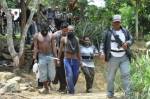
In the latest crackdown 13 members of the Wakno Baptist Church were arrested on August 31 in Kotaraja, a suburb of Jayapura, by Police and Detachment 88 anti-terror troops. Heavily-armed plain clothes troops, BRIMOB paramilitary police and intelligence officers raided the houses of Giki and Giben Kogoya just before 0500 local time, looking for perpetrators of an attack that killed several Indonesian colonists in Nafri on August 1. Local human rights activists reported that many locals fled into the forest, fearing for their lives, after warning shots were fired.
Desi Kogoya, 8
The raid at the shepherd’s house was witnessed by scores of local residents. Police chased a terrified eight-year-old, Desi Kogoya, catching her in the forest just before dawn during the arrest of her family, but the whereabouts of Desi and several of her family members were unknown for several days. Jayapura Police returned her to her family around lunchtime on September 7 after initially denying arresting the child or having her in custody, despite the witnesses telling Baptist priests that they saw her being dragged away and bundled into a truck.
The Fellowship of Baptist Churches of Papua has condemned the kidnapping of Desi, saying “that she is just a child that has no idea of the activities of her parents.” In a statement, a spokesman for the West Papua National Committee (KNPB) labelled the kidnapping of Desi Kogoya “a clear violation of Indonesian Human Rights Law” and has demanded that police immediately bring her home. “This is a clear violation of Indonesia’s obligations under the Convention on the Rights of the Child.”. At time of writing it was unclear as to the current condition of Desi.
On August 15, Jayapura District Police Assistant Senior Commissioner Imam Setiawan accused Dani Kogoya, the alleged Jayapura area commander of the West Papua National Liberation Army (TPN-OPM), of responsiblity for the Nafri attack – despite the violence being initially linked by police to “unknown persons”. Credible independent observers have widely linked the violence to elite security forces intent on violent destabilisation of pro-independence civil resistance, part of a deepening campaign of seemingly random violence against West Papuan civilians.
Indonesian security forces have a long record of arbitrary arrests and violent actions against civilians in the Kotaraja and Tanah Hitam neighbourhoods, with several military operations causing displacement of civilians and their families. In December 2010 a particularly brutal operation resulted in the arrests of 8 local men. Residents accused the military and police of planting weapons and evidence to link Dani Kogoya to acts of violence also blamed on “unknown persons”.
The neighbourhoods are strongholds of Dani and Lani families, who have moved to Jayapura for education or employment opportunities absent from their home tribal areas – in the Baliem Valley and highlands. The Kogoya clan, like many in local area, is a large Dani clan from the highlands of West Papua, with members in the pro-independence movement, ordinary farmers, and public servants.
(Please click on thumbnails for larger versions of these photos)
Local sources say Dani Kogoya had never visited Biben Kogoya’s house, and Police concede that he escaped the raid. The Fellowship of Baptist Churches in Papua has reported that the men arrested were forced by police to pose as perpetrators of the violence in Nafri. During a welfare visit to the Jayapura Police cells on August 31 the arrestees told PGBP General Chairman, Socratez Yoman, that they were not involved.
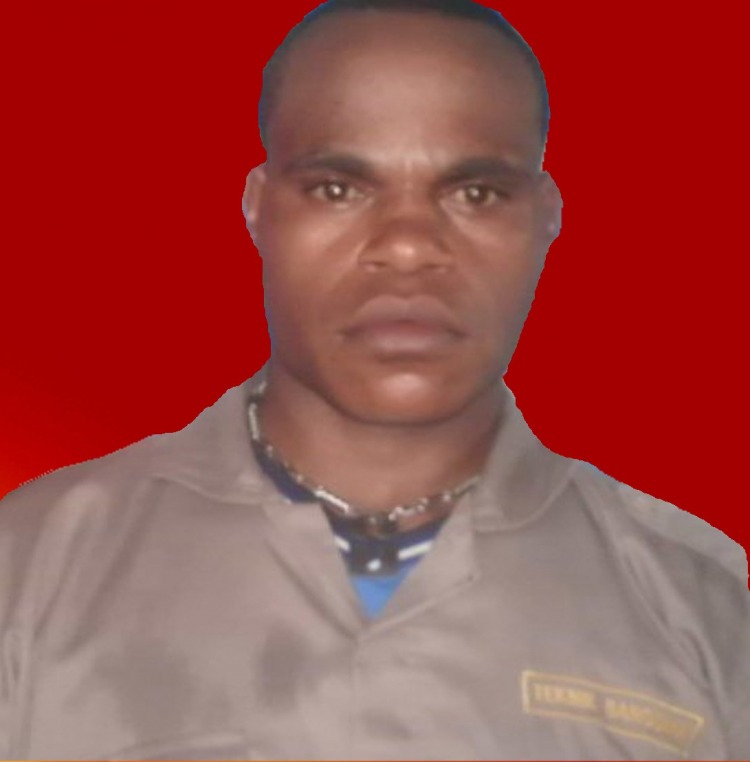
Those arrested were Desi Kogoya (8) and 13 other family members including Tinus, Arinus and Wen Wenda; and Mis, Bodi, Denias, Yawanus, Siki, Yeskiel, Yusman, Ekimar and Panius Kogoya. Of the 12 people arrested on August 31, ten were eventually released from Polsekta Jayapura, leaving two men – Ekimar Kogoya (22) and Panius Kogoya (20) – still undergoing interrogation.
Ekimar KogoyaPanius Kogoya
Deep Scepticism at scapegoating
The arrests are being greeted with great scepticism by a highly traumatised local population. They accuse police of deliberately failing to find the real perpetrators of multiple acts of violence, and of scapegoating West Papuan people.
Indonesian Police in Jayapura have issued numerous contradictory statements surrounding the recent upsurge of violence, especially the Nafri case. According to the Jakarta Post the Papua Police spokesman, Senior Commander Kombes Wachyono, said on September 1 that the incident was simply a criminal act and had nothing to do with the Free Papua Organization (OPM).
Ferry Marisan, director of local Papuan human rights organisation ELSHAM Papua, told Radio Kbr68h that those arrested were simply not at the scene of the Nafri attacks, and were high school and college students committed to nonviolent civil resistance for Papua. Marisan, based on extensive investigations by ELSHAM, suspected the police of fabricating the case to link the detainees to the “separatist” OPM, and convict them of the violence – taking suspicions away from the security forces . “According to us, from ELSHAM (view) it’s not something new for police officers to always blame Papuans, put them on trial, and to prosecute them as the actual perpetrators. (With) Elsham’s longer investigation, we also find other evidence. There are some people other than Papuan people; we can definitely say they are part of the shooting. ” Marisan said.
Socratez Yoman, the Chairman of the Baptist Church, also demanded security forces find and arrest the genuine perpetrators of all the violence. “’Unknown Persons’ (OTK) are to be sought and arrested instead of the little people being scapegoated. Orchestrated theatre such as this must be stopped because it just destroys the authority and public view of the government and security apparatus in Indonesia and the international community. The authorities have failed to protect the people. We hope and we ask the security forces to free the two detained civilians. Do not be injured or injure the conscience of the people of God,” Yoman said.
According to local human rights and activist sources, it seems the police are fully aware of the real perpetrators of ongoing acts of violence, which is most likely connected to operational and funding competition between Police paramilitary forces and the elements of the rogue special forces, Kopassus.
The KNPB Sentani branch were even more blunt. “None of the 13 arrested as TPN-OPM suspected of the Nafri incidents are truly the perpetrators, as seen from several cases according to our investigations. TPN are not the murderers, but the perpetrator is Kopassus (Army Special Forces)”, said a KNPB spokesperson. Papua Police have been making arbitrary arrests and sweeps all over the city and Kotaraja, but the case has not yet been solved. “Papua Police need to stop sweeping and conducting activities that are not fundamental, because this unprofessional behaviour of Police has resulted in many Papuans becoming victims of abuse. The Indonesian police, army and BRIMOB in Papua must stop the injustice in Papua.”
Mass militarisation and distributed violence
West Papuan civil society has become progressively more active in demonstrating discontent at Jakarta’s failure to show the least concern for Papuan social, economic, development or security welfare. Increasing civil resistance has been emerging across Papua, with Jayapura a significant focus for regional grievances.
Jakarta is studiously ignoring Papuans’ core demand – removing its security forces from the streets. Local observers are seeing an increased display of muscle as the real demonstration of Jakarta’s resolve. Activists who have been identified as key figures in organising creative resistance are feeling the full force of the state, not limited to any single branch of state.
The current operation across the wider Jayapura region came after the Nafri attacks, with senior Indonesian military personnel vowing to militarily “crush all forms of separatism in the province”. The Indonesian military has publicly and clearly stated that it is not sympathetic to any demands for democratic space, and sees any act of dissent, peaceful expression, and even discussion, as evidence of separatism. In an address marking the end of Ramadan on August 35 at TNI headquarters in Jakarta, Commander Admiral Agus Suhartono declared that TNI will not negotiate with any separatist movement, especially the Free Papua Movement (OPM). “There are no [negotiations], none, in any shape or form,”
According to KontraS, The Commission for the Disappeared, the approach taken by the Indonesian military is illegal, as the deployment of troops was promoted by the TNI and not approved by the President or the Indonesian parliament. Without structures for accountability these deployments breach regulations. “The government should have learnt from past experience in Aceh and Timor-Leste that the security approach never solves problems but only intensifies the issues, making any solution even more difficult.”
“The illegal use of TNI forces also provides more evidence of the weak role of Polri in taking charge of security in Papua. Polri is increasingly showing that it lacks confidence in itself and its incapacity to take charge of security” said KontraS on September 3.
Since August 1, Indonesian security forces have been heavily deployed across the Jayapura region, conducting a campaign of indiscriminate and heavy-handed raids against civilians across an area from Genyem, west of Lake Sentani, to the PNG border. A special roaming correspondent for West Papua Media reported from Abepura that local people are deeply fearful of the military activities and indiscriminate targeting of civilians, and human rights workers and pro-independence activists particularly are on guard. Indonesian intelligence officers are monitoring every conversation and groups of more than three are being harassed across the military operations area.
The West Papua Advocacy Team said that the TNI’s continued resort to the “security approach” in West Papua, manifested most clearly in continued “sweep operations” that displace Papuan civilians and cost civilian lives, is an ongoing tragedy for Papuans. “TNI unaccountability for its criminal activity, including systematic abuse of Papuan civilians and continuance of illegal “business operations” there, is a part of this continuing tragedy. But the TNI’s behavior in West Papua also has implications for Indonesian democracy more broadly. The TNI’s role in West Papua underscores that this institution remains above the law and insubordinate to the policy and direction of the civilian government. It constitutes a severe threat to the growth of Indonesian democracy.”
Many sectors of Papuan civil society, together with international human rights observers, are noting that this campaign is extending to all forms of political expression – peaceful, political and pastoral – and is causing terror to the families of those even who have not engaged in political activity.
Witnesses and correspondents are describing the atmosphere as a warzone, with soldiers on the streets and harassing groups, conducting training and random Stop and Search, and indiscriminately targeting Papuan youths during sweep operations to flush out perpetrators of recent violence. Activist sources have reported seeing many groups of “people who are new in town” roaming across all areas from the ferry terminal and throughout the city, acting in an intimidatory fashion. “There is only one organisation that can have people act tough on the locals on their first day in a new town, and we call them the ghosts,” said a foreign observer present during this upsurge, recently returned from Papua.
Armed Intelligence officers, working in conjunction with pro-Indonesian militias of Barisan Merah Putih and Aswain (Uni Timor Asawin / United Sons of Timor, the vehicle for ex-Timor militiamen led by the notorious indicted war criminal Eurico Guterres), are regularly shadowing activists and their families, and conducting random roadblocks in isolated streets, according to witnesses.
Of course, like any terror campaign, “unknown persons” do not limit their victim to just one side, in order to create maximum terror and deniability. In an eerie simulacrum to his own stabbing in early 2011 after he broke a story on police abuse of detainees, journalist Banjir Ambarita reported the killing on August 23 of Captain Tasman, 53, from the Cendrawasih Regional Military Command. Unknown attackers fatally stabbed Tasman while he was motorcycling to work in the outskirts of Jayapura. In addition to the Ambarita case, this type of brazen attack bears strong similarities to the August 1 attack at Nafri, the delivery of a bomb on June 28 to the KumHAM office in Kotaraja, and many years of so-called “ninja” attacks from motorbikes that Papuan civilians have suffered for years.
This case, like so many others, has been unsolved, and police are showing no signs of hurrying any investigations. Papuan media sources have said that it absolutely critical for the TNI to be fully transparent with this investigation, and not blame Papuans immediately without credible evidence for an attack that bears all the hallmarks of Indonesian Islamist violence – especially in the use of the sword – or factional violence between members of the security forces involved in illegal business activities.
Gruesome and credible reports have been provided to West Papua Media detailing random attacks on students not necessarily connected with political activism. August 23 was a day of particular brutality, with similarities in all cases with the attack on Captain Tasman – connections that the police have so far refused to examine.
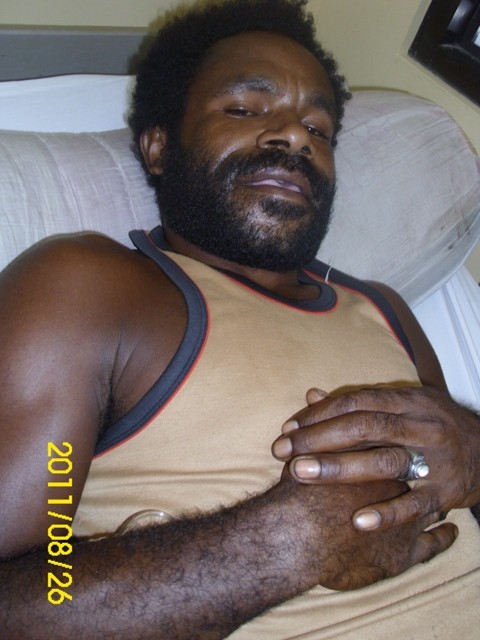
Noris Selegani in Abepura Hospital
Noris Selegani in Abepura Hospital
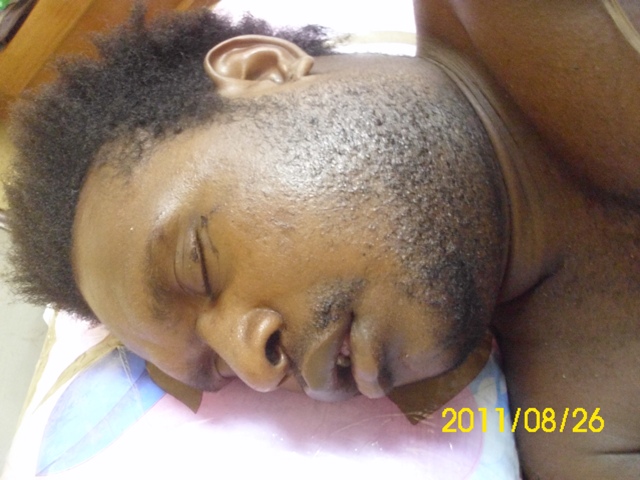
At 04:15 in the morning of August 23, two University students were attacked near the Cenderawasih University Campus (UNCEN) in Abepura, by perpetrators believed to be members of Kopassus from Abe Beach. Noris Selegani, 21, an International Relations Student at UNCEN, and Martinus Nayagau, 20, a student at the Department of Mines USTJ, were coming home on a motorbike from a University graduation party when a black four wheel drive Avanza blocked their path.
According to interviews from human rights workers who visited the victims in hospital, the two students were rammed by the Avanza and fell off their motorbike, but then several men dressed in Police trousers and “police civvies” (bajupreman) jumped out the car and beat them.
Martinus Nayagau
Using martial arts techniques, the assailants punched at Noris’s heart three times in quick succession so he lost consciousness, then broke his jaw, and left and right hands and upper arms, causing deep lacerations at the breaks and paralysis. Martinus received significant head and eye injuries from the beating. The assailants left the two victims for dead on the road. A garbage truck brought the two unconscious victims to Abepura Hospital for treatment.
According to witnesses and medical staff, Noris and Martinus were denied trauma treatment for two days at the hospital by medical personnel, as armed police and army took over the emergency area and refused to allow treatment of Papuan casualties. It is still unknown why armed officers evicted Papuans from the emergency ward of the hospital on August 24, but treatment was only able to be provided after the armed men ended their occupation. The students finally received surgery on August 26 and are currently recovering from their ordeal.
According to KNPB, this is another clear case of Kopassus deliberately sacrificing the lives of the victims. “This is an act that violates the State guaranteed Right to life of Papuan people, the occurrence of this incident is clear that, together with the killings in the streets at Buper, Nafri and other places that the culprit was Kopassus. They make deception that the culprits are TPN-OPM, but this is not true. TPN-OPM know the rules, they cannot target civilians but only eternal enemy being the TNI or Police.”
Later on the 23rd, terrified university students contacted via a West Papua Media stringer, speaking on the condition of anonymity, provided an account of the brutal stabbing of their friend, a student at Cenderawasih Universty (UNCEN). The student, who was testing out a newly purchased telescope on the summit of a hill above the new UNCEN campus, was with a friend and were ambushed and stabbed by unknown assailants. KNPB activists considered the stabbing – at around 1pm on August 23 – highly curious on the day of the Tasman incident, when TNI and Police were on high alert and standby (siaga) everywhere.
Evidence has also come to light of another extrajudicial police shooting of a civilian in his front garden, during a security sweep.
Marten Wenda
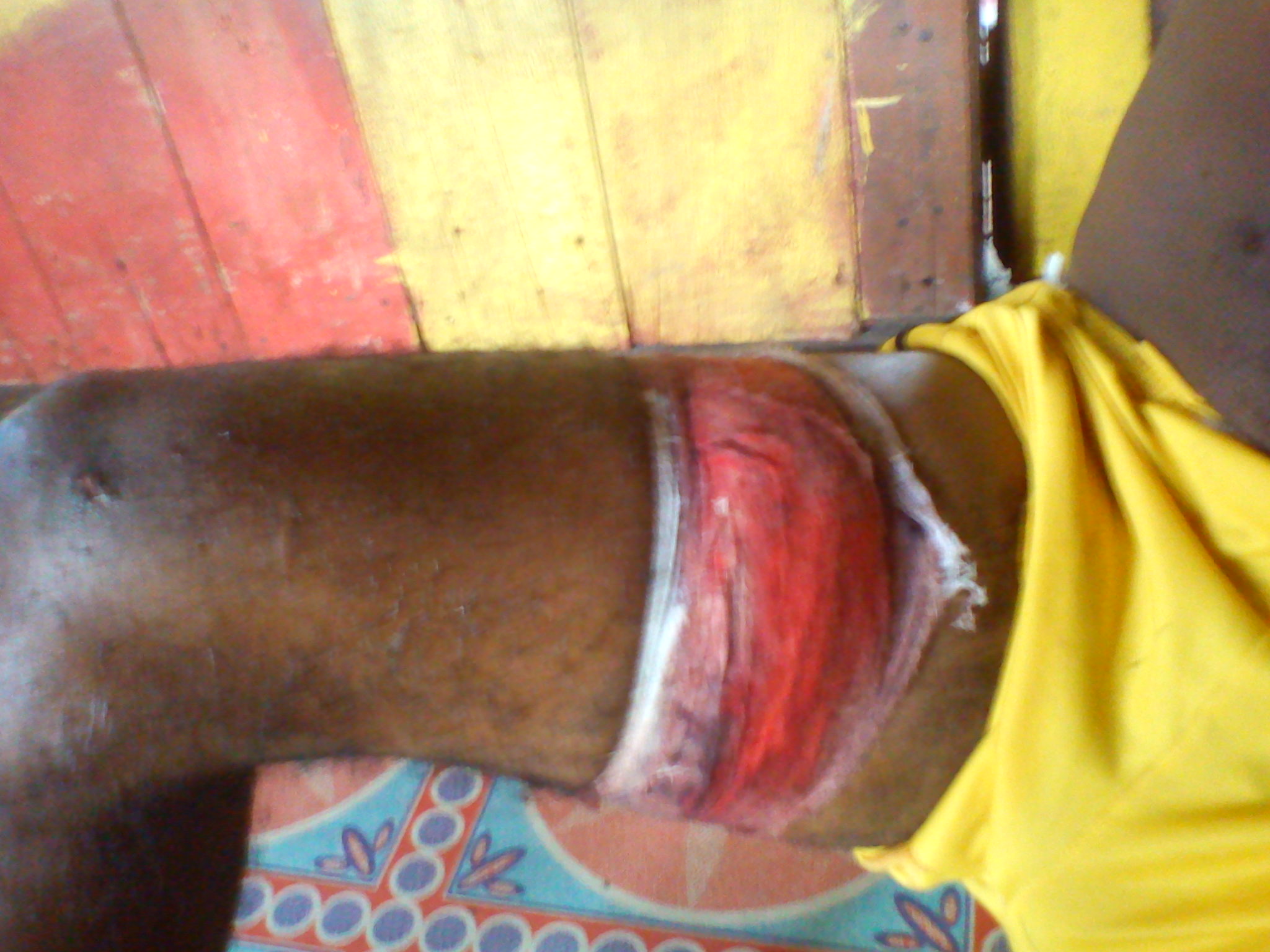
Marthen Wenda, 38, was shot through the thigh and beaten by Brimob police after being chased when falsely accused of being a thief at the Kangkung Outdoor Market, at 9pm on August 23. In video testimony provided to West Papua Media, Wenda described how he ran and was shot – extrajudicially – in his own front garden by a Brimob officer from Abeupra police station. Wenda sustained a deep gunshot wound in his thigh.
Marten Wenda's front garden, where he was shot by Brimob policeGunshot wound from Brimob - Marten Wenda
These unsolved acts of violence that have been occurring around the Jayapura region since August 1, have been attributed to “unknown persons”, but are widely believed by many to be the work of security forces, with many acts of brutality being recorded against civilians in the aftermath. Police are reluctant to ever investigate, citing lack of evidence.
The KNPB believe these acts appear to be part of a scenario designed by certain quarters. “This scenario is being promoted by people who want to get their hands on funding. These acts of terror or intimidation are aimed at warning Papuans not to go on pressing for their human rights,” said Mako Tabuni of the KNPB, speaking alongside Buchtar Tabuni, the general chairman of the KNPB, as well as Viktor Kogoya, during a press conference on 6 September. A policy of terror to dissuade activism?
The ongoing brutality against civilians in Jayapura is not quelling the desire for independence or organising for campaign of civil resistance.
Activists from the two main civil resistance sectors – KNPB and West Papua National Authority (WPNA) have reported significant threats to personal security in the weeks since mass mobilisations were held across West Papua on August 2. Civil resistance activists linked to KNPB Abepura, who declined to be identified, told West Papua Media the violent acts are part of a destabilisation scenario and are linked to conflict between police and military. “After violence, the military are totally taking over the public space especially around KNPB’s secretariat and Sofyan Yoman’s house, basically an invasion, putting lots of pressure on folks and demanding careful movements and security precautions.”
Once again, in the press conference on September 2, Mako Tabuni said KNPB would not be influenced by these incidents. “We, as the voice of the Papuan people, will continue to speak up for the human rights which are the true aspirations of the people of West Papua.”
Indonesian intelligence officers are continuing to threaten any activist that speaks out against the increasingly brutal colonial occupation of West Papua, extending intimidation even to churchmen who are not advocating independence and regularly engaging in activities that intimidate local people.
Indonesian Police on August 18 opened fire on a car of West Papua independence activists in Abepura, West Papua, after arresting three other activists from the West Papua National Committee (KNPB) for distributing pamphlets in support of demonstrations planned for August 20. Brimob Officer Bripka Numberi allegedly fired indiscriminately in pursuit of the vehicle of KNPB activists who had enquired to the safety of a detained friend, shooting 21 rounds into the car. After the vehicles occupants panicked and ran, Numberi continued to open fire on the unarmed group, shooting Demi Asso, Soni Kosay in the feet.
A Papuan farmer was killed in his garden at Arso on August 19 by soldiers from either Kostrad or Kopassus. After a terrifying day for local villagers who were threatened repeatedly by soldiers occupying their village and gardens, Das Komba, 30, was returning from his banana grove when gunfire erupted. His body was found on August 20, and police later came to exhume his body.
According to a statement from KontraS, the Papua Regional Military commander, Major-General Erfi Triassunu later confirmed that shots were fired by a member of the TNI – because they alleged that Komba “was preparing to attack his men.” He said he was not clear about what happened but claimed that Komba had tried to seize a weapon from his men who were on patrol in the area. According to Triassunu, his men could not possibly have shot someone at random. However, Bintang Papua reported an autopsy confirmed that there were fragments of ammunition in Komba’s body but the calibre of the bullets is not known. Witnesses said that Komba had been told to go home by three soldiers, but just as he turned round, intending to return home, they heard two gunshots. His body was not found until Sunday, two days after the shooting.
Local human rights sources, pro-independence activists and even clergy have reported to West Papua Media of a significant increase in threatening behaviour from military officers and regular anonymous SMS and phone threats against anyone expressing their opinions or reporting evidence of daily life in Papua. However the SMS threats are considered to be so routine by the recipients that they often do not both to keep them, and are impossible to verify.
West Papua Media was recently provided with significant and thorough confidential police documentation that details the techniques of SMS and cell phone monitoring and communication blocking strategies regularly utilised by security forces against civilians. Activists report they receive an influx of threats after they observe security agents acting suspiciously in their vicinity. One recent wave of threats was targeted at activists from the West Papua National Authority, telling recipients “to get ready for their execution date”.
WPNA activists have responded to these latest threats by simply redoubling their efforts for massive mobilisations ahead of the planned Third Papuan Peoples’ Congress. KNPB activists are also redoubling their efforts by ensuring that the SMS threats are simply countered with improved security practice and careful movement. KontraS is conducting a thorough investigation currently into the SMS threats.
The reports detailed in this investigation are just the tip of the iceberg, and of course are only a small over all area of Papua. Many more reports of threats, intimidation and acts of violence against both ordinary Papuans and activists have been received in the past month by West Papua Media, but cannot be published at this stage as they cannot be verified.
Currently, significant military operations are still going in the Puncak jaya and Tingginambut areas of the highlands, designed to flush out the troops of Goliat Tabuni. In Paniai regency, thousands of security forces are occupying villages of the Mee people, and local church officials are helping to broker significant peacebuilding measures to limit the civilian displacement and potential for conflict. In Serui, local organisers from the West Papua National Authority are daily threatened with murder by Kopassus and Kostrad troops, with entire villages occupied to intimidate one activist living there.
At time of writing, it was unclear if Indonesian security forces were acting with or without clear direction of Jakarta. However, Jakarta is at a crossroads with international attention on Papua. On September 7 at the Pacific Island’s Forum meeting in Auckland, the visiting United Nations Secretary-General Ban Ki-Moon was drawn into the Papua issue, but was unequivocal in his response. “whether you are an independent state or a non-self-governing territory or whatever, the human rights is inalienable and a fundamental principle of the United Nations. We will do all to ensure that people in West Papua, their human rights will be respected,” Mr. Ban told reporters.
West Papuan civil resistance activists understand that their internal consolidation is being greeted with trepidation from Jakarta. By the violent actions of the last month, the “unknown persons” of the TNI are increasingly desperate to nip this desire for freedom in the bud and are trying every little black bag trick they can think of. However, according to most observers on the ground in Papua, the military’s black bags are becoming increasingly transparent, and aided by increasing capacity for citizen media, Papuan civil society is becoming increasingly impatient for – and capable of – the disciplined change that is going to shake Jakarta at its foundations once again.
Nick Chesterfield
***
Please help support the work of West Papua Media, and help us continue to cover the escalating struggle in West PAPUA. HELP SUPPORT INDEPENDENT MEDIA IN WEST PAPUA. WE ARE ENTIRELY NON-PROFIT AND RELY ON YOUR SUPPORT FOR OUR SURVIVAL. Visitwww.westpapuamedia.info and click on donate
(West Papua Media Note: this event also subject to a lengthy and detailed investigation by West Papua Media that will be published in coming days)
Statement by KontraS on 3 September 2011Arrests and torture of ordinary Papuans by the Police and the Army (Polri/TNI) have worsened situation in PapuaKontraS condemns the appalling practices of torture and criminalisation which were perpetrated by the law enforcement agencies against of a number of Papuan people by the police in Papua. Such activities are a serious violation of their human rights which should be avoided at all costs because they are in breach of a number of legal provisions.
Acts of torture and criminalisation were perpetrated on 31 August, during Lebaran, and occurred early in the morning. when a number violent acts also took place. These activities were perpetrated against a group of Papuans and occurred as they were being arrested by the police who were acting in violation of the laws in force. The details of what happened are given in the chronology attached to this statement. [Abridged translation only]
These criminal acts were perpetrated without being credibly justifiable in relation to the allegations being made. We fear that this is part and parcel of the practice of stigmatisation of Papuan people which has been developed by the state apparatus, in particular the police and the army, in their law enforcement activities.
The practice of torture is inhumane and is moreover in breach of Law 5/1998 regarding the ratification by Indonesia of the Convention Against Torture . This means that components of law and the security apparatus, in particular the police, are bound by law to refrain from such practices and to punish those who perpetrate such acts (see articles 1 and 2). They are also bound by Law 39/1999 on Basic Human Rights, article 33 of which prohibits the use of torture.
With regard to the police, these acts are also in violation of internal police regulation 8/2009 which clearly prohibits the use of torture.
This latest incident is an indication of the fact that torture and criminalisation have become integral to police practices when they try to obtain statements (that is to say, confessions) from persons who are suspected of committing crimes. In the second place, this behaviour represents a repetition of previous acts of torture that have occurred in Papua. With regard to the army, they are not entitled to be involved in making such arrests. A year ago, we were all stunned when we saw the brief, amateur video broadcast on Youtube showing members of Brimob and the army engaged in acts of torture against people alleged to be members of the OPM.
Such practices undermine the confidence of ordinary Papuan people in the police. In the past few months, violent practices have been spreading throughout Papua such as the case of 16 people arrested in 2010 and seven people who were arrested in Manokwari. It is necessary to strengthen the confidence between the government, the various pro-independence groups, civil and customary society and other elements. It is also necessary to strengthen people’s confidence and respect in the implementation of democratic principles such as the law and human rights. The practise of torture will only make it more difficult to comply with the agenda for peaceful dialogue with Papua.
We therefore call on Kompolnas (the police community) and the National Human Rights Commission to investigate these reported incidents of torture in Papua. And once sufficient evidence has been found, the perpetrators must be made accountable before the law. This is important in order to show that there is no discrimination in law between Papuan civilians who are vulnerable to actions by law enforement agencies who are treated like heroes for taking actions against alleged separatists.
This should also be an occasion for the police to improve their behaviour which has been damaged by the continual practice of torture by members of the police force.
We take this opportunity to remind the President that the continuing lack of clarity in the policy of the government towards Papua is a threat to the security and livelihoods of the Papuan people.
3 September 2011:
Kontras National Executive: Haris Azhar, Co-ordinator.
Kampak (?) Dorus Wakum, Chairperson
A chronology attached to the statement provides details of the place and time of the arrests.
The thirteen arrested persons are alleged to have caused unrest during an Idul Fitri ceremony that was being held on the premises of Brimob. They are alleged to have been involved in shootings in Nafri Kampung which resulted in the deaths of three civilians and one member of the TNI.
During an assault, the police fired shots in the direction of the Wahno Baptist Church and then confiscated traditional equipment such as arrows, machetes and knives as well as some OPM documents.
The thirteen persons are:
Yawanus Kogoya.
Tinus Wenda
Siki Kogoya
Arinus Wenda
Yusman Kogoya
Mis Kogoya
Bodi Kogoya
Wen Wenda
Denias Kogoya
Ekimar Kogoya
Panius Kogoya
Yeskiel Kogoya
One unidentified person
Information has been provided to West Papua Media that in an unprovoked attack, an Indonesian police officer shot a West Papuan teenager on on August 30 in Merauke, West Papua.
Activists from the West Papua National Committee (KNPB) in Merauke reported that Benedict Umap, 19, was shot outside the KNPB Secretariat office on Johar Kelurahan Kelapa street at 1530 by Brigadier Jhon Piter Dias of Merauke Police.
According to witnesses, Umap had been walking back to his house, and was approached by Brigadier Dias without just cause. Dias fired several shots from his rifle without provocation into Benedict Umap’s left leg, resulting in gunshot wounds and a broken leg. Umap then scrambled with a broken leg to the Regional General Hospital Merauke assisted by family members who witnessed the shooting.
KNPB Merauke has described the situation as highly tense at this arbitrary and casual act of police brutality, with local residents and Papuan people in Merauke fearful of further police violence.


 (Please click on thumbnails for larger versions of these photos)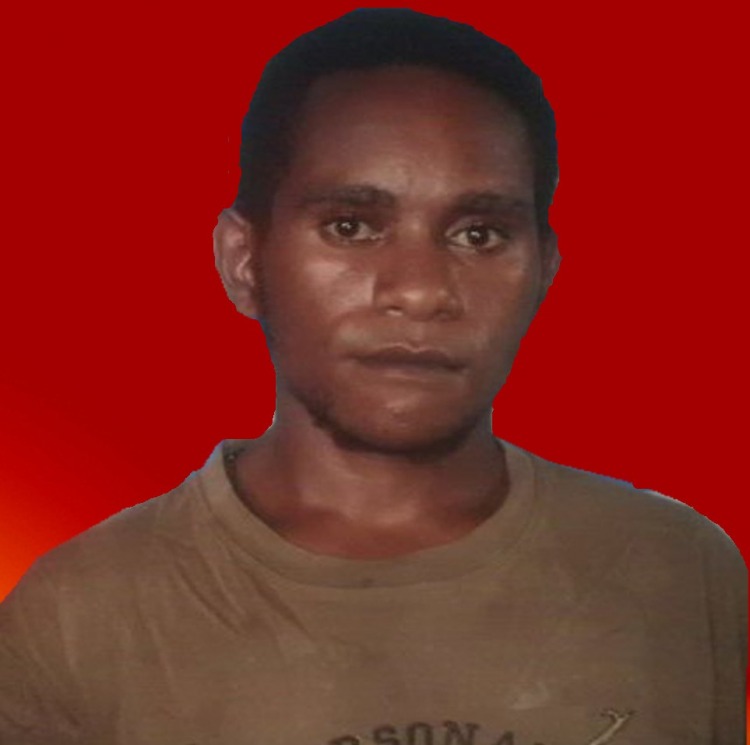






 West Papua Media Alerts