TEMPO Interactive, Jakarta:A week long strike that left Freeport Indonesia’s Grasberg mine in Papua shuttered and paralyzed has come to an end. Freeport Indonesia’s spokesman Ramdani Sirait confirmed at midnight that an agreement had been reached with the PT Freeport Indonesia union to end the strike which began on July 4 and led to a suspension of mining and milling activities.
“Under the agreement, negotiations for the upcoming collective labor agreement, scheduled for renewal in October 2011, will commence. The agreement provides that employees will begin reporting to their positions on Tuesday, July 12, 2011,” Ramdani said in a text message, received by TEMPO English Edition at 12. a.m. on Tuesday,
“The agreement was the result of collaboration by representatives of the union, the Mimika Regency Legislative Council (DPRD) and PTFI.”
The strike ran from July 4 till July 11 at the mine, as leaders of the workers’ labor union had refusing to negotiate, pointing out that any sort of compromise was only a possibility with US-based Freeport chairman James Moffett. The Grasberg mine is one of the world’s biggest sources of copper and gold.
A total of 8,000 of the 19,500 workers employed at the Grasberg mine would continue this strike , according to labor union leaders last Saturday evening, until they knew their wages had been increased sufficiently. Previous media reports have pointed out a demand for an increase from $1.50 to $3 per hour.
REPORTS OF 600 TNI SURROUNDING VILLAGES IN TINGGINAMBUT
by Nick Chesterfield @ Westpapuamedia.info
Monday July 10, 2011
Confirmed reports emerged on Sunday from Puncak Jaya, West Papua, that over 600 Indonesian Army (TNI) troops have been conducting daily full combat operations since July 4 in and around villages in the Tingginambut area. Troops have reportedly attacked a series of villages said to be the refuge of the West Papuan Guerrilla leader Goliat Tabuni.
Troops from the notorious 753 Nabire battalion have reportedly surrounded the General Headquarters area of the West Papua National Liberation Army (TPN-PB) faction led by Tabuni, and have occupied several villages including Kalome, where three soldiers were shot by unknown assailants last Tuesday. The Indonesian government news agency Antara reported that armed men stopped TNI soldiers from carrying out what it described as a “routine patrol” in Kalome village. An exchange of fire occured – it is unclear who shot first – and three TNI were all struck by bullets to their arms sustaining non-life-threatening gunshot injuries.
According to reliable human rights activists in the immediate area, villagers in Kalome were rounded up and subject to harsh treatment by returning soldiers from 753Btn, and reportedly forced to watch as several houses were torched. West Papua Media has been unable to verify these reports, but 753Btn has a well documented history of burning villages suspected of sympathies or harbouring TPN-PB. (Extensive video footage of previous village burnings is available to any interested party).
Firefights have been occurring daily between TPN and TNI forces, with local sources describing it as “a 7-day shootout”. “The current death toll, according to our intelligence data, is that Indonesia have killed 20 TPN fatalities, and according to reports from the field in Puncak Jaya, TPN have claimed five Indonesian military casualties”, said the source upon condition of anonymity. Several civilian casualties have been reported, though exact figures are unconfirmed. West Papua Media cannot at this stage confirm exact numbers.
Battalion 753, the battalion responsible for the well documented torture of West Papuan civilians and village burnings across Puncak Jaya in 2010 (including the infamous Tunaliwor Kiwo torture video), has been recently engaged in a much publicised heart-and-minds Bakti (Service) campaign, gardening and house-building cynically named “Love and Peace are Beautiful”, to mend the bridges damaged by the Army’s human rights abuses, torture and village burnings. It was unclear whether this campaign was mending the houses that 753 had previously burnt down.
Puncak Jaya has been the scene of regular human rights abuses on civilians, with major combat operations ongoing since 2009. TNI and BRIMOB paramilitary Police, as well as the Australian trained Detachment 88 counter-terrorist unit, have regularly targeted civilians whom they accuse of supporting the guerrilla TPN-PB of Tabuni.
Local sources have expressed fear to West Papua Media that their villages are being targeted for pacification and punitive operations after the failure of a much touted Social service campaign to heal the image of brutality that surrounds the 753 battalion. It is feared by local activists that civilians are especially at risk as collective punishment for the potential escape of Tabuni’s forces, in a strategy by the TNI designed to flush out the TPN.
According to the adjutant of General Tabuni in a statement sent to West Papua Media, the purpose of the social activities by the TNI was to create a trojan horse for the eradication of armed resistance from Tabuni and his men. “TNI’s Bakti social mission in Puncak Jaya is really a guise to avoid gross violations of human rights because the TNI Papua Commander was in the area and needed good press”. According to the Jakarta Globe, the head of the Cenderawasih Military Command, Maj. Gen. Erfi Triassunu, said the TNI would provide psychiatrists to help residents traumatized by the widespread violence in the area. The campaign was due to run from 2 May to 28 August, but almost all the troops who were building houses are now burning them down again, according to local sources.
Local human rights activists described the failure of this program being caused by the simple issue of trust. “All their talk of caring for our human rights and welfare is shown to be a lie by this latest operation. We have never trusted them, but now we trust them even less,” said the human rights worker, who cannot be named for his safety.
The TPN spokesperson was more blunt. “People doubted the presence of top military who were proclaiming their victory in Puncak Jaya. The TNI social service campaign is merely a shield. It was evident from July 6, that (these) military forces ….suddenly stopped and all directed to Tingginambut to conduct military sweeps. AllTNI Bakti activities stopped completely. Since July 6 to the 8th all military forces here, with full combat equipment, have surrounded the headquarters of TPN / OPM…. Tabuni is currently under siege”.
Reports of major abuse by Indonesian security forces in the West Papuan highlands are notoriously difficult to verify, as international human rights monitors and journalists are banned by the Indonesian government from travel to West Papua.
Please stay tuned to West Papua Media for more updates.
Exclusive Copies of the Scanned Letter are available for download at the end of this article. (Please note, any attempts to block access will result in significant multiplication across the internet)
EXCLUSIVE: A leaked letter from an Army General reveals Indonesia’s attempts to disband a West Papuan church with threats of “assertive action”
From the outside looking in, the latest church conflict in West Papua might look like just another example of factional Protestant politics. A little sordid perhaps, but irrelevant to all but the parties involved.
Dig a little deeper, however, and one finds something far more disturbing.
A leaked letter from the head of the Indonesian Army in Papua obtained by New Matilda reveals that far from being an internal church matter, the conflict between Kingmi Indonesia, a Protestant church that has parishes across Indonesia, and the breakaway Kingmi Papua Church, goes to the heart of the Indonesian government’s attempt to repress movements for cultural pride and autonomy in the country’s restive Pacific periphery.
In a nutshell, the conflict turns on whether Kingmi Papua has the right to separate from Kingmi Indonesia and set up an autonomous synod, reverting to an arrangement that existed prior to 1982.
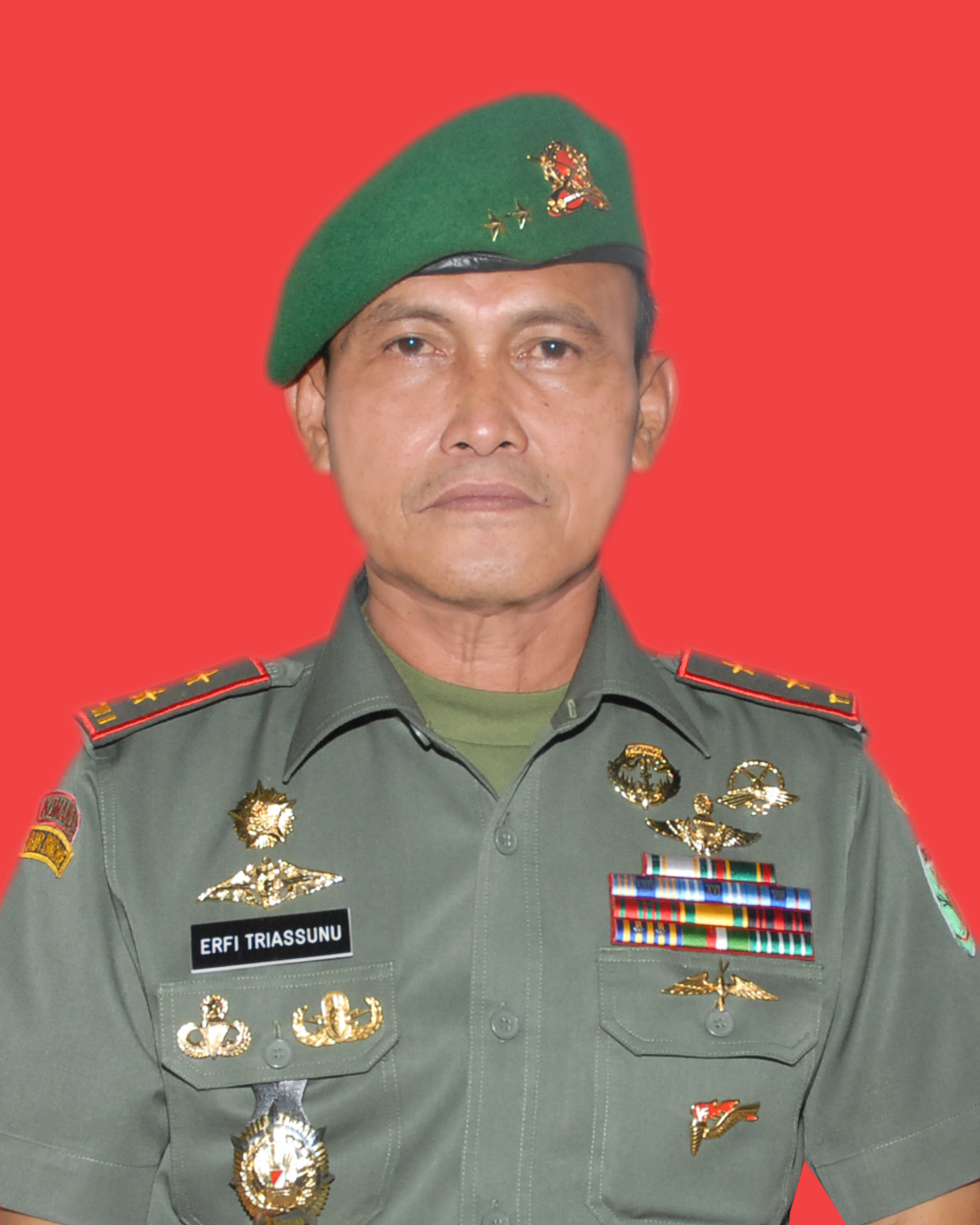
Major General Erfi Triassunu, TNI Chief, Kodam 17 (Papua) (photo discourtesy of TNI)
The question is this: why has the Indonesian Army become involved? Major-General Erfi Triassunu has waded into a conflict that he himself acknowledges is an internal church matter. In the letter (File Number: R/773/IV/2011) addressed to the Governor of Papua, Barnebus Suebu, dated 30 April 2011 and marked “secret”, Triassunu “respectfully requests” the Governor to arrange a meeting between Kingmi Indonesia and Kingmi Papua. The General also offers himself as a mediator.
The letter continues: “if the conflict cannot be resolved through discussion then assertive action must be taken”.
Let me translate “assertive action”. In East Timor when the Indonesian Army took “assertive action” against the Church, they murdered church workers, massacred parishioners, raped women and burnt churches to the ground. In West Papua too the Indonesian Army has a history of killing pastors from the Kingmi Papua Church, as well as other churches. This dates back to 1 May 1963 when the Indonesian government took administrative control of the territory and has continued up to the present.
Last October a video filmed on soldiers’ mobiles phones and circulated widely on the internet, showed several soldiers from Kostrad, the Indonesian Army’s Strategic Command — Triassunu’s own division — torturing a Papuan church worker by burning his genitals with a stick.
In the letter, Triassunu, who previously served in Aceh, makes a number of accusations. He accuses Kingmi Papua of trying to access as much money as they can from the government’s Special Autonomy programme in order to create new churches. However, the real purpose of building a network of churches, Triassunu insists, is “to strengthen Papuan civil society aspirations for freedom”. He then argues that the Kingmi Papua Church’s desire to be independent of the Indonesian Church is “just an excuse” for “the church to become a political vehicle” that supports Papuan independence.
Triassunu then goes on to make a number of recommendations. He specifically says that Kingmi Papua pastors should stick to Biblical “dogma” and not stray into politics. The General is on solid ground here, following in the footsteps of numerous dictators from Marcos to Pinochet, all notorious for their attempts to stifle meddlesome priests. Triassunu specifically names Reverends Benny Giay (the current moderator of the Kingmi Papua Church), Seblum Karubaba (the former moderator) and Noakh Nawipa (the Rector of the Pos 7 Theological College) as malcontents, mentioning several seminars organised by the trio where “Papua Merdeka” (freedom) was discussed.
All this has echoes of Suharto who systematically depoliticised (read: violently repressed and disbanded) all independent organisations, including religious ones, for fear they could become bases for organised opposition against the regime. Indonesian democrats may have overthrown Suharto but West Papua is not part of a new democratic Indonesia. What is deeply concerning is that in the Papuan context the label “separatist” is regularly applied to Papuan leaders as a pretext for justifying extra-judicial action by security forces.
This is where the plot thickens.
According to the letter, the General decided to become involved in the Kingmi conflict after a Kingmi Indonesia pastor, Reverend Karel Maniani, personally asked the Army to protect his parishioners. But Reverend Maniani himself was previously a member of “Group Nine” of the Papuan Freedom Movement (or OPM). In the 1980s Maniani was jailed for four years in the notorious Kalisosok Prison. What happened to Maniani on the journey from freedom fighter to Army petitioner?
To make things stranger, the conservative US-based evangelical Christian Missionary Association backs Maniani and Kingmi Indonesia against Kingmi Papua. At stake is not only valuable church property and access to Special Autonomy funds, it is also over influence of a broad Papua base. Kingmi Papua has half a million members. Virtually all of them are indigenous Papuans from the fractious Highlands, around a third of the entire Papuan population.
When I asked Benny Giay about all this his reply was revealing. For years he said he was part of a church that was more concerned with “saving souls” than the day-to-day oppression of the Papuans. “The Kingmi church has been complicit with the suffering of the Papuans. We need to confess our sins and follow the narrow path of Jesus. This Gospel is very clear; we must stand with the oppressed and work to alleviate their suffering. I hope we can cast off our fear and stay firm to this path.”
Giay has a vision for an independent Papuan church; a uniquely Papuan church that makes space for Papuans to begin to articulate their own theology, one that sees God present in Papuan history and culture. Giay and his colleagues are slowly building up a church that commits itself to solidarity with the poor and oppressed; one that is led by the Papuans themselves. That may not sound much to a reader unfamiliar with Papuan politics, but in West Papua it is a big deal.
Just ask the General.
SCAN OF ORIGINAL LETTER SIGNED BY MAJ-GEN ERFI TRIASSUNU
Strange Birds in Paradise – A West Papuan Story
While the Indonesian army continues to dominate the indigenous inhabitants of West Papua, three friends gather in Melbourne to record outlawed folk songs with renowned Australian rock musicologist David Bridie. DVD AVAILABLE NOW
This is the soundtrack to the film by Charlie Hill-Smith, with music by David Bridie & Arnold Ap, sung by Hein Arumisore, Donny Roem, Kelly Kwalik and Jacob Rumbiak. It is a journey more than 250 West Papuan cultures, the interviews paint a picture not only of a country with a rich musical tradition and breathtaking nature, but also of a country weighed down by Indonesian military oppression. While the Indonesian army continues to dominate the indigenous inhabitants of West Papua, three friends gather in Melbourne to record outlawed folk songs with renowned Australian rock musicologist David Bridie.





 West Papua Media Alerts