Violence Continues in Papua, Soldier Murdered

(West Papua Media Note: this type of brazen attack bears strong similarities in its conduct  to the stabbing of journalist Banjir Ambarita in early 2011, elements of the August 1 attack at Nafri, the delivery of a bomb on June 28 to the KumHAM office in Kotaraja,  and many years of so-called “ninja” attacks from motorbikes that Papuan civilians have suffered for years. It is absolutely critical for the TNI to be fully transparent with this investigation, and not blame Papuans immediately without CREDIBLE for an attack that bears all the hallmarks of Indonesian Islamist violence (especially in the use of the sword), or factional violence between members of the security forces involved in illegal business activities) .

http://www.thejakartaglobe.com/news/violence-continues-in-papua-soldier-murdered/461024

Violence Continues in Papua, Soldier Murdered
Jakarta Globe | August 23, 2011


An Indonesian Military officer stationed in Papua was stabbed to death by unknown attackers on Tuesday.

Capt. Tasman, 53, from the Cenderawasih XVII Military Regional Command, was on his way to work when the attack took place near a housing complex on Jalan Baru in Heram, Jayapura.

A Cenderawasih University student who witnessed the incident told Suara Pembaruan that he was riding a motorbike behind Tasman when two men approached him.

One man used a knife to stab him repeatedly and the other one used a sword. Tasman fell to the ground and the men ran away.

Kiki reported the attack to a nearby police precinct but Tasman was already dead when police arrived at the scene.

He had been stabbed or slashed in the neck, back and stomach.

Neither the police nor the military in Papua were willing to comment regarding the latest attack in the region.

On Aug. 3, suspected Papua separatists attacked an Army helicopter in Jayawijaya district as it evacuated the body of a soldier they had allegedly killed, police said.

A few days before, the town of Mulia was rocked by two separate shootings that targeted police and military offices, wounding one soldier. On July 29, police said 16 rebel fighters engaged in a fire-fight with police in Paniai district. In the same month, two other shooting incidents left four soldiers dead.

AI: Indon authorities refuse Papuan political prisoner Kimanus Wenda medical care

Amnesty International
INDONESIA: AUTHORITIES REFUSE PRISONER MEDICAL CARE

UA: 251/11 Index: ASA 21/025/2011 Indonesia Date: 19 August 2011

Papuan political prisoner Kimanus Wenda is in urgent need of medical treatment. He has a tumour in his stomach, and needs to be transferred to a hospital to undergo an operation. Prison authorities have refused to pay for his transport and medical costs.

Kimanus Wenda is being held at the Nabire prison in Papua province, Indonesia. He has a tumour in his stomach and is constantly vomiting. Prison doctors have confirmed that he needs an operation; however, Nabire does not have the necessary medical facilities available. Kimanus Wenda needs to be transferred to Jayapura, also in Papua province, where he can receive the medical treatment he urgently requires. His family and lawyer have requested that he be transferred to Jayapura but the Nabire prison authorities have refused to cover the cost of his transport and medical treatment. Under Indonesian Government Regulation No. 32/1999 on Terms and Procedures on the Implementation of Prisoners’ Rights in Prisons, all medical costs for treatment of a prisoner at a hospital must be borne by the state.

Kimanus Wenda has been ill-treated in detention in the past. During his arrest and interrogation in April 2003, he was reportedly tortured or otherwise ill-treated by military officers, who beat, kicked and stamped on him. On 25 May 2011 Kimanus Wenda was beaten by prison guards after he and another political prisoner, Linus Heluka, attempted to file a complaint about a prison officer who had insulted a Papuan prisoner. At least four prison guards beat Kimanus Wenda with a thick piece of rubber and kicked him. The guards also hit Linus Heluka on the head and hand. Linus Heluka was then put in an isolation cell for two weeks.

Please write immediately in English, Indonesian or your own language urging the authorities to:

  • Ensure that Kimanus Wenda receives full and immediate access to the proper medical treatment he requires;
  • Allow Kimanus Wenda to travel to Jayapura to receive urgent medical care as recommended;
  • Cover the cost of such treatment in accordance with the UN Body of Principles for the Protection of All Persons under Any Form of Detention or Imprisonment (Principle 24) and Indonesian regulations;
  • Immediately conduct an independent and impartial investigation into all allegations of torture or other ill-treatment by prison guards in Papua and ensure that, should the allegations be verified, those responsible be brought to justice in fair trials and the victims receive reparations; and
  • Ensure that prison conditions and the treatment of prisoners meet standards provided for in Indonesian law as well as UN Standard Minimum Rules on the Treatment of Prisoners.

PLEASE SEND APPEALS BEFORE 3 OCTOBER 2011 TO:

Head of Nabire Prison

Arif Rachman
Lapas Klas IIb Nabire, Jl. Padat Karya,
Nabire 98801, Papua, Indonesia
Fax: +62 984 24721
Salutation: Dear Arif Rachman

Head of the Papuan Provincial Department of Justice and Human Rights
Daniel Biantong
Jl. Raya Abepura No. 37
Kotaraja – Jayapura 99117, Papua, Indonesia
>Fax +62 967 586112
Salutation: Dear Daniel Biantong

And copies to:

Director General of Prisons
Drs. Untung Sugiyono
Ministry of Justice and Human Rights
Jl. Veteran No. 11
Jakarta Pusat, Indonesia
Fax: +62 21 384 1711

Also send copies to diplomatic representatives accredited to your country.

Please check with your section office if sending appeals after the above date

URGENT ACTION Authorities refuse PRISONER medical care

ADDITIONAL INFORMATION

In April 2003 Kimanus Wenda was accused of attacking a military warehouse in Wamena, Papua province, an accusation which he denies. According to his lawyers, he was arbitrarily detained at the barracks of the Wamena District Military Command 1702 by the military and police and initially denied access to a lawyer. There, he was reportedly tortured or otherwise ill-treated by military officers, including being beaten with a piece of wood, kicked on his chest, stamped on, and dragged around with a piece of rope around his neck. According to Kimanus Wenda, the ill-treatment continued while the police were interrogating him. A translator was not provided during the police interrogation, even though Kimanus Wenda did not speak Indonesian. He was forced to sign a confession he could not read. In January 2004 he was sentenced to 20 years’ imprisonment for “rebellion” under Articles 106 and 110 of the Indonesian Criminal Code. He continues to suffer physically on account of the ill-treatment he experienced in 2003.

In December 2005 Kimanus Wenda was transferred to Gunung Sari prison in Makassar, South Sulawesi, thousands of miles from his family in Papua. While he was there he was forced to sleep on a cement floor. In January 2008 he was transferred to Biak prison, Papua and then to Nabire prison.

The Indonesian authorities have an obligation under national law and standards to provide medical treatment to all prisoners in the country. Article 17 of the Indonesian Government Regulation No. 32/1999 on Terms and Procedures on the Implementation of Prisoners’ Rights in Prison requires the prison authorities to provide adequate access to medical treatment. International standards also provide for medial treatment for prisoners. The UN Standard Minimum Rules for the Treatment of Prisoners provides that prisoners needing treatment not available in the prison hospital, clinic or infirmary should be transferred to an appropriate institution outside the prison for assessment and treatment. Furthermore, Principle 24 of the UN Body of Principles for the Protection of All Persons under Any Form of Detention or Imprisonment requires that prison authorities cover the costs of such treatment.Amnesty International believes the denial of medical care to Kimanus Wenda could amount to cruel, inhuman or degrading treatment.

Name: Kimanus Wenda
Gender m/f: M

UA: 251/11 Index: ASA 21/025/2011 Issue Date: 19 August 2011

Freedom Now Welcomes Call of 26 Members of U.S. House for Release of Papuan Filep Karma

Freedom Now

FOR IMMEDIATE RELEASE 

August 22, 2011

Contact: Fred Fedynyshyn
+1 202-637-6461

FREEDOM NOW WELCOMES CALL OF 26 MEMBERS OF U.S. HOUSEFOR RELEASE OF RENOWNED HUMAN RIGHTS ADVOCATE FILEP KARMA

Today, a bipartisan group of 26 members of the United States House of Representatives, led by Reps. Joseph Pitts (R-PA) and James Moran (D-VA) requested that President Susilo Bambang Yudhoyono of Indonesia release Papuan human-rights advocate Filep Karma. In the letter, attached, the Representatives declared:

Mr. Karma’s case represents an unfortunate echo of Indonesia’s pre-democratic era, when Indonesia regularly imprisoned political activists on unlawful grounds…. We urge your government to uphold its commitments to international law and to its own domestic law and immediately and unconditionally release Mr. Karma.

Other signatories to the letter included members of the House’s Committee on Foreign Affairs, Chris Smith (R-NJ), Dana Rohrabacher (R-CA), and Eni Faleomavaega (D-AS); and co-chairs of the Tom Lantos Human Rights Commission, Jim McGovern (D-MA) and Frank Wolf (R-VA).

Freedom Now attorney Sachi Jepson stated: “We, along with an international community of supporters, are heartened by the House’s efforts to restore justice and health to Mr. Karma. We sincerely hope the Government of Indonesia will bring an end to Mr. Karma’s unlawful detention and that he can return to his family at long last.”

Mr. Filep Karma, 52, is a prominent Papuan political activist and former Indonesian civil servant who is serving a fifteen-year prison sentence for his peaceful human rights advocacy. He was arrested on December 1, 2004, for organizing and participating in a ceremony at Trikora Field in Abepura, Papua, where hundreds gathered to raise the Papuan Morning Star flag and celebrate the anniversary of the 1961 Papuan declaration of independence from Dutch rule. Although Mr. Karma has explicitly denounced the use of violence, he was charged with treason and sentenced to fifteen years in prison. His wrongful arrest, detention, and trial violate Indonesian law and Indonesian obligations under international law. Mr. Karma is an inspirational leader of nonviolent human rights advocacy­currently suffering respiratory infections and abdominal pains while being denied medical attention.

Freedom Now welcomes the support of these Representatives and joins them in calling on President Yudhoyono to release Mr. Karma and urging the Indonesian government to comply with its commitments under international law and its own constitution.

###1776 K Street, NW, 8th Floor • Washington, D.C. 20006 • +1 (202) 223-3733 • www.freedom-now.org Our mission is to free prisoners of conscience through focused legal, political and public relations advocacy efforts.


—-

Congress of the United States
Washington, DC 20515

August 19, 2011

Dr. H Susilo Bambang Yudhoyono
President of the Republic of Indonesia
Istana Merdeka
Jakarta 10110
Indonesia

Your Excellency:

As Members of the House of Representatives of the United States Congress, we write asking your government to release Filep Samuel Karma, a Papuan political activist and former civil servant, who has been unlawfully and arbitrarily detained since 2004.

Mr. Karma is a prominent non-violent Papuan political activist. He is currently serving a 15- year prison sentence following his raising of the Papuan Morning Star flag at a 2004 political rally celebrating the 1961 Papuan declaration of independence from Dutch rule. U.S. policy towards Indonesia supports the advancement of universal human rights and the fair and nondiscriminatory treatment of all people, which includes the peoples of Papua and West Papua. As a strategic partner, we remain concerned that your government meet its fundamental obligations to  protect the rights of its people, as respect for human rights strengthens democracy.

Mr. Karma’s trial violated international standards of due process of law. For example, the judge made several plain statements indicating a bias against Mr. Karma. Additionally, Mr. Karma’s appeal was rejected on unfounded procedural grounds. And during his incarceration, he has suffered degrading and inhumane treatment, including the denial of necessary medical treatment. Recently, Mr. Karma has been placed in an isolation cell that is causing respiratory problems and has been denied adequate food and water. Additionally, Indonesian authorities have repeatedly threatened to move Mr. Karma to Nusa Kambangan Prison, which reputedly has the worst prison conditions in Papua.

Mr. Karma’s case represents an unfortunate echo of Indonesia’s pre-democratic era, when Indonesia regularly  imprisoned political activists on unlawful grounds. Indeed, Mr. Karma’s case was cited in the United States State Department 2009 Human Rights Report as an example of Indonesia’s detention of political prisoners. Accordingly, Mr. Karma’s release would be a welcome indication of the Government of Indonesia’s otherwise robust commitment to  democracy and human rights.

We urge your government uphold its commitments to international law and to its own domestic law and immediately and  unconditionally release Mr. Karma.

Sincerely,

Joseph R. Pitts
James P. Moran

Frank R. Wolf
James McGovern
Jim McDermott
Christopher Smith
Heath Shuler
Steve Cohen
Chellie Pingree
Henry A. Waxman
Tammy Baldwin
Edolphus Towns
Carolyn B. Maloney
Lloyd Doggett
Michael M. Honda
Bob Filner
Janice D. Schakowsky
Thaddeus McCotter
Barney Frank
Steven R. Rothman
Jesse L. Jackson, Jr.
Sam Farr
Dana Rohrabacher
Edward J. Markey
Maurice D. Hinchey
Eni F.H. Faleomavaega

Melkianus Bleskadit sentenced to two years

JUBI, 19 August 2011

Melkianus Bleskadit was sentenced yesterday in Manokwari court to two
years for his role when the 14-star flag was raised.

A day earlier, the prosecutor asked for him to be sentenced to five
years. The prosecutor has announced that he will mount an appeal against
the verdict.

In a report made public by the human rights lawyer Yan Christian
Warimnussy it was stated that Melkianus was arrested along with Dance
Yenu for flying the 14-star flag to mark the anniversary of independence
for ‘West Melanesia ‘ on 14 December 2010.

In a comment on the verdict, Yan Christian Warinussy who was also a
member of the defence team, said that while the judges had taken a good
decision by limiting the punishment to the criminal element of the
incident, indicating that he was not willing to go as far as the
prosecutor, in the end his client had been given a much higher sentence.
According to past experience involving the case of Jacob Wanggai and his
colleagues, the judges had passed a shorter sentence which was
subsequently increased at the request of the prosecutor, resulting in a
far higher sentence.

He also said that the defendant had been held in a cell of the Manokwari
prosecutor at the Manokwari prison in breach of the law. He said that
both the judge as well as the chief prosecutor had obstructed his
client’s release to the moment when the high court judge could decide on
extending the period of the appeals detention which should have ended
on 19 August.

The three hours of freedom that his client should have enjoyed had been
denied him by the decisions of the prosecutor and the judge. Moreover,
there was a show of force when a company of police security officers as
well special intelligence personnel stood on guard round Bleskadit at
the office of the prosecutor. He said that the the lack of
professionalism by both of these institutions had resulted in his client
being deprived of his basic rights.

MIFEE project violates human rights: Joint press release

Joint Press Release,

14 August 2011

Walhi, Pusaka, Sajogyo Institute, Sorpatom, Papuan NGOs Working Group, Sawit Watch, Aman, Huma,  JKPP, KPA, Kontras, Green Peace Indonesia, DtE

MIFEE Project Violates Human Rights

[Translated by TAPOL]

One year after the MIFEE (Merauke Integrated Food and Energy Estate) Project was launched by the central government, the situation of the people in Merauke  has become a matter of grave concern.  The indigenous Malind  people and the inhabitants in Merauke in general have been threatened and marginalised as a result of the conversion of their land and their ancestral forests by the MIFEE Project.

Research undertaken by Pusaka, called  ‘MIFEE does not reflect the aspirations of the Malind people’ drew the conclusion that the MIFEE Project was launched as the illegitimate offspring of the global food crisis for Food, Feed, Fuel and Climate Change (3F and 2C).  MIFEE is called the ‘illegitimate offspring’ because it is not a solution that serves the interests of the majority of the people but is the result of a conspiracy between capitalists and the government in search of economic rent side by side with cramped living conditions for the majority of the people. In the words of Emillianus Ola Kleden, a researcher for Pusaka Foundation, the MIFEE programme will have a number of negative impacts on the social and cultural fabric, the demographics, the social and economic conditions and the environment of the people. These negative impacts  will also worsen the living conditions of many groups living in the areas affected by the project.

Laksmi A Savitri, a researcher for the Sajogyo Institute, came across facts showing that MIFEE is a development model which makes no provision for improving the living standards  of the indigenous people in Merauke and is only focussed on the accumulation of corporate profits. There are three reasons for this, according to Laksmi:  firstly, it fails to respect the concept of land and identity  which is inseparable from the identity and dignity of the Malind people; secondly, it fails to understand the close links between the Malind people’s system of living and the natural resources and the forests, and assumes that the loss of forestry resources will be replaced by opportunities to work as day labourers for the companies; and thirdly, it pays no attention to the process of meaningful social transformation for the Malind people towards a better life in ways and forms that are defined by the Malind people themselves.

According to Billy Metemko, chairman of Sorpatom Merauke, the Merauke Project  has already caused significant damage  to  the social structure of the customary groups who have lost land where they are able to look for food and fulfil their social  needs, like what has happened in Zanegi Kampung in the operational area of PT Medco or Domande Kampung in the operational area of PT Rajawali and Nakias Kampung in the operational area of PT Dongin Prabhawa.  The destruction of these forests has resulted in the destruction of traditional symbols, the source of their livelihood, while in the longer term, it will lead to the wholesale destruction and extermination of traditional communities in Merauke.

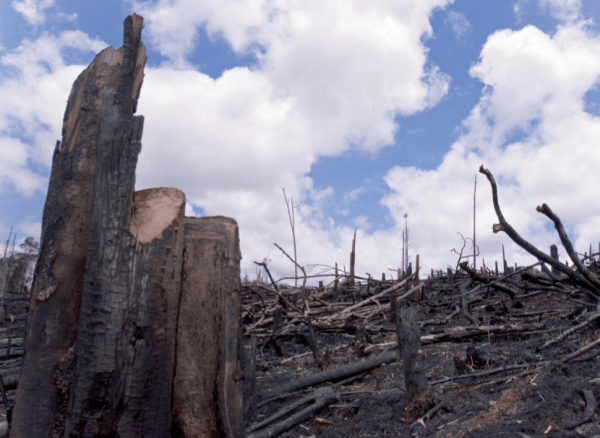
Since 2010, Sawit Watch and the Justice and Peace Commission of the Diocese of Merauke (SKP-Merauke) have held a number of meetings in kampungs along the border region between Indonesia and Papua New Guinea in South Papua and have discovered that land has been allocated for palm oil plantations on a massive scale. In the district of Merauke, at least 380,887 hectares have been allocated to ten companies, and 320,000 hectares in the district of Boven Digoel where licences have been issued to eight palm oil plantation companies. Opening up the land to palm oil plantations  on such a large scale has resulted in forest areas in the south of Papua having been turned into mono-cultural  plantations  leading to ecological destruction and the permanent and irreversible loss of its vitally important diversity. The presence of traditional communities  and indigenous Papuan people whose lives still depend on the forests will eventually be uprooted and marginalised as a consequence of development schemes that fail to take account of local wisdom and culture.

Bearing these conditions in mind, civil society in Indonesia has warned the Indonesian government and parliament, the DPR RI, that this project is more harmful than beneficial. Nevertheless the government  seems to have refused to listen to reports about the destruction of the environment, the food culture of the traditional communities and their life spaces and the destruction of Merauke’s forests. Sorpatom (Solidarity of Papuan People Rejecting MIFEE) has on numerous occasions organised activities to reject the  presence of MIFEE. Komali (the Community of Traditional Communities) wrote to the Indonesian president last year expressing the same views about MIFEE.

A field visit to Merauke by the environmental NGO WALHI in June 2011 discovered that during the course of the past year, at least one hundred thousand hectares of natural forest in Merauke have been cleared, including sago hamlets which protected food security  at all times, regardless of the season, and are very adaptable to changes in the climate. The marshlands are threatened  by drought, as a result of which  fish, birds  and deer  that have provided the local people with their source of protein will find it increasingly difficult to enjoy the necessary living space. Eventually, the Economic, Social and Cultural (ECOSOC)  rights will become ever more inaccessible to protection and provision by the state. Berry N. Forqan, the national executive director of WALHI, has stated that it is reasonable to say that the Indonesian government should be regarded as having caused the violation of basic human rights with the MIFEE Project.

Sinal Blegur, a member of the Working Group of NGOs in Papua, said that the violation of these ECOSOC rights will ultimately lead to the violation of  civil and political rights because MIFEE could potentially pave the way for the security forces  to enter the region on a massive scale to protect the operations of the companies.

In view of the above, dozens of local, national and international NGOs  have in the past month jointly produced a report to be submitted  to the Special Rapporteur of the UN on the Right to Food, drawing attention to threats to the right to food  of the traditional communities in Merauke. According to Abet Nego Tarigan, executive director of Sawit Watch, 22 NGOs  have so far signed  this document, representing the traditional communities in Merauke who are the victims or potential victims of the MIFEE Project The report has also been sent to the Committee on the Elimination of Racial Discrimination at the Office of the UN High Commissioner for Human Rights, and the Committee on Economic, Social and Cultural Rights  of the Human Rights Treaties Division.

This means that all civil society organisations which are concerned with the rights and living space for indigenous Papuan people should call on the government to immediately halt all MIFEE activities and Food Estates in general  in Indonesia that are  damaging the environment and forcing the  removal of traditional communities from their traditional land  and areas which they manage. The national, provincial and district governments must stop granting location licences  to companies and hold an inclusive dialogue, in which the Malind people are central, to discuss the allocation of land, the provision of space and development capital for agriculture, in conformity with social transformation that can bring the Malind people self-reliance and dignity.

All this is intended to ensure that similar operations that have resulted in the massive destruction of the environment which have occurred in Sumatra, Java, Kalimantan and Sulawesi  should not be repeated in Papua.

Contacts:

Islah, Manager   of the Water and Food Campaign, WALHI;

Frangky Samperante, Director of Psaka;

A Karlo Nainggolan, staff member of Advocacy, Policy and Legal Defence, Sawit Watch;

Laksmi Savitri, Sajogyo Institute;

Sinal Blegur, member of the Working Group of NGOs in Papua.
Create a website or blog at WordPress.com

Up ↑
