Unconfirmed reports of imminent major security crackdown in West Papua

West Papua flag

from West Papua Media sources in Jayapura

January 15th, 2012

Across West Papua, a series of remarkable and disturbing text messages has been circulating the claim that Indonesian security forces are preparing a major security assault across Papua in an operation that allegedly began on February 10.

West Papua Media has been unable to speak with any of the alleged participants in the meeting, nor any official representative of the organisations present, to verify these reports.  However local sources are reporting that security forces have intensified patrols and street presence in Jayapura at least  that would correspond to such an operation.

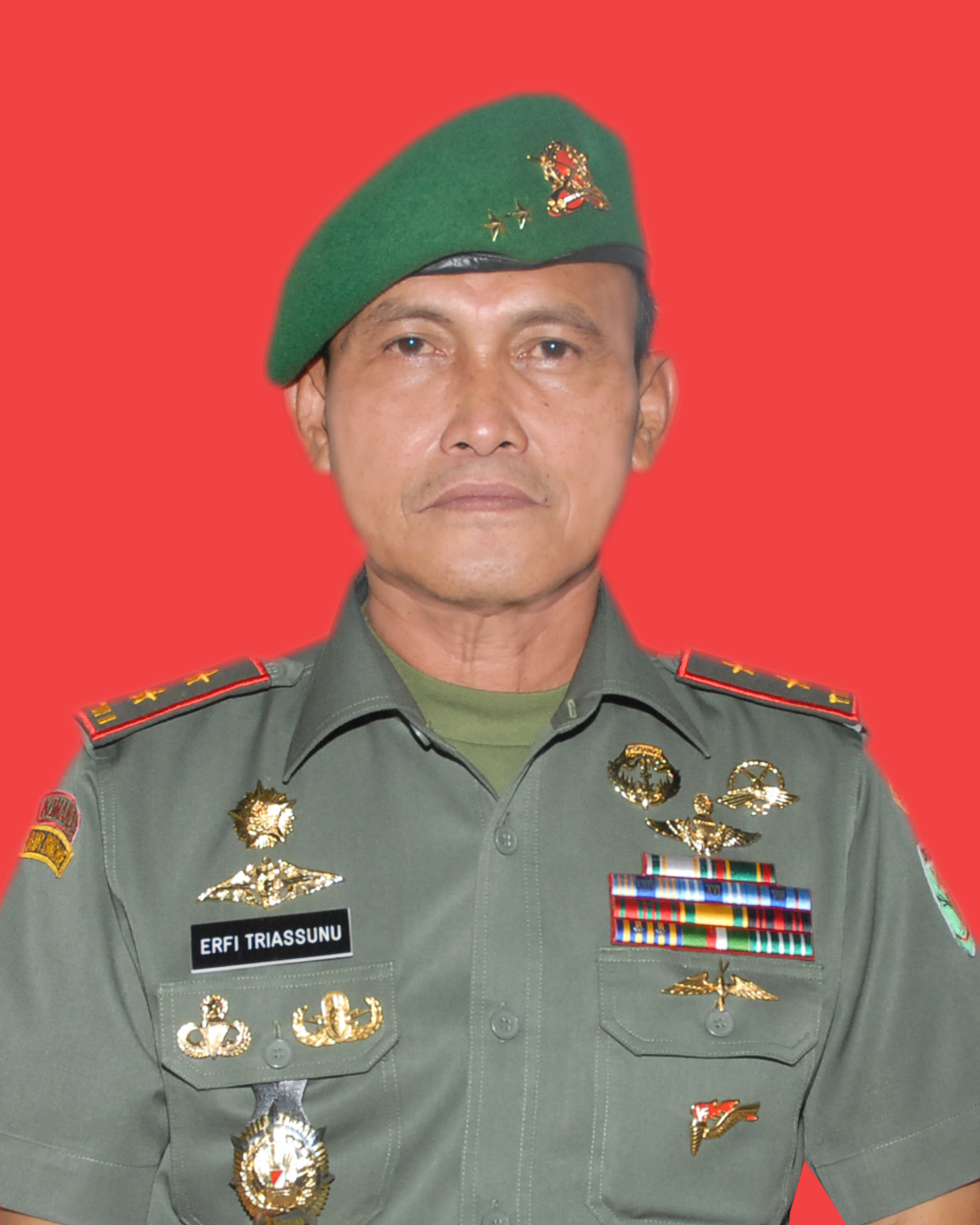
According to the messages a meeting was held at the Hotel Aston at 10am on February 9, between Polda Papua senior police officers.  Also at the meeting were the Papuan governor, the Commander of Cenderawasih Military District Erfi Triassunu, and officials from the Papua District Attorney, State Intelligence Body (BIN),  the army Strategic Intelligence Agency (BAIS), senior Kopassus officers, and leaders from Barisan Merah Putih – the main pro-Indonesia militia.  The meeting was  allegedly being held against the threat of disintegration of Indonesia  by separatist groups in Papua, according to the messages.

Erfi Triassunu - duplicitous

Participants allegedly raised the issue that “pro-merdeka” Papuan independence aspirations had been “globalized” and were attracting widespread international support especially after the brutal and heavy handed crackdown by Indonesian security forces on the Third Papuan People’s Congress on October 19, 2011, according to the source.

The  Memorandum assigned to officers present was to immediately raise “any safety risk to the smooth operation codes” – believed to indicate that security forces would be placed on high alert to prevent all expressions of self-determination.   It continued:

“The main focus is for the treason trial of Forkorus Yaboisembut and colleagues, who should not be given (political or public) space to defend themselves to their (Papuan) people and release pressure on the Makar defendants.  Any adverse condition in the control of the military from the Start Date (of) 10 February 2012 immediately increase security emergency.”

The messages then hinted darkly at the final conclusion of the meeting:  “Do not hesitate (in carrying out your duty if you have) to violate human rights for the sake of the sovereignty of Indonesia. ”

The text messages were said by local human rights sources to have come from a “very reliable source close to the military”.  It is not known at this stage if these text messages have been circulated deliberately by military intelligence as a possible tension building exercise.

West Papua has been subjected to many false SMS rumour “storms” in the past as sources believed by observers to be Indonesian intelligence officers have circulated false and inciting claims of imminent communal violence.  This includes a notorious case

Threats by SMS to human rights defenders and journalists are commonplace in Papua, widely believed to come from military sources.

Across Papua in recent weeks, SMS messages are also circulating claiming that “mysterious killings” are allegedly being perpetrated by Indonesian security forces against West Papuan civilians.  Reports have been circulating that a man allegedly from Yakuhimo, Puncak Jaya, was killed and his mutiliated body turned up in Sentani, and another allegedly was found in a marketplace in Abepura.  Additionally bodies have been reported as being found in similar circumstances in Timika and Wamena, but none of these reports have been able to be independently verified.

Westpapuamedia.

Treason Trials: Panel of judges reject demurrer by defendants

14 February 2012[Abridged in translation by TAPOL]

At the fourth hearing of the trial of Forkorus Yaboisembut and his colleagues which was held on 13 February, the panel of judges chaired by Jack Jacobus Octavianus SH announced that they could not accept the demurrer of the defendants which was submitted on  30 January, arguing that it was not in conformity with the law.

But the panel of judges failed to take into consideration the opening statement of the defendants which analysed the social, political and economic circumstances currently prevailing or the roots of the conflict in the Land of Papua at this time.

It was clear that the judges  only take into consideration  the thoughts and actions of the security forces such as the army, the police and the prosecutor and are only seeking those aspects of the law  which  restrict the right to freedom of expression of the majority of the Papuan people.

The defendants’ team of lawyers  went on to say that  the judges hearing the case are under pressure from forces outside the court of law as is clear from the fact that the head of the  Prosecutor’s Office along with the military commander of the Cenderawasih military command, the chief of police in  Papua and the prosecutor’s office  were approached prior to the hearing on 8 February and prior to the hearing held yesterday.

Our impression is, they said, that the powers that be in Indonesia  are very keenly following every aspect of the trial,  as is evident from the  extra tight security arrangements; the fact that access for the press to attend the trial  is very much restricted  while members of the public are not being allowed to enter the courtroom because it is packed with intelligence agents and members of various elements of the army and the police who are busy taking photographs and recording everything happening from very corner of the courtroom.

Forkorus, speaking on behalf of all the defendants, stood up and challenged the judges, saying that the judges will not be able to prevent him as the president of the NRFPB, the Federal Government of West Papua from reading out their rejection, a copy of which was then handed to the panel of judges

Responding to the statement of the defendants, Yan Christian Warinussy, a member of their legal team, said that the panel of judges should not at the forthcoming hearing try to restrict the defendants from expressing their views but should use those elements in the Criminal Code by simply noting the reports of the interrogations of the defendants (BAP).

The judges decision rejecting the defendants demurrer also called forth a strong statement from Yan Christian Warinussy who said that he did not agree with the viewpoint of the judges which only reflects the difference of opinion between the judges and the prosecutors and the legal team of the defendants, and he went on to say that it was wrong to say that their demurrer is not based on the law.

The team of lawyers also said that  the trial should be accessible to the international community and members of the diplomat corps in Jakarta so that they are able to follow developments in the trial.

The panel of judges then announced that the next hearing would take place on Friday, 17 February, when witnesses for the prosecution would be heard, most of whom are members of the police force which was involved in the attcks against the defendants and the mass of people, following the closure of the Papuan Peoples Conference (KRP III) on19 October last year.

LP3BH: Military Intelligence Operations are still underway in Papua

Statement by Yan Christian Warinussy, Executive-Director of LP3BH,  Papua[Translated by TAPOL]

The appointment and deployment of Major-General Mohammad Erwin Syafitri (former deputy chief of BAIS, Indonesia’s joint strategic intelligence  agency) as commander of KODAM XVII Cenderawasih Papua is clear proof that the Land of Papua is still an area of operations of Indonesian military intelligence.

As a result, the top leadership of the military territorial command in this region has been placed under the command of a leader who has a background in intelligence or at the very least a history of involvement in Indonesia’s intelligence agency.

This is important in order to protect the collaboration between military activities or security and intelligence which acts as the front line for gathering information and deploying security forces in the area.

It is important to point out that in the opinion of human rights activists in Papua, the Land of Papua is still isolated from the international community, bearing in mind that access to the area has been made difficult for several humanitarian and human rights institutions such as the International Committee of the Red Cross and Peace Brigades International, as a result of which they have closed their offices in Papua and left Indonesia in November last year.

The same goes too with regard to the presence of international observers as well as foreign journalists. And for the past five years, it has been difficult for foreign diplomats based in Jakarta to gain access to Papua. This situation  has come about because of the powerful influence of the Indonesian army – TNI – and the Indonesian police, so as to make it more difficult for international observation of developments with regard to the rule of law and basic human rights in the Land of Papua.

As a human rights defender in the Land of Papua, I see a close connection with  the upsurge in demands being made by the Papuan people  to the Indonesian government to find a solution to a number of problems by means of a Papua-Indonesia dialogue, as an important theme which is continually being confronted by certain elements, such as the TNI and the Indonesian police, both of whom have their own vested interests in the Land of Papua.

Bearing in mind that President Susilo Bambang Yudhoyono stated on 9 November 2011 that he is ready to enter into dialogue with all forces in the Land of Papua, I have not yet seen  any response to this from TNI or from the Indonesian police, to indicate whether they agree with this or indeed whether they support the wishes of the President.

Although in this connection, the military commander and the chief of police of Papua said in their presentations to the Papuan Peace Conference on 5-7 July 2011 that they too support dialogue as the way to solve the conflict in the Land of Papua.

I believe that the Indonesian army and police must clearly reveal their attitude towards the question of dialogue.which is what the vast majority of Papuans support, along with their non-Papuan brothers here in Papua. Even the central government in Jakarta is supporting this, which is clear from the fact that President SBY  has appointed Deputy President Boediono to take the lead in efforts to prepare the way for this Papua-Indonesia dialogue.

The idea of dialogue has moreover won positive support from a number of countries around the world, including the USA, Australia, Germany, the UK and the European Union, all of whom are close allies of Indonesia and support the territorial integrity  of the Republic of Indonesia.

6 February 2012

Statement from 5 Makar accused at KP3 treason trial

STATEMENT BY FIVE PAPUANS WHO WENT ON TRIAL IN JAYAPURA ON 30 JANUARY 2011[This hand-written statement is signed by the five Papuans who went on trial in Jayapura on 30 January 2012, and is translated in full by
Carmel Budiardjo, TAPOL]

Fully understanding and conscious of our basic human rights as Papuans of the negroid race, part of the Melanesian race who live in the land of the country of West Papua, inheritors from our ancestors, we herewith firmly declare  that WE FIRMLY REJECT THE TREASON TRIAL AND OTHER SUCH TRIALS that has been mounted against the five of us, and we speak on behalf our colleagues and the entire nation of the Papuan people of the Nation of West Papua.

We call for an understanding of this declaration, a declaration of independence, in accordance with the principles of PUBLIC INTERNATIONAL LAW, a law which should be lawfully accepted. And in this case, this declaration will bring us substantial  happiness if it gains the recognition of the international community.

In order to gain substantial and dignified recognition from the international community, we have requested our international team of lawyers to  notify and register  our legal status along with the question of the annexation of the TERRITORY OF THE STATE OF WEST PAPUA at the International Court, with the Secretary-General  of the United Nations, Amnesty International and all member states of the United Nations, as well as other competent authorities.

We herewith categorically state that we are not prepared to make any statements or answer any questions that are based on the laws and accusations of treason by  the Unitary State of the Republic of Indonesia, during the current trial for treason. It is very clear indeed that this is a matter between two nations and two states, that is to say, between the Papuan nation and the Indonesian nation, between the Federal State of West Papua  and the Unitary State of the Republic of Indonesia.

The following are the reasons for our rejection of the trial for treason or any such trial:

[NB: The copy of the statement which we have received jumps at this point from page 2 to page 4 which suggests that the copy we have is incomplete.]

1.    Our struggle and the struggle of those who have gone before us and the nation of West Papua  and all members of the Papuan people up to the present day is a struggle for the restoration of independence and sovereignty of the Papuan Nation as one of our most basic political rights.

2.    Bearing in mind that the Unitary State of the Republic of Indonesia annexed and continues to annex, the people and nation of the Papuan people since the TRIKORA command which was proclaimed by the former president of Indonesia, President Sukarno on 19 December 1961 in the city of Jogyakarta and which was followed up by  the Indonesian military, from 1962 to the present day, by a variety of measures aimed at preserving the annexation.

3.    Our struggle is not aimed as damaging or destroying any country in the world.

4.    We do not intend to damage or destroy the Unitary State of the Republic of Indonesia.

5.    We feel that our dignity has been defiled, that our basic political  rights have been violated in our country, West Papua, which we inherited from our ancestors.

6.    No one, for whatever reason, has the right to make accusations against us or to convict us in a treason trial or any such trial. This is because we have become the subjects of our own laws  as citizens of the nation and state of the Federal Republic of West Papua.

7.    Based on the values of basic human rights, of democracy and the following universal laws:

a. The  first article in the Preamble to the1945 Constitution  of the Republic of Indonesia.
b. Article15 of the Universal Declaration of Human Rights of the United Nations adopted on 10 December, 1948.
c. Article 1, para 1 of the Covenant on Civil and Political Rights adopted as UN Resolution 2200 (xxi) which has been in force since 23 March 1976,.
d. The Declaration on Granting of Independence to Colonial Countries and Peoples in UN Resolution 1514 (xv) on 14 December 1960.
e. The basic principles of decolonisation , namely possidetis juris and the legal succession of the state to the colonial territories  of the  Dutch East Indies (Dutch Papua) since 19 October 1961.
f. ILO Convention No. 169, 1989 on the Rights of Indigenous and Tribal People.
g. The UN Declaration on the basic rights of indigenous peoples of 13 September 2007.
h. The Papuan Independence Manifesto of 19 October 1961 adopted by the Papuan National Committee.
i.  Stipulations adopted by the Grand Congress (MUBES) of the Papuan people in 2000.
j. The Eleven Recommendations of the Second  Papuan Peoples’ Congress and Indigenous Papuan People  in 2010.
k. The decisions of the Second Papuan Peoples Congress in 2000.
l.  The decisions of the Third Papuan Peoples Congress of 2011.

8.    The Statement by the Indigenous Papuan People and the Papuan people is a truth based on analytical and practical categories. The analytical category means that the indigenous P apuan people are the Papuan nation, a negroid race of the Melanesian race, located in the South Pacific. Whereas the practical category is a political statement which was enunciated in the Manifesto of Papuan Independence of the Papuan National Committee on 19 October 1961 in Hollandia, the State of West Papua.

9.     We democratically restored the independence and sovereignty of the Papuan people on 19 October 2011, at the Third Papuan Peoples  Congress with the establishment of the Federal Republic of West Papua  which was announced by the DECLARATION OF THE PAPUAN NATION IN THE STATE OF WEST PAPUA.

10.    The government of the Republic of Indonesia and the governments of all other members of the United Nations, should without discrimination recognise and respect the democratic processes of the Papuan people at the Third Papuan Peoples Congress on 19 October 2011 in the form of the Declaration of the West Papuan Nation and State.

11.     The application of the treason law against the Papuan people must be categorised as a violation of the basic and legal political rights of the Papuan nation.

We hereby call on to the Honourable Judges in this forum to annul the trial held in order to accuse us of TREASON and make similar charges against us. The solution to the independence of the Papuan nation which is our most basic political right must be sought by means of international mechanisms between the Federal Republic of West Papua and the Unitary State of the Republic of Indonesia, mediated by the United Nations.

In order to regulate the transfer  of sovereign powers from the Unitary State of the Republic of Indonesia to the Federal Republic of West Papua, we intend to initiate a new phase of cooperation  based on the principles of democracy,  justice, peace, mutual respect and dignity. As is customary between independent and sovereign nations and states on Planet Earth.

Herewith our statement of REJECTION OF THE TRIAL BEING HELD TO ACCUSE  US OF TREASON AND SIMILAR CHARGES.

Jayapura, 30 January 2012

Signed:

1. Forkorus Yaboisembut, President of the Federal State of West Papua.
2. Edison G. Waromi, SH, Prime Minister of the Federal State of West Papua.
3. Agust M. Sananai Kraar, SIP,human rights activist/staff
4. Selpius Bobii, activist/staff
5. Dominikus Subarat, activist/staff

Lawyers urge Australian Government to speak out over Papuan treason trials

Media Release

Human Rights Law Centre and

International Lawyers for West Papua

1 February 2012

The Australian Government’s silence on human rights abuses in the region has once again been put in the spotlight, with the Human Rights Law Centre (HRLC) and International Lawyers for West Papua (ILWP) urging the Foreign Minister to speak up in defence of basic rights such as freedom of expression and assembly.

Criminal trials have commenced this week in Jayapura, against five Papuan political activists charged with criminal offenses following their involvement in last year’s peaceful assembly at the Third Papuan People’s Congress. The activists were among the hundreds of people arrested after Indonesian police and military forcibly shut down the gathering, killing at least three people and injuring approximately 90 others.

HRLC spokesperson, Tom Clarke, said the fundamental rights of all persons to freedom of expression, peaceful assembly and association are protected by International Covenant on Civil and Political Rights – which Indonesia ratified in 2006.

“These fundamental human rights must be recognised and respected by Indonesia. The exercise of such democratic rights and freedoms must be protected by law, not criminalised.

“Australia’s UN Security Council bid pitches us as a ‘principled advocate of human rights for all’. This is a prime opportunity for the Foreign Minister to take a principled stand against human rights abuses on our doorstep,” Mr Clarke said.

The Papuan activists, Forkorus Yaboisembut, Edison Waromi, August Makbrowen Senay, Dominikus Sorabut and Selpius Bobii, are facing charges of treason in a region where people may be imprisoned for simply raising the West Papuan ‘Morning Star’ flag.

ILWP’s Jennifer Robinson called on the Australian Government to use its unique relationship with Indonesia to encourage the authorities to demonstrate their respect for human rights by dropping charges against the five activists.

“These trials should stop immediately, and Australia should do everything it can to help that happen. The prosecution of activists for peacefully expressing their political views has no place in a modern democracy. The Australian Foreign Minister, his department and embassy staff in Indonesia should make it very clear that the Australian Government firmly supports human rights and freedom of expression in the region,” Ms Robinson said.

Ms Robinson also called on the Australian Government to deploy embassy staff to observe the legal proceedings for the purpose of ensuring that the protesters receive a fair trial.

The trial is scheduled to resume on Wednesday 8 February.

For further comments:

please contact West Papua Media +61450079106 for contacts

Create a website or blog at WordPress.com

Up ↑