FREEPORT’S IPPKH DOES NOT BENEFIT PAPUAN PEOPLE

FREEPORT‘S IPPKH  DOES NOT BENEFIT PAPUAN PEOPLE

The deputy chairman of Commission IV of the Indonesian parliament, Firman Soebagyo, said that Freeport’s IPPKH (Forestry Area Use loan) has done nothing to improve conditions for the local communities and the company has failed to involve local human resources and the economic community in general in the areas, with the people continuing to be very poor.

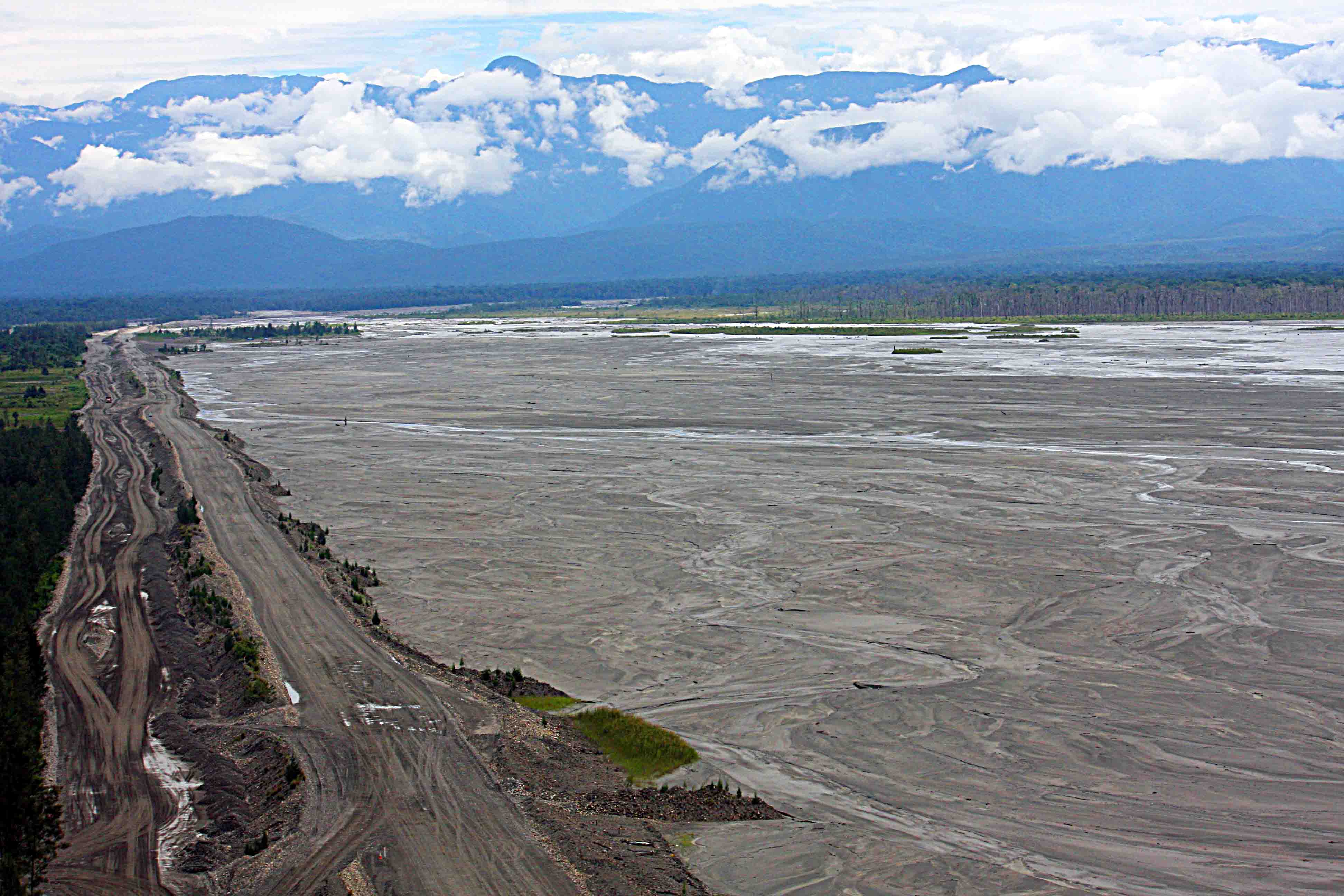
The environmental impact has led to the loss of vegetation and biodiversity in the protected forestry areas that have been exploited. ‘The quality of the water has deteriorated and the environment and mangrove forests have been damaged downstream of the river.’

He said that as a member of Commission IV, he was very concerned  about Freeeport’s IIPKH license which has caused problems for local development and the welfare of the local communities. He quoted forestry ministry data that indicated that Freeport was one of thirteen companies exploiting forestry areas which includes 10,000 ha in Mimika and another 202,980 ha in Mimika, Paniai and Jayawjaya.

JUBI reported that members of the commission had gained access to data that Freeport does not have license to operate in protected forests from the forestry ministry as required under Law 41/1999. The company has been  operating in Papua since 1967 which means that the world’s biggest mining company has not been paying  the required taxes known as Non-Tax Levies to the State (PNBP) as a result of which the country has suffered the loss of tens of billions of rupiahs. The company has ignored two requests regarding this license.

Firman also said while Freeport contributes Rp.400 billion annually to the local people, the facts on the ground show that the local people are still suffering, while children are unable to get a decent education. He said that with the seas having been turned into dry land because of the impact of the tailings, Freeport should be held accountable for damaging the biodiversity and destroying people’s livelihoods. He would therefore recommend that the government should stop issuing any more licenses to the company.

STATE LOSING Rp 30 TRILLION BECAUSE OF FREEPORT

JUBI, 16 July 2011

Member of Commission IV of the Indonesian Parliament, Markus Nari, has reported that Indonesia has suffered the loss of Rp 30 trillion as a result of Freeport Indonesia ‘s failure to work on the basis of a licensing permit to operate within forestry areas known as Regulation in lieu of Law (Perpu) Ijin Pinjam Pakai Kawasan Hutan, despite two official requests from the Indonesian forestry minister.

Commission member Markus Nari, made this statement during a visit to Timika, to see the tailings waste spilling into the Ajkwa River. He pointed out that all mining companies which operates within forestry regions must be in possession of an IPPKH. ‘The company has been pressed twice by the forestry minister to obtain this license but has until now failed to do so. Instead of being requested for a third time, the company should be sent a very strong warning,’ he said.

According to information received by JUBI, Freeport Indonesia is using of 202,000 ha of land, much of which is adjacent to the Lorenz National Park. There are  altogether thirteen companies operating within these protected forestry areas, including Freeport.

Nari said that he had received reports from local communities during his visit to the area that the forests had been damaged, while silt had affected the depth of the river and the nearby sea.

He said that the team from parliament and the forestry ministry  had paid close attention to Freeport’s utilisation of forestry areas,  and had seen the impact of the tailings in silting the estuary and the sea.

Tensions Increase Between PT Freeport Indonesia Employees, Authorities

From Joyo

The Jakarta Post [web site]

July 11, 2011

Tensions between native Papuan workers, who come from seven various tribes, at PT Freeport Indonesia and police escalated on Monday after the workers blocked the access road heading to the mine.

According to Andre, a PT Freeport Indonesia employee detained in Tembagapura, Papua, the tension between the workers and police had started on one of roads leading to the mine.

“The authorities were heading up to the mill with several pipe operators to deal with the stockpile that had started to overflow,” Andre said as reported by tempointeraktif.com.

However, native Papuan workers physically blocked the group, eyewitnesses reported.

Tembagapura Police chief Adj.Comr. Sudirman denied that there were problems in the area. “The situation is safe,” he said.

RNZI: Difficult conditions remain for Freeport’s Papua workers‎

RNZI Posted at 07:32 on 14 July, 2011 UTC
Striking workers at Freeport-McMoran’s gold and copper mine in Indonesia’s Papua province have returned to work after their union said the firm agreed to its demands in the latest round of talks.
The estimated 7-thousand workers had been demanding higher wages and were protesting against the dismissal of six union leaders.
Their eight-day strike crippled operations at the remote Grasberg mine, which contains the world’s largest recoverable reserves of copper and the biggest single gold reserve. Johnny Blades reports that Freeport’s Papua staff work under uniquely difficult conditions:
Freeport management has granted the reinstatement of the sacked unionists, and has agreed to further negotiations on wage rates.
Nick Chesterfield of West Papua Media Alerts says no real concessions have been made to the workers who are said to be paid up to 10 times less than what other Freeport workers around the world earn.
“People who are working significant hours, and their welfare is not being looked after. They’re only earning about a dollar-fifty (US) an hour for extremely dangerous conditions. They wanted their pay to be raised to three dollars. Freeport are out there, making massive amounts of profit and not giving anything back to the workers or the people.”
Not all employees at Freeport were happy with the industrial action.
One non-striking worker who wishes to remain unnamed warns that any wage increases would incur a cost for the local community.
“It will be impact to other sub-contractors for Freeport. They will lose their jobs because their company cannot pay for the high salary in their company like Freeport. And the other people in Timika – like police, like local government, community – will get a problem because for meals, for transportation, for gasoline, the price will rise up like that.”
Freeport workers have recently been demanding guarantees of safety at Grasberg.
An Indonesian human rights activist, Andreas Harsono, says the deaths of two staff in an attack in April are still fresh in workers’ memories.
“They also had a strike last year, demanding better security. The problem with security in Freeport is not always coming from the West Papua guerilla fighters. Sometimes it also comes from Indonesian security forces. The Indonesian military police used to be bought earlier this year but the ones who shot (workers) at Freeport mine were actually three Indonesian soldiers.”
Andreas Harsono hears many complaints from Freeport personnel about the conduct of the Indonesian security forces around the mine.
There are 3,000 of these forces in the area and the soldiers tend to act as a law unto themselves.
“The solders sometimes go beyond their duties like selling protection, involved in illegal alcohol sales, prostitution, and of course hunting, because it is so difficult to control the soldiers in the jungle and mountains around Freeport.”
For the strike to end, the union wanted Freeport’s Indonesia CEO Armando Mahler to be included in negotiations over pay.
Union leaders say Mr Mahler will be involved intermittently in pay talks, which are due to start next week

Freeport must recognise rights of Moni people; contract of work should be re-negotiated

Freeport's contribution to Papua's welfare - Riverine tailings pollution

Bintang Papua, 8 July 2011

Jayapura: At a time when thousands of workers at Freeport are taking part in demonsstrations, demanding improvements in their conditions, the Moni people are calling on Freeport to acknowledge their rights.

According to Ema Zongganau, a women’s leader of the Moni people, Freeport has failed in the fifty years that it has been operating in the central highlands of Papua, to make any contribution to the indigenous Papuan people, in particular the Moni and Komoro people who have for generations been acknowledged as the rightful owners of the land where Freeport is now operating.

‘These two people have a claim to the land on which the largest mining company in the world is now operating. The company also operates in land owned by Amungme people,’ she said. While the Amungme people have land in the vicinity of Freeport operations with the company acknowledging their rights, the company has never acknowledged the rights of the Moni and Komoro people,’ she said.

In fact, according to Ema Zongganau, the company should contribute to all the Papuan people, in the two provinces of Papua and West Papua, those living in the coastal regions as well as those living in the mountainous interior. She said that what infuriates the Papuan people is that virtually all the profits earned by the company go abroad. The natural resources of Papua are being drained away with almost nothing being enjoyed by the Papuan people.

Speaking on behalf of the Moni people, she said that her people should get a just share of all this wealth. She said that in the fifty years that Freeport has been operating there, there has been no improvement whatsoever in the living standards and welfare of the Papuan people.

Ema said that the contract of work with Freeport should be re-negotiated, bearing in mind that the current contract is very weak indeed. Anyone who plays a leading role in Papua must immediately deal with the relationship with Freeport.

Strike causing Freeport the loss of Rp 800 billion a day

According to a separate article in Bintang Papua on the same day, relating to the strike of thousands of Freeport workers, it is estimated, according to a report by the DPRP, that the suspension of the company’s operations as a result of the strike is thought to be losing the company Rp. 800 billion a day which, at the current exchange rate of Rp 9,000 to the dollar, is a little short of $100,000 a day.

If this figure is roughly correct, it puts into perspective the huge profits the company is making from its mining of copper and gold, while the Papuan people, even those whose land is being used by the company, continue to live poverty-stricken lives. (TAPOL)

Create a website or blog at WordPress.com

Up ↑