Take Care of Our Rivers and Give Us Back our Land

Sawit Watch / SKP KAMe

Press Release

December 20, 2012

West Papua’s natural resources are being exploited by extractive industries, especially around Merauke. When it was launched in August 2010, the MIFEE mega-project was described as an initiative to meet the world’s food needs, a response to the world food crisis. As well as this, there are the current global concerns that the diminishing reserves of fossil fuel globally are bringing about a energy crisis.

https://i0.wp.com/sawitwatch.or.id/wp-content/uploads/2012/12/Sawit-Papua.jpg

With an area of over 1.2 million hectare earmarked for the project, the Merauke Regency Government hoped to turn Merauke into a centre of urban agriculture, agribusiness and agrotourism. Many companies welcomed the government’s offer and saw it as a great opportunity to expand their operations in eastern Indonesia. Merauke Regency’s Investment Planning Board (Badan Perencanaan Investasi Daerah or BAPINDA) has recorded that 46 companes have obtained permits, and some of which have already commenced operations. (data from Bapinda, September 2012).

The extent of concessions for large-scale oil-palm plantations in Indonesia currently exceeds 11.5 million hectares (Sawit Watch, 2011), stretching over all of Indonesia’s island groups both large and small, from Sabang at the westernmost tip of Aceh, to Merauke in South-East Papua.  The first palm-oil plantation in Merauke was started in 1997 by Pt Tunas Sawa Erma, a subsidiary of the Korindo Group. There are currently six oil palm plantation companies which have begun operations on Malind Anim land in Merauke: PT Dongin Prabhawa (Korindo Group), PT Bio Inti Agrindo (Korindo Group) [awasMIFEE note: PT Bio Inti Agrindo was actually bought by Daewoo International in 2011, and still belongs
to that company as far as we know], PT Central Cipta Murdaya (CCM), PT Agriprima Cipta Persada, PT Hardaya Sawit Papua and PT Berkat Citra Abadi (Korindo Group). Hundreds of thousands of hectares of indigenous people’s land will be appropriated, the forest destroyed and replaced with large-scale oil palm plantations.

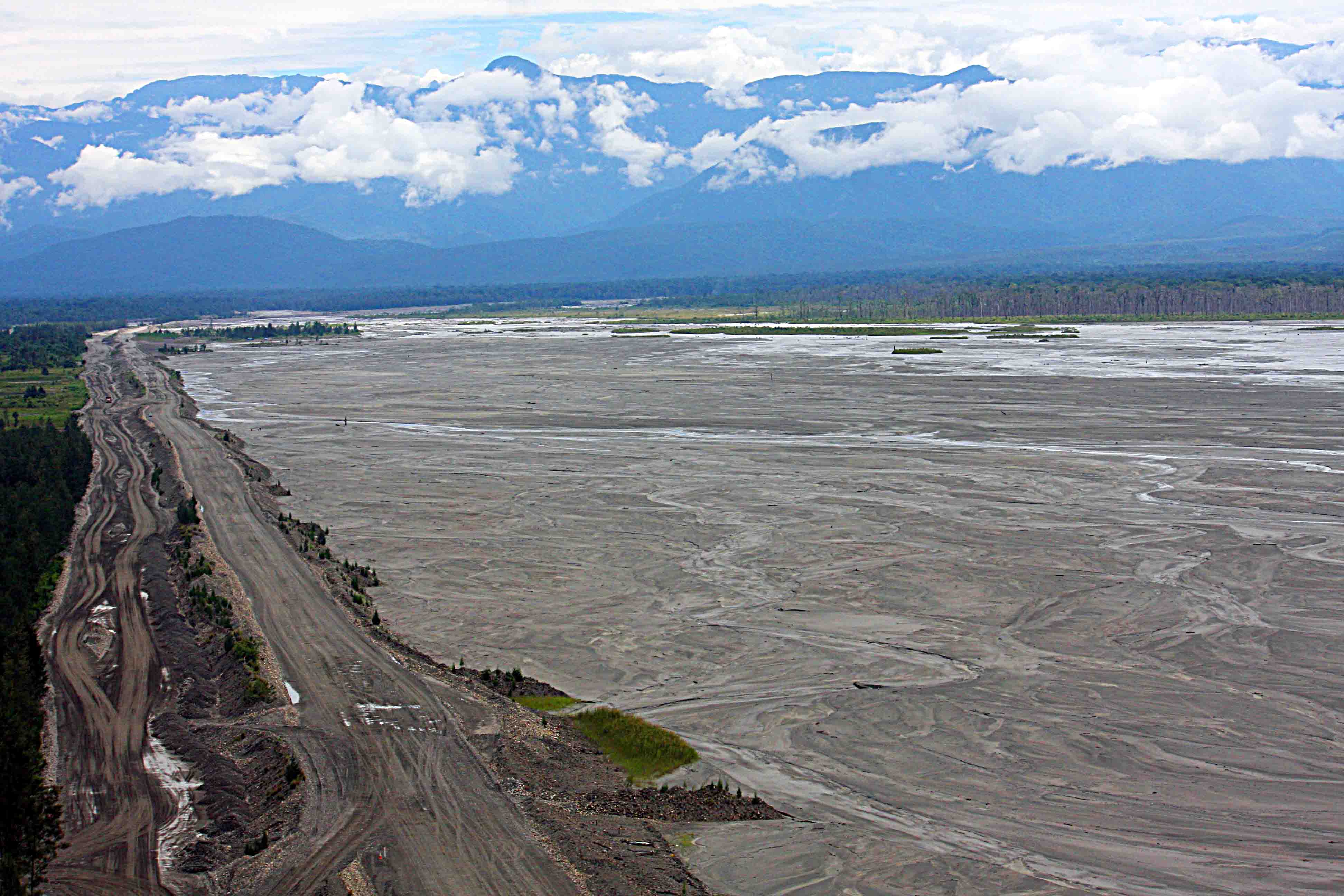
Oil-palm plantations along the shores of the Bian and Maro Rivers have already brought serious problems for the indigenous people and clans that live in the area and own the land.  Oil-palm companies have been clearing land by burning, which has polluted water in the rivers and swamps, damaged and wiped out cultural sites and caused irreplaceable damage to the natural environment.  This is aggravated by a lack of information about companies’ status and plans, wrongful identification
of which clans own or have rights over which land, insufficient payment of compensation and deception and manipulation of data.  As a result the clans and tribes living along the Maro and Bian rivers have been dispossessed of their customary lands.

On the 31st July2011, 13 civil society organisations signed and delivered a letter to the UN Committee on the Elimination of Racial Discriminaton (CERD), accusing the MIFEE Mega-Project of bringing about the destruction of indigenous societies in Papua and in Merauke in particular.  A response to this letter was received from Anwar Kemal, Chairperson of the Committee on the Elimnation of Racial Discrimination, on the 2nd September 2011.  It requested that the Indonesian Government, which became a party to the International Convention on the Elimination of All Forms of Racial Discrimination 1965 when it ratified Law number 29 of 1999, to give a swift response and clarification before 31st January 2012.   Until now, the government has still not given its response. The government is showing neglect and disregard and it’s not for the first time – previously in 2007 they had planned to fell the forest along the whole Indonesia-Malaysia border for oil palm plantations.

Seeing the conditions that indigenous communities in the villages along the Bian and Maro rivers are currently facing, with their land already allocated to large scale oil palm plantation concessions, we strongly advocate the following:

1. Companies must be responsible and make restorations, as well as giving compensation to people living along the Bian River as far as Kaptel and the Maro River for the environmental damage and pollution caused by oil palm plantation operations.

2. The government must carry out a review and evaluation of the permits which have been given to oil palm plantations on indigenous land belonging to the clans and tribes which live in Merauke Regency, revoke and cancel location permits and withdraw all commercial cultivation rights from customary lands in Merauke Regency.

3. The government must stop issuing new permits in Merauke Regency before all current problems are resolved, as well as repairing the damage that has already been done to the various communities.

4. As a party which has ratified the International Convention on the Elimination of All Forms of Racial Discrimination 1965 through Law number 29 of 1999, the government must immediately respond to the Chairperson of the Committee on the Elimination of Racial Discrimination Anwar Kemal’s letter dated 2nd  September 2011 (which was a response to the concerns raised to the UN CERD on 31st July 2011).

Source: Sawit Watch http://sawitwatch.or.id/2012/12/1047/
Translated and posted on awasMIFEE: https://awasmifee.potager.org/?p=302

Sugar Company Rajawali’s Sweet Promises on MIFEE

Source: Pusaka
http://pusaka.or.id/2012/12/perusahaan-tebu-rajawali-manis-janjinya.html

December 13, 2012

The Malind indigenous people from Domande and Kaiburse villages are continuing to raise complaints and accusations against two subsidiaries of the Rajawali Group, PT Karyabumi Papua and PT Cenderawasih Jaya Mandiri, which are currently developing sugarcane plantations in Malind and Kurik districts, Merauke, West Papua.

The company has already been operating in Domande village since 2011, and has built a road and cut down the forest to develop their plantation and factory infrastructure.

“At the beginning, the company promised they would recruit local people as their labour force, but that turned out to be untrue. Many of the workers came from outside the village, which left local people feeling let down”, said Hubertus, a young person from Domande.

The company had made a list of ten promises which the people of Domande had agreed to, sweet-sounding promises about building facilities and infrastructure and recruiting local labour. But then when the people would demand their rights, the company would often refuse to meet those promises.

Tired of waiting for the company to give compensation for the trees they had already felled, villagers and holders of traditional land rights blockaded the road in November 2012. The company managed to reach an agreement with local community leaders that they would meet their demands and pay compensation for the trees at the beginning of December 2012, but there have still been no signs that the company will meet the obligations which it agreed to.

“The company just decieves us all the time”, said Hubertus, irritated.

In Kaiburze village, the head of the LMA (Lembaga Masyarakat Adat = Customary People’s Organisation), Ursus B. Samkakai, has sent letters to the government and the company, making clear that they did not consider as legitimate any permits or agreements with investors made without the knowledge or agreement of the local people and the LMA.

Paulus Samkakai, LMA’s secretary in Kaiburse, related how villagers from Kaiburse, together with the Malind LMA at the Merauke Regency level, have asked the Papua branch of the National Human Rights Commission to issue a letter of recommendation to the local government and the Rajawali company. They want them to conduct a meeting to discuss compensation and the opinion of the Domande people who reject investment plans in the Kaiburse area.

The Kaiburze people reject the company because they no longer have access to much land. Most of their customary land is now taken over by transmigrant villages, covering a area of 40,000 hectares.

The problem is that government and transmigrants, who have arrived from outside the area, often take over, use or sell this customary land, without the permission of the Kaiburse villagers or clans who hold the rights to that land. That includes giving it to the companies.

The people hope that through its policy and support the local government will protect the Malind people’s customary rights.

English version: https://awasmifee.potager.org/?p=297

IHRC Media Release: Indonesia Human Rights Committee applauds NZ Superannuation Fund decision to divest from Freeport McMoran on ethical grounds

PRESS RELEASE
Indonesia Human Rights Committee,

 26 September 2012

IHRC is delighted that the NZ Superannuation Fund has decided to pull its investments from the Freeport McMoran mining giant. (NZ Superannuation Fund Media Release 26 September, 2012. )

‘We have been campaigning for the Superannuation Fund and other Crown Financial Institutes to divest from Freeport for six years and we know the news will be welcomed the West Papuan people who have been campaigning about the mine’s impact on their communities for decades.’

‘The Norwegian Pension Fund divested from Freeport several years ago on environmental grounds, but the NZ Superannuation Fund has stated that the breaches of human rights by the security forces were the critical factor in their decision making. So this is an advance.’

‘We intend to call to the Super Fund Offices in Auckland on Friday to make a personal acknowledgement of this important step.’

Freeport has been directly or indirectly responsible for gross human rights abuses in West Papua since it was first granted a highly favourable contract to exploit gold and copper in the days of the Suharto dictatorship.  These abuses include torture, illegal detentions, and killings.   These days the area close to mine is no-go area and an area where the Indonesian security forces rule the roost.   Shooting deaths are regular occurrence on the access road and last October police killed a miner and injured several others who were carrying out a lawful strike.

According to Rev Socrates Yoman a leading human rights advocate Freeport is like an ATM for the security forces – when there is conflict they can be sure of money.

The mine has destroyed a mountain considered sacred by the indigenous Amungme people and displaced thousands, destroying their forest-based subsistence lifestyle in the process.  Local people live below the poverty line- only Jakarta and the mining magnates get the wealth from the enormously profitable mining enterprise.

Freeport uses a system for disposing of the mine waste tailings in the river system -outlawed almost everywhere else in the world.   Over 200, 000 tonnes of waste a day are deposited in the river leading to the creation of vast dead zone where nothing grows.

For further information; Maire Leadbeater; 09-815-9000 or 0274-436-957

An Agribusiness Attack in West Papua: Unravelling the Merauke Integrated Food and Energy Estate

PRESS RELEASE FROM awasMIFEE

April 25, 2012

Announcing the publication of a new report into a major land grab in West Papua:

“An Agribusiness Attack in West Papua: Unravelling the Merauke
Integrated Food and Energy Estate” is now online at:
http://awasmifee.potager.org
(direct pdf download: http://awasmifee.potager.org/uploads/2012/03/mifee_en.pdf )

AwasMIFEE

The Merauke Integrated Food and Energy Estate (MIFEE) is a vast mega-project, a plan for over a million hectares of plantations and industrialised agriculture that threatens the people and environment across the southern part of West Papua. Indonesian and foreign companies have each claimed their share of the land, and offer the local Malind people next-to-nothing in exchange for the forest that has sustained them for countless generations.

West Papua, where the MIFEE project is set to take place, is a conflict zone. The Papuan people have been struggling for decades for their freedom and self-determination. West Papua is also the next frontier for Indonesia’s plantations industry – after Sumatra and Borneo’s forests have been decimated for the pulp and oil-palm industries, now Papua becomes the target. Although some plantations already exist, MIFEE represents another order of magnitude, opening the floodgates to development projects across Papua in which the losers will be the Papuan people.

awasMIFEE! has been created as an act of solidarity with the social and ecological struggles of the people of Merauke and elsewhere in West Papua. We believe that it is important that people outside of West Papua also know what is happening in Merauke. However, information available about MIFEE can be confusing – much of it comes from different companies and government bodies, and each have their own way of describing the project that fits with their own interests and objectives.

By compiling information from different sources, such as reports from the villages affected, from NGOs and other groups, from Papuan, Indonesian and financial media, from local and national government, and from company websites, we have tried to unravel what MIFEE is likely to mean for the people of Merauke. We hope that a more coherent understanding of how this land grab is taking shape will be of interest to people who are interested in West Papua, in the defence of forests and forest peoples, in the struggles against agro-fuels and against the growth of industrialised agriculture.

Most of all we hope that this information can be the catalyst for action! Our initiative is independent, unconnected to the programs of any NGO, and we hope it can also be a source of inspiration.

The report “An Agribusiness Attack in West Papua : Unravelling the
Merauke Integrated Food and Energy Estate” is an attempt to give an
overview of the situation in April 2012. It focusses on the following areas:

  • Background information – to understand MIFEE in the context of West
  • Papua, it’s history and struggles, and the local Malind people.
  • What is MIFEE – how MIFEE presents itself as the answer to Indonesia’s food security needs. But is it actually just an excuse for oil palm and logging companies to conquer new territory? A look at the difference between the propaganda and the reality of development in Merauke.
  • Reports from villages: A summary of news of what has been happening on the ground around the MIFEE project area, compiled from reports of NGOs that have visited the area, local media and letters sent from villagers.
  • Company Profiles: Tracing where the money comes from behind each proposed plantation.
    • Which of Indonesia’s top business conglomerates are involved?
    • How South Korean companies have been buying up plantations.
    • How Australia’s top-selling sugar brand is connected to forest destruction in Papua.

News of further developments will be posted on the website, and from
time to time updates containing news of all recent developments will be published.

[awasMIFEE minta ma’af karena versi Bahasa Indonesia belum siap. Laporan masih dalam proses terjemahan. Semoga dalam waktu dekat kami akan menerbit versi Bahasa Indonesia]

Amungme leader warns Freeport it could be closed down

”]JUBI, 19 January 2012

In view of the fact that there has been no response from Freeport -Indonesia or Freeport McMoran, ‘I, Anthonius Alomang, as executive-director of Lemasa, the Association of Amungme tribal people, herewith warn Freeport in Mimika district that we may close you down.’

‘As director of Lemasa, I declare on this day that we will close Freeport down,’ Alomang told a group Amungme people, addressing them at the meeting hall in Mile 32, Kuala Kencana, Timika.

He said that this was not just a joke but a very serious matter because already more than a month has elapsed without the Freeport management making any response to the statement issued by Tom Beanal, the Torei Negel.

The reason why a statement was made by the Torei Negel himself, said Alomang, speaking before representatives of the Kamoro Tribe and other tribes in Papua as well as representatives of various Indonesian groups in Mimika, is that ever since Freeport has been present here, what has been happening is quite unacceptable to the people who hold customary rights to the land.

The people who were already poor and have become even poorer, and they have seen that there has been not a shred of compassion in the practices towards the local people. This includes murders by unaccountable groups as well as corruption practised by the Freeport management who have never been called to account for all this.

As previously reported by Jubi on 7 December last year, the Torei Negel, Tom Beanal issued a nine-point statement expressing his attitude regarding the ten crucial issues that have been experienced by the Amungme people ever since PT-FI first arrived in Mimika.

Yet, up to this day, there has been no response whatever from the management of Freeport or from McMoran.

But no details are yet available about what these measures might be.

Create a website or blog at WordPress.com

Up ↑