Pictures: Turquoise ‘dragon’ among 1,000 new species discovered in New Guinea

SHARE: print

Pictures: Turquoise ‘dragon’ among 1,000 new species discovered in New Guinea
mongabay.com
June 27, 2011

Varanus macraei © Lutz Obelgonner
Varanus macraei monitor lizard © Lutz Obelgonner

Scientists discovered more than 1,000 previously unknown species during a decade of research in New Guinea (slideshow), says a new report from WWF.

Final Frontier: Newly Discovered species of New Guinea (1998 – 2008) (PDF-4.7MB) is a tally of 10 years’ worth of discoveries by scientists working on the world’s second largest island.

While the majority of 1,060 species listed are plants and insects, the inventory includes 134 amphibians, 71 fish, 43 reptiles, 12 mammals, and 2 birds.

Among the most notable finds: a woolly giant rat, an endemic subspecies of the silky cuscus, a snub-fin dolphin, a turquoise and black ‘dragon’ or monitor lizard, and an 8-foot (2.5-m) river shark.

Final Frontier: Newly Discovered species of New Guinea (1998 – 2008)
Spilocuscus wilsoni © Tim Flannery

Spilocuscus wilsoni cuscus, a type of marsupial © Tim Flannery
Litoria sauroni © Stephen Richards
Litoria sauroni tree frog © Stephen Richards
Chrysiptera cymatilis © Gerald R Allen

Chrysiptera cymatilis damselfish © Gerald R Allen

WWF released the report to showcase New Guinea’s biodiversity, which includes more than 800 species of birds and more than 25,000 species of vascular plants in New Guinea ranges. New Guinea’s rainforests — the third largest after the Amazon and the Congo — and its coral reefs are astoundingly rich, yet still poorly studied relative to other places in the tropics. The dearth of information is a concern because New Guinea, which covers less than 0.5 percent of the Earth’s landmass, but is thought to be home to 6–8 percent of the world’s species, is facing an onslaught of threats from logging, large-scale industrial agriculture, and mining.

“This report shows that New Guinea’s forests and rivers are among the richest and most biodiverse in the world,” said Neil Stronach, WWF Western Melanesia’s Program Representative, in a statement. “But it also shows us that unchecked human demand can push even the wealthiest environments to bankruptcy.”

Varanus macraei © Lutz Obelgonner
Click map to enlarge.

Ecosystems, especially forests, are threatened on both halves of New Guinea. On the western half — controlled by Indonesia — illegal logging is rampant and the government has granted, or is planning to grant, hundreds of thousands of hectares’ worth of forests for conversion to timber and oil palm plantations and large-scale rice and sugarcane operations. On the eastern part of the island, the Papua New Guinea government recently stripped communities of traditional land rights in favor of big business, especially foreign agricultural firms, which have been winning Special Agricultural and Business Leases (SABLs) to develop forest lands (a moratorium on SABLs was put in place last month). Meanwhile industrial logging has degraded large tracts of rainforest. Both sides of New Guinea have been affected by mining operations, which at times have caused pollution and exacerbated social conflict.

Chilatherina alleni © Gerald R Allen
Chilatherina alleni rainbowfish © Gerald R Allen
Melipotes carolae © Bruce Beehler

Melipotes carolae © Bruce BeehlerDelias durai © Henk van Mastrigt
Delias durai buterfly © Henk van Mastrigt

According to WWF, environmental degradation is already taking a toll in New Guinea, with the incidence of forest fires increasing, coastal erosion worsening, and depletion of forest resources for local use. Since 1972 a quarter of Papua New Guinea’s rainforests have been lost or degraded, while 99 of the island’s species are now listed on the IUCN Red List of Threatened Species, including 59 mammals, 34 birds and 6 frogs.

But WWF says there is still time to protect New Guinea’s flora, fauna, and incredible cultural richness (New Guinea is home to 15 percent of the world’s spoken languages). It highlights the potential to boost the capacity of local communities to use legal mechanisms to protect their lands and resources from expropriation and expresses optimism that the Reducing Emissions from Deforestation and Forest Degradation (REDD) mechanism could generate revenue to support conservation activities (although the report fails to note the widespread corruption associated with early REDD efforts in Papua New Guinea). Final Frontier concludes by arguing that certification schemes for timber and agricultural commodities could help maintain New Guinea’s biodiversity in the future.

“It’s vital that New Guinea’s forests, rivers, lakes and seas are managed in a way that ensures they’ll continue to sustain economic and social development – and support the island’s fabulous wildlife,” states the report. “If we’re to safeguard this ‘final frontier’, it’ll require active partnerships between New Guinea’s communities and a wide range of stakeholders.”


New Guinea Slideshow

WHAT DO WE KNOW ABOUT HOW MUCH FREEPORT PRODUCES?

JUBI, 22 June, 2011
It is still very difficult for the Mimika district administration to get information about the quantity of gold and copper produced by Freeport-Indonesia and how much is exported via Portsite, Amamapare.
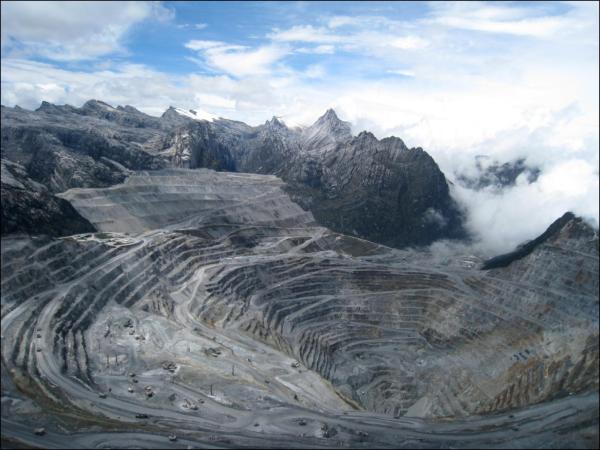
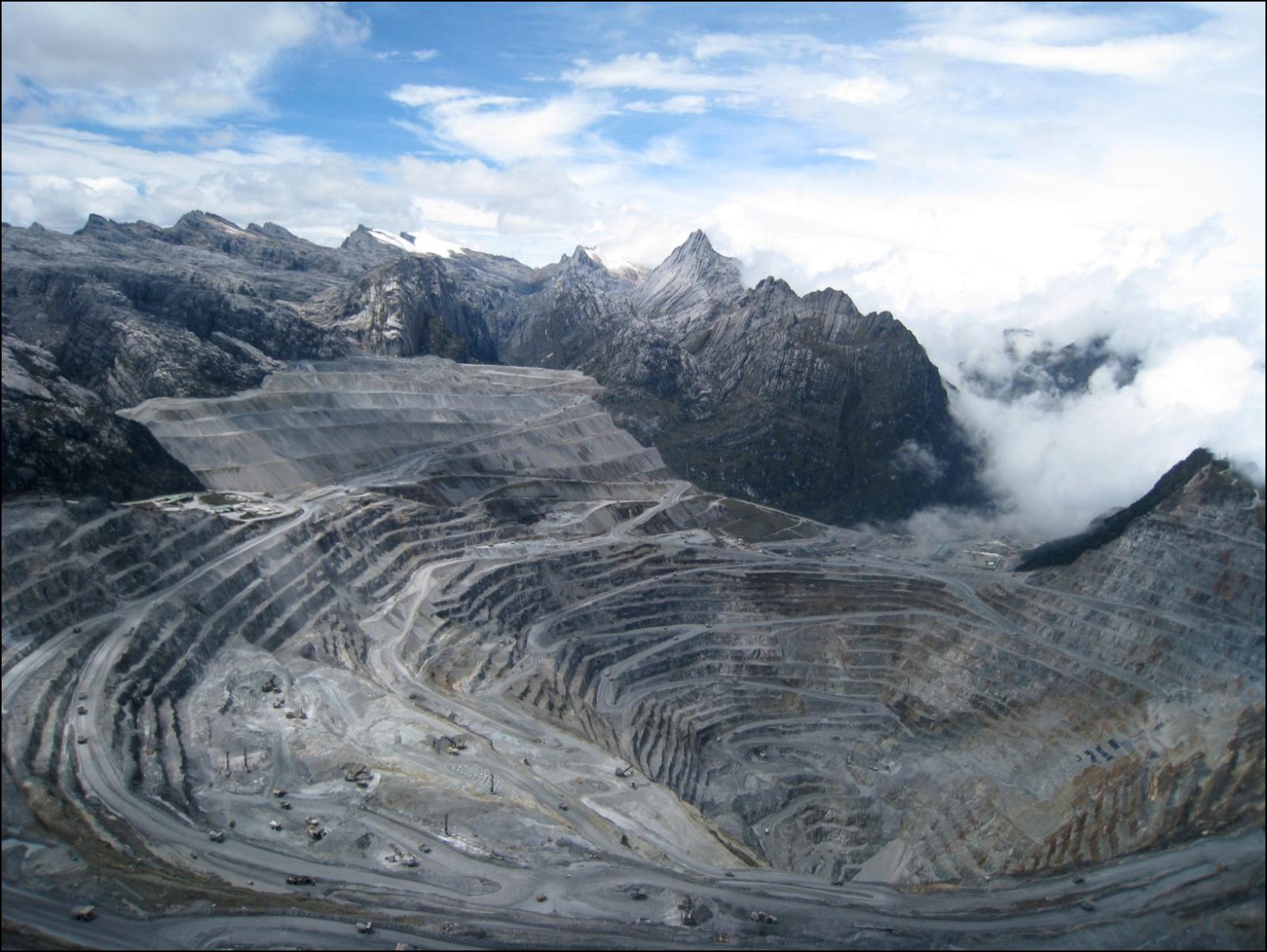
Freeport's Grasberg mine - Earth's biggest hole in the ground

The head  of the mining, energy and minerals department of the Mimika administration, said:

‘We don’t know anything about the quantity of gold, copper and other minerals produced daily by Freeport and this is because  we do not have free access to the company to be able to control the level of production every day.’

He said that the administration did once charge two of its employees to oversee export activity in Amamapare, but after we had given them the task, the two men were unfortunately shifted other posts.’  [Could this have been a deliberate action.]

This is a big problem. Anyone charged with scrutinising exports and imports  would have to be a specialist. They would need to have a special certificate for controlling goods and services for both exports and imports..

All this has an impact on obtaining clarification about the quantity of minerals produced every year. How can this possibly be synchronised with the information received by the authorities in Jakarta? It’s all just a game because the people at the centre get data about gold and copper production which comes directly from the company, PTFI.

The department of mines in Jakarta only gets information from one side. ‘This doesn’t lead to any accuracy. Anyone with bad intentions can easily manipulate the data.  Although lots of stuff is exported, they report a very low figure.’

So the question is: who else but the company can know anything about the quantity of material it produces every year? Only the PTFI.

[COMMENT: This once again highlights the extraordinary powers that the US company has been given to keep a tight control over how much it exploits of Papua’s abundant natural resources, with the  Papuan people not only left in the dark but also left living in poverty while Freeport makes a fortune from its investments in West Papua. TAPOL]

Freeport looking for more minerals to extract from Papua

Grasberg mine
Image via Wikipedia
JUBI, 21 June 2011
A crater that is many metres wide and as deep as a three-storey house is to be found at Mile Post 74 within the area of the mining concession of Freeport-Indonesia(PTFI). Thousands of people working for Freeport say that they know nothing about the mining potential of this deep crater and what exactly Freeport intends to mine there.Some of the workers are quoted as saying: ‘The company is concealing information about the minerals it plans to mine. Some have mentioned copper but more recently mention has been made of gold, silver, iron,  and other minerals about which nothing has been reported officially.’ The workers believe that as many as nine new minerals are going to be mined there.As regards the natural resources now being researched, the crater is said to be much greater than the one dug for the Grasberg mine to the north.

One worker said that it is not only a question of nine more minerals being exploited by Freeport. As regards the geo-science potential from Papua, most of the minerals will be taken abroad. One worker who is familiar with the minerals in Grasberg said that it is only if the minerals are processed here and not taken abroad that we will be able to know what Freeport it intending to extract. ‘It is likely that the stuff will be taken abroad through pipes so that no one here knows what is there.

Another report from JUBI of the same day says that foreign investors are busy investigating what more they can take away from Papua. Freeport undertook a major research a while ago near Kampung Ugimba.

‘People from the company who work in Tembagapura have been seen frequently coming and going, and we have been told that there is uranium there.’

JUBI has been told that aerial surveying – aerogeophysics -has been used to survey the mineral  potential.

They have been using helicopters  to assess the uranium potential, he said. Once this has been ascertained, more conventional techniques will be used.

As yet, Freeport has said nothing about these searches. But for sure, the company has been undertaking many surveys in various parts of Papua.

(West Papua Media Comment:  At this time of great market uncertainty about uranium and the safety of nuclear power following the still ongoing Fukushima reactor disaster in Japan, it beggars belief that Freeport and its main shareholder, Rio Tinto, are conducting illegal (uncontracted) exploration for potential uranium deposits (of which there are large amounts around the Grasberg complex).  It is also very curious that this is the exact area that the unsolved shootings and bombings of Freeport workers has been occuring over the past two years, yet in an “unsecured” environment this exploration and processing has been able to occur.  If the Indonesian civilian government were to set up a National Audit of all Freeport activities, they would see clearly that the military-corporate collusion is reaping massive financial benefits, just not for either West Papua, nor Indonesian people.)

Churches call for revision of contract with Freeport

Bintang Papua, 8 June 2011The Alliance of Churches in the Land of Papua, PGGP, has called on the government to revise the work contract concluded with the mining company, Freeport.

‘The presence of this foreign company in the district of Mimika has not resulted in any improvements in the conditions of the local people,’ said Wiem Maury, secretary of the PGGP. He said that in addition to this,  the very presence of Freeport in the area has always been a very serious problem for the people.

‘The welfare of the people who are the true owners of the rich natural resource continue to be a matter of great concern. Nor is there any guarantee about security in the area either,’ he added..

He said that the call for a revision of the contract was one of 22  recommendations agreed at the Papuan Transformation Conference that took place from 3-5 June this year.

He said that a representative of the government had attended the conference, along with representatives of all the different Christian denominations that are present in both Papua and West Papua.

The purpose of the conference was to try to reach a common perception  between church leaders and the government on the crucial  issues of empowerment of the community, education and spiritual attitudes.

‘The conference also sought to reach a common position between Papuans with regard to the substance of the special autonomy concerning the issue of taking the side of the local communities, their protectiona and empowerment,’ he said.

Another aim was to reach a common approach between the churches and the government , as the centre as well as in the regions.

According to Victor Abraham Abaidata, the secretary of the organising committee of the conference, a decision was taken to set up a team composed of a representative of the government, representatives of all the churches in Papua as well as a representative of the church at the national level.

‘We have already presented the 22 recommendations to the provincial governments and will soon present them to the central governmentl,’ he said.

PT Medco refuses to pay compensation for Papuan land used for three years

[COMMENT: Here is a major company bemoaning its fate if required to pay compensation for Papuan land, without acknowledging that its operations have certainly led to the devastation of the livelihoods of the people whose land it has been using for three years. How does one weigh the demise of a company against the lives and livelihoods of indigenous Papuan people who are bereft of the land that is the very heart and soul of their physical and spiritual beings?  This is the first time we have read reports  about the absence of any compensation for Papuan people. It sums up a problem besetting Papuan people across the length and breadth of West Papua. TAPOL]JUBI, 21 April 2011

The inhabitants of Sanggase kampung, district  of Okaba, district of Merauke, have submitted a demand for compensation of sixty-five billion rupiahs from PT Medco for their operations in the kampung for the past three years, but they have had no response from the company.

In other words, the company has simply washed its hands and is not prepared to pay any compensation.

At a meeting held on Thursday this week with the district chief (bupati) of Merauke which was also attended by representatives of the local administration and military chiefs, as well as a number of local people, the representative of PT Medco in Papua Aradea Arifin,  said that paying compensation  of sixty-billion rupiahs  would mean that the company would not be able to function any more.

He said that the land being used by the company is 2,800 hectares. Should such a large amount of money be paid in a case like this?. ‘It simply means asking us to close down our company,’ he said. ‘So it is quite impossible for us to pay the community such a huge amount of money.’

He claimed that during the years of its operations in Kampung Boepe, the company had  given assistance to the local people in the form of building houses, building a church, provided motor cycles and so on which he claimed meant that the company  had acknowledged the problems confronted by the people there

Create a website or blog at WordPress.com

Up ↑