Empty promises whitewash Freeport’s rights, responsibility record

 http://etanaction.blogspot.com/2011/08/empty-promises-whitewash-freeports.html

Special for ETAN‘s  Blog

by David Webster

What does a mining company need to do to get a top score for “corporate social responsibility”?

Freeport's contribution to Papua's welfare - Riverine tailings pollution

To judge by the recent “100 Best Corporate Citizens List”, all it takes to finesse a long and controversial record of human rights abuses is to come up with a piece of high-minded rhetoric, then carry on as usual.

Human rights advocates and those who have studied the record of Freeport McMoran in West Papua were startled to learn that Corporate Responsibility Magazine had named Freeport as the 24th-best corporate citizen in America (click for the full list). More startling still, the company scored well based mainly on a sixth-place ranking in the human rights category.

How is this possible? Well, the survey’s methodology seems to pay no heed to human rights performance. Only human rights rhetoric matters. And in that, Freeport excels. A strong written policy on human rights declares: “Freeport-McMoRan does not tolerate human rights transgressions.” It points to rights risks in West Papua, Peru, and the Democratic Republic of Congo, and adds that PT Freeport Indonesia policy is to “notify the direct commanders of the perpetrators” in cases where human rights allegations are made against Indonesian security forces. Since reputable human rights groups suggest that the top ranks of the security forces are implicated in widespread human rights violations in West Papua, this is hardly striking at the root of the problem.

As local people have pointed out, and researchers have confirmed, Freeport’s performance is a far cry from the written policies. The main trouble is intimate ties to Indonesian security forces.

Security forces may be implicated in the murder of American citizens near the Freeportmine, as Eben Kirksey and Andreas Harsono have reported.

Violence around the mine is used by security forces to target and scapegoat local people. In 2005, the New York Times revealed thatFreeport paid the security forces more than $10 million in 2001 and 2002. Payments are now made “in-kind” rather than in cash. The local Amugme people have long protestedFreeport seizure of their lands. Pictures of Freeport’s Grasberg mine from space (left) show the scale and environmental impact in the mountains that are home to the Amungme.

And lest all of this be hailed as “old news,” the Amungme filed a lawsuit last year sayingFreeport had taken their lands illegally. Meanwhile, the Indonesian army’s presence around Freeport, and the company’s close ties to Indonesian security forces, were reinforced this year. The continuing alliance between Freeport Indonesia and the Indonesian security forces is likely to exacerbate, rather than improve, the human rights situation.

None of these reports are taken in to account in the “100 Best Corporate Citizens List.” All the human rights indicators measure “human rights disclosure” and the sole source, according to the methodology details, comes from “Company public disclosures” – a corporation’s own information about itself.

The methodology, in other words, measures promises, not performance. There are parallels to the debate over whether companies accused of operating sweatshops overseas can be trusted to police themselves, or should accept independent monitoring. Thus the list cites the voluntary “Sullivan principles” first created under the Reagan administration and welcomed by companies resisting demands to divest from apartheid South Africa. AndFreeport boasts of adherence to the Voluntary Principles on Security and Human Rights, launched by the British and American governments in 2000.

The key word here is “voluntary.” As with the mining industry globally and with businesses jumping on the corporate social responsibility (CSR) bandwagon more generally, companies are happy to promise good performance, as long as no one will be looking over their shoulders.

So perhaps it’s no surprise to learn that Corporate Responsibility Magazine is in fact published on behalf of the Corporate Responsibility Officers Association, a body made up of many of the companies being judged, and steered by such firms as Domtar and KPMG.Freeport is listed as a “recent member” of the CROA. It’s advanced in the listings – it was ranked 83rd in 2010.

The problem here isn’t just the “corporate social responsibility” methodology, but the entire concept of “CSR”. It can all too often be used by companies to buy their way out of “corporate social irresponsibility.”

Freeport is no champion of the best values of corporate citizenship: For human rights activists, it’s long been a poster child for corporate irresponsibility. A list of good corporate citizens with Freeport winning laurels demonstrates more than flaws in the study. As George Monbiot has written of climate change credits, the lists offer corporations a new form of medieval European Catholic “indulgences,” forgiveness for any form of offence. Jeff Ballinger recently pointed out on this blog that companies like Nike are wrapping themselves in the CSR garment to burnish their corporate images, despite continuing disregard for many labor rights. Freeport, too, is now having itself measured for a fine CSR wardrobe.

—-

David Webster is an assistant professor of International Studies at the University of Regina inSaskatchewan, Canada. He is a former coordinator with the East Timor Alert Network/Canada.

see also

West Papua Report (monthly)

ETAN/WPAT: Statement on the operations of the Freeport McMoran Mine in West Papua, to the U.S. Senate hearing on Extracting Natural Resources: Corporate Responsibility and the Rule of Law

Indonesia food security project threatens Papuan way of life – activists

http://www.trust.org/alertnet/news/indonesia-food-security-project-threatens-papuan-way-of-life-activists

Source: Alertnet // Thin Lei Win

05 Aug 2011 14:07

NOTE: West Papua Media proudly provided fixing services for Reuters AlertNet for this article and further investigations.  

A member of the Koroway tribe walks up a ladder to his house at a forest nearMerauke city in Indonesia’s Papua province in this May 18, 2010 handout photo. REUTERS/Suntono-Indonesia statistic agency/Handout

By Thin Lei Win

BANGKOK (AlertNet) – Indigenous Papuans are at risk of further marginalisation and the forests and ecosystems on which they rely face destruction due to an ambitious food security project by the Indonesian government, activists say.

Under MIFEE (Merauke Integrated Food and Energy Estate) plans, 1.63 million hectares of forest which forms the basis of life for some 200,000 indigenous people in the Merauke area would be used to grow rice, palm oil, soya bean and corn among other crops.

Indonesia is seen as a key player in the fight against climate change and is under intense international pressure to curb its rapid deforestation rate and destruction of carbon-rich peatlands.

Activists accuse the authorities of not sufficiently consulting the Malind Anim people about the project, which they say pose a double threat to local Papuans. Not only would they lose their customary lands, but they would also face an influx of migrants from the rest of Indonesia — further marginalising communities that feel disenfranchised by what they say is the government’s exploitation of natural resources at their expense.

“If this project goes ahead, it means we will lose everything – we will lose our land, our culture, our livelihood, our food,” Rosa Moiwend, a Papuan activist whose family still lives in Merauke, told AlertNet.

The transition from forest to farm and plantation land would have a “tremendous” impact on natural ecosystems, Carlo Nainggolan from Indonesian rights group Sawit Watch, said.

“Indigenous people who have made use of natural forests to meet necessities of life will experience a dramatically decreased quality of life and well-being,” he said.

Department of Agriculture officials did not respond to a request for comment.

STRAINED TIES

Papua, two provinces on the west half of New Guinea island, has long suffered strained ties with Indonesia which took over the area from Dutch colonial rule in 1963. And this week, thousands of indigenous Papuans them marched on the parliament in the capital of Papua, demanding a referendum on independence from the archipelago.

Despite being home to a mine with the world’s largest gold and recoverable copper reserves, Papua is one of the least developed regions in Indonesia. According to the United Nations, 40 percent of Papuans live below the poverty line of $1.25 a day, compared to the national average of 18 percent.

Both the central and regional governments have hailed MIFEE as the answer not only to Indonesia’s growing concerns about food shortages but as a source of exports.

The project is expected to produce close to 2 million tonnes of rice, almost 1 million tonnes of corn, 2.5 million tonnes of sugar and close to 1 million tonnes of crude palm oil, according to local media reports.

However, activists point out that the staple food for Papuans is sago, a starch derived from sago palm, not rice. And they say there has been discontent in some areas where compensation from companies clearing and managing the land was deemed insufficient.

Despite a recent government pledge to resolve land tenure conflicts and protect the rights of people in forest-based communities, activists say most locals remain in the dark about the project.

“People from the village, when asked about MIFEE project replied, ‘MIFEE is a car that frequently crosses the road that reads MIFEE (on the body of the car)’,” Sawit Watch’s Nainggolan said.

LOSING A WAY OF LIVING

The massive scale of the project and nature of the indigenous people’s skills – many make a living hunting and gathering rather than farming – means a huge workforce is likely to be imported from outside Papua, activists say.

Sawit Watch estimate that some 5 million workers were needed to work the land, or four labourers per hectare. Yet, based on the 2009 census, the number of people native to Merauke was 195,577, Nainggolan said.

The low levels of education, knowledge and Indonesian language skills also mean indigenous Papuans are likely to be only involved in MIFEE as low-skilled labourers despite the loss of their land and livelihoods, he said.

Moiwend summed up the anger felt by activists.

“If the Indonesian government says that we are a part of them, that we are their brothers and sisters like they say, why do they do this project?,” she said. “They don’t want us to live in our own land. They want to kill us with this project.”

AP: Military Vows Crackdown in Papua Province [+Reject Calls for Referendum: Lawmaker]

From Joyo

also: JP: Reject Calls for Papua Referendum: Lawmaker

The Associated Press
August 4, 2011

Military Vows Crackdown in Papua Province

Indonesia’s army chief vowed Thursday to hunt down separatist rebels
after a swell in violence in the restive province of Papua killed two
soldiers and three civilians in less than a week.

They will be “chased down” and “cleaned up” by local military units,
said Gen. Pramono Edhie Wibowo, a day after gunmen shot a military
helicopter in the hilly district of Puncak Jaya, a rebel stronghold
and longtime hotbed of separatist violence.

The chopper had flown into the remote region to evacuate Fana Hadi, an
army private who was wounded during an attack on his post Tuesday
morning.

Gunmen opened fire as it passed a hill, killing Hadi with a shot to
his left rib, local military officials said.

That shooting followed the killings of one soldier and three civilians
Monday, shot and hacked to death during an ambush on their minibus and
taxi near the provincial capital of Jayapura.

Five other people were injured.

It was not immediately clear what sparked the uptick in violence.

Papua is a former Dutch colony on the western part of New Guinea. It
was incorporated into Indonesia in 1969 after a U.N.-sponsored ballot.

A small, poorly armed separatist group known as the Free Papua Movement has battled for independence ever since.

Nineteen people were killed in clashes between supporters of rival
political candidates in a seemingly unrelated violence Sunday. Because
of the violence, elections for district chief scheduled for Nov. 9
will be delayed, local media reported Thursday.

———————————-

The Jakarta Post [web site]
August 4, 2011

Reject Calls for Papua Referendum: Lawmaker

by Mariel Grazella

The chairman of the Papua and Aceh special autonomy supervisory team,
Priyo Budi Santoso, urged the government to send the military to Papua
if the referendum movement escalated to a mass rebellion.

Thousands of Papuans across the province have demonstrated to call for
a referendum on independence.

The demonstrations coincided with a series of attacks on police and
military posts in Puncak Jaya that have been blamed on the Free Papua
Movement (OPM).

“I urge law enforcers not to hesitate in taking firm action,” he said.

He added that if the situation escalated to rebellion, the “military
should be sent in if necessary”.

“We should remain persuasive but if the situation leads to [demands
for] a referendum; [we] should not hesitate in sending in the
military,” he said, adding that special autonomy was the “best formula
in addressing the problems of Papua”.”Therefore, I urge the government to firmly reject [the calls for a
referendum] because Papua is part of Indonesia and that is final,” he
added.

JUBI: Conditions in Keerom very bad

JUBI, 1 August 2011

Conditions in Keerom are very bad

The Coalition for Justice, the Rule of Law, Human Rights and Public Service (K2PH2P2) has expressed its concern about conditions in the district of Keerom during the first months of this year.

It said that the governing body is far from being capable, responsive and accommodative. Government workers are largely incapable and unresponsive and lacking in discipline in their work. In a press release issued on 1 August in Abepura, a group of leaders including church leaders, civil society leaders and human rights activists expressed their fear that development in the district which was intended for transmigrants is stagnant.

‘Discipline in the civil service is very bad. They live in Jayapura, arrive in their offices at 9am and go home soon afterwards, which means that the service they provide is very bad,’ said Bonefasius A. Muenda of the Keerom Social Institution. Most of them live in Jayapura and arrive in their offices quite late in the morning. Even worse, some of the civil servants only go to their offices twice or three times a week. For the rest of the time, they stay at home.

But there are other problems as well, according to the Coalition. In education for example, Pastor John Jonga, a leader of the Catholic Church in Keerom, said that hundreds of children receive no attention at all because there are no teachers. He said this was more likely to be thousands of children, not hundreds. Ironically, billions of rupiahs are allocated to education but the children are waiting for their teachers.

‘In Towe Hitam, 36 members of the armed forces are paid for by the government but there are no teachers. This is a crime,’ said Pastor Jonga who is a recipient of the Yap Thien (Hien) award.

But that is not all. Medical facilities are worryingly poor in this new district that was set up just a few years ago. Another pastor, Eddy Togotly was of the opinion that there is no serious intention on the part of the government to develop Keerom. ‘People dont come to Keerom to help with development. On the contrary.’

Meanwhile, the chairman of commission A of the provincial legislative assembly, Yosep Turot, said that some officials are so far from adequate that they should be sacked from their jobs. He said that there are a number of reasons for this, including the purchase and sale of certificates among officials which has an impact on the performance of the government.

In view of all this, the Coalition is calling for the appointment of a new local government chief who should be credible, intelligent, creative and concerned about the conditions of the people.   And they say that the new chief should pay full attention to the performance of his staff so as to ensure that they work for the development of Keerom and not for their personal interests.’

Leaked Letter Reveals Indon Army Scare Tactics

Exclusive Copies of the Scanned Letter are available for download at the end of this article. (Please note, any attempts to block access will result in significant multiplication across the internet)

at NewMatilda.Com

By Alex Rayfield

EXCLUSIVE: A leaked letter from an Army General reveals Indonesia’s attempts to disband a West Papuan church with threats of “assertive action”

From the outside looking in, the latest church conflict in West Papua might look like just another example of factional Protestant politics. A little sordid perhaps, but irrelevant to all but the parties involved.

Dig a little deeper, however, and one finds something far more disturbing.

A leaked letter from the head of the Indonesian Army in Papua obtained by New Matilda reveals that far from being an internal church matter, the conflict between Kingmi Indonesia, a Protestant church that has parishes across Indonesia, and the breakaway Kingmi Papua Church, goes to the heart of the Indonesian government’s attempt to repress movements for cultural pride and autonomy in the country’s restive Pacific periphery.

In a nutshell, the conflict turns on whether Kingmi Papua has the right to separate from Kingmi Indonesia and set up an autonomous synod, reverting to an arrangement that existed prior to 1982.

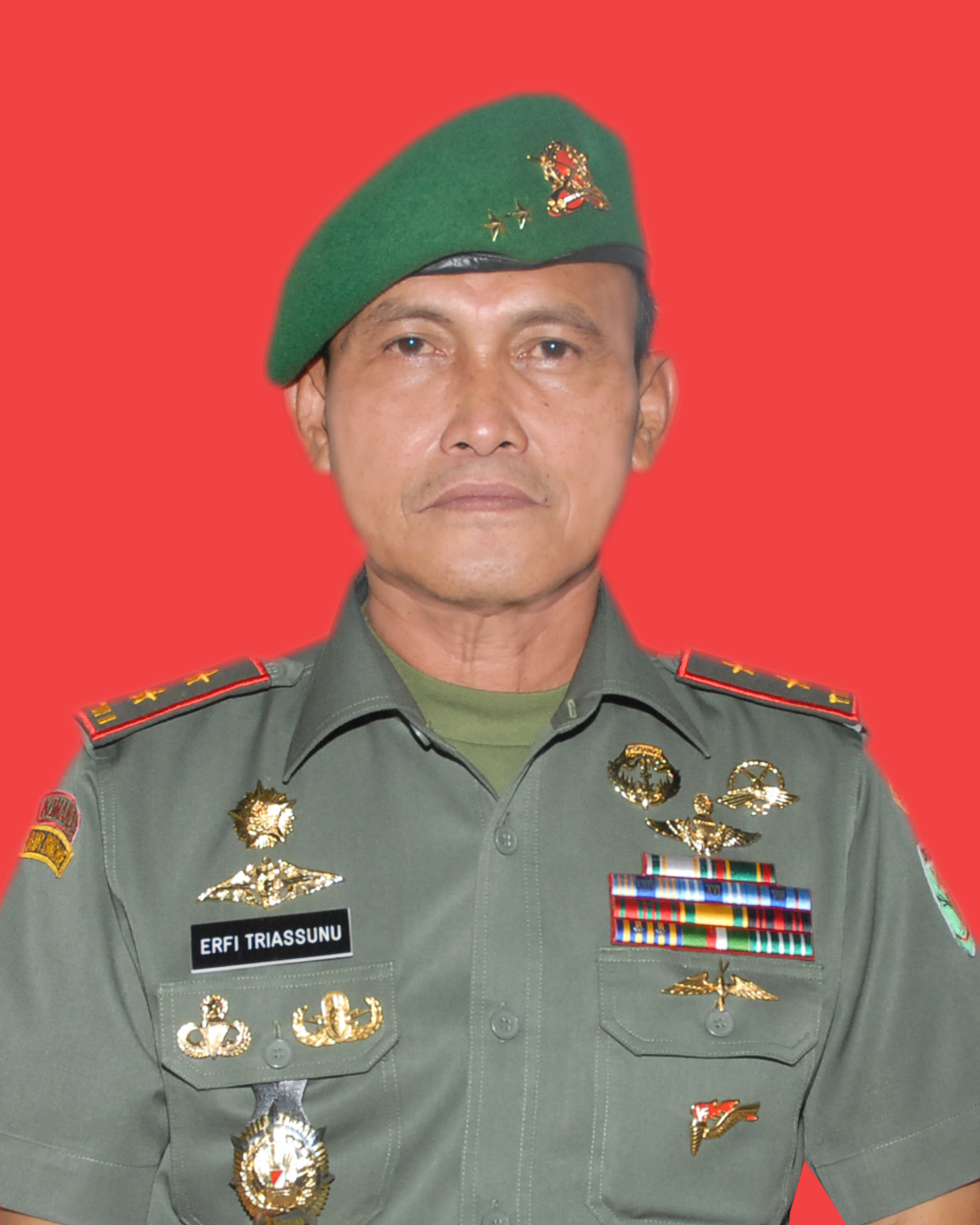
Major General Erfi Triassunu, TNI Chief, Kodam 17 (Papua) (photo discourtesy of TNI)

The question is this: why has the Indonesian Army become involved? Major-General Erfi Triassunu has waded into a conflict that he himself acknowledges is an internal church matter. In the letter (File Number: R/773/IV/2011) addressed to the Governor of Papua, Barnebus Suebu, dated 30 April 2011 and marked “secret”, Triassunu “respectfully requests” the Governor to arrange a meeting between Kingmi Indonesia and Kingmi Papua. The General also offers himself as a mediator.

The letter continues: “if the conflict cannot be resolved through discussion then assertive action must be taken”.

Let me translate “assertive action”. In East Timor when the Indonesian Army took “assertive action” against the Church, they murdered church workers, massacred parishioners, raped women and burnt churches to the ground. In West Papua too the Indonesian Army has a history of killing pastors from the Kingmi Papua Church, as well as other churches. This dates back to 1 May 1963 when the Indonesian government took administrative control of the territory and has continued up to the present.

Last October a video filmed on soldiers’ mobiles phones and circulated widely on the internet, showed several soldiers from Kostrad, the Indonesian Army’s Strategic Command — Triassunu’s own division — torturing a Papuan church worker by burning his genitals with a stick.

In the letter, Triassunu, who previously served in Aceh, makes a number of accusations. He accuses Kingmi Papua of trying to access as much money as they can from the government’s Special Autonomy programme in order to create new churches. However, the real purpose of building a network of churches, Triassunu insists, is “to strengthen Papuan civil society aspirations for freedom”. He then argues that the Kingmi Papua Church’s desire to be independent of the Indonesian Church is “just an excuse” for “the church to become a political vehicle” that supports Papuan independence.

Triassunu then goes on to make a number of recommendations. He specifically says that Kingmi Papua pastors should stick to Biblical “dogma” and not stray into politics. The General is on solid ground here, following in the footsteps of numerous dictators from Marcos to Pinochet, all notorious for their attempts to stifle meddlesome priests. Triassunu specifically names Reverends Benny Giay (the current moderator of the Kingmi Papua Church), Seblum Karubaba (the former moderator) and Noakh Nawipa (the Rector of the Pos 7 Theological College) as malcontents, mentioning several seminars organised by the trio where “Papua Merdeka” (freedom) was discussed.

All this has echoes of Suharto who systematically depoliticised (read: violently repressed and disbanded) all independent organisations, including religious ones, for fear they could become bases for organised opposition against the regime. Indonesian democrats may have overthrown Suharto but West Papua is not part of a new democratic Indonesia. What is deeply concerning is that in the Papuan context the label “separatist” is regularly applied to Papuan leaders as a pretext for justifying extra-judicial action by security forces.

This is where the plot thickens.

According to the letter, the General decided to become involved in the Kingmi conflict after a Kingmi Indonesia pastor, Reverend Karel Maniani, personally asked the Army to protect his parishioners. But Reverend Maniani himself was previously a member of “Group Nine” of the Papuan Freedom Movement (or OPM). In the 1980s Maniani was jailed for four years in the notorious Kalisosok Prison. What happened to Maniani on the journey from freedom fighter to Army petitioner?

To make things stranger, the conservative US-based evangelical Christian Missionary Association backs Maniani and Kingmi Indonesia against Kingmi Papua. At stake is not only valuable church property and access to Special Autonomy funds, it is also over influence of a broad Papua base. Kingmi Papua has half a million members. Virtually all of them are indigenous Papuans from the fractious Highlands, around a third of the entire Papuan population.

When I asked Benny Giay about all this his reply was revealing. For years he said he was part of a church that was more concerned with “saving souls” than the day-to-day oppression of the Papuans. “The Kingmi church has been complicit with the suffering of the Papuans. We need to confess our sins and follow the narrow path of Jesus. This Gospel is very clear; we must stand with the oppressed and work to alleviate their suffering. I hope we can cast off our fear and stay firm to this path.”

Giay has a vision for an independent Papuan church; a uniquely Papuan church that makes space for Papuans to begin to articulate their own theology, one that sees God present in Papuan history and culture. Giay and his colleagues are slowly building up a church that commits itself to solidarity with the poor and oppressed; one that is led by the Papuans themselves. That may not sound much to a reader unfamiliar with Papuan politics, but in West Papua it is a big deal.

Just ask the General.

SCAN OF ORIGINAL LETTER SIGNED BY MAJ-GEN ERFI TRIASSUNU


Create a website or blog at WordPress.com

Up ↑