A Food Project Invasion in West Papua: Merauke Integrated Food and Energy Estate (MIFEE)

http://www.wri-irg.org/node/12386

War Profiteer of the Month:

Merauke Integrated Food & Energy Estate (MIFEE)

– A Food Project Invasion in West Papua

18 Mar 2011 — javier

Rosa Moiwend

Background

Papua is the western half of New Guinea, the world’s second largest island, located about 200 km from the north of Australia. When the Dutch colonised this territory, it called it Dutch New Guinea. The name of this territory has changed over time according to its political status. The Papuan political leaders then changed the name of Dutch New Guinea to West Papua when they prepared for the self-government of this territory in 1961. As soon as the Dutch left in 1962, Indonesia took over the territory, and then West Papua became one of the Indonesian provinces, called Irian Jaya. In 1999, the demand for independence from Papuans increased. In 2001 the Indonesian government granted a Special Autonomy status for Papua under law number 21, and accepted the original name of Papua. Yet, the autonomous status does not mean self-government. All development policies are still under the control of Jakarta, including the policy over investment in natural resources. Moreover, Papua is the only province of Indonesia which it is still identified as a conflict zone under the national defence policy after East Timor became an independent country in 1999 and after Acheh Province signed a Peace Agreement in 2008.

After nine years of Special Autonomy, Papuans realised that this status does not provide significant changes in many aspects of their life. Moreover, the Indonesian government controls the regulation of investment in natural resources by opening easy access for multinational companies to exploit the abundant minerals and forests. Some multinational corporations such as Freeport McMoran, a US giant mining company, plan long-term investment and spend huge amounts of money on security using Indonesian military from the Special Forces (Kopassus) and police. The UK/US company BP and some Korean and Chinese companies, are on the list of investors as well. The Indonesian government through its programme to save energy and deal with the world food crisis plans to open up a massive area of land in the southern part of Papua with a mega-project on food and bio-energy called MIFEE (Merauke Integrated Food and Energy Estate). Since the demand for independence and the various demands for indigenous people’s rights cause opposition to the investors, the government uses a military approach as the only way to stop the conflict. After Freeport McMoran, MIFEE would be the next disaster for Papua. This article will portray a small part of the struggle over Food and Bio Energy project in Papua.

Malind, one of the indigenous communities in Merauke

Merauke is the southern part of Papua, covered by swampy forest with many rivers flowing down, mixed with massive savannah. The ecosystem in this region is unique. According to WWF, Merauke is one of the important places in the New Guinea Trans Fly Eco-region with its abundant bio-diversity.

Local tribes who have been living in the region are the Malind, Muyu and Mandobo, as well as Mappi and Auyu. The Malin tribe is one of the tribes most affected by the Food and Energy project. Some missionaries and anthropologists such as EB Savage from London Missionary Society, AC Haddon and Van Baal from the Netherlands, wrote in the early of 19th century about the Malind people in the region1. Malind people identify themselves according to their Dema (ancestors). They believe that some places in Merauke are sacred, as Demas had visited that place on their journey. More than that, they believe that ancestors live there so they should protect that place and give their respect to it. If they disobey, they will get a customary sanction which bring bad things in their lives. These beliefs are transferred from generation to generation. Malind recognised each other according to the symbols of clans. There are six big clans with their own symbols; Gebze with coconut, Mahuze with the sagoo palm, Basik with a pig, Samkakai with a kangaroo, Kaize with a cassowary and Balagaise with a falcon bird. These symbols integrated with the customary rules that control and influence their lives. Losing one of the symbols in nature means losing their identity.

Malind people have their own mechanism for using their natural resources. Each clan has its own customary territory that functions as a hunting place, for gardening, as a fishing ground, and to settle. Each place has a boundary that doesn’tt appear on the government map of land rights. All explanations and knowledge of customary matters are found in their customary law. If the sacred places and boundaries are lost, it means that internal conflict between clans might happen. This is the reason for the importance of keeping the customary boundaries and sacred places.

Merauke Food and Energy Estate (MIFEE)

In 2009, when a food and energy crisis hit the world in connection with global warming, the Indonesian President, Susilo Bambang Yudhyono, declared his goal of feeding “Indonesia and the world” by developing a food and energy estate in Merauke, Papua. As a mean of stabilising the security of Indonesia’s food, the project – called Merauke Integrated Food and Energy Estate, or MIFEE — covers 1.6 million hectares of commercial plantations. Merauke has been designated a national Special Economic Zone (SEZ) in order to attract the $8.6 billion of investment needed for the project. MIFEE is one of the priority programmes of the second term of his presidency (2009 to 2014).

To fulfill its ambition, the government of Indonesia has invited multinational companies from the Middle East, Asia, and the US, as well as from Indonesia. More than 30 companies confirmed their interest in this project and have already received concessions from the Indonesian government. Some, such as the Bin Laden Group from Saudi Arabia, announced their interest in spending 43 million dollars for 500,000 hectares of land on rice fields in Merauke. Then it was followed by some other companies from Qatar, Oman and the United Arab Emirates who also want to invest in agribusiness in Indonesia2. International Paper, based in Memphis, Tennessee, is also reported to have had exploratory talks with the Indonesian minister of forestry concerning developing a mill either in Kalimantan or in Merauke3. From Asia, a Japanese Corporation, the Mitsubishi group, the Wilmar group from Singapore, and LG International from Korea, also made commitments to this project though a joint venture with Indonesian companies. Companies such as Medco Group, owned by Arifin Panigoro; Artha Graha Network, owned by Tomy Winata; PT Bangun Cipta Sarana, owned by Siswono Yudhohusodo; Comexindo International, owned by Hasyim Djojohadikusumo; Sumber Alam Sutra; Korindo; PT Rajawali Nusantara Indonesia; Sinar Mas; PT Kertas Nusantara; PT Digul Agro Lestari as part of Astra Agro Lestari, and Sinar Mas Group4 are the Indonesian partners of these multinational companies. As well as investing in food plantations, many of them are interested in industrial timber plantation and cheap production.

MEDCO Group vs Malind

Medco International is an integrated corporation that invests in oil, gas, mining and energy sectors across Asia, Africa, and the US. It has 8 production blocks in the US and the Gulf of Mexico, 2 exploration blocks in Yemen, 2 blocks in Cambodia, 1 block in Tunisia, and 1 in Libya1. According to The Jakarta Post, Hilmi Panigoro, the presidential commissioner, stated that Medco Energy International will collaborate with the Libyan Investment Authority (LIA) for US$ 400 million investment on an oil facility in Libya. The investment will be shared fifty-fifty with LIA.2 In Indonesia, Medco Energy owns 10 blocks in total in Sumatra, Java, Kalimantan and Sulawesi.

In order to spread out its business, Medco Energy particularly shows an interest in bio-fuel and bio-energy. In Sumatra (Lampung), Medco is spending US$ 45 million for 13,000 hectares of Cassava plantations. Then in Merauke, Papua, Medco is investing in 170,000 hectares for an industrial timber plantation. MIFEE has one of its priorities as energy investment. It has been planning to operate using a similar model of corporate farming as in Brazil. According to Hilmi Panigoro, Brazil is a successful model of an integrated agriculture project regarding energy and food security. Panigoro said Brazil has switched 50% of its fuel consumption from only 1% of its fertile land. Moreover, he quotes the studies of the FAO in 2005 that suggested Indonesia has more potential for developing bio-energy than Brazil. 3

Medco has strong support from the Indonesian government and the local authorities in Merauke. Without consulting with the Malind people, the Indonesian government, with help from the local government, has split opinions in the area about forestry and agriculture.

In September 2009, LG International announced its partnership with Medco Group to obtain 1 million hectares of Papua’s forests for wood chips. For that reason, the Korean corporation spent about US$ 25 million on 25% of PT Metra Duta Lestari (Medco Group), with another 66% held by Medco.4

Local independent media, Jubi online, reported complaints from the Malind tribes’ leader Alberth Onoka Gebze Moiwend, in Merauke, about Medco’s activities. Alberth explained that Medco’s forest clearance was destroying hunting places, and firewood and food grounds of the Malind tribes who live in Bupu village. In addition, wastes from Medco’s pulp factory in Bupu village is polluting the river, which is the only water supply for the village. Yet Medco Group refuses to say that its activity affects deforestation. The company, is already producing large amounts of timber from natural forests, and has shipped several barges, mostly of acacia and eucalyptus trees for chips in Merauke. All the land will be cleared and then replanted with other seedlings of commercial timber. Moreover, Onoka Moiwend asserted that Medco activities could potentially bring the indigenous people in Merauke towards slow extermination.

The Malin people in Kaliki, a small village near the town, are waiting for their compensation from Medco. According to the local church, the PT Medco Papua (PT Medco) company entered Kaliki village in 2008 and promised to pay compensation to five clans (Mahuze, Kaize, Balagaize, Gebze, and Ndiken) who own the land. On 3 March, 2008, they organised a meeting with villagers. PT Medco promised to give them compensation for the use of land with 10 motorbikes for the Gebze family, who owned most of the land; and they promised to build houses for the villagers. Additionally, the company would provide each villager with their own bank account and provide a school and houses for the teachers. Also, there would be guaranteed scholarships and dormitory costs for children of Kaliki who continued their studies in the city. The company would facilitate a new road to Kaliki as well. Medco would provide jobs for villagers in order to improve their economic situation.

Nevertheless, the company created internal conflicts between clans in the village by signing an agreement with only the other four clans. In the meantime, Medco made another agreement with the Gebze clan who agreed to sell 20 hectares of their land with only a payment of 20 Million Rupiahs (approximately £1500). The four other clans complained to the company and the Gebze. Misunderstandings between those clans finally led to one of the Gebze members being a victim of a black magic practice that cause his death. Villagers and Gebze families believed that the black magic was sent by people from the other clans. For that reason, the clans are fighting against each other while the company continues to run its project. Just recently, the local church took an initiative to mediate between the Gebze and other clans to resolve their conflict. Finally, the villagers have decided to reject PT Medco and its activities in Kailiki.

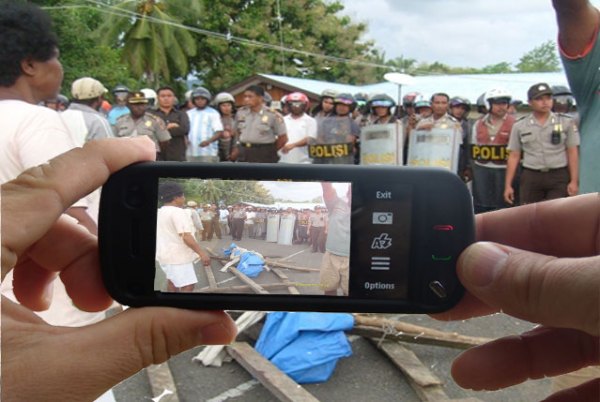
It has been reported that there has been strong rejection of MIFEE by local people. Solidarity groups called SORPATOM and KOMALI have formed a resistance alliance. Protests and demonstrations had been organised by these groups. Furthermore, the customary leaders in Merauke wrote a letter of rejection to MIFEE and sent it to the UN Special Rapporteur for Indigenous People was facilitated by AMAN (The Indigenous People’s Alliance of Archipelago), the main Indonesian Indigenous People’s forum. AMAM delivered a statement of concern about human rights in Merauke in connection with the MIFEE project to the UN Permanent Forum on Indigenous Issues in New York, in April, 2010. AMAN in its statement categorises the MIFEE project as “a structural and systematic genocide of the West Papuan people” this was endorsed by 24 indigenous people’s organisations around the world5. The rejection of MIFEE has now gained big support from different organisations in Indonesia and Papua, and internationally as well.

The case of Kaliki is only one of many cases that have happened in the region. Not only Medco, but also some 30 other companies cause problems for the indigenous people there. However, the Indonesian government stays quiet and continues its interest in this mega-food project. At tge local government level, Merauke recently had a new head of authority who has a different perspective on this food project. Romanus Mbaraka, the new head has decided to postpone operating this project under the local legislation. However, he has no authority to influence national investment policy.

The question is for how long the indigenous people in Papua will resist the bombardment of investments threatening their existence in their ancestors’ land.

Notes

Published in War Profiteers’ News, March 2011, No. 28

AJI Papua Presses Police About Lack of Progress Over Stabbing

Media information FYI

The Jakarta Globe
Sunday, March 27, 2011

AJI Papua Presses Police About Lack of Progress Over Stabbing

The Papua chapter of the Alliance of Independent Journalists has
expressed frustration with the sluggish pace of police investigations
into the stabbing of local journalist Banjir Ambarita.

“The investigation is taking too long, that is why we are monitoring
the case closely,” said Viktor Mambor, chairman of the Papuan branch
of the alliance also known as the AJI. “We are going to do something
to pressure the police, like hold a protest rally.”

“The new [Papua] police chief was once in Densus [the National
>Police’s counterterrorism unit], investigating a case like this should
be easier than capturing terrorists,” he said.

Banjir, a freelance reporter and contributor to the Jakarta Globe, was
attacked in Jayapura by two men on a motorcycle as he was riding his
own motorcycle home shortly after midnight on March 3.

The Jayapura Police’s detective unit questioned Banjir on Friday, more
than three weeks after the stabbing. “Because Banjar Ambarita’s
condition has improved, we formally asked him for information in
relation to the stabbing,” said First Adj. Insp. Widodo, an officer in
the unit. “A total of 37 questions were posed and were answered well.

“We have already questioned five witnesses, but we have yet to find a
lead,” he added.

Viktor said the AJI appreciated the police’s efforts but said: “Even
though they are working quite well in carrying out their job, this does not guarantee that they are taking the case seriously.”

Poengky Indarty, director of external relations at rights group Imparsial, said that as a defender of human rights in Papua, it was
vital that Banjir be protected.

“Until today, the perpetrators responsible for the violence have not
been identified,” she said. “We urge the Papuan Police to make every
effort to catch the offenders and legally process them.”

She said Banjir had provided police with information to make a sketch
of his attackers. “We want them to investigate based on this sketch
and look into police officers who may be involved in the case,” she
said.
Nurfika Osman

Broadcasting Papua’s Songs of Freedom: Why the international community must support West Papua’s citizen media development

FREE THE PEOPLE? FREE THE MEDIA!

by Nick Chesterfield

A Paper presented at the University of Sydney Centre for Peace and Conflict Studies “Comprehending Papua Conference”, February 22-23, 2011.    This paper will form a chapter of the forthcoming book “Comprehending Papua”, to be published in early 2011 by the University of Sydney Centre for Peace and Conflict Studies.

———

It is almost a cliché today that peoples wishing to free themselves from tyranny are turning in huge numbers to citizen journalism both to tell their stories to the outside world, and to put a formidable brake on the out of sight, out of mind mentality that allows state organs to conduct constant abuse with impunity. The rise of citizen media is giving mainstream journalism the kick it needs to remember its core business of giving voice to the voiceless.  In West Papua, the Voiceless are slowly discovering they can roar.

Just a few weeks ago an event occurred in Tunisia that was to be the spark for the pan-Arab awakening which has just seen yet another dictator ousted, now in Egypt.  After a local trader immolated himself in protest against the Tunisian regime, citizen media succeeded in viralizing the news of this event.  “We could protest for two years here, but without videos no one would take any notice of us,” said a relative of the martyred 25-year-old.

For media activists and journalists reporting Papua, this truth is self-evident, and its acceptance hopefully could ignite the spark of uprising in Papua.  The opportunities presented by the Pan-Arab (and other) awakenings are not being lost on the young generation in Papua.  Social media in Papua is buzzing, unafraid, with vibrant discussions of implications for Papua of the pan-Arabic revolutionary success.  The reality is that a spontaneous awakening and mass politicisation of ordinary Papuans is completely inevitable, and it is being ably assisted by switched-on local people developing their capacity to tell the story to the world.

In researching for several stories over the last few months, my sources have told me in no uncertain terms that they are all ready for a trigger to explode the situation.  The only thing holding back sustained mass action – revolution even – across occupied Papua is the constant bickering between exile groups, the actions of the collaborator elites, desperate to cling to the illusion that Jakarta is not there just to steal their land and send them to the moon, and for those who will put their own interests ahead of those surviving under occupation.

What is a mystery is how this mass consciousness will survive the elite and exile power games that are evident in most transitional polities throughout recent history (and is certainly present in West Papua today); whether those exiles will hijack the efforts of the young generation or listen to the actual wishes of their people; and if Jakarta can be trusted not to unleash the truly evil and deeply entrenched habitual brutality that is its only constant in becoming the new colonialists; or that they will claim their place amongst the civilised by not slaughtering those who want peace. History is a wise teacher, and its lesson is never trust the evil or greedy to reform of its own accord.

To keep these ugly realities in check, West Papua (and the international community) needs a determined, effective, vibrant and fearless citizen and professional media to deliver real-time accountability both internally and internationally.

Real time advocacy is vital for the international community to act to end Papua’s suffering.  Human Rights advocates conduct scientific research into abuses, but because this information does not get out easily, the problems in Papua are only now getting known to the world.

I need to ask you all today an honest question:  without the hard work of journalists in Papua and those outside assisting them to get their voice to international media, would Papua even be in people’s consciousness today?   So why is the international arena concerned with West Papua falling prey to the disease of factionalism and Big Man syndrome, and not in assisting WestPapuan people to get their stories into the living rooms of the world?

Many loud mouthed exiles claim significant legitimacy, but baulk and splutter when asked to prove it.   This has developed a culture of opacity across the exile movement.  A strong and diverse citizen based media across Papua can easily counter exile’s game playing and false claims by ensuring credibility and honesty in social movements. It benefits and strengthens social movements too by giving the skills and practice for sharpening their message, and creating a powerful argument for international support for their aims.  Strong domestic media also removes international government’s excuses for inaction, by seriously raising the credibility and verification bar.

If the international community is serious about improving the lives of Papuan people, it will help develop the capacity of the West Papuan media to tell the story of what is going on, and press Jakarta hard to allow immediate international media access.  After all, with full accountability, what is there to be afraid of?

Largely in response to years of wilful ignorance and self-censorship of the Indonesian created horrors in West Papua by international media, many sectors of Papuan society spontaneously and independently began a dramatic take-up of social media technology, exponentially increasing since 2008. Blogs, social networking and online media outlets are being utilized all over the country, by a young generation of Papuans impatient for real change.  Today’s mass Papuan movement is mainly urban, educated, innovative, nonviolence based, and embracing significantly the power of citizen and social media as a key plank of civil resistance strategy.

Very occasionally West Papua does get in the news, but only through the co-ordination between committed journalists and human rights workers working together and ear-bashing news editors.

Due to the ongoing ban by Indonesia on international media and humanitarian organisations having access to Papua, allegations of abuse are notoriously difficult to verify.  While this ban remains in place, only the most dedicated journalists make the effort to go in undercover.   West Papua Media has been proud to facilitate undercover trips into occupied territory to meet with many West Papuan people prepare to tell their own story. This is getting more difficult by the day so local people are working for a solution.

Live images, videos and online activism by Papuan people have already created tremendous momentum in action and awareness of Papua.  By creating their own media, and their own narrative, Papuan people are reclaiming self-determination denied for so long.

Reporting in West Papua is a highly risky business.   Journalists, Papuan and outsiders alike, are under constant threats for reporting West Papua, with four journalists dying in suspicious circumstance in 2010 alone.  Anywhere journalists report fearlessly they are targets, but most journalists in West Papua simply put up with it, they have no other option.  What can we do to lessen their risk?

Partly in response to this danger and partly to give local journalists a voice globally, West Papua Media (WPMA) (WestPapuaMedia.Info) was started. It aims to provide a professional service to international media covering West Papua, ensuring high quality, verifiable reporting gets into the international media, directly from the ground, and not from those who seek to distort the truth of daily experience in Papua.  By reporting Papuan campaigns to end human rights abuses and bringing these unreported Papuan issues to the front page, we hope to hold the abusers to account. With an ever growing stable of committed and disparate voices from citizen media to professional journalists, West Papua Media is proud and excited to be part of this movement.

Some of our real time work has assisted directly in the prevention of mass acts of violence by the Indonesian security forces, such as our coverage and media advocacy fixing of the July 8-9 Otsus Gagal demos and occupation of the Jayapura DPRP.

Less than ten minutes before the deadline for dispersal of the 2 day rally of over 45,000 people, Indonesian security forces were forced to back down after a BBC report aired, organised by WPMA, which brought international attention the explosively dangerous situation.  Extensive international diplomacy occurred in that 15 minutes and, together with the extreme discipline of the mass protest, enabled the protestors to peaceably leave the scene of the protest without violence.

WPMA has worked very hard raising the media profile of West Papua, with significant joint investigations with major media outlets breaking several key stories in 2010.  None of this would be possible without deep trust from the people of Papua in reporting their stories.  West Papuan citizen media, in conjunction with several colleagues here today, played a key role in alerting the world to deeply heinous cases of abuse.

One was the sourcing, verification and release of the deeply shocking leaked Kostrad torture videos of civilians in Puncak Jaya. The Kiwo incident neatly captures why the Indonesian military cannot be trusted to reform themselves from the inside, and why the role of a robust media is so critical in Papua.

The other was footage of Indonesian BRIMOB police taunting a former political prisoner Yawan Wayeni, having disembowelled him moments before for arguing with them. Both these videos showed the power of citizen media in activating international human rights networks to effectively raise the issue of Papua. Of course, there are many more videos in preparation for release.

A swarm movement cannot have a single media strategy, but media need to understand that it will get media out in its own way too.  The media that had wilfully ignored West Papua’s voice for so long really has no right to dictate how information disseminates, and if it wants to get the stories before others, then it just has to move faster.  Because it is new media techniques that have already, and will propel Papua onto the front page, to make people choke on their cornflakes.

Likewise, evidence dissemination also needs multiple, failsafe distribution routes: Single dissemination routes can easily be shut down or silenced.  West Papuans have tailored their mechanisms to this very effectively; yet this is significantly frustrating outside journalists.  According to many in mainstream media, West Papuans can be their own worst enemy when it comes to disseminating information.  People on the ground do need to get smarter about media distribution strategies, but the media also must adapt to a social and cultural reality.  West Papuan human rights and citizen media are not chaotic: they are maximising the potential audience  for their information.

It is important to understand that no one faction or sector in West Papua can claim dominance or leadership of this mass movement. This is not Congress in India and there is no single Gandhi figure. Rather, this is a movement with thousands of Gandhis.  The civil movement refuses to be based around a single leadership group, and instead features multitudes of groups and tribes all acting autonomously and independently (where everyone knows their role and works their hardest) but which is nevertheless unified under its collective goals.

Such a swarm structure can occasionally present difficulties for those who cannot think outside traditional top-down strategies for national change, which includes traditional media. Rather than being shut out of dialogue by the game playing of unaccountable elites, this type of structure encourages a longer lasting peace by enabling all actors to have their voices heard. It is also a natural strategy to employ in a nation where it is,  for the most part, illegal to congregate in groups.

Other barriers for West Papuan media are much more easily solved with a bit of training, and understanding the enemy (this time the enemy being the unreasonable expectations of media executives far removed from reality).

One issue is the lack of speed with which many West Papuan media activists work, and whilst improving, an event on a day has to be filmed, edited, packaged and disseminated as fast as possible. There are issues of journalistic discipline and professional journalistic practice in new media; safe information gathering, abuse documentation and investigative journalism methodology; information quality assurance; protection of sources, and more.

Effective citizen and professional media training is required to develop awareness of major current and future challenges to safe information dissemination – these are all programs that the West Papua Media network is currently engaged in and it needs help to increase its capacity.

All of this costs money, and requires the international community to understand that the development of indigenous journalism in West Papua is crucial to the protection of human security and peace across the entire Asia-Pacific region.  It requires international institutions in media and academia to get out of their cloisters and get muddy, to actually pool resources and help identify new sources of sustainable funding to start training journalists in innovative new media reportage techniques, and to support their work for the global human interest.  As I said before, West Papua Media already has training programs ready to go, we just need the funds to make them happen.

In West Papua, as across the world, accountability is always the simplest solution to combatting impunity. An aggressive culture of investigative journalism must be encouraged, and the skills to enable it must be developed, to deliver that accountability, be it in human rights, against military business mafias and corruption, human security, environmental protections, etcetera, and to cover (and protect) the desires of a population to determine their own future, in both the current occupation and in any situation for the future.  Both academia and international media must take a strong role in its development, to embed international protections to enable West Papua’s journalists and citizen media to report without fear, hindrance or threat, the stories that are important to West Papuan people and their freedom.

Our hope is that we have a really robust citizen media that can deliver accountability.  We want to stop people from being afraid of speaking out, and we want West Papua’s voice to be its weapon, to broadcast its songs for Freedom.

Nick Chesterfield, editor at westpapuamedia.info, is a human security journalist and activist with extensive experience of the Papua issue through refugee protection, human rights, environmental protection, and citizen media work and safety training. He has conducted many field investigations in the West Papuan region since 1999. Together with citizen media and human rights workers from inside Papua, Chesterfield helped set up West Papua Media in 2008, to counter the wilful lack of coverage of West Papua by the international press.


The Indonesian Government: closing window for peace in West Papua

This article originally appeared at
Jason MacLeod

Just as Indonesia’s president Susilo Bambang Yudhuyono was being feted globally for being a democrat, the Indonesian government was entrenching Papua’s reputation as Indonesia’s last bastion of authoritarian military rule. Now Peace Brigades International has finally been forced out.

The latest casualty in the Indonesian Government’s efforts to seal off West Papua from international scrutiny is Peace Brigades International (PBI). In January this year the international non-government organisation was finally forced out of Indonesia. Since 1981 at the invitation of local people, PBI has been providing unarmed protection to human rights defenders at risk in conflict zones around the world. International accompaniment is literally the embodiment of the international community’s concern. The presence of internationals increases the cost of attacking human rights workers and expands the political space for local activists. All this is made possible by an elaborate communication network. PBI staff meet with local police and military personal as well as their superiors in regional and national capitals to let them know exactly who is being accompanied. This acts as a deterrent. The PBI volunteers are the eyes and ears of the international community, communicating the human rights situation on the ground to an international network of governments and civil society actors. It is a tried and tested approach that has worked in places as diverse as El Salvador, Guatemala, Colombia, Haiti, Sri Lanka and Nepal.

Members of the PBI Indonesia Project were invited by Acehenese activists to accompany them through the darkest days of martial law. Acehenese civil society organisations like Flower Aceh and Koalisi HAM (the Human Rights Coalition) were able to continue their work because of PBI protective accompaniment. It gave local workers a sense that the international community cared about their situation and sent a clear message to the Indonesian army that they were being watched. PBIs protective accompaniment helped expand the space for peace in Aceh in the lead up to the historic Helsinki Peace Agreement. But in West Papua, home to Indonesia’s longest running separatist conflict, the world’s oldest international nonviolence organisation has finally met its match. After years of harassment from the Indonesian security forces the PBI Indonesia Project was closed down.

My colleagues and I helped set up the PBI West Papua project in 2003. I left the organisation in 2004 but kept in close contact with many of the organisers and staff members. One of the reasons PBI responded to an invitation from Papuan human rights defenders was because for years the Indonesian government has closed off access to West Papua to humanitarian organisations, journalists and even diplomats. It is important that Papua is opened up to the international community if human rights are to be addressed. But while the rest of Indonesia moved towards greater democracy, Papua slid back into an authoritarian backwater ruled by the Indonesian security forces as if it was their own private fiefdom. Since PBI established a presence in West Papua Amnesty International, Human Rights Watch, the Dutch NGO CordAid and even the Red Cross have all been denied access. This level of hostility by a State to international scrutiny of a human rights situation is unusual. Even during the height of apartheid, the South African government permitted the Red Cross access to political prisoners. Not so in West Papua.

Prior to being forced out of West Papua, PBI was the only international human rights organisation with a permanent presence in Indonesia’s restive Pacific periphery. A group of long-term international volunteers based in Jayapura, the capital and in Wamena, in the troubled highlands, provided unarmed protection for Indonesian and Papuan human rights defenders and monitored the situation on the ground. PBI helped protect human rights defenders and lawyers trying to expose police brutality during the ‘Bloody Abepura’ trial in 2004. PBI also protected Papuan human rights defenders who were investigating the security forces after they cracked down on Papuans in the wake of the March 16 2006 blockade of the main road outside the University of Cendrawasih in Jayapura.

PBI is governed by a strict mandate. The organisation only supports unarmed actors, they do not take sides and they do not tell Papuans how they should run their struggle. Despite this the Indonesian government was petrified of PBI. I experienced this personally. When I was taken in for questioning in West Papua in 2007 after observing a demonstration in Papua, the very first question the Indonesian police intelligence agent asked me – even before enquiring whether I was a journalist or spy – was “Are you PBI?” By then I had left the organisation but it revealed the depth of the intelligence services concerns about PBI.

Almost from the moment PBI started work in West Papua the Indonesian government acted to restrict PBI’s access and ability to work. In 2009 the organisation was pressured to close the Wamena office in West Papua’s remote highlands, the scene of frequent human rights violations by the Indonesian military. PBI staff were refused permission to work as the police and intelligence services launched an official investigation into the organisation’s status. National Indonesian staff started to receive threatening phone calls. They felt increasingly vulnerable.

By late 2009 all one-on-one protective accompaniment had ceased. In an effort to stay in Papua protective strategies were reduced to regular check-in calls with PBI clients who felt threatened by state security forces. Then on 30 July 2010 Ardiansyah Matra’is’s naked, handcuffed body was found in the River Gudang Arang. His arm had been tied to a tree to prevent his body from floating downstream. Matra’is was a journalist working for Papua’s only national independent paper, Jubi. Matra’is had been critical of illegal logging operations run by the Indonesian military in Merauke and had taken photos of their activities. Matra’is was also a PBI client. His murder was the first time in Indonesia that a current PBI client had been killed.

The writing was on the wall: PBI was no longer making space for peace in Papua. In fact the opposite was happening. The Indonesian government was closing space for peace in Papua, and PBI appeared powerless to halt the slide into greater military impunity. Just as Indonesia’s president Susilo Bambang Yudhuyono was being feted globally for being a democrat, the Indonesian government was entrenching Papua’s reputation as Indonesia’s last bastion of authoritarian military rule.

But the Indonesian government’s restriction of access to West Papua is not just confined to grassroots international nonviolence organisations. Jakarta is even willing to snub the US government. In late 2010 the US Ambassador, Scott Marciel asked the Indonesian government if staff from the Embassy could observe the trial of three soldiers involved in torturing Papuan civilians. The torture, which including burning a man’s genitals with a stick, was filmed on a mobile phone camera and leaked to transnational human rights networks. When the footage was uploaded on to YouTube and featured on domestic and international news networks it generated massive moral outrage not just internationally but inside Indonesia as well. When the trial went ahead last month, Mr. Marciel was notified by the Indonesian government only 24 hours beforehand, not enough time to apply for a surat jalan, a letter of permission to travel to West Papua required by the Indonesian government. It was not an official denial from the Indonesian government but it may as well have been.

The Indonesian government is blocking access for all those who want to shine a light into West Papua. The problem for the Indonesian president, Susilo Bambang Yudhuyono is that he has allowed the Indonesian intelligence services to dominate decision-making processes in West Papua. The intelligence services determine who gets access into West Papua and who does not. They are the ones who assess the applications of foreign NGOs, journalists and even diplomats who want to travel to West Papua. Access to West Papua should be subjected to the rule of law and not to surveillance principles. If democracy and rule of law was present in West Papua, the surat jalan regime would be abolished altogether.

The Indonesian government cannot have it both ways. The human rights situation in West Papua cannot be fine while at the same time the Indonesian government and its intelligence and security forces insist the territory is off limits to foreigners. Either human rights are respected in West Papua or they are not. The closure of PBI in Indonesia only sharpens the international community’s perception that the Indonesian government has something to hide in West Papua.

Jason MacLeod worked for the PBI Indonesia Project from 2000 to 2004. He teaches civil resistance at the University of Queensland.

Members of new MRP urged to resign

JUBI, 13 March 2011

The chairman of the West Papua Forum of Democracy (FORDEM), Salmon Yumame, has declared that the leaders of the MRP – Majelis Rakyat Papua – Papuan People’s Assembly – failed to have the courage to acknowledge to the public the mistakes made by the MRP in their commitment to the Papuan people. He accused them of being ‘banci’ or ‘perverts’ for misleading the people.

He said it was highly regrettable that the members of the MRP who had, together with the Papuan people, declared their firm rejection of the Special Autonomy Law 21/2001 which included the creation of the MRP, yet had allowed themselves to be nominated for membership of the second MRP. They had failed to have the courage to withdraw their names, so that the aspirations of the Papuan people could be comprehensively raised with the central government.

He expressed the hope that those who had already been chosen to become members of the MRP and were now waiting to be sworn in would withdraw and would, along with the Papuan people, demand that the central government respond to the eleven recommendations adopted in June 2010.

The recommendations were handed over to the Papuan Provincial
Legislative Assembly, the DPRP. He said that all the problems confronting the Papuan people were contained in those eleven
recommendations.

Salmon said that FORDEM will continue to organise peaceful actions,
press conferences and issue statements to express the aspirations of the Papuan people.

In June last year, the MRP, along with other components of the Papuan people, held a grand consultation which had resulted in the adoption of he 11 recommendations, which included calling for Freeport Indonesia to close down, for a dialogue between the Indonesian government and the Papuan people mediated by a neutral, third party, for the rejection of Special Autonomy and for a referendum.

Create a website or blog at WordPress.com

Up ↑