Empty promises whitewash Freeport’s rights, responsibility record

 http://etanaction.blogspot.com/2011/08/empty-promises-whitewash-freeports.html

Special for ETAN‘s  Blog

by David Webster

What does a mining company need to do to get a top score for “corporate social responsibility”?
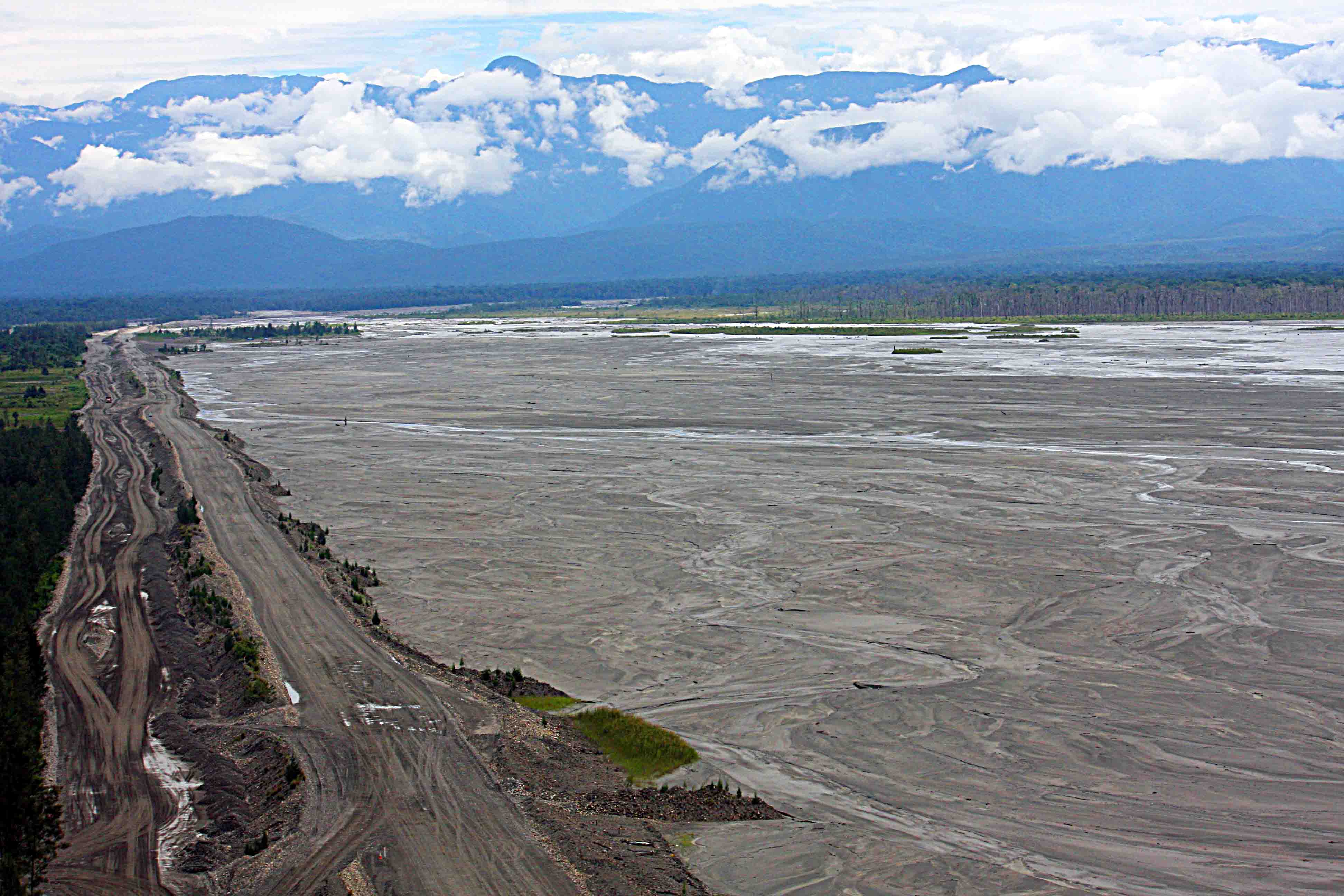
Freeport's contribution to Papua's welfare - Riverine tailings pollution

To judge by the recent “100 Best Corporate Citizens List”, all it takes to finesse a long and controversial record of human rights abuses is to come up with a piece of high-minded rhetoric, then carry on as usual.

Human rights advocates and those who have studied the record of Freeport McMoran in West Papua were startled to learn that Corporate Responsibility Magazine had named Freeport as the 24th-best corporate citizen in America (click for the full list). More startling still, the company scored well based mainly on a sixth-place ranking in the human rights category.

How is this possible? Well, the survey’s methodology seems to pay no heed to human rights performance. Only human rights rhetoric matters. And in that, Freeport excels. A strong written policy on human rights declares: “Freeport-McMoRan does not tolerate human rights transgressions.” It points to rights risks in West Papua, Peru, and the Democratic Republic of Congo, and adds that PT Freeport Indonesia policy is to “notify the direct commanders of the perpetrators” in cases where human rights allegations are made against Indonesian security forces. Since reputable human rights groups suggest that the top ranks of the security forces are implicated in widespread human rights violations in West Papua, this is hardly striking at the root of the problem.

As local people have pointed out, and researchers have confirmed, Freeport’s performance is a far cry from the written policies. The main trouble is intimate ties to Indonesian security forces.

Security forces may be implicated in the murder of American citizens near the Freeportmine, as Eben Kirksey and Andreas Harsono have reported.

Violence around the mine is used by security forces to target and scapegoat local people. In 2005, the New York Times revealed thatFreeport paid the security forces more than $10 million in 2001 and 2002. Payments are now made “in-kind” rather than in cash. The local Amugme people have long protestedFreeport seizure of their lands. Pictures of Freeport’s Grasberg mine from space (left) show the scale and environmental impact in the mountains that are home to the Amungme.

And lest all of this be hailed as “old news,” the Amungme filed a lawsuit last year sayingFreeport had taken their lands illegally. Meanwhile, the Indonesian army’s presence around Freeport, and the company’s close ties to Indonesian security forces, were reinforced this year. The continuing alliance between Freeport Indonesia and the Indonesian security forces is likely to exacerbate, rather than improve, the human rights situation.

None of these reports are taken in to account in the “100 Best Corporate Citizens List.” All the human rights indicators measure “human rights disclosure” and the sole source, according to the methodology details, comes from “Company public disclosures” – a corporation’s own information about itself.

The methodology, in other words, measures promises, not performance. There are parallels to the debate over whether companies accused of operating sweatshops overseas can be trusted to police themselves, or should accept independent monitoring. Thus the list cites the voluntary “Sullivan principles” first created under the Reagan administration and welcomed by companies resisting demands to divest from apartheid South Africa. AndFreeport boasts of adherence to the Voluntary Principles on Security and Human Rights, launched by the British and American governments in 2000.

The key word here is “voluntary.” As with the mining industry globally and with businesses jumping on the corporate social responsibility (CSR) bandwagon more generally, companies are happy to promise good performance, as long as no one will be looking over their shoulders.

So perhaps it’s no surprise to learn that Corporate Responsibility Magazine is in fact published on behalf of the Corporate Responsibility Officers Association, a body made up of many of the companies being judged, and steered by such firms as Domtar and KPMG.Freeport is listed as a “recent member” of the CROA. It’s advanced in the listings – it was ranked 83rd in 2010.

The problem here isn’t just the “corporate social responsibility” methodology, but the entire concept of “CSR”. It can all too often be used by companies to buy their way out of “corporate social irresponsibility.”

Freeport is no champion of the best values of corporate citizenship: For human rights activists, it’s long been a poster child for corporate irresponsibility. A list of good corporate citizens with Freeport winning laurels demonstrates more than flaws in the study. As George Monbiot has written of climate change credits, the lists offer corporations a new form of medieval European Catholic “indulgences,” forgiveness for any form of offence. Jeff Ballinger recently pointed out on this blog that companies like Nike are wrapping themselves in the CSR garment to burnish their corporate images, despite continuing disregard for many labor rights. Freeport, too, is now having itself measured for a fine CSR wardrobe.

—-

David Webster is an assistant professor of International Studies at the University of Regina inSaskatchewan, Canada. He is a former coordinator with the East Timor Alert Network/Canada.

see also

West Papua Report (monthly)

ETAN/WPAT: Statement on the operations of the Freeport McMoran Mine in West Papua, to the U.S. Senate hearing on Extracting Natural Resources: Corporate Responsibility and the Rule of Law

Freeport Indonesia, Union Pay Talks Enter Third Day

Grasberg mine
Image via Wikipedia

JAKARTA, July 22 (Reuters) – Negotiations between Freeport McMoran Copper & Gold and its workers in Indonesia over pay entered the third
day on Friday, industry sources said, as the mining giant reported
losses of copper and gold after a strike at its massive mine.

Chief executive Richard Adkerson said on Thursday the aggregate impact
of production lost during an eight-day strike at the Grasberg mine in
Papua province was 35 million pounds of copper and 60,000 ounces of
gold.

Adkerson also said the strike, which ended on July 13 and production
resumed a day later, led to a temporary suspension of all mining,
milling and concentration shipments from the mine.

“The talks are ongoing but the details are not disclosed to the
public,” said an industry source in Jakarta, who has seen Freeport’s
notice on the talks.

“The meeting is attended by PT Freeport Indonesia’s union team and
witnessed by representatives from the company’s management team.”

A Freeport spokesman in Jakarta did not reply to an email inquiry.

Union leaders started pay talks with the U.S. miner on Wednesday in
the Indonesian part of New Guinea, as they push for a doubling of
salaries for workers earning $1.50 per hour, saying other Freeport
workers around the world get 10 times that.

The company is negotiating with the union on a contract due to be
renewed in October.

The New York-listed firm reported a doubling in second-quarter
profits, citing soaring metal prices and higher copper sales than
expected at its North American mines, but said that costs are creeping
up and it expects to sell less copper in the third quarter.

That outlook, combined with a fall in copper price on Thursday and
some analysts’ concerns with the nagging uncertainties over the labour
situation in Indonesia, led to a more than 1 percent drop in Freeport
share price.

Gold was steady around $1,589 an ounce on Friday, not far from a
record around $1,609 hit on Tuesday. Three-month copper on the London
Metal Exchange edged down to around $9,650 a tonne.(Reporting by Lewa Pardomuan and Samuel Wanda; Editing by Ramthan Hussain)

Freeport employees want human rights violator sacked

JUBI, 18 July 2011Following the violation of human rights that were perpetrated by personnel working for Freeport Indonesia,  there have been calls for the perpetrator, Nurcahyo to be sacked by the company.

‘We dont want that person to go on working here because he is bound to continue with his habits of discrediting indigenous Papuans.  We have experienced these things because of some trivial mistakes. Does the company want a repetition of recent actions,’ said one worker who didn’t want his name to be identified, when asked to confirm the action.

The matter was said to be closed after the person concerned was given a second warning.  For some of the staff, a very simple thing can result in the worker being sacked without mercy.

It appears that the person involved in this latest case is a superintendent  working at the Marine Section of the company named Nurcahyo who committed these human rights violations which are forbidden within the company. When there is clear evidence that someone has committed such things, that person is immediately sacked. Yet in this case, the man in charge of the human rights department, SemiYapsawaki, was simply given a second warning.

There have been many cases like this, according to JUBI, which recently triggered a strike at the company.

‘We want this person to be sent home because this is not the first time that he behaved in such a way. We hope that the management will take action against this person who can cause further major problems  in the workforce,’ said this source.

Attempts to contact the management, including the Manager, Juarsa, were not successful as he did not respond on his hand phone.

STATE LOSING Rp 30 TRILLION BECAUSE OF FREEPORT

JUBI, 16 July 2011

Member of Commission IV of the Indonesian Parliament, Markus Nari, has reported that Indonesia has suffered the loss of Rp 30 trillion as a result of Freeport Indonesia ‘s failure to work on the basis of a licensing permit to operate within forestry areas known as Regulation in lieu of Law (Perpu) Ijin Pinjam Pakai Kawasan Hutan, despite two official requests from the Indonesian forestry minister.

Commission member Markus Nari, made this statement during a visit to Timika, to see the tailings waste spilling into the Ajkwa River. He pointed out that all mining companies which operates within forestry regions must be in possession of an IPPKH. ‘The company has been pressed twice by the forestry minister to obtain this license but has until now failed to do so. Instead of being requested for a third time, the company should be sent a very strong warning,’ he said.

According to information received by JUBI, Freeport Indonesia is using of 202,000 ha of land, much of which is adjacent to the Lorenz National Park. There are  altogether thirteen companies operating within these protected forestry areas, including Freeport.

Nari said that he had received reports from local communities during his visit to the area that the forests had been damaged, while silt had affected the depth of the river and the nearby sea.

He said that the team from parliament and the forestry ministry  had paid close attention to Freeport’s utilisation of forestry areas,  and had seen the impact of the tailings in silting the estuary and the sea.

Tensions Increase Between PT Freeport Indonesia Employees, Authorities

From Joyo

The Jakarta Post [web site]

July 11, 2011

Tensions between native Papuan workers, who come from seven various tribes, at PT Freeport Indonesia and police escalated on Monday after the workers blocked the access road heading to the mine.

According to Andre, a PT Freeport Indonesia employee detained in Tembagapura, Papua, the tension between the workers and police had started on one of roads leading to the mine.

“The authorities were heading up to the mill with several pipe operators to deal with the stockpile that had started to overflow,” Andre said as reported by tempointeraktif.com.

However, native Papuan workers physically blocked the group, eyewitnesses reported.

Tembagapura Police chief Adj.Comr. Sudirman denied that there were problems in the area. “The situation is safe,” he said.

Create a website or blog at WordPress.com

Up ↑
