MIFEE project violates human rights: Joint press release

Joint Press Release,

14 August 2011

Walhi, Pusaka, Sajogyo Institute, Sorpatom, Papuan NGOs Working Group, Sawit Watch, Aman, Huma,  JKPP, KPA, Kontras, Green Peace Indonesia, DtE

MIFEE Project Violates Human Rights

[Translated by TAPOL]

One year after the MIFEE (Merauke Integrated Food and Energy Estate) Project was launched by the central government, the situation of the people in Merauke  has become a matter of grave concern.  The indigenous Malind  people and the inhabitants in Merauke in general have been threatened and marginalised as a result of the conversion of their land and their ancestral forests by the MIFEE Project.

Research undertaken by Pusaka, called  ‘MIFEE does not reflect the aspirations of the Malind people’ drew the conclusion that the MIFEE Project was launched as the illegitimate offspring of the global food crisis for Food, Feed, Fuel and Climate Change (3F and 2C).  MIFEE is called the ‘illegitimate offspring’ because it is not a solution that serves the interests of the majority of the people but is the result of a conspiracy between capitalists and the government in search of economic rent side by side with cramped living conditions for the majority of the people. In the words of Emillianus Ola Kleden, a researcher for Pusaka Foundation, the MIFEE programme will have a number of negative impacts on the social and cultural fabric, the demographics, the social and economic conditions and the environment of the people. These negative impacts  will also worsen the living conditions of many groups living in the areas affected by the project.

Laksmi A Savitri, a researcher for the Sajogyo Institute, came across facts showing that MIFEE is a development model which makes no provision for improving the living standards  of the indigenous people in Merauke and is only focussed on the accumulation of corporate profits. There are three reasons for this, according to Laksmi:  firstly, it fails to respect the concept of land and identity  which is inseparable from the identity and dignity of the Malind people; secondly, it fails to understand the close links between the Malind people’s system of living and the natural resources and the forests, and assumes that the loss of forestry resources will be replaced by opportunities to work as day labourers for the companies; and thirdly, it pays no attention to the process of meaningful social transformation for the Malind people towards a better life in ways and forms that are defined by the Malind people themselves.

According to Billy Metemko, chairman of Sorpatom Merauke, the Merauke Project  has already caused significant damage  to  the social structure of the customary groups who have lost land where they are able to look for food and fulfil their social  needs, like what has happened in Zanegi Kampung in the operational area of PT Medco or Domande Kampung in the operational area of PT Rajawali and Nakias Kampung in the operational area of PT Dongin Prabhawa.  The destruction of these forests has resulted in the destruction of traditional symbols, the source of their livelihood, while in the longer term, it will lead to the wholesale destruction and extermination of traditional communities in Merauke.

Since 2010, Sawit Watch and the Justice and Peace Commission of the Diocese of Merauke (SKP-Merauke) have held a number of meetings in kampungs along the border region between Indonesia and Papua New Guinea in South Papua and have discovered that land has been allocated for palm oil plantations on a massive scale. In the district of Merauke, at least 380,887 hectares have been allocated to ten companies, and 320,000 hectares in the district of Boven Digoel where licences have been issued to eight palm oil plantation companies. Opening up the land to palm oil plantations  on such a large scale has resulted in forest areas in the south of Papua having been turned into mono-cultural  plantations  leading to ecological destruction and the permanent and irreversible loss of its vitally important diversity. The presence of traditional communities  and indigenous Papuan people whose lives still depend on the forests will eventually be uprooted and marginalised as a consequence of development schemes that fail to take account of local wisdom and culture.

Bearing these conditions in mind, civil society in Indonesia has warned the Indonesian government and parliament, the DPR RI, that this project is more harmful than beneficial. Nevertheless the government  seems to have refused to listen to reports about the destruction of the environment, the food culture of the traditional communities and their life spaces and the destruction of Merauke’s forests. Sorpatom (Solidarity of Papuan People Rejecting MIFEE) has on numerous occasions organised activities to reject the  presence of MIFEE. Komali (the Community of Traditional Communities) wrote to the Indonesian president last year expressing the same views about MIFEE.

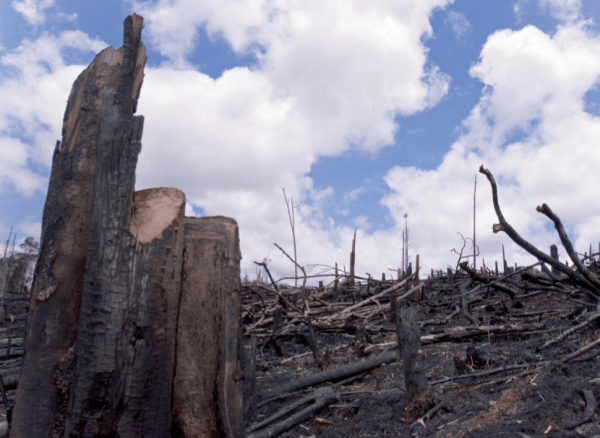
A field visit to Merauke by the environmental NGO WALHI in June 2011 discovered that during the course of the past year, at least one hundred thousand hectares of natural forest in Merauke have been cleared, including sago hamlets which protected food security  at all times, regardless of the season, and are very adaptable to changes in the climate. The marshlands are threatened  by drought, as a result of which  fish, birds  and deer  that have provided the local people with their source of protein will find it increasingly difficult to enjoy the necessary living space. Eventually, the Economic, Social and Cultural (ECOSOC)  rights will become ever more inaccessible to protection and provision by the state. Berry N. Forqan, the national executive director of WALHI, has stated that it is reasonable to say that the Indonesian government should be regarded as having caused the violation of basic human rights with the MIFEE Project.

Sinal Blegur, a member of the Working Group of NGOs in Papua, said that the violation of these ECOSOC rights will ultimately lead to the violation of  civil and political rights because MIFEE could potentially pave the way for the security forces  to enter the region on a massive scale to protect the operations of the companies.

In view of the above, dozens of local, national and international NGOs  have in the past month jointly produced a report to be submitted  to the Special Rapporteur of the UN on the Right to Food, drawing attention to threats to the right to food  of the traditional communities in Merauke. According to Abet Nego Tarigan, executive director of Sawit Watch, 22 NGOs  have so far signed  this document, representing the traditional communities in Merauke who are the victims or potential victims of the MIFEE Project The report has also been sent to the Committee on the Elimination of Racial Discrimination at the Office of the UN High Commissioner for Human Rights, and the Committee on Economic, Social and Cultural Rights  of the Human Rights Treaties Division.

This means that all civil society organisations which are concerned with the rights and living space for indigenous Papuan people should call on the government to immediately halt all MIFEE activities and Food Estates in general  in Indonesia that are  damaging the environment and forcing the  removal of traditional communities from their traditional land  and areas which they manage. The national, provincial and district governments must stop granting location licences  to companies and hold an inclusive dialogue, in which the Malind people are central, to discuss the allocation of land, the provision of space and development capital for agriculture, in conformity with social transformation that can bring the Malind people self-reliance and dignity.

All this is intended to ensure that similar operations that have resulted in the massive destruction of the environment which have occurred in Sumatra, Java, Kalimantan and Sulawesi  should not be repeated in Papua.

Contacts:

Islah, Manager   of the Water and Food Campaign, WALHI;

Frangky Samperante, Director of Psaka;

A Karlo Nainggolan, staff member of Advocacy, Policy and Legal Defence, Sawit Watch;

Laksmi Savitri, Sajogyo Institute;

Sinal Blegur, member of the Working Group of NGOs in Papua.

AlertNet: Indonesia re-thinks Papua food project – report

http://www.trust.org/alertnet/blogs/alertnet-news-blog/indonesia-re-thinks-papua-food-project-report

By Thin Lei Win

A member of the Koroway tribe walks up a ladder to his house at a forest near Merauke city in Indonesia's Papua province in this May 18, 2010 handout photo.A member of the Koroway tribe walks up a ladder to his house at a forest near Merauke city in Indonesia’s Papua province in this May 18, 2010 handout photo.

BANGKOK (AlertNet) –Indonesia’s government is considering moving its controversial food security project from Merauke, on the island of Papua, to East Kalimantan province, on Borneo island, due to lack of progress in the past two years, the Jakarta Globe reported.

Under MIFEE (Merauke Integrated Food and Energy Estate) plans, 1.63 million hectares of forest which form the basis of life for some 200,000 indigenous people in the Merauke area would be used to grow rice, palm oil, soya bean and corn among other crops.

Earlier this month, AlertNet reported criticism from rights activists that MIFEE threatens indigenous people and the forests and ecosystems in the area.

They also said the government has failed to sufficiently consult the native residents over the impact, which will include losing their customary lands, an influx of migrants from the rest of Indonesia and decreased quality of the ecosystems which people rely on for food and for their livelihood.

The minister of agriculture, Suswono, said on Monday that 200,000 hectares of land available in East Kalimantan could be used for agriculture, according to the Globe.

“The principle of the food estate is finding enough land for an agricultural zone. It doesn’t have to be in Papua,” the Globe quoted the minister as saying.

“[The East Kalimantan site] may not as big as Merauke, but it is more feasible. It has been two years since we floated the plan, but there has been no progress at all.”

Indonesia annually imports 2 million tonnes each of rice and soybean, and the nation needs to be able to feed its people without importing food, he added

Tempo: All West Papua Province’s Lawmakers Declared as Corruption Suspect

FYI

(West Papua Media comment:  these actions should be seen as an indictment of Jakarta’s failed Special Autonomy policies.  The DPRD office holders are restricted to those who are  members of Indonesia-wide political parties, and are heavily skewed toward military business interests.  A high proportion of members of the DPRP are not ethnically Papuan, and those who are, are involved in major Indonesian business ventures)

also: Big Budget, Big Leaks

Tempo Magazine
No. 50/XI/August 10-16, 2011

Law

All Suspects Together

All members of the West Papua DPRD were named as suspects in
corruption of the province’s funding. The state funds that should have
been used as capital for one of the province’s own businesses was
instead distributed to serve political interests. Governance in West
Papua is now threatened with coming to a complete standstill.

A Plenary session of the West Papua Provincial House of
Representatives (DPRD) was suddenly called for Thursday two weeks ago.
Although all the members were not present, the sitting was marked by a
tense atmosphere. Not surprisingly, as the theme of the discussion was
a very serious matter concerning the future fates of all those
attending.

The Papua State Prosecutor’s Office had named 44 members of the
parliament as suspects over corruption of Rp22 billion of West Papua
Provincial Income and Expenditure Budgets (APBD) for 2010 and 2011.
The announcement made by Deputy Chief State Prosecutor Suhardjo Tjatjo
rocked Papua. In the history of this nation, this is the first time
ever all the members of a parliament have been named graft suspects.

Not just the public, but the West Papua DPRD members themselves
admitted they were shaken when the release first appeared two weeks
ago. “I have never been questioned, so how come I am suddenly declared
a suspect?” said DPRD Speaker Johan Yoseph Auri. The Golkar Party
politician accused the investigation of the case of being loaded with
political interests. “I’m sure the prosecutor doesn’t have any strong
evidence in this corruption case,” he asserted boldly.

Johan admits he did accept the cash concerned. As did all his
parliamentary colleagues. But, he said: “It was a loan that was to be
repaid in three years.” Johan says he borrowed the cash from the
province-owned PT Papua Doberai Mandiri because he was under pressure
to meet his constituents’ requests.

Every day, he said, groups come to DPRD members’ offices claiming to
be constituents from various parts of Papua. They come asking for
donations for this and that and to lodge proposals for all kinds of
activities. “I have no other income, so I’m forced to look for loans,”
Johan explained.

Disastrously, those loans were not obtained from a bank, but rather
from a state-owned business that was not supposed to be involved in
borrowing and lending its shareholders cash. PT Doberai, for instance,
is a company set up by the West Papua government to look after
investment in this, Indonesia’s youngest province.

It was difficult to get other DPRD members to explain to us why they
now have the status of suspects. The plenary session, said John
Fathie—another Golkar politician—had decided that all its members were
forbidden to talk to the media. Explanations were only to be offered
by the DPRD speaker. Several members denied they had received any
money. “I already owe my bank money, so it would be impossible for me
to look for another loan,” declared PNI Marhaenisme politician Yance
Yomaki.

The difficulty is that the Papua Attorney General’s Office is fully
convinced that these people’s representatives have already done as
they liked by ‘feasting’ on the state funds to which they had no
right. Deputy Head of the State Prosecutor’s Office (AGO), Suhardjo
Tjatjo laid out to Tempo just how this case had begun, from its
investigation through to the conclusions reached and all the suspects
being determined.

Tjatjo said this was an old case whose status could only recently be
raised to that of an investigation once the AGO was convinced that
none of the money that had been claimed to be loans had been returned.
“There was no accountability for this expenditure,” he added.

Now, it so happened that Rp22 billion was cleared to be paid out at
the request of West Papua Provincial Secretary, Marthen Luther
Rumadas. Rp15 billion of that came from the 2010 APBD and the rest
from the 2011 one. “The business is under my authority,” he said
defensively.

The funds ought to have been allocated as additional capital for PT
Papua Doberai Mandiri. This provincial government-owned company is
active in very wide-ranging fields: drilling for oil and gas, non-oil
and gas exploration, as well as the acceleration of infrastructure
development, including netting new investors, both domestic and
foreign.

PT Doberai was set up around the same time as the formation of the new
province in 2009. West Irian Jaya regency was then elevated to the
status of West Papua province, with Manokwari as its capital. At its
establishment on 18 May 2009, the provincial government, that had
obtained an injection of special autonomy funds of Rp1.7 trillion,
invested Rp100 billion to buy shares in the new company.

A year later, all the shares in the province-owned business were taken
over by the West Papua government, until full control of it rested in
the hands of the provincial secretary. While that was happening, the
province treasury injected a further Rp25 billion in capital into it.
“That was when the games began,” said Tjatjo.

As the one having control of the business, Rumadas has also become a
suspect. He is accused of handing out state funds to DPRD members on
very spurious grounds: to cover their additional living expenses.

Rumadas was discovered to have issued a letter on 17 September 2010
concerning lending PT Doberai another Rp15 billion. Johan Auri gave
his written agreement to lending out this money to DPRD members.

The problem was that his letter was issued several hours after the
money had been transferred. “This meant that the money that had been
deposited then had to be hurriedly paid out,” said Tjatjo. The AGO
looked into this odd occurrence. It was also revealed that PT Papua
Doberai Mandiri’s CEO Mamad Suhadi at one point apparently refused
Rumadas’s request to pay out the money that had just been transferred.

When Rumadas had summoned him to his office, Mamad verbally declined
to comply. “Sorry, Sir, making such payouts would be a mistake,” said
Mamad, as imitated by Tjatjo. When Mamad refused to follow Rumadas’s
instruction, the Head of the West Papua Province Financial Bureau M.
Sirait was sitting next to Rumadas and later confirmed Mamad’s
statement to the prosecutor.

Rumadas paid no attention to Mamad’s objections. The money was still
paid out. Several weeks later another instruction was issued to
disburse a further Rp7 billion. The grounds were the same: loans to
the DPRD members. The AGO considered this corruption because the
members could not possibly pay back their loans in the set time,
namely July this year.

Rumadas does not reject the series of events, the results of the
prosecutors’ investigation. But he rejects claims that the loans were
deliberately given out to enrich DPRD members. Because of the loan
clause, Rumadas says, the DPRD members were required to return the
money they had borrowed.

Strangely, when he was pressed to explain why the loan money had been
taken from the company’s coffers and whether he knew what the loans
were for, Rumadas shook his head. “I didn’t know what they wanted the
loans for,” he admitted.

Tjatjo also admitted that the DPRD members were not told they had been
made suspects as the request for permission to question them submitted
to the Minister of Home Affairs had not yet had a response. Under
criminal procedure law, Tjatjo explained, if permission is not
forthcoming by one month after a request letter is sent, his office
may then continue its investigation and use compulsion to summon
suspects.

Last Friday, when we asked Home Affairs Minister Gamawan Fauzi for
confirmation of the request letter, he said he had not yet received
it. “Once I have received the request, I’ll certainly agree to it.
It’s just to uphold the law,” Gamawan told Tempo.

However, Gamawan does hope the AGO doesn’t have clear proof that the
DPRD members were involved in corruption, so the case won’t need to be
pursued further. He added that governance of West Papua could come to
a standstill if all the members of its parliament were detained.
“There is still an opportunity not to take this further,” he said.

Tjatjo realizes the consequences if the legal process continues.
Governance in West Papua could stall and many policies could not get
implemented, as all DPRD members would likely be non-active. The
current total confusion could get even worse, remembering that West
Papua is also due to hold the direct election of its governor in
September of this year.

But, Tjatjo added, the AGO has no other choice as, whatever else
happens, the law must be enforced. Especially as the evidence in this
case is so glaringly obvious. “If necessary, I will summon them using
compulsion,” he warned.

Bagja Hidayat (Jakarta), Jerry Omona (Jayapura)

——————

Tempo Magazine
No. 50/XI/August 10-16, 2011

Law

Big Budget, Big Leaks

The riots that recently spread in Papua have caused the government to
reevaluate the special autonomy status for the area. Last Thursday
President Susilo Bambang Yudhoyono discussed the issue when he met the
heads of the nations’s top institutions at the State Palace.

“Special autonomy is not just a matter of budget, but also concerns
policy,” commented Regional Representatives Assembly Speaker Irman
Gusman after the meeting. Irman said special autonomy that is focused
only on meeting its budget has been shown to be ineffective. An audit
by the Supreme Audit Agency (BPK) did indeed confirm what Irman said.

In its report last April, the BPK uncovered suspected budget misuse
throughout the period 2002-2010 of special autonomy in Papua. Of the
total Rp19 trillion of special autonomy funding for improvement of
infrastructure and health services, Rp4.2 trillion had been likely
misused.

Not all the autonomy funding since 2002 was examined. Because the
total general autonomy funding for Papua and West Papua provinces
already disbursed by 2010 amounted to Rp28.8 trillion.

The misuse in the sample checked covered various things: expenditure
that could not be accounted for, expenditure not in accordance with
submitted programs, overpayments, and fictive programs. The report
says, for instance, that Rp1.85 trillion of autonomy funding for the
period 2008-2010 was put on term deposit in Bank Mandiri Jayapura and
Bank Papua.

The Rp53 billion in interest from this was then not credited to the
account of the special autonomy fund. The Papua provincial government
has explained that the money stashed away as term deposits did not
come from the special autonomy fund. It was reserve funds, the
interest on which was then used to subsidize village development at
Rp100 million per village.

The BPK does not accept that. “Because special autonomy funding is
intended to accelerate development, cash management via term deposits
is then inappropriate,” reads the report that BPK member Rizal Djalil
presented to parliament.

That report concludes that leaks have clearly occurred in the absence
of any clear regulations on the use and accountability for the
jumbo-sized cash largesse. When reporting these findings, Rizal said
that to date the use of the autonomy funds only needed verbal
agreement between the governor plus a regent and a mayor within Papua.
It it is not surprising then that the BPK later uncovered fictive
expenditure. “I’m sure, from our sample investigation, the nation has
suffered a loss of Rp319 billion,” said Rizal.

Under Papua’s Special Autonomy Law, a budget of 2 percent of the
National General Allocation Fund is to be disbursed for improvement of
infrastructure and health services there, so that, in 25 years’
time—beginning from 2002—there will no longer be any transportation
problems in the area. Everything will be connected by land, sea, or
air.

But the reality is very different. The funds seem to vanish and not
make their way down—let alone get disbursed—to those at the bottom.
Corruption has spread into a number of areas. The money that ought to
be used to build facilities is instead grabbed everywhere, as with the
money of provincial government-owned businesses corruptly taken by
members of the West Papua provincial parliament.

Almost every year, for instance, hospital staff in Jayapura or Abepura
go on strike over their miniscule allowances. In turn, other hospitals
are forced to turn away patients because of lack of medicines to treat
them.

Irman says the current chaos in the management of autonomy funds is a
result of weak control and supervision. Accordingly, it will later
become not just a matter of being unclear where the money went, as the
area concerned will then become continually afflicted by chaos. “Later
the autonomy funding must no longer be dropped there just like that.
The programs for its use must be clear and supervision tight,” Irman
stressed.

BHD, Munawwaroh

Indonesia food security project threatens Papuan way of life – activists

http://www.trust.org/alertnet/news/indonesia-food-security-project-threatens-papuan-way-of-life-activists

Source: Alertnet // Thin Lei Win

05 Aug 2011 14:07

NOTE: West Papua Media proudly provided fixing services for Reuters AlertNet for this article and further investigations.  

A member of the Koroway tribe walks up a ladder to his house at a forest nearMerauke city in Indonesia’s Papua province in this May 18, 2010 handout photo. REUTERS/Suntono-Indonesia statistic agency/Handout

By Thin Lei Win

BANGKOK (AlertNet) – Indigenous Papuans are at risk of further marginalisation and the forests and ecosystems on which they rely face destruction due to an ambitious food security project by the Indonesian government, activists say.

Under MIFEE (Merauke Integrated Food and Energy Estate) plans, 1.63 million hectares of forest which forms the basis of life for some 200,000 indigenous people in the Merauke area would be used to grow rice, palm oil, soya bean and corn among other crops.

Indonesia is seen as a key player in the fight against climate change and is under intense international pressure to curb its rapid deforestation rate and destruction of carbon-rich peatlands.

Activists accuse the authorities of not sufficiently consulting the Malind Anim people about the project, which they say pose a double threat to local Papuans. Not only would they lose their customary lands, but they would also face an influx of migrants from the rest of Indonesia — further marginalising communities that feel disenfranchised by what they say is the government’s exploitation of natural resources at their expense.

“If this project goes ahead, it means we will lose everything – we will lose our land, our culture, our livelihood, our food,” Rosa Moiwend, a Papuan activist whose family still lives in Merauke, told AlertNet.

The transition from forest to farm and plantation land would have a “tremendous” impact on natural ecosystems, Carlo Nainggolan from Indonesian rights group Sawit Watch, said.

“Indigenous people who have made use of natural forests to meet necessities of life will experience a dramatically decreased quality of life and well-being,” he said.

Department of Agriculture officials did not respond to a request for comment.

STRAINED TIES

Papua, two provinces on the west half of New Guinea island, has long suffered strained ties with Indonesia which took over the area from Dutch colonial rule in 1963. And this week, thousands of indigenous Papuans them marched on the parliament in the capital of Papua, demanding a referendum on independence from the archipelago.

Despite being home to a mine with the world’s largest gold and recoverable copper reserves, Papua is one of the least developed regions in Indonesia. According to the United Nations, 40 percent of Papuans live below the poverty line of $1.25 a day, compared to the national average of 18 percent.

Both the central and regional governments have hailed MIFEE as the answer not only to Indonesia’s growing concerns about food shortages but as a source of exports.

The project is expected to produce close to 2 million tonnes of rice, almost 1 million tonnes of corn, 2.5 million tonnes of sugar and close to 1 million tonnes of crude palm oil, according to local media reports.

However, activists point out that the staple food for Papuans is sago, a starch derived from sago palm, not rice. And they say there has been discontent in some areas where compensation from companies clearing and managing the land was deemed insufficient.

Despite a recent government pledge to resolve land tenure conflicts and protect the rights of people in forest-based communities, activists say most locals remain in the dark about the project.

“People from the village, when asked about MIFEE project replied, ‘MIFEE is a car that frequently crosses the road that reads MIFEE (on the body of the car)’,” Sawit Watch’s Nainggolan said.

LOSING A WAY OF LIVING

The massive scale of the project and nature of the indigenous people’s skills – many make a living hunting and gathering rather than farming – means a huge workforce is likely to be imported from outside Papua, activists say.

Sawit Watch estimate that some 5 million workers were needed to work the land, or four labourers per hectare. Yet, based on the 2009 census, the number of people native to Merauke was 195,577, Nainggolan said.

The low levels of education, knowledge and Indonesian language skills also mean indigenous Papuans are likely to be only involved in MIFEE as low-skilled labourers despite the loss of their land and livelihoods, he said.

Moiwend summed up the anger felt by activists.

“If the Indonesian government says that we are a part of them, that we are their brothers and sisters like they say, why do they do this project?,” she said. “They don’t want us to live in our own land. They want to kill us with this project.”

AP: Military Vows Crackdown in Papua Province [+Reject Calls for Referendum: Lawmaker]

From Joyo

also: JP: Reject Calls for Papua Referendum: Lawmaker

The Associated Press
August 4, 2011

Military Vows Crackdown in Papua Province

Indonesia’s army chief vowed Thursday to hunt down separatist rebels
after a swell in violence in the restive province of Papua killed two
soldiers and three civilians in less than a week.

They will be “chased down” and “cleaned up” by local military units,
said Gen. Pramono Edhie Wibowo, a day after gunmen shot a military
helicopter in the hilly district of Puncak Jaya, a rebel stronghold
and longtime hotbed of separatist violence.

The chopper had flown into the remote region to evacuate Fana Hadi, an
army private who was wounded during an attack on his post Tuesday
morning.

Gunmen opened fire as it passed a hill, killing Hadi with a shot to
his left rib, local military officials said.

That shooting followed the killings of one soldier and three civilians
Monday, shot and hacked to death during an ambush on their minibus and
taxi near the provincial capital of Jayapura.

Five other people were injured.

It was not immediately clear what sparked the uptick in violence.

Papua is a former Dutch colony on the western part of New Guinea. It
was incorporated into Indonesia in 1969 after a U.N.-sponsored ballot.

A small, poorly armed separatist group known as the Free Papua Movement has battled for independence ever since.

Nineteen people were killed in clashes between supporters of rival
political candidates in a seemingly unrelated violence Sunday. Because
of the violence, elections for district chief scheduled for Nov. 9
will be delayed, local media reported Thursday.

———————————-

The Jakarta Post [web site]
August 4, 2011

Reject Calls for Papua Referendum: Lawmaker

by Mariel Grazella

The chairman of the Papua and Aceh special autonomy supervisory team,
Priyo Budi Santoso, urged the government to send the military to Papua
if the referendum movement escalated to a mass rebellion.

Thousands of Papuans across the province have demonstrated to call for
a referendum on independence.

The demonstrations coincided with a series of attacks on police and
military posts in Puncak Jaya that have been blamed on the Free Papua
Movement (OPM).

“I urge law enforcers not to hesitate in taking firm action,” he said.

He added that if the situation escalated to rebellion, the “military
should be sent in if necessary”.

“We should remain persuasive but if the situation leads to [demands
for] a referendum; [we] should not hesitate in sending in the
military,” he said, adding that special autonomy was the “best formula
in addressing the problems of Papua”.”Therefore, I urge the government to firmly reject [the calls for a
referendum] because Papua is part of Indonesia and that is final,” he
added.

Create a website or blog at WordPress.com

Up ↑
