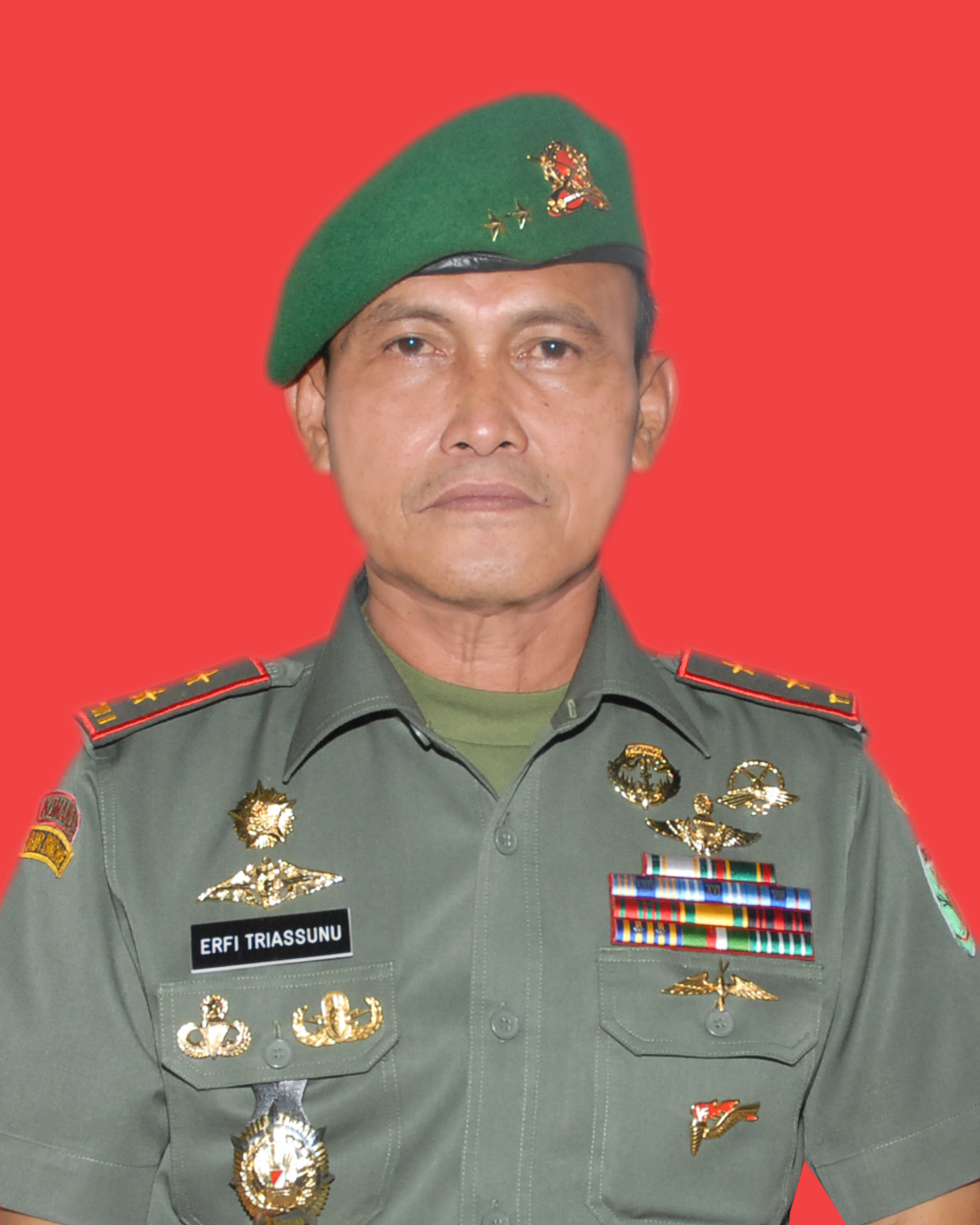
Sorry: Indon Army Backs Down Over Threats

via NewMatilda.com

By Alex Rayfield

The chief of the Indonesian Army in West Papua has taken the unprecedented step of issuing a public apology to the Kingmi Papua Church over a leaked letter first published in New Matilda, reports Alex Rayfield

In an extraordinary media statement dated Monday 18 July the chief of the Army in Indonesian occupied West Papua, Major-General Erfi Triassunu, issued a very public apology to the leadership and congregation of the Kingmi Papua Church.

In the statement, a copy of which has been obtained by New Matilda, the general writes, “if I caused any offence to the Kingmi Papua Church I am sorry”.

Reverend Benny Giay, the moderator of the embattled Kingmi Papua Church, and a subject of the general’s initial ire, said that “this is perhaps the first time in West Papuan history that an Indonesian Army Chief has apologised to the West Papuan church”.

A copy of the original letter was also obtained by New Matilda who published an exclusive story on 7 July. The article was then republished in Open Democracy, written about in daily newspaper Bintang Papua and discussed extensively in blogs, Facebook and email lists inside and outside West Papua.

In the original letter (marked “secret” and dated 30 April 2011) Triassunu repeats claims made by representatives of Kingmi Indonesia, an Indonesian-wide church, that Kingmi Papua is a separatist organisation. In his letter, the general weighed into a conflict that he himself notes is an internal church matter.

The most disturbing phrase in the original letter is a veiled threat by the chief of the Army to take “assertive action” if the conflict between Kingmi Indonesia and Kingmi Papua is not resolved. What is implied here is that the Kingmi Papua Church must cease all efforts to establish an autonomous church in West Papua or risk violent retaliation from the state. It is these kinds of statements that can encourage Indonesian nationalist militias to take the law into their own hands, says Benny Giay.

However, in the three-page apology to Kingmi Papua Church, the general claims that the military command in Papua has never stated that Kingmi Papua is a separatist organisation. He also clarifies the meaning of the phrase “assertive action”, insisting that he did not mean to imply “repressive action” but rather wanted to encourage the civil authorities in Papua to resolve the internal church conflict “on the basis of peace and mercy”.

If true, it marks a seismic policy shift for the Indonesian Army in West Papua — news that will certainly be welcome to Giay. Kingmi Papua’s pastors have been killed at the hands of the Indonesian Military since they first occupied West Papua in 1963. Papuan Church leaders and their congregations across Papua are regularly harassed and intimidated by Indonesian security forces. Public beatings and torture by the security forces is also systemic in Papua, meted out on the basis of race and often conducted in public view, reports ANU based academic Br. Budi Hernawan.

While welcoming the apology, Giay urges the civilian and military authorities in Indonesia to go further. In an open letter to the Susilo Bambang Yudhuyono dated 16 July, Giay asks the President to guarantee Kingmi Papua’s right to exist. An apology from the chief of the Army in Papua after all, is no guarantee of religious freedom.

Giay maintains that the real cause of the conflict, whether between Kingmi Indonesia and Kingmi Papua or the Indonesian government and the Kingmi Church, is political and fundamentally connected to the history of Papua. To break the impasse Giay repeats the call for “dialogue” and an end to “stigmatising” the Papuan people for wanting to address the root causes of state violence in Papua.

Recognition of the right of the Church in Papua to speak out on behalf of the oppressed and to take nonviolent action in protection of their congregations is an acid test for freedom of speech in West Papua.

To date the Indonesian Government has failed that test.

While the general seeks to reassure Papuans that the Army wants to resolve problems on the basis of “peace” and “mercy”, their approach has been inconsistent at best. Papuans are still not allowed to raise the Morning Star flag or sing their national anthem “Hai Tanahku Papua“. Filep Karma, who has been sentenced to 15 years for nonviolent action remains in jail along with scores of other Papuan political prisoners. A press conference by the West Papua National Committee earlier this month concerning current military operations in Puncak Jaya had to be cancelled because of police and military intimidation of the both the organisers and invited journalists.

The Indonesian constitution ostensibly guarantees the right to free speech but it looks a lot like that freedom does not reach West Papua. Until that changes any claim that Indonesia is a democracy rings hollow.

For now, however, Benny Giay and Kingmi Papua are claiming the apology as a “small victory”.

Whether that victory can be defended and extended remains to be seen.

KINGMI Church makes its aspirations known to President

Bintang Papua, 21 July, 2011

KINGMI Church writes to SBY

Jayapura: The chairman of the Synod of the KINGMI Evangelical Church Dr Benny Giay, has written to President Yudhoyono to explain the church’s aspirations, in response to a statement by the Cenderawasih military commander, Major-General Erfi Triassunu who alleged that the church was set up to get as much money as possible from the government in order to fund its political campaign for independence.

Following a prayer meeting, the prayer co-ordinator Rev Domminggu Pigay read out the aspirations, watched by Dr Benny Giay and other victims of stigmatisation as separatists.

Dr Giay later put the sheets of paper with the aspirations written on
them on the ground in front of the office of the DPRP – provincial
legislative council. There were not many local people around to witness the event as they had returned to their homes about 200 meters away.
Yunus Wonda, deputy chairman of the DPRP, said he had facilitated the
meeting in order to get clarifications from the military commander.
‘This is a long struggle and needs to support of the whole KINGMI
congregation,’ he said.

Dr Giay, as leader of the KINGMI Church, said he had made their
aspirations known to the President publicly, in response to the
statement made in Arpil by Major-General Triassunu, which had been
disseminated to all the local military commanders, and made public in
the media on 7 July.

Dr Giay’s letter to the President made a number of points, one of which rejected all efforts to drive public opinion in the direction of
reducing the right of religious bodies to become political
organisations, or identifying the church as the OPM. ‘We reject the
efforts by the government which have been under way for a long time to see everything connected with the churches from a political perspective.’

‘They fail to see,’ the statement said, ‘that it is the role of the
church to strengthen friendship and solidarity for those who suffer and are excluded.’

He said that the Synod was nothing like what the government and the
military commander imagine. ‘We reject being called OPM which we regard as being a trick to extinguish the church’s role as a prophet in the Land of Papua.

He appealed to the President to stand by his pledge to ensure that
that Papua is a place of tranquillity not only for newcomers from
elsewhere but also for the indigenous Papuan people.

[Abridged in translation by TAPOL]

Australian media reports about KINGMI church supporting Papua Merdeka

Bintang Papua, 15 July, 2011

ARE AUSTRALIAN MEDIA REPORTS THAT KINGMI CHURCH SUPPORTS PAPUA MERDEKA TRUE?

The KINGMI Church in the the Land of Papua has raised its concern about a report in an Australian newspaper on 7 July alleging that the KINGMI Church is using special autonomy (OTSUS) funds it receives from the provincial government to fund activities to prepare for Papuan
independence and secession from the Republic of Indonesia. The Synod of
the Church referred to Major-General Erfi Triassunu, the military
commander of the Cenderawasih Military Command XVII, as the source of
the report.

The KINGMI Church has asked the military commander to acknowledge
responsibility for the statement.

This was stated by the chairman of Commission A of the Papuan
Legislative Assembly, the DPRP, Ruben Magai, along with commission
member, Ignasius W. Mimin during a meeting with leaders of the KINGMI
Church Synod.

When Bintang Papua sought confirmation from the military commander that he thought the KINGMI Church was separatist, he denied it, saying that he had never said this. All he wanted was that the conflict should not be used by a third party to disrupt peace in the Land of Papua.

The military commander said that he was frequently asked for assurances of security from churches that were being overwhelmed by internal conflicts, but he had asked the provincial governor to resolve these matters.

‘It is not the task of TNI (Indonesian army) institutions to resolve conflicts but we are prepared to help if requested to do so by the regional government,’ he said.

Ruben Magai said that by making such a statement, the military commander was brushing aside a number of serious problems in Papua such as corruption and recent shooting incidents which the Indonesian government had failed to resolve.   He said he would be calling on the military commander to acknowledge responsibility for making a statement that stigmatises the KINGMI Church for allegedly using OTSUS funds to fund Papua’s independence as well as calling on the provincial government to give a clarification about OTSUS funds being used for religious guidance in the Land of Papua.

The chairman of the Synod of the KINGMI Church, Dr Beny Giay, said that
he had conveyed his concerns about the military commander having
disseminated a political document which apparently says that the KINGMI Church had been set up to use money received from the government to support Papuan independence. ‘The military commander’s document was leaked to us and when we checked the report, it was confirmed. We believe that what has been reported in the Australian media is indeed correct.’

Meanwhile, the legal advisor of the KINGMI Church Synod, Benny W.
Pakage, said he had called on the military commander to explain what the legal basis was for his statement. ‘We want to know what his intentions are,’ he said.To indicate their rejection of such a statement, they are planning to hold a demonstration and prayer meeting outside the DPRP office on Wednesday.

Leaked Letter Reveals Indon Army Scare Tactics

Exclusive Copies of the Scanned Letter are available for download at the end of this article. (Please note, any attempts to block access will result in significant multiplication across the internet)

at NewMatilda.Com

By Alex Rayfield

EXCLUSIVE: A leaked letter from an Army General reveals Indonesia’s attempts to disband a West Papuan church with threats of “assertive action”

From the outside looking in, the latest church conflict in West Papua might look like just another example of factional Protestant politics. A little sordid perhaps, but irrelevant to all but the parties involved.

Dig a little deeper, however, and one finds something far more disturbing.

A leaked letter from the head of the Indonesian Army in Papua obtained by New Matilda reveals that far from being an internal church matter, the conflict between Kingmi Indonesia, a Protestant church that has parishes across Indonesia, and the breakaway Kingmi Papua Church, goes to the heart of the Indonesian government’s attempt to repress movements for cultural pride and autonomy in the country’s restive Pacific periphery.

In a nutshell, the conflict turns on whether Kingmi Papua has the right to separate from Kingmi Indonesia and set up an autonomous synod, reverting to an arrangement that existed prior to 1982.

Major General Erfi Triassunu, TNI Chief, Kodam 17 (Papua) (photo discourtesy of TNI)

The question is this: why has the Indonesian Army become involved? Major-General Erfi Triassunu has waded into a conflict that he himself acknowledges is an internal church matter. In the letter (File Number: R/773/IV/2011) addressed to the Governor of Papua, Barnebus Suebu, dated 30 April 2011 and marked “secret”, Triassunu “respectfully requests” the Governor to arrange a meeting between Kingmi Indonesia and Kingmi Papua. The General also offers himself as a mediator.

The letter continues: “if the conflict cannot be resolved through discussion then assertive action must be taken”.

Let me translate “assertive action”. In East Timor when the Indonesian Army took “assertive action” against the Church, they murdered church workers, massacred parishioners, raped women and burnt churches to the ground. In West Papua too the Indonesian Army has a history of killing pastors from the Kingmi Papua Church, as well as other churches. This dates back to 1 May 1963 when the Indonesian government took administrative control of the territory and has continued up to the present.

Last October a video filmed on soldiers’ mobiles phones and circulated widely on the internet, showed several soldiers from Kostrad, the Indonesian Army’s Strategic Command — Triassunu’s own division — torturing a Papuan church worker by burning his genitals with a stick.

In the letter, Triassunu, who previously served in Aceh, makes a number of accusations. He accuses Kingmi Papua of trying to access as much money as they can from the government’s Special Autonomy programme in order to create new churches. However, the real purpose of building a network of churches, Triassunu insists, is “to strengthen Papuan civil society aspirations for freedom”. He then argues that the Kingmi Papua Church’s desire to be independent of the Indonesian Church is “just an excuse” for “the church to become a political vehicle” that supports Papuan independence.

Triassunu then goes on to make a number of recommendations. He specifically says that Kingmi Papua pastors should stick to Biblical “dogma” and not stray into politics. The General is on solid ground here, following in the footsteps of numerous dictators from Marcos to Pinochet, all notorious for their attempts to stifle meddlesome priests. Triassunu specifically names Reverends Benny Giay (the current moderator of the Kingmi Papua Church), Seblum Karubaba (the former moderator) and Noakh Nawipa (the Rector of the Pos 7 Theological College) as malcontents, mentioning several seminars organised by the trio where “Papua Merdeka” (freedom) was discussed.

All this has echoes of Suharto who systematically depoliticised (read: violently repressed and disbanded) all independent organisations, including religious ones, for fear they could become bases for organised opposition against the regime. Indonesian democrats may have overthrown Suharto but West Papua is not part of a new democratic Indonesia. What is deeply concerning is that in the Papuan context the label “separatist” is regularly applied to Papuan leaders as a pretext for justifying extra-judicial action by security forces.

This is where the plot thickens.

According to the letter, the General decided to become involved in the Kingmi conflict after a Kingmi Indonesia pastor, Reverend Karel Maniani, personally asked the Army to protect his parishioners. But Reverend Maniani himself was previously a member of “Group Nine” of the Papuan Freedom Movement (or OPM). In the 1980s Maniani was jailed for four years in the notorious Kalisosok Prison. What happened to Maniani on the journey from freedom fighter to Army petitioner?

To make things stranger, the conservative US-based evangelical Christian Missionary Association backs Maniani and Kingmi Indonesia against Kingmi Papua. At stake is not only valuable church property and access to Special Autonomy funds, it is also over influence of a broad Papua base. Kingmi Papua has half a million members. Virtually all of them are indigenous Papuans from the fractious Highlands, around a third of the entire Papuan population.

When I asked Benny Giay about all this his reply was revealing. For years he said he was part of a church that was more concerned with “saving souls” than the day-to-day oppression of the Papuans. “The Kingmi church has been complicit with the suffering of the Papuans. We need to confess our sins and follow the narrow path of Jesus. This Gospel is very clear; we must stand with the oppressed and work to alleviate their suffering. I hope we can cast off our fear and stay firm to this path.”

Giay has a vision for an independent Papuan church; a uniquely Papuan church that makes space for Papuans to begin to articulate their own theology, one that sees God present in Papuan history and culture. Giay and his colleagues are slowly building up a church that commits itself to solidarity with the poor and oppressed; one that is led by the Papuans themselves. That may not sound much to a reader unfamiliar with Papuan politics, but in West Papua it is a big deal.

Just ask the General.

SCAN OF ORIGINAL LETTER SIGNED BY MAJ-GEN ERFI TRIASSUNU


Statement of deep concern by Coalition of Human Rights Defenders in Papua

Bintang  Papua, 17 June 2011Human rights defenders in Papua very worried

Acts of violence and terror that have been perpetrated against human rights defenders as well as against journalists have led to a  sense of deep concern among human rights NGOs and religious organisations which are members of the Coalition of Human Rights Defenders in the Land of  Papua

The following NGOs held a press conference in Jayapura  on Friday 17 June, to convey their problems:

KomnasHAM- Papua, the Synod of the Kingmi Church in Papua, the Synod of the Baptist Church in Papua, Foker NGO (NGO Working Group) Papua, Kontras Papua, LBH – Legal Aid Institute in Papua, and BUK, United for Truth.

Foremost among the agencies criticised was the TNI, the Indonesian army whose members were involved in a number of acts of violence. They drew attention in particulate to five incidents that had occurred during the past five months in which members of the TNI were involved:

‘Up to June this year, there have been at least five incidents which reflect the  arrogance and random actions perpetrated by members of the TNI,’ said Olga Hamadi, the co-ordinator of Kontras Papua. Others present at the press conference included the Rev. Benny Giay, chairman of the Synod of the Kingmi Church in the Land of Papua, Mathius Murib, representative of Komnas HAM-Papua, Eliezer M, LBH-Papua, Julian Howay of the ALDP, and a number of human rights activists.

They said that the much-vaunted  reforms within the TNI were rarely reflected in the activities of members of the TNI on the ground. ‘Is this what the commander of the TNI was praising so profusely during his recent visit to Papua,’ wondered Rev Giay.

Mathius Murib  said that the incident that occurred in Puncak Jaya a few months ago had drawn a great deal of public attention, nationally as well as internationally. [This refers to the acts of torture against Papuans that were circulated by video.]

‘All their talk about Love and Peace is far from been applied by members of the security forces on the ground. Isn’t it time for them to change their tune?’

They said that the continued occurrence of acts of violence and intimidation by members of the TNI is a clear indication that no actions have been taken against members of the TNI who have violated the law.

‘We are concerned about the impact this is having on the reputation of the Indonesian state and wonder  what is being done to protect the rights of human rights defenders,’ said Olga Hamadi.

She said that in cases where members of the TNI had been involved in acts of violence, all that had happened was that they had been moved sideways. ‘Or, in those instances where they had been taken to court, they had appeared before a military tribunal and the verdicts were often unclear or had had little if any effect.,’ said Peneas Lokbere, co-ordinator of BUK.

The Coalition of Human Rights Defenders in the Land of Papua therefore issued the following statement:

1. Protection is needed for human rights defenders in Papua in carrying out their humanitarian activities throughout the Land of Papua. Such protection can be provided by the introduction of a special law, while at the same time setting up an independent commission at state level for the purpose of monitoring and advocacy as well as taking sanctions against those individuals who commit violence against human rights defenders.

2. As a short-term measure, we regard it as important to set up a special bureau within Komnas HAM to focus on the protection of human rights defenders.

3. In view the many acts of intimidation and violence perpetrated by members of the armed forces, we urge the military commander of  Cenderawasih XVII military command  to take firm measures in the law courts and administration against all violations perpetrated by members of the TNI on the ground.

4. To provide moral guidance  to all officers of the armed forces  as well as disseminate an understanding of human rights so as to ensure that acts of violence  perpetrated by members of the armed forces are not committed against civil society or against human rights defenders in the Land of Papua.

[Translated by TAPOL]

Create a website or blog at WordPress.com

Up ↑