Final Investigation into Dec 1 Wanampompi Yapen flagraising payback shootings, beatings and torture incidents (Warning: graphic images)

Investigation Report

by JPIC* Nabire, with additional reporting from West Papua Media

January 21, 2016

Apologies for the delay in publication due to translation and verification requirements

This report contains graphic images of human rights abuses in context and with actionable data

This report is part of the investigations carried out by the “Justice, Peace and Integrity of Creation Desk” of the Evangelical Christian Church in Papua (Gereja Kristen Injili di Tanah Papua (GKI), into the shootings in the Yapen Island village of Wanampompi on December 1, 2015, and also sever beatings on indigenous Papuan people of the Oyehe tribe near Nabire.  The Nabire report will be published shortly.

A. Shootings in the Village of Wanampompi – Yapen, December 1, 2015

On December 1, 2015, between 03: 00 AM and  07: 30, Erick Manitori with his friends held prayers and raised the banned independence Morning Star flag in front of his own house in Wanampompi Village, Serui, Yapen.   After the flag-raising ceremony Erik Manitori and his friends then rested at his house.


Around 8 am, a joint taskforce of Army and Police came to Erik and friend at his house, and executed by gunfire four people without warning.  Erik Manitori, Yonas Manitori, Darius Andiribi, and Julian Robaha all died instantly and 8 others suffered gunshot wounds.

Chronology

The  joint military-police taskforce came to Erik’s house, using two Estrada cars, one Avanza car, and one Dalmas Riot Police truck. The Joint force had stopped near the street and shouted to Eric to meet with them.  Erik and some of his friends came up to meet the joint force, but within 15-20 distance from the main street,  about 50 meters from the flagpole, Erik and his friends were shot without warning by the combined forces.

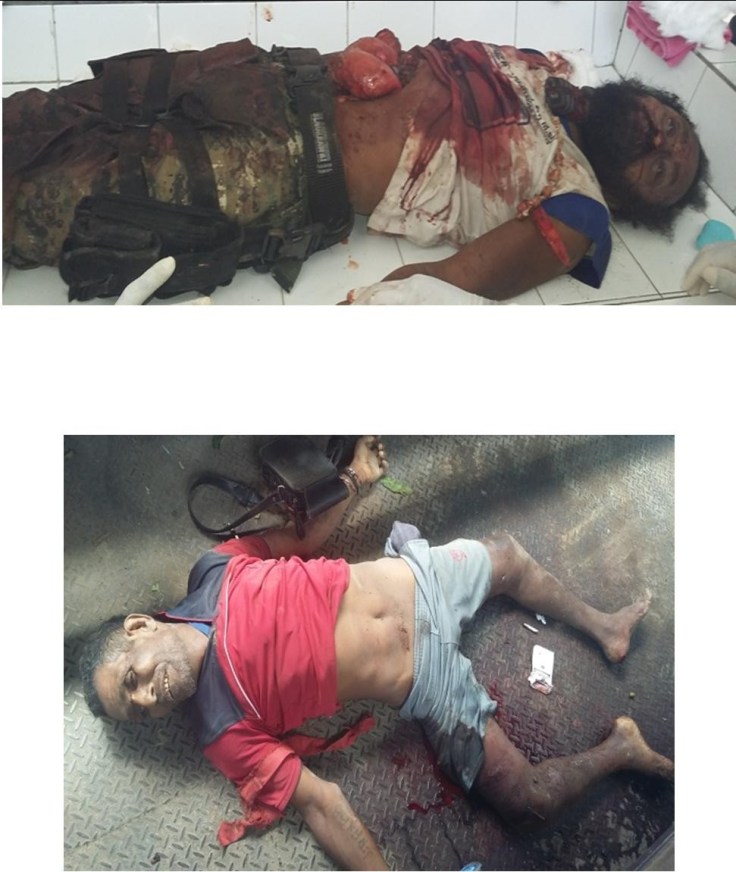
Two people were shot dead on the spot, namely, Yonas Manitori ( The Younger brother of Erik Manitori) and Darius Andiribi.  Erik Manitori and Yulianus Robaha were shot in the legs and then dragged into the police truck, whereupon they were taken to the Serui Regional General Hospital ER ( Emeregency Room). On the way to the hospital, the two men were tortured to death. Erik Manitori’s belly was cut open, and with a bayonet he was disembowelled, and his hands and feet were also broken. The two men were unable to be saved at Serui Hospital’s emergency room, and died soon after arrival.

This incident occurred with all victims being unarmed.

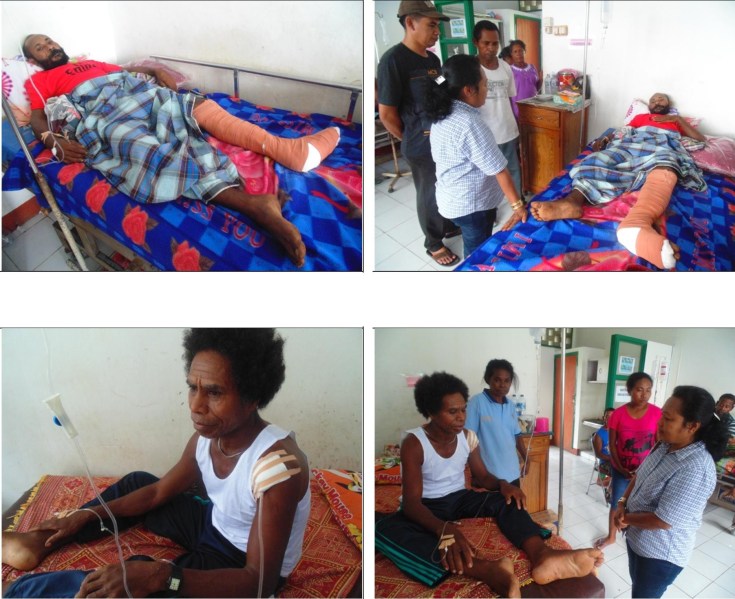
Eight other villagers were seriously injured by gunshot, beating and torture, but the Wanampompi villagers managed to helped the victims back to the village and were evacuated to the Randawaya Serui general hospital by civilian ambulance and truck.
The victim’s condition improved after they were evacuated off the Island to General Hospital Biak. One of the victims, Toni Runaweri, still has a bullet lodged in his skull, and is awaiting transfer for a specialist operation by surgeons in Makassar.

List of Victims

  1. Erik Manitori, Died (was tortured, disembowelled and shot);
  2. Yonas  Manitori, Died (Gunshot);
  3. Darius Andiribi, Died (Gunshot);
  4. Yulianus Robaha, Died (Shot in leg, then tortured);
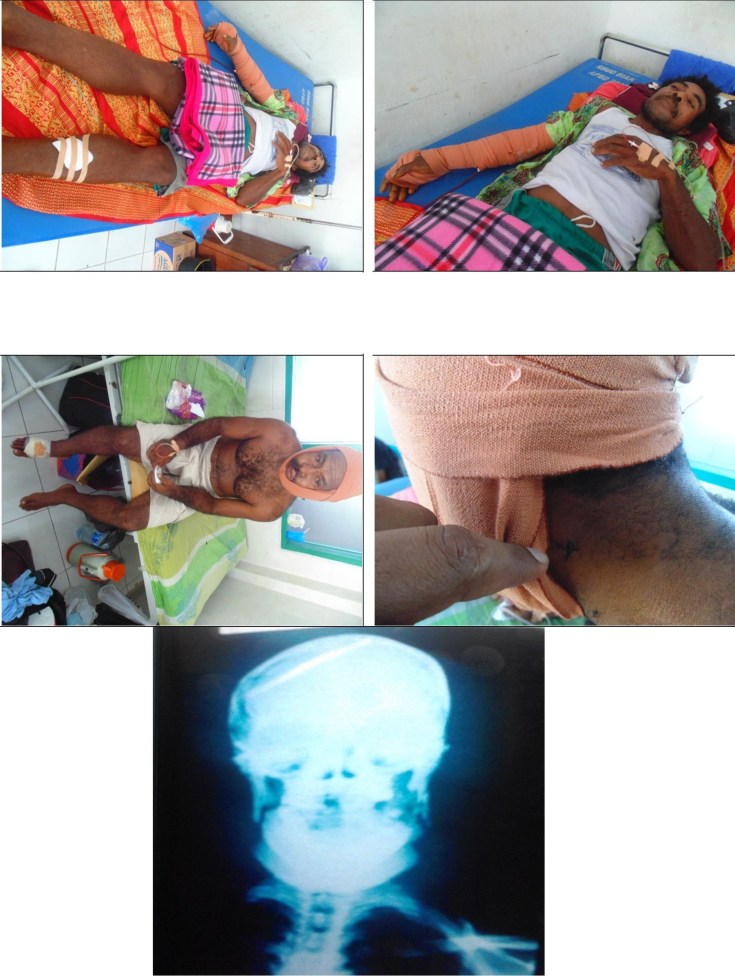
  5. Toni Runaweri, Injured, Gunshot Wound, bullet passed through head and mouth;
  6. Paulinus Warrimuri, Injured, Gunshot wound in Ribs;
  7. Zakarias Torobi, Injured,  Gunshot Wound, left Calf;
  8. Daud Ayomi, Injured, Gunshot Wound on left shoulder;
  9. Filemon Ayomi, Injured, wounds,  right hand and left calf;
  10. Yance Manitori, Injured,  Wounds on Knee, left and right ankle;
  11. Alius Karimati, Injured,  Wound on right palm;
  12. Agus Manitori, Injured, Wound on left hand and left thigh, gunshot to left and right calves.

All of the 8 victims received medical treatment in the public hospital RSUD Biak, and at village
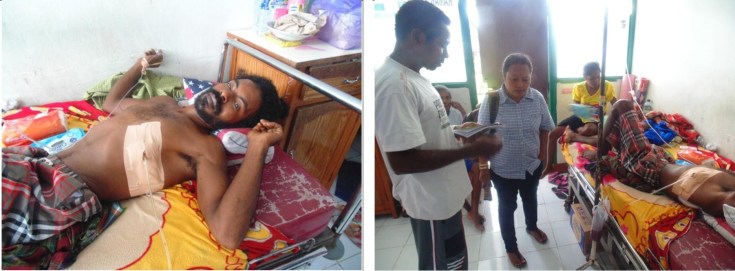
1. Paulinus Warirowai Desember 1st 2015Paulinus Warirowai Shot on his Rib

2. English Desember 1st 2015 2 and 3 Top: 2. Zakarias Torobi Wound on his left calf

Bottom 3. Daud  Ayomi Wound on his left shoulder

Top, 4. Filemon Ayomi Wound on right hand and left calfEnglish Desember 1st 2015 4 and 5

Bottom, 5.  Toni Runaweri, Gunshot Wound through mouth; X-Ray of wound in skull

Top, 6. Yance Manitori, Wound on knee, right and left ankleyance group 678 English Desember 1st 2015

7.  (middle) Alius Karimati, Wound on right calf of hand

8.  (Bottom) Agus Manitori gunshot wound on left hand and left thigh, left calf and  right calf

9. (top) Erik Manitori  Died, tortured and gunshot wounds, his stomach was torn and disembowelled with  bayonet.erick manitori English Desember 1st 2015

10. (bottom) Yulianus Robaha   Died, Tortured and Gunshot

Investigation Report: The Tolikara Arson and Shootings Incident

by JPIC, GKI-TP*
January 19, 2016

(apologies for the delay in publication due to verification issues)


On Friday, July 17, 2015, 10 youths from the GIDI (Evangelical Christian Church in Indonesia) suffered gunshot wound, and 1 died from mortal wounds inflicted by Indonesian military and police.

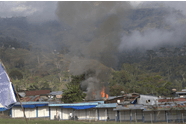
Closeup of Incident Location next to the Tolikara airstrip (photo: JPIC/WPM)

After the shooting, the demonstrators became mad and burned gasoline outlets and the other outlets, with the fire spreading into the surrounding kiosk stalls, including a mosque. 62 citizens suffered material losses as the result of the fire.

Chronology
On Friday, July 17, 2015, at 08.30am, approximately 15 young members of the GIDI Church (Evangelical Church in Indonesia) gathered at the GIDI complex, located at the end of the of the airfield of Karubaga township to continue a seminar and Christian Youth outdoor worship (KKR) on its third day. They went to meet the Muslim community, which had gathered at the office of the Karubaga Military Sub-District Command (KORAMIL) to conduct the morning prayer. The young GIDI members wanted to make a visit with peaceful intent, and wanted to convey that the Idulfitri prayer should take place inside the local small mosque, without the utilization of loudspeakers (Toa), due to the short distance of 300 meters between the mosque and the worship location. The young church members’ request was in line with a previous letter from July 15, 2015, with the number 90/SP/GIDI-WT/VII/2015 by the executive board of the GIDI church in Tolikara region stating that “1) The Lebaran opening prayer on July 17, 2015 is welcomed to take place in Karubaga, Tolikara regency; 2) it would be better if the prayer would not be carried out at an open field, but inside the mosque and its surrounding yard”.

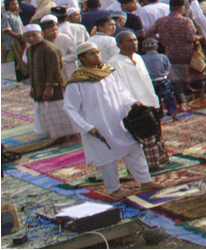
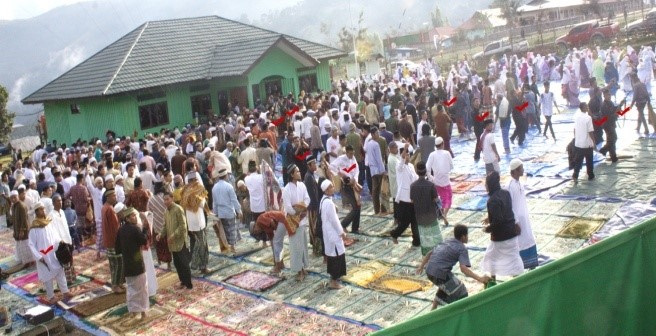
Evidence for the use of fire arms by the by Muslim community praying at the  big field in Tolikara 2
Evidence of firearm use by alleged intelligence officer amongst Muslim community prayers at Tolikara big field. (Photo JPIC/WPM)

The Agreement to not using loudspeakers accompanying or initiating prayer of Muslim Community in Karubaga had already been agreed since 2010. On the 30th of July 2015 prior to the Seminar and Youth Worship occurring, the Regent had repeatedly instructed the Chief of Tolikara Regional Police via telephone, and also directly informed Muslim Cleric (Ustad) about the agreement. Despite this, the persons in charge used loudspeakers during the Idulfitri prayer at the Karubaga Military District Command, which caused the protest of the youth seminar participants and finally let to the Tolikara incident.

Incident Location next to the airstrip of Tolikara from distance (photo: JPIC/WPM)

As all the seminar participants went to express their aspirations and protest in front of the military district command office, one youth was suddenly shot down by gunfire from the Koramil office.

Evidence of of firearms use by Muslim community praying at the  big field in Tolikara (Photo: JPIC/WPM) - Note: Firearms are Indonesian army intelligence service issue)
Evidence of firearms use by Muslim community praying at the big field in Tolikara (Photo: JPIC/WPM) – Note: Firearms are Indonesian army intelligence service issue)

Subsequently the security forces released shots, causing injuries to 11 of GIDI Youth. 1 youth died, named Endi Wanimbo (15 years old). As the result of the shootings, the mass of people released their anger over the incident and burned several small stores (kiosks) in the market area to the ground. The fire expanded and finally caused the burning of the mosque.


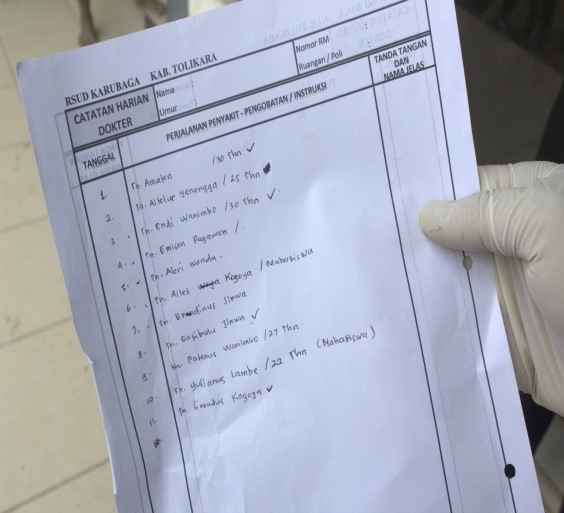
Names of Shooting Victims

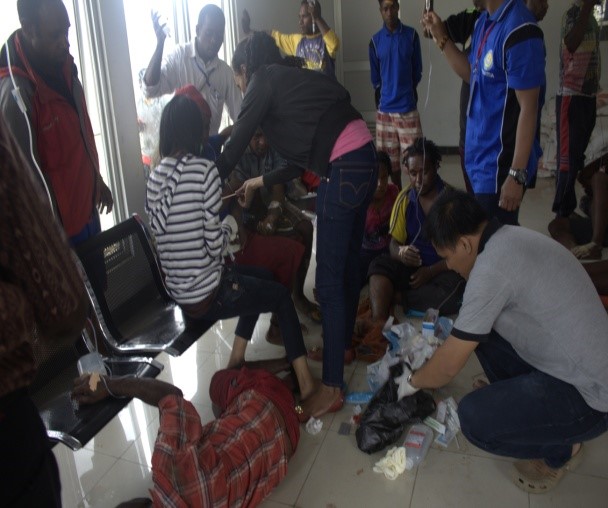
Tollikara shooting victims (photo: JPIC/WPM)

All of the 11 victims received medical treatment in the public hospitals RSUD Wamena and RSUD Dok 2 Jayapura.

  1. Endi Wanimbo (15 years) died after bullet pierced his lower back and exited the stomach
  2. Amatin Sibolim, bullet wound in the leg
  3. Enembe Mus Jikwa, bullet wound in the right thigh
  4. Geradadus Kogoya, bullet wound in the right calf
  5. Yulianus Lambe, bullet wound in the left thigh
  6. Dasiduli Jikwa, bullet wound in the buttocks
  7. Atlelu Wenda, bulllet wound in the left thigh
  8. Ares Kogoya, bullet wound in the left knee
  9. Alesi, bullet wound in the left thigh
  10. Ciliben, bullet wound in the left thigh
  11. Edison Pagawak, bullet wound in the left leg

    List of injured tolikara victims (photo: JPIC/WPM)
    List of injured tolikara victims (photo: JPIC/WPM)
List of Citizens that were material/property Fire Victims in Karubaga, Tolikara, July 17 2015
No. Name From Religion
1 Nandina Karubaga Christian
2 H. Colleng South Sulawesi Muslim
3 Albetina Karubaga Christian
4 Bindo Yikwa Karubaga Christian
5 Ferianto South Sulawesi Muslim
6 Ilang Karubaga Christian
7 Nasiore Karubaga Christian
8 Merika Karubaga Christian
9 H. Suparman South Sulawesi Muslim
10 Mappe South Sulawesi Muslim
11 Zainal Abidin South Sulawesi Muslim
12 Andi Madda South Sulawesi Muslim
13 Andi Madda 1 South Sulawesi Muslim
14 Baharuddin Linta South Sulawesi Muslim
15 Baharuddin Linta South Sulawesi Muslim
16 Bastian Sulawesi Barat Christian
17 Yulius Ruru South Sulawesi Christian
18 Yoland South Sulawesi Christian
19 Agus South Sulawesi Muslim
20 Robert South Sulawesi Christian
21 Pak Sarno Center Java Muslim
22 Sudirman South Sulawesi Muslim
23 Silvi South Sulawesi Muslim
24 Mama Febi South Sulawesi Christian
25 Ali Usman Center Java Muslim
26 Ali Muktar East Java Muslim
27 Kondalina Karubaga Christian
28 Syamsul South Sulawesi Muslim
29 Hastang South Sulawesi Muslim
30 Ismail South Sulawesi Muslim
31 Ridwan South Sulawesi Muslim
32 Ansar South Sulawesi Muslim
33 Faizal South Sulawesi Muslim
34 Ali South Sulawesi Muslim
35 Mustafa South Sulawesi Muslim
36 Taslim South Sulawesi Muslim
37 Munta South Sulawesi Muslim
38 Mustaqim South Sulawesi Muslim
39 Madong South Sulawesi Muslim
40 Abu South Sulawesi Muslim
41 H. Darwis South Sulawesi Muslim
42 Sultan South Sulawesi Muslim
43 Udin South Sulawesi Muslim
44 Sudirman South Sulawesi Muslim
45 Mansyur South Sulawesi Muslim
46 Syukur South Sulawesi Muslim
47 Unding South Sulawesi Muslim
48 Asdar South Sulawesi Muslim
49 Iccang South Sulawesi Muslim
50 Madi South Sulawesi Muslim
51 Tagiling South Sulawesi Muslim
52 Bustam South Sulawesi Muslim
53 Darman South Sulawesi Muslim
54 Yusuf South Sulawesi Muslim
55 Mansyur South Sulawesi Muslim
56 Nurmin South Sulawesi Muslim
57 Massara South Sulawesi Muslim
58 Timombi Karubaga Christian
59 Billiar Karubaga Christian
60 UST. Junaidi Karubaga Christian
61 Mama Ari Karubaga Christian
62 Mosque

 Post Incident Mediation and Legal Process
Together with the legal process undertaken by Police Regency ,POLDA against GIDI leadership, the GIDI take the initiative to negotiate with the Muslims, in this case the national Islamic Ulama’s Council, Nahdlatul Ulama (NU), and encourage these cases to be solved through indigenous Papuan methods. On 27-28 July 2015 meeting between the two sides, which were mediated by the Rev. Benny Giay, representing Papuan ecumenical church leaders, and Toni Wanggai of NU Papua province. The leader of GIDI in Papua then communicated with Ustad Ali of Tolikara, and on July 29 reached an agreement which put forward the peaceful settlement and legal proceedings be lifted. Despite this agreement, the peace and reconciliation effort was ignored by the state, and the legal process is still running. Until the publication of this report, state prosecutions are still underway, and are currently at the stage of witness testimony.

Photo Evidence is presented within the report.

 *Justice, Peace and Integrity of Creation (JPIC) Desk (Keadilan, Perdamaian dan Keutuhan Ciptaan (KPKC) Bidang), Evangelical Christian Church in Papua (Gereja Kristen Injili di Tanah Papua (GKI))

LP3BH’s Warinussy meets with US Ambassador on Manokwari visit

Briefing

January 19, 2016

by Yan Christian Warinussy

On Sunday 17th January 2016, I had the opportunity of meeting the United States Ambassador to Indonesia,  Robert Blake, during a visit
to Manokwari.

At the meeting which lasted about 45 minutes, Ambassador Blake
asked me about the views of my organisation, the LP3BH. Ambassador
Blake asked me about the general situation in West Papua and recent
developments as well as the human rights situation here in West Papua
and he also wanted to know about the policy of President Joko Widodo
towards Papua and West Papua.

I told the Ambassador that the situation here continues to be
highly unsatisfactory in view of the many cases of human rights
violations, none of which had been dealt with in a court of law.

I referred in particular to the various laws and regulations that
were now in force, such as Law on Human Rights 39/1999 and Law 26/2000 on Human Rights Courts. In addition, I drew his attention to Law 21/2001 on Special Autonomy for the Province of West Papua, as amended by Law 35/2008.

I referred in particular to a number of cases of grave human rights
violations such as the Wasior Case (2001), the Wamena Case (2002), the
Paniai Case (8th December (2014), the Tolikara Case (2015) when eleven
civilians were shot and wounded, whereas none of these cases has been
dealt with in a law court.

Ambassador Blake was very concerned about all these incidents and
the failure up to the present day by the Government of Indonesia to
deal with any these cases.

Ambassador Blake said that his government would guarantee that all
those who had ben responsible for these violations would be excluded
from any its governmental programmes related to education and human rights.

Speaking as a lawyer and a Human Rights Defender, I submitted a
written report to Ambassador Robert Blake, hoping that this would be
handed over to the US Government.

I also told Ambassador Blake that these matters were now being
seriously considered by various governments which were members of the Melanesian Spearhead Group (MSG) and members of the Pacific Islands Forum.  I drew his attention to the fact that the United Liberation
Movement for West Papua had been granted observer status by the MSG
in June 2015.

The result of all this was that these various regional state groups
had pressed for a fact-finding human rights mission to be sent to
West Papua and Papua.

I also expressed the opinion that (examination of) all these serious cases should be considered by the Government of the USA as the only way to strengthen democracy and peace throughout the Land of Papua.

With regard to the security situation in the Land of Papua, I stressed that the security forces now based in the Land of Papua should be instructed not to used firearms to handle the situation in the Land of Papua.but to deal with these incidents with peaceful means, instead of using the force of arms.

. I also urged the US Government to exert pressure on the Government
of Indonesia, under President Joko Widodo to respond to the peaceful
moves that had been taken by Papuan NGOs to resolve the social
conflicts in the Land of Papua.

Peace

Yan Christian Warinussy is Executive Director of the LP3BH, the Institute for Research, Investigation and the Development of Legal Aid, and Recipient of the John Humphrey Freedom Award, 2005, Canada.

Translated by Carmel Budiardjo, Recipient of the Right Livelihood Award, 1995.

Edited for clarity by West Papua Media

West Papuans Testify: Excerpt from “Merdeka and the Morning Star: Civil Resistance in West Papua”

West Papuans Testify

Book Excerpt from “Merdeka and the Morning Star: Civil Resistance in West Papua”

We have come to testify. There is much that we want the world to know.

We want you to travel with us to the remote places of Papua—Wamena, Paniai, the Jayawijaya Highlands, the Star Mountains, Mindiptana, Timika, Arso, Mamberamo, Biak, Merauke, Asmat and many other places. We want you to hear stories of suffering from the mouths of ordinary people. Our memories are clear and sharp.

‘In this river our father was murdered’

‘On that mountain slope there used to be villages. They were destroyed by the military’

‘On that open field, our old men were forced to burn their koteka [penis sheaths] because they were considered primitive’

‘In the past that mountain was ours, now people have destroyed our mother’

We want you to travel with us to the sites of the massacres. We want to testify about the killings and the beatings with rifles.

We want to testify about the people who were disappeared, those who were imprisoned and those who were tortured.

There have been many forms of torture – the burning, the stabbing of the genitals, the rape of women.

These are some of the injustices that we want the world to know.

On some days bombs have fallen like rain. We have been up against Hercules aircraft and helicopters and boats. They had overwhelming power.

And after the massacres or murders, the injustices always continue.

Rather than acknowledge the truth, they tell lies.

The perpetrators are promoted not punished, while the victims are dragged into court.

Some of us have spent years in prison. One of us was jailed for 15 years simply for raising our Morning Star flag.

Over years we have faced one injustice after another and then another.
There has been violation after violation since 1963. Entire villages have been destroyed. And Papuan people have been turned against other Papuans.

Injustices continue to this day. Today we face human rights violations, economic injustice, and every week thousands more migrants come in white ships and planes. We are becoming a minority in our land.

Those who resist face continuing discrimination. We are excluded from employment, education and health care. And for women, it has been worse.
They suffered the rapes and assaults and then even more. They were shamed by their own families and often marriages broke apart. These are forms of double injustice and women’s suffering that no one should ever have to face.

These are just some of the injustices that we are testifying to today.
We want the world to know about this.

We also want to testify to the effects of these injustices

Some of our bodies bear the scars.

And so do our souls. We will never forget the sound of the killings.
Some of us still feel the fear. For those who fled we don’t know if we will be safe when we return.

Other survivors have been left with physical disabilities and troubles in the mind.

The rapes brought shame – so much shame that some women did not seek medical help.

And sometimes survivors may feel guilty for being alive. The killings can make us doubt that we have a right to live.

There have been effects for children too. Fear came to the children who did not go to school for months.

When the foreigners have taken our land, cut down our forests and destroyed our rivers, this destruction affects us too. The loss of our sacred places has brought sickness to our people.

And sometimes we feel like we are slaves in our own land. Some of us have to struggle everyday just to feed our families and send our children to school.

But there is more that we want you to know.

We want you to know our testimonies of remembrance.

We are survivors and also witnesses. We have always remembered those who were killed. We will remember them until we die.

There are many ways that we do this.

We have cultural ways of joining in memory and in prayer. We place stones or wreaths of flowers. And there are traditional songs that we use to connect us with those who have died and with the ancestors. These are songs we can sing to those who have passed. We do this in a quiet place, a garden, a beach.

Or we remember through making statues of our loved ones, or photos, or lighting candles. We commune with our ancestors.

But we never forget them. They are with us. Those of us who are still alive have a responsibility to keep progressing the struggle. I have dreams of those who were killed in the jungle. They come to me in my dreams and they encourage me to keep going. I dreamt of them just last week. I listen to their voices.

If they knew that we were meeting together now, if they knew that we were gathering this testimony, they would be very happy. This would mean something to them.

They have gone over there to another world. We will always remember them.

We also want you to know the stories of our resistance, action and rescue

Our people have a long, long history of resistance. We Papuans have been resisting outsiders for centuries. Back to the 1850s, the Dutch who were seeking to protect their spice trade, faced more than 40 Papuan rebellions – both violent and nonviolent. Diverse tribes came together to resist. Angganeta Menufandu, a Konor (indigenous prophet) from Biak Island, led a mass defiance of government and mission bans on wor (ritual singing and dancing) and urged her followers not to pay taxes and to withhold labor. When the Japanese invaded, towards the end of World War Two, they were initially welcomed but, after acts of cruelty, the movement for a free and independent West Papua began again. The killings and massacres began in these times. And our resistance continued.

Our struggle for freedom continued after WWII when the US drove the Japanese out of West Papua at the cost of thousands of lives. And since
1963 we have resisted Indonesian government rule.

We remember our long history of resistance. This history raises us up.
We carry it on.

Many of us have formed organisations of action. We come together for survivors of human rights abuses, for women, for people all over Papua.
We form resistance groups. We are students, young people, older people, women, men, religious leaders and traditional leaders. We take action on behalf of those who are living and those who are no longer alive.

Some of us, who witnessed massacres, were involved in acts of rescue on the days when bullets were raining down, and when the sky was on the fire. After the Biak Massacre our family gave shelter to two men who were fleeing for their lives. My father gave them his clothes. He sat my sisters on their laps. We sat down quietly and we opened all the doors and all the windows. When the soldiers came in with all their weaponry, we stood there shaking. As they held their guns at us, and asked us if we were hiding anyone, we said no. We were all shaking, my father, my sisters, myself, but we survived, and the two men survived too. For four days they stayed with us. We had almost no food but my mother found a way to feed us. We are survivors, rescuers and resistors.

Right across Papua, and for so many years, we have continued to resist, to rescue and to raise the Morning Star. When we cannot fly our flag we have painted it on our bodies, stitched it into noken string bags. When one of us was imprisoned for 15 years for raising our flag, he was offered amnesty if he apologised, but he refused. ‘Why should I say sorry? I have done nothing wrong. It is the Indonesian state who has to say sorry. And not just to me but to all the Papuan people. They have to return our sovereignty.’

And even though it is risky for us there are many times we have come out on to the streets in our thousands, even in our tens of thousands, to demand freedom.

These are just some of our stories of resistance. There are stories of resistance all over Papua.

We want you to know that building unity is not easy – but we are doing it

The Indonesian government and corporations use many methods to divide us. To turn Papuans against Papuans. If some people raise their voice, the company will come – or the government will come – and say, ‘Hey come into the office, let’s talk.’ They then give that person money, or a scholarship, or a good job. These are some of the ways our opponent uses to break our resistance.

But we keep taking steps to come together. There is a long history to this. When the Amungme have a problem we build a traditional house. In this house – this Tongoi – people come, sit down and talk. We invite every leader and chief from every village. People come together in one mind. When people then go out of the Tongoi they are going to bring a change. These are traditional ways of calling up assistance. In our culture, no one can stand up by themselves. Everyone needs everyone.

So we keep taking steps to come together. We have now formed the United Liberation Movement for West Papua. Inside this United Movement are the National Federal Republic of West Papua (NFRWP), the West Papua National Coalition of Liberation (WPNCL), National Committee for West Papua (KNPB), National Parliament for West Papua (PNWP) and other non-affiliated groups. We are strengthening our struggle and as we do so more and more people join us. People in other Pacific nations are raising their voices.

Our resistance is like a mat or noken – many strands woven together to become one.

Our resistance is like a spear, sharp and dangerous.

Our resistance is like a drum that speaks with the voices of the ancestors.

We want you to know about Papuan skills in survival

Despite all the injustices we have faced, we are survivors and we have many skills. We are wise about when to speak, when to stay quiet, and when to sing our songs. Some of these songs were written in prison for the future of West Papua. Some of our singers have been arrested and murdered. But we continue to sing freedom.

We also have our dances. We wear our traditional dress, and dance traditional Papuan dances. Our Papuan culture helps us to love and care for one another. When we live inside our culture we are free.

We have prayer, faith in Jesus Christ, and God as our witness.

And we have each other. We are among friends and we want to acknowledge all those who have stood with us.

There are other Papuan survival skills too.

Like mothers’ skills of endurance. Mothers who sell fruit and vegetables to feed their families and send their children to school display their produce on hessian mats by the side of the road. Rain, hail, sun and dust they sit. They survive.

Some of us travelled by canoe with 43 others all the way to Australia to seek another life. Years later, some of us sailed back to West Papua with the Freedom Flotilla. The West Papuans, Aboriginal elders and other Australian supporters on board the Flotilla carried a message of peace and solidarity, and reignited ancient connections.

And we have skills in humour, in jokes and in laughter. Even in the hardest times, we pray, we sing, we dance, and somehow we find a way to laugh.

We want you to know about our hopes and our dreams

We carry a big hope together … a free West Papua. We have held onto this hope for many, many years.

As we lift up these injustices to the light, then all the other cases will also be lifted up.

And we carry a hope for justice – international justice, western justice, West Papuan justice, spiritual justice.

That is why we are testifying today.

We are sharing with you testimonies of injustice.

We are speaking about the effects of these injustices.

We are sharing testimonies of remembrance.

We are sharing stories of resistance, action and rescue.

We are sharing the ways we build unity.

We are sharing our Papuan survival skills.

And we are testifying to our hopes and to our dreams.

What we are testifying here has been an open secret. We have always known this, God has always known this, but now you will know it too.

This means that now you are also witnesses.

So these stories and our hopes will now also be carried by you.

Thank you.

..

Biodata: Jason MacLeod is an organiser, researcher and educator. He is the author of the just-published book ‘Merdeka and the Morning Star: civil resistance in West Papua’.
 This testimony was written in collaboration with Mama Tineke and Daniel Rayer, two West Papuan activists who survived the Biak Massacre, and David Denborough from the Dulwich Centre. It contains the voices of many of the people of West Papua Jason has collaborated with and is in part based on a similar testimony developed for the Biak Massacre Citizens Tribunal.

Oil palm plantation development & forest fires in southern Papua, September-October 2015

by Sam Lawson, Earthsight via AwasMIFEE

First

Summary:

Analysis of satellite data clearly demonstrates forest fires burning in areas undergoing conversion for oil palm in two locations in southern Papua. One of these areas is intact primary forest, while part of the other is on peat soil. The concessions concerned are both owned by the large Korean conglomerate Korindo.

It is illegal in Indonesia for companies to clear land using fire, and oil palm concession holders are also legally required to have in place appropriate fire prevention and fire-fighting measures. Though on its own the evidence below does not prove any wrongdoing by the company or its subsidiaries or contractors, it should justify further investigation by the Indonesian authorities.

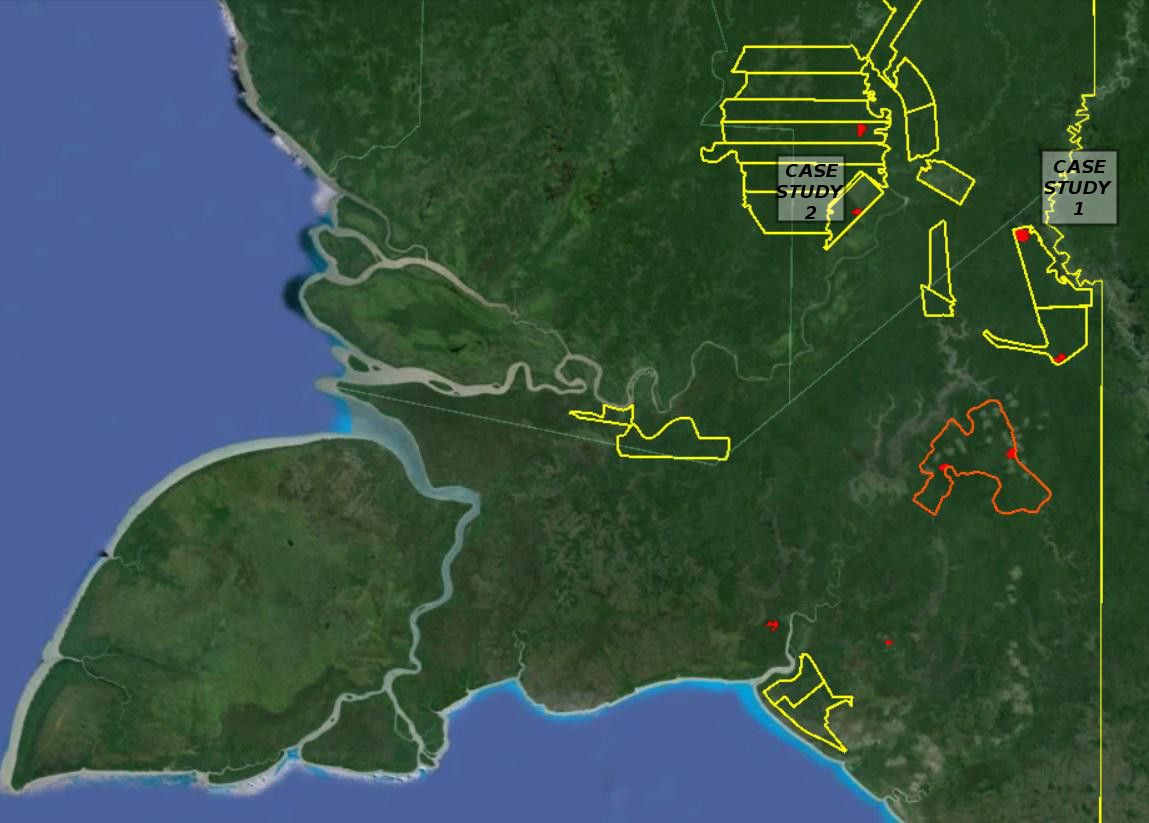
location map

Figure 1: Southern Papua, showing boundaries of oil palm conversion concessions (yellow), forest clearance for oil palm during September-October 2015 (red) and location of case studies below.

Case Study 1: PT Papua Agro Lestari (Korindo group)1

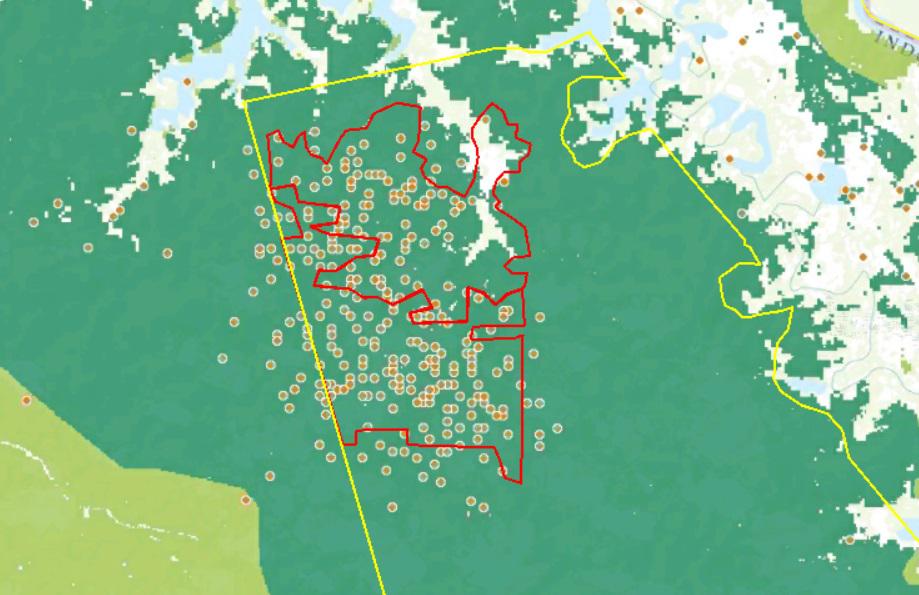
Between 1st September and 9th November 2015, more than 230 fire hotspots were detected by the NASA MODIS satellite within an area of intact primary forest undergoing plantation development near the PNG border in PT Papua Agro Lestari, Merauke district (see Figure 2).

PT Papua Agro Lestari

Figure 2: Fire hotspots 1st Sept – 9th Nov 2015 in PT Papua Agro Lestari (yellow boundary). Red boundary shows area of forest cleared for plantation development up to 24th October 2015. Green background shows that the area was previously intact primary forest.2

Landsat images confirm the existence of fires within this area, and clearly show how they are related to oil palm plantation development.

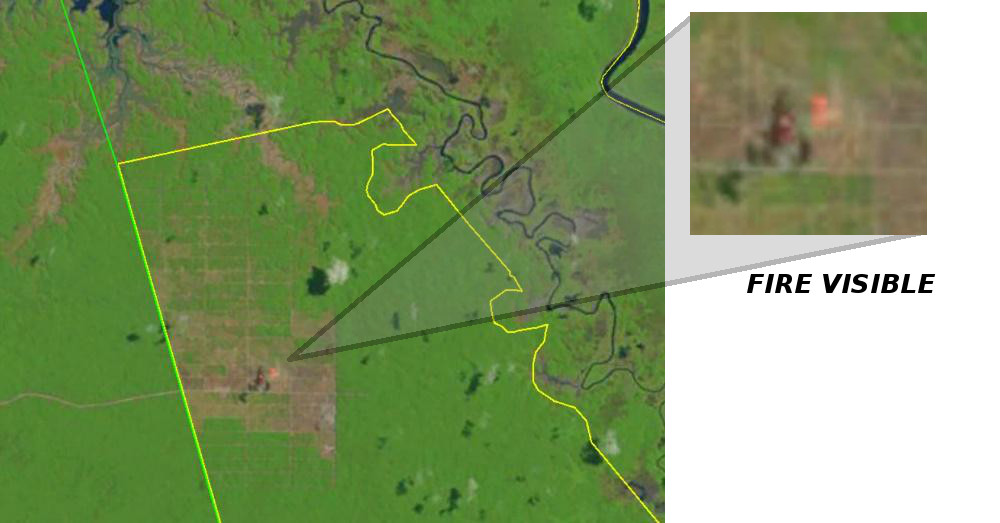
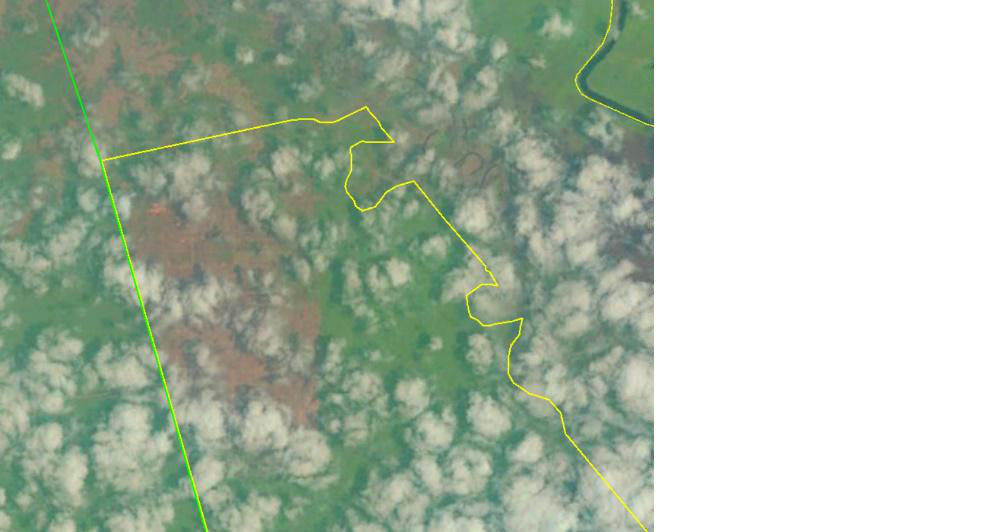
On 6th September 2015, a fire is clearly visible burning in the plantation (see Figure 4). The next cloud-free image, from 24th October 2015, also shows a fire burning, in an area which was still primary forest 7 weeks earlier (Figure 3).

In just 7 weeks between during Sept-October 2015, 1000 hectares of primary forest were cleared, a much faster rate than could plausibly have been achieved by other means.
PT PAL satellite6-9-2015

pt pal satellite 24-10-2015Figures 3 & 4: Fires visible in oil palm plantation under development in PT PAL, September & October 2015

Case Study 2: PT Tunas Sawaerma (Korindo)

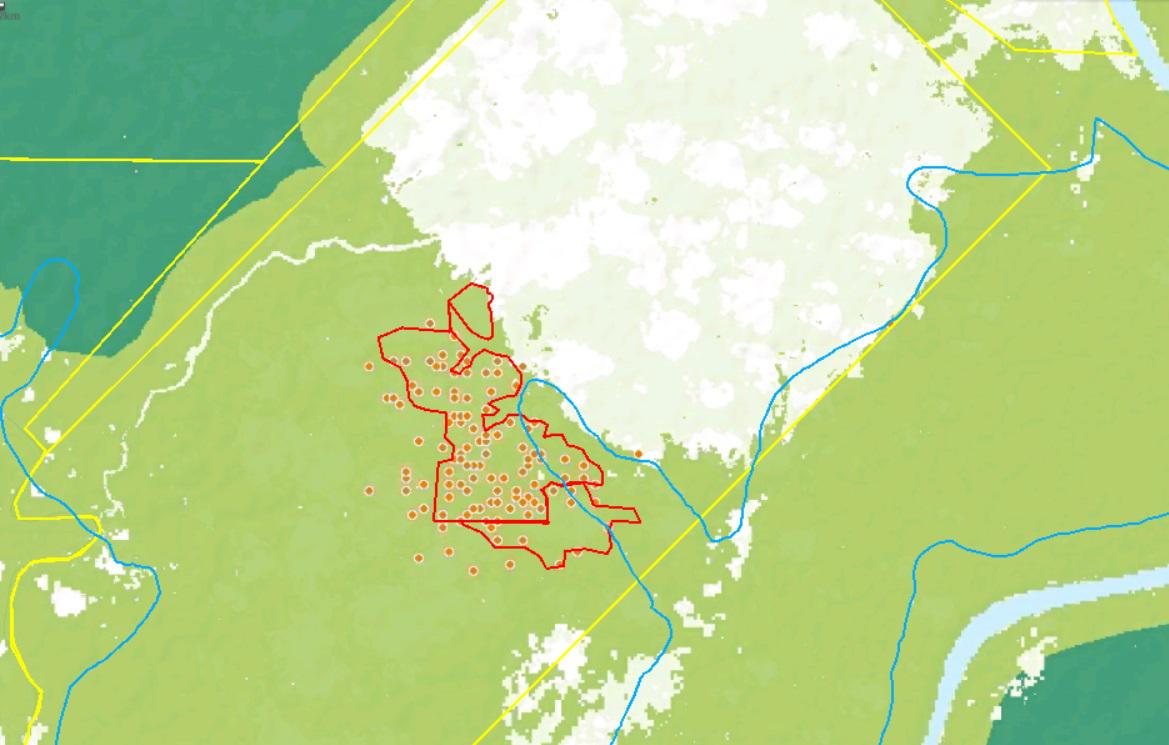
During the same period, more than 100 fire hotspots were recorded by the NASA satellite in an area currently being cleared of degraded primary forest for oil palm in PT Tunas Sawaerma, a concession in Boven Digoel district which is also owned by Korean conglomerate Korindo (see Figure 5).

PT Tunas Sawaerma

Figure 5: Fire hotspots 1st Sept-9th Nov 2015 inside Korindo’s PT Tunas Sawaerma oil palm concession (yellow). Red/orange boundary shows area of forest cleared for plantation development up to 24th October 2015. Blue line indicates peat soils. The orange boundary shows the areas cleared between 6th September and 24th October 2015 (( Sources: Peat soils – Wetlands International, 2004. For all other data see reference for Figure 2 ))

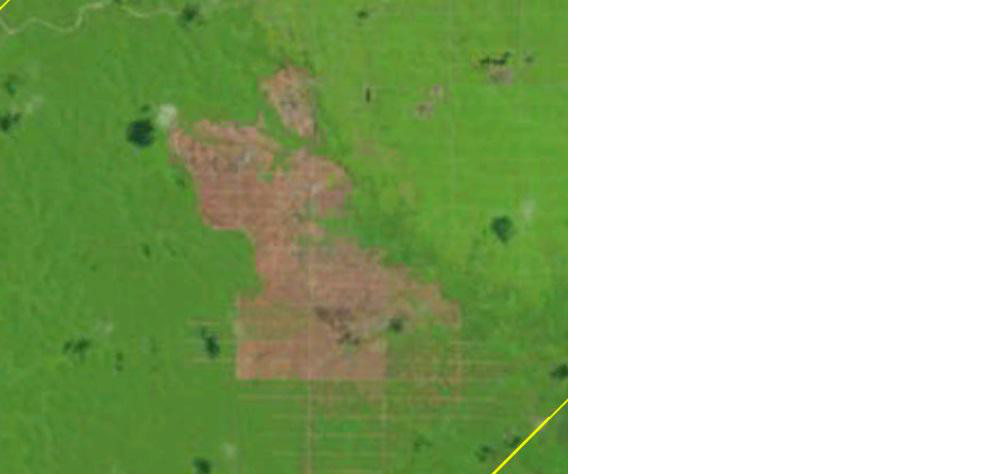
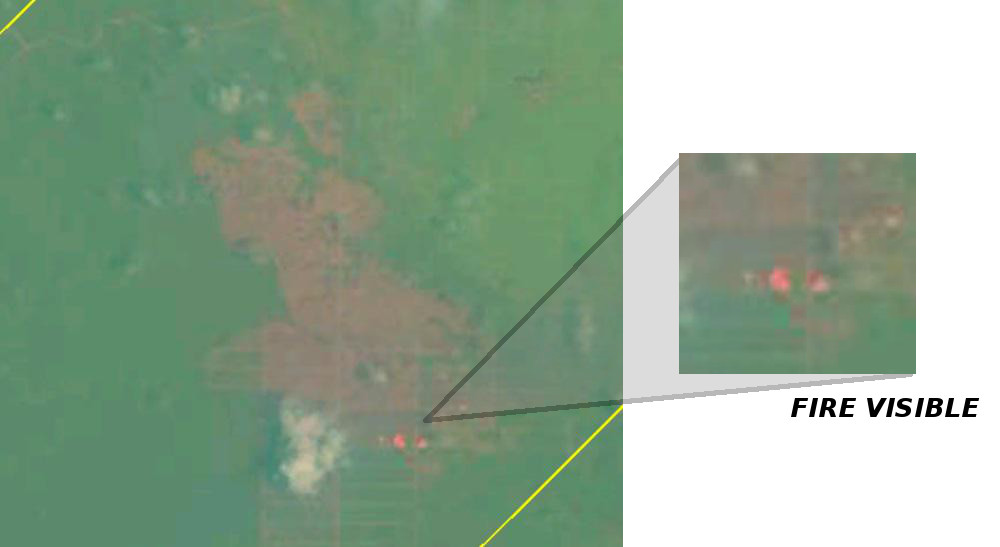
Again, Landsat satellite images confirm the existence of fires within this area of recent development. An image from 24th October clearly shows a large fire within the area under development. Comparison with an image from the beginning of September shows that the area concerned remained forested previously, though new plantation roads had been cut (see Figures 6 and 7).

Many of the fire hotspots in the Korindo concession are on peat soils, as is some of the area newly cleared by fire during September/October 2015 (see Figure 5).

PT TSE satellite 6-9-2015

PT TSE satellite 24-10-2015

Figures 6 & 7: Fire visible in forest area in process of development into oil palm, Korindo’s PT Tunas Sawaerma. The images were taken on 6th September 2015 (figure 6) and 24th October 2015 (figure 7)


  1. The Linked-In page of the Assistant Manager of Plasma (Smallholder) plantation development at PT PAL identifies the company as being part of the Korindo group – https://www.linkedin.com/in/yovita-natalia-b5168882  [awasMIFEE note: previously on this site it had been thought that ownership of PT Papua Agro Lestari had been transferred to the Daewoo International Corporation. Although the situation is confusing, and there appears to be close cooperation between the two companies, several pieces of evidence indicate that the company is still part of  the Korindo Group]  ↩
  2. Sources: Background – Degraded (light green) and intact (dark green) primary forest, from Margono, B. Primary forest cover loss in Indonesia over 2000–2012. Nature Climate Change,doi:10.1038/nclimate2277; spots – NASA MODIS fire hotspots, “NASA Active Fires.” NASA FIRMS. Accessed through Global Forest Watch on 15th November 2015; concession boundary – Ministry of Forestry GIS portal map of Forestland releases, accessed 9th November 2015; extent of new oil palm development (red/orange line) – based on analysis of Landsat satellite images from 25/1/15, 6/9/15, 24/10/15.  ↩
This entry was posted in Merauke News and tagged Bookmark the permalink. Comments are closed, but you can leave a trackback: Trackback URL.


Create a website or blog at WordPress.com

Up ↑