Tito Karnavian: “Mastermind” Behind the Prohibition of Democracy in Papua.

March 14, 2013

by OKTOVIANUS POGAU at SuaraPapua.com

with additional reporting from West Papua Media

https://i0.wp.com/suarapapua.com/wp-content/uploads/2013/05/kapolda-papua.jpeg
Inspector-General Tito Karnavian, current Kapolda Papua

PAPUAN, Jayapura — Dorus Wakum, a human right activist in Papua has examined that the Head of Papua Regional Police (Kapolda Papua), General Inspector (Pol), Tito Karnavian is the authorised “mastermind” behind widespread acts of arrests, killings and plunder of activists in Papua.

“Since Tito Karnavian was appointed on September 3, 2012, democratic space in Papua has been closed for meetings. Many Papuan activists were arrested, killed, and even imprisoned for no apparent reason,” said Wakum, when contacted by suarapapua.com, Tuesday, (14/05/2013) afternoon.

Prior to his Papua appointment in 2012, Karnavian was the feted head of the controversial elite anti-terror unit Detachment 88, funded, armed and trained by Australia, the United States and the United Kingdom.  Under his command, the unit became known for its extrajudicial killings of suspects, and was embroiled in documented case of torture and and excessive force in Maluku and Papua, most notably with its involvement in the brutal crackdown on the Third Papuan People’s Congress in October 2011.

Karnavian’s first major engagement in Papua was commanding the openly boasted extrajudicial assassination of at-the-time-unarmed legendary West Papuan guerrilla fighter and Commander of the National Liberation Army, Kelly Kwalik, in Timika on December 16, 2009.

Wakum assessed that Tito Karnavian is not worthy to serve as Kapolda (Chief of Police) Papua, because the activities of the people of Papua are not based on terrorism, as he was assigned prior to serving as Kapolda Papua.

“Since Tito came to power, we already heard about the discovery of bombs in Sorong, Wamena and Biak, and this is a big conspiracy.  The objective of Tito Karnavian is that this is acceptable in Papua, and hopes to gain support from the international community and non-Papuans. There are no terrorists in Papua, we the people of Papua fought for our political rights peacefully,” said Wakum.

Wakum also evaluated that if Tito Karnavian continues to be stationed in Papua, the escalation of violence will increase because all peaceful mass demonstrations would be faced with gun and muzzle of rifle.

“Try observe all the previous Kapolda, although they utilised full force, but not as bad as the current Kapolda. People can still demonstrate, (were still) permitted to hold fellowship at Theys Cemetry Oval, but now not at all, as an example that occurred on May 1, and May 13, yesterday, this is the action of Tito Karnavian,” said Wakum.

Thobias Bagubau, a human right activist in Jayapura agreed with Wakum’s assessment. He emphasised that Tito Karnavian is not appropriate to be position in Papua because the situation will intensify and the number of Papuan political prisoners will increase.

“Currently, we are not able to demonstrate, if sleeping at night, certainly mindful of (tomorrow) we’ll be arrested, tortured and beaten while staging the action and lucky enough if not shot dead. This is now the policy and command from Kapolda Papua,” said Bagubau.

Bagubau also observe on one hand that Tito Karnavia’s socio-cultural approach to partially soften the people of Papua, especially the central highlanders, but on the other hand, continues to undermine the  democracy with murder, arrest and imprisonment of Papuan activists.

“The soft approaches actually obstruct his actual image. Kapolda should be someone who understand the demands, desires and expectations of the society. The total number of political prisoners recently stated by Papuan Behind Bars are 40 people and now there is addition of 7 people in Sorong, 4 people in Jayapura and 7 people in Timika, which totalled to 58 people. The total is extraordinary,” added Bagubau.

Both Wakum and Bagubau agreed that Kapolda Papua Tito Karnavian, has shut down democratic space in Papua to fulfil his personal ambition as a police career, that is, to become Head of Republic Police (Kapolri) in the future.

“This is for the sake of Kapolri position in the near future, Papua will be a springboard for his career advancement, we’ll see,” concluded Wakum.

A glance of Tito Karnavian’s life:

Born in Palembang, South Sumatera, Indonesia, on October 26, 1964. He was an officer of the Indonesian National Police, who managed to dismantle the terrorist leader’s Noordin Moch Top networks.   At that time, Commissioner Tito Karnavian was promoted to Brigadier General and was promoted as the Head of Detachment 88 anti-terror unit at Polri headquarters. Tito Karnavian replaced Brigadier General (Pol) Saut Usman Nasution, who served as the first Director of Security and Transnational Criminal Investigation Polri Headquarters.

In accordance with TR Kapolri dated, September 3, 2012, Tito was appointed as Kapolda Papua as a replacement of Inspector General (Irjen Pol) Bigman Lumban Tobing, who had been criticised in Jakarta for allowing a spiral of “unknown persons” (OTK) shootings to occur without investigation, shootings which were widely believed by credible Papuan obsevers to be carried out by members of Indonesia’s notorious special forces, Kopasssus, and allegedly even members of Detachment 88.

Some positions that Tito Karnavian held were:

  • Head of Intelligence Unit (Kasatserse)
  • General Director of Regional Intelligence Unit (Umum Ditserse);
  • Jakarta Provincial Police (Polda Metro Jaya);
  • Head of Densus 88/anti-terrorism unit (Kadensus 88/Anti Teror),
  • Head of District Police in Serang,
  • Head of sub-division Densus & Police Intel Detachment 88/Anti Terrorism Unit (Kasubden Intel 88/Anti Terror Intel Densus);
  • Republic Criminal Investigative Unit (Bareskrim Polri);
  • and Head of Densus 88/Anti-Terrorism Unit (Kadensus 88/Anti Terror) from 2009 til 2010.
  • He’s also the head of the education section and capacity building (Pembinaan Kemampuan BNPT) from 2010-2012, and after that he was “entrusted as the best person to maintain Papua”.

KNPB Member Tortured until Arm Broken

by OKTOVIANUS POGAU at SuaraPapua.com

http://suarapapua.com/2013/05/satu-anggota-knpb-disiksa-hingga-patah-tangan/

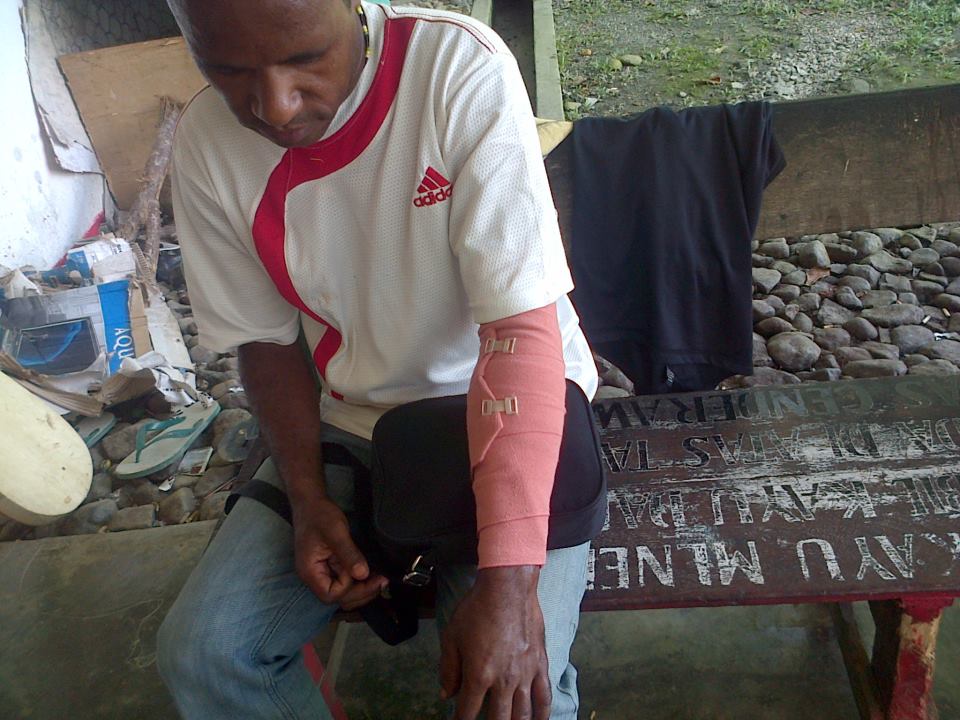
Photo: Markus Giban (19), one of the members of the KNPB who was arrested by police and had his arm broken. (Photo: KNPB / SuaraPapua.com)

Papua, Jayapura – A member of the West Papua National Committee (KNPB), Mark Giban (19), student at Cenderwasih University (Uncen) reportedly suffered a broken arm after being arrested and tortured by Jayapura City Police, at National Housing Authority 3, Abepura, Jayapura, Monday (13/5/2013) afternoon.

“There has been massive persecution against KNBP activists. This is extremely excessive, some others are still detained at Papua Police Regional Command, and Giban has suffered a broken arm and must be treated at Abepura Regional District Hospital (RSUD)”, said the Chairman of the National Parliament of West Papua (PNWP), Bucthar Tabuni when contacted by suarapapua.com, this afternoon.

As well as the arrest and torture of Giban, several KNBP activists, including the Head of the KNPB, Victor F Yeimo, suffered the same fate. They are currently being detained at Papua Police Regional Command and are being interrogated by police.

Bucthar added, the full report of the torture, arrest and beatings suffered by the KNPB activists, as well as several other mass actions on May 13, 2013, will be published in full.

“Friends are currently compiling the full report, we will later publish for the media, just wait”, said Tabuni from Jayapura, Papua.

Papua Police Public Relations, Adjunct Senionr Commissioner 1 Gede Sumerta, S. lk when contacted reported that confimed reports from the field had not yet been received.

“Wait, I need to check first”, wrote the Commisioner of Public Relations briefly via mobile phone to the media.

Previously, as reported by this media (read: Jayapura, four Papuan Activists back in Police detention), police again arrested four Papuan activists outside the taxi rank at National Housing Commission 3, not far from the Cenderwasih University Campus, Papua.

The four people arrested are: student Yongky Ulimpa (23), student Ely Kobak (17), Manggaprouw Marten (30) activist of the West Papuan National Authority (WPNA) and Victor F Yeimo (30), Chariman of the West Papua National Committee (KNPB).


Papuans mourn 50 years of Indonesian occupation

 by Alex Rayfield

 May 1, 2013

Demo in Jayapura, May 1 (photo: Dawn Treader)

For many people around the world the first day in May is a time a celebration, a day to remember how ordinary people won the right to the eight hour working day.

But in West Papua May Day is a day of national mourning.

Fifty years ago on 1 May 1963 the United Nations abandoned West Papua. After a brief nine months administering the country the United Nations pulled out of West Papua to allow the Indonesian government to rule the territory on behalf of the International Community.

Fifty years later the Indonesian security forces are still in West Papua and a free and fair referendum on West Papua’s political status is yet to take place.

Here’s a rundown of how West Papuans across the country commemorated the day.

Sorong

Thomas Blessia
Thomas Blessia

https://i0.wp.com/suarapapua.com/wp-content/uploads/2013/05/korban-di-sorong.jpgGrief took on new intensity as the Indonesian security forces shot dead two Papuan protesters in Sorong and wounded two others. According to human rights defenders from Elsham, the Institute for the Study and Advocacy of Human Rights in West Papua, who also have an office in Sorong, shortly after 10pm on Tuesday night police from Aimas Police station together with Indonesian soldiers.

arrived at the home of Ishak Klaibin (49).  In a report obtained by West Papua Media Elsham Sorong reports that Papuan activists were holding a meeting to prepare for demonstrations the following day.

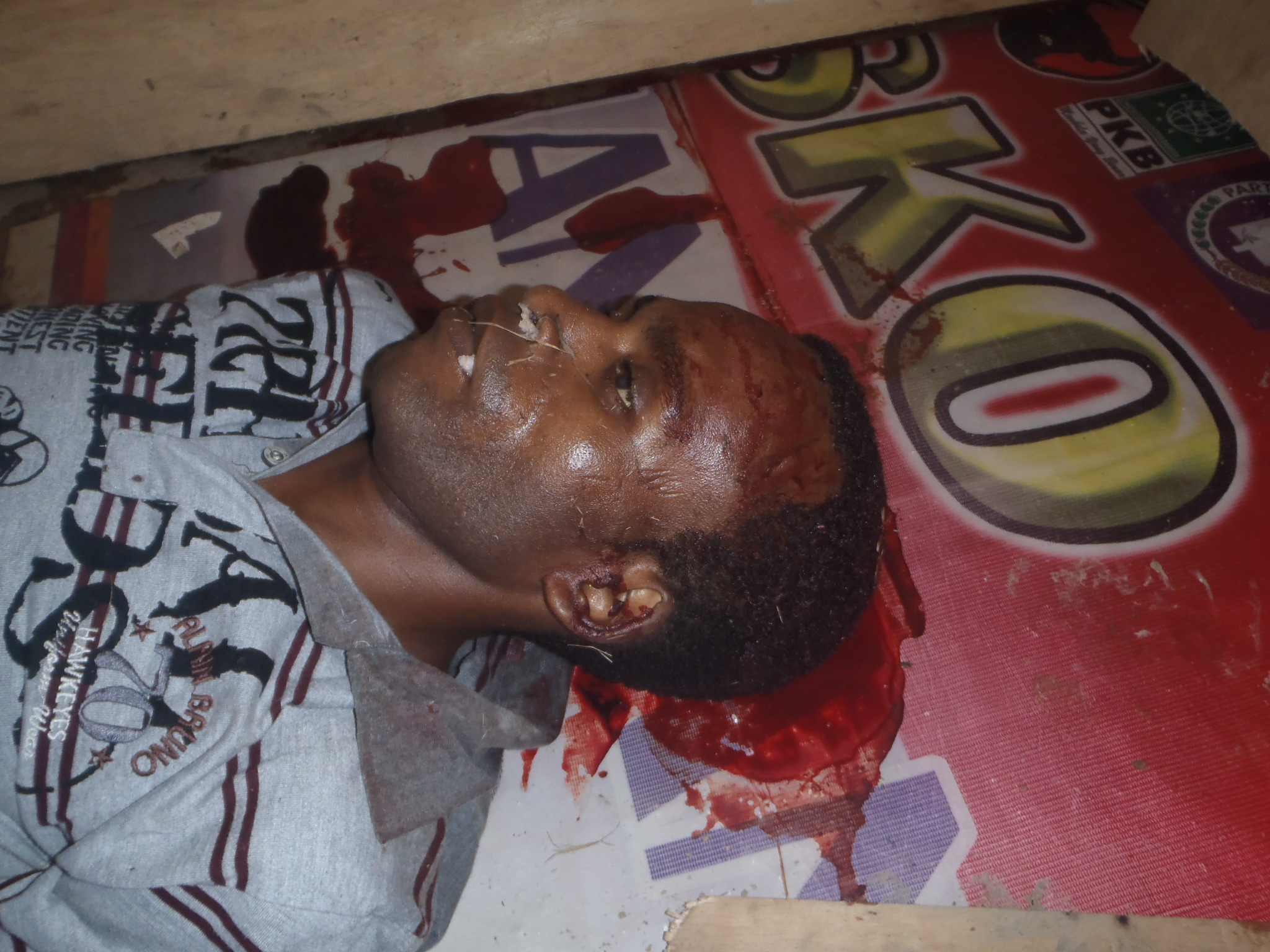
According to Mr Klaibin a number of Papuans got into an argument with the police and soldiers who shot dead Abner Malagawak (22) and Thomas Blesia (22). Malagawak was shot in the shoulder while Blesia was shot in the back of the head.

Apner Malagawak
Apner Malagawak

Three other people, Salomina Klaibin (31), Herman Lokmen (18), and Andreas Safisa (24), were wounded in the attack.

Jayapura

Despite the killing of the Malagawak and Blesia the night before in Sorong and knowing the risk to their safety given the refusal by the Indonesian police, military and recently inaugurated Papuan Governor, Lukas Enembe, to grant official permission for peaceful demonstrations, Papuans from across the country continued with planned nonviolent demonstrations.

In Jayapura, the capital of West Papua, the demonstration was jointly organised by the West Papuan National Parliament and the National Federated Republic of West Papua, and the march led by Buchtar Tabuni.  The West Papua National Committee (KNPB), West Papua National Authority and Melanesian Women of Papua – all came together to support civilian based protest.

The activists gathered outside the University student dormitory, Asrama Nayak, and proceeded to march towards Abepura, a university suburb in Jayapura. Five hundred West Papuan activists accompanied by drums, flautists and banners marched. They sang, cried out “Free Papua” and carried banners denouncing fifty years of occupation by the Indonesian military. The protesters held banners declaring “Fifty years of lies, manipulation, torture and killing”, “Not Integration; Annexation”, “The Indonesian occupation is illegal”, “Enough is Enough” and “Stop violence against Papuan women”. Many of the banners were decorated with the photos of Papuan victims of torture by the Indonesian security forces.

Human rights defenders from Elsham, who were present monitoring the demonstration reported that as the protesters passed the military command at Padang Bulan, the name of neighbourhood where the Elsham office is located, soldiers fired their weapons seven times into the air.

Around the same time local stringers at the protest reported that several activists walking on the street in Jayapura were seized by security personnel, forcibly loaded into a military truck and driven some thirty kilometres away to an army base at the foot of Mt Cyclops. The activists later managed to escape when the truck was forced to stop near Sentani.  Papuan citizen journalists also told New Matilda and West Papua Media that during the march in Jayapura Indonesian police attempted to arrest Markus Yenu, a well-known protest leader from Manokwari. However, they were prevented from doing so when activists  nonviolently positioned themselves between Yenu and the police. According to eyewitnesses Yenu promptly disappeared into the crowd and is now reported to have gone into hiding.

This slideshow requires JavaScript.

Slideshow: photos from May 1 Anniversary mobilisations, and Indonesian militia counter-demonstration (Photos: West Papua Media, and supplied)

According to West Papuan journalist Okto Pogau writing for Suara Papua (The Voice of Papua), water cannons, tear gas cannons and hundreds of heavily armed police and military were positioned in several sites between the centre of Jayapura and Sentani, a further 50kim away. In Sentani, beside the memorial site of West Papuan independence leader Theys Eluay, and in Kampung Harapan (the village of hope), a pro-independence stronghold, there was a heavy police and military presence. KNPB media reported the determination of the organisation to defy Indonesian police attempts to destroy them. Despite the presence of the security forces, peaceful demonstrations, speeches by KNPB chairman Viktor Yeimo and a worship service went ahead in Sentani. However, the security forces did manage to break up a KNPB demonstration in Waena, an outlying suburb of Jayapura.

In Jayapura Indonesian police, soldiers and citizens organised a counter demonstration. They drove through the streets of Jayapura in vehicles emblazoned with giant Red and White flags, the Indonesian national flag, honking their horns.

Biak

In Biak forty pro-independence activists led by Oktofianus Warnares (46) raised the Morning Star flag. According to Elsham staff in Biak the demonstration was forcibly dispersed by police and an unknown number of activists were arrested. Also in Biak, the West Papua National Committee, whose activists were recently accused of bomb-making – a charge they deny – led a prayer service. Local KNPB activist, Mnumumes, said that “1 May is the day that colonialism entered West Papua and that West Papua continues to be colonised until today.”

Fak-Fak

In Fak-Fak, a town on the North West Coast, Elsham staff report that the Morning Star flag was raised at three locations, at the Inpres Wagom Mountain Primary school, at the Second Middle School and in front of the North Fak-Fak District Office.

Paniai

In Nabire, the district capital of Paniai, Human rights defenders and church workers, under the banner of the Coalition of Papuan People from Nabire (Koalisi Rakyat Bangsa Papua Kabupaten Nabire) held a press conference commemorating the 50 year anniversary of West Papua’s annexation by the Indonesian state.

The speakers at the press conference all declared that “West Papua’s incorporation into Indonesia, the Act of Free Choice in 1969 (a shame referendum), Special Autonomy, the Unit for the Acceleration of Development in West Papua were all problems that remained unresolved.” The speakers, who included Rev. Esebius Pigai,

Daniel Zonggenau  (A tribal leader from Meepako), Theo Mirip (a senior chief from the Nduga tribe), Mrs Pina Jagani (a Papuan woman’s leader), Frans Madai (a youth leader) and Yones Douw (a human rights activist), were dismissive of a new policy package called Special Autonomy Plus recently announced by Indonesian President Susilo Bambang Yudhuyono. Douw and the other Papuan leaders in Nabire demanded that “the Indonesian government immediately begin political talks with the Papuan people, mediated by an international third party.”

Timika

Viktor Mambor from the independent West Papuan media outlet, Jubi reported on events in Timika. According to Mambor, Papuans raised the Morning Star flag in front of the new Mimika Presidential primary School. The protest was dispersed by police shortly afterwards. Mimika Police Chief Adjunct Senior Commissioner Rontini Jeremias, quoted by the Antara news agency on Wednesday (01/05), said that ten residents were arrested and a Morning Star flag, betel nut tree flag pole and rope were seized.

“We follow the rules of the state, not the citizen’s rules. Who is at fault remains our process, “said Commissioner Rontini.

Benny Pakage, a human rights activist from Timika/Mimika said that police detained 15 people. Pakage also mentioned that a number of security forces were hit, but that no one was killed.

Beyond West Papua

There were also reports of demonstrations by Papuans in Java and solidarity demonstrations as far away as Noumea, Kanaky (also known as French Caledonia) where the National Kanaky Socialist Liberation Front (FLNKS) has backed West Papuan’s call for a seat at the table of the Melanesian Spearhead Group.

One thing is certain: protest in West Papua shows no sign of letting up. As the Indonesian government continues to refuse to countenance talks West Papua becomes a bigger political problem.

westpapuamedia

“Secure” May 1: TNI/Police deployed in full strength

by OKTOVIANUS POGAU, Editor, SuaraPapua.com

May 1, 2013

West Papua, Jayapura – Both the Papuan Regional Police (Polda) and Indonesian Military (TNI) Command XVII/Cenderawasih are reportedly at full strength to “secure” actions that commemorate the annexation of West Papua by the Indonesian state on 1 May 1963.

https://i0.wp.com/suarapapua.com/wp-content/uploads/2013/05/mobil-Polisi.jpg
Police anti-demonstration apparatus in a show of force, Jayaura, May 1, 2013 (Photo: SuaraPapua.com)

Arnold Belau, a journalist from suarapapua.com reported that dozens of police (Polri) and military (TNI) trucks were driving through the streets of Jayapura. A number of trucks were parked in places that have been sites of regular protest action by Papuans in the past.

“I just came from the housing estate Perumnas III, right at the round-about of Uncen campus. There are 5 Brimob trucks, and several military trucks parked there. I didn’t see any signs of protest or public speaking near the taxi ranks. The situation was very tense,” said Belau, via mobile connection from Jayapura.

Apart from Perumnas III, Belau also monitored the Waena area, right in front of the Museum Budaya (Cultural Museum), on the road towards Sentani, a usual location for protest action.

“At Expo, right next to Cultural Museum, there are 5 police trucks, 1 mobile water cannon, 3 armoured military vehicles and 10 Brimob (paramilitary police) patrol cars. There are hundreds of fully armed security forces near the vehicles” said Belau.

In the Sentani area Belau reported that Kampung Harapan (the village of hope) has been also occupied by hundreds of security forces. They stand alert in combat gear and are armed with automatic weapons.

“In Kampung Harapan, I observed 4 police trucks, 2 police vehicles, and 1 military truck. At the junction of the Institute of Agriculture, also in Sentani, there is 1 water cannon vehicle, 1 police truck, and 1 truck with a mounted tear gas cannon,” said Belau.

Belau continued to monitor the Sentani area, especially at the memorial of Theys Hiyo Eluay, the slain West Papuan independence leader where a protest of national mourning will be organized by the West Papua National Committee (KNPB) and their supporters.

OKTOVIANUS POGAU


Indonesian security forces conduct violent sweeps, detain scores ahead of mass demos in Jayapura for May 1

West Papua Media

May 1 2013

Indonesian police and army units have conducted heavily armed security sweeps across Jayapura ahead of mass demonstrations to commemorate the 50th Anniversary of Indonesia’s annexation of West Papua.

Thousands of members of civil society organisations are today converging on Jayapura, West Papua, to hold the demonstrations, however, reports from West Papua Media stringers on the ground in Jayapura have documented a series of brutal raids to prevent public participation in the planned rallies.

Led by a coalition of pro-independence networks including activists from the National Federated Republic of West Papua (NFRPB) and the West Papua National Committee (KNPB), the demonstrations are intended to “show a peaceful expression of continued and universal opposition to Indonesia’s colonial violence against indigenous West Papuans,” and continue to call for self-determination for Papua’s people, a basic human right now denied by Indonesia with the May 1 50-year anniversary of Papua’s annexation, according to organisers from the NFRPB.

Organisers have also called for rolling and widespread strikes, particularly amongst Papuan members of the Indonesian civil service, and for Papuan university and high school student to join the rallies and use May 1 as a “public holiday for West Papuan people’s future”.

The raids began at 0300 (3am local time) on April 30, after the new Papuan Governor Lukas Enembe endorsed a decision by Chief of the (Indonesian) Papua Police, the Australian-trained former head of the notorious counter-terror unit Detachment 88, Inspector General Tito Karnavian, to criminalise all public gatherings for May 1.  Karnavian made significant public statements in both Indonesian and Papuan press saying that he will not tolerate dissent to be publicly expressed today, despite this ban being a breach of the of freedoms of expression and association guaranteed under the Indonesian Constitution.

Police have announced to Jayapura residents and rally organisers, that if demonstrations occur, Police will first attempt to use persuasion to disperse the approach of rally participants, and if rally participants ignored persuasion, then they would use force and “destroy” any gatherings.

Organisers have reported that on top of the extra thousand heavily armed police announced by Karnavian, hundreds of heavily armed plain clothes special forces police and soldiers have arrived in the city, with most moving around on motorbikes.  In addition, hundreds of soldiers from the Indonesian Army (TNI) were yesterday witnessed riding on motorbikes whilst in full battle kit in a clear show of force and intimidation against Papuan civilians.

Several student dormitories housing rally delegates from various centres across Papua were raided by heavily armed police on April 30, allegedly including Australian-trained members of the counter-terror Detachment 88 attached to the Jayapura ResKrim (Criminal Investigation Branch), as part of a sweep to capture key organiser and West Papua National Authority Manokwari Governor Markus Yenu.  In one raid, police from ResKrim detained for 15 hours an elderly former political prisoner named Alfred Kapisa (72), beat, interrogated and subjected him to violence, because according to human rights sources, he was found with a rally flyer on his kitchen table and was suspected of being involved as an organiser.

A raid on the Manokwari student dormitory at 1442 local time, where Yenu was present with the Manokwari rally delegations, ended with police left empty-handed after the students told the police that the delegation were the student’s official guests.

After Yenu and the Manokwari delegation moved to the Mamberamo dormitory, the Abepura police chief allegedly pressured the Chairman of the GKI (Indonesian Christian Church) Synod Alberth Yocku to issue an eviction demand for delegates to vacate the dormitories, managed by the GKI.   A platoon and several carloads of heavily armed Police then arrived in the courtyard of the dormitories, and gave the delegates an hour to vacate, upon threat of arrest.  The GKI had often come under criticism from Papuan civil society, churches and even Papuan politicians in the Indonesian parliament as being no more than a puppet of Jakarta.

Meanwhile, Indonesian civil society organisation National Papua Solidarity (NAPAS) has condemned the Papuan police decision to ban public dissent, saying in a statement that the ban “represents a reactive, paranoid and discriminative approach of the Indonesian government that limits the exercise of the civil and political rights of Papuans.”

“Furthermore, the decision would undermine the existing processes and initiatives to find a peaceful solution for Papua conflicts,” NAPAS coordinator Zely Ariane said in the statement.

“The ban to commemorate the 50th anniversary event illustrates the Indonesian government position that aims to monopolies the interpretation of Papuan history for the sake of the state, not for Papuans,” Ariane said.

“When both the Governor of Papua and the Chief of Police of Papua deliberately ban any activities of Papuans to commemorate this historic moment, history repeats itself. Papuan’s rights of free speech of free speech and freedom of movement and of assembly were not protected and guaranteed then and now. Therefore, we question both the local authorities in Papua and the national authorities of Indonesia whether they treat Papuans as citizens or just inhabitants,” said Ariane.

Credible sources in Jayapura have reported to West Papua Media that members of the military and police are very wary of KNPB involvement in the 50 year anniversary demonstrations, after these sources spoke with Kopassus officers posing as ojek (motorbike taxi) drivers.  Indonesian security forces have long blamed KNPB members for major acts of violence including “unknown persons” (OTK) shootings, though no credible evidence has ever been proven.

However, organisers have reported to West Papua Media that consolidation and planning meetings for today’s commemorations were held between all participant components of Papuan civil resistance, and successfully developed an understanding for joint action, highlighting the goals of Negotiations, Referendum and Recognition as three points of an agreed campaign pathway agenda.  Additionally, all components have reaffirmed their commitment to peaceful actions and non-violence as a strategy for all civil resistance mobilisation.

Activists are pressing on with their plans to hold rallies and commemorate today’s anniversary.  Whilst activists are expecting a violent police response, they are prepared with a diversity of civil resistance and non-violence tactics to maximise the strategic backfire on Indonesian security forces.

Reports from the ground in Jayapura have detailed fears of a major escalation in repression by security forces.  Currently over a thousand police have illegally set up a camp on the Papuan land that is the gravesite of Indonesian assassinated Papuan independence hero Theys Eluay.  Human rights sources have expressed concern that this military occupation of one of Papua’s most important sacred site for self-determination and freedom expression is a deliberate provocation by the military to create outrage and potential violence in public gatherings today.

Elsewhere in Papua, unconfirmed reports have emerged from Sorong that a May 1 rally being held there has already been forcefully broken up by police.  Human rights sources have reported that two civilians, Tomas Blesia and Abner Malagawak were shot dead, and Salomina Klaibin and Herman Lokden were wounded by security force gunfire, reportedly as people gathered peacefully for the rally.  Conflicting reports have claimed that the victims were members of the West Papua National Liberation Army (TPN), but West Papua Media has not been able to independently verify this claim.

More updates will appear on West Papua Media throughout the day, and urgent breaking news will be available on our Twitter feed @westpapuamedia. 

Note: Journalists needing comment or contact numbers for speakers inside Papua are encouraged to call the West Papua Editorial team on +61401222177.    This contact is bilingual in English and Bahasa Indonesia.  The Coordinating Editor can be reached intermittently throughout the day on +61450079106, but not for immediate comment.

Create a website or blog at WordPress.com

Up ↑