Comment by Yan Christian Warinussy, senior lawyer in West Papua, recipient of the John Humphreys Freedom Award, 2005
December 13, 2013
The latest treason verdict against seven West Papuans is yet another example of the serious human rights situation in West Papuan, in particular with regard to the right to freedom of expression. The seven men were headed by Isak Kalaiban.
Based on the facts revealed during the course of the trial, it is clear that there was a plan between the accused to freely give expression to their views in a way that is based on the rule of law.
This occurred on 1 May 2013 after Isak and his colleagues brought the families of the accused together on the previous day at their home in Aimas-Sorong. While they were meeting together, a police patrol in Sorong began to opened fire at the group of people, as a result of which four people were killed or wounded.
At the trial, the men were charged with treason (makar) by the court in Sorong before a panel of judges headed by Maria Magdalena Sitanggung.
None of the witnesses questioned at the trial said anything about what had taken place on the day before, 30 April.
For the legal team defending the accused, the question is who indeed is it that perpetrated treason in view of the fact that none of the witnesses who appeared in the trial knew anything about the men who were being charged.
This is yet another case in which the accused were charged under Articles 106, 108 and 110 to prevent people in Sorong from giving free expression to their rights to freedom of expression and freedom of assembly as provided for by Law 39/1999 on Human Rights and the Universal Declaration of Human Rights.
Apologies for the delay in republishing: No donations mean no internet for West Papua Media
On 5th December, Wilmar International, one of Asia’s biggest agribusiness corporations and the world’s biggest palm oil trader, announced a broad new environmental and social policy, including a commitment to no deforestation and the principle of Free, Prior Informed Consent when dealing with indigenous communities.
As these new ethical criteria would apply not only to Wilmar’s own plantations but also other companies who supply the palm oil, sugar and soy that Wilmar trades, it would seem that this pledge might have a big effect on the plantation industry’s environmental record – especially for palm oil where Wilmar controls 45% of world trade.
The question is, will it be implemented? This new policy was launched at the same time as a deal between Wilmar and food and household products giant Unilever, which has its own target to only use traceable palm oil by the end of 2014. As more multinationals come under pressure to use less environmentally-damaging ingredients, the commercial benefits to Wilmar of appearing to be an environmental leader are clear.
However the company has frequently been accused of violating ethical standards that is has signed up to in the past – for example as a member of the Round Table on Sustainable Palm Oil (RSPO) and recipient of funding from the World Bank’s International Finance Corporation(IFC). That means many groups with experience of the company’s track record are sceptical about this new commitment.
PT Anugerah Rejeki Nusantara: a test of whether the new policy is serious.
In West Papua Wilmar has plans for two 40,000 hectare sugar-cane plantations in Merauke and two more in neighbouring Mappi regency, and these could be a key test for the company’s new policy. If these plantations for ahead, they will clearly contravene the ethical standards. Let’s take a look at the situation with PT Anugerah Rejeki Nusantara (PT ARN), one of those plantations:
No deforestation. Wilmar has committed to end deforestation in High Carbon Stock and High Conservation Value forest. The definition is quite broad and includes most forest that has not been cleared within the last ten years. PT ARN’s concession is an ecologically-rich area, largely forested, with some grassland and swamps.
No peat. Wilmar says it will not start plantations on peat of any depth. Data from Wetlands International shows intermittent shallow and medium peat within PT ARN’s concession.
Respect the rights of local and indigenous people to give or withhold their Free, Prior, Informed Consent (FPIC). PT ARN has been trying to convince communities in the area to hand over their land for two years now, but many people are still determinedly opposed. A recent study in four villages affected by PT ARN revealed that the company was falling far short of FPIC principles. Where people have clearly not consented, the company keeps making its approaches, until the community feels it really has no choice. Often Wilmar only speaks with community and clan leaders individually, which was causing the seeds of conflict within the village. Security forces brought to discussions also have an intimidating effect. There are other tools of deception too – in one village PT ARN’s Public Relations Manager even pretended to be a priest to get the people’s support.
Wilmar’s policy covers a number of other areas, such as workers’ rights and dealing with land conflict. The full text can be read here.
What about the Ganda Group?
Wilmar commits itself to stop deforestation and development on peat immediately, and will not start buying from any suppliers who are deforesting or developing peat. Existing suppliers have until the end of 2015 to comply. Of particular interest is to see how this will affect the Ganda Group (Agro Mandiri Semesta Plantations), a palm oil company which sells its produce to Wilmar.
Wilmar has a special relationship with Ganda Group, which is owned by Ganda Sitorus, the younger brother of Wilmar founder Martua Sitorus. In recent years the Ganda Group have taken over plantations which do not meet Wilmar’s previous ethical commitments to the RSPO and IFC. The most notorious case is in Jambi, Sumatra, where after going through the motions of two years of IFC-facilitated mediation to resolve a land conflict with the indigenous Suku Anak Dalam Batin Sembilan, Wilmar suddenly sold it’s subsidiary PT Asiatic Persada to the Ganda Group, rather than abide by any agreements produced by that mediation. On Saturday 7th December, the Ganda Group once again violently evicted Suku Anak Dalam communities which had reoccupied their ancestral land in the plantation.
The Ganda Group also has plans for two plantations in Merauke: PT Agrinusa Persada Mulia and PT Agriprima Cipta Persada. These companies are also accused of deceiving local villagers and paying shockingly low compensation rates, as well as clearing forest for an oil palm nursery before receiving a plantation permit. The plantations, which also involve clearing natural forest, would clearly not meet the RSPO standards which Wilmar has signed up to in its bid to be seen as a responsible company, but the Ganda Group is unencumbered by such commitments.
However now Wilmar’s policy states that it it won’t be buying from companies that are clearing forests. Does that mean the Ganda Group are going to have to look elsewhere to sell their tainted palm oil?
AwasMIFEE wrote to Wilmar on 6th December to ask whether its new ethical policy would mean that it would be cancelling its plans in Merauke. No response was received by the time this article was published.
Jayapura 1/12 [Jubi]- The statement of the Vice-Captain of Papua Police Region, Police Brig-Gen Paulus Waterpauw to a national media source about the incident that killed a citizen of Depapre has been refuted by locals from Yongsu village, Depapre District, Jayapura Regency.
The Police Vice-Captain said that there had been armed contact between a mobile brigade [Brimob] of the Indonesian Police with an armed civilian group in the Depapre area of Jayapura, killing one of the civilians on Saturday. Apart from that it was claimed that a Brimob member was shot in the hand. However when Yongsu villagers were contacted by Jubi on Sat 30/11 evening, they said there had been no armed contact in Depapre. A villager who didn’t want to give their name said that a villager named Eduard Okoseray [40] who worked as the village secretary of Yongsu, Depapre District had died from being shot by Brimob Papua forces.
Another Yongsu villager who wanted his name concealed who was contacted by Jubi Sat 30/11 night said the same thing. ‘The event happened on 29 Nov 2013. Eduard was not looking after the operational aid money for the village. The District head facilitated police from Brimob. The Papuan police arbitrarily shot Eduard’.
The event was also noted by Matius Murib, Director of Baptist Voice. Matius said, ‘the victim Eduard, male 40, was village secretary of Yongsu, a victim of Brimob brutality at Yapsi village, Depapre [29/11].
The police’s different version of the incident as exchange of fire was declared by Kabid Humas Papuan Police AKBP Sulistyo Pudjo Hartono, Sat 30/11 afternoon. He said one police was hit by a bullet that exploded by itself before the exchange of fire. To this journalist, Pudjo said it happened during an ambush by an armed group calling themselves Cycloop King Group [Kelompok Raja Cycloop]
‘The bullet was too active, it went off as soon as it was put in the gun and someone was hit. But that happened on top of the vehicle. The soldier was hit in the cheek and shoulder but is in a stable condition, still at Bhayangkara Hospital’
Pudjo also claimed that the police seized some evidence.
But the Yongsi villagers said it was not true there was armed conflict. ‘The police make up false opinions, please help to advocate for the people of Depapre who are scared. There was no police victim. He shot himself when holding the rifle loosely on the very bumpy road to Yongsu’ explained the Yongsu villager [Jubi]
Jayapura, 28/11 (Jubi) – The family of Matias Tengket and the chairman of the West Papuan National Committee (KNPB) of the Sentani region has discovered the chronology of the murder of Matias Tengket who was found dead in the Kali Kamp Wolter estuary at Sentani Lake, a day after the KNPB mass murders by police, last Tuesday (26/11).
Matthius Tengget before his burial. (photo: Songgolom Pahabol/WPM)
KNPB received this chronology from a Sentani male citizen who was unwilling to mention any names. KNPB regards this male as an eye-witness.
During the time of the event, the eye witness was fishing at the Sentani Lake which is likely to become a location for execution. This location is not far from the discovery of the corpse, still in Kali Kamp Wolter estuary, on the shore of Sentani Lake, behind the Museum or Expo Waena Pavilion, Jayapura city, Papua.
The Sentani KNPB chairman, Alen Halitopo, stated that when the Police chased the crowd, Matias Tengket ran to hide from being physically harmed. He ran into a street on the edge of Kali Kamp Wolter reaching the estuary. “A black Avansa car chased him from behind. The car stopped in front of Matias. The people armed with weapons pushed and shoved him,” said Alen in Matis Tengket’s funeral home, in Hawai, Sentani, Jayapura Regency, Papua, Wednesday (28/11).
At that time, according to Alen, there were children fishing. People who were armed with the weapons chased the away the children who were fishing by pointing their weapons at them. At that moment the children ran in fear and fled.
One of the children who was at that time fishing told the events of the situation and also saw the immediate execution process of Matias. “He saw, while running, people pulling Matias onto a boat. They struck him with the end of a weapon,” continued Alen.
The time went very fast. According to Halitopo, the eye witness who told the story to them suspected that Matias was already dead before he entered the boat. “They drove the ship quite far into the centre of the lake. They then returned to where the Avanza was parked and hereafter moved to Waena Mega Mall,” he said.
The eye witness is very well acquainted with the family (Matias’ family?) in Sentani. “He immediately telephoned us during the event of the shooting at the estuary. Three people fell into the water,” said Alen.
At that time, said Alen, KNPB members could not go to check because the moment had already passed. The Police were on guard everywhere. “The same morning, I sent two people to the location. A good friend of Matias’ stood rigid in a fishing net. They pulled his head and flipped his body to take two to three photos,” he said.
A KNPB member cannot take a lot of photos. Maybe there were the people who telephoned the Police. Because it was not long before the Police arrived. The friends fled from the location. They went home and thought maybe the police will contact them.
“We will see. Mr Pilipus Halitopo contacted us to go see the corpse which was located at the Bhayangkara hospital. We went and checked that it was actually a member of the Sentani KNPB,” he said.
When the KNPB director arrived at Bahayangkara hospital, police chief Abe, AKP Decky Rumpasanny said something that was not plausible. “Police chief Abe said to us, how could you eat this raw (kami-kamu baku makan itu bagaimana – an expression, meaning “how can you accept this raw story as fact?”)? Maybe he meant the Sentanti person who killed Matias. We are not consumed (we are not concerned) with the issue,” he said.
According to Alen, KNPB could not believe that irrational sentence because he had found out the chronology of events just recently from the eye-witness. “We don’t need to killanyone, when it is not related to the conduct of Indonesia’s security force,” Halitopo asserted.
Previously, The AKBP Jayapura Police Chief, S.IK to journalists in Jayapura stated, the corpse which was discovered is named Matias Tengket, found by a citizen and is located in Polri Bhayangkara hospital in the capital. From the hospital reports it was revealed that there were no signs of violence or mistreatment to the victim’s body, therefore it has been determined to have not been related to the riot pursuit towards KNPB actions. While the corpse is bruised, according to Police, it is suspected that the victim recently passed away or shortly before being found.
The family of Matias Tengket has refused to have an autopsy performed on Matias Tengket.
(Jubi/Mawel) – Translated By West Papua Media Translation Team
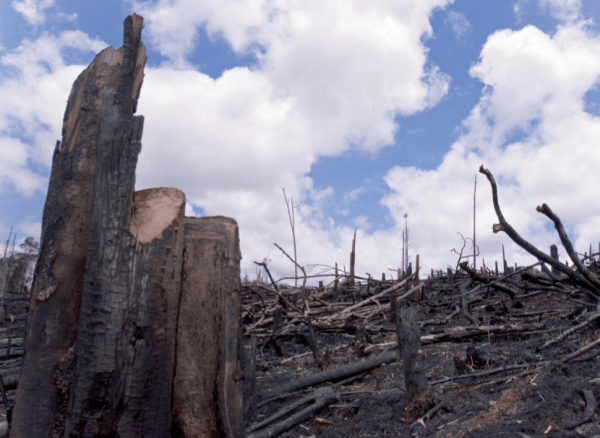
Around 50-60 permits for forest management, mining and even plantations which were issued by Papua’s two caretaker governors over the last two years are going to be revoked. “A caretaker governor does not have the authority to issue permits, their duty is only to prepare local elections to choose the definitive governor,” said Lukas Enembe, the Governor of Papua Province, on Friday 11th October 2013.
The election for the Governor of Papua Province was delayed for two years and during that time 60 forestry, mining and plantation companies received permits to start operations in Papua.
“In the end monopolies have arisen over natural resources, land and forests. The mechanism must be regulated so that no one company or corporate group has a monopoly. A caretaker does not have the right to do this., and so they have contravened the law. I have signed a document meaning that those companies can no longer operate in Papua.”
Last August, Enembe wrote to the Forestry Ministry calling for a halt to 13 of the 25 timber utilization permits from natural forests (IUPHHK-HA) that are currently in force in Papua , covering an area of 2,083,091 hectares.
The Governor will also evaluate 42 gold mining companies in Degeuwo, all of which are illegal. “Really we should already have intervened in this area. Although the Governor ha previously issued an instruction to shut the mines, but the regency governments haven’t carried it out. What’s going on there?” asked the Secretary of the Papuan Provincial Mining and Energy Agency, Fred Boray.
The Degeuwo mining area, which was first opened in 2002, is located across four government districts: Nabire, Paniai, Intan Jaya and Deiyai Regencies. There are currently 42 companies operating, but only six have permits.
Papua province covers an area of around 32,757,948 hectares, of which 31,738,931 hectares (97.89%) is land area. Land classified as production forest or limited production forest is around 10,700,567 hectares, and timber utilization permits have been issued for 4,989,783 hectares.
The governor has requested Regency leaders (bupatis) not to issue permits that will result in forest destruction. The reason is that damage to the forest will not bring any positive contribution to people’s lives. “For example, the oil palm plantations in Keerom Regency that are no longer productive. Because of that, I ask all the bupatis not to give out permits too freely, they should look at the seriousness of the investor,” said Enembe.
[awasMIFEE note: no info as yet which of the plantation permits are likely to be cancelled as a result of this decision. It is not expected that any of the MIFEE plantations will be affected. On the other hand, in Nabire, leader of the Yerisiam Tribe, Simon Petrus Hanebora welcomed the news, hoping that it would mean that PT Nabire Baru and PT Sariwana Unggul Mandiri would have their permits revoked. The two companies have been accused of illegally clearing the Yerisiam people’s ancestral land.]





 West Papua Media Alerts