Four killed in OTK shooting in Raja Ampat

English: Map (rough) of Raja Ampat islands, In...
English: Map of Raja Ampat islands, Papua (Photo credit: Wikipedia)


Tabloid Jubi


December 23, 2012


 Jayapura (23/12) – “Unknown Persons” (OTK) returned to action in the Land of Papua. This time the victims were seven fishermen in the district of Raja Ampat, West Papua. Four people were reportedly killed and three others injured by shooting from unknown assailants.
The Papua Police Head of Public Relations, Chief Sumerta I Gede Jaya, said the incident occurred on Thursday (20/12) at around 18:00 local time. However, Police only received a report on Sunday (23/12) because the shooting incident took place in a remote area, approximately 4 to 5 hour drive from Raja Ampat.
“I received a report from the Chief of Police Raja Ampat where, on Thursday (20/12) and then around 18:00 CEST, there has been a shooting incident on Papan Island, Waigama, Northern District of Misool in the Raja Ampat, on the north west tip of West Papua.   The victim is believed to be an artisan explosive fishermen. In addition to distance, the scene is also very remote, “said I Gede Sumerta Jaya, on Sunday (23/12).
According to Jaya, four people are reportedly killed and three others suffered gunshot wounds due to the shooting.  “The four people dead are La Tula (13), La Nuni (55), La Jake (30) and La Edi (20). While the three victims of gunshot wounds is La Amu (20), La Udin (30) and La Self (20),”  the police chief explained.
He added that until now the police are still investigating the shooter. “The  shooting perpetrator is still under investigation. Currently, police and military are working together to uncover the culprit, “said I Gede Sumerta Jaya.
He Amu, one of the victims, said while they were looking for fish around the Papan island, another boat suddenly opened fire on them with a rifle.    A barrage of bullets targeted their boats, on one of them was a small child. He Amu could not identify who issued the shot, but she said she saw four people in the boat who issued these shots.
At time of writing, the two fishermen who survived were undergoing treatment at the Intensive Care Unit at Sorong Hospital.  Both has sustained gunshot wounds in the hands and feet, and their condition remained unstable, weak, and scared. (Jubi / Arjuna)


Ruben Magay : KNPB is not a terrorist group

Tabloid Jubi

December 20, 2012

Jayapura (20/12) – Ruben Magay, Chairman of Committee A of the Papuan Legislative Council (DPRP), strongly insisted that it is not correct for certain parties to link the activities of the West Papua National Committee (KNPB) to terrorism.

“For quite some time now, some parties have referred to the KNPB as a terrorist organization but I wish to reiterate that KNPB is not a terrorist group.  On the contrary they are an organization which promotes democracy in Papua and that is part of the controlling function and the ability to evaluate the performance of the government in the region,” said Ruben Magay on Thursday (20/12).

According to him, if so far, for some reason, weapons, ammunition and explosives have been found in Papua, the task of the intelligence is to uncover and find out the origin and the source of this material.

“We question the efforts put into this matter by the intelligence. Where did they obtain those guns? It is really the task of the police and the intelligence to answer that question.  At the governmental and institutional levels we need to make sure that we clearly define the status of terrorist groups and prove with strong evidence how such groups plan and carry out their actions,” he said.

According to Chairman Ruben, enforcing anti-terrorism laws in Papua, as envisaged by the Indonesian National Police (Polri), is also unnecessary.

“I believe such measures should not be deemed as necessary. If it is said that there are terrorists in Papua, I think we should turn our attention to the level of performance of the security apparatus.  It would be wrong to address one issue with another issue.  There are terrorists that are known to be implicated in explosions. The question is now: to what extent is the police able to ascertain them and subsequently how many further threats can be identified. This is what is important,” he said.

He went on to say that it is not the people who talk about democracy that should be called terrorists; certainly not the people who were shot and whose actions were then put in such a scenario that later on it was stated that they were the terrorists. “No, that should absolutely not be the case.  For example, weapons and ammunition are being discovered in all kinds of places lately.  My question is: where did these guns come from?  It’s not as if we are talking about gold that can be panned by the local communities from underground.  So it would not be appropriate to apply these so-called anti-terrorism laws to Papua.  Let’s tackle this problem together in a responsible way and straighten out the issue of clarifying who the real owners are of these arms, ammunitions and explosives that were found in Papua.  It is obvious that the material was brought in from outside, so a first step would be to take measures to heighten the safety and tighten security checks at ports and airports.  That’s what is important,” said Ruben Magay. (Jubi/Arjuna/LT)


Without support, West Papua Media may have to close down in 2013

by West Papua Media eds

Supporter Request

December 23, 2012

Will you stand on the sideline, or will you help Independent Human Rights Journalism for West Papua grow in 2013?  

Friends and supporters of West Papua Media’s mission:
As the Western orgy of excessive spending and consumerism leaves full bellies but empty spirits for those lucky in the first world, independent human rights journalism projects look at the empty bank accounts and try to find pennies to hopefully continue to shine a preventative light on human rights abuses, and do what we can to give voice to the voiceless, and help them roar in West Papua.  This is the time of year when we do our sums, and see if the Editorial Team can afford to commit to another year of penury to provide robust and credible Independent journalism reporting on events, people, abuse and resistance in West Papua.

As you know, our work has been instrumental in putting West Papua into the mainstream media in 2012, including the unprecedented 7.30 Report coverage of the Densus 88 death squads.  Yet all of this has been funded by small and irregular donations from just a few people, and whilst deeply appreciated, we still have a massive shortfall coming out of personal income.  For every request of support, we perhaps receive 5% of the minimum we need to survive, if we are lucky.  Overall in 2012, we received less than 30% of our spend in private donations due to the lifesaving last-minute donations, but the rest came from our own pockets and personal loans.

We cannot continue this for much longer.  West Papua Media punches well above its weight, and certainly does it without foundational funding – we are entirely funded through volunteer donations.  We need to support our brave journalists and stringers inside Papua, we need to give them material support in terms of cameras, phones, and laptops, and phone cards for internet.  We need to pay for communications costs, equipment upkeep, websites, website registration, and now, we are also threatened with having our very name – westpapuamedia – taken away from us unless we renew a trademark.  That alone is $4000.  To cover our most basic costs we must operate a minimum budget of $2000 per month.  But we are lucky to get $300 per month in support – the rest comes from our pockets.

Do you support our mission?  Do you live in Australia – the richest country on Earth?  Do you want to see West Papuan people have their voice roar around the world?  Or do you want to sit by, while the last best chance for linking international journalists with the voice from the ground in Papua has to shut down because its Editors have spent every last cent on standing with a people?

West Papua Media may soon be forced to make a very difficult choice – to go offline at the most critical time when and where it is needed – because those who do all the work have no more money to pay for it.  From January 20, despite the need for us to stay online, if we do not have enough to pay for three months of operating costs, then you will see our homepage go blank.

Please help share the load, and help us grow for 2013.  Our mission has not changed, but our costs are going up.  We still wish to provide effective training to those who need it, to support the development of a robust free and independent media for West Papua – the basic cornerstone of a democratic society.

2012 Spend                                                                                            AUD$26,000

2012 income via donations:                                                               AUD$8375

The shortfall made up from West Papua Media editors’ personal contribution and personal loans is close to (measured) AUD$13,000, and the End 2012 debt still stands at $4500.

2013 Fundraising Goals

Yearly Survival mode (no journo support, no equipment; no training):

A$24,000

Yearly Effective mode (support for our journalists, 2 basic salaries; mirroring; equipment support; 2 effective training groups per annum): 

A$200,000

Are you going to help us approach the support we need to grow?

Crowdfunding campaign managers:  if you can help with your time, please get in contact with us as soon as possible at editor<@>westpapuamedia.info

You can donate via paypal by clicking on the link here  www.westpapuamedia.info/donate
Australian and European bank details are also here, but for international transfer details please email to info<@>westpapuamedia.info
European donations are also tax-deductible for EU residents.

Thank you for your support

Nick Chesterfield

Founding and Coordinating Editor

West Papua Media

Take Care of Our Rivers and Give Us Back our Land

Sawit Watch / SKP KAMe

Press Release

December 20, 2012

West Papua’s natural resources are being exploited by extractive industries, especially around Merauke. When it was launched in August 2010, the MIFEE mega-project was described as an initiative to meet the world’s food needs, a response to the world food crisis. As well as this, there are the current global concerns that the diminishing reserves of fossil fuel globally are bringing about a energy crisis.

https://i0.wp.com/sawitwatch.or.id/wp-content/uploads/2012/12/Sawit-Papua.jpg

With an area of over 1.2 million hectare earmarked for the project, the Merauke Regency Government hoped to turn Merauke into a centre of urban agriculture, agribusiness and agrotourism. Many companies welcomed the government’s offer and saw it as a great opportunity to expand their operations in eastern Indonesia. Merauke Regency’s Investment Planning Board (Badan Perencanaan Investasi Daerah or BAPINDA) has recorded that 46 companes have obtained permits, and some of which have already commenced operations. (data from Bapinda, September 2012).

The extent of concessions for large-scale oil-palm plantations in Indonesia currently exceeds 11.5 million hectares (Sawit Watch, 2011), stretching over all of Indonesia’s island groups both large and small, from Sabang at the westernmost tip of Aceh, to Merauke in South-East Papua.  The first palm-oil plantation in Merauke was started in 1997 by Pt Tunas Sawa Erma, a subsidiary of the Korindo Group. There are currently six oil palm plantation companies which have begun operations on Malind Anim land in Merauke: PT Dongin Prabhawa (Korindo Group), PT Bio Inti Agrindo (Korindo Group) [awasMIFEE note: PT Bio Inti Agrindo was actually bought by Daewoo International in 2011, and still belongs
to that company as far as we know], PT Central Cipta Murdaya (CCM), PT Agriprima Cipta Persada, PT Hardaya Sawit Papua and PT Berkat Citra Abadi (Korindo Group). Hundreds of thousands of hectares of indigenous people’s land will be appropriated, the forest destroyed and replaced with large-scale oil palm plantations.

Oil-palm plantations along the shores of the Bian and Maro Rivers have already brought serious problems for the indigenous people and clans that live in the area and own the land.  Oil-palm companies have been clearing land by burning, which has polluted water in the rivers and swamps, damaged and wiped out cultural sites and caused irreplaceable damage to the natural environment.  This is aggravated by a lack of information about companies’ status and plans, wrongful identification
of which clans own or have rights over which land, insufficient payment of compensation and deception and manipulation of data.  As a result the clans and tribes living along the Maro and Bian rivers have been dispossessed of their customary lands.

On the 31st July2011, 13 civil society organisations signed and delivered a letter to the UN Committee on the Elimination of Racial Discriminaton (CERD), accusing the MIFEE Mega-Project of bringing about the destruction of indigenous societies in Papua and in Merauke in particular.  A response to this letter was received from Anwar Kemal, Chairperson of the Committee on the Elimnation of Racial Discrimination, on the 2nd September 2011.  It requested that the Indonesian Government, which became a party to the International Convention on the Elimination of All Forms of Racial Discrimination 1965 when it ratified Law number 29 of 1999, to give a swift response and clarification before 31st January 2012.   Until now, the government has still not given its response. The government is showing neglect and disregard and it’s not for the first time – previously in 2007 they had planned to fell the forest along the whole Indonesia-Malaysia border for oil palm plantations.

Seeing the conditions that indigenous communities in the villages along the Bian and Maro rivers are currently facing, with their land already allocated to large scale oil palm plantation concessions, we strongly advocate the following:

1. Companies must be responsible and make restorations, as well as giving compensation to people living along the Bian River as far as Kaptel and the Maro River for the environmental damage and pollution caused by oil palm plantation operations.

2. The government must carry out a review and evaluation of the permits which have been given to oil palm plantations on indigenous land belonging to the clans and tribes which live in Merauke Regency, revoke and cancel location permits and withdraw all commercial cultivation rights from customary lands in Merauke Regency.

3. The government must stop issuing new permits in Merauke Regency before all current problems are resolved, as well as repairing the damage that has already been done to the various communities.

4. As a party which has ratified the International Convention on the Elimination of All Forms of Racial Discrimination 1965 through Law number 29 of 1999, the government must immediately respond to the Chairperson of the Committee on the Elimination of Racial Discrimination Anwar Kemal’s letter dated 2nd  September 2011 (which was a response to the concerns raised to the UN CERD on 31st July 2011).

Source: Sawit Watch http://sawitwatch.or.id/2012/12/1047/
Translated and posted on awasMIFEE: https://awasmifee.potager.org/?p=302

West Papua Political Prisoner Dominikus Sorabut amongst writers honoured for commitment to Free Expression

English: Human Rights Watch logo Русский: Лого...

From Human Rights Watch

http://www.hrw.org/node/112138

41 Facing Persecution Win Hellman/Hammett Grants

December 20, 2012 (WEST PAPUAN POLITICAL PRISONER DOMINIKUS SORABUT AMONGST WINNERS – SEE BELOW)
(New York) – Forty-one writers from 19 countries have received 2012 Hellman/Hammett grants for their commitment to free expression and their courage in the face of persecution.The award-winners have faced persecution for their work, generally by government authorities seeking to prevent them from publishing information and opinions.  Those honored include journalists, bloggers, essayists, novelists, poets, and playwrights. They also represent numerous other writers worldwide whose personal and professional lives are disrupted by repressive policies to control speech and publications.

“The Hellman/Hammett grants help writers who have suffered because they published information or expressed ideas that criticize or offend people in power,” said Lawrence Moss, coordinator of the Hellman/Hammett grant program at Human Rights Watch. “Many of the writers honored by these grants share a common purpose with Human Rights Watch: to protect the rights of vulnerable people by shining a light on abuses and building pressure for change.”

Governments have used arbitrary arrest and detention, politically motivated criminal charges, and overly broad libel and sedition laws to try to silence this year’s Hellman/Hammett awardees. They have been harassed, threatened, assaulted, indicted, jailed on trumped-up charges, or tortured for peacefully expressing their views or informing the public. When abusive governments target writers, it intimidates others to practice self-censorship.
Free expression is a central human right, enshrined in article 19 of the Universal Declaration of Human Rights, which declares that “everyone has the right to freedom of opinion and expression; this right includes freedom to hold opinions without interference and to seek, receive, and impart information and ideas through any media and regardless of frontiers.” On July 21, 2011, the Human Rights Committee, the expert body established under the International Covenant on Civil and Political Rights, reiterated the central importance of freedom of opinion and expression, stating that these freedoms “are indispensable conditions for the full development of the person. They are essential for any society. They constitute the foundation stone for every free and democratic society.”

The Hellman/Hammett grants are given annually to writers around the world who have been targets of political persecution or human rights abuses. A distinguished selection committee awards the cash grants to honor and assist writers whose work and activities have been suppressed by repressive government policies.

The grants are named for the American playwright Lillian Hellman and her longtime companion, the novelist Dashiell Hammett. Both were both questioned by US congressional committees about their political beliefs and affiliations during the aggressive anti-communist investigations inspired by Sen. Joseph McCarthy in the 1950s.  Hellman suffered professionally and had trouble finding work. Hammett spent time in prison.

In 1989, the trustees appointed in Hellman’s will asked Human Rights Watch to devise a program to help writers who were targeted for expressing views that their governments oppose, for criticizing government officials or actions, or for writing about subjects that their governments did not want reported.

Over the past 23 years, more than 750 writers from 92 countries have received Hellman/Hammett grants of up to US$10,000 each, totaling more than $3 million. The program also gives small emergency grants to writers who have an urgent need to leave their country or who need immediate medical treatment after serving prison terms or enduring torture.

Of the 41 winners this year, six remain anonymous to prevent further persecution. A list and brief biographies of the award-winners, including just the countries of the anonymous grantees, is below.

A concentration of grantees in certain countries points to especially severe repression of free expression by those governments. Twelve of this year’s grantees come from the People’s Republic of China; four of them are Tibetan and remain anonymous for security reasons. Five grantees are from Vietnam, four from Ethiopia, and three from Iran.

“The compelling stories of the Hellman/Hammett winners illustrate the danger to journalists and writers around the world,” Moss said.

2012 Hellman/Hammett Awardees (Full list at http://www.hrw.org/node/112138 )

Dominikus Sorabut (Indonesia/Papua)

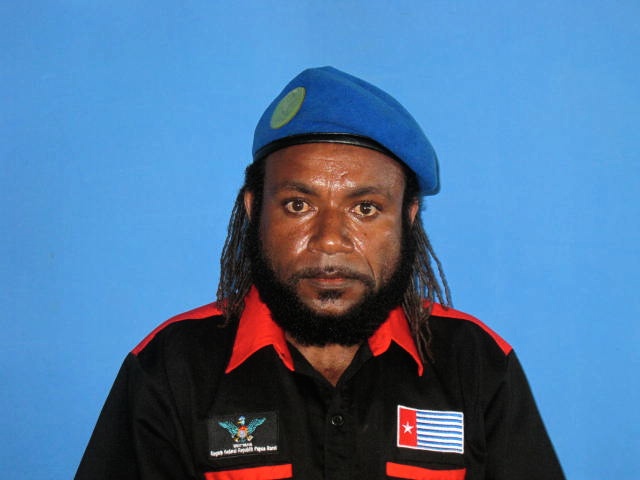
Dominikus Sorabut (photo: PW/West Papua Media)

Dominikus Sorabut is a Papuan activist who also produced a number of film documentaries on issues such as deforestation, illegal mining, and Indonesian government efforts to eradicate Melanesian Papuan cultures. In 2010, he interviewed a Papuan farmer who was tortured by Indonesian soldiers, helping to provide international exposure of torture and suffering of the farmers. Sorabut has written several op-ed articles and a number of book manuscripts on the Papuan people. While attending a peaceful demonstration for Papuan independence in October 2011, Sorabut was arrested when Indonesian police and soldiers fired into the crowd and detained more than 300 protesters. Sorabut was convicted of treason along with four other Papuan figures and sentenced to three years in prison. He is in the Abepura prison in Jayapura, Papua.

Create a website or blog at WordPress.com

Up ↑