
This is the 105th in a series of monthly reports that focus on developments affecting Papuans. This series is produced by the non-profit West Papua Advocacy Team (WPAT) drawing on media accounts, other NGO assessments, and analysis and reporting from sources within West Papua. This report is co-published with the East Timor and Indonesia Action Network (ETAN). Back issues are posted online at http://www.etan.org/issues/wpapua/default.htm Questions regarding this report can be addressed to Edmund McWilliams at edmcw@msn.com. If you wish to receive the report directly via e-mail, send a note to etan@etan.org. For additional news on West Papua see the reg.westpapua listserv archive or on Twitter.
WPAT Note: With the October 2012 edition, West Papua Report changed format: The Report now leads with “Perspective,” an opinion piece; followed by “Update,” a summary of some developments during the covered period; and then “Chronicle” which lists of statements, new resources, appeals and action alerts related to West Papua. Anyone interested in contributing a “Perspective” or responding to one should write to edmcw@msn.com. The opinions expressed in Perspectives are the author’s and not necessarily those of WPAT or ETAN.
See also West Papua Advocacy Team Urges Unrestricted Visit by UN Special Rapporteur
CONTENTS
This edition’s PERSPECTIVE discusses Indonesian presidential aspirant Lt. General (ret) Prabowo dark role in West Papua’s past. In the UPDATE section, we review the Indonesian security forces’ expanding campaign of violence targeting self-determination advocates associated with the West Papua National Committee (KNPB). We also summarize the implications for human rights of the proposed new “anti-terrorism” law and describe the continuing destruction of pristine forests throughout the Indonesian archipelago. In CHRONICLE: a new Asian Human Rights Commission “alert” about police violence in West Papua, a report by the Alliance of Independent Journalists regarding the rise of threats and violence against journalists, and the Australia West Papua Association Sydney’s review of human rights developments in West Papua. This edition also highlights a critique of the Merauke Integrated Food and Energy Estate project (MIFEE) by Indigenous Peoples Organization of Bian Enim.
“PERSPECTIVE”>PERSPECTIVE
Prabowo and Papua
by Edmund McWilliams
WPAT’s Edmund McWilliams is a retired U.S. Foreign Service Officer who served as the Political Counselor at the U.S. Embassy in Jakarta. 1996-1999. He worked closely with sources cited in the following account.
The list of likely candidates in the Indonesia’s 2014 Presidential election includes Lt. General (ret) Prabowo Subianto, leader of the “Great Indonesian Movement Party” (Gerinda). His candidacy has generated concern over the future of democracy in Indonesia, because of the retired General’s well-documented record of human rights violations and his admitted role in a coup attempt.
 Prabowo, was forced out of the Indonesian army in August 1998 following revelations of his role in the kidnapping, torture and murder of peaceful democratic activists in 1997-98 and due to his apparent central role in sparking May 14, 1998 anti-Chinese riots in Jakarta and several other major urban areas. Prabowo has confessed his role in the kidnappings, but told foreign journalists that his “conscience is clear.” In 2000, Prabowo became the first person to be denied entry into the United States under the UN Convention against Torture and other Cruel, Inhuman or Degrading Treatment or Punishment.
Robert Gelbard, former United States Ambassador to Indonesia, described Prabowo as “somebody who is perhaps the greatest violator of human rights in contemporary times among the Indonesian military. His deeds in the late 90s before democracy took hold, were shocking, even by TNI standards.”
Prabowo’s rapid rise to power was based on nepotism. He married the dictator Suharto’s youngest daughter, Titiek Suharto. Prabowo’s father, Sumitro Djojohadikusumo, was a cabinet minister under both President Sukarno and Suharto. Although, he financed an armed rebellion against President Sukarno in 1957-58. His son’s career also benefited from close ties to the United States military, which trained him in the U.S. and provided the forces he commanded special training and access to U.S. military technology.
Prabowo’s military record, early on, demonstrated a disregard for human rights. In 1976, Prabowo was a commander of Group 1 Komando Pasukan Sandhi Yudha and took part in the Indonesian army’s Nanggala Operation in East Timor. He led the mission to track down Nicolau dos Reis Lobato, a founder and vice president of Fretilin, who became the first Prime Minister of East Timor after the declaration of independence in November 1975. Lobato – who had become East Timor’s second President – was shot in the stomach and killed after Prabowo’s company found him on 31 December 1977. The Indonesian military reportedly decapitated the body and sent Lobato’s head to Jakarta.
Prabowo was appointed vice commander of Kopassus’s Detachment 81 in 1983 before receiving commando training at Fort Benning, GA, in the U.S. As commander of Kopassus Group 3, Prabowo attempted to crush the East Timorese independence movement. To terrorize the population, he employed militias trained and directed by Kopassus commanders and hooded “ninja” gangs, who operated at night dressed in black. In East Timor, Prabowo “developed his reputation as the military’s most ruthless field commander. [1]
|
Prabowo is “somebody who is perhaps the greatest violator of human rights in contemporary times among the Indonesian military.” |
While Prabowo’s notorious reputation is based, to a significant extent, on his 1998 anti-democratic and inhumane exploits and his role as a butcher in East Timor, less is known of the key role he played in West Papua. In 1996, Prabowo led the Mapenduma Operation to secure the release of 12 researchers from the World Wildlife Fund’s Lorentz expedition taken hostage by the OPM several months earlier. While five of the researchers were Indonesian, the others were English, Dutch and German. The presence of Europeans among those abducted drew international attention to the obscure struggle for self-determination in West Papua.
Prabowo seized upon the crisis as a means to enhance his reputation domestically and with the international community. He devised a plan whereby the hostages would be released via negotiations between himself and their captors. After lengthy negotiations mediated by the local office of the International Committee of the Red Cross (ICRC), the OPM commander Kelly Kwalik agreed to turn over all hostages in exchange for a military promise of no reprisals and an ICRC pledge to establish a network of health clinics in the remote Mapenduma area. The deal fell through at the last minute.
The Indonesian military’s version of events, quickly accepted by Jakarta-based embassies which were monitoring developments, was that Kwalik had had an inexplicable “change of heart” and had fled the village of Geselema where the transfer of hostages was to take place. There followed a clumsy Indonesian military attack on the village (already evacuated by Kwalik) which killed up to eight civilians. The foreign hostages eventually escaped their captors and reached Indonesian military encampments.
However, in separate interviews with the author of this article, the two most senior ICRC officials provided an entirely different account of events. On the eve of the transfer, the senior ICRC official involved in the negotiations was summoned by Prabowo to his military headquarters in West Papua. There, an enraged Prabowo told the ICRC official that Suharto’s elder daughter, “Tutut,” was planning to fly to West Papua the following day to officiate at the hostage transfer in her capacity as Indonesian Red Crescent chairperson. This, Prabowo told the ICRC official, would rob him of the credit for the hostage rescue. Prabowo pressed the ICRC official to telephone Jakarta and press for Tutut to abort her mission. The ICRC official made the call but learned that Tutut was already enroute. Prabowo, according the two ICRC senior officials who spoke with this author, then moved to scuttle the transfer. This was done by conveying to Kwalik through a source Kwalik trusted that the Indonesian military had been acting in bad faith all along and would immediately target Kwalik and his personnel once the transfer had taken place. This, the ICRC officials claimed, was the reason for Kwalik’s last minute “change of heart.”
|
The aborted hostage transfer led to a brutal campaign of reprisal attacks by the Indonesian military (largely Kopassus) against highland villages thought to be sympathetic to the OPM. |
The aborted hostage transfer led to a brutal campaign of reprisal attacks by the Indonesian military (largely Kopassus) against highland villages thought to be sympathetic to the OPM. The campaign began with the assault on tGeselema using an Indonesian military helicopter disguised to look like the helicopter that ICRC mediators had been using for several months. The ICRC officials told the author that the disguised helicopter and the use of the Red Cross insignia constituted a “perfidy” about which the ICRC could have protested, but did not. The consequence was to so damage the reputation of the ICRC with Papuans as to limit its effectiveness in West Papua for many years. (The Indonesian government subsequently forced the ICRC to close its office in Jayapura, an action unrelated to the Geselema affair.)
The reprisal campaign executed by Prabowo and Kopassus represents only a portion of Prabowo’s long record of involvement in West Papua, but is perhaps among the most important considerations for Papuans as they consider the prospect of a Prabowo presidency.
[1] Joseph Nevins, A Not-So Distant Horror, Mass Violence in East Timor, Cornell University Press, 2005. p. 61
Indonesian Security Forces Broaden Campaign Targeting Peaceful Papuan Dissidents
The December 17 Sydney Morning Herald reports that as 2012 drew to a close at least 22 Papuans associated with the West Papua National Committee (KNPB) had been murdered by Indonesian state security forces. Indonesian military and the so-called “anti-terrorist” Detachment 88 are leading perpetrators of this violence. Three KNPB members are missing and seven are detained. Over 200 Papuans with ties to the organization have been detained but later released, often after brutal treatment. The detain-and-release tactic is part of a broader strategy to intimidate Papuans who speak out in defense of their rights. The KNPB has drawn special attention by security forces because of its growing appeal and its blunt call for Papuan self determination.
J. Ruben Magay, Chairman of Committee A of the Papuan Legislative Council (DPRP), told Papuan media on December 20 that it is incorrect to link the activities of the West Papua National Committee (KNPB) to terrorism. “For quite some time now, some parties have referred to the KNPB as a terrorist organization but I wish to reiterate that KNPB is not a terrorist group. On the contrary they are an organization which promotes democracy in Papua and that is part of the controlling function and the ability to evaluate the performance of the government in the region,” Magay said.
“If it is said that there are terrorists in Papua, I think we should turn our attention to the level of performance of the security apparatus. It would be wrong to address one issue with another issue. There are terrorists that are known to be implicated in explosions. The question is now to what extent is the police able to ascertain them and subsequently how many further threats can be identified. This is what is important,” he said.
It would appear that the national police (POLRI) concur that the KNPB does not constitute a “terrorist threat. Responding to concern that the police would employ anti-terror legislation broadly against peaceful dissidents such as the KNPB. Papua Police chief Insp. Gen. Tito Karnavian told media in late December that he could “ensure that we have no cases of criminals hiding behind the [Papuan] freedom movement.”
National Police Join Military in More Militant Approach in West Papua
National Police Criminal Investigation Division chief Commander Gen. Sutarman told media on December 18 that the police would employ the Antiterrorism Law No.15/2003 to deal with individuals or groups which he contended were “terrorizing” people in Papua, including those attacking police stations. Sutarman said the decision to use the law has nothing to do with the burgeoning separatist movement.
|
“We, Papuans, are not terrorists. I regret the decision to even think of using that law to respond to local violence. Even without that law, the police already treat Papuans as terrorists. Can you imagine what they would do with the [anti-terrorism] law?” |
Catholic priest John Jonga warned that security personnel would take use of the law as license to use violence against Papuans in the name of counterterrorism. “We, Papuans, are not terrorists. I regret the decision to even think of using that law to respond to local violence. Even without that law, the police already treat Papuans as terrorists. Can you imagine what they would do with the law?”
Poengky Indarti of Imparsial suggested that the plan for the Antiterrorism Law in Papua, could heighten the already tense atmosphere in the province. “The law doesn’t provide a clear definition of terrorism. The police could interpret it subjectively and use it for their own purposes.”
Indonesian Military Shoot Seven Civilians, Killing Four
The Indonesian military shot seven Papuan fisherman near Pulau Papan District in West Papua, killing four, according to a December 28, 2012 report in Bintang Papua (translated by TAPOL). It is unclear why the men were shot and one solider is being questioned by the military police. The bodies of the four were under water for almost a week.
The South Sulawesi Families Association called on the military command to make a statement, but the military have as yet failed to clarify what happened. A spokesman of the association said that they were trying find other victims of the shooting.
Deforestation Continues at Rapid Pace
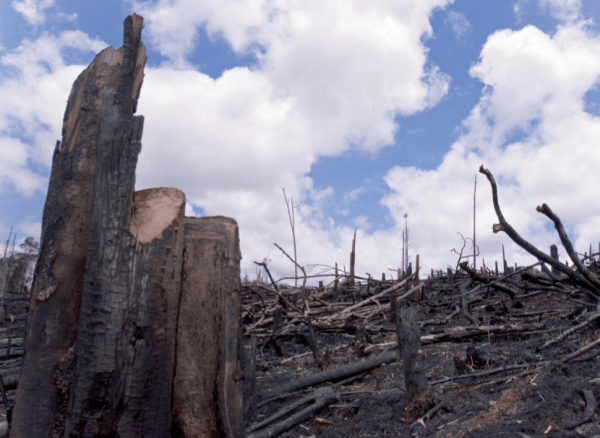
Latest Indonesian Forestry Ministry figures put the area of remaining primary rainforest in the Indonesian archipelago at less than half of the 130 million hectares of land the ministry currently defines as forest, with most of the remaining pristine rainforests in West Papua. Very little is left in Sumatra and Kalimantan. More than a third of Sumatra’s forests have been destroyed over the last 20 years. Recent expansion in Kalimantan has pushed deforestation rates to rival those recorded in Sumatra. Extractive industries are now targeting the largest remaining tracts of pristine rainforests in Papua.
Indonesian Security Forces Have Killed A Peaceful Activist in Custody
The Asian Human Rights Commission on December 21 issued an “urgent appeal” regarding the killing of a pro-independence Papuan activist while in custody and the wounding of a second. Reportedly, members of the infamous Detachment 88 shot both Hubertus Mabel and Natalis Alua, in Milima, Kurulu District on December 16. Hubertus Mabel was killed and Natalis Alua injured. The killing followed the arrest and interrogation at gun point of three other members of West Papua National Committee (Komite Nasional Papua Barat, KNPB) named Simeon Daby, Meki Kogoya and Wene Helakombo on December 15, 2012. Security officials forced the three KNPB members to lure Mabel and Alua to a fatal meeting at which Detachment 88 personnel fired on Mabel and Alua after they had been detained and were lying on the ground. Mabel was also stabbed in the chest.<
Locals Critique MIFEE Project
The Indigenous Peoples Organization of Bian Enim on December 21 released a powerful indictment of the impact of the Indonesian government’s MIFEE (the Merauke Integrated Food and Energy Estate) project. The report highlights the environmental pollution and the failure to involve clan leaders in the planning. The organization demands include and end to the usurpation of private land and compensation for damage already caused.
The Alliance of Independent Journalists Reports Violence and Intimidation of Journalists on The Rise in Papua
The Alliance of Independent Journalists (AJI) recorded twelve cases of violence and intimidation against journalists Papua during 2012. A significant increase as compared with 2011, when there were seven cases. The great majority of the cases involved physical abuse and intimidation by Indonesian security forces and other members of the Indonesian administration. In two instances the KNPB was implicated in the intimidation of journalists.
Eben Kirksey on West Papua
WPAT co-founder Dr. Eben Kirksey, author of Freedom in Entangled Worlds: West Papua and the Architecture of Global Power, recently published an article in the Huffington Post on developments in West Papua.
AWPA Sydney Produces West Papua Human Rights Review
The Australian West Papua Association Sydney has produced a detailed and comprehensive review of human rights developments in West Papua for 2012. The report details incidents of human rights abuses in the past year and in particular looks at the crackdown on the KNPB. The report offers recommendations to the Australian and Indonesian governments, and the leaders of the Micronesia Spearhead Group and Pacific Islands Forum.
Link to this issue: http://etan.org/issues/wpapua/2013/1301wpap.htm
Related articles
- West Papua Advocacy Team Urges Unrestricted Visit by UN Special Rapporteur (westpapuamedia.info)
- West Papua Report December 2012 (westpapuamedia.info)
- UK Embassy denies fake journalism in Bintang Papua article (westpapuamedia.info)
- Paniai villages reportedly razed as Densus 88 resumes sweep operations in search of TPN’s Jhon Yogi (westpapuamedia.info)
- Victor Yeimo: 22 Members of KNPB killed in 2012 (westpapuamedia.info)
- KNPPB A Rival Organization Created By Indonesia To Compete With KNPB (westpapuamedia.info)
- Wewak PNG turns out in numbers to support West Papua (westpapuamedia.info)
- AMP Yogyakarta holds silent protest commemorating Operation Trikora invasion of Papua. (westpapuamedia.info)
- Breaking News: Knpb Leader Victor Yeimo Among Arrests on December 1 Flagraising Day (westpapuamedia.info)





 West Papua Media Alerts