EXCLUSIVE REPORT FROM WEST PAPUA MEDIA
21 December 2011
Alex Rayfield
Human Rights Defenders in West Papua accuse the Australian Government and an Australian-owned mining company, Paniai Gold, of being involved in ongoing military operations in Paniai, West Papua.
Mr Ferry Marisan alleges that the Australian-trained Indonesian counter-terrorism unit Detachment 88 (also known as Densus 88 or D88), is involved in ongoing military operations in Paniai. According to Marisan, the Director of Elsham Papua, the Institute for the Study and Advocacy of Human Rights in West Papua, the joint police and military D88 have been embedded in the Second “Coconut” (Kelapa Dua) paramilitary Police Force (Brimob) sent from West Java for military operations against suspected members of the West Papua Liberation Army (or TPN), based at Eduda, Paniai.
According to Mr Yones Douw, a human rights defender based in Paniai, D88 are currently being deployed against members of the TPN in a jungle warfare operation. John Yogi – the Paniai based commander of the TPN – and his men, believed to number a few dozen, fled into the jungle following an attack on his base in Eduda by the Indonesian military and police between the 12-15 December.
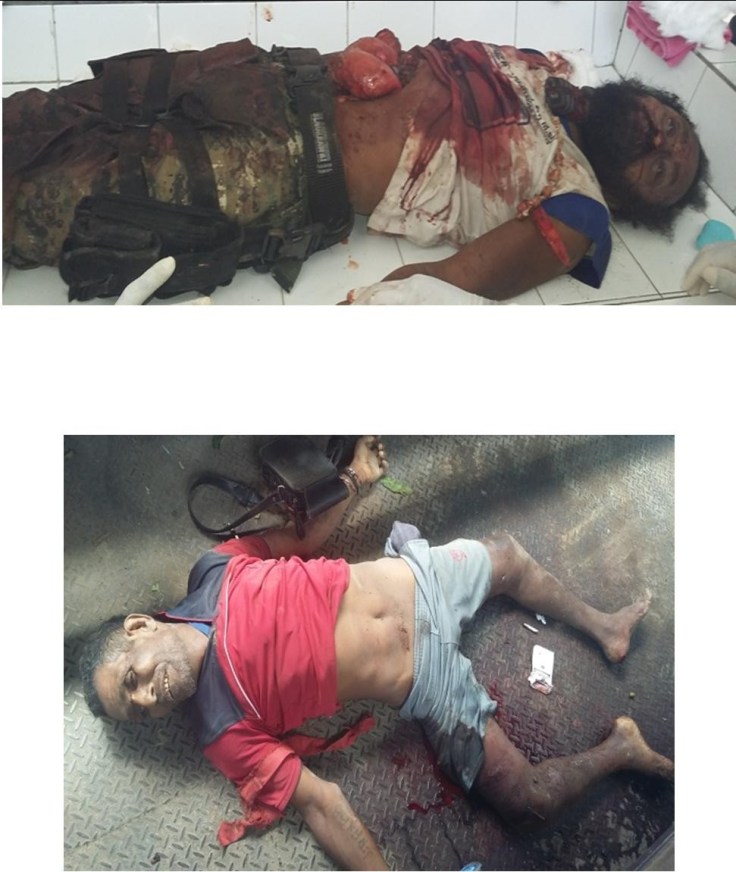
Marisan says that in total 30 people have died during the latest round of violence in Paniai Seventeen people were shot dead during the military operations in Eduda. Only ten of these victims were members of the TPN, according to Marisan. Between the 9th and 14th of December a further three people died, all from exposure related sickness. Amongst the dead were two children aged two and four. Prior to the military operations Brimob also shot dead eight Papuans. Yogi’s men responded by killing two Brimob soldiers, an event that triggered the recent military operations.
In addition Elsham Papua reports that the following six villages were burnt to the ground: Toko, Badawo, Dogouto, Obayoweta, Dey, and Wamanik. As a result of the violence Marisan says that up to 20,000 people have fled their homes. ”They are living in government care centres, or staying with family and friends. Many have also fled to the forest” says Marisan.
SBS Radio reported that a spokesperson from the Department of Foreign Affairs and Trade says that the “Australian Government does not train or fund Indonesia’s security forces to counter separatism.”
Irrespective of the training that both the Australian and U.S government’s say they provide to D88 , both Douw and Marisan claim that group is being used in military operations against so-called separatists. “Many of the victims in these operations” says Marisan, “are not members of the TPN, they are ordinary Papuan villagers who are supposed to be protected by the state”. D88 was also allegedly involved in the killing of six Papuans at the conclusion of the Third Papuan Congress on October 19.
D88 is not the only link between Australia and the recent wave of violence.
According to both Douw and Marisan, helicopters used at the Derewo River Gold (DRG) project were utilised by the Military and Police in these latest military operations. DRG is operated by Paniai Gold, a fully owned subsidiary of Melbourne based gold mining company West Wits Mining. A local source, requesting anonymity, told West Papua Media that the helicopters are those used by the mining company. “They are white with blue and red markings” the sources said. “They are defiantly mining company helicopters.”
The person responsible for Paniai Gold’s operations is Mr Vincent Savage, a Non-Executive Director of West Wits. According to publicly available company documents “Mr Savage has been intimately involved in all governmental and regulatory issues involving the Derewo River Gold Project as well as working closely with the Company’s local Indonesian partners.”
These same documents state that “security [for the DRG Project] will be provided by the local Paniai police and Brimob (Indonesian paramilitary police) under the supervision of a Company Security Officer”.
West Papua Media attempted to contact Mr Savage for comment, but he was not available.
The 2011 November-December military operations are not the first military operations in the area. Paniai was the scene of widespread military operations between 1963-1969, 1977-1978, and again in 1981-1982. During this period U.S. supplied Bronco aircraft were used to bomb villages while helicopters strafed Papuans with machine gun fire.
“People don’t forget these things easily” says Douw.
December 21, 2011 | Categories: Investigative Journalism, News alert, Story fixed by West Papua Media, Urgent Action | Tags: Australian military training, Brigade Mobil (Indonesia), brutality, Derewo River Gold, Detachment 88, Eduda, Impunity, indonesia, Indonesian National Armed Forces, Indonesian National Police, Indonesian State Violence, Paniai, Paniai Gold, TNI, tpn, village burnings, west papua, west papua media alerts, West Wits Mining | Leave A Comment »
SPECIAL REPORT AND UPDATE
by Nick Chesterfield at westpapuamedia.info
December 16, 2011
Harrowing accounts of terror and intimidation are emerging from villagers and human rights workers in the remote Paniai district in West Papua overnight, as a massive Indonesian military assault against National Liberation Army guerrillas continues.
Local human rights and church sources are reporting that ordinary villagers are being subjected to significant human rights abuses by a combined Indonesian police and military force, and have called for immediate international intervention in West Papua to stop the violence.
Over four full strength combat battalions of Indonesian army (TNI) Kostrad commandos from Battalion 753, Brimob paramilitary police, and elite counter-terrorism troops from Detachment 88 – all units armed, trained, and supplied by the Australian Government – were deployed in an offensive to surround the headquarters of the Paniai Free Papua National Liberation Army (TPN-OPM), under the command of General Jhon Yogi.

TPN/OPM headquarters Markas Eduda burning after TNI attack, 13/12/2011, Paniai, Papua

Paniai villages burning after TNI attack, 13/12/2011, Paniai, Papua

TPN/OPM headquarters Markas Eduda burning after TNI attack, 13/12/2011, Paniai, Papua
Punitive village burnings and raids are continuing in remote villages around the TPN/OPM headquarters of Markas Eduda. At the time of writing, seventy-five houses, six schools, and about 25 other buildings have been recorded as burnt down in a total of 27 villages by Indonesian security forces.
Eighteen people are now confirmed dead – fifteen from gunshot wounds, and three refugees who allegedly succumbed to starvation in the so-called care centres under the control of security forces. The victims’ names from the attack in Eduda are:
Dead:
- Tapupai Gobay (30) was shot in the chest.
- Tawe Bunai Awe (30) head crushed*.
- Uwi Gobay (35) was shot in the abdomen.
- Wate Nawipa (25) was shot in the back.
- Martinus Gobay (29) head crushed*.
- Owdei Yeimo (35) was shot in the back.
- Ruben Gobay (25) was shot in the abdomen.
- Paul Gobay (42) was shot in the abdomen.
- Bernadus Yogi (23) was shot in the chest.
- Demianus Yogi (15) was shot in the back.
- Simon Kogoya (40) was shot in the abdomen.
- Simon Yogi (30) was shot in the head.
- Luke Kudiai (25) was shot in the chest.
- Alfius Magai (20) head crushed*
Note: those with “head crushed” allegedly sustained these fatal injuries through severe beatings with rifle butts and “boot stamping”, according to sources
Wounded:
- Paschal Kudiai (15) hit by a bullet in the head.
- Martinus Kudiai (30) was shot in the hand.
- David Mote (40) was shot in the thigh.
- Amandus Kudiai (43) was shot in the arm.
- Yohan Yogi (21) was shot in the leg.
- Mon Yogi (20) was shot in the back.
Credible reports have also confirmed that two civilian “company” helicopters were provided to Security forces, and were allegedly used to drop live grenades and chemical dispersal weapons onto villages surrounding Eduda, and strafe villages with sniper and machine-gun fire on December 13, 14, and 15. Several independent witnesses have claimed to West Papua Media, and reported elsewhere across social media, that the helicopters are well known in the area for local non-military operations.

"Company" Helicopter alleged by local sources to be used in Indonesia security force offensive in Paniai. Source claims photo taken on Dec 13 aas helicopter was circling group. This photo is not independently verified, however analysis shows the image is consistent with independent witness descriptions, and the terrain and weather conditions are consistent with other photos supplied. (West Papua Media source)
Witnesses interviewed by local human rights workers have claimed that at 0800 local time on December 13, the Company helicopter launched CS gas salvos into the village of Markas Eduda, the TPN headquarters, to flush out villagers and guerrillas. According to a separate account sent to West Papua Media by TPN/OPM sources, the helicopters landed troops and occupied Eduda for most of the day, with guerrillas taking to forests in retreat. In retaliation, TPN/OPM fighters shot at the helicopters, unsuccessfully, and several hours of intense fighting ensued which was suspended when Free Papua fighters witnessed many village houses and schools being simultaneously burnt in the surrounding area. According to the TPN/OPM source, villages were set on fire around Eduda and gunshots were heard for the rest of the day and through the night. Free Papua fighters have retreated to the forest and are awaiting orders for their next moves, according to the source.
Villagers from across Paniai are continuing to be displaced by the operations, forced to flee en masse into areas around Enaratoli, on the opposite side of Lake Paniai. As reported on December 14 by West Papua Media, over 131 villages have been abandoned causing at least 10800 Paniai villagers to flee the military operations.
Church sources have further reported that refugees seeking shelter in the Enaratoli area are enduring worsening conditions without any relief. Armed Indonesian security forces have established a police supervised secure “Care Centre” at Uwatawogi Hall in Enaratoli, and have crammed into it 1715 people from Kopabutu and Dagouto villages. According to local activists in reports to West Papua Media, local residents are being threatened with arrest and beatings if they try to provide detainees with adequate humanitarian relief. Police are also preventing people held at the hall from leaving for food or sanitation needs, according to sources. At the time of writing, three people have died at the “care Centre” since December 9 from Diarrhoea. They are :
- OTOLINCEA DEGEI age 2 years , died 8:20pm, 9/12/11;
- YULIMINA GOBAI Age 4, died 3pm, 14/12/2011;
- ANNA DEGEI Age 47, died 1030pm, 14/12/2011.
No food, sanitation or medical aid has been made available by any government agency to give relief to this large number of internally displaced people.
Over 9000 refugees are either hiding in the forest or seeking shelter with their own extended families in the region area. Those with their families are considered safe, however their needs and conditions are difficult to monitor and assess given their isolation
Local teachers have also been in contact with West Papua Media’s stringers. Since 27 November 2011, teaching and learning activities have been suspended indefinitely in all village schools surrounding Markas Eduda. Schools such as SD YPPK in Badao Dei, Yimouto, and Obayauweta villages have been suspended, as has Primary, Junior High, “shop” (trade school) and Elementary Instruction in the towns of Dagouto, and Uwani. The students of these schools have been evacuated with their parents.
A teacher in junior YPPGI Uwani said while repression was occurring in the villages that: “For while we have closed the schools, because school children are frightened and fled with their parents. In addition, we as teachers do not feel safe to make teaching and learning activities. All the teachers have fled Paniai district, and to Nabire. “
On December 15, the army / police battalions have returned to the villages of Uwamani, Dei and Obaipugaida to prepare a major attack for a new phase of the campaign. It is believed strongly by local activists that the “company” helicopter will still be used in addition to Unconfirmed reports have been received by West Papua Mediathat the Indonesian arsenal against civilians in Paniai includes one Mil Mi-24 SuperHind gunship, one of two usually stationed near Jayapura.

650 Kostrad troops from Battalion 142 being deployed from Palembang to Paniai in Papua, boarding their troop ship on December 9, 2011
West Papua National Committee (KNPB) activists in Paniai reported on December 15 that after the assaults on villages, the Indonesian military forces are now arresting, intimidating and carrying out interrogation on all residents across the districts of Toko, Kopabaida and Uwamani. According the KNPB, Indonesian police have arrested scores of children and adults, and are conducting brutal and physical interrogations and questioning from 11.00 am until the end of the day
The offensive was ongoing throughout December 15, with Indonesian security forces opening fire in many locations around Eduda. Overnight, from 0200 to 0600, heavy gunfire erupted across the Degeuwo River valley. Human rights sources in villages and also with refugees conveyed reports that people were being shot at by snipers if they were moving anywhere after dark, even to collect, food, water, or to secure pigs. It is not known how many people were killed during the night, but local source are expecting the toll to rise.
According to a report provided tonight by a local pilot, Indonesian security forces shot eleven times into houses in the village of Gekoo, where mourners were gathering for a the funeral of a local man who died from illness. Villagers alleged that some bullets even landed in their cooking fires, exploding their food pots.
Witnesses reported a series of helicopter raids from 11am on December 15, with helicopters being used to machine-gun the villages of Obaiyepa and Uwaman. Human rights workers have been unable to access these areas to see if any casualties were sustained.

Unidentified village burnt down 13, dec 2011, near Eduda, Paniai
Helicopters landed at Eduda ceremony ground 11 times from 11:00 to 13:00 hours, and residents suspect logistics, ammunition and additional forces were being deployed.
The area around Paniai has been long subject to conflict and heavy Indonesian military offensives against civilians, however in recent months the Indonesian police have taken charge of punitive operations against West Papuans harbouring pro-independence sympathies. The conflict has recently escalated over land rights and the control of local gold mining operations, with Brimob deeply involved in both joint venture security, and direct involvement in gold businesses and associated activities. The Australian gold mining company Paniai Gold is also operating in the Degeuwo River region.

Indonesian soldiers in Paniai, December 2011
Civilians in the foothills are in panic and reliving the trauma of past operations, according to the report from a local pilot. “They are concerned emotions again will open in Wegeuto of the 1982 war Memoria Passionis (memory of suffering) and again when the Army conducted ongoing military operations (DOM – Daerah Operasi Militer) from 1989-1993 across the Badauwo area, near Eduda, ” the source said via email. He explained that during the last DOM period the army accused and stigmatised civilians as being members of the TPN-OPM, and subsequently tortured thousands of villagers. Human rights sources at the time documented villagers being waterboarded / tortured for 24 hours; residents’ houses burned, raped girls and married women, extrajudicial killings, burning off fingers, moustaches and beards, pulling fingernails and quartering villagers with armoured vehicles. Troops also conducted burning and destroying food gardens, killing livestock and pets, and fouling water supplies.
Residents are concerned that the current angry and emotional behaviour by the TNI-police toward TPN / OPM will be vented on civilians living on the slope of the hamlet Wegeuto especially, directly adjacent to Markas Eduda. In a message delivered to West Papua Media local villagers have pleaded for International Advocacy to get Military and Police immediately withdrawn from Eduda and Paniai in general.
Much trauma is being felt by civilians across Paniai as a result of the offensive. Independent journalist Sonny Dogopia, from Papuan Voices , interviewed local villagers by telephone on December 14. Magda Tekege, a housewife from Deiyai District, said civil society is very scared and depressed. ” Here also TNI / Police beat us and put us under surveillance, and are one full alert status, ” she explained. Deiyai Magda called the situation unusual , “this is probably due to invasion by TNI / police in Paniai, therefore Deiyai also suffer the effects.”
Reports from Tuesday described the exercises that the Australian trained, funded and armed Brimob Gegana unit, upon arriving in Enaratoli proceeded to take over the streets immediately, causing normal town life to be immediately disrupted as local people emptied the streets to hide.
On December 6, Human rights, church sources and local activists had independently claimed that 542 people have been forcibly evacuated by troops from the Special Gegana Brimob “Counter” terrorist police unit. The villages of Dagouto and Kopabatu and surrounding hamlets in the Dagoutu Paniai district were evicted after the Gegana unit decided it wanted to expand a new headquarters facility to deploy in the offensive against Jhon Yogi, the local leader of the armed guerrilla unit of the National Liberation Army (TPN-OPM).
The Gegana unit, a specialised elite anti-terrorist unit of the Indonesian police has been deployed heavily across Papua to crackdown on pro-independence activists engaged in non-violent resistance, as well as to eliminate the armed struggle groups. Gegana is one of several elite Indonesian police units that receives arms, funding, and training from the Australian Government, and was blamed on December 3 for burning down a church and school in Wandenggobak, in the highland regency of Puncak Jaya.
As this article was going to press, an update was received from a trusted human rights worker in Paniai. “At 2300 in the evening, Brimob Coconut Battalion 2 burned down buildings of Paniai Districts’ tourism assets, located in Bukit Dupia, in the same location as the Regent’s residence. This evening in Paniai the situation is very tense”. TPN fighters reportedly have returned fire on the attack and heavy fighting is still occurring,
The situation is ongoing and developing and West Papua Media will continue to closely monitor events.
Please urgently help us continue this work. @westpapuamedia ia working tirelessly to end impunity in Papua with effective journalism. But we need your help – PLEASE DONATE NOW wp.me/P1aPlR-116
December 16, 2011 | Categories: News alert, Urgent Action, Story fixed by West Papua Media, Investigative Journalism | Tags: Australian military training, brutality, colonialism, Detachment 88, genocide, human rights, Impunity, indonesia, Indonesian State Violence, Kopassus, Kostrad, POLRI, TNI, village burnings, west papua, west papua media alerts, Indonesian National Armed Forces, Papua, Indonesian National Police, Paniai, Gegana, Brigade Mobil (Indonesia), West Papua Media, Government of Australia | 19 Comments »
“….But violations will be dealt with”
Bintang Papua, 7 December 2011
Jayapura: Activities that are conducted by people, such as freedom of
assembly and the expression of opinion or aspirations such as pro-independence for West Papua (‘M’) which are being promoted by some
West Papuan people are guaranteed under the law, said the Chief of
Police Police-General Drs Timur Pradopo, speaking after participating
in a dialogue with stakeholders about accelerating development in West Papua at the office of the governor of Papua.
He went on to say that if this freedom of assembly and talking about
independence aspirations are done in ways that violate the law, it is the responsibility of the police to enforce the law. Nevertheless,
before the law is enforced, certain steps need to be taken. If, for
example, the persons who assemble wish to present their views, it is up to the police at the local level (Polsek) or the regional level (Polres), backed by the regional police chief along with the rest of society and religious leaders, to take action for their protection but they should not act in violation of the law.
‘This is what is always done by police officers in Papua (Polda, Polres, Polsek), so as to safeguard the activities of each side.’
He said any violation of the law will be dealt with by the police. And furthermore, action will be taken against police officers who violate the law, such as maltreating people in the community.
He went on to say that if anyone feels that they have been harmed by the presence of the police, this should immediately be reported, along with facts and data, and there will be a response from Polsek, Polres, Polda or even the chief of police (Kapolri) will deal with the matter when the law has been violated.
‘No one is immune, including police officers.’
Asked whether there could be an increase in the number of police, taking into account the current security situation in Papua, the police chief said that there is no plan in the coming days for the number of police to be increased But what is being done is enforcement of the law.
‘It is the task of the police to preserve a situation of security in
Papua and this should be done in a proper way in order to ensure that
the plans for development and activities by the people can proceed smoothly.
[COMMENT: A shift towards greater leniency seems to be in the air]
[Translated by TAPOL]
December 9, 2011 | Categories: News alert, syndication | Tags: brutality, civil resistance, Human Rights and Liberties, Impunity, indonesia, Indonesian National Police, Indonesian State Violence, Jayapura, Makar, nonviolent action, Papua, Papuan people, Rebellion/Subversion charges, right of free expression, west papua | Leave A Comment »
Human Rights Day, December 10, 2011
On the occasion of the International Human Rights Day, December 10, 2011 the AHRC publishes its annual report on the State of Human Rights in Indonesia in 2011.
The full report will be made available for download at http://www.humanrights.asia/resources/hrreport/2011/AHRC-SPR-006-2011/view.
In 2011, the Asian Human Rights Commission (AHRC) has witnessed a deterioration of the human rights situation in Indonesia in terms of religious freedom, the role of the judiciary and accountability for violence by security forces. This report, which is based on the organisation’s documentation and monitoring work, shows that Indonesia remains heavily affected by serious human rights violations and shortcomings in the rule of law. The lack of effective prevention and legal measures taken by the legal apparatus against fundamentalist groups, shows the inability of the State to ensure fundamental rights, such as the right to life and the right to freedom of thought, conscience and religion.
Constitutional foundations such as “unity in diversity” (Pancasila) and fundamental rights are being undermined, as is being seen in the lack of appropriate responses by the State to the decay of religious pluralism and diversity. Constitutional fundamental rights are not being enforced for Aceh’s citizens, who live under discriminating Sharia laws, or for religious minorities in Java and elsewhere in the country, who face persecution, or for indigenous Papuans who lack equal access to justice, protection and social welfare and as a result increasingly reject Indonesian citizenship. Indonesia’s international recognition as a role-model for secular democracy in the region, and as the country with the world’s largest Muslim population, is losing credibility.
Numerous cases of violations of the freedom of religion were reported in 2011. This situation cannot be separated from Indonesia’s recent history. The relationship between State and religion in Indonesia is swinging from one extreme to the other. Under the authoritarian Suharto regime, which was in power until 1998, religious movements were violently suppressed, as shown in the Tanjung Priok (1984) and Talangsari (1989) incidents, during which hundreds of Muslims were killed. Alleged perpetrators in that case remain unpunished. The use of violence against religious groups was a strategy at that time to prevent Islamists from gaining political power. Conversely, the trend that has developed in recent years shows that religious organisations are now undermining State institutions and justice processes. The increased religious violence is exemplified by the killing of three Ahmadiyah followers in February 2011. The perpetrators in the case have received no or only lenient punishments, while victims among religious minorities suffer persecution.
Violence by security forces, including the police and military, remains the other major concern in Indonesia in 2011. The AHRC continued to receive numerous cases of torture by the police, and, from crises regions under heavy military control like Papua, (1) it received cases of torture by the military. The AHRC is deeply concerned by the violent dispersal and killings during the Third Papuan Congress in October 2011.
The prevailing climate of impunity permits such violence to go unchecked. It is caused by the lack of effective reforms to provide impartial and professional accountability mechanisms, including for human rights violations. Efforts to develop and reform the bodies mandated to oversee the police, prosecution and judiciary, such as the extension of the mandate of the National Police Commission (KOMPOLNAS) and the mandate of the Prosecutorial Commission, are important steps taken by the GoI. However, in practice, police officers cannot be criminally prosecuted for the widespread use of torture to obtain information or punish detainees, and members of the military cannot be held accountable by independent investigations and civilian courts. They continue to be tried exclusively by the Indonesian National Army’s (TNI) legal system, which has serious flaws and typically perpetuates impunity. While Indonesia had announced the inclusion of the crime of torture in its new draft criminal code, this draft has been pending for adoption for many years. Sharia law in Aceh institutionalises corporal punishment and therefore inhuman and degrading treatment, and violates rights concerning fair trials.
The freedom of expression of activists in Papua is frequently violated through arrests of protesters and imprisonment for the peaceful expression of political opinions. More than 60 cases of violence against journalists in 2011 and several defamation law suits were reported. A new law concerning the State’s intelligence system passed in 2011, and allows for arbitrary measures that violate human rights and can be used to silence activists. Civil society faces many serious challenges to their ability to perform work in favour of human rights and reforms.
As a survey by the Kompas newspaper in 12 major Indonesian cities in October revealed, 83\% of the respondents are dissatisfied with the work of the police, judiciary and the attorney general’s office in upholding the law. Almost 100\% of the respondents felt that political conflicts within the police and corruption within State institutions is, in general, in a serious condition. (2)
Politicisation of criminal justice institutions such as the Attorney General’s Office (AGO), corruption in the judiciary and the immunity of military commanders present an ongoing problem. The lack of accountability for gross violations of human rights and ongoing impunity for the instigators of the 2004 assassination of Indonesia’s leading human rights defender, Munir Said Thalib, due to the refusal of the Attorney General to conduct new investigations, are key indicators concerning the inability of State institutions to address human rights violations effectively, and thus to fulfil their mandate to ensure a just and fair society. As a result, religious extremism grows and violations by security forces continue.
The full report will be made available for download at http://www.humanrights.asia/resources/hrreport/2011/AHRC-SPR-006-2011/view.
——-
December 8, 2011 | Categories: News alert, Press Release, Urgent Action | Tags: AHRC, Asian Human Rights Commission, human rights, Impunity, indonesia, Indonesian State Violence, TNI, Susilo Bambang Yudhoyono, Papua, Munir Said Thalib, Third Papuan People's Congress | 3 Comments »
West Papua Report
This is the 91st in a series of monthly reports that focus on developments affecting Papuans. This series is produced by the non-profit West Papua Advocacy Team (WPAT) drawing on media accounts, other NGO assessments, and analysis and reporting from sources within West Papua. This report is co-published with the East Timor and Indonesia Action Network (ETAN). Back issues are posted online at http://etan.org/issues/wpapua/default.htm Questions regarding this report can be addressed to Edmund McWilliams at edmcw@msn.com. If you wish to receive the report via e-mail, send a note toetan@etan.org.
Summary: A new operation by security forces in West Papua’s central highland region
has targeted civilians with destruction of a church, houses and other buildings. Human rights organizations are calling for an investigation of security force brutality associated with the October 16-19 Papuan Congress. Continued repression in West Papua and the Yudhoyono administration’s defense of the perpetrators of that repression as well as the impunity regularly accorded the perpetrators points to the Jakarta’s ultimate responsibility for the violence. The decade-old Special Autonomy policy in West Papua constitutes a strategy for subjugation of Papuans in their own homeland.
Contents:
Security Forces Again Target Civilians in Papuan Central Highlands
 |
|
| POLRI GEGANA anti-terrorism troops attacking peaceful flag raisers, Taokou Village, East Paniai, December 1 (West Papua Media) |
|
West Papua Media reports that a major offensive by Indonesian security forces in West Papua’s Central Highlands (Puncak Jaya) was launched on December 1. Special forces of the militarized police (Brimob) attacked the village of Wandenggobak on December 3, burned a church, an unknown number of houses and village guard houses. Initial reports suggest some civilian casualties, but the number of Papuan civilians killed and injured is not known.
According to West Papua Media sources, the assault on the village was in reprisal for the killing of two Brimob personnel in earlier fighting with forces of Goliat Tabuni, a local leader of the Papua independence movement.
The latest “sweeping operation” reportedly coincided with a December 1 peaceful demonstration by a large number of Papuans celebrating the 50th anniversary of the first raising of the Papuan independence flag at the district center of Tingginambut. National police spokesman Maj. Gen. Saud Usman Nasution says hundreds of troops have been deployed in Puncak Jaya.
West Papua Media notes that the Brimob unit involved (the “anti terrorist” Gegana Brimob) has received Australian training and weaponry obtained from Australia.
 |
| About 110 residents of Berap and Genyem villages, near Lake Sentani in Papua, have been forced to flee to the forest after Indonesian Police terrorized the village. WestPapuaMedia |
New Reports on Security Force Attack on Papuan Congress, Call for Accountability
The November 29 Jakarta Globe reported that the Institute for Human Rights Study and Advocacy (Elsham) and the Communion of Churches in Papua (PGGP) said that at least 51 people had been tortured by members of the military and police during and after the October 16-19 Papuan Congress (see West Papua Report November 2011).
Congress participants testified that they had been “beaten and kicked repeatedly by security forces both at the congress site and while being transported to police headquarters. Some participants said they were beaten at the police station.”
These accounts echoed victim testimony reported elsewhere. The ELSHAM and PGGP report broke new ground, however, noting that security forces also looted and vandalized a monastery.
The Rev. Wellem Maury of the PGGP said the National Commission on Human Rights (Komnas HAM) should assume responsibility for the investigation and specifically form a fact-finding team to investigate allegations of human rights abuses, torture and excessive use of force. “Komnas HAM must also report its findings to the Coordinating Ministry for Politics, Legal and Security Affairs so there is an open and fair trial,” he said.
Brutal Repression in West Papua: A Product of Rogue Security Forces or Yudhoyono Administration Policy?
The injustice of the brutal assault on peaceful Papuan civilians at the Papuan Congress on October 19 has been compounded by exceedingly light sentences for the perpetrators of the abuses, including the death of at least three dissenters and the beating/torture of scores of others. A security force-led investigation produced official reprimands for 13 district police officers, four Mobil Brigade (Brimob) officers and one district police chief, while five Jayapura Police officers were given seven-day detentions.
|
The silence of the President regarding the October 19 assault, the impunity accorded the perpetrators, and the defense of their actions by senior Yudhoyono administration officials underscore the President’s direct responsibility.
|
Any impact of these minimal sanctions has been mitigated by comments by key security leaders. National Police chief Gen. Timur Pradopo told the House of Representatives that some police officers had taken the wrong approach during the third Papuan People’s Congress. However, he defended the measures taken saying “what we did [at Abepura] was part of law enforcement.” Coordinating Political, Legal and Security Affairs Minister Djoko Suyanto, at the same House hearing echoed Timur’s statement. “I hereby defend my colleague from the police. I think it’s impossible for officers [military and police] to commit violence for no reason – there must be a logical explanation for their anarchist deeds.” The spokesman for President Yudhoyono Julian Aldrin Pasha also has defended the assault, telling the Jakarta Post: “In principle, we have dealt with the Papua issue properly.” He added that the police were justified in forcibly dispersing the Third Papuan People’s Congress in Abepura when it found that it was an act of treason.
Most tellingly, President Yudhoyono himself was dismissive of concerns about human rights violations arising from the October 19 assault, even when those concerns are raised by a foreign Head of State. President Obama, during their November Bali meeting, according to U.S. government sources, raised the October 19 assault. Yudhoyono told mediathat said he responded to the U.S. leader by contending that Indonesian forces were conducting legitimate operations against an ”insurgency” and that Indonesian forces came under attack from separatists. ”If there are members who have violated the laws, gross violations of human rights, then they will go before the law,” he said. ”I told him personally, there is no impunity, no immunity.” Apparently Yudhoyono public silence specifically regarding the October 19 extended to his evasive response to President Obama’s direct question.
WPAT Comment: International reaction to the October 19 assault, mostly from human rights organizations, but also from some international parliamentarians such as U.S. Representative Eni Faleomavaega (see West Papua Report November 2011), condemned the Indonesian security forces as responsible for violence against peaceful dissenters. Such international opprobrium directed at security forces abuses over the years has been strong and often has identified specific units and officers as perpetrators of these rights violations. But such criticism may be misdirected. The silence of the President regarding the October 19 assault, the impunity accorded the perpetrators, and the defense of their actions by senior Yudhoyono administration officials underscore the President’s direct responsibility, not only for the assault, but for the climate of repression that assures such abuses will continue. The Yudhoyono administration itself, and President Yudhoyono himself, should stand in the dock for these crimes.
Where Are Indonesia’s Indigenous Voices in the Climate Change Debate?
A November 30 Jakarta Globe article by Andrew D. Kaspar underscored the importance of annual international climate change conference now meeting in Durban, South Africa. While much of the coverage in the run-up to the conference has focused on the failure of many developed nations, notably the U.S., to live up to commitments made in this area, another key issue is the extent to which perspectives of the indigenous peoples are (and are not) reflected in the deliberations.
Kaspar writes that a key element of any climate change strategy is Reduced Emissions from Deforestation and Forest Degradation (REDD), which is intended to offer payments to encourage forest preservation to prevent the release of carbon dioxide stored in the trees. Kaspar points out that REDD is seen as a particularly potent means of emissions reductions because the vast majority of Indonesia’s emissions are attributed to deforestation.
United Nations Secretary General Ban Ki-moon speaking in mid-November at the launch Indonesia’s UN Office for REDD Coordination made point that “Making REDD a success …will require the commitment and cooperation of all stakeholders. We must ensure that all have a voice.”
Up to now, Indonesia has accorded indigenous stakeholders little say in the fate of the forests that provide sustenance and shelter for many of them. This is particularly true in West Papua where Papuans’ objections to plans for a vast commercial plantation in the Manukwari area have been ignored. Papuan protest over decades of illegal logging either run by or protected by security forces and destruction of vast swaths of sago and mangrove by the Freeport mining operation also have been ignored.
Special Autonomy: A Strategy for Subjugation
“Special Autonomy,” the Indonesian Government’s strategy for addressing the myriad problems confronting the Papuan people, is now ten years old. Inaugurated by then-President Megawati in 2001, the plan was intended to address decades of failed development and the absence of critical health, education and other services which have impoverished and marginalized the Papuan people since West Papua’s coercive annexation by Indonesia in 1969.
The Papuan people have resoundingly rejected Special Autonomy, most notably in massive, peaceful demonstrations in June of 2010 (see West Papua Report July 2010).
While most independent analyses have consistently described “special autonomy” as a failed approach, criticism of the plan has largely focused on Jakarta’s hapless implementation of the policy. But a closer analysis of Special Autonomy suggests a more sinister reading of the plan’s impact and real intent.
Over the past decade the plight of Papuans has remained bleak. The poverty level, especially in non-urban areas where most Papuan live, is particularly revealing. The percentage of Papuans identified as living in poverty in the two West Papuan provinces in 2010 are among the highest in Southeast Asia.
|
Special autonomy funds continue to flow into West Papua in a manner that benefits the transmigrant population. Special Autonomy has disadvantaged Papuans systematically and comprises in effect a strategy for subjugation of Papuans in their own homeland.
|
According to the Indonesian statistical office (see BPS Nasional), the poverty level is 36.80% in Papua Province and 34.88% in West Papua Province.
Most Papuans live in rural areas and when poverty levels for non-urban populations are separated out the marginalization and suffering of Papuans emerge as especially acute. In the villages of Papua Province the poverty level is 46.02%, but only 5.55% of those living in towns (home to most non-Papuan migrants), The dichotomy between village dwellers (largely Papuans) and towns (largely migrants) in West Papua Province is similar. In villages, 43.38% live in poverty, while in towns only 5.73%.do so.
One long time observer of developments in West Papua (whose identity is not revealed for reasons of his security) argues that the combination of Special Autonomy and Jakarta’s decentralization policy (dividing up the region into increasing numbers of new administrative entities/districts) has been a “disaster” leading to ever greater marginalization of Papuans. He argues: “New districts have been formed without any real base/guarantee that public services will be improved or at least consolidated,” and that as a result, “new districts are much worse of than before.”
Many of the staff appointed to administer the new districts live outside the new districts, “hardly showing up where they should be working daily,” he told the West Papua Report. Moreover, the Jakarta central government has pressed the newly created districts to seek their own sources of financial income “opening the door wide for all kind of devastating investments without any critical reflection as to the impact on local indigenous communities such as the Merauke Integrated Food and Energy Estate.”
In reality, a large portion of the Special Autonomy funds flowing to West Papua has been devoted to infrastructure development and expansion of services in the towns to meet the needs of government-sponsored migrants (transmigrants) from other parts of Indonesia. The Ministry of Transmigration and Labor announced in late November plans to build three “new transmigration towns” in West Papua: Senggi in Keerom District, Muting and Salor in Merauke District (see p.6 Bintang Papua, November 29).
Special Autonomy funding of projects and services for migrants appear to have aggravated the marginalization of Papuans demographically in their own lands. Papuans constituted only 49.55% of the population of West Papuaaccording to 2010 Indonesian statistics. Population growth rates according to these same statistics for dire for Papuans with at only 1.84% annual growth for Papuans and 10.82 annual growth for non-Papuans.
The reality on the ground in West Papua is grinding poverty for many Papuans and a persistent dearth of critical services in rural areas where most Papuans live. Meanwhile, special autonomy funds continue to flow into West Papua in a manner that benefits the transmigrant population. Special Autonomy has disadvantaged Papuans systematically and comprises in effect a strategy for subjugation of Papuans in their own homeland.
Peaceful Papuans Celebrate 50th Anniversary of Raising of Papuan National Flag
Bintang Papua reported that thousands of Papuans peacefully gathered at the the tomb of Theys Hijo Eluay at Sentani, District of Jayapura, to celebrate the 50th anniversary of Papua’s independence on 1 December. Theys Eluay was murdered by Indonesian Special Forces personnel (Kopassus) in 2001.
At the gathering, the co-coordinator of the 50th anniversary committee, Jack Wanggai read out a series of demands which expressed support for international monitored negotiations on the future of West Papua and a referendum of the Papuan people who for decades have been denied the right of self-determination. At the gathering there were also calls for the Indonesian government to immediately withdraw army and police troops from Papua and to release political prisoners in West Papua.
Wanggai also noted the Papuans rejection of the Indonesian government’s latest initiative to evade an internationally facilitated, senior level dialogue i.e., the creation of the special organization known as UP4B – Unit for the Acceleration of Development in Papua and West Papua (see West Papua Report November 2011 for background on this unit and its leadership).
While the event was under way, troops conducted patrols along the roads, as well as in the vicinity of residential houses and shops. These activities by the security forces failed deter the people who completed their program peacefully.
December 7, 2011 | Categories: News alert, syndication | Tags: brutality, civil resistance, ELSHAM, human rights, Impunity, indonesia, Indonesian State Violence, Papua, Papuan people, Puncak Jaya, Third Papuan People's Congress, west papua, West Papua Advocacy Team, West Papua Media, WPAT | 4 Comments »
Citizen journalists on the ground have started filing the following reports by SMS (translated from Bahasa Indonesia):
(All times given are local time)
Timika
“December 1st was celebrated in Timika. The flag was raised for approximately minutes. A church service began at 9am. The military then forcibly dispersed everyone. Two people were shot (a man and a woman). The man’s name is Viktus Wamang. He is currently in the hospital in Timika. The woman is yet to be identified. Three people have been detained. The situation is very tense. People are still detained on the field in Timika Indah.” 11:30, Dec. 1.
Sorong
“We marched around the municipality office and are now joining a mass prayer. Around 1,000 to 1,500 people are involved. The police are strictly guarding us. Hope that nothing happens to us.” 10:35, Dec 1.
Manokwari
“The streets of Manokwari are crowded. People are holding a 100m long banner that reads ‘The Federal Republic of West Papua’ and includes a photo of the President [Forkorus Yaboisembut] and the Prime Minister [Edison Waromi] and hundreds of Morning Star Flags.” 11:29, Dec 1.
Puncak Jaya (Nemangkawi in the Amungme language), the highest mountain between the Himalaya and the Andes
A European mountain climber unfurled the Morning Star Flag on the summit of Nemangkawi. The photo and a video has just been released on West Papua Media.
People are now coming out of church services. More flag raisings are expected.
It is expected that tension will increase as people come on the streets across Papua. West Papua Media will continue to monitor the situation closely.
Witness contacts are available from West Papua Media at +61450079106
December 1, 2011 | Categories: News alert, Urgent Action | Tags: brutality, civil resistance, December 1, flagraising, Impunity, Indonesian National Armed Forces, Indonesian National Police, Indonesian State Violence, Morning Star Flag, TNI, west papua media alerts | Leave A Comment »
30 Nov 2011
By Stefan Armbruster
A West Papuan leader-in-exile fears Indonesian security forces will violently suppress the 50th anniversary celebrations of the independence movement’s flag … the Morning Star.
Thousands of police, military and special forces are reportedly massing in the two provinces just north of Australia, ahead of Papuan rallies planned for Thursday.
On Monday, Indonesian police said no officers would face charges over last month’s crackdown on the Papuan People’s Congress.
The crackdown left three Papuans dead and there are claims dozens were tortured.
Stefan Armbruster spoke with London-based West Papuan leader Benny Wenda, for whose arrest Indonesia this week issued an Interpol Red Notice.
November 30, 2011 | Categories: News alert, syndication | Tags: australia, benny wenda, brutality, civil resistance, December 1, human rights, Impunity, indonesia, Indonesian National Armed Forces, Indonesian National Police, Indonesian State Violence, London, Makar, Papuan people, POLRI, Third Papuan People's Congress, west papua, West Papuan languages | 1 Comment »
As the 1st of December looms, two new short documentaries published by West Papua Media take a look at the recent wave of unprecedented political and industrial action and state repression in the lead up to the 50th anniversary of West Papuan Independence.
The Third Papuan People’s Congress
PLEASE NOTE: FOOTAGE FROM TIMECODE 04:59 – 05:43, OF PAPUAN GUERRILLAS FROM TPN/OPM RAISING THE MORNING STAR FLAG IS INDICATED AS FILE FOOTAGE FROM “FORGOTTEN BIRD OF PARADISE”, AND IS USED PURELY FOR HISTORICALLY ILLUSTRATIVE PURPOSES. THIS FOOTAGE WAS SHOT IN 2008 IN THE HIGHLANDS OF PAPUA AND DOES NOT INDICATE, IMPLY OR ILLUSTRATE ANY ARMED PRO-INDEPENDENCE PRESENCE AT THE THIRD PAPUAN PEOPLE’S CONGRESS, WHICH IS FACTUALLY CONFIRMED AS BEING A PEACEFUL, NON-VIOLENT ASSEMBLY, WITH NO WEAPONS OF ANY SORT PRESENT BEFORE, DURING, OR AFTER PROCEEDINGS, OTHER THAN WEAPONS USED AND BELONGING TO INDONESIAN SECURITY FORCES.
PUBLIC OR PRIVATE MISREPRESENTATION OF THIS FACT WILL BE CONSIDERED DEFAMATION AND LEGALLY ENFORCED.
Credits
Production: traverser11 and Nick Chesterfield
Music: Airi Ingram and Ak Rockefeller
Script: Nick Chesterfield and Mark Davis
Video Supplied by: West Papua Media, Tapol/Down to Earth, Dominic Brown; ABC Lateline, SBS, TV Papoes, Metro TV Papua
Freeport Miners Strike
Video from the three month long strike at Freeport Mine in West Papua, police repression and actions in solidarity with the miners. Produced by traverser11 with music by Airi Ingram.
Credits
Production: traverser11 and Nick Chesterfield
Music: Airi Ingram and Ak Rockefeller
Video supplied by: SPSI Freeport (miners Unions), West Papua Media, Lococonut, Theagapaipho, WPACTION Network, Yerry Nikholas, Beni Pakage
and public domain content from: Al Jazeera English, Reuters
November 30, 2011 | Categories: News alert, Video | Tags: Airi Ingram, Al Jazeera English, Australian military training, brutality, civil resistance, Detachment 88, Dominic Brown, Freeport-McMoRan, genocide, human rights, Impunity, Indonesian State Violence, Jayapura, Makar, Nick Chesterfield, nonviolent action, POLRI, Rebellion/Subversion charges, Reuters, right of free expression, Special Broadcasting Service, Third Papuan People's Congress, west papua | 4 Comments »
http://www.thejakartaglobe.com/news/51-tortured-by-indonesian-security-forces-in-papua-violence-elsham/481479
51 Tortured by Indonesian Security Forces in Papua Violence: Elsham
Farouk Arnaz & Ronna Nirmala | November 29, 2011
The National Police said on Monday that it handed out punishments to a total of 17 officers for last month’s deadly crackdown on the Third Papuan People’s Congress but refrained from firing or demoting any of their own.
Ethics tribunals were held for members of the Mobile Police (Brimob) and the Jayapura Police believed to have been responsible for the incident, according to a National Police spokesman, Insp. Gen. Saud Usman Nasution.
Two Brimob officers were reprimanded, while two low-ranking enlisted officers were sentenced to 14 days detainment in a special cell.
In Jayapura, the capital of Papua, the chief of police at the time of the violence, Adj. Sr. Comr. Imam Setiawan, and seven of his subordinates received reprimands, while five enlisted officers were sentenced to seven days of detainment.
“They failed to follow proper police procedures in carrying out their security duties,” Saud said of those punished. “[Their actions were] excessive.”
No officer, however, was dismissed from the force or demoted for a violent incident that left at least three congress participants dead.
Sau d said the none of the officers would be charged with murder or face any other criminal charges. Police investigators, he said, put the victims’ times of death after the officers had left the scene.
He said one of the congress participants, Daniel Kadepa, had died from a stab wound, while the other two victims, Max Saseyo and Jacob Samansabra, could not be autopsied because they had already been buried by their families.
Separately on Monday, the Institute for Human Rights Study and Advocacy (Elsham) and the Communion of Churches in Papua (PGGP) said at least 51 people had been tortured by members of the military and police during and after the congress.
Congress participants told the groups they had been beaten and kicked repeatedly by security forces both at the congress site and while being transported to police headquarters. Some participants said they were beaten at the police station.
There were also reports of verbal abuse, the groups said.
One person said a policeman hit him in the head with the butt of an assault rifle. Another said he was shot in the buttock and thigh.
Also, a nearby monastery was looted and vandalized by security forces, the groups said.
The Rev. Wellem Maury of the PGGP said the National Commission on Human Rights (Komnas HAM) needed to take over the case and form a fact-finding team to investigate allegations of human rights abuses, torture and excessive use of force.
“Komnas HAM must also announce its findings to the Coordinating Ministry for Politics, Legal and Security Affairs so there is an open and fair trial,” he said.
International human rights groups like Amnesty International and Human Rights Watch, he added, must also be given access to those still being detained for treason, particularly Forkorus Yaboisembut, who was named president of an independent Papuan republic at the congress.
In a report released on Nov. 4, Komnas HAM alleged that the crackdown violated a raft of basic human rights and called on police to conduct a thorough investigation. It also said the central government should accelerate a dialogue with the Papuan people and do more for development in the province
November 29, 2011 | Categories: News alert, syndication | Tags: amnesty international, Brigade Mobil (Indonesia), brutality, human rights, Impunity, Indonesian State Violence, Jayapura, Komnas Ham, National Police, Papua, police, Third Papuan People's Congress, torture | 1 Comment »
November 28, 2011

(ENAROTALI, Paniai, West Papua) In another display of arbitrary brutality against civilians, members from the increasingly notorious Indonesian paramilitary police unit Brimob last Thursday severely beat a local teacher without cause.
Yulianus Yeimo, 46, a teacher from Paniai was beaten at 15:00 local time on 24 November by Brimob officers at Kogekotu / awabutu field in Enarotali, Paniai, Papua. Police Officers fractured Yeimo’s nose and jaw from repeated blows with rifle butts. The injuries caused by the Mobile Brigade officers caused severe bleeding, with his tongue almost severed by blows from the rifle butts.
West Papua Media has verified the photograph as genuine, and consistent with injuries reported. Local sources have reported that Brimob and military officers are constantly raiding houses, taking away traditional hunting wepons and gardening tools such as axes, machetes and knives. According to the same sources, this has made work and finding firewood for cooking impossible. Many people have fled into the surrounding hills for shelter, fearful of continued arbtitrary violence from Indonesian security forces.
Combined operations throughout the Paniai district by Indonesian police and army since July have displaced several thousand local people, with many unable to find food or effective shelter in the mountains.
The district is subject to increasing tension, so please stay tuned to westpapuamedia.info for further updates.
November 28, 2011 | Categories: News alert, Urgent Action | Tags: Brigade Mobil (Indonesia), brimob, brutality, Human Rights and Liberties, Impunity, Indonesian Army, Indonesian National Armed Forces, Indonesian National Police, Indonesian State Violence, Paniai, Paniai Regency, Papuan people, police, west papua, west papua media alerts | 3 Comments »
http://news.smh.com.au/breaking-news-world/exodus-in-papua-amid-fears-of-crackdown-20111127-1o10t.html
Karlis Salna, AAP South-East Asia Correspondent
November 27, 2011
AAP
Human rights groups have called for Australian monitors to be allowed into Papua amid reports people are fleeing parts of the Indonesian province due to fears of another violent crackdown on pro-independence rallies planned for next week.
In a joint letter to Foreign Minister
Kevin Rudd, Human Rights Watch and the Melbourne-based Human Rights Law Centre have called for Australian embassy staff to be deployed to the restive Indonesian province to monitor events on December 1.
Large numbers of people are expected to gather in cities and other areas in Papua on Thursday for rallies to mark an unofficial independence day and the 50th anniversary of the first raising of the
Morning Star flag.
The flag has been adopted by the separatist Free Papua Movement(OPM) and is regarded as a symbol of independence in the province which has been racked by a surge in violence over the past six months.
However, the Indonesian government considers the raising of the flag an act of treason.
At least three protesters were killed and another 90 people injured last month when Indonesian police and military stormed a pro-independence rally in Abepura after the raising of the Morning Star flag.
Video of the aftermath of the rally, broadcast on Australian television, also showed police beating unarmed protesters, including children.
As many as 300 people were arrested.
A spokesman for the pro-independence group, the
National Committee for West Papua (KNPB), has told AAP that large numbers of people have begun leaving Jayapura and Manokwari in Papua, fearing a backlash from security forces at rallies planned for Thursday.
As Indonesia remains off limits to foreign journalists, the report could not be confirmed.
In the letter to Mr Rudd, Human Rights Watch and the Human Rights Law Centre raise concerns about the likelihood of a repeat of last month’s violence as well as the use of excessive force by the police and military.
The letter calls on Mr Rudd to urge the Indonesian government to allow full and free access of journalists to Papua and to deploy Australian embassy staff to monitor and observe events on December 1.
The human rights organisations say there should also be a full and impartial investigation into the deaths and injuries, and allegations of excessive use of force by the authorities, arising from the demonstration in Abepura on October 19.
But the letter also criticises the Australian Ambassador to Indonesia Greg Moriarty who had described the actions of the protesters at the rally as provocative.
“In our view, a clear and firm public statement on Australia’s position on human rights in the area is critical, especially since there is a real risk that Australian Ambassador Greg Moriarty’s recent reference to the actions of Papuan People’s Congress leaders as illegal, provocative and counterproductive may otherwise be interpreted as supporting a government crackdown on the congress,” the letter said.
Mr Moriarty, however, had also pointed to the response by Indonesian security forces as being disproportionate.
The letter to Mr Rudd also questions Australia’s funding and training of Indonesia’s elite anti-terrorism squad
Densus 88, members of which were among the security forces present at the rally on October 19.
“Australia plays a critical leadership role on human rights in Asia and the Pacific and should take a principled and proactive stand on human rights with a key partner like Indonesia,” the two human rights organisations said.
Indonesia has been battling a long-running but low-level insurgency since its takeover of Papua in 1969.
However, the security situation has deteriorated in recent months with the province experiencing its worst violence in years.
Figures from Indonesia’s Commission for Missing Persons and Victims of Violence show at least 40 people have been killed as a result of the violence since the beginning of July.
November 27, 2011 | Categories: News alert, syndication | Tags: brutality, civil res, civil resistance, Free Papua Movement, human rights, Impunity, indonesia, Indonesian National Armed Forces, Indonesian State Violence, Kevin Rudd, National Committee for West Papua, Papua, Papuan people, TNI | 2 Comments »
Amnesty International
23 November 2011
“
These written warnings are a slap on the wrist. They do not provide accountability for the deaths of three people, or for the use of excessive and unnecessary force against a peaceful gathering.
”
Sam Zarifi, Amnesty International’s Director for the Asia-Pacific
The fact that eight Indonesian police officers involved in a violent crackdown on a peaceful gathering that left three dead have only been given written warnings, is a failure of human rights accountability, Amnesty International said today.The warnings were given after an internal disciplinary hearing on 22 November found that the officers violated the police Disciplinary Code.On the afternoon of 19 October 2011, police and military units violently dispersed peaceful participants of the Third Papuan People’s Congress, a nationalist gathering being held in Abepura, Papua province.
The bodies of Demianus Daniel, Yakobus Samonsabara, and Max Asa Yeuw were later found near the Congress area.
“These written warnings are a slap on the wrist. They do not provide accountability for the deaths of three people, nor for the use of excessive and unnecessary force against a peaceful gathering,” said Sam Zarifi, Amnesty International’s Asia-Pacific Director.
Some 300 participants were arbitrarily arrested and ill-treated at the end of the Congress. Most were released the following day but six have been charged and are currently awaiting trial.
Amnesty International has called on the authorities to act on the findings of the Indonesian National Human Rights Commission (Komnas HAM) that rights violations were committed by security forces, and to prosecute those responsible.
“Even though the Indonesian authorities have a responsibility to prosecute human rights violators, this is yet another example of how in Indonesia, human rights crimes committed by police officers never reach civilian courts, but are dealt with through inhouse disciplinary hearings,” said Sam Zarifi.
“Internal disciplinary procedures are for dealing with minor offences, not serious human rights violations.”
Amnesty International also urges the Indonesian authorities to set up an independent police complaints mechanism to deal with human rights violations by police officers.
Current bodies such as the National Police Commission or the National Human Rights Commission do not have the powers to deal effectively with complaints about police abuses, nor to provide reparations to victims.
A Komnas HAM investigation team found a range of human rights violations were allegedly committed by the Indonesian security forces on 19 October, including opening fire on the peaceful Papuan gathering and beating and kicking participants.
It was reported on 7 November that the President’s office had rejected the Komnas HAM findings, stating that the police were still handling the case.
On 22 November, an internal police disciplinary hearing in Jayapura, Papua found the former Jayapura Police Chief Iman Setiawan guilty of violating the Disciplinary Code for “his inability to co-ordinate police officers under his command”.
Seven police officers from Jayapura City were also found guilty of violating the code for not “protecting and servicing the community with the best of their ability” and “degrading the honour and dignity of the state and the police”. They were all each given a written warning.
The disciplinary hearings for the seven police officers were reportedly held behind closed doors.
——————–
November 24, 2011 | Categories: News alert, Press Release, Urgent Action | Tags: amnesty international, brutality, human rights, Impunity, indonesia, Indonesian National Armed Forces, Indonesian National Police, Indonesian State Violence, Jayapura, Kopassus, Kostrad, Makar, Papua, Rebellion/Subversion charges, right of free expression, Third Papuan People's Congress, west papua media alerts | 2 Comments »
http://www.thejakartaglobe.com/home/officers-involved-in-deadly-crackdown-on-papuan-congress-slapped-on-wrist/480247
Banjir Ambarita | November 23, 2011
Jayapura. The former Jayapura Police chief and seven of his subordinates were handed a token written warning on Tuesday for their role in a brutal crackdown on a peaceful gathering that led to the deaths of at least three civilians.
At a disciplinary hearing at the Papua Police headquarters, Adj. Sr. Comr. Imam Setiawan was ruled to have committed a disciplinary infraction by not prioritizing the protection of civilians.
A parallel hearing at the Jayapura Police headquarters found the seven others guilty of a similar breach. All were issued a warning letter, despite earlier findings by the National Commission for Human Rights (Komnas HAM) that the crackdown on the pro-independence Papuan People’s Congress violated a raft of basic rights.
A day after the incident on Oct. 19, six congress participants were found dead in a field near the scene and just outside the local military headquarters.
Komnas HAM had ruled that at least three of the deaths could be attributed to excessive use of force by the security forces, although it stopped short of specifically fingering the police or the military.
In his defense, Imam said his men had acted out of fear of a repeat of the clash that occurred in March 2006 between protesters and security forces at Jayapura’s Cendrawasih University that left five police officers dead.
Sr. Comr. Deddy Woeryantono, the provincial police’s head of internal affairs, said the punishment meted out to the eight officers was the “heaviest in the police force.”
“If in the next six months after receiving a warning they commit another disciplinary breach, it’s possible that their punishment could be increased,” said Deddy, who presided over the disciplinary hearings.
He declined to say how the heaviest punishment available could be made any heavier.
The other officers disciplined included Comr. Junoto, the Jayapura Police’s operations head; Adj. Comr. Laurens, the head of intelligence; Adj. Comr. Frans, the head of riot personnel; and Adj. Comr. Ridho Purba, the chief of detectives. Adj. Comr. K.R. Sawaki and First Insp. I. Simanjuntak, the North Jayapura Police chief and deputy chief, and Comr. Arie Sirait, the Abepura Police chief, completed the list.
Tuesday’s decision echoes similar cursory punishment handed down to soldiers accused of gross rights abuses. In August, three soldiers accused of killing a Papuan man were given 15 months in jail for insubordination by a military tribunal.
In January, the military was criticized internationally for handing out sentences of between eight and 10 months to three soldiers who had tortured two Papuan men, in an act caught on video and posted to YouTube.
November 23, 2011 | Categories: News alert, syndication | Tags: brimob, brutality, Chief of police, human rights, Human Rights and Liberties, Imam, Iman Setiawan, Impunity, indonesia, Indonesian National Police, Indonesian State Violence, Jayapura, Jayapura Police, Papua, Third Papuan People's Congress, YouTube | 1 Comment »
November 23, 2011
by Jason Macleod
with This Blog Harms at Crikey
When Julia Gillard meet Indonesian President Susilo Bambang Yudhuyono in Bali on the weekend West Papua barely got a mention. Although the text messages inside West Papua went into overdrive with the rumour that the reason Australia and the United States were stationing 2,500 U.S Marines in Darwin was to prepare for military intervention in West Papua.
I told my friends in West Papua it wasn’t true.
But then I got thinking. Actually Australia is doing a lot to help Indonesia loosen their grip on the troubled territory. Not by design of course. But the effect is much the same as if the Government suddenly adopted a radical pro-independence policy.
Confused? Let me explain.
Last month the Indonesian police and military fired live rounds into an unarmed crowd of civilians in West Papua, killing five. The Army and Police then tried to make out that it wasn’t them, that what had taken place was a coup by the Papuan Liberation Army; that it was the Papuans who were doing the shooting. Yudhuyono tried to sell Obama and Gillard a version of that story in Bali on the weekend. That might have washed twenty years ago but in this age of social media and smart phones it is much more difficult to hide the evidence.
Since the killing of five Papuans on October 19, the wounding of scores more and the arrest of six Papuan leaders, international media coverage of West Papua has spiked and Indonesia’s international standing has taken a beating. The Army, Police and President’s denials and attempts at cover-up have not helped the government’s reputation.
The killings have also generated outrage and division within Indonesia. And October 19 was not an isolated incident. A series of shocking acts of torture of Papuans by the Indonesian military have been captured on video and recently released. And when I speak of outrage I am not talking about protests from human rights groups. National legislators from a range of Indonesian political parties have begun to publicly criticise the Indonesian military, police and even the President over the government’s policy, or lack of it, in West Papua. Even the cautious Indonesian Bishop’s Conference urged Indonesian President Susilo Bambang Yudhuyono to hold a third party mediated dialogue without delay.
Indonesian critics recognise that the political crisis in West Papua is spiralling out of control and that the central government and the security forces are making things worse. Indonesian journalist Bramantyo Prijosusilo writing in the Jakarta Globe went as far as saying that the “powerful forces bent on forcing Papuans to separate from Indonesia are none other than the central government, especially its military and police force.”
He has a point. West Papua teeters on the brink of open rebellion. After the shooting on October 19 one student previously uninvolved with politics told me “if the police and military thought they could shoot us dead like animals and we would somehow stop pressing for freedom, they are wrong. We don’t care about the military; we don’t care about the police. We are not afraid anymore.” Days later he was on the streets along with 3,000 other Papuans calling for a referendum.
This is not just about political insurrection. The economy is on the brink as well.
Consider the massive Freeport/Rio Tinto gold and copper mine. Eight thousand mine workers there have been on strike since July. Freeport’s pipeline has been cut in more than 20 places, the company has been unable to deliver on its contracts, the local government in Mimika which depends on revenue from the mine to supply services is cash strapped, and Freeport itself is losing billions.
That could mean Australian jobs are affected. Over 800 Australian companies supply the mine through Cairns and Darwin. The Australian owned company International Purveying Incorporated sends everything from Toyota’s, heavy mining equipment, and frozen beef dinners to Freeport every few days.
How long shareholders and investors will put up with heavy loses and adverse economic risk is any ones guess. But it won’t be forever. And it is not just Freeport / Rio Tinto that is in the firing line. BP, Clive Palmer’s nickel businesses in Raja Ampat, and logging interests are all the target of a torrent of anger from landowners. CEOs like Palmer and Freeport’s Bob Moffet may not ask the Indonesian government to negotiate with Papuans demanding political freedoms but sooner or later shareholders and investors will demand just that.
So how is the Australian government responding to these shifting power dynamics? Well that is the problem. They are not. The government’s position is the same as it has always been: continued support for the Indonesian military / police unhinged from any tangible improvements in human rights such as guarantees of free speech, release of political prisoners or moves towards supporting political dialogue.
No matter what side of the political fence you sit this is not smart policy.
For years Papuans have been telling our leaders that Special Autonomy had failed, that the Freeport mine was a source of conflict, and that the military and police were killing them. Just in case we were not paying attention they described the situation as “slow motion genocide”.
So for those realists out there who think an independent West Papua would be a mistake, here’s some free policy advice: stop funding the armed group splitting Indonesia apart.
Giving a blank cheque to the Indonesian military while there is continued suppression of political freedoms in West Papua is the surest way for Australia to help Indonesia lose a country.
It seems the Australian government might be eager to usher in freedom in West Papua after all.
November 23, 2011 | Categories: News alert, Opinion, syndication | Tags: brutality, Freeport-McMoRan, Impunity, indonesia, Indonesian National Armed Forces, Indonesian State Violence, Julia Gillard, October 19, Papuan, Papuan people, Third Papuan People's Congress, united states, west papua | 6 Comments »
Exceptionally powerful article appearing the Jakarta Globe: a must read for all Indonesians who are concerned for Papua, either for or against.
Bramantyo Prijosusilo | November 22, 2011
Transparency and accountability are universally accepted as the cornerstones of good governance. With neither present in Papua, we can be sure that the natural riches of the region will never come to benefit local communities, but will rather bring about the so-called “resource curse” in the form of economic, cultural, social and political strife and ecological disaster.
The massive destruction caused by Freeport-McMoRan, the American mining conglomerate, can now be witnessed by anyone with an Internet connection thanks to Google Earth. The continuous stream of stories of torture and murder that leak out of the region is proof that people are unhappy and that the national government is acting less than honorably there.
What the central government claims about goings-on in Papua cannot be trusted because its claims can be disproved immediately. Since the act of free choice in 1969 (called “the act of no choice” by Papuans resisting Indonesia’s “occupation”), the western half of Guinea island has been covered by a “batik curtain.” Foreign independent journalists are banned from working there freely, as are international NGOs.
However, with the advance of information technologies and the fact that more and more Papuans are receiving modern education, the contemptuous treatment of indigenous people at the hands of the nation’s police and military is becoming more and more difficult to conceal. Gleaning information on Papua from the Internet it becomes obvious that there are powerful forces at play in Papua that are bent on reaching the point of no return — where either all Papuans must be exterminated, or a second and more honest “act of free choice” is conducted, for the world to witness the true aspirations of the people of Papua in terms of their relationship with the Indonesian state.
The powerful forces bent on forcing Papuans to separate from Indonesia are none other than the central government, especially its military and police force.
Since the brutal murder of Papuan leader Theys Eluay a little over 10 years ago, the world has seen how Indonesia has yet to reform its approach to the issue of Papuan independence. As we near Dec. 1 — the date that Papuans consider to be their independence day — the world is fearfully expecting to witness more state violence against Papuans peacefully expressing their aspirations. Indeed, in the past few months we have witnessed attacks on journalists and peaceful protestors, including the still unclear circumstances surrounding the latest fatal shooting of eight gold prospecting civilians in the Paniai district.
On the issue of the Freeport workers on strike demanding better pay, the world witnesses how the central government’s actions toward the Freeport strikers differs from the government of Peru’s reaction toward the same sort of strike at a Freeport mine there. While the government of Peru visibly takes the role of a mediator that holds the interests of its own people foremost, Indonesia appears to unashamedly play the role of Freeport’s guard dog, and without hesitating to release live ammunition on its own people.
The recent armed police and military raids of Papuan students’ dormitories in Java and Bali are an indication of what is likely to come on Dec. 1. The recent Papuan voices that have leaked out thanks to the Internet indicate that there are plans for at least a “Morning Star” flag rising in Papua on that date. Although the government has cracked down hard on similar events in the past, it is unthinkable to imagine that the people of Papua have been cowed into submission by these repressions. Just as Indonesian youth defied the Dutch colonialists in the early 20th century and continued to raise the “Red and White,” so will the youths of Papua. After all, most Papuan youth leaders were educated in Indonesia, so they fully understand that perseverance pays and aspirations for independence cannot be stifled by force. Yhe more Indonesia uses force to keep its hold on Papua, the stronger its independence movement will become.
Papuan activists can also see how Islamists in Indonesia can actively work to destroy the country not only with impunity, but also with the tacit support of the state and members of the government. The Islamist party, Hizbut Tahrir, for example, openly agitates for the fall of the republic to build a global Islamic caliphate in its place, but the authorities tend to aid and support it rather than take action to hinder its activities. Islamists in the country openly work for the resurrection of the age of the Islamic caliphs, or at least work toward their version of Shariah being enshrined as state law, but even though these activities are in blatant contempt of our constitution, the government has never done so much as lift a little finger in defense of the republic and its principles in the face of these orchestrated attacks.
Therefore it is natural that activists from Papua feel that they are being continuously discriminated against, for they receive the harshest treatment for the simple activity of raising a flag.
So who is it that is working hardest to compel Papua break away? Are the people of Papua to blame for objecting to having their sacred lands ripped apart by corporations making profits for shareholders far away? Are they to blame if they do not trust Indonesia’s capacity or intent to develop the country along the lines of the constitution?
If Indonesia wants to keep Papua as part of the family, it needs to clean up its act, especially in curbing Islamist treason and protecting minorities. It also needs to open up Papua to the world and come clean and apologize for the wrongs it has inflicted on the people there. As Dec. 1 approaches, we can expect that the national government will try to further alienate Papuans to a point where the only way forward will be through a sea of blood.
Bramantyo Prijosusilo is a writer, artist and broadcast journalist in East Java.
November 22, 2011 | Categories: News alert, Opinion | Tags: civil resistance, December 1 West Papua, East Java, freeport, Freeport-McMoRan, Impunity, indonesia, Indonesian State Violence, Papua, Papua Merdeka, Papuan, Papuan people, right of free expression, Theys ELuay | Leave A Comment »
JUBI, 17 November 2011
The deployment of army and police forces including Brimob has spread anxiety and fear among the people in Paniai during the past week.
‘We haven’t left our homes for the past week, people are being questioned by the army as well as the police along a number of roads,’ said one person who lives in the area. ‘We have done nothing wrong but they have been going from house to house and this has made us very afraid.’
Following the searches in the houses of ordinary people, the military in Paniai confiscated bows and arrows, axes, knives and other sharp things belonging to the local people. The Justice and Peace Secretariat (SKP) in Dekenat, Timika, reported that not only had sharp implements been confiscated. ‘People’s homes have been searched very roughly indeed. In some cases, doors and windows have been badly damaged. This is very strange indeed because there are no problems with the local people so why are they behaving like this,’ said Father Oktopianus Pekei, co-ordinator of SKP Dekenat.
Some of the homes that have been badly damaged are in Kampung Kogekotu, Gakouda, Madi and elsewhere in the area. ‘The destruction has been encouraged by Brimob, Kelapa 2 Unit, Jakarta,’ he said, referring to the fact that there has been an increase in the number of Brimob troops deployed in the area in the past week.
SKP also regretted the arrogant behaviour of the Indonesian military. ‘Why is it that equipment used in people’s households, things for chopping up vegetables in the kitchen, or for building new homes, or for cutting down wood to burn in their houses are all being confiscated?’
Father Pekei said that the church would make public its support for the concerns of the people. ‘When things like this happen, the church cannot stay silent. This is all about the people’s right to life, the family and the vulnerable people in our society. This is the voice of the church,’ he said.
November 22, 2011 | Categories: News alert | Tags: brimob, brutality, Civilian, Impunity, Indonesian National Armed Forces, Indonesian National Police, Indonesian State Violence, Jakarta, Paniai, Paniai Regency, police, Timika, village burnings | 2 Comments »
FYI -Media information only
Note: these items contain Contradictory reporting. Independent media is banned by Indonesia from attending gatherings like ASEAN in Bali, and therefore West Papua Media cannot independently verify claims made by corporate mainstream media or US/Indo or Australian government activists as being factual and reflective of what was discussed during the summit.
1) Yudhoyono quizzes Gillard on US marines
2) Obama, Gillard assure SBY on Darwin plan, Papua
3) Indonesian president defends military in Papua
—————————————————
http://www.smh.com.au/world/yudhoyono-quizzes-gillard-on-us-marines-20111119-1not3.html
1) Yudhoyono quizzes Gillard on US marines
Daniel Flitton and Tom Allard, Nusa Dua, Indonesia
November 20, 2011
INDONESIA’S President Susilo Bambang Yudhoyono quizzed Julia Gillard and Barack Obama over the new American ”base” in northern Australia but was assured that it posed no threat to Indonesia’s territorial integrity.
Dr Yudhoyono wrapped up the East Asia Summit last night and hailed the talks – which for the first time included the US and Russia along with regional giants China, India, and Japan – for tackling sensitive issues.
He told reporters last night that a joint Australia-Indonesia plan presented to the gathering for improving disaster readiness in the region had called for rapid deployment of emergency workers to save lives.
Asked if this would include a role for the 2500 US marines to be eventually stationed near Darwin, he said he would welcome the idea.
President Obama had raised the US presence in Australia during talks yesterday and said it would not unsettle the region, Dr Yudhoyono said.
Prime Minister Gillard also sought out Dr Yudhoyono to discuss the role of the American troops ahead of a formal meeting today.
”I’m happy they explained it to me personally,” the Indonesian leader said. ”On the establishment of that military base, it is not expected to change anything, it is not expected to distract or disturb neighbours
she [Ms Gillard] gave her guarantee.”
Indonesia has historically been highly sensitive to outside interference, and some Indonesian nationalists hold lingering suspicion about Australia after it led the peacekeeping mission to East Timor.
Indonesian military commander Agus Suhartono had also raised concerns that the training arrangement could result in Indonesia being dragged into a dispute involving the South China Sea.
Dr Yudhoyono said he had asked Mr Obama and Ms Gillard about their policy towards Indonesia in light of the new military arrangements and was happy to be told Australia and the US supported Indonesia’s territorial integrity.
Mr Obama also raised with Dr Yudhoyono the vexed issue of the restive region of West Papua, where there have been killings of independence activists in recent months and persistent allegations of human rights abuses by security forces.
Dr Yudhoyono said he told the US leader that Indonesian forces were conducting legitimate operations against an ”insurgency” and that Indonesian forces came under attack from separatists.
”If there are members who have violated the laws, gross violations of human rights, then they will go before the law,” he said.
”I told him personally, there is no impunity, no immunity.”
The Indonesian leader added that Mr Obama told him ”explicitly” that he respected Indonesia’s sovereignty over the territory, which was incorporated into Indonesia after a highly contested referendum in 1969 when 1025 hand-picked West Papuan delegates unanimously endorsed integration.
I
——————————————
http://www.thejakartapost.com/news/2011/11/20/obama-gillard-assure-sby-darwin-plan-papua.html
2) Obama, Gillard assure SBY on Darwin plan, Papua
Esther Samboh and Abdul Khalik, The Jakarta Post, Nusa Dua, Bali | Sun,
East Asian Summit (EAS) leaders wrapped up their meetings here on Saturday, with ASEAN member nations trying their best to remain united, despite conflicting interests between the US and China, both of which, in different ways, have reportedly threatened to divide the 10-member regional grouping.
There have been concerns that different stances on crucial issues, such as tensions in the South China Sea and the Trans-Pacific Partnership free trade pact, which some say have essentially divided the world into two sides the US and China would disrupt ASEANs ambitions towards forming an integrated and secure political, economic and socio-cultural community.
The US plan for a military base in Darwin, a city only 850-kilometers from Indonesia, has raised concerns from some ASEAN members, but perhaps most especially from China.
President Susilo Bambang Yudhoyono dismissed such concerns.
Countries have economic interests or other interests any country has its own national interests. But when we unite into a regional grouping, there are common interests, Yudhoyono told a press briefing after the three-day ASEAN and East Asia Summit in Bali on Saturday.
Whenever there are respective interests, we ensure that with this association we build a common interest pattern, instead of having a common platform or common interest. ASEAN could still maintain its centrality and we will play roles in the regions cooperation.
The planned military base in Darwin has raised fear it may spark new tension in the ASEAN territory.
Yudhoyono said Obama and Australian Prime Minister Julia Gillard have guaranteed there are no intentions to disrupt neighboring countries. Presumption and prejudice could disintegrate us all in the region, Gillard said.
The EAS meeting was part of US President Barack Obamas nine-day Asia-Pacific trip, in which he has focused on bulking up Americas presence in the region, including setting up the Darwin base. The Darwin plan has been largely viewed as a hedge against the rise of Chinas economic and military prowess and a guarantee to US allies in the region that if China were to use force in settling South China Sea disputes, the worlds largest economy would stand ready to help.
Four ASEAN countries Vietnam, Malaysia, the Philippines, Brunei have competing claims over areas in the South China Sea.
Chinese Premier Wen Jiabao reaffirmed Chinas stance on the South China Sea issue but stressed the summit was not the right place to discuss such issues.
Obama held an impromptu meeting with Chinese Premier Wen on the summits sidelines Saturday to discuss the South China Sea and economic differences.
The US has planned to form a free trade alliance with its Pacific counterparts in the Trans-Pacific Partnership (TPP), which would exclude China but comprise four ASEAN countries (Singapore, Malaysia, Vietnam, Brunei Darussalam) as well as Japan, Australia, New Zealand, Chile and Peru.
We are ready to join the TPP. But as President, I chose to assess matters more deeply. If it brings benefits, we would say we will join the TPP, Yudhoyono said.
———————————
http://www.reuters.com/article/2011/11/19/indonesia-papua-idUSL3E7MJ06W20111119
3) Indonesian president defends military in Papua
JAKARTA | Sat Nov 19, 2011 8:00am EST
Nov 19 (Reuters) – Indonesian President Susilo Bambang Yudhoyono defended on Saturday the actions of its military in remote Papua province following accusations of human rights abuses and the recent killing of three people.
Three people were killed on Oct. 19 as police and military tried to disperse a political meeting in Abepura, a sub-district of Papua, a resource-rich yet underdeveloped province with a simmering separatist insurgency and heavy military presence.
The government’s national human rights commission found strong evidence of excessive acts that led to rights violations.
Human Rights Watch and other rights groups have called on U.S. President Barack Obama to address the issue when he met Indonesian President Susilo Bambang Yudhoyono in Bali during an East Asia Summit.
But Yudhoyono said on Saturday there was accountability and military personnel who committed crimes would be investigated.
“The world must know that in Papua there are armed cells who are launching attacks at us, including at an area of a firm there,” he said, referring to a mine run by Freeport McMoRan Copper & Gold Inc where a worker was killed by gunmen on Thursday.
“When our soldiers are doing self-defense then it can’t be categorised as violating human rights.”
Yudhoyono said Papua was not specifically discussed during his meeting with Obama in Bali.
November 20, 2011 | Categories: News alert, Opinion | Tags: ASEAN, barack obama, China, East Asia Summit, Impunity, indonesia, Indonesian State Violence, Julia Gillard, Papua, Susilo Bambang Yudhoyono | 3 Comments »
JUBI, 16 November, 2011
The shooting which is believed to have resulting in the deaths of eight local residents in Bayabiru who were illegally panning for gold in Degeuwo in the district of Bogobaida, Paniai, took place three days after Brimob troops arrived in Enarotali from Timika. Full details of the incident along with a chronology and the reasons for the shooting are not yet known.
‘If this is true, no one can accept what happened. We herewith demand that the Brimob troops be withdrawn from Paniai,’ said Yakobus Dumupa, a member of the MRP, the Majelis Rakyat Papua.
The chairman of the Paniai district Customary Council (Dewan Adat Daerah Pania)i, John NR Gobai, asked in a press release what was the reason for sending 120 Brimob troops to Paniai where the security situation can be described as conducive. ‘We are seeking an explanation about this from the local Brimob chief as well as the chief of police in the district.’ He said that the Brimob troops that had been deployed to Enarotali had for the first three days caused a great deal of anxiety and trauma among the local people.’There needs to be some campaigning and advocacy from the NGOs and we need to set up a fact-finding committee to prove that this is true,’ he said.
‘Someone must take institutional responsibility for what happened. This is not just a matter of some rogue member of the unit. If there is no response from the institution itself, then the people will have to make an issue of this. The MRP will set up its own team to investigate the shooting of eight local people.’ he said.
He strongly condemned the brutal action that of the security forces in Bayabiru, Degenwo.It happened at a time when a number of things had occurred that require special attention from the government.’These serious violations of human rights are putting a heavy strain on efforts to hold a dialogue between the Papuan people and the central government, And they suggest that it is the TNI and the police who are the ones who are the separatists the ones who are trying to cause disunity within the NKRI.’
November 19, 2011 | Categories: News alert, syndication, Uncategorized | Tags: brimob, brutality, Chief of police, human rights, Human Rights and Liberties, Impunity, Indonesian State Violence, Paniai, Paniai Regency, Papuan people, Timika | 5 Comments »
Fresh footage has emerged from last month’s brutal crackdown by Indonesian security forces on the Third Papuan People’s Congress in Abepura on October 19.
SBS Television broadcast the following footage which was also sent to West Papua Media. The footage shows plain clothes and uniformed security personnel shooting hundreds of rounds into the crowd, beating and brutalising scores of participants, and violently attacking the elected President of the West Papuan Transitional Government, Forkorus Yaboisembut.
West Papua Media has also been provided with the remainder of the Congress footage through a source inside West Papua (via Tapol/ Down to Earth). We have decided to make this available for the use of all media. Please spread widely. Please be aware this contains images of extreme Indonesian state violence against unarmed civilians.
MEDIA NOTE: For access to this original footage, please visit the contact page on this site and send an email or contact the number.
November 11, 2011 | Categories: News alert, Video | Tags: brutality, Congress, human rights, Impunity, indonesia, Indonesian language, Indonesian National Armed Forces, Indonesian State Violence, October 19, Papua, Papuan people, Third Papuan People's Congress, west papua, West Papua Media | 12 Comments »
by Lococonut
via our partners at EngageMedia.org
A snippet of footage and chatters around the Freeport strike in West Papua. The Freeport workers’ union says it is a matter of simple “revenue transparency”, the international trade union says the dispute “has nothing to do with” West Papua politics, and a worker recorded in his video testimony that the walk-out was something “important” and worth keeping.

05:36
| video information |
| produced by |
Lococonut |
| produced |
Nov 04, 2011 |
FULL DESCRIPTION
The Geneva-based International Federation of Chemical, Energy, Mine and General Workers’ Unions (ICEM), its Australian affiliated group Australia’s Construction, Forestry, Mining and Energy Union (CFMEU) and the Freeport Indonesia Workers’ Union, SP KEP SPSI, met in Jakarta from October 30 to November 2, 2011.
In this video, SP KEP SPSI was represented by Airan Koibur, ICEM was represented by Information and Campaign OfficerDick Blin, and Wayne McAndrew spoke for the CFMEU.
November 10, 2011 | Categories: News alert, syndication, Video | Tags: brutality, civil resistance, Corporate Malfeasance, DPRP, freeport, Impunity, indonesia, Indonesian State Violence, Jakarta, new guinea, Timika, west papua, police, united states, australia, Indonesian National Armed Forces, Papua, Indonesian National Police, Law, Kontras, Freeport-McMoRan, Papua New Guinea, Papuan people, strike action, Chief of police, worker exploitaition, Tembagapura, World' s largest hole in the ground, Grasberg mine, Rio Tinto Group, Trade union, environmental devastation, worker safety, strike, industrial action, Jayawijaya Mountain, spsi, violence against workers, Laborer, Petrus Ayamiseba, Geneva | 1 Comment »
Bintang Papua, 6 November 201112 Civilians torture by security forces? Komnas HAM demands clarifications from army commanderTwelve civilians in Kurulu, Jayawijaya are thought to have been tortured by members of the security forces on 2 November 2011 in violation of legal procedures., said Matius Murib, the deputy chairman of Komnas HAM Papua branch, in a statement to Bintang Papua.
He said that the commander in chief of Cenderawasih Military Command, Major-General Eri Triassunu investigated members of the security forces who are thought to have committed these acts of torture, for them to explain the reasons for the torture to the victims and the general public.
Such behaviour fails to respect human dignity and violates human rights and is not in compliance with calls to put an end to violence in Papua. All parties should choose the path of peace and dialogue as the way to solve the problems.
The head of public relations of the Cenderawasih military command, Colonel Ali Hamdan Bogra was asked to confirm that these acts of torture were perpetrated by members of the TNI security forces but he refused to respond..
Meanwhile, Buchtar Tabuni of the central executive of the KNPB told journalists on 4 November that these acts of torture by the TNI had occurred in Kurima Kampung on 2 October 2011
The torture was preceded by cheap provocations from the TNI Battalion 756 saying that a TPN group in Umapagalo Kampung had held a meeting with the people of Kampung Umapagalo. After hearing about this meeting, the military commander organised a sweeping operation. During this operation, further acts of torture occurred.
According to Bucktar Tabuni, the KNPB sent a report about the torture perpetrated by the TNI, along with photos of the victims to the central committee of the KNPB as well as sending it to the media.
After listing the names of the twelve victims, the KNPB said that these acts of violence were accompanied by screams of abuse and the victims were beaten with wooden truncheons, kicked with heavy army boots and threatened with rifle butts as well as gunshots.
A report of these acts of violence by the TNI against the twelve civilians was then submitted to the police in Kuruku but the police refused to accept it, saying that the operation had failed to conform with legal procedures.
According to Buchtar and Mako Tabuni, the victims of this incident intend to submit this case to the district court in Wamena.
A spokesperson for Buchtar and Mako declared that the Cenderawasih military commander should accept responsibility for the actions of his men in Kostrad 755/Kurulu. He said: From now onwards, we will not accept any attacks against the civilian population in the Land of Papua because these activities by the Indonesian military are acts of subversion (makar) in which members of the community were attacked by members of the state apparatus without there having been any acts of resistance by the local communities.
November 9, 2011 | Categories: News alert, syndication | Tags: brutality, human rights, Impunity, Indonesian Army, Indonesian National Armed Forces, Indonesian State Violence, knpb, Kostrad, Papua, Papuan people, Puncak Jaya, TNI, torture, Umapagalo Kampung, village burnings, Wamena, west papua | 1 Comment »
(Comment: West Papua Media was the only media outlet that covered this is detail when the story was broken (with thanks to local human rights sources and Tapol), so we also thank Jakarta Globe for following this up with such a positive result. see http://westpapuamedia.info/2011/11/05/indon-commando-btn-755-brutalise-puncak-jaya-villagers/ It remains to be seen if these soldiers from Battalion 755 are charged and put on trial for human rights abuses and torture, and face accountability for their actions. Moreover, without the identification of command responsibility for who gave the orders for soldiers to extrajudicially abuse civilians on mere suspicion of separatism (freedom of expression) then these abuses will continue. Detention at a garrison is a long way from a judicial process).
http://www.thejakartaglobe.com/news/7-soldiers-detained-for-abuse-in-papua/476877
by Banjir Ambarita | November 07, 2011
Seven soldiers stationed in Papua have been detained by military police on suspicion of abusing civilians there.
Col. Ibnu Tri Widodo, the head of district command (Korem) 172/PWY, said the seven soldiers were taken into custody after it was reported that they had beaten, kicked and humiliated 12 residents of Kurulu village in Papua’s Jayawijaya district.
“For what they [the soldiers] did, they are being detained at the military police in Wamena,” Ibnu said.
The Commission for Missing Persons and Victims of Violence (Kontras) reported that the soldiers had stumbled across the civilians participating in a traditional tribal council on Wednesday, but that the soldiers mistook the meeting for a pro-separatist gathering.
The soldiers then allegedly beat, kicked and doused the 12 with water while also forcing them to crawl on all fours.
Following the allegations, all military troops assigned to Kurulu have been replaced.
Ibnu said on Monday that he would try to prevent similar incidents.
“We have to be better and prevent violence against the civilians.”
November 8, 2011 | Categories: News alert, syndication | Tags: brutality, human rights, Human Rights and Liberties, Impunity, indonesia, Indonesian National Armed Forces, Indonesian State Violence, Jakarta Globe, Korem, Kostrad, Kurulu, Military police, Papua, TNI, torture, Wamena, west papua media alerts | 2 Comments »
by Nick Chesterfield at westpapuamedia.info
November 5, 2011
Indonesian army (TNI) commandos have terrorised and severely beat villagers in Kurulu District in Puncak Jaya in another show of extreme brutality against West Papuan civilians.
Soldiers from the Kostrad (Strategic Reserve) Battalion 755 stationed at the Kurulu army post stormed the village of Umpagalo, near Wamena, on the night of November 2, breaking up a meeting and severely beating 12 men, including 3 West Papua National Committee (KNPB) members.
This comes after a series of violent events across Papua in recent months, and just hours before a horrific attack on a student in nearby Wamena town, when Yusuf Hiluka (23) was set alight with glue by two officers from Satpol PP (Satuan Polisi Pamong Praja), the district civil security unit.
According to local activists from KNPB, in a chronology provided to West Papua Media, villagers were holding a peaceful gathering and discussions about local tribal and community issues, and the elections to be held for the Hubulu area Tribal Council (DAP or Dewan Adat Papua).
Local human rights sources claimed that the attack happened after a Kurulu villager, who reportedly drank and gambled with members of the pro-Jakarta militia Barisan Merah Putih, falsely reported to soldiers that a squad of TPN/OPM guerrillas were in the village. From the Area Security post a platoon of Kostrad troops, an elite Commando unit from Jakarta, descended on the village in full battle gear and proceeded to terrorise villagers by opening fire with machine guns as they arrived.
From 11pm local time Kostrad soldiers rounded up and tied all the elders and young men, according human rights sources, and subjected them to a humiliating torture and beating in front of their wives and children. Then men were beaten with rifle butts to the head, and whipped across their face and backs using rattan canes. Soldiers then proceeded to “stampede” on the detained villagers, according to the chronology, telling the victims when holding bayonets to their throats “”watch out, your neck will Decide”. Women in the village were also hit on their heads by the soldiers, according to the witnesses.
It is also alleged by local human rights sources that the soldiers opened fire at least four times, shooting into the air, and also stabbed four people with bayonets. Furthermore, the sources allege that some victims were tortured by being hung by a hook for 2 hours, and then immersed in water for one hour. After this torture, victims were allegedly taken to 755 Battalion branch Kurulu Wimanesili Wamena for 2 hours. The exact identity of those particular victims have not yet been provided.
Melianus Wantik, Edo Doga, Mark Walilo from KNPB Wamena, and Pilipus Wantik, Kosy Wilem, Elius Dabi, Lamber Dabi, Othi Logo, Nilik Hiluka, Hukum Logo, Martinus Mabel and Saulus Logo, all from the Umpagalo village., all were injured by the TNI operation at the village.
Photographs supplied to West Papua Media and Tapol appear to show significant beating injuries, and several deep tissue injuries caused by Indonesian troops.
This slideshow requires JavaScript.
As the soldiers left around 2am, villagers dispersed to the police station in Kurulu and summoned help from the Indonesian police, who refused to assist. Local human rights sources allege that the TNI performed the operation andconducted arrests without a formal letter of Command authorisation and was therefore illegal, and by torturing acted illegally and inhumanely. Torture is an offence under Indonesian law, however it is rarely punished when carried out by security forces.
westpapuamedia.info
November 5, 2011 | Categories: News alert, Urgent Action, Video | Tags: brutality, human rights, Impunity, Indonesian Army, Indonesian National Armed Forces, Indonesian State Violence, Kostrad, Papua, Puncak Jaya, torture, village burnings, Wamena, west papua | 12 Comments »
Press Release from Tapol, Franciscans International, Asian Human Rights Commission and Faith Based Network on West Papua (FBN)
NGOs meet in Geneva to address their concerns on the situation of Human Rights in Papua
Geneva, 3 November 2011
Following last month’s violent dispersal by Indonesian security forces of the Third Papuan Peoples’ Congress in Jayapura, Indonesia has been confronted with the full scale of human rights problems in Papua by the new Report ‘Human Rights in Papua 2010/2011’.[1] This was launched yesterday in Geneva, by the Faith Based Network on West Papua (FBN), Franciscans International (FI), and the Asian Human Rights Commission (AHRC).
The Report portrays the bleak reality of the abuse of civil and political rights, as well as economic, social and cultural rights in Papua in 2010 and 2011. The aim of the Report is to raise awareness of the human rights situation in Papua and to create in Papua a ‘land of peace’.
More specifically, the Report draws attention to the hardship faced by national and international civil society as well as by local human rights defenders who are too often victims of intimidation, harassment and arbitrary detention on the charge of makar (treason) while exercising their right to freedom of expression in their struggle for justice and accountability. The Report further denounces the policy of the Government of Indonesia aimed at discrediting, limiting and jeopardizing the work of international human rights organizations working in Papua, including denied access to international media through the manipulation of bureaucracy. As a result, certain international organizations are directly or indirectly forced to withdraw from the country, as was the case of the International Committee for the Red Cross (ICRC) and Peace Brigades International (PBI).
With a view to presenting the Report and raising awareness on the recent tragic events, Franciscans International organised a round table discussion. This was attended by representatives of the Faith Based Network on West Papua, Geneva for Human Rights, Human Rights Watch, Papua Peace Network (JDP -Jaringan Damai Papua), Special Rapporteur on the situation of human rights defenders TAPOL, World Organization Against Torture (OMCT), and the Permanent Mission of the Republic of Indonesia to the United Nations.
In response to the numerous issues and concerns raised during the discussion, the representative of the Permanent Mission of Indonesia made an official statement asserting that “human rights protection is a national priority”. Despite the appreciation for the participation of the Permanent Mission of Indonesia, this statement was visibly met with strong disagreement by NGOs. They attested that “Political statements are not enough to address human rights violations in Papua, since – the reality is -a climate of fear prevails in Papua”.
The NGOs present concluded by calling upon the Government of Indonesia to: Immediately release all political prisoners; Immediately cease intimidation, harassment and physical violence against human rights defenders, journalists, and religious leaders in Papua; to criminalise torture and ratify the Optional Protocol to the Convention against Torture; ratify the International Convention on Enforced Disappearances; and to Start a genuine dialogue with national and international civil society.
For more information on the report Human Rights in Papua 2010/2011, please contact:
Kristina Neubaeur –Faith Based Network on West Papua, Coordinator
Francesca Restifo – Franciscans International, International Advocacy Director
Paul Barber – TAPOL, Coordinator: +44 7747 301 739; paul.barber@tapol.org
Wong Kai Shing – Asian Human Rights Commission, Executive Director
1] Available at http://tapol.gn.apc.org/press/files/Human-Rights-in-Papua_Report-2010-2011.pdf
November 5, 2011 | Categories: Press Release, Urgent Action | Tags: Asian Human Rights Commission, brutality, civil resistance, Franciscans International, human rights, Impunity, indonesia, Indonesian State Violence, Jayapura, Kopassus, Papua, Peace Brigades International, Rejection of Special autonomy, Third Papuan People's Congress, torture, west papua | 4 Comments »