State is obliged to protect striking PT Freeport Indonesia workers

Statement by the Coalition for the Freeport Indonesia Workers’ Struggle – September 28, 2011

We fully support the strike by PT Freeport Indonesia workers for better wages and conditions. The government must guarantee legal protection to the workers and protect them against intimidation and threats while they are on strike and conducting negotiations with the company in accordance with Law Number 13/2003 on Labour.

The strike by around 8,000 PT. Freeport Indonesia employees in Timika, West Papua, is to demand that the management bring their wages into line with PT Freeport Mc Moran wage standards in other countries. Freeport currently pays its workers as little as US$1.50 and hour and workers are demanding that this be increased to US$3 (25,000 rupiah) an hour. Freeport workers in other countries currently receive an hourly wage of US$15 or 128,250 rupiah per hour.

The Freeport management has refused to fulfill the workers’ demands. A tripartite meeting has been held between the government, Freeport management and workers, but the workers have still not succeeded in reaching an agreement.

Since the strike began on September 15, there have been numerous incidents of pressure and intimidation against the workers, either directly by the Freeport management or through the arrogant actions of the police and the Mobile Brigade (Brimob).

This includes the attempted shooting of PT Freeport Indonesia All Indonesia Workers Union (SPSI) chairperson Sudiro on September 11, the removal of employees’ rights through the “No Work, No Pay” letter, pressure on striking workers and apprentices to leave Tembagapura, contract workers being forced to work for 12 hours straight to meet production losses during the strike, replacing contract workers with as many as 100 strike breakers sent from Jakarta by the companies PT. Tri Parta Jakarta and PT. Komaritim, forced removals from the workplace and employees being forcibly picked up at their homes using DS-1643 and DS-1500 vehicles.

There has also been intimidation from PT Freeport Indonesia foreign workers through Deputy President Director John Hollow (a US citizen) who signed a letter stating that 200 permanent workers were to be laid off. The systematic threats of dismissals by the company management have been supported by the police, Brimob and Freeport security.

In one instance this involved a Freeport level 1 staff member “X”, who was not prepared to give their name because they were concerned for their personal and family’s security. X received a letter of temporary release from duties (RFD) dated September 24 from a superior. X was accused of spreading confidential company information in violation of company regulations. X was deemed to be indirectly involved because X provided the confidential company information (related to employee wages) that trigged the dispute between workers and management. Two days later on September 26, X was forcibly picked up at the Tembagapura employees barracks and then transported to Timika by the management at 6.10pm local time escorted by a Brimob officer, a superior who is well known to X, two security personnel and a company driver. X stayed overnight at the PT Freeport base camp near the Timika airport and the following day was then sent back to his home town.

The example above is evidence that the Freeport management is more interested in throwing money at security personnel that comprise members of the police and Brimob to “safeguard their assets” than pay decent wages to their workers who have worked for and served company for decades. In addition to demands for wage increases, the strikers are also reasonable healthcare facilities for workers.

The Coalition for the Freeport Indonesia Workers’ Struggle therefore states:

1. The management must immediately increase workers wages from US$1.5 an hour to US$3 per hour.

2. The management must provide the same facilities to local workers as those given to foreign workers (healthcare services, education for workers’ children)

3. It is the worker’s right to go on strike and the management does not have the right to dismiss workers that are on strike.

4. Foreign employees working at PT Freeport Indonesia do not have the right to become involved in issues between workers and the management. This is in conflict with the legal principles contained in the 2003 Labour Law and if they continue to do so, the government must deport the foreign workers concerned.

5. The police and Brimob do not have the right to become involved in industrial affairs between the management and workers, as regulated under Article 143 of the 2003 Labour Law.

Jakarta, 28 September 2011

Coalition for the Freeport Indonesia Workers’ Struggle:

The Papua Student Alliance (AMP), the Papuan Traditional Social Community Against Corruption (Kampak Papua), the Commission for Missing Persons and Victims of Violence (Kontras), the Indonesian Association of the Families of Missing Persons (Ikohi), the Papua NGO Cooperative Forum (Foker LSM Papua), the Working People’s Association (PRP), the People’s Liberation Party (PPR), the National Trade Union Preparatory Committee (KP-KSN), the Indonesian Forum for the Environment (Walhi), the Indonesian People’s Opposition Front (FORI), the Student Action Union (KAMLAKSI), the Jakarta Legal Aid Foundation (LBH Jakarta), the Indonesian Transportation Trade Union of Struggle (SBTPI), the Student Struggle Center for National Liberation (PEMBEBASAN), Praxis, the Semanggi Student Action Front (FAMSI), the Strategic State-Owned Enterprises Federation (FED BUMN Strategis), the Indonesian Pulp and Paper Trade Union Federation (FSP2KI), the West Java Federated Trade Union
for Justice (FSPK Jabar), the Central Java Indonesian Farmers Federation Union (FSPI Jateng), the Banten Primary Industries Trade Union Federation (FSBKU Banten), the South Sulawesi Nusantara Trade Union Alliance (GSBN Sulsel), the South Sulawesi Indonesian Federated Trade Union of Struggle (FSPBI Sulsel), the North Sumatra Plantation Workers Trade Union (Serbuk Sumut), Perbumi North Sumatra (Perbumi Sumut), the East Java People Based Trade Union (SBK Jatim), the Sidoarjo Independent Trade Union (SBM Sidoarjo), the Malang Independent Trade Union (SBM Malang), the Working People’s Association-Organisational Saviours Committee (KPO-PRP) and the United Indonesian Labour Movement (PPBI).

[Translated by James Balowski.]

West Papua: A history of exploitation -Opinion – Al Jazeera English

West Papua was taken over by Indonesia in 1969, and a legacy of oppression and environmental devastation has followed.
Listen to this page using ReadSpeaker
”]

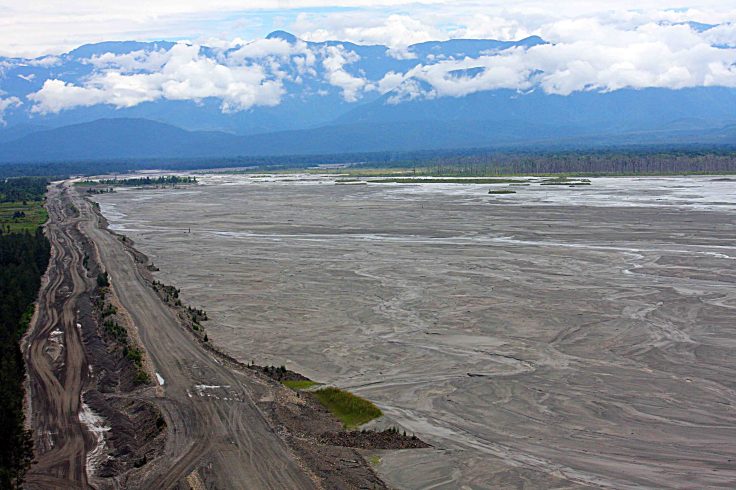
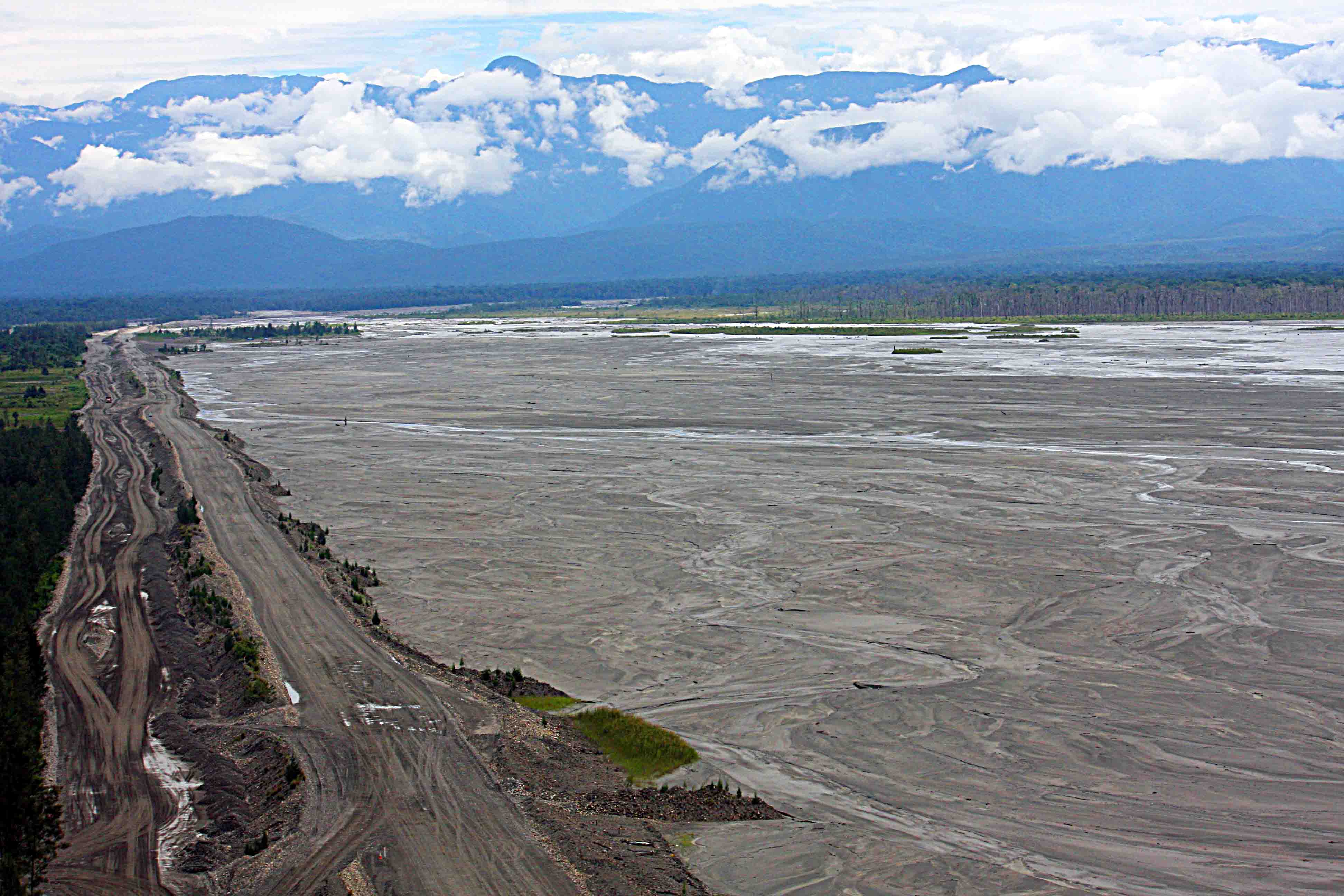
The Grasberg mine has damaged surrounding river systems, such as the Ajikwa river above [West Papua Media]

Investing in conflict-affected and high-risk areas is a growing concern for responsible businesses and investors. Companies based in developed countries often operate in lesser-developed foreign markets, where governance standards are lax, corruption is high and business practices are poor.

These pieces focus on one specific Anglo-Australian company and their American partner that jointly operate a mine in West Papua, one of the poorest provinces of Indonesia. The risks for the company include the potential to contribute to environmental and social damage in a foreign market. The risks for investors include financing a company that does not get its risk management right.

This is the second chapter of a four-part essay that examines how the Norwegian Pension Fund came to blacklist the mining giant Rio Tinto. The first part can be found here.

Part 2: A history of exploitation

New Guinea, geographically as well as historically, is Australia’s closest relative. Separated from the mainland during the last glacial period, the waters filled in what now separates them: about 152km of the Torres Strait.

While Australia and New Guinea both have enviable mineral stores, economic and political exploitation has left the latter as home to many of the poorest people on Earth. New Guinea is also an island of two histories.

The eastern half forms the independent state of Papua New Guinea – a status it has enjoyed since breaking from Australia in 1975. With its natural resources of oil and industrial metals, Papua New Guinea has long been exploited for its minerals at places like Ok Tedi and Bougainville.

Both projects ended in social and environmental disaster. The environmental impact of Ok Tedi was so great that, in 1999, Paul Anderson, then chief executive of Australian mining company BHP, conceded that the mine was “not compatible with our environmental values”. But it did serve the company’s pursuit of profit. It was not until the Ok Tedi environmental disaster three years later that the true impact of BHP’s mining practices came to the attention of the global public. BHP subsequently sold its interest, established a fund to restore the sustainable development of the affected people, and received immunity from further prosecution.

The western half of New Guinea has had a lesser-known but equally tragic history centred around the Jayawijaya Mountain, home to the Amungme, and farther downstream, the Kamoro people. As with much of East Asia, the indigenes were under Dutch rule when a geological expedition in 1936 located a significant ertsberg (ore mountain) deep in the southwestern highlands. World War II intervened, and the Japanese claimed Indonesia and some of the western parts of New Guinea.Following defeat in the war, the Japanese were marshalled back to their home territory, and Dutch colonialism resumed. Importantly, when Indonesian independence was obtained from the Dutch in 1949, few knew of the ertsberg (mineral ore) hidden deep in West Papua’s wilderness.The Dutch began a ten-year Papuanisation programme in 1957 that would see West Papua handed back to the indigenes, and would create the independent state of West Papua around 1972.Despite multiple territorial claims, the ore mountain lay dormant for over 20 years.On March 6, 1959, the New York Times reported the presence of alluvial gold in the Arafura Sea just off the coast of West Papua. Reminded of their earlier discovery, Dutch geologists were said to be returning to the ore mountain, now simply known as Ertsberg.Independence deniedThe indigenes, meanwhile, as part of their programme toward independence, established a Papuan National Council and provisional government as well as their own military, police force, currency, national anthem, and flag. At the time, West Papua’s independence was due before the United Nations Decolonisation Commission, and representatives took part in various cultural and political activities throughout the region. By December 1, 1961, the West Papuan “Morning Star” flag had been raised alongside the Dutch for the first time. Many assumed that independence was imminent.Unbeknown to both the indigenes and the Dutch, US mining company Freeport-McMoRan Copper and Gold was negotiating directly with Suharto – at the time an Indonesian army general – for a small group of its experts to prospect this ore mountain. The path into West Papua through Suharto promised to be fruitful for Freeport, since its board was stacked with the Rockefeller’s Indonesian oil interests who already were versed in the general’s way of doing business. An exploration agreement was reached, and soon after a geologist from Freeport was forging his way through the wilderness toward Ertsberg.West Papua was about to change hands again.Armed with Chinese and Soviet weapons, as well as an increasingly public friendship with the communists, Indonesia declared war on the Netherlands. To protect Western interests from the threat of communism, on August 15, 1962, the United Nations and the United States orchestrated a meeting between Dutch and Indonesian officials during which interim control of West Papua was signed over to Indonesia.Six years of UN interregnum followed, after which a plebiscite would decide whether to form a separate nation or integrate into Indonesia. All 815,000 West Papuans were to vote in an Act of Free Choice.To ensure a favourable outcome, the Indonesians worked to suppress Papuan identity. Raising the West Papuan flag and singing of the national anthem were banned, and all political activities were deemed subversive. Indonesia ruled through force, for self-interest. Alarmed by ongoing media reports, on April 5, 1967, in the British House of Lords, Lord Ogmore called for a UN investigation. By early 1968, with Suharto having assumed the presidency of Indonesia, a US consular visit almost unanimously agreed that “Indonesia could not win an open election” in West Papua.West Papua still wanted its independence.In a desperate attempt to secure West Papua’s right to self-determination, two junior politicians crossed the border into Australian-administered Papua and New Guinea on May 29, 1969. They carried damning evidence of Indonesian repression; the hopes of a yet-unformed nation rested on the politicians reaching the UN. As Australia and its allies were amenable to Indonesian control of West Papua, the two were imprisoned upon crossing the border until after the referendum. Their brave plea was silenced.Between July and August 1969, less than a quarter of one per cent of the population – some 1,026 West Papuans – signed the country’s freedom over to Indonesia. The election, held under the aegis of the UN, was far from an act of free choice. The following day West Papua was declared a military operation zone, the local people’s movement was restricted, and expression of their national identity banned under Indonesian law.Poor, neglected West Papua.Selling West PapuaControl of West Papua proved a lucrative business deal for the Indonesians. Two years prior to the Act of Free Choice – coincidentally on the same day the plight of Papua was raised in the House of Lords – Freeport signed a contract of work with the Suharto government entitling a jointly owned company, PT Freeport Indonesia (Freeport-Indonesia), full rights to the Ertsberg mine. In return, Indonesia would derive significant tax revenues and fees as well as a minority 9.36 per cent shareholding. Without the authority to do so, Indonesia nevertheless cut itself into a deal that sold large tracts of West Papua to the US company, intent on sifting it for copper and gold.Although Ertsberg fulfilled its promise, as production slowed in the mid-1980s, Freeport-Indonesia began to explore surrounding mountains and ridges for other reserves. As is often the case, the best place to establish a new mine is next to another. Sure enough, significant copper and gold reserves were located at Grasberg only a couple of miles southwest of Ertsberg.Grasberg has the largest recoverable reserves of copper and gold in the world. It’s also Indonesia’s economic beachhead.Observing the Grasberg mine via Google Earth, one sees a scar like no other: Located about 13,000 feet (4,000 meters) above sea level, open-pit (above ground) mining has bored a hole through the top of the mountain more than half a mile (1 km) wide. What they’re digging for is more than $40bn worth of copper and gold. Every day the operation discharges 230,000 tons of tailings (waste rock) into the Aghawagon River. This process is expected to continue for up to six more years, at which point exploration will go underground until there’s no value left. Freeport estimates that will occur by 2041.The operation is so large that it has shifted the borders of the adjacent Lorenz National Park. Listed as a World Heritage site by the UN’s Educational, Scientific, and Cultural Organisation (UNESCO) in 1999, the park is “the only protected area in the world to incorporate a continuous, intact transect from snowcap to tropical marine environment, including extensive lowland wetlands”. For the Amungme and Kamoro indigenes, corporate imperialism had replaced European colonialism.The ramifications are both environmental and social.‘Slow-motion genocide’The social and economic condition of the indigenous Amungme and Kamoro poses fundamental human rights concerns. Although Freeport-Indonesia directly or indirectly employs a large number of West Papuans and is regularly Indonesia’s biggest taxpayer, in 2005, the World Bank found that Papua remained the poorest province in Indonesia. With a marked rise in military personnel and foreign staff has come a number of social issues, including alcohol abuse and prostitution such that Papua now has the highest rate of HIV/AIDS in Indonesia.Indonesian control of West Papua has been characterised by the ongoing and disproportionate repression of largely peaceful opposition. Few sustained violent interactions have occurred; however, in one major conflict in 1977, more than 1,000 civilian men, women, and children were killed by the Indonesian military in Operasi Tumpas (“Operation Annihilation”) after a slurry pipe was severed and partially closed the Ertsberg mine.More recently, in 1995, the Australian Council for Overseas Aid reported that the Indonesian army and security forces killed 37 people involved in protests over the mine in the preceding seven-month period. While the level of violence is difficult to establish, academics at the Centre for Peace and Conflict Studies at the University of Sydney maintain that up to 100,000 West Papuans may have been killed since Indonesian occupation. They call what’s happening to West Papua “slow-motion genocide”.There are also two primary environmental concerns over Grasberg. The first is that the mine discharges 230,000 tons of waste rock a day into surrounding waterways; given the escalating rate of processing, this rate is arguably above that allowed by national law. Secondly, acid rock drainage – the outflow of acidic water – has resulted from the disposal of a further 360,000 to 510,000 tons a day of overburden and waste rock in two adjacent valleys covering 4 miles (6.5 km), up to 975 feet (300 metres) deep. The mine operators dispute both claims.Riverine methods of waste disposal are banned in every developed country on Earth. The World Bank no longer funds projects that operate this way, due to the irreversible ecological devastation, and the International Finance Corporation requires that rock be treated prior to disposal, which is not a practice carried out at Grasberg. Since the mid-1990s, a number of independent environmental assessments have found unacceptably high levels of toxicity and sediment as far as 140 miles away.Freeport and Rio Tinto maintain that riverine tailings disposal is the best solution, given the difficult terrain, the threat of earthquakes, and heavy rainfall.Grasberg’s reserves are so vast that extracting them is expected to create 6 billion tons of industrial waste.President Suharto, who is now recognised as one of the most corrupt and tyrannical leaders in history, renewed Freeport-Indonesia’s exclusive mining rights in 1991 for a further 30 years with an option of two 10-year extensions. The license included an option to prospect another 6.5 million acres (2.6 million hectares), as far as the Papua New Guinea border. “The potential is only limited by the imagination,” Freeport’s chairman, James Moffett, remarked to shareholders in March 1995. “Every other mining company wants to get into Irian Jaya [West Papua]. Bougainville and Ok Tedi don’t hold a candle to Grasberg.”Part 3 to follow next week.This is an extract of a chapter from the book, Evolutions in Sustainable Investing: Strategies, Funds and Thought Leadership, to be published by Wiley in December 2011. NAJ Taylor is a PhD candidate in the School of Political Science and International Studies at the University of Queensland, and casual lecturer in the Faculty of Law and Management at La Trobe University.Follow NAJ Taylor on Twitter: @najtaylordotcomThe views expressed in this article are the author’s own and do not necessarily reflect Al Jazeera’s editorial policy.Related articles

BHP Billiton acknowledged that its mine at Ok Tedi was ‘not compatible with our environmental values’ [GALLO/GETTY]
“Grasberg’s reserves are so vast that extracting them is expected to create 6 billion tons of industrial waste.”

The blacklisting of Rio Tinto – Opinion – Al Jazeera English

Grasberg mine
Image via Wikipedia

The blacklisting of Rio Tinto – Opinion – Al Jazeera English.

Too many invest in companies – such as Australia’s Rio Tinto – without any consideration of the ethics of doing so.
Listen to this page using ReadSpeaker
Papuans protest against Freeport and Rio Tinto’s Grasberg mine outside of Freeport’s office in Jakarta [EPA]

[This is the first of four pieces examining Rio Tinto and mining in Indonesia’s West Papua province]

Investing in conflict-affected and high-risk areas is a growing concern for responsible businesses and investors. Often times companies based in developed countries operate in lesser-developed, foreign markets, where governance standards are lax, corruption is high and business practices are poor.

These pieces focus on one specific Anglo-Australian company that operates in West Papua, one of the poorest provinces of Indonesia. The risks for the company include the potential to contribute to environmental and social damage in a foreign market. The risks for investors include financing a company that does not get its risk management right. This is the story of how the Norwegian Pension Fund blacklisted Rio Tinto.

An ancient copper mine located near Huelva in southernmost Spain changed hands in 1873. A group of opportunistic Anglo-German investors, equipped with modern techniques that favored mining aboveground, acquired it from the Spanish government. The mine’s copper had stained the surrounding water to such an extent that the indigenes named the river Rio Tinto – literally meaning “red river”.

The mine at Rio Tinto had supplied the Phoenicians, ancient Greeks, Carthaginians, and the Roman Empire. Its copper had paid for Carthage’s numerous wars on Rome and had been held by both Scipio and Hannibal. We can only assume that these investors, aware of such indelible marks on the environment and history, missed the irony, because they named their company Rio Tinto.

However, the red river has since flowed a long way from home. The company has expanded its operations through Australia, North and South America, Asia, Europe, and southern Africa – across coal, aluminum, copper, diamonds, uranium, gold, industrial minerals, and iron ore. Rio Tinto is now so large that its dual listing on the Australian and London stock exchanges commands a value of over $100bn.

What’s left behind near the Spanish town of Huelva is a 58-mile-long river flowing through one of the world’s largest deposits of pyrite, or fool’s gold. Because of the mine, the river has a pH reading similar to that of automobile battery acid and contains virtually no oxygen in its lower depths. In the late 1980s, temporary flooding dissolved a power substation, a mandibular crusher, and several hundred yards of transport belts.

More recently, NASA astrobiologists used the conditions of the river to replicate the conditions of Mars. “If you remove the green,” one of them remarked, “it looks like Mars”. The thinking goes that if something could live in such an acidic river, then there is likely to be life on Mars too.

Every Australian – through public monies invested by elected governments, or their choice of superannuation fund, insurer, and bank – is funding this red river now too. Rio Tinto is so large and so profitable that, for the average Australian, investment in it is very near unavoidable.

Blacklisted

On September 9, 2008, amid the turmoil of the global financial crisis, the Norwegian government announced that it had liquidated its entire $1bn investment in Rio Tinto for “grossly unethical conduct”. Operating the second largest fund in the world, the Norwegians’ decision focused solely on the Grasberg mine in West Papua on New Guinea, which it believed posed the “unacceptable risk” of contributing to “severe environmental damage” if it were to continue funding the Anglo-Australian mining giant.

Rio Tinto had been blacklisted.

The following day, Rio Tinto’s official statement relayed that the company was “surprised and disappointed”, given both its recognised leadership in environmental sustainability and its noncontrolling interest in the Grasberg mine. As with most claims of sustainability, the truth is otherwise.

Rio Tinto should not have been surprised by the Norwegian stance on Grasberg. Records show that there had been months – in fact, years – of dialogue with the Norwegians about Grasberg’s inadequate environmental and social performance. Rio Tinto had faced a litany of signposts indicating that multinational and Indonesian involvement in West Papua was not meeting various standards, laws, and norms: Institutions such as the World Bank, the Australian Council for Overseas Aid, the International Finance Corporation, the Overseas Private Investment Commission, the United Nations Committee against Torture, the US State Department, and the Indonesian Environment Ministry, as well as many US and European politicians, independent environmental assessments, international media, Papuan leaders, civil society groups, and shareholders had brought the problems to Rio Tinto’s attention.

That an institutional investor should act on environmental, social, and corporate governance considerations is a newly evolving development within the global investment industry, and one in which many Australian institutional investors and service providers have been quick to claim leadership. However, the blacklisting of Rio Tinto by the Norwegian government was uniquely public, transparent, and forward-thinking. Yet this wholesale dumping of one of Australia’s blue-chip stocks received only syndicated coverage in the local media.

Behind the headlines of the global financial crisis is a deeper, more systemic fault line that rewards rampant capitalism. Too many invest in and operate mines such as Grasberg without any consideration of the ethics of so doing.

Part 2 to follow next week.

This is an extract of a chapter from the book, Evolutions in Sustainable Investing: Strategies, Funds and Thought Leadership, to be published by Wiley in December 2011.

Follow NAJ Taylor on Twitter: @najtaylordotcom

Freeport looking for more minerals to extract from Papua

Grasberg mine
Image via Wikipedia
JUBI, 21 June 2011
A crater that is many metres wide and as deep as a three-storey house is to be found at Mile Post 74 within the area of the mining concession of Freeport-Indonesia(PTFI). Thousands of people working for Freeport say that they know nothing about the mining potential of this deep crater and what exactly Freeport intends to mine there.Some of the workers are quoted as saying: ‘The company is concealing information about the minerals it plans to mine. Some have mentioned copper but more recently mention has been made of gold, silver, iron,  and other minerals about which nothing has been reported officially.’ The workers believe that as many as nine new minerals are going to be mined there.As regards the natural resources now being researched, the crater is said to be much greater than the one dug for the Grasberg mine to the north.

One worker said that it is not only a question of nine more minerals being exploited by Freeport. As regards the geo-science potential from Papua, most of the minerals will be taken abroad. One worker who is familiar with the minerals in Grasberg said that it is only if the minerals are processed here and not taken abroad that we will be able to know what Freeport it intending to extract. ‘It is likely that the stuff will be taken abroad through pipes so that no one here knows what is there.

Another report from JUBI of the same day says that foreign investors are busy investigating what more they can take away from Papua. Freeport undertook a major research a while ago near Kampung Ugimba.

‘People from the company who work in Tembagapura have been seen frequently coming and going, and we have been told that there is uranium there.’

JUBI has been told that aerial surveying – aerogeophysics -has been used to survey the mineral  potential.

They have been using helicopters  to assess the uranium potential, he said. Once this has been ascertained, more conventional techniques will be used.

As yet, Freeport has said nothing about these searches. But for sure, the company has been undertaking many surveys in various parts of Papua.

(West Papua Media Comment:  At this time of great market uncertainty about uranium and the safety of nuclear power following the still ongoing Fukushima reactor disaster in Japan, it beggars belief that Freeport and its main shareholder, Rio Tinto, are conducting illegal (uncontracted) exploration for potential uranium deposits (of which there are large amounts around the Grasberg complex).  It is also very curious that this is the exact area that the unsolved shootings and bombings of Freeport workers has been occuring over the past two years, yet in an “unsecured” environment this exploration and processing has been able to occur.  If the Indonesian civilian government were to set up a National Audit of all Freeport activities, they would see clearly that the military-corporate collusion is reaping massive financial benefits, just not for either West Papua, nor Indonesian people.)

Create a website or blog at WordPress.com

Up ↑