Reporters Without Borders offers its condolences to the family and friends of Leiron Kogoya, a journalist with the newspapers Pasific Post and Papua Pos Nabire, part of the Pacific Post group, who was killed in an attack by gunmen on a plane at Mulia airport in the province of Papua three days ago.
“Although the journalist did not appear to be the target of the attack, it illustrates the insecurity that prevails in the region, where at least two other journalists were killed late last year,” the press freedom organization said.
“Covering the Papua region is highly risky for journalists. Leiron Kogoya was among those courageous reporters who strive to keep the world informed about the region, which has been the scene of violent clashes. Our thoughts go out to his family and friends.”
“We expect the authorities to shed light on the attack. Contradictory information about the identity of those behind the shooting said to have been provided by security forces to journalists indicates that an independent investigation must be carried out as soon as possible.”
The plane, a Twin Otter of the Indonesian airline Trigana Air, landed at Mulia at about 8 am when at least five gunmen opened fire. The pilot and co-pilot, who were both hit, lost control of the aircraft, which then crashed into one of the terminal buildings. Four people were wounded. Kogoya, was fatally shot in the neck.
The 35-year-old reporter was flying to Mulia in the Puncak Jaya district to cover local elections in the provincial capital, Jayapura.
Photo by: Agus Fakaubun
The news website westpapuamedia.info quoted the head of public relations for the Papua police, Commander Yohanes Nugroho Wicaksono, as saying the gunmen were hiding in the hills 50 metres from the airport. It said police had not yet been able to identify the perpetrators or the type of guns they used.
According to military intelligence, the separatist group Free Papua Movement (Organisasi Papua Merdeka, or OPM, in Indonesian) was behind the attack, while local police said they had no information about the identity of the attackers.
Special Report by Nick Chesterfield at West Papua Media
Monday, April 9, 2012
Concern is mounting in Puncak Jaya that an Indonesian military unit of “unknown persons” seeking to create a security crisis in Puncak Jaya may be behind the April 8 shooting attack on a Trigana Air Twin Otter aircraft in which a Papua Post journalist was killed.
Civil Society representatives, media sources and representatives from the rebel TPN (Tentara Pembebasan Nasional or National Liberation Army) have all cast significant doubt on the Indonesian military claim that Papuan guerrillas were responsible for opening fire on the aircraft. The aircraft came under accurate small arms fire as it was approaching from the Noble airfield in Mulia, Puncak Jaya, forcing the plane to make an emergency landing.
Leiron Kogoya, 35, the Puncak Jaya correspondent covering local elections for the Nabire-based Papua Post, was fatally injured by a gunshot to his neck.
During the landing the injured pilot panicked, according to local media sources, and crashed the plane into the terminal building (shed). Four people sustained injuries from bullet fragments. A child, Pako Korwa, was wounded in the left finger, Jackie Korwa (mother) was wounded in the right shoulder; Dedy or Beby (pilot), was hit in the left ankle, and Willy Resubun (copilot) injured his right hand and fingers.
Papua Police’s public relations head, Commander Yohanes Nugroho Wicaksono, told Tempointeractif.com that the shooters were hiding in the hills 50 metres from the airport. Police had been unable to identify the perpetrators or the guns used in the incident. Yohanes guessed the shooter had used a M-16 or SS1 – the standard issue weapon for the TNI. “We’re still studying what particular type of gun was used,” he said.
Djoko Suyanto, the Coordinating Minister for Political, Justice and Security Affairs condemned the attack and demanded security forces immediately capture the perpetrators, but admitted that the case would likely remain unsolved. “Their actions must be stopped although it is difficult to do this because of the hills and dense forests,” Suyanto said.
A joint team of the Australian-created Detachment 88 counter-terrorism unit,
Australian funded Detachment 88/ Brimob unit near shooting site, Mulia, 2010 (West Papua Media sources)
Brimob snipers and members of the notorious Nabire-based Indonesian army (TNI) Battalion 753 AVT gave chase to the shooters – according to the police statement – but failed to locate the shooters. Perpetrators for “unknown persons” shootings are rarely located by Police in Papua, despite significant intelligence resources and funding provided to the counter-terror units by the Australian Government.
Australian funded Detachment 88/ Brimob unit near shooting site, Mulia, 2010 (West Papua Media sources)
A West Papua rights activist and former political prisoner Sebby Sambon has told Tabloid Jubi that the work is not that of the TPN, and was far from the areas of operation for troops of TPN leader Goliat Tabuni. “If it occurred near the TPN-OPM headquarters in Tingginambut, then accusations (that TPN may be involved) may make sense,” he said.
However, according to Sambon, TPN/OPM will not shoot civilians. “TPN / OPM (is there) to fight for the people. Period. It is not possible to shoot people.”
Sambon, who is in regular contact through the underground network with Tabuni’s men, said there is a group that was playing at Mulia. “There is a play, therefore, forged evidence. TPN / OPM has made no orders to shoot civilian aircraft, Sambon explained.
Police have accused TPN of involvement without any evidence, according to Sambon. “Is it the TPN / OPM purely firing, or other parties who deliberately do this to create a “project” in Papua?”
“For every event at Mulia, legal facts have never been substantiated,” said Sambon.
Indonesian press outlets are reporting that Indonesian police have conceded that the shooting is the work of “Unknown persons”, Polri Public Information Bureau chief Brigadier-General M Taufik told Vivanews.com that the police could not confirm whether the shooting was carried out by the Free Papua Movement (OPM). “So far we have not been able to ascertain whether or not they are the OPM, and we suspect they are a bunch of strangers,” he told Vivanews.com.
Yet a senior media source told West Papua Media on condition of anonymity, that both Police and military intelligence officers have been sending contradictory SMS messages about the shooting to journalists across Papua. “Two SMS messages about Trigana shooting were received from ASINTEL (Assistant Intelligence Commander of the Cenderawasih military district) and two from Kadivhumas (Public Affairs) Police.”
“Asintel told me that the shooter is OPM, but Kadivhumas Police told me that the shooter were “unknown persons”. This is a common habit known among journalists in Papua. TNI (Indonesian military) will send SMS to journalists to told them that the shooter is OPM. But the police already know who actually did the shooting in the Puncak Jaya and Freeport area. You know, TNI also has many groups that conducted operations in Papua,” the source told West Papua Media.
In a statement obtained by West Papua Media, Indonesian human rights organisation Imparsial suggested that the shootings were carried out as an “outrageous act” by elements that want to destabilize the security situation in Puncak Jaya and take advantage of the chaos. “Shoot civilian aircraft on the holy day of Easter, there are casualties. I guess there is a deliberate manufacture of the situation in Mulia, (so the area) seems to be harbuoring terrorists,” said the Executive Director of Imparsial, Poengki Indarti.
Indarti says that serious investigation must occur into events surrounding the shootings in Puncak Jaya. “I hope the government and security forces act seriously, because Papuans don’t want to dirty their hands with blood of others on Easter Sunday,” she said. “This act was orchestrated to make Mulia a (place) of terrorists, but it is not at all, “said Indarti again. Imparsial urged the police to immediately identify the imposters with sophisticated intelligence sent to Puncak Jaya.
The Alliance of Independent Journalists Papua Branch has also called for Kogoya’s death to be properly investigated by police, and for them not to fall back on the usual defence of “unknown persons”.
In a statement, the Chairman of the Alliance of Independent Journalists Jayapura, Victor Mambor said “The incident is very regrettable. Leiron Kogoya was confirmed as the journalist for Pacific and Papua Post Nabire, and was commissioned by the editors to cover the phase of the elections in Puncak Jaya district.”
“It is clear that Leiron Kogoya was killed while on journalistic assignment, because he flew on the plane ordered by the editors to cover the phases of elections in Puncak Jaya,” said Mambor. According to AJI Jayapura, the police are supposed to ensure the safety of civilians, including journalists carrying out their journalistic duty.
“To his fellow journalists in Papua, (this is a renewed warning) to always be alert and careful in carrying out journalistic duties, since the recent intimidation and violence against journalists in Papua is increasing in intensity.” said Mambor. Victor Mambor is also is editor in chief of tabloidjubi.com.
Journalists in Papua are regularly subjected to violence and intimidation by Indonesian security forces, including direct monitoring by intelligence officers in newsrooms. The Pacific Media Freedom Report 2011 documented cases where at least two journalists have been killed in West Papua, five abducted and 18 assaulted in 2011.
From 13 to 16 February 2012, the secretariats of the Justice, Peace and Integrity of Creation (JPIC) in Papua (Franciscans JPIC in Papua, JPIC Archdiocese of Merauke, JPIC Agats Diocese, JPIC of Timika Diocese and JPIC of Sorong Diocese) held an annual meeting in Sentani. The outcome of this meeting is summed up in the following reflections on the situation in Papua with some recommendations.
The secretariats of JPICs in Papua confirm that the pro-investment policy of the Government of Indonesia and the torture and cruel treatment by the security forces have undermined law and the dignity of the indigenous Papuans, marginalising and threatening their right to life.
Situation in Papua in 2011
The indigenous Papuans have suffered from different investment policies of the Government in Papua. We found that the development policies on investment have caused the Papuans to lose their customary lands, identity, culture, livelihood, and they threaten the right to life. They have also become the source of horizontal conflict, as shown in the MIEFFE programme in Merauke, the palm oil plantation of PT. Merdeka Plantation Indonesia, PT. Merdeka Tapare Timber, PT Freeport Indonesia in Mimika, PT. Sawita Tandan Papua and PTPN 2 in Kerom.
The indigenous Papuans live in fear. The security forces use violence, torture, cruel and inhuman treatment against the Papuans which they justify with claims that their victims are supporters of the Free Papua Movement (Organisasi Papua Merdeka – OPM), as shown in the case of violence and torture against civilians during the 3rd Papuan Congress, the case of Tingginambut, the armed conflict in Puncak Jaya and Paniai and the conflict during the regional elections.
The indigenous Papuans are confused by the attitude of the Provincial Government which is not critical but rather tends to support the policy of the Central Government, as demonstrated in the case of the adoption of the policy on the Special Unit for the Acceleration of Development for Papua and West Papua (UP4B). This situation has put the future of the indigenous Papuans at risk. They are confronted with the difficulty to fight for their basic rights. The Papuan People’s Assembly (Majelis Rakyat Papua – MRP) and the Provincial Legislative Assembly of Papua (Dewan Perwakilan Rakyat Papua – DPRP) have been made powerless. MRP and DPRP only execute the orders of the Central Government and do not defend the interest of the Papuans.
The composition of the indigenous and non-indigenous Papuans is not in balance. The population census of the Indonesian Statistical Bureau (BPS) shows that the population of indigenous Papuans in the Provinces of Papua and West Papua is 1.760.557 or 48.73% of the total population, while the non-indigenous population is 1.852.297 or 51.27% of the total population of 3.612.854. It shows that the indigenous Papuans are a minority group in their own land while four decades ago they were the majority (96.09%).
Recommendations:
1. The Government of Indonesia should stop all investment that harms the right to life and the livelihood of the Papuan and conduct an independent evaluation of the companies investing in Papua. The Government of Indonesia should foster community-based development policies.
2. The Indonesian Military and the Indonesian Police should resolve the problems in Papua without using violence and they should bring to justice all perpetrators of the conflict in the area of PT. Freeport Indonesia.
3. In dealing with political demonstrations in Papua, the Government of Indonesia and the Police/Military should respect the right to freedom of expression of the Papuan people.
4. The Papuan People’s Assembly and the Provincial Legislative Assembly of Papua should genuinely represent the aspirations of the Papuans especially in addressing the issues that are causing the Papuans to become a minority in their own land.
These are our reflections and recommendations based on our wish to improve the future of Papua and to respect the human rights of the indigenous Papuans.
Abepura, 16 February 2012
P. Emanuel Tenau, Pr (Director of JPIC Diocese of Sorong) Br. Edy M. Rosaryanto, OFM (Director of Franciscans JPIC Papua). Ms. Veronika Tri Kanem (Program Manager of JPIC Merauke Archdiocese) Fr. Saul Wanimbo, Pr (Director of JPIC Timika Diocese) Fr. Hendrik Hada, Pr (Director of Agats Diocese)
Across West Papua, a series of remarkable and disturbing text messages has been circulating the claim that Indonesian security forces are preparing a major security assault across Papua in an operation that allegedly began on February 10.
West Papua Media has been unable to speak with any of the alleged participants in the meeting, nor any official representative of the organisations present, to verify these reports. However local sources are reporting that security forces have intensified patrols and street presence in Jayapura at least that would correspond to such an operation.
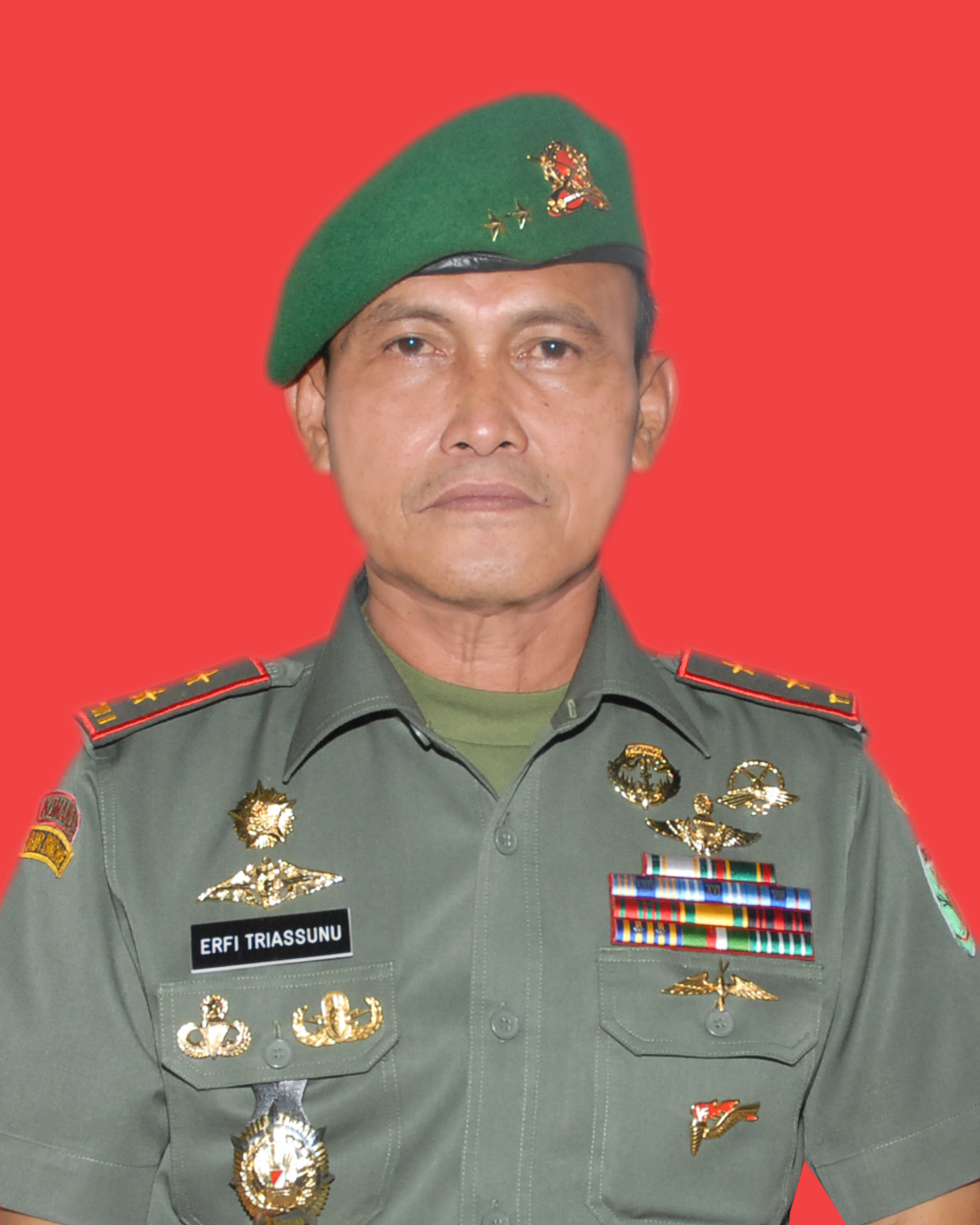
According to the messages a meeting was held at the Hotel Aston at 10am on February 9, between Polda Papua senior police officers. Also at the meeting were the Papuan governor, the Commander of Cenderawasih Military District Erfi Triassunu, and officials from the Papua District Attorney, State Intelligence Body (BIN), the army Strategic Intelligence Agency (BAIS), senior Kopassus officers, and leaders from Barisan Merah Putih – the main pro-Indonesia militia. The meeting was allegedly being held against the threat of disintegration of Indonesia by separatist groups in Papua, according to the messages.
Erfi Triassunu - duplicitous
Participants allegedly raised the issue that “pro-merdeka” Papuan independence aspirations had been “globalized” and were attracting widespread international support especially after the brutal and heavy handed crackdown by Indonesian security forces on the Third Papuan People’s Congress on October 19, 2011, according to the source.
The Memorandum assigned to officers present was to immediately raise “any safety risk to the smooth operation codes” – believed to indicate that security forces would be placed on high alert to prevent all expressions of self-determination. It continued:
“The main focus is for the treason trial of Forkorus Yaboisembut and colleagues, who should not be given (political or public) space to defend themselves to their (Papuan) people and release pressure on the Makar defendants. Any adverse condition in the control of the military from the Start Date (of) 10 February 2012 immediately increase security emergency.”
The messages then hinted darkly at the final conclusion of the meeting: “Do not hesitate (in carrying out your duty if you have) to violate human rights for the sake of the sovereignty of Indonesia. ”
The text messages were said by local human rights sources to have come from a “very reliable source close to the military”. It is not known at this stage if these text messages have been circulated deliberately by military intelligence as a possible tension building exercise.
West Papua has been subjected to many false SMS rumour “storms” in the past as sources believed by observers to be Indonesian intelligence officers have circulated false and inciting claims of imminent communal violence. This includes a notorious case
Threats by SMS to human rights defenders and journalists are commonplace in Papua, widely believed to come from military sources.
Across Papua in recent weeks, SMS messages are also circulating claiming that “mysterious killings” are allegedly being perpetrated by Indonesian security forces against West Papuan civilians. Reports have been circulating that a man allegedly from Yakuhimo, Puncak Jaya, was killed and his mutiliated body turned up in Sentani, and another allegedly was found in a marketplace in Abepura. Additionally bodies have been reported as being found in similar circumstances in Timika and Wamena, but none of these reports have been able to be independently verified.
Bintang Papua, 20 January 2012Human rights violations are occurring in PuncakThe Papua branch of Komnas HAM, the Indonesian Commission for Human Rights, has confirmed that human rights violations have been occurring in Puncak. These include a number of deaths that have occurred during this prolonged conflict.
‘While not yet knowing the motive or who was responsible, the killings were clearly human rights violations. Lives were lost which is an indication that the right to life has been ignored.,’ said Matius Murib, deputy chairman of the Komnas HAM Papua branch. He made the statement after attending a Forces Group Discussion on Civil and Political Rights and Economic, Social and Cultural Rights (ECOSOC) held by the Papuan branch of Komnas HAM.
When lives are lost, human rights are certainly violated. No need to ask about the motive as this goes beyond the power of the Almighty. The state or government have no right to destroy life, which is totally without justification .’ The right to life comes only from God and no one has the right to kill people,’ he said.
In this Puncak case, those involved were planning to conduct investigations in February and were planning to visit the site of the killings, in order to make recommendations to the authorities. Murib said that he could not make any comments until they had visited the site
Responding to a question about whether the government had been responsible fir triggering the conflict, he said that such a charge would need to be investigated. If this turns out to the true, then some individual or institution that had been granted powers by the state had failed o take action quickly enough to prevent the incident from occurring, and this is matter for KomnasHAM to issue a charge.
He recognised that according to investigations reported in the media, there were indeed actions by the government and related persons, and the question was, why had the conflict occurred and why were casualties still occurring. ‘It is our task to investigate whether actions were taken by the state and whether they were justified.’
As has previously been reported, the conflict that relates to the election of the head of the district of Puncak and has resulted in 49 casualties among the local community since 30 July 2011. This conflict was still on-going up until 14 January 2012 in the district and the government has not made any efforts to resolve it, nor have the police done anything to resolve the conflict, which is being described as a tribal war between people living in the Central Highlands. It relates to an internal dispute within the political party called Gerindra, between a number of candidates. Gerindra has turned this internal conflict into a conflict between the commnity in general which has paralysed all development activities there.





 West Papua Media Alerts