How the Papuan people Continue to Unite in Resistance: Victor Yeimo Interview

http://hidupbiasa.blogspot.com/2011/08/how-papuan-people-continue-to-unite-in.html

[This Interview with Papuan activist Victor Yeimo was published on the
Kontinum website, because of a feeling that little information and
perspectives from the Papuan struggle is available in Indonesia, and so
people outside Papua are not aware of the what is actually going on
there. The original, in Indonesian, can be found at
http://kontinum.org/2011/08/wawancara_victor_papua/%5D

We see Papua’s problems as coming from a combination of problems with
the state and corporations, military violence, ecological damage,
genocide and extinction of indigenous cultures. The Papuan issue is also
a national issue for Indonesia, and one which is not yet resolved. Many
indigenous people are killed and tortured in order to legitimise the
destruction of Papua’s natural riches by the world’s giant companies
together with their closest partners: government.

Constitutional reasons, together with the logic of national unity and a
narrow nationalist view of ‘Indonesianness’ are used to legitimise
repression and oppression of the Papuan people and their land.

But amidst a climate of repression that doesn’t seem to subside, the
Papuan people struggle on, ever-bravely. To get to know the situation
and viewpoint of the resistance movement in Papua, Kontinum interviewed
Victor Yeimo, spokesperson of the West Papua National Committee (KNPB),
one of the people’s organisations that continues the active struggle in
the land of Papua:

Bearing in mind that there is very little and quite selective news about
the Papuan situation and the people’s struggle in the media, could you
explain for all our readers what is the latest situation in Papua?
Human rights violations of civilians by the Indonesian military and
police are still taking place. Global investment has ballooned after the
ACFTA agreement (ASEAN-China Free Trade Agreement), where President
Susilo Bambang Yudhoyono had given instructions to police and military
commanders to use investment as a means of pacifying Papua (see Jurnal
Nasional, 16 May 2011, page 10). China is the home of the majority of
global investors, and the Papuan Provincial Body for Capital Investment
(Badan Penanaman Modal) has reported that there has been a 28% increase
in investment in Papua in the last 6 months.

There have also been cases of malpractice where Indonesia’s bureaucratic
elite have interfered with the governance of Papua. Corruption,
collusion and nepotism have increased due to the central government’s
inconsistency around laws and regulations.

Aside from that, Freeport workers have risen up and have gone on strike
(tabloidjubi.com will have news updates).

Illegal business from the police and military is also on the rise, such
as illegal logging, ,gold panning, bringing sex workers from outside
Papua, dealing in the wood of the eaglewood tree, and so on. Meanwhile
military repression to silence the democracy movement has been getting
more intense, and uses labels such as separatist, terrorist,
trouble-maker and so on.

What do the Papua people think about these situations, and how have they
reacted to them?
The people do not have much power, due to the military strength in
Papua. Meanwhile the government is seducing the people with trillions of
rupiah of foreign direct investment in their ancestral lands, and so in
the end there are many people that do not want to join organised
resistance movements.

The people continue to problematise the history of Papua’s integration
in the unified Indonesian state, which has always been manipulated by
the United States, Indonesia and the Netherlands. Because of that the
people still continue to unite in resistance.

Apart from the problems of history and culture, what is making the
Papuan people refuse Jakarta’s influence in their everyday lives and
want self-determination?
Because Jakarta’s approach is militaristic, exploitative, deceitful and
marginalising. From the beginning right up to the present day Jakarta
has regarded Papuans as second-class people, people close to animals.
And then the next thing they do is that they violate the arrangements
that they themselves have made. They are just not consistent in their
regulations and policy. Policy is also biassed in favour of incomers to
Papua. So the people prefer to think about sorting things out for
themselves. Many Papuans, as a result of all they have gone through,
believe that Indonesia’s sole aim in West Papua is to wipe out the
Papuan people and take control of the territory.

How have government, the bourgeoisie and Indonesian politicians viewed
the Papuan people’s struggle, and what has been their reaction?
They continue to be suspicious of all civil activists that operate in a
legal or democratic way. Indonesia also uses its military force and
criminal law to kill off west Papua’s peaceful movement. They also use
‘divide and conquer’ techniques to destroy the unity and solidarity of
the Papuan people’s resistance. Jakarta has poured a lot of money into
the military, police and intelligence organisations in order to make
Papua secure. Many Papuans have been recruited by enticing them with
money to join the ranks of Barisan Merah Putih (Red and White Front: a
militant Indonesian nationalist civil organisation). Many cases of abuse
by members of the military police have not been brought to justice, and
the perpetrators have even been rewarded with new jobs and promotions.

How have the Papuan people got involved in the struggle for freedom in
Papua? What kinds of resistance have developed?
Papuans take a peaceful and dignified approach, organising
demonstrations, prayer sessions, seminars, writing books or reporting
repression on the Internet. There are also some traditional militant
groups in the national Liberation army – Free Papua Movement (TPN-OPM)
who refer to themselves as a West Papuan military. They continue to use
guerilla tactics to chase the Indonesian army out of their areas.

What is the reaction of Papuan people towards the ‘separatist’ label
that is put on every movement that emerges in Papua?
We’re aware that we aren’t separatists, because the people on the
contrary consider Indonesia to be the separatists, as Indonesia arrived
in 1962 whereas the Papuan state was given independence in 1961.

The people regard this label as one imposed by the people in power, who
are anti-democratic and anti-human rights, as it is stated in the
Indonesian basic law set down in 1945 that colonisation should be erased
across the whole world. The people see this label as something imposed
by the military, to promote their own interests of expanding the
territory under military control in order to profit from securitization
projects. In books, speeches seminars etc. the people continue to state
that we are not separatists, because this land belongs to the Papuans,
it dot belong to Indonesia, the US, Britain or any other country.

How do you see the general Indonesian population’s understanding of, and
response to, the Papuan problem?
Much of Indonesian society doesn’t understand the problems of Papua.
Maybe people have been influenced by the opinion of those in power,
because of the propaganda they spread on TV and in newspapers, that
Papuans are poor, and so on. But actually we’re rich, only Indonesia
keeps marginalising the Papuan people’s rights. The Indonesian people,
with their blinkered nationalism, see the Papuan movements as being
against those in power. But they are also being treated in the same way
by our exploitative, greedy, gun-crazed, corrupt and chauvinist leadership.

For the majority of the Indonesian population, there are very few who
know just how the Indonesian leadership invaded, took over and then
annexed Papua, which was granted independence in 1961, through
agreements to establish Papua’s political status that were devised by
the US, Britain and the Netherlands, without involving the Papuan
people. Most people in Indonesia are still blind to the problems of
Papua and still ignorant of how Papuans have suffered, and so still take
the side of our cruel leaders.

Can you tell us about your organisation, KNPB?
West Papua National committee (KNPB) is a West Papuan people’s medium.
KNPB exists in different places throuout the land of Papua, and also has
consulates in the Indonesian cities of Jakarta and Manado. KNPB was set
up in 2008 with Buchtar Tabuni as chair and Victor Yeimo as General
Secretary. Towards the end of 2006 Buchtar was arrested and condemned to
3 years in prison and Victor undertook the everyday tasks. In August
2009 Victor was arrested and condemned to 3 years in prison. Now the
organisation is operating with Mako Tabuni as Chair I of KNPB, Buchtar
still as General Chair, and Victor Yeimo as International Spokesperson.

KNPB always encourages Papuans to see themselves as historically,
culturally and geographically different to Indonesians. Can you explain
what is the position of KNPB comrades regarding this?
We locate our struggle with the Papuan people. Whatever the people want,
that’s what we fight for. The historical, geographical and cultural
factors are actually like you said. We see that Indonesia’s involvement
in West Papua is no more than a story of protracted repression. This
territory is still like a protectorate. Whatever the people wish for,
that’s what KNPB will mediate as a focus for the struggle, using sincere
means.

What is KNPB’s vision of the “right to self-determination”, in
connection with the Papuan struggle?
Papuans do not regard the test of public opinion that took place in 1969
as final. The people continue to demand the right to determine their own
future. Many Papuans have died as a result of demanding these rights.
Therefore KNPB fights for a referendum as a decisive solution to the
Papuan conflict. This is so that the people can decide whether they want
to continue as part of Indonesia, or if they want independence. In
KNPB’s role as media, it continues to make demands to international
bodies and also appeals to the will of Jakarta so that the people are
given their democratic right to choose their future. Of course we need
the reinforcement of international solidarity, and to this end there is
a group of international lawyers working to investigate the status of
Papua and resolve it through international law.

What sort of Papua do the Papuan people themselves want?
A Papua that is free of all forms of repression: Indonesian
neocolonialism, neoliberalism/ global capitalism and militarism.

How do Freeport and the other corporations that have established
themselves in the land of Papua react to the people’s struggle there?
Freeport collaborates with the Indonesian leadership. They both look
after their economic and political interests in the same way. That means
that they label anyone who doesn’t accept the presence of these
corporations as separatists and terrorists. Freeport takes a line
opposing the Papuan people’s struggle, because in their view it will
harm their capital investments and vital assets.

What is their connection with the Indonesian government and bourgeoisie?
Freeport continues to deceive Indonesia and the Papuan people, but
Freeport wants Indonesia to continue as guarddog of its assets. So
Freeport keeps paying the military and Indonesian bourgeoisie to ensure
guaranteed security and legal favour. Papuans get nothing meaningful
from this arrangement.

What are the priority needs right now for friends involved in the
struggle for freedom in Papua?
-We really need the solidarity of oppressed people wherever they might
be, including people in Indonesia, to work together to chase all forms
of repression out of Papua.
-We really need solidarity from friends in the national press to take
the side of the Papuan people in their reportage.
-We really need consolidation at the national level to shape a
definitive solution for the Papuan people.
-We need some means of production that can be used to protect ourselves
against the ongoing siege of repression in the land of the bird of paradise.

What sort of solidarity do the Papuan people need? And what can friends
from outside Papua do to help the Papuan people’s struggle?
-We would like it if the Papuan issue was regularly discussed by friends
outside Papua.
-We would wish for some sort of national consolidation to discuss and
establish strategy and tactics for a joint resistance.
-We also need advocacy, economic and political information and reading
material that could help us be active in the field.

Thank-you, and respectful greetings to all Papuans in struggle.

Melkianus Bleskadit sentenced to two years

JUBI, 19 August 2011

Melkianus Bleskadit was sentenced yesterday in Manokwari court to two
years for his role when the 14-star flag was raised.

A day earlier, the prosecutor asked for him to be sentenced to five
years. The prosecutor has announced that he will mount an appeal against
the verdict.

In a report made public by the human rights lawyer Yan Christian
Warimnussy it was stated that Melkianus was arrested along with Dance
Yenu for flying the 14-star flag to mark the anniversary of independence
for ‘West Melanesia ‘ on 14 December 2010.

In a comment on the verdict, Yan Christian Warinussy who was also a
member of the defence team, said that while the judges had taken a good
decision by limiting the punishment to the criminal element of the
incident, indicating that he was not willing to go as far as the
prosecutor, in the end his client had been given a much higher sentence.
According to past experience involving the case of Jacob Wanggai and his
colleagues, the judges had passed a shorter sentence which was
subsequently increased at the request of the prosecutor, resulting in a
far higher sentence.

He also said that the defendant had been held in a cell of the Manokwari
prosecutor at the Manokwari prison in breach of the law. He said that
both the judge as well as the chief prosecutor had obstructed his
client’s release to the moment when the high court judge could decide on
extending the period of the appeals detention which should have ended
on 19 August.

The three hours of freedom that his client should have enjoyed had been
denied him by the decisions of the prosecutor and the judge. Moreover,
there was a show of force when a company of police security officers as
well special intelligence personnel stood on guard round Bleskadit at
the office of the prosecutor. He said that the the lack of
professionalism by both of these institutions had resulted in his client
being deprived of his basic rights.

ROAD TO FREEDOM IN JAYAPURA – Video

by Frengky Making

The rally organised by the National Committee for West Papua (KNPB) on August 2 2011 was led by Mako Tabuni from KNPB. The protesters were on the streets the whole day. There were more than 10,000 people, from Sentani, Jayapura as well as students from Abepura. The peaceful rally was organised to support the seminar by International Lawyer for West Papua (ILWP), initiated by Benny Wenda in London, the UK, which looked into the history of the 1969’s People’s Act of Free Choice (PEPERA).

[vimeo http://www.vimeo.com/27921972 w=500&h=400]
 07:05
video information
produced by Frengky Making
produced Aug 18, 2011

Tempo: All West Papua Province’s Lawmakers Declared as Corruption Suspect

FYI

(West Papua Media comment:  these actions should be seen as an indictment of Jakarta’s failed Special Autonomy policies.  The DPRD office holders are restricted to those who are  members of Indonesia-wide political parties, and are heavily skewed toward military business interests.  A high proportion of members of the DPRP are not ethnically Papuan, and those who are, are involved in major Indonesian business ventures)

also: Big Budget, Big Leaks

Tempo Magazine
No. 50/XI/August 10-16, 2011

Law

All Suspects Together

All members of the West Papua DPRD were named as suspects in
corruption of the province’s funding. The state funds that should have
been used as capital for one of the province’s own businesses was
instead distributed to serve political interests. Governance in West
Papua is now threatened with coming to a complete standstill.

A Plenary session of the West Papua Provincial House of
Representatives (DPRD) was suddenly called for Thursday two weeks ago.
Although all the members were not present, the sitting was marked by a
tense atmosphere. Not surprisingly, as the theme of the discussion was
a very serious matter concerning the future fates of all those
attending.

The Papua State Prosecutor’s Office had named 44 members of the
parliament as suspects over corruption of Rp22 billion of West Papua
Provincial Income and Expenditure Budgets (APBD) for 2010 and 2011.
The announcement made by Deputy Chief State Prosecutor Suhardjo Tjatjo
rocked Papua. In the history of this nation, this is the first time
ever all the members of a parliament have been named graft suspects.

Not just the public, but the West Papua DPRD members themselves
admitted they were shaken when the release first appeared two weeks
ago. “I have never been questioned, so how come I am suddenly declared
a suspect?” said DPRD Speaker Johan Yoseph Auri. The Golkar Party
politician accused the investigation of the case of being loaded with
political interests. “I’m sure the prosecutor doesn’t have any strong
evidence in this corruption case,” he asserted boldly.

Johan admits he did accept the cash concerned. As did all his
parliamentary colleagues. But, he said: “It was a loan that was to be
repaid in three years.” Johan says he borrowed the cash from the
province-owned PT Papua Doberai Mandiri because he was under pressure
to meet his constituents’ requests.

Every day, he said, groups come to DPRD members’ offices claiming to
be constituents from various parts of Papua. They come asking for
donations for this and that and to lodge proposals for all kinds of
activities. “I have no other income, so I’m forced to look for loans,”
Johan explained.

Disastrously, those loans were not obtained from a bank, but rather
from a state-owned business that was not supposed to be involved in
borrowing and lending its shareholders cash. PT Doberai, for instance,
is a company set up by the West Papua government to look after
investment in this, Indonesia’s youngest province.

It was difficult to get other DPRD members to explain to us why they
now have the status of suspects. The plenary session, said John
Fathie—another Golkar politician—had decided that all its members were
forbidden to talk to the media. Explanations were only to be offered
by the DPRD speaker. Several members denied they had received any
money. “I already owe my bank money, so it would be impossible for me
to look for another loan,” declared PNI Marhaenisme politician Yance
Yomaki.

The difficulty is that the Papua Attorney General’s Office is fully
convinced that these people’s representatives have already done as
they liked by ‘feasting’ on the state funds to which they had no
right. Deputy Head of the State Prosecutor’s Office (AGO), Suhardjo
Tjatjo laid out to Tempo just how this case had begun, from its
investigation through to the conclusions reached and all the suspects
being determined.

Tjatjo said this was an old case whose status could only recently be
raised to that of an investigation once the AGO was convinced that
none of the money that had been claimed to be loans had been returned.
“There was no accountability for this expenditure,” he added.

Now, it so happened that Rp22 billion was cleared to be paid out at
the request of West Papua Provincial Secretary, Marthen Luther
Rumadas. Rp15 billion of that came from the 2010 APBD and the rest
from the 2011 one. “The business is under my authority,” he said
defensively.

The funds ought to have been allocated as additional capital for PT
Papua Doberai Mandiri. This provincial government-owned company is
active in very wide-ranging fields: drilling for oil and gas, non-oil
and gas exploration, as well as the acceleration of infrastructure
development, including netting new investors, both domestic and
foreign.

PT Doberai was set up around the same time as the formation of the new
province in 2009. West Irian Jaya regency was then elevated to the
status of West Papua province, with Manokwari as its capital. At its
establishment on 18 May 2009, the provincial government, that had
obtained an injection of special autonomy funds of Rp1.7 trillion,
invested Rp100 billion to buy shares in the new company.

A year later, all the shares in the province-owned business were taken
over by the West Papua government, until full control of it rested in
the hands of the provincial secretary. While that was happening, the
province treasury injected a further Rp25 billion in capital into it.
“That was when the games began,” said Tjatjo.

As the one having control of the business, Rumadas has also become a
suspect. He is accused of handing out state funds to DPRD members on
very spurious grounds: to cover their additional living expenses.

Rumadas was discovered to have issued a letter on 17 September 2010
concerning lending PT Doberai another Rp15 billion. Johan Auri gave
his written agreement to lending out this money to DPRD members.

The problem was that his letter was issued several hours after the
money had been transferred. “This meant that the money that had been
deposited then had to be hurriedly paid out,” said Tjatjo. The AGO
looked into this odd occurrence. It was also revealed that PT Papua
Doberai Mandiri’s CEO Mamad Suhadi at one point apparently refused
Rumadas’s request to pay out the money that had just been transferred.

When Rumadas had summoned him to his office, Mamad verbally declined
to comply. “Sorry, Sir, making such payouts would be a mistake,” said
Mamad, as imitated by Tjatjo. When Mamad refused to follow Rumadas’s
instruction, the Head of the West Papua Province Financial Bureau M.
Sirait was sitting next to Rumadas and later confirmed Mamad’s
statement to the prosecutor.

Rumadas paid no attention to Mamad’s objections. The money was still
paid out. Several weeks later another instruction was issued to
disburse a further Rp7 billion. The grounds were the same: loans to
the DPRD members. The AGO considered this corruption because the
members could not possibly pay back their loans in the set time,
namely July this year.

Rumadas does not reject the series of events, the results of the
prosecutors’ investigation. But he rejects claims that the loans were
deliberately given out to enrich DPRD members. Because of the loan
clause, Rumadas says, the DPRD members were required to return the
money they had borrowed.

Strangely, when he was pressed to explain why the loan money had been
taken from the company’s coffers and whether he knew what the loans
were for, Rumadas shook his head. “I didn’t know what they wanted the
loans for,” he admitted.

Tjatjo also admitted that the DPRD members were not told they had been
made suspects as the request for permission to question them submitted
to the Minister of Home Affairs had not yet had a response. Under
criminal procedure law, Tjatjo explained, if permission is not
forthcoming by one month after a request letter is sent, his office
may then continue its investigation and use compulsion to summon
suspects.

Last Friday, when we asked Home Affairs Minister Gamawan Fauzi for
confirmation of the request letter, he said he had not yet received
it. “Once I have received the request, I’ll certainly agree to it.
It’s just to uphold the law,” Gamawan told Tempo.

However, Gamawan does hope the AGO doesn’t have clear proof that the
DPRD members were involved in corruption, so the case won’t need to be
pursued further. He added that governance of West Papua could come to
a standstill if all the members of its parliament were detained.
“There is still an opportunity not to take this further,” he said.

Tjatjo realizes the consequences if the legal process continues.
Governance in West Papua could stall and many policies could not get
implemented, as all DPRD members would likely be non-active. The
current total confusion could get even worse, remembering that West
Papua is also due to hold the direct election of its governor in
September of this year.

But, Tjatjo added, the AGO has no other choice as, whatever else
happens, the law must be enforced. Especially as the evidence in this
case is so glaringly obvious. “If necessary, I will summon them using
compulsion,” he warned.

Bagja Hidayat (Jakarta), Jerry Omona (Jayapura)

——————

Tempo Magazine
No. 50/XI/August 10-16, 2011

Law

Big Budget, Big Leaks

The riots that recently spread in Papua have caused the government to
reevaluate the special autonomy status for the area. Last Thursday
President Susilo Bambang Yudhoyono discussed the issue when he met the
heads of the nations’s top institutions at the State Palace.

“Special autonomy is not just a matter of budget, but also concerns
policy,” commented Regional Representatives Assembly Speaker Irman
Gusman after the meeting. Irman said special autonomy that is focused
only on meeting its budget has been shown to be ineffective. An audit
by the Supreme Audit Agency (BPK) did indeed confirm what Irman said.

In its report last April, the BPK uncovered suspected budget misuse
throughout the period 2002-2010 of special autonomy in Papua. Of the
total Rp19 trillion of special autonomy funding for improvement of
infrastructure and health services, Rp4.2 trillion had been likely
misused.

Not all the autonomy funding since 2002 was examined. Because the
total general autonomy funding for Papua and West Papua provinces
already disbursed by 2010 amounted to Rp28.8 trillion.

The misuse in the sample checked covered various things: expenditure
that could not be accounted for, expenditure not in accordance with
submitted programs, overpayments, and fictive programs. The report
says, for instance, that Rp1.85 trillion of autonomy funding for the
period 2008-2010 was put on term deposit in Bank Mandiri Jayapura and
Bank Papua.

The Rp53 billion in interest from this was then not credited to the
account of the special autonomy fund. The Papua provincial government
has explained that the money stashed away as term deposits did not
come from the special autonomy fund. It was reserve funds, the
interest on which was then used to subsidize village development at
Rp100 million per village.

The BPK does not accept that. “Because special autonomy funding is
intended to accelerate development, cash management via term deposits
is then inappropriate,” reads the report that BPK member Rizal Djalil
presented to parliament.

That report concludes that leaks have clearly occurred in the absence
of any clear regulations on the use and accountability for the
jumbo-sized cash largesse. When reporting these findings, Rizal said
that to date the use of the autonomy funds only needed verbal
agreement between the governor plus a regent and a mayor within Papua.
It it is not surprising then that the BPK later uncovered fictive
expenditure. “I’m sure, from our sample investigation, the nation has
suffered a loss of Rp319 billion,” said Rizal.

Under Papua’s Special Autonomy Law, a budget of 2 percent of the
National General Allocation Fund is to be disbursed for improvement of
infrastructure and health services there, so that, in 25 years’
time—beginning from 2002—there will no longer be any transportation
problems in the area. Everything will be connected by land, sea, or
air.

But the reality is very different. The funds seem to vanish and not
make their way down—let alone get disbursed—to those at the bottom.
Corruption has spread into a number of areas. The money that ought to
be used to build facilities is instead grabbed everywhere, as with the
money of provincial government-owned businesses corruptly taken by
members of the West Papua provincial parliament.

Almost every year, for instance, hospital staff in Jayapura or Abepura
go on strike over their miniscule allowances. In turn, other hospitals
are forced to turn away patients because of lack of medicines to treat
them.

Irman says the current chaos in the management of autonomy funds is a
result of weak control and supervision. Accordingly, it will later
become not just a matter of being unclear where the money went, as the
area concerned will then become continually afflicted by chaos. “Later
the autonomy funding must no longer be dropped there just like that.
The programs for its use must be clear and supervision tight,” Irman
stressed.

BHD, Munawwaroh

Empty promises whitewash Freeport’s rights, responsibility record

 http://etanaction.blogspot.com/2011/08/empty-promises-whitewash-freeports.html

Special for ETAN‘s  Blog

by David Webster

What does a mining company need to do to get a top score for “corporate social responsibility”?

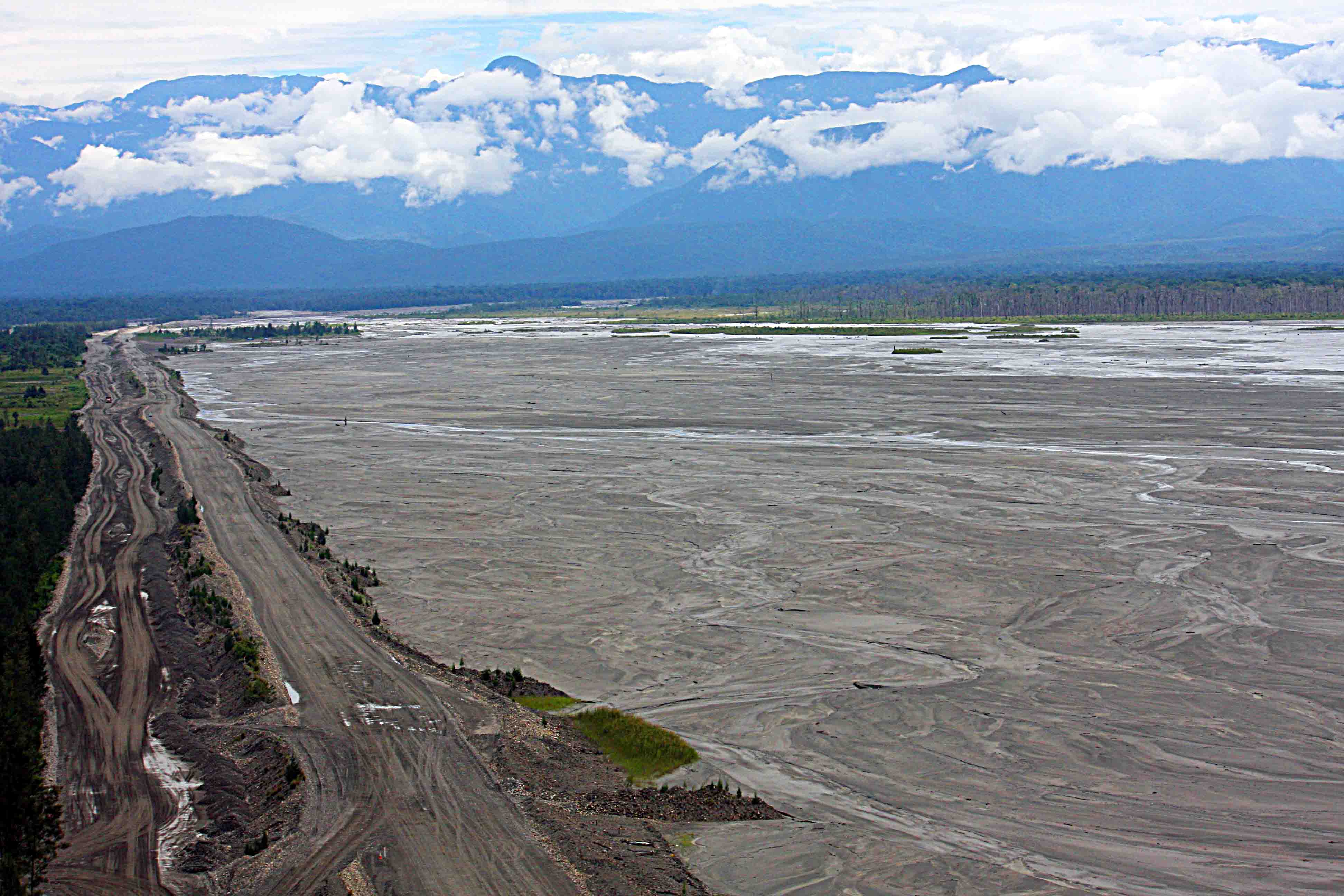
Freeport's contribution to Papua's welfare - Riverine tailings pollution

To judge by the recent “100 Best Corporate Citizens List”, all it takes to finesse a long and controversial record of human rights abuses is to come up with a piece of high-minded rhetoric, then carry on as usual.

Human rights advocates and those who have studied the record of Freeport McMoran in West Papua were startled to learn that Corporate Responsibility Magazine had named Freeport as the 24th-best corporate citizen in America (click for the full list). More startling still, the company scored well based mainly on a sixth-place ranking in the human rights category.

How is this possible? Well, the survey’s methodology seems to pay no heed to human rights performance. Only human rights rhetoric matters. And in that, Freeport excels. A strong written policy on human rights declares: “Freeport-McMoRan does not tolerate human rights transgressions.” It points to rights risks in West Papua, Peru, and the Democratic Republic of Congo, and adds that PT Freeport Indonesia policy is to “notify the direct commanders of the perpetrators” in cases where human rights allegations are made against Indonesian security forces. Since reputable human rights groups suggest that the top ranks of the security forces are implicated in widespread human rights violations in West Papua, this is hardly striking at the root of the problem.

As local people have pointed out, and researchers have confirmed, Freeport’s performance is a far cry from the written policies. The main trouble is intimate ties to Indonesian security forces.

Security forces may be implicated in the murder of American citizens near the Freeportmine, as Eben Kirksey and Andreas Harsono have reported.

Violence around the mine is used by security forces to target and scapegoat local people. In 2005, the New York Times revealed thatFreeport paid the security forces more than $10 million in 2001 and 2002. Payments are now made “in-kind” rather than in cash. The local Amugme people have long protestedFreeport seizure of their lands. Pictures of Freeport’s Grasberg mine from space (left) show the scale and environmental impact in the mountains that are home to the Amungme.

And lest all of this be hailed as “old news,” the Amungme filed a lawsuit last year sayingFreeport had taken their lands illegally. Meanwhile, the Indonesian army’s presence around Freeport, and the company’s close ties to Indonesian security forces, were reinforced this year. The continuing alliance between Freeport Indonesia and the Indonesian security forces is likely to exacerbate, rather than improve, the human rights situation.

None of these reports are taken in to account in the “100 Best Corporate Citizens List.” All the human rights indicators measure “human rights disclosure” and the sole source, according to the methodology details, comes from “Company public disclosures” – a corporation’s own information about itself.

The methodology, in other words, measures promises, not performance. There are parallels to the debate over whether companies accused of operating sweatshops overseas can be trusted to police themselves, or should accept independent monitoring. Thus the list cites the voluntary “Sullivan principles” first created under the Reagan administration and welcomed by companies resisting demands to divest from apartheid South Africa. AndFreeport boasts of adherence to the Voluntary Principles on Security and Human Rights, launched by the British and American governments in 2000.

The key word here is “voluntary.” As with the mining industry globally and with businesses jumping on the corporate social responsibility (CSR) bandwagon more generally, companies are happy to promise good performance, as long as no one will be looking over their shoulders.

So perhaps it’s no surprise to learn that Corporate Responsibility Magazine is in fact published on behalf of the Corporate Responsibility Officers Association, a body made up of many of the companies being judged, and steered by such firms as Domtar and KPMG.Freeport is listed as a “recent member” of the CROA. It’s advanced in the listings – it was ranked 83rd in 2010.

The problem here isn’t just the “corporate social responsibility” methodology, but the entire concept of “CSR”. It can all too often be used by companies to buy their way out of “corporate social irresponsibility.”

Freeport is no champion of the best values of corporate citizenship: For human rights activists, it’s long been a poster child for corporate irresponsibility. A list of good corporate citizens with Freeport winning laurels demonstrates more than flaws in the study. As George Monbiot has written of climate change credits, the lists offer corporations a new form of medieval European Catholic “indulgences,” forgiveness for any form of offence. Jeff Ballinger recently pointed out on this blog that companies like Nike are wrapping themselves in the CSR garment to burnish their corporate images, despite continuing disregard for many labor rights. Freeport, too, is now having itself measured for a fine CSR wardrobe.

—-

David Webster is an assistant professor of International Studies at the University of Regina inSaskatchewan, Canada. He is a former coordinator with the East Timor Alert Network/Canada.

see also

West Papua Report (monthly)

ETAN/WPAT: Statement on the operations of the Freeport McMoran Mine in West Papua, to the U.S. Senate hearing on Extracting Natural Resources: Corporate Responsibility and the Rule of Law

Create a website or blog at WordPress.com

Up ↑