AWPA: PIF should grant observer status to the territory of West Papua

Australia West Papua Association (Sydney)
Media Release 31 August 2011
 
PIF should grant observer status to the territory of West Papua [1]
At the  42nd Meeting of the Pacific Islands Forum (PIF) to be held in  Auckland next week, AWPA calls on the PIF leaders to grant observer status to  genuine representatives of the West Papuan people who are struggling for their right to self determination.
As more of the Pacific community applies for observer status at the Forum  (Congressman Faleomavaega in a press release on the 8 August thanked   U.S. Secretary of State Hillary Clinton for clearing American Samoa, Guam and CNMI to apply for observer status at the PIF) http://www.house.gov/apps/list/press/as00_faleomavaega/enithankssecretaryclinton.html
surely it is time on the 40th  anniversary  of the PIF  to  bring the  Melanesian people of West Papua back into  the Pacific community.
In its guiding principles the PIF talks about ” the importance of averting the causes of conflict” and how  “Human Rights are a fundamental component of the vision of the Pacific Island Leaders which states that “We see a Pacific region that is respected for the quality of its governance…the full observance of democratic values, and for its defence and promotion of human rights.
Joe Collins of AWPA said West Papua is the one territory in the Pacific  where the  deteriorating human rights situation could lead to  instability  in the region.  The Forum leaders should be concerned about this and do all they  can to help resolve this conflict.  A good start would be to grant observer to those West Papuan representatives who are struggling for their right to self determination. They PIF leaders would have the support of their people in bringing West Papua back into the Pacific community.
In a letter to the PIF leaders in June 2011 AWPA urged
 the  PIF Leaders to put the issue of West Papua on its agenda  at its September summit and to not only  discuss the deteriorating human rights situation in West Papua but to  make a public statement of concern regarding the human rights situation in the territory as it has in past Forum Communiques. We also urge the PIF  to raise concerns about the human rights situation in West Papua with the Indonesian President.
to grant observer status to  genuine representatives of the West Papuan people who are struggling for their right to self determination
A number of governments have supported the autonomy package for West Papua  stating that the it is the best way forward for the West Papuan people. Although funding for the autonomy package has flowed to West Papua it has only benefited some elites and the bureaucrats with no benefit for the majority of West Papuans, which is why it has been rejected. We believe that it is pointless for  governments to keep saying the autonomy package is the best way forward. Even a revised Special Autonomy in whatever form it might take will never satisfy West Papuans demand for self determination. West Papuans have lost  trust that Jakarta will ever develop West Papua for the sake of the Papuans. The Forum can help by urging Jakarta to dialogue with the Independence Movement to find a lasting solution.
We also call on the Forum leaders to urge the Indonesian President to release all West Papuan political prisoners as a sign of good faith to the West Papuan people and urge the Forum to send a fact finding mission to West Papua to investigate the human rights situation in the territory.
 AWPA (Sydney) uses the name “West Papua” to refer to the whole of the western half of the Island of New Guinea.
info.
Joe Collins
+61.2. (0)4077 857 97

MIFEE project violates human rights: Joint press release

Joint Press Release,

14 August 2011

Walhi, Pusaka, Sajogyo Institute, Sorpatom, Papuan NGOs Working Group, Sawit Watch, Aman, Huma,  JKPP, KPA, Kontras, Green Peace Indonesia, DtE

MIFEE Project Violates Human Rights

[Translated by TAPOL]

One year after the MIFEE (Merauke Integrated Food and Energy Estate) Project was launched by the central government, the situation of the people in Merauke  has become a matter of grave concern.  The indigenous Malind  people and the inhabitants in Merauke in general have been threatened and marginalised as a result of the conversion of their land and their ancestral forests by the MIFEE Project.

Research undertaken by Pusaka, called  ‘MIFEE does not reflect the aspirations of the Malind people’ drew the conclusion that the MIFEE Project was launched as the illegitimate offspring of the global food crisis for Food, Feed, Fuel and Climate Change (3F and 2C).  MIFEE is called the ‘illegitimate offspring’ because it is not a solution that serves the interests of the majority of the people but is the result of a conspiracy between capitalists and the government in search of economic rent side by side with cramped living conditions for the majority of the people. In the words of Emillianus Ola Kleden, a researcher for Pusaka Foundation, the MIFEE programme will have a number of negative impacts on the social and cultural fabric, the demographics, the social and economic conditions and the environment of the people. These negative impacts  will also worsen the living conditions of many groups living in the areas affected by the project.

Laksmi A Savitri, a researcher for the Sajogyo Institute, came across facts showing that MIFEE is a development model which makes no provision for improving the living standards  of the indigenous people in Merauke and is only focussed on the accumulation of corporate profits. There are three reasons for this, according to Laksmi:  firstly, it fails to respect the concept of land and identity  which is inseparable from the identity and dignity of the Malind people; secondly, it fails to understand the close links between the Malind people’s system of living and the natural resources and the forests, and assumes that the loss of forestry resources will be replaced by opportunities to work as day labourers for the companies; and thirdly, it pays no attention to the process of meaningful social transformation for the Malind people towards a better life in ways and forms that are defined by the Malind people themselves.

According to Billy Metemko, chairman of Sorpatom Merauke, the Merauke Project  has already caused significant damage  to  the social structure of the customary groups who have lost land where they are able to look for food and fulfil their social  needs, like what has happened in Zanegi Kampung in the operational area of PT Medco or Domande Kampung in the operational area of PT Rajawali and Nakias Kampung in the operational area of PT Dongin Prabhawa.  The destruction of these forests has resulted in the destruction of traditional symbols, the source of their livelihood, while in the longer term, it will lead to the wholesale destruction and extermination of traditional communities in Merauke.

Since 2010, Sawit Watch and the Justice and Peace Commission of the Diocese of Merauke (SKP-Merauke) have held a number of meetings in kampungs along the border region between Indonesia and Papua New Guinea in South Papua and have discovered that land has been allocated for palm oil plantations on a massive scale. In the district of Merauke, at least 380,887 hectares have been allocated to ten companies, and 320,000 hectares in the district of Boven Digoel where licences have been issued to eight palm oil plantation companies. Opening up the land to palm oil plantations  on such a large scale has resulted in forest areas in the south of Papua having been turned into mono-cultural  plantations  leading to ecological destruction and the permanent and irreversible loss of its vitally important diversity. The presence of traditional communities  and indigenous Papuan people whose lives still depend on the forests will eventually be uprooted and marginalised as a consequence of development schemes that fail to take account of local wisdom and culture.

Bearing these conditions in mind, civil society in Indonesia has warned the Indonesian government and parliament, the DPR RI, that this project is more harmful than beneficial. Nevertheless the government  seems to have refused to listen to reports about the destruction of the environment, the food culture of the traditional communities and their life spaces and the destruction of Merauke’s forests. Sorpatom (Solidarity of Papuan People Rejecting MIFEE) has on numerous occasions organised activities to reject the  presence of MIFEE. Komali (the Community of Traditional Communities) wrote to the Indonesian president last year expressing the same views about MIFEE.

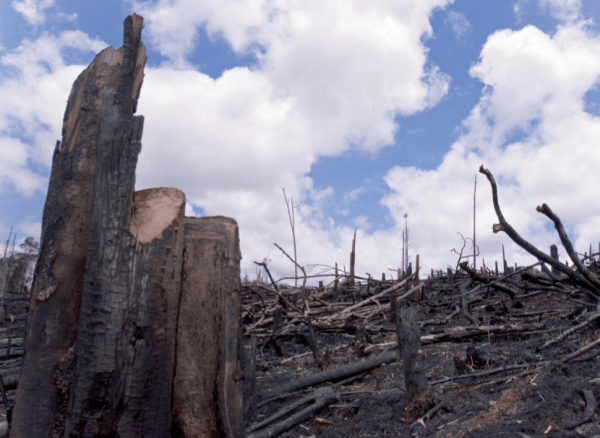
A field visit to Merauke by the environmental NGO WALHI in June 2011 discovered that during the course of the past year, at least one hundred thousand hectares of natural forest in Merauke have been cleared, including sago hamlets which protected food security  at all times, regardless of the season, and are very adaptable to changes in the climate. The marshlands are threatened  by drought, as a result of which  fish, birds  and deer  that have provided the local people with their source of protein will find it increasingly difficult to enjoy the necessary living space. Eventually, the Economic, Social and Cultural (ECOSOC)  rights will become ever more inaccessible to protection and provision by the state. Berry N. Forqan, the national executive director of WALHI, has stated that it is reasonable to say that the Indonesian government should be regarded as having caused the violation of basic human rights with the MIFEE Project.

Sinal Blegur, a member of the Working Group of NGOs in Papua, said that the violation of these ECOSOC rights will ultimately lead to the violation of  civil and political rights because MIFEE could potentially pave the way for the security forces  to enter the region on a massive scale to protect the operations of the companies.

In view of the above, dozens of local, national and international NGOs  have in the past month jointly produced a report to be submitted  to the Special Rapporteur of the UN on the Right to Food, drawing attention to threats to the right to food  of the traditional communities in Merauke. According to Abet Nego Tarigan, executive director of Sawit Watch, 22 NGOs  have so far signed  this document, representing the traditional communities in Merauke who are the victims or potential victims of the MIFEE Project The report has also been sent to the Committee on the Elimination of Racial Discrimination at the Office of the UN High Commissioner for Human Rights, and the Committee on Economic, Social and Cultural Rights  of the Human Rights Treaties Division.

This means that all civil society organisations which are concerned with the rights and living space for indigenous Papuan people should call on the government to immediately halt all MIFEE activities and Food Estates in general  in Indonesia that are  damaging the environment and forcing the  removal of traditional communities from their traditional land  and areas which they manage. The national, provincial and district governments must stop granting location licences  to companies and hold an inclusive dialogue, in which the Malind people are central, to discuss the allocation of land, the provision of space and development capital for agriculture, in conformity with social transformation that can bring the Malind people self-reliance and dignity.

All this is intended to ensure that similar operations that have resulted in the massive destruction of the environment which have occurred in Sumatra, Java, Kalimantan and Sulawesi  should not be repeated in Papua.

Contacts:

Islah, Manager   of the Water and Food Campaign, WALHI;

Frangky Samperante, Director of Psaka;

A Karlo Nainggolan, staff member of Advocacy, Policy and Legal Defence, Sawit Watch;

Laksmi Savitri, Sajogyo Institute;

Sinal Blegur, member of the Working Group of NGOs in Papua.
AlertNet: Indonesia re-thinks Papua food project – report

http://www.trust.org/alertnet/blogs/alertnet-news-blog/indonesia-re-thinks-papua-food-project-report

By Thin Lei Win

A member of the Koroway tribe walks up a ladder to his house at a forest near Merauke city in Indonesia's Papua province in this May 18, 2010 handout photo.A member of the Koroway tribe walks up a ladder to his house at a forest near Merauke city in Indonesia’s Papua province in this May 18, 2010 handout photo.

BANGKOK (AlertNet) –Indonesia’s government is considering moving its controversial food security project from Merauke, on the island of Papua, to East Kalimantan province, on Borneo island, due to lack of progress in the past two years, the Jakarta Globe reported.

Under MIFEE (Merauke Integrated Food and Energy Estate) plans, 1.63 million hectares of forest which form the basis of life for some 200,000 indigenous people in the Merauke area would be used to grow rice, palm oil, soya bean and corn among other crops.

Earlier this month, AlertNet reported criticism from rights activists that MIFEE threatens indigenous people and the forests and ecosystems in the area.

They also said the government has failed to sufficiently consult the native residents over the impact, which will include losing their customary lands, an influx of migrants from the rest of Indonesia and decreased quality of the ecosystems which people rely on for food and for their livelihood.

The minister of agriculture, Suswono, said on Monday that 200,000 hectares of land available in East Kalimantan could be used for agriculture, according to the Globe.

“The principle of the food estate is finding enough land for an agricultural zone. It doesn’t have to be in Papua,” the Globe quoted the minister as saying.

“[The East Kalimantan site] may not as big as Merauke, but it is more feasible. It has been two years since we floated the plan, but there has been no progress at all.”

Indonesia annually imports 2 million tonnes each of rice and soybean, and the nation needs to be able to feed its people without importing food, he added

Indonesia food security project threatens Papuan way of life – activists

http://www.trust.org/alertnet/news/indonesia-food-security-project-threatens-papuan-way-of-life-activists

Source: Alertnet // Thin Lei Win

05 Aug 2011 14:07

NOTE: West Papua Media proudly provided fixing services for Reuters AlertNet for this article and further investigations.  

A member of the Koroway tribe walks up a ladder to his house at a forest nearMerauke city in Indonesia’s Papua province in this May 18, 2010 handout photo. REUTERS/Suntono-Indonesia statistic agency/Handout

By Thin Lei Win

BANGKOK (AlertNet) – Indigenous Papuans are at risk of further marginalisation and the forests and ecosystems on which they rely face destruction due to an ambitious food security project by the Indonesian government, activists say.

Under MIFEE (Merauke Integrated Food and Energy Estate) plans, 1.63 million hectares of forest which forms the basis of life for some 200,000 indigenous people in the Merauke area would be used to grow rice, palm oil, soya bean and corn among other crops.

Indonesia is seen as a key player in the fight against climate change and is under intense international pressure to curb its rapid deforestation rate and destruction of carbon-rich peatlands.

Activists accuse the authorities of not sufficiently consulting the Malind Anim people about the project, which they say pose a double threat to local Papuans. Not only would they lose their customary lands, but they would also face an influx of migrants from the rest of Indonesia — further marginalising communities that feel disenfranchised by what they say is the government’s exploitation of natural resources at their expense.

“If this project goes ahead, it means we will lose everything – we will lose our land, our culture, our livelihood, our food,” Rosa Moiwend, a Papuan activist whose family still lives in Merauke, told AlertNet.

The transition from forest to farm and plantation land would have a “tremendous” impact on natural ecosystems, Carlo Nainggolan from Indonesian rights group Sawit Watch, said.

“Indigenous people who have made use of natural forests to meet necessities of life will experience a dramatically decreased quality of life and well-being,” he said.

Department of Agriculture officials did not respond to a request for comment.

STRAINED TIES

Papua, two provinces on the west half of New Guinea island, has long suffered strained ties with Indonesia which took over the area from Dutch colonial rule in 1963. And this week, thousands of indigenous Papuans them marched on the parliament in the capital of Papua, demanding a referendum on independence from the archipelago.

Despite being home to a mine with the world’s largest gold and recoverable copper reserves, Papua is one of the least developed regions in Indonesia. According to the United Nations, 40 percent of Papuans live below the poverty line of $1.25 a day, compared to the national average of 18 percent.

Both the central and regional governments have hailed MIFEE as the answer not only to Indonesia’s growing concerns about food shortages but as a source of exports.

The project is expected to produce close to 2 million tonnes of rice, almost 1 million tonnes of corn, 2.5 million tonnes of sugar and close to 1 million tonnes of crude palm oil, according to local media reports.

However, activists point out that the staple food for Papuans is sago, a starch derived from sago palm, not rice. And they say there has been discontent in some areas where compensation from companies clearing and managing the land was deemed insufficient.

Despite a recent government pledge to resolve land tenure conflicts and protect the rights of people in forest-based communities, activists say most locals remain in the dark about the project.

“People from the village, when asked about MIFEE project replied, ‘MIFEE is a car that frequently crosses the road that reads MIFEE (on the body of the car)’,” Sawit Watch’s Nainggolan said.

LOSING A WAY OF LIVING

The massive scale of the project and nature of the indigenous people’s skills – many make a living hunting and gathering rather than farming – means a huge workforce is likely to be imported from outside Papua, activists say.

Sawit Watch estimate that some 5 million workers were needed to work the land, or four labourers per hectare. Yet, based on the 2009 census, the number of people native to Merauke was 195,577, Nainggolan said.

The low levels of education, knowledge and Indonesian language skills also mean indigenous Papuans are likely to be only involved in MIFEE as low-skilled labourers despite the loss of their land and livelihoods, he said.

Moiwend summed up the anger felt by activists.

“If the Indonesian government says that we are a part of them, that we are their brothers and sisters like they say, why do they do this project?,” she said. “They don’t want us to live in our own land. They want to kill us with this project.”

AFP: Languages of Papua Vanish Without a Whisper

(Comment from West Papua Media:  A very sad indictment of the policy of cultural genocide and Indonesianisation practiced in West Papua.  Deliberate refusal of allowing birth languages to be spoken at school, and persecution of people speaking traditional languages by security forces is contributing to this.  As any indigenous person knows, loss of language means loss of place, and is the last step of cruel dispossession.)

Agence France-Presse
July 21, 2011

Who will speak Iniai in 2050? Or Faiwol? Moskona? Wahgi? Probably no
one, as the languages of New Guinea — the world’s greatest linguistic
reservoir — are disappearing in a tide of indifference.

Yoseph Wally, an anthropologist at Cendrawasih University in Jayapura,
keeps his ears open when he visits villages to hear what language the
locals are speaking.

“It’s Indonesian more and more,” he said. “Only the oldest people
still speak in the local dialect.”

In some villages he visits, not a single person can understand a word
of the traditional language.

“Certain languages disappeared very quickly, like Muris, which was
spoken in an area near here until about 15 years ago,” he said.

New Guinea is home to more than 1,000 languages — around 800 in Papua
New Guinea and 200 in Indonesian Papua — but most have fewer than
1,000 speakers, often centered around a village or a few hamlets.

Some 80 percent of New Guinea’s people live in rural areas and many
tribes, especially in the isolated mountains, have little contact with
one another, let alone with the outside world.

The most widely-spoken language is Enga, with around 200,000 speakers
in the highlands of central PNG, followed by Melpa and Huli.

“Every time someone dies, a little part of the language dies too
because only the oldest people still use it,” said Nico, Cendrawasih
University’s museum curator.

“In towns but also eventually in the forest, Indonesian has become the
main language for people under 40. Traditional languages are reserved
for celebrations and festivals,” said Habel M. Suwae, the regent of
Jayapura district.

In PNG, under the influence of nearby Australia, English has spread,
though it has made little headway with some tribes, particularly those
in the isolated highlands.

The authorities are sometimes accused of inaction, or even of favoring
the official language to better integrate the population, particularly
in Indonesian Papua.

But according to Hari Untoro Dradjat, an adviser to the Indonesian
ministry of culture, “it is almost impossible to preserve a language
if it is no longer spoken in everyday life.”

Despite his pessimism about the future, anthropologist Wally believes
art and culture can stop Papuan languages being forgotten.

Papuans love to sing and celebrate and they must do these things in
their traditional languages, Wally says — this way, young people “will
want to discover the language to understand the meaning of the songs.”

Instead of saving languages on the way to extinction, some researchers
want to preserve a record of them — a difficult task when many are
exclusively oral.

Oxford University has launched a race against the clock to record
Emma, aged 85, Enos, 60, and Anna, also 60, who are the three last
Papuans to speak Dusner.

More than 200 languages have become extinct around the world over the
last three generations and 2,500 others are under threat, according to
a Unesco list of endangered languages, out of a total of 6,000 in the
world.

Create a website or blog at WordPress.com

Up ↑
