Amnesty: Indonesia – Victims still waiting for truth and justice for past human rights violations

Amnesty International

AMNESTY INTERNATIONAL
PUBLIC STATEMENTIndex: ASA 21/012/2012
24 March 2012

Indonesia: Victims still waiting for truth and justice for past human rights violations

As the world marks the International Day for the Right to the Truth concerning Gross Human Rights Violations and for the Dignity of Victims, in Indonesia victims of serious human rights violations, including unlawful killings, rape and other crimes of sexual violence, enforced disappearance, torture and other ill-treatment continue to call for truth, justice and reparation for past crimes.

Amnesty International today urges the Indonesian Coordinating Minister for Political, Legal and Security Affairs, who is leading a team to resolve past human rights violations, to answer these calls by making the establishment of a National Truth and Reconciliation Commission a key priority.

The Commission should function according to international law and standards, including the Updated Set of principles for the protection and promotion of human rights through action to combat impunity. It should not substitute the responsibility of the criminal justice system in the country to investigate and – if sufficient admissible evidence exists – prosecute those responsible for grave human rights violations and crimes under international law. All victims should be guaranteed access to full reparation including restitution, compensation, rehabilitation, satisfaction and guarantees of non-repetition.      In 2004, the Indonesian Parliament passed the Law on a Truth and Reconciliation Commission (No. 27/2004), which provided for the establishment of a national truth commission with powers to receive complaints, investigate grave human rights violations which occurred in the past and to make recommendations for compensation and/or rehabilitation for victims. In 2006 the Indonesian Constitutional Court struck down the law, after it ruled that an article which provided reparation for victims only after they agreed to an amnesty for the perpetrator was unconstitutional. Amnesty International welcomed this ruling, as amnesties, pardons or similar measures of impunity for the most serious crimes and human rights violations such as unlawful killings, rape and other crimes of sexual violence, enforced disappearance, torture and other ill-treatment are contrary to international law.

Almost six years later, attempts to pass a new law and enact a national truth commission have stalled. Although a new law has been drafted and is scheduled for discussion in Parliament in 2011-2014; to date there has been no progress, with Parliament failing to prioritize debate of the draft in the 2012 legislative programme. The continued failure to debate and pass a new law in Indonesia leaves many victims without an effective mechanism for truth and full and effective reparation.

In May 2011, President Susilo Bambang Yudhoyono established a multi-agency team to devise “the best format to resolve grave human rights violations that occurred in the past”. The team has so far visited victims of such violations in various part of the country, including Talangsari, Tanjong Priok and Kupang. However, it has been criticized by human rights organizations and victims’ groups for failing to develop a concrete strategy to ensure truth, justice and reparation for victims.

All victims of gross human rights violations, crimes against humanity and other crimes under international law have a right to truth. Principle 4 of the Updated Set of principles for the protection and promotion of human rights through action to combat impunity states that “[i]rrespective of any legal proceedings, victims and their families have the imprescriptible right to know the truth about the circumstances in which violations took place and, in the event of death or disappearance, the victims’ fate”.

For victims, this right involves knowing the whole truth about the violations they suffered, including the identity of the perpetrators and the causes, facts and circumstances in which such violations took place. For family members, particularly of those who were killed or disappeared, it involves establishing the fate and whereabouts of their loved ones. Whether individual or collective, the right to truth involves the public acknowledgement of victims’ suffering. Truth commissions are also an important step towards understanding the circumstances that led to past violations, learning from the past to ensure that such crimes will not be committed again, and ensuring that shared experiences are acknowledged and preserved.

In addition to a lack of action at the national level, local attempts to establish truth commissions to deal with specific cases also continue to face delays. In the provinces of Aceh and Papua, civil society organizations are pushing for the establishment of local truth commissions, which are provided for in autonomy laws governing those areas. In Aceh a draft bylaw (qanun) has been on the legislative programme since early 2011 but is yet to be debated in the Aceh regional parliament, while in Papua, to date there has been no progress.

Amnesty International calls on the provincial and central government to prioritize the establishment of local truth commissions to ensure truth, justice and full reparation for victims and their families.

Efforts to deliver truth for victims and their families must form part of a wider framework of accountability for past crimes. Amnesty International calls on the Indonesian authorities to ensure that perpetrators of serious human rights violations are brought to justice in independent courts and in proceedings which meet international standards of fairness. Victims and their families must be provided with full and effective reparation under international law.

Amnesty International further calls on the Indonesian government to ratify the International Convention for the Protection of All Persons from Enforced Disappearance at the earliest opportunity, incorporate its provisions into domestic law and implement it in policy and practice.

Link: http://www.amnesty.org/en/library/info/ASA21/012/2012/en


New Matilda: Australia’s Money Helps Kill, Intimidate And Torture

from our good friends at

New Matilda.com

NM INVESTIGATES

23 Mar 2012

Our Money Helps Kill, Intimidate And Torture

By Marni Cordell

Bob Carr and Stephen Smith

Australia plays a key role in training and funding elite Indonesian counter-terror unit Detachment 88 – but wants to distance itself from the unit’s violent reputation, reports Marni Cordell

Bob Carr and Stephen Smith with

their Indonesian counterparts.

There’s been a terror threat in Jakarta. A group of hardliners claim they intend to bomb the city’s transport system, just days before the UK prime minister is scheduled to arrive for a state visit. Indonesia’s counter terror agencies scramble to respond to the critical incident as the population goes into lockdown.

I’m sitting in the Control Room at the Jakarta Centre for Law Enforcement Co-operation (JCLEC) alongside international police trainers Bob Milton and David Gray.

On the screens in front of us, Indonesian police are acting out roles in this imagined terrorism scenario — and Milton and Gray are the puppet-masters.

Inside the JCLEC Control Room. Photo: Marni Cordell

“Basically the scenario develops into a more and more complicated problem,” explains Milton, a former Metropolitan Police commander from the UK.

“We try to make it as real as possible. We’ll have things such as pictures, audio, taped phone conversations, anything that we can try and get the information to them in a more interesting way.”

“We then challenge the students and ask for quite a lot of detail about how they are going to respond, and how they are going to deal with it.”

Fake terror scenarios like this one are a regular part of the immersive training that goes on at the Australian-funded police training centre.

JCLEC was set up in 2004 as a result of a bilateral agreement between Indonesia and Australia to strengthen Indonesia’s counter-terror effort in the wake of the Bali Bombings.

I visited the centre last week as part of an investigation into Australia’s funding and training of Indonesia’s crack anti-terror squad, Detachment 88 — the unit responsible for capturing or killing most of Indonesia’s terrorism kingpins since the 2002 Bali attack.

Detachment 88 employs a controversial brand of policing in which suspects are shot dead rather than arrested — like a soldier would shoot an enemy combatant. The high profile counter-terror raid in Bali last Sunday, in which five suspected terrorists were killed and the police were hailed internationally as heroes, was just the latest in a long line of lethal operations.

The unit is funded and trained by Australia and while the Australian Government might not endorse their paramilitary-style tactics, it’s been willing to turn a blind eye because Detachment 88 has been extremely effective at disrupting Indonesia’s extensive terror network.

JCLEC itself is deep within the grounds of the Indonesian National Police Academy, in the city of Semarang in Central Java. When I arrive at the centre I’m met by AFP federal agent Brian Thomson, a friendly, middle-aged cop from Canberra who is nine months into a two-year stint here. I’m the first Australian journalist he has hosted in that time.

JCLEC is touted as an international police training centre but in fact its students are over 90 per cent Indonesian — 9 per cent of whom are Detachment 88. The centre hosts trainers from Indonesia and across the globe, predominantly from Australia, Europe, and the UK.

Students undertake computer-based training courses – this one tests their knowledge of the difference between intelligence and information. Photo: Marni Cordell

Its core funding for more than 130 staff on six hectares of well maintained grounds comes directly from the Australian Federal Police’s own budget.

The self-contained centre — complete with student accommodation, lap pool and gym — couldn’t stand in greater contrast to stories that abound in Jakarta about Detachment 88’s operations.

JCLEC’s shtick is about “learning and understanding through shared experience” — and teaching best practice terror investigation techniques and proper use of the judicial process. Detachment 88, an elite and highly skilled unit with unique powers of surveillance in Indonesia, seems to operate above the law.

As I reported earlier this month, there is growing evidence to suggest what was once solely a counter-terror unit is now moving into counter-separatist operations. Activists in West Papua claim the squad is being deployed to hunt down civilians aligned with the independence movement in a growing campaign of intimidation.

According to Eric Sonindemi, a participant in last October’s Third Papuan People’s Congress, says Detachment 88 personnel were involved in the deadly attack on Congress in which six people were killed and many others wounded.

“Most of the security forces were in plain clothes, but they weren’t really concealing their weapons — they were sort of showing off,” Sonindemi told me when I met with him in Jakarta. “Detachment 88 was there,” he said, explaining that he “saw their equipment and riot shields”.

“Hundreds of people were detained [by police] that night and many of them were beaten in detention,” Sonindemi said. “I spoke to one person who had a gash in his head, a broken nose and bruises on his face. He had been beaten with the butt of a rifle by a policeman.”

“He was subsequently released and never charged with any crime.”

So exactly how closely does Australia work with the deadly unit?

According to a Jakarta-based security analyst who asked not to be named, “There was a big push after the first Bali Bombing, to the point where Detachment 88 actually had Australians with them on [counter-terror] operations.”

“It’s been a long time since that’s happened,” the analyst continued. “The AFP says that sometimes Detachment 88 doesn’t even share information with them any longer. There’s a real pride in doing things themselves now without relying on the Australians.”

But a diplomatic source in Jakarta confirmed that the relationship remains extremely close — and that the AFP continues to work with the Indonesian National Police, of which Detachment 88 is a part, at head office in Jakarta.

Australian Federal Police agent Brian Thomson at JCLEC, with an Indonesian colleague. Photo: Marni Cordell

Details on our financial support for the unit are harder to come by. The Australian government committed $36.8 million over the first four years of JCLEC. Now Thomson tells me the Australia’s support for JCLEC comes out of the AFP budget, which continues to provide “roughly the same amount” of funding to the centre. We also assist the unit directly — although just what that assistance entails is a closely guarded secret.

“I’ve pursued that question through senate estimates, through questions on notice, I’ve had DFAT briefings, and I can’t get any clarity about the role of Australian support of the Indonesian military and police and specifically whether our contribution benefits Detachment 88,” Greens senator and spokesperson on West Papua Richard Di Natale told NM.

“And it’s very clear that Detachment 88 has been involved in some of the violence that has occurred in the region.”

Details from the Indonesian side are just as shady.

Although some of Detachment 88’s terror raids have been simulcast on television in Indonesia, scratch below the surface and it’s difficult to get any real detail on the unit, says Usman Hamid, advisor to the International Center for Transitional Justice.

“The accountability of Detachment 88 is very low,” Hamid tells me when I meet him in a hotel lobby in Jakarta where he is meeting with other experts to prepare a response to the draft national security bill.

“Detachment 88 has special allocation of the budget and international funding — which has never been explained to the Indonesian public clearly, or even to the parliament for that matter.”

“We hear vague amounts but it’s not under the state budget.”

“It should be accounted appropriately,” Hamid told NM. “To the Indonesian parliament, to the Indonesian public, and of course to the Australian parliament and public … to make sure that the budget Australia gave is really being used for the right purpose.”

As Brian Thomson walks me through the official JCLEC Power Point presentation, I ask how Australia can be sure that the training taught at the centre is also being “used for the right purpose” — how do we know it isn’t being used to crack down on civilian dissent?

He’s silent for some time before asking me to repeat the question, and then ultimately refusing to answer it — handballing to his Indonesian counterpart, Dwi Priyatno, who refers me to the Indonesian law on terrorism, and back to the public affairs branch of the Indonesian police.

I also ask specifically about separatism in Indonesia and whether techniques to quash independence movements are ever discussed at the Australian-funded centre. Thomson again gets nervous.

“I can’t really answer that because my job here as an executive director is to be involved in running the centre, so what’s actually discussed in the classroom, I can’t give full [details],” he says.

“Although separatism…

“Yeah…

“No…

“Not separatism.

“When you say separatism, in what regard are you referring to it?”

Back in Australia my inquiries about Detachment 88’s operations in Papua and their move toward policing separatism have been met with an almost uniform response. Here’s what I received from the AFP head office in Canberra: Australia has no mandate to tell the Indonesian Police how to run their business. And yes, we will continue to provide “capacity building assistance”.

Meanwhile, Eric Sonindemi says he remains traumatised by the police and military attack on the Third Papuan People’s Congress. He clearly remembers the sound of gunfire, he tells me, and now jumps when he hears loud noises. He is sure he is being monitored by the police. “I’ve been threatened by the police before,” he says, “but this is the first time I’ve feared for my life.”

Other Papuans I met in Jakarta told similar stories — of constant surveillance by the security forces, phone tapping and intimidation. They told me that fear is part of their daily lives.

Australian officials may well seek to disclaim any responsibility for the behaviour of the Indonesian police and particularly from the activities of Detachment 88. Given the close relationship between the AFP and the unit, however, it’s hard not to conclude that Australia is directly contributing to this climate of oppression.

This is the second article in an NM investigation of Detachment 88 and Australia’s role in the Indonesian counter-terror effort. Read the first article here.

“Enough Is Enough!” Testimonies of Papuan Women Victims of Violence and Human Rights Violations 1963–2009

http://ictj.org/publication/enough-enough-testimonies-papuan-women-victims-violence-and-human-rights-violations

March 14, 2012
ICTJ, the Women Commission, and the Women Working Group of Papuan People Assembly

“We women of Papua have been bruised, cornered, besieged from all directions. We are not safe at home, and even less so outside the home. The burden we bear to feed our children is too heavy. The history of the Papuan people is covered in blood, and women are no exception as victims of the violence of blind military actions. We have experienced rape and sexual abuse in detention, in the grasslands, while seeking refuge, no matter where we were when the army and police conducted operations in the name of security.”

In 2009–2010, ICTJ, the Women Commission, and the Women Working Group of Papuan People Assembly provided support to Papuan women in a project to document gender-based violence and human rights violations that occurred between 1963 and 2009. This documentation effort aims to understand different patterns of violence, including abuses committed by security forces and resulting from efforts to seize natural resources in Papua, as well as violence women have experienced in their own households since the army took control of the region in 1963. Of the regions in Indonesia, Papua—on the verge of becoming independent when Soehato gained power—experienced some of the highest rates of atrocities committed under the regime. And recent crackdowns in Papua indicate the government is still adopting a heavy-handed security approach.

The women in Papua worked on this collection of stories of violence and abuse over three months, interviewing 261 people (243 women and 18 men). The report finds that a range of factors within Papua—violence employed by security forces, a culture of discrimination against women, and lack of political will to change policies among others—have meant the victims are still neglected and none of the effects of violence have been addressed. “Change cannot be postponed any longer,” the women conclude.

Unconfirmed reports of imminent major security crackdown in West Papua

West Papua flag

from West Papua Media sources in Jayapura

January 15th, 2012

Across West Papua, a series of remarkable and disturbing text messages has been circulating the claim that Indonesian security forces are preparing a major security assault across Papua in an operation that allegedly began on February 10.

West Papua Media has been unable to speak with any of the alleged participants in the meeting, nor any official representative of the organisations present, to verify these reports.  However local sources are reporting that security forces have intensified patrols and street presence in Jayapura at least  that would correspond to such an operation.

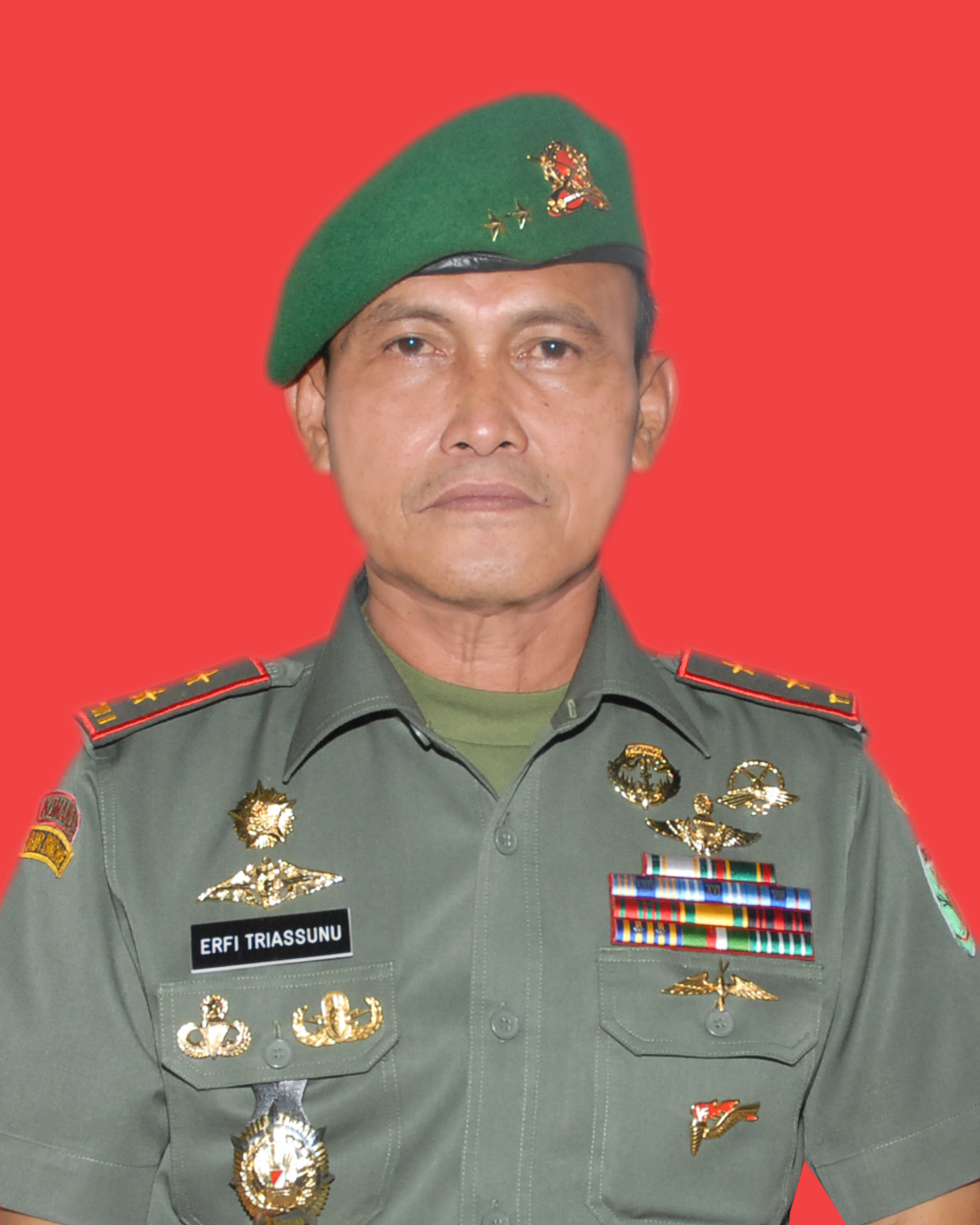
According to the messages a meeting was held at the Hotel Aston at 10am on February 9, between Polda Papua senior police officers.  Also at the meeting were the Papuan governor, the Commander of Cenderawasih Military District Erfi Triassunu, and officials from the Papua District Attorney, State Intelligence Body (BIN),  the army Strategic Intelligence Agency (BAIS), senior Kopassus officers, and leaders from Barisan Merah Putih – the main pro-Indonesia militia.  The meeting was  allegedly being held against the threat of disintegration of Indonesia  by separatist groups in Papua, according to the messages.

Erfi Triassunu - duplicitous

Participants allegedly raised the issue that “pro-merdeka” Papuan independence aspirations had been “globalized” and were attracting widespread international support especially after the brutal and heavy handed crackdown by Indonesian security forces on the Third Papuan People’s Congress on October 19, 2011, according to the source.

The  Memorandum assigned to officers present was to immediately raise “any safety risk to the smooth operation codes” – believed to indicate that security forces would be placed on high alert to prevent all expressions of self-determination.   It continued:

“The main focus is for the treason trial of Forkorus Yaboisembut and colleagues, who should not be given (political or public) space to defend themselves to their (Papuan) people and release pressure on the Makar defendants.  Any adverse condition in the control of the military from the Start Date (of) 10 February 2012 immediately increase security emergency.”

The messages then hinted darkly at the final conclusion of the meeting:  “Do not hesitate (in carrying out your duty if you have) to violate human rights for the sake of the sovereignty of Indonesia. ”

The text messages were said by local human rights sources to have come from a “very reliable source close to the military”.  It is not known at this stage if these text messages have been circulated deliberately by military intelligence as a possible tension building exercise.

West Papua has been subjected to many false SMS rumour “storms” in the past as sources believed by observers to be Indonesian intelligence officers have circulated false and inciting claims of imminent communal violence.  This includes a notorious case

Threats by SMS to human rights defenders and journalists are commonplace in Papua, widely believed to come from military sources.

Across Papua in recent weeks, SMS messages are also circulating claiming that “mysterious killings” are allegedly being perpetrated by Indonesian security forces against West Papuan civilians.  Reports have been circulating that a man allegedly from Yakuhimo, Puncak Jaya, was killed and his mutiliated body turned up in Sentani, and another allegedly was found in a marketplace in Abepura.  Additionally bodies have been reported as being found in similar circumstances in Timika and Wamena, but none of these reports have been able to be independently verified.

Westpapuamedia.

LP3BH: Military Intelligence Operations are still underway in Papua

Statement by Yan Christian Warinussy, Executive-Director of LP3BH,  Papua[Translated by TAPOL]

The appointment and deployment of Major-General Mohammad Erwin Syafitri (former deputy chief of BAIS, Indonesia’s joint strategic intelligence  agency) as commander of KODAM XVII Cenderawasih Papua is clear proof that the Land of Papua is still an area of operations of Indonesian military intelligence.

As a result, the top leadership of the military territorial command in this region has been placed under the command of a leader who has a background in intelligence or at the very least a history of involvement in Indonesia’s intelligence agency.

This is important in order to protect the collaboration between military activities or security and intelligence which acts as the front line for gathering information and deploying security forces in the area.

It is important to point out that in the opinion of human rights activists in Papua, the Land of Papua is still isolated from the international community, bearing in mind that access to the area has been made difficult for several humanitarian and human rights institutions such as the International Committee of the Red Cross and Peace Brigades International, as a result of which they have closed their offices in Papua and left Indonesia in November last year.

The same goes too with regard to the presence of international observers as well as foreign journalists. And for the past five years, it has been difficult for foreign diplomats based in Jakarta to gain access to Papua. This situation  has come about because of the powerful influence of the Indonesian army – TNI – and the Indonesian police, so as to make it more difficult for international observation of developments with regard to the rule of law and basic human rights in the Land of Papua.

As a human rights defender in the Land of Papua, I see a close connection with  the upsurge in demands being made by the Papuan people  to the Indonesian government to find a solution to a number of problems by means of a Papua-Indonesia dialogue, as an important theme which is continually being confronted by certain elements, such as the TNI and the Indonesian police, both of whom have their own vested interests in the Land of Papua.

Bearing in mind that President Susilo Bambang Yudhoyono stated on 9 November 2011 that he is ready to enter into dialogue with all forces in the Land of Papua, I have not yet seen  any response to this from TNI or from the Indonesian police, to indicate whether they agree with this or indeed whether they support the wishes of the President.

Although in this connection, the military commander and the chief of police of Papua said in their presentations to the Papuan Peace Conference on 5-7 July 2011 that they too support dialogue as the way to solve the conflict in the Land of Papua.

I believe that the Indonesian army and police must clearly reveal their attitude towards the question of dialogue.which is what the vast majority of Papuans support, along with their non-Papuan brothers here in Papua. Even the central government in Jakarta is supporting this, which is clear from the fact that President SBY  has appointed Deputy President Boediono to take the lead in efforts to prepare the way for this Papua-Indonesia dialogue.

The idea of dialogue has moreover won positive support from a number of countries around the world, including the USA, Australia, Germany, the UK and the European Union, all of whom are close allies of Indonesia and support the territorial integrity  of the Republic of Indonesia.

6 February 2012

Create a website or blog at WordPress.com

Up ↑