SMH: Under the long arm of Indonesian intelligence

Tom Allard, Indonesia

August 13, 2011
Papuans calling for a referendum for Papua in Jayapura.Papuans calling for a referendum for Papua in Jayapura. Photo: AFP

IT WOULD seem an unremarkable venture – a group of American tourists visiting a cultural centre in the Papuan town of Abepura. But to one observer the event (lasting, as he later reported, precisely 35 minutes) was laden with potential significance.

The man in the shadows as the visitors watched a traditional dance was an informant for Indonesia’s elite special forces unit, Kopassus. In a subsequent report, he noted that, while the visit had been ”safe and smooth”, there was no room for complacency. It was a point heartily endorsed by his Kopassus contact, Second Lieutenant Muhammad Zainollah, who alluded, in a report to his own commander, to the risk of foreign tourists ”influencing conditions of Papuan society”.

”Politically, there needs to be a deeper detection of the existence hidden behind it all,” he warned, ”because of the possibility of a process of deception … such as meetings with pro-independence groups.”

One of hundreds of intelligence briefs from Kopassus intelligence posts in Papua obtained by The Saturday Age – and part of a cache of 19 documents that includes a detailed analysis of the ”anatomy” of the separatist movement pushing for independence from Indonesia – the note is bizarre, even amusing, but also revealing. The Indonesian government runs a massive network of spies and informants in Papua, illustrating the level of paranoia in Jakarta about its hold over the resource-rich region in the western half of the island of New Guinea.

Situated in the easternmost reaches of Indonesia’s sprawling archipelago, the Papua region is a source of continuing embarrassment for Indonesia – a country that has otherwise made substantial strides as a democratic and economic power. Despite being granted special autonomy 10 years ago and targeted for accelerated economic development, its indigenous Melanesian people are the country’s poorest and many are deeply unhappy with Jakarta’s rule and a heavy security presence.

The documents, which date from 2006 to 2009, reveal that independence activists and members of the OPM-TPN, the small armed resistance, are under intense surveillance, but so too are many ordinary Papuans and civic leaders who do not advocate independence but are concerned about the advancement of their people, or are influential in the community.

”Everyone is a separatist until they can prove they are not,” says Neles Tebay, a pastor and convener of the Papua Peace Network that is promoting dialogue with Jakarta.

Around the capital, Jayapura, where many of the documents originate, there are 10 Kopassus spy networks infiltrating ”all levels of society”, including the university, government agencies, the local parliament, hotels and the Papuan Customary Council.

A worker at a car rental agency tips off his Kopassus handler whenever a suspicious customer visits the establishment or talks about ”M”, shorthand for ”merdeka” or freedom. A phone shop employee ”often provides information on the phone numbers of people purchasing phone credits”.

Journalists, university students, bureaucrats, church leaders, teachers, motorcycle taxi drivers, clan leaders, village chiefs, farmers and forest workers are all on the books of Kopassus.

One leader of the OPM-TPN has eight Kopassus informants within his network, including a 14-year-old family member.

Other units of the Indonesian military, known as the TNI, run similar intelligence operations, as do the police. There are also scores of agents in Papua from Indonesia’s national intelligence agency, known by its acronym BIN.

Benny Giay, a leader of the Gospel Tabernacle Church, is one of the civic leaders branded a separatist by Kopassus. For Dr Giay, the suffocating presence of the intelligence network is part of daily life, as is interference in the affairs of his church by the military. ”If someone joins the church, we always have to ask ourselves, ‘What did they come here for? Are they intels or worshippers?’ ” he says.

Given the disappearance and deaths of other leaders under the gaze of Kopassus, the surveillance leaves Giay constantly uneasy. ”I have to check my meals to make sure they are not poisoned and I have to be home by 7pm. If I walk around after then, I have to bring someone with me, always.”

Marcus Haluk, the secretary general of the Central Highlands Papuan Student Association, features heavily in the documents. It seems most of his meetings are attended by a Kopassus spy. ”I’ve lost count of the attempts to kill or threaten me,” he says. ”I’ve had guns pointed at my head, I’ve been thrown from a motorcycle. There are always SMS threats.”

Underpinning the spying is the view that most institutions in Papua are riddled with separatists. The documents outline a two-stage intelligence operation to address the perceived problem. The first involves disrupting alleged separatist networks and the second is dubbed the ”diminishing dominant influence phase” or ensuring ”traditional institutions used for politics in Papua lose the trust of the indigenous peoples of Papua”.

In short, the objective is to discredit the institutions and arrangements introduced by the central government under Papua’s special autonomy deal introduced in 2001 – the very policy supposed to give Papuans economic and cultural rights, dampen independence sentiment and secure national unity.

Agus Sumule, a long-term resident of Papua and adviser to governor Barnabas Suebu, is an immigrant and a nationalist and was a key player in drafting the special autonomy laws which created a new legislative body – known as the Majelis Rakyat Papua (MRP) – to represent indigenous Papuans.

Special autonomy has never had a chance, he argues, and much of the blame lies with Jakarta’s refusal to implement it properly. Papua was divided into two provinces – Papua and West Papua – in 2003 against the wishes of the MRP, Dr Sumule says. Moreover, the home affairs ministry interferes in the election of MRP candidates, and has banned people from taking their seats. Despite provisions in the special autonomy law for symbols of Papuan identity to be displayed, the cherished Morning Star flag has been outlawed. Those caught displaying it can be sentenced to 15 years in prison.

Some $3 billion in aid has flowed from the central government to the region in the past decade, but it is handed out haphazardly and most of it has been siphoned off by corrupt officials or wasted on bureaucracies to support the new province and dozens of new regencies in Papua.

Meanwhile, Papua has been swamped by migrants from other parts of Indonesia who dominate its economy. Explaining the economic disparity, one Kopassus report claimed that indigenous Papuans ”lack the willingness to work and the lack the willingness to make a better life, so their lives seem to be making no substantial progress”. Migrants, in contrast, had a ”high spirit and work ethic”.

Asked about the extensive intelligence operations, Sumule observes: ”On the one hand it’s paranoia, but it’s also much more than paranoia. It shows they don’t have a relevant policy for Papua, an understanding of Papua or what Papua should be in Indonesia.

”The problem with the intelligence is it’s not intelligent,” he adds. ”They send so much wrong information for the people in Jakarta, and they make decisions on it. It’s very dangerous.”

Indeed, the major report on the ”Anatomy of Separatists” had a detailed section on the alleged foreign support networks for a ”Free Papua” and it bears out Dr Sumule’s criticism of the quality of the intelligence. The list of 32 names for Australia includes academics, politicians and religious leaders who could understandably be placed in the category, but many others are not separatist supporters – they have simply shown an interest in Papuan affairs, raised concerns about human rights or are journalists who have reported from the region. The appearance of the former current affairs host Naomi Robson on the list is a standout.

Foreigners in Papua are viewed suspiciously, especially non-government groups. Indeed, Indonesia has expelled several foreign NGOs from the territory in recent years. The International Committee of the Red Cross, for example, is allowed into Guantanamo Bay but banned from visiting more than 100 political prisoners in Papuan jails.

One part of the intelligence analysis that is presumably more accurate is the assessment of the strength of the OPM-TPN. It is reckoned to have just 1129 fighters with mixed weapons totalling only 131, plus some grenades.

While the poorly armed resistance fighters do have some success in ambushing Indonesian military posts, the low estimate of their strength calls into question why there is such a large military presence in Papua. The Indonesian government won’t release precise figures on its armed deployments in Papua but, since special autonomy was introduced, it has doubled the number of battalions from three to six. It has 114 posts along the border with Papua New Guinea alone.

Estimates put the military numbers at about 15,000, approximately 13 soldiers for every armed separatist.

As one Indonesian official told a US embassy staffer, revealed in cables released by WikiLeaks: ”The TNI has far more troops in Papua than it is willing to admit, chiefly to protect and facilitate TNI interests in illegal logging operations.”

Whatever the reason for its deployment, the massive military and intelligence apparatus in Papua makes a lie of the Indonesian government’s insistence that it long ago junked its ”security” approach to managing Papua and it is now formulating policy under the rubric of ”development and prosperity”, says Neles Tebay.

”[The troops] are trained to see Papuans as the enemy,” he adds. ”I’m not saying all the troops are bad but if one group of them is threatening the indigenous people then it creates widespread fear. Also, they are always interrogating people. It’s very threatening.”

Read more: http://www.smh.com.au/world/under-the-long-arm-of-indonesian-intelligence-20110812-1iqtj.html#ixzz1Urwzdlye

Read the secret Kopassus report [PDF 3mb file]

Imparsial: Only a state can challenge the Act of Free Choice

Benny Wenda at the IPWP launch
Image via Wikipedia

>Bintang Papua, 10 August 2011
[A very lengthy report, abridged in translation by TAPOL]

Only a state can challenge the Act of Free Choice

Jayapura: Although no official report has yet been received about the
results of the International Laywers for West Papua conference in Oxford
on 2 August with regard to challenging the 1969 Act of Free Choice
(pepera) at the International Court of Justice, Imparsial-Jakarta says
that a challenge can only be successful if it is made by a state, not
by an organisation like ILWP.

Poengki Indarti, the executive director of Imparsial, an organisation
that frequently draws attention to the activities of the Indonesian
military in West Papua as well as to the human rights situation there,
said that the ILWP is not a state and furthermore, pepera was
legitimised by the United Nations while virtually all countries
recognise that West Papua is part of NKRI, the Unitary State of the
Republic of Indonesia.

She said that what Benny Wenda is trying to do via the ILWP and the
IPWP is to win as much support as possible from countries around the
world which show an interest in West Papua’s secession from Indonesia.
However, this is very difficult indeed because all countries with the
exception of Vanuatu support the incorporation of West Papua into
Indonesia. ‘What they are trying to do is get the support of some
hopefully sympathetic states. I dont think people should overact to the
decisions adopted by the ILWP conference,’ she said.

However, Yan Christian Warinussy, executive director of Papua-based
human rights NGO, LP3BH, said that any challenge with regard to ‘legal
standing’ would depend on the interpretation of the judge before whom
the case is brought. He said: ‘As regards any efforts to challenge
pepera that may be made by the ILWP, anyone and in particular the
Papuan people could submit a challenge because it relates to their
rights as Papuans . If in the opinion of the judge before whom the case
is brought, an organisation such as the ILWP has been granted the
necessary powers by the Papuan people, the case can of course be
accepted.’ He went on to say that it would be much more strategic for
the challenge to be made first of all at the national level because
Indonesia has its own legal system and it is not certain that a
decision would be adopted by the International Court in a case
connected with a sovereign state like Indonesia.

‘Therefore, I would press for the challenge to be made within the
Indonesian legal system which could be done by the Papuan Customary
Council (Dewan Adat Papua) or another organisation that has been granted
the necessary powers,’ said Warinussy who received the John Humphrey
human rights award in 2005.

The Imparsial director-general said that she thinks that all
stakeholders in Papua should focus primarily on peaceful endeavours and
dialogue to find a ‘middle way’. If everyone sticks to their own
opinion, the ones whose interests are damaged are the Papuan people who
do not have a very good understanding of political affairs. (sic).
Meanwhile, she drew attention to the long drawn out Papuan problem with
many actions being taken about the unsatisfactory implementation of
OTSUS (the special autonomy law), many acts of violence that have
resulted in civilian lives being lost, as well as actions calling for
independence, all of which point to the lack any serious attention from
the central and provincial governments. She said that the Indonesian
government is half-hearted about Papua and seems to want conditions in
Papua to stay the same as they are now. ‘We all hope to see the
government pay serious attention to Papua.’ She said it seems as though
the government just wants to keep the conflict in Papua going. It shows
no interest in enacting regulations or laws and seems to be acting at
cross purposes, with the government frequently pursuing the repressive
approach while the military have said that that they have made drastic
changes in the way they handle Papua. However, people feel that the
situation is no different from what it was in the past.

‘In the many cases of violence, it is the task of the police to
investigate who was responsible but nothing concrete has happened, while
Papuans are asking whether it was the real OPM or a fictional OPM that
certain state institutions are keeping alive. Everyone is looking to
the government to explain things because as yet the Papuan question
has not been resolved whereas the government is not serious about
solving it.

A case in point is what Benny Wenda is doing in the UK. Although Poengky
Indarti has checked the Interpol list of fugitives and saw that he is a
fugitive registered with Interpol, he is nevertheless free to seek
support overseas while no action is taken against him either by the
Indonesian government or the Indonesian police. The government is
deliberately keeping the Papuan problem hanging in the air, from the
polemics about the failure of OTSUS, to the breaches of security and the
shooting incidents as well as the calls for independence that have
caused much anxiety among the civilian population, whereas the
government still doesnt regard Papua as a problem that is in need of
solution.

Tempo: All West Papua Province’s Lawmakers Declared as Corruption Suspect

FYI

(West Papua Media comment:  these actions should be seen as an indictment of Jakarta’s failed Special Autonomy policies.  The DPRD office holders are restricted to those who are  members of Indonesia-wide political parties, and are heavily skewed toward military business interests.  A high proportion of members of the DPRP are not ethnically Papuan, and those who are, are involved in major Indonesian business ventures)

also: Big Budget, Big Leaks

Tempo Magazine
No. 50/XI/August 10-16, 2011

Law

All Suspects Together

All members of the West Papua DPRD were named as suspects in
corruption of the province’s funding. The state funds that should have
been used as capital for one of the province’s own businesses was
instead distributed to serve political interests. Governance in West
Papua is now threatened with coming to a complete standstill.

A Plenary session of the West Papua Provincial House of
Representatives (DPRD) was suddenly called for Thursday two weeks ago.
Although all the members were not present, the sitting was marked by a
tense atmosphere. Not surprisingly, as the theme of the discussion was
a very serious matter concerning the future fates of all those
attending.

The Papua State Prosecutor’s Office had named 44 members of the
parliament as suspects over corruption of Rp22 billion of West Papua
Provincial Income and Expenditure Budgets (APBD) for 2010 and 2011.
The announcement made by Deputy Chief State Prosecutor Suhardjo Tjatjo
rocked Papua. In the history of this nation, this is the first time
ever all the members of a parliament have been named graft suspects.

Not just the public, but the West Papua DPRD members themselves
admitted they were shaken when the release first appeared two weeks
ago. “I have never been questioned, so how come I am suddenly declared
a suspect?” said DPRD Speaker Johan Yoseph Auri. The Golkar Party
politician accused the investigation of the case of being loaded with
political interests. “I’m sure the prosecutor doesn’t have any strong
evidence in this corruption case,” he asserted boldly.

Johan admits he did accept the cash concerned. As did all his
parliamentary colleagues. But, he said: “It was a loan that was to be
repaid in three years.” Johan says he borrowed the cash from the
province-owned PT Papua Doberai Mandiri because he was under pressure
to meet his constituents’ requests.

Every day, he said, groups come to DPRD members’ offices claiming to
be constituents from various parts of Papua. They come asking for
donations for this and that and to lodge proposals for all kinds of
activities. “I have no other income, so I’m forced to look for loans,”
Johan explained.

Disastrously, those loans were not obtained from a bank, but rather
from a state-owned business that was not supposed to be involved in
borrowing and lending its shareholders cash. PT Doberai, for instance,
is a company set up by the West Papua government to look after
investment in this, Indonesia’s youngest province.

It was difficult to get other DPRD members to explain to us why they
now have the status of suspects. The plenary session, said John
Fathie—another Golkar politician—had decided that all its members were
forbidden to talk to the media. Explanations were only to be offered
by the DPRD speaker. Several members denied they had received any
money. “I already owe my bank money, so it would be impossible for me
to look for another loan,” declared PNI Marhaenisme politician Yance
Yomaki.

The difficulty is that the Papua Attorney General’s Office is fully
convinced that these people’s representatives have already done as
they liked by ‘feasting’ on the state funds to which they had no
right. Deputy Head of the State Prosecutor’s Office (AGO), Suhardjo
Tjatjo laid out to Tempo just how this case had begun, from its
investigation through to the conclusions reached and all the suspects
being determined.

Tjatjo said this was an old case whose status could only recently be
raised to that of an investigation once the AGO was convinced that
none of the money that had been claimed to be loans had been returned.
“There was no accountability for this expenditure,” he added.

Now, it so happened that Rp22 billion was cleared to be paid out at
the request of West Papua Provincial Secretary, Marthen Luther
Rumadas. Rp15 billion of that came from the 2010 APBD and the rest
from the 2011 one. “The business is under my authority,” he said
defensively.

The funds ought to have been allocated as additional capital for PT
Papua Doberai Mandiri. This provincial government-owned company is
active in very wide-ranging fields: drilling for oil and gas, non-oil
and gas exploration, as well as the acceleration of infrastructure
development, including netting new investors, both domestic and
foreign.

PT Doberai was set up around the same time as the formation of the new
province in 2009. West Irian Jaya regency was then elevated to the
status of West Papua province, with Manokwari as its capital. At its
establishment on 18 May 2009, the provincial government, that had
obtained an injection of special autonomy funds of Rp1.7 trillion,
invested Rp100 billion to buy shares in the new company.

A year later, all the shares in the province-owned business were taken
over by the West Papua government, until full control of it rested in
the hands of the provincial secretary. While that was happening, the
province treasury injected a further Rp25 billion in capital into it.
“That was when the games began,” said Tjatjo.

As the one having control of the business, Rumadas has also become a
suspect. He is accused of handing out state funds to DPRD members on
very spurious grounds: to cover their additional living expenses.

Rumadas was discovered to have issued a letter on 17 September 2010
concerning lending PT Doberai another Rp15 billion. Johan Auri gave
his written agreement to lending out this money to DPRD members.

The problem was that his letter was issued several hours after the
money had been transferred. “This meant that the money that had been
deposited then had to be hurriedly paid out,” said Tjatjo. The AGO
looked into this odd occurrence. It was also revealed that PT Papua
Doberai Mandiri’s CEO Mamad Suhadi at one point apparently refused
Rumadas’s request to pay out the money that had just been transferred.

When Rumadas had summoned him to his office, Mamad verbally declined
to comply. “Sorry, Sir, making such payouts would be a mistake,” said
Mamad, as imitated by Tjatjo. When Mamad refused to follow Rumadas’s
instruction, the Head of the West Papua Province Financial Bureau M.
Sirait was sitting next to Rumadas and later confirmed Mamad’s
statement to the prosecutor.

Rumadas paid no attention to Mamad’s objections. The money was still
paid out. Several weeks later another instruction was issued to
disburse a further Rp7 billion. The grounds were the same: loans to
the DPRD members. The AGO considered this corruption because the
members could not possibly pay back their loans in the set time,
namely July this year.

Rumadas does not reject the series of events, the results of the
prosecutors’ investigation. But he rejects claims that the loans were
deliberately given out to enrich DPRD members. Because of the loan
clause, Rumadas says, the DPRD members were required to return the
money they had borrowed.

Strangely, when he was pressed to explain why the loan money had been
taken from the company’s coffers and whether he knew what the loans
were for, Rumadas shook his head. “I didn’t know what they wanted the
loans for,” he admitted.

Tjatjo also admitted that the DPRD members were not told they had been
made suspects as the request for permission to question them submitted
to the Minister of Home Affairs had not yet had a response. Under
criminal procedure law, Tjatjo explained, if permission is not
forthcoming by one month after a request letter is sent, his office
may then continue its investigation and use compulsion to summon
suspects.

Last Friday, when we asked Home Affairs Minister Gamawan Fauzi for
confirmation of the request letter, he said he had not yet received
it. “Once I have received the request, I’ll certainly agree to it.
It’s just to uphold the law,” Gamawan told Tempo.

However, Gamawan does hope the AGO doesn’t have clear proof that the
DPRD members were involved in corruption, so the case won’t need to be
pursued further. He added that governance of West Papua could come to
a standstill if all the members of its parliament were detained.
“There is still an opportunity not to take this further,” he said.

Tjatjo realizes the consequences if the legal process continues.
Governance in West Papua could stall and many policies could not get
implemented, as all DPRD members would likely be non-active. The
current total confusion could get even worse, remembering that West
Papua is also due to hold the direct election of its governor in
September of this year.

But, Tjatjo added, the AGO has no other choice as, whatever else
happens, the law must be enforced. Especially as the evidence in this
case is so glaringly obvious. “If necessary, I will summon them using
compulsion,” he warned.

Bagja Hidayat (Jakarta), Jerry Omona (Jayapura)

——————

Tempo Magazine
No. 50/XI/August 10-16, 2011

Law

Big Budget, Big Leaks

The riots that recently spread in Papua have caused the government to
reevaluate the special autonomy status for the area. Last Thursday
President Susilo Bambang Yudhoyono discussed the issue when he met the
heads of the nations’s top institutions at the State Palace.

“Special autonomy is not just a matter of budget, but also concerns
policy,” commented Regional Representatives Assembly Speaker Irman
Gusman after the meeting. Irman said special autonomy that is focused
only on meeting its budget has been shown to be ineffective. An audit
by the Supreme Audit Agency (BPK) did indeed confirm what Irman said.

In its report last April, the BPK uncovered suspected budget misuse
throughout the period 2002-2010 of special autonomy in Papua. Of the
total Rp19 trillion of special autonomy funding for improvement of
infrastructure and health services, Rp4.2 trillion had been likely
misused.

Not all the autonomy funding since 2002 was examined. Because the
total general autonomy funding for Papua and West Papua provinces
already disbursed by 2010 amounted to Rp28.8 trillion.

The misuse in the sample checked covered various things: expenditure
that could not be accounted for, expenditure not in accordance with
submitted programs, overpayments, and fictive programs. The report
says, for instance, that Rp1.85 trillion of autonomy funding for the
period 2008-2010 was put on term deposit in Bank Mandiri Jayapura and
Bank Papua.

The Rp53 billion in interest from this was then not credited to the
account of the special autonomy fund. The Papua provincial government
has explained that the money stashed away as term deposits did not
come from the special autonomy fund. It was reserve funds, the
interest on which was then used to subsidize village development at
Rp100 million per village.

The BPK does not accept that. “Because special autonomy funding is
intended to accelerate development, cash management via term deposits
is then inappropriate,” reads the report that BPK member Rizal Djalil
presented to parliament.

That report concludes that leaks have clearly occurred in the absence
of any clear regulations on the use and accountability for the
jumbo-sized cash largesse. When reporting these findings, Rizal said
that to date the use of the autonomy funds only needed verbal
agreement between the governor plus a regent and a mayor within Papua.
It it is not surprising then that the BPK later uncovered fictive
expenditure. “I’m sure, from our sample investigation, the nation has
suffered a loss of Rp319 billion,” said Rizal.

Under Papua’s Special Autonomy Law, a budget of 2 percent of the
National General Allocation Fund is to be disbursed for improvement of
infrastructure and health services there, so that, in 25 years’
time—beginning from 2002—there will no longer be any transportation
problems in the area. Everything will be connected by land, sea, or
air.

But the reality is very different. The funds seem to vanish and not
make their way down—let alone get disbursed—to those at the bottom.
Corruption has spread into a number of areas. The money that ought to
be used to build facilities is instead grabbed everywhere, as with the
money of provincial government-owned businesses corruptly taken by
members of the West Papua provincial parliament.

Almost every year, for instance, hospital staff in Jayapura or Abepura
go on strike over their miniscule allowances. In turn, other hospitals
are forced to turn away patients because of lack of medicines to treat
them.

Irman says the current chaos in the management of autonomy funds is a
result of weak control and supervision. Accordingly, it will later
become not just a matter of being unclear where the money went, as the
area concerned will then become continually afflicted by chaos. “Later
the autonomy funding must no longer be dropped there just like that.
The programs for its use must be clear and supervision tight,” Irman
stressed.

BHD, Munawwaroh

BBC: US Firm Freeport Struggles To Escape Its Past In Papua

August 8, 2011By Karishma Vaswani BBC News, JakartaThe US mining firm Freeport McMoRan has been accused of everything from polluting the environment to funding repression in its four decades working in the Indonesian province of Papua. A recent spate of strikes by workers has brought all those uncomfortable allegations back to the surface.

“Ask any Papuan on the street what they think of Freeport, and they will tell you that the firm is a thief,” said Neles Tebay, a Papuan pastor and co-ordinator of the Papua Peace Network which campaigns for more rights for local people.

“It is in the interests of the Indonesian government that Freeport stays in Papua because it pays so much money to the state.”

For decades, a small number of Papuans have fought an armed struggle for independence from Indonesia.

But Neles Tebay believes the US mining firm plays a crucial role in that struggle: “Papua will never become independent as long as Freeport is in Papua.”

Yet Freeport says it provides vital jobs and wealth to the people of Papua. It is a decades-old row.

Massive profits

In the mid-1960s, Indonesia was undergoing a political transformation – and facing potential economic collapse. The government led by General Suharto was desperate to gain legitimacy with the international investment community – a hard task when Indonesia was seen as a risky market.

Suharto got the legitimacy he was looking for in 1967 – when Freeport became the first foreign company to sign a contract with the new government. In exchange, Freeport got access to exploration and mining rights for one of the most resource rich areas in the world.

In 1988, Freeport literally struck gold, finding one of the largest known deposits of gold and copper in the world at Grasberg in Papua.

Today, Freeport is one of Indonesia’s biggest tax-payers. In the last five years the firm says it has paid about $8bn (£5bn) in taxes, dividends and royalties to the Indonesian government. In the second quarter of this year alone, the company saw its profits double to $1.4bn.

But all of that money has yet to buy Freeport the reputation it needs in Papua. Thousands of Papuan workers walked out last month complaining about their wages, which they say are a fraction of what their international counterparts get.

Most Papuans believe that a contract Freeport signed with the Indonesian government in 1967 is invalid, because it was signed two years before Papua was officially incorporated into Indonesia by a controversial referendum.

The company says it signed a new 30-year contract with the Indonesian government in 1991, with provisions for two 10-year extensions.

But Papuans dispute the length of the deal, and the number of extensions Freeport has been able to get from the Indonesian government. Critics say Suharto wrote a blank cheque for Freeport, allowing the company to operate in any way it chose with little regard for consequences.

“The initial contract started in 1967, and was meant to end in 1997,” said Singgih Wigado, director of the Indonesian Coal Society.

“But in 1991, Suharto’s government renewed it – and then extended it for another 30 years, so now it ends in 2021. But Freeport is also entitled to two extensions during this period – of 10 years each. So Freeport’s contract really only ends in 2041.”

‘Law unto themselves’

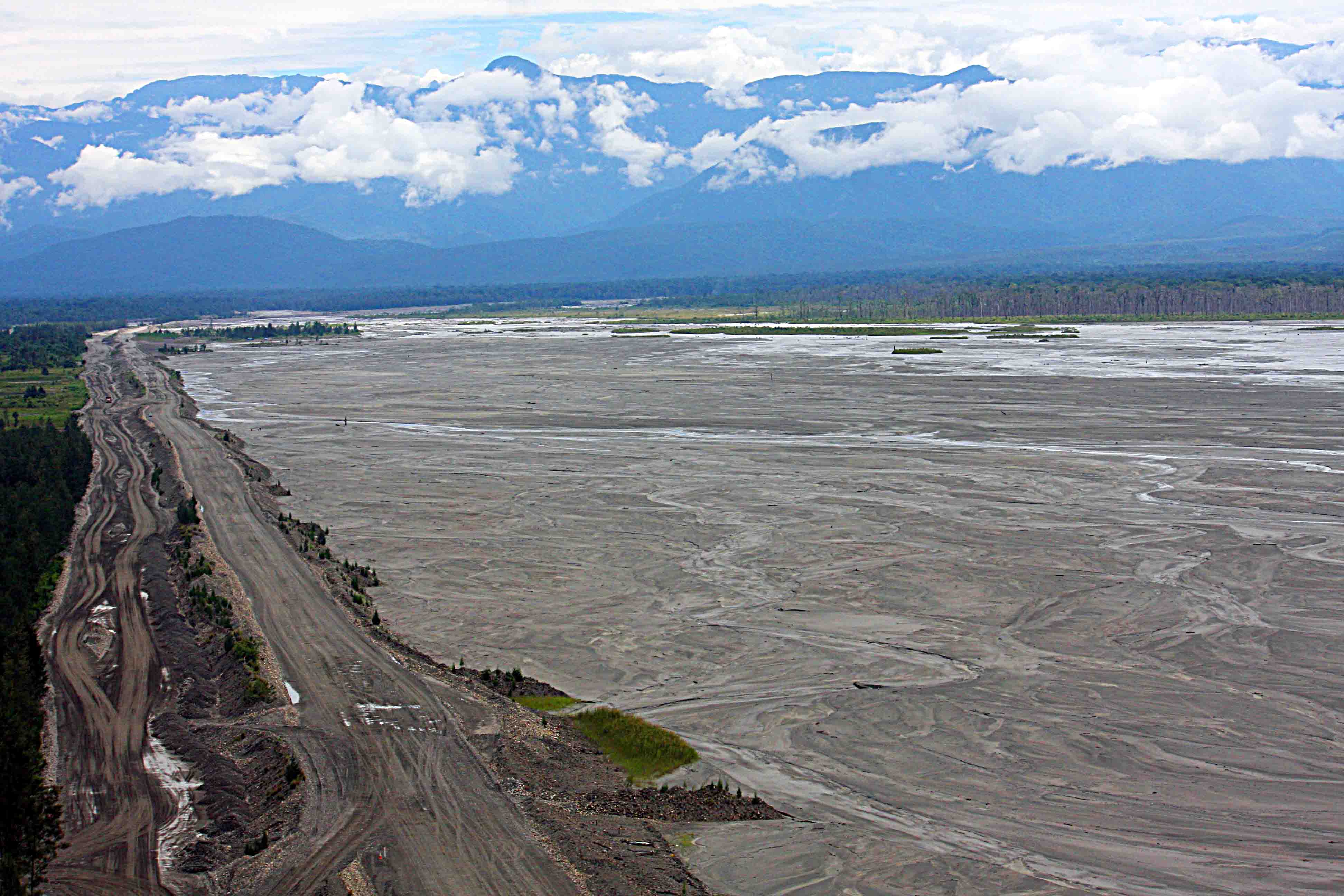
By then, environmentalists allege that Freeport will have not only ripped all of the mineral wealth from Papua’s soil but it will also have destroyed the local waterways and killed off the marine life in the rivers nearest to the mine.

The lobby group Indonesian Forum for the Environment accuses Freeport of dumping hazardous waste into rivers.

“We’ve seen no improvements in their operations. The local communities are suffering because of Freeport’s presence in Papua,” said the group’s Pius Ginting.

But Freeport disputes the claims, saying that it uses a river near the mine to transport waste and natural sediments to a large deposition area. This method, the company says, was chosen because studies showed it was the most feasible way of disposing of the waste, and the environmental impact caused by its waste material is reversible.

In a statement, the company argued that the current arrangement with the government was fair, and has resulted in significant benefits.

Some of those significant benefits include providing employment to scores of Indonesian police who are mandated by Indonesian law to protect the Grasberg mine. This used to be the job of the Indonesian military, who are still sometimes asked to provide extra support for the mine by the police.

Freeport estimates that it spent $14m on security-related expenses in 2010.

But human rights groups say Freeport is effectively financing the Indonesian military in Papua, and is turning a blind eye to the soldiers’ alleged human rights abuses in the province.

Andreas Harsono of Human Rights Watch says there are about 3,000 troops in the area, some of whom “tend to act as a law unto themselves”.

“They sometimes go beyond their duties of providing security to Freeport – and are also believed to be involved in illegal alcohol sales and prostitution,” he says.

The Indonesian military has consistently denied any wrongdoing in Papua.

Freeport defends its use of police and soldiers to guard the Grasberg mine, saying it is mandated under Indonesian law. Freeport has never been implicated in any human rights abuses allegedly committed by the Indonesian military in Papua.

Nevertheless, the company remains hugely controversial in the restive province.

“Freeport is a symbol of everything that is wrong with Papua,” said pastor Neles Tebay.

“Indigenous Papuans want to feel like they have control over their own future – and that means a right to safeguard their natural wealth.”

The BBC has requested to travel to Papua and visit the Grasberg mine, but access has so far been denied by Freeport.

Empty promises whitewash Freeport’s rights, responsibility record

 http://etanaction.blogspot.com/2011/08/empty-promises-whitewash-freeports.html

Special for ETAN‘s  Blog

by David Webster

What does a mining company need to do to get a top score for “corporate social responsibility”?

Freeport's contribution to Papua's welfare - Riverine tailings pollution

To judge by the recent “100 Best Corporate Citizens List”, all it takes to finesse a long and controversial record of human rights abuses is to come up with a piece of high-minded rhetoric, then carry on as usual.

Human rights advocates and those who have studied the record of Freeport McMoran in West Papua were startled to learn that Corporate Responsibility Magazine had named Freeport as the 24th-best corporate citizen in America (click for the full list). More startling still, the company scored well based mainly on a sixth-place ranking in the human rights category.

How is this possible? Well, the survey’s methodology seems to pay no heed to human rights performance. Only human rights rhetoric matters. And in that, Freeport excels. A strong written policy on human rights declares: “Freeport-McMoRan does not tolerate human rights transgressions.” It points to rights risks in West Papua, Peru, and the Democratic Republic of Congo, and adds that PT Freeport Indonesia policy is to “notify the direct commanders of the perpetrators” in cases where human rights allegations are made against Indonesian security forces. Since reputable human rights groups suggest that the top ranks of the security forces are implicated in widespread human rights violations in West Papua, this is hardly striking at the root of the problem.

As local people have pointed out, and researchers have confirmed, Freeport’s performance is a far cry from the written policies. The main trouble is intimate ties to Indonesian security forces.

Security forces may be implicated in the murder of American citizens near the Freeportmine, as Eben Kirksey and Andreas Harsono have reported.

Violence around the mine is used by security forces to target and scapegoat local people. In 2005, the New York Times revealed thatFreeport paid the security forces more than $10 million in 2001 and 2002. Payments are now made “in-kind” rather than in cash. The local Amugme people have long protestedFreeport seizure of their lands. Pictures of Freeport’s Grasberg mine from space (left) show the scale and environmental impact in the mountains that are home to the Amungme.

And lest all of this be hailed as “old news,” the Amungme filed a lawsuit last year sayingFreeport had taken their lands illegally. Meanwhile, the Indonesian army’s presence around Freeport, and the company’s close ties to Indonesian security forces, were reinforced this year. The continuing alliance between Freeport Indonesia and the Indonesian security forces is likely to exacerbate, rather than improve, the human rights situation.

None of these reports are taken in to account in the “100 Best Corporate Citizens List.” All the human rights indicators measure “human rights disclosure” and the sole source, according to the methodology details, comes from “Company public disclosures” – a corporation’s own information about itself.

The methodology, in other words, measures promises, not performance. There are parallels to the debate over whether companies accused of operating sweatshops overseas can be trusted to police themselves, or should accept independent monitoring. Thus the list cites the voluntary “Sullivan principles” first created under the Reagan administration and welcomed by companies resisting demands to divest from apartheid South Africa. AndFreeport boasts of adherence to the Voluntary Principles on Security and Human Rights, launched by the British and American governments in 2000.

The key word here is “voluntary.” As with the mining industry globally and with businesses jumping on the corporate social responsibility (CSR) bandwagon more generally, companies are happy to promise good performance, as long as no one will be looking over their shoulders.

So perhaps it’s no surprise to learn that Corporate Responsibility Magazine is in fact published on behalf of the Corporate Responsibility Officers Association, a body made up of many of the companies being judged, and steered by such firms as Domtar and KPMG.Freeport is listed as a “recent member” of the CROA. It’s advanced in the listings – it was ranked 83rd in 2010.

The problem here isn’t just the “corporate social responsibility” methodology, but the entire concept of “CSR”. It can all too often be used by companies to buy their way out of “corporate social irresponsibility.”

Freeport is no champion of the best values of corporate citizenship: For human rights activists, it’s long been a poster child for corporate irresponsibility. A list of good corporate citizens with Freeport winning laurels demonstrates more than flaws in the study. As George Monbiot has written of climate change credits, the lists offer corporations a new form of medieval European Catholic “indulgences,” forgiveness for any form of offence. Jeff Ballinger recently pointed out on this blog that companies like Nike are wrapping themselves in the CSR garment to burnish their corporate images, despite continuing disregard for many labor rights. Freeport, too, is now having itself measured for a fine CSR wardrobe.

—-

David Webster is an assistant professor of International Studies at the University of Regina inSaskatchewan, Canada. He is a former coordinator with the East Timor Alert Network/Canada.

see also

West Papua Report (monthly)

ETAN/WPAT: Statement on the operations of the Freeport McMoran Mine in West Papua, to the U.S. Senate hearing on Extracting Natural Resources: Corporate Responsibility and the Rule of Law

Create a website or blog at WordPress.com

Up ↑