AlertNet: Indonesia re-thinks Papua food project – report

http://www.trust.org/alertnet/blogs/alertnet-news-blog/indonesia-re-thinks-papua-food-project-report

By Thin Lei Win

A member of the Koroway tribe walks up a ladder to his house at a forest near Merauke city in Indonesia's Papua province in this May 18, 2010 handout photo.A member of the Koroway tribe walks up a ladder to his house at a forest near Merauke city in Indonesia’s Papua province in this May 18, 2010 handout photo.

BANGKOK (AlertNet) –Indonesia’s government is considering moving its controversial food security project from Merauke, on the island of Papua, to East Kalimantan province, on Borneo island, due to lack of progress in the past two years, the Jakarta Globe reported.

Under MIFEE (Merauke Integrated Food and Energy Estate) plans, 1.63 million hectares of forest which form the basis of life for some 200,000 indigenous people in the Merauke area would be used to grow rice, palm oil, soya bean and corn among other crops.

Earlier this month, AlertNet reported criticism from rights activists that MIFEE threatens indigenous people and the forests and ecosystems in the area.

They also said the government has failed to sufficiently consult the native residents over the impact, which will include losing their customary lands, an influx of migrants from the rest of Indonesia and decreased quality of the ecosystems which people rely on for food and for their livelihood.

The minister of agriculture, Suswono, said on Monday that 200,000 hectares of land available in East Kalimantan could be used for agriculture, according to the Globe.

“The principle of the food estate is finding enough land for an agricultural zone. It doesn’t have to be in Papua,” the Globe quoted the minister as saying.

“[The East Kalimantan site] may not as big as Merauke, but it is more feasible. It has been two years since we floated the plan, but there has been no progress at all.”

Indonesia annually imports 2 million tonnes each of rice and soybean, and the nation needs to be able to feed its people without importing food, he added

Anatomy of an Occupation: The Indonesian Military in West Papua

Full Report is available for download and distribution as a pdf Anatomy of an Occupation: The Indonesian Military in West Papua

and the Secret report is available Here

By Jim Elmslie and Camellia Webb-Gannon, with Peter King

Report for the West Papua Project at the Centre for Peace and Conflict Studies (CPACS), The University of Sydney, August 2011

Executive Summary

This report deals with a series of Indonesian military documents that were passed to the West Papua Project (WPP) in early 2011.[1] The documents provide remarkable insights into how the Indonesian military (Tentara Nasional IndonesiaTNI), operates within the disputed territory of West Papua (disputed, that is, between the vast majority of Papuans and the Indonesian government), and how they view West Papuan civil society. The documents reveal the names and activities of Indonesian intelligence agents; describe how traditional Papuan communities are monitored; and include a detailed analysis of both the West Papuan armed guerrilla groups and the non-violent civil society organisations which promote self-determination. Identifying so many West Papuan leaders and others as “separatists”, these documents effectively show that support for independence is widespread and surprisingly well organised. West Papuans have long complained of living under an Indonesian military “occupation” and these documents go a long way to Anatomy of an Occupation: The Indonesian Military in West Papuasubstantiating this claim.

The authors of this report have sought to verify information contained in the documents where possible. Much of this information on individuals and Papuan organisations is already well known, although presented here more comprehensively in some respects than ever before. We can therefore be relatively confident that the documents are not fabricated or deliberately misleading, although they do contain inaccuracies, omissions and many obvious examples of false or misleading precision. Names of Indonesian intelligence agents, both Papuan and non-Papuan, are impossible to verify and have been left out of our report. We do believe, however, that the general modus operandi revealed in the documents is a fair representation of how the Indonesian military operates. As many diverse and disputed claims are made about the conflict in West Papua by the Indonesian and other governments, by international commentators and by the Papuans themselves, we believe that this information should be in the public sphere to increase understanding of this little-known, but intense, bitter and long-standing conflict.

The report is split into two sections. The first deals with the 97 slide PowerPoint presentation entitled, Anatomy of Papuan Separatists. The presentation itself can be viewed at http://sydney.edu.au/arts/peace_conflict/research/west_papua_project.shtml. This section acts as a running commentary on the slide show, explaining and contextualising what is an intriguing exposition of the West Papuan armed liberation movement and its non-violent civilian counterpart. The forensic details of the Anatomy leave the reader in no doubt as to the level of military scrutiny under which the Papuans live. It shows just how seriously the Indonesian forces take the threat of “separatism”, especially its attempts to reach out to an international audience. The presentation could accurately be renamed as an Anatomy of the Papuan Occupation.

The second section deals with an assortment of other leaked documents that flesh out the day-to-day reality of living under Indonesian occupation. In both images and text the daily tasks of security force members are outlined as they maintain a close surveillance on communities of traditional Papuans. Details of Indonesian agents  – who they are, where they work, what information they can provide – are listed as small links in the heavy chain mesh of an occupation which has at its core the modern practice of “psychological warfare”, PSYOPS. This pernicious system of social control has created a pervasive atmosphere of terror amongst the Papuan population as their lives are manipulated by state actions and threatened with “black operations”. Unsolved, indeed uninvestigated, killings, beatings and rapes occur against a background of a rapidly changing demography as hundreds of thousands of non-Papuan Indonesians move into the province. Predominantly Muslim, the newcomers are adding another layer of tension and fear, as the Muslim-Christian divide widens – taking its cue from the threatened growth of radical Islam in Java and elsewhere.

PSYOPS, as practiced in West Papua, is analysed initially from a general perspective and then from the personal experience of several individual Papuans. As a tool of social control it has been effective in dividing the Papuan people, some of whom now form a Papuan elite that has prospered economically under the bureaucratic “reforms” enacted by the Indonesian government, particularly the creation of two provinces and some 23 new administrative regencies in Papua. However, these documents show that, despite PSYOPS and divide-and-rule administrative policies, there is a high degree of cohesion and unity amongst the West Papuan nationalist majority. Indeed, looking at the Papuan individuals identified in these documents it can be seen that West Papuan nationalism is spread throughout civil society, in the churches, youth groups, customary bodies and political organisations. Far from the desire for self-determination dying out, the younger generation of Papuan leaders is now stridently demanding the rights to which they are entitled by Indonesian law, albeit increasingly as a non-violent, civil resistance movement.

These documents show that Indonesian rule over West Papua can be characterised as an ongoing military/police occupation. Inevitably this involves the systematic infliction of human rights abuses on a civilian population. Our report concludes that Australia should not be co-operating as it does with the TNI elite special forces, Kopassus, because it directly implicates the Australian army and taxpayer in the suffering of the Papuan people. And all Australian military aid to Indonesia should be seriously reconsidered while the military dominated system of occupation persists in Papua. The political and administrative reforms that have benefited so much of Indonesia since 1998 need to be properly implemented in West Papua. Until then West Papua will remain a blight on Indonesia’s international reputation and a place of suffering for its indigenous Melanesian population.


[1] The West Papua Project, at the Centre for Peace and Conflict Studies, The University of Sydney, has operated since 2000 as an academic think tank and research center examining the conflict in West Papua between the indigenous Melanesian people and the Indonesian state and its security forces. During this period the WPP has held many conferences, workshops and briefings, and its affiliates have produced a wide range of publications including books, scholarly articles and reports.

Introduction

This report is based on a series of documents recently leaked into the public domain that relate to military and intelligence operations in West Papua.[1] The most important is entitled Anatomy of Papuan Separatists and it gives observers unprecedented insight into how the Indonesian army views the situation there. Organised as a confidential briefing document, presumably for senior Indonesian military, political and government figures, it clarifies a situation that is generally regarded as opaque. Other documents relate to the use of Papuan and non-Papuan intelligence agents by the TNI and efforts by soldiers to socialise with Papuan village communities (these documents are analysed in the second section of this report). While the Indonesian government bans foreign journalists and researchers from Papua’s two provinces, now confusingly named Papua and West Papua, in an attempt to block information on the situation from reaching the outside world, here is a case where the Indonesians themselves are providing a frank and comprehensive assessment. While undated, the Anatomy document’s reference to US President Barack Obama suggests it was written, or at least finished, sometime after his election on November 4, 2008.

Anatomy of Papuan Separatists is an extraordinary document in the form of an extended PowerPoint presentation. Produced by the TNI,[2] it is a systematic and detailed analysis of the West Papuan political landscape, mapping who the various actors are and where they fit into a larger picture. Almost every leading West Papuan political and military player is included in this analysis – leaving one with the distinct impression that there is no other game in town except “separatism”. In fact the goal for most of the West Papuan leaders in this analysis is independence, which implies that this is also the desired outcome for the overwhelming majority of the Papuan people. So this document is both a study in “separatism” and a blueprint for a military occupation meant to combat that separatism. Separatism is shown to be not a rare sentiment held by the few, but rather the glue which binds together the West Papuan ethnic and political consciousness. We are given a valuable insight into how West Papua and its Indonesian occupation actually work.

The Anatomy file comprises 97 slides and methodically works through the various ways in which the West Papuans confront the Indonesian state. In broad terms the conflict is split between military and political spheres, with some overlap. Both of these spheres are explored in remarkably frank detail. The military analysis of the “separatist” movement is the most detailed ever undertaken, or at least revealed publicly, and shows just how extensive the armed opposition to Indonesian rule is. The Anatomy document provides details of 31 armed groups of the TPN (Tentara Pembebasan Nasional –the National Liberation Army), the military wing of the OPM (Organisasi Papua Merdeka—the Free Papua Movement) that are spread right across the two provinces (Papua and Papua Barat) that constitute the region referred to collectively in this report as West Papua. Rather than being the ragtag bunch of malcontents – which the OPM/TPN are usually portrayed as — this Anatomy shows them to be a relatively cohesive and deeply entrenched resistance army, highly committed to achieving their goal of independence from Indonesia, even though the Anatomy often seems to imply that all the dozens of groups it identifies across a 40 year period are still functioning pretty much as when first identified.

Before proceeding with analysis of the document we have three general comments.

First, we wish to highlight the pervasiveness of the phenomenon of “separatism” as seen from the (Indonesian military) author’s point of view. Demands for dialogue; the “return” of Special Autonomy to Jakarta, and for  demilitarisation, improved human rights, an end to discrimination, economic marginalisation and environmental devastation in West Papua — all amount to only “separatism” in the Anatomy. And separatism is viewed as a legitimate thing for the military to attack; separatists are enemies of the Indonesian state, and therefore enemies of the military and the police. There is no attempt to understand where this sentiment comes from, just to identify its existence to be targeted for destruction. That there are so many separatists does not seem to faze the author(s) of the Anatomy; just to reinforce his (their) sense of mission.

There is little discussion of those Papuans who are not separatists. There are undoubtedly Papuans who have thrown in their lot with Indonesia, one of whom is identified in the Anatomy, Franzalbert Joku. He is the only person of the hundreds listed who has “returned to Indonesia”. Joku is a well-known former independence activist who has given up the struggle as a hopeless cause and works hard to convince other “separatists” to do the same. Later in this report we will explore Joku’s views further as well as those of other prominent Papuans who have eschewed the struggle for freedom.

Second, it is noteworthy that there are so many “separatists” identified in the Anatomy, and that they include so many of the most prominent people from the three generations since the Indonesian takeover of Papua in 1962-3 is striking. While most outside observers dismiss the chance of achieving independence as remote if not impossible, given the power and determination of the Indonesian state and the comparative weakness of the Papuans, many Papuans do not. They are fully committed to the struggle. In fact these documents show that the younger generation, those in their 20s and 30s, are as committed as the older generations. Together the Papuans listed in this document represent most of the current leading figures in West Papuan society. The Anatomy shows how seriously the Indonesian state and military consider the threat of separatism, and indeed it places the people named under grave threat of targeted assassination. Some of them have indeed already been killed since the publication of the document (for instance OPM leader Kelly Kwalik). This has led some informed readers of the Anatomy to describe it as a “hit list” of people targeted for removal.

Thirdly, this document tells us how the Indonesian military views the West Papuan political structure. To an outside observer it is hard to grasp how all the multiple military, social and political Papuan groups relate to each other. Here this complex situation is laid out with surprising clarity: there are traceable lines of authority and engagement — even between various “factions” and geographically isolated groups. One reason that Jakarta has given for refusing to negotiate with the West Papuans over the myriad problems that beset the province is that “we do not know who to negotiate with”.[3] This document undermines that pretext.


[1] These documents have been referred to in a blog site on the internet dated January 30, 2011 at www.nokenlama.blogspot.com/2011/01/kisah-tentang-kekerasan-seksual.html in an entry entitled “Story About Sexual Violence in West Papua [By] Army Personnel”, which refers to “an article titled An Anatomy of Separatists in Papua, [by] Maj. D. Arm Fence”.  The article was published by the Secretariat for Justice and Peace, Archdiocese Merauke, Papua. Some others of these documents have been quoted previously (see allannairn.com), although many appear to be new, or at least to have received no public analysis; hence this report.

[2] The author of the Anatomy document is named as Major Arm Fence D Marani.

[3] Private conversation with senior Indonesian officials accompanying President Yudhoyono on his visit to Australia, Sydney University, 8 March, 2010.

Acts of violence are damaging the Papuan people, says DPD member

Bintang Papua, 8 August. 2011

Sofia Popy Maipauw, a member of the DPD, the Council of Regional
Representatives, said that the recent upsurge in acts of violence that
have been occurring in the Land of Papua can be very damaging for the
Papuan people and called on those who are responsible for all this
violence to stop.

She said she doesn’t want to mention any names but insists that all
those involved in violence should stop. The incident in Ilaga, district
of Puncak Jaya and the Nafri incident in Jayapura have been very
harmful for indigenous Papuan people. These incidents have had damaging
consequences for the economy. People living in the kampungs are afraid
to come to the markets to sell their products, which can result in an
increase in the price of these products, she told journalists in Jayapura.

She went on to say that the indigenous Papuan people are much weaker
economically than other people in the province which means that these
acts of violence can be very burdensome for them.

‘I would like to know what the state intelligence agency, BIN, has been
doing all this time. The recent shootings in Papua are not the first
time such things have happened. They keep on happening but no action has
been taken against those responsible,’ she said.

She said that in November last year, a similar incident occurred in
Nafri but no one has been arrested and held to account for this
incident. Incidents like this, she said, give the Papuan people a very
bad reputation. Such stigmas must end so that Papuans can feel
comfortable as part of Indonesia.

She went on to say that SBY, the president, should not keep silent about
problems in Papua but should take action to prevent these incidents from
occurring and ensure that these incidents are dealt with seriously. She
said that this was a huge challenge for the new chief of police who
should take action regardless of who is involved. ‘The acting governor
of Papua should take responsibility for safeguarding the forthcoming
local elections. He should cooperate with the Elections Commission (KPU)
of the province of Papua to deal with any violations that occur during
the elections,’ she said.

Tempo: All West Papua Province’s Lawmakers Declared as Corruption Suspect

FYI

(West Papua Media comment:  these actions should be seen as an indictment of Jakarta’s failed Special Autonomy policies.  The DPRD office holders are restricted to those who are  members of Indonesia-wide political parties, and are heavily skewed toward military business interests.  A high proportion of members of the DPRP are not ethnically Papuan, and those who are, are involved in major Indonesian business ventures)

also: Big Budget, Big Leaks

Tempo Magazine
No. 50/XI/August 10-16, 2011

Law

All Suspects Together

All members of the West Papua DPRD were named as suspects in
corruption of the province’s funding. The state funds that should have
been used as capital for one of the province’s own businesses was
instead distributed to serve political interests. Governance in West
Papua is now threatened with coming to a complete standstill.

A Plenary session of the West Papua Provincial House of
Representatives (DPRD) was suddenly called for Thursday two weeks ago.
Although all the members were not present, the sitting was marked by a
tense atmosphere. Not surprisingly, as the theme of the discussion was
a very serious matter concerning the future fates of all those
attending.

The Papua State Prosecutor’s Office had named 44 members of the
parliament as suspects over corruption of Rp22 billion of West Papua
Provincial Income and Expenditure Budgets (APBD) for 2010 and 2011.
The announcement made by Deputy Chief State Prosecutor Suhardjo Tjatjo
rocked Papua. In the history of this nation, this is the first time
ever all the members of a parliament have been named graft suspects.

Not just the public, but the West Papua DPRD members themselves
admitted they were shaken when the release first appeared two weeks
ago. “I have never been questioned, so how come I am suddenly declared
a suspect?” said DPRD Speaker Johan Yoseph Auri. The Golkar Party
politician accused the investigation of the case of being loaded with
political interests. “I’m sure the prosecutor doesn’t have any strong
evidence in this corruption case,” he asserted boldly.

Johan admits he did accept the cash concerned. As did all his
parliamentary colleagues. But, he said: “It was a loan that was to be
repaid in three years.” Johan says he borrowed the cash from the
province-owned PT Papua Doberai Mandiri because he was under pressure
to meet his constituents’ requests.

Every day, he said, groups come to DPRD members’ offices claiming to
be constituents from various parts of Papua. They come asking for
donations for this and that and to lodge proposals for all kinds of
activities. “I have no other income, so I’m forced to look for loans,”
Johan explained.

Disastrously, those loans were not obtained from a bank, but rather
from a state-owned business that was not supposed to be involved in
borrowing and lending its shareholders cash. PT Doberai, for instance,
is a company set up by the West Papua government to look after
investment in this, Indonesia’s youngest province.

It was difficult to get other DPRD members to explain to us why they
now have the status of suspects. The plenary session, said John
Fathie—another Golkar politician—had decided that all its members were
forbidden to talk to the media. Explanations were only to be offered
by the DPRD speaker. Several members denied they had received any
money. “I already owe my bank money, so it would be impossible for me
to look for another loan,” declared PNI Marhaenisme politician Yance
Yomaki.

The difficulty is that the Papua Attorney General’s Office is fully
convinced that these people’s representatives have already done as
they liked by ‘feasting’ on the state funds to which they had no
right. Deputy Head of the State Prosecutor’s Office (AGO), Suhardjo
Tjatjo laid out to Tempo just how this case had begun, from its
investigation through to the conclusions reached and all the suspects
being determined.

Tjatjo said this was an old case whose status could only recently be
raised to that of an investigation once the AGO was convinced that
none of the money that had been claimed to be loans had been returned.
“There was no accountability for this expenditure,” he added.

Now, it so happened that Rp22 billion was cleared to be paid out at
the request of West Papua Provincial Secretary, Marthen Luther
Rumadas. Rp15 billion of that came from the 2010 APBD and the rest
from the 2011 one. “The business is under my authority,” he said
defensively.

The funds ought to have been allocated as additional capital for PT
Papua Doberai Mandiri. This provincial government-owned company is
active in very wide-ranging fields: drilling for oil and gas, non-oil
and gas exploration, as well as the acceleration of infrastructure
development, including netting new investors, both domestic and
foreign.

PT Doberai was set up around the same time as the formation of the new
province in 2009. West Irian Jaya regency was then elevated to the
status of West Papua province, with Manokwari as its capital. At its
establishment on 18 May 2009, the provincial government, that had
obtained an injection of special autonomy funds of Rp1.7 trillion,
invested Rp100 billion to buy shares in the new company.

A year later, all the shares in the province-owned business were taken
over by the West Papua government, until full control of it rested in
the hands of the provincial secretary. While that was happening, the
province treasury injected a further Rp25 billion in capital into it.
“That was when the games began,” said Tjatjo.

As the one having control of the business, Rumadas has also become a
suspect. He is accused of handing out state funds to DPRD members on
very spurious grounds: to cover their additional living expenses.

Rumadas was discovered to have issued a letter on 17 September 2010
concerning lending PT Doberai another Rp15 billion. Johan Auri gave
his written agreement to lending out this money to DPRD members.

The problem was that his letter was issued several hours after the
money had been transferred. “This meant that the money that had been
deposited then had to be hurriedly paid out,” said Tjatjo. The AGO
looked into this odd occurrence. It was also revealed that PT Papua
Doberai Mandiri’s CEO Mamad Suhadi at one point apparently refused
Rumadas’s request to pay out the money that had just been transferred.

When Rumadas had summoned him to his office, Mamad verbally declined
to comply. “Sorry, Sir, making such payouts would be a mistake,” said
Mamad, as imitated by Tjatjo. When Mamad refused to follow Rumadas’s
instruction, the Head of the West Papua Province Financial Bureau M.
Sirait was sitting next to Rumadas and later confirmed Mamad’s
statement to the prosecutor.

Rumadas paid no attention to Mamad’s objections. The money was still
paid out. Several weeks later another instruction was issued to
disburse a further Rp7 billion. The grounds were the same: loans to
the DPRD members. The AGO considered this corruption because the
members could not possibly pay back their loans in the set time,
namely July this year.

Rumadas does not reject the series of events, the results of the
prosecutors’ investigation. But he rejects claims that the loans were
deliberately given out to enrich DPRD members. Because of the loan
clause, Rumadas says, the DPRD members were required to return the
money they had borrowed.

Strangely, when he was pressed to explain why the loan money had been
taken from the company’s coffers and whether he knew what the loans
were for, Rumadas shook his head. “I didn’t know what they wanted the
loans for,” he admitted.

Tjatjo also admitted that the DPRD members were not told they had been
made suspects as the request for permission to question them submitted
to the Minister of Home Affairs had not yet had a response. Under
criminal procedure law, Tjatjo explained, if permission is not
forthcoming by one month after a request letter is sent, his office
may then continue its investigation and use compulsion to summon
suspects.

Last Friday, when we asked Home Affairs Minister Gamawan Fauzi for
confirmation of the request letter, he said he had not yet received
it. “Once I have received the request, I’ll certainly agree to it.
It’s just to uphold the law,” Gamawan told Tempo.

However, Gamawan does hope the AGO doesn’t have clear proof that the
DPRD members were involved in corruption, so the case won’t need to be
pursued further. He added that governance of West Papua could come to
a standstill if all the members of its parliament were detained.
“There is still an opportunity not to take this further,” he said.

Tjatjo realizes the consequences if the legal process continues.
Governance in West Papua could stall and many policies could not get
implemented, as all DPRD members would likely be non-active. The
current total confusion could get even worse, remembering that West
Papua is also due to hold the direct election of its governor in
September of this year.

But, Tjatjo added, the AGO has no other choice as, whatever else
happens, the law must be enforced. Especially as the evidence in this
case is so glaringly obvious. “If necessary, I will summon them using
compulsion,” he warned.

Bagja Hidayat (Jakarta), Jerry Omona (Jayapura)

——————

Tempo Magazine
No. 50/XI/August 10-16, 2011

Law

Big Budget, Big Leaks

The riots that recently spread in Papua have caused the government to
reevaluate the special autonomy status for the area. Last Thursday
President Susilo Bambang Yudhoyono discussed the issue when he met the
heads of the nations’s top institutions at the State Palace.

“Special autonomy is not just a matter of budget, but also concerns
policy,” commented Regional Representatives Assembly Speaker Irman
Gusman after the meeting. Irman said special autonomy that is focused
only on meeting its budget has been shown to be ineffective. An audit
by the Supreme Audit Agency (BPK) did indeed confirm what Irman said.

In its report last April, the BPK uncovered suspected budget misuse
throughout the period 2002-2010 of special autonomy in Papua. Of the
total Rp19 trillion of special autonomy funding for improvement of
infrastructure and health services, Rp4.2 trillion had been likely
misused.

Not all the autonomy funding since 2002 was examined. Because the
total general autonomy funding for Papua and West Papua provinces
already disbursed by 2010 amounted to Rp28.8 trillion.

The misuse in the sample checked covered various things: expenditure
that could not be accounted for, expenditure not in accordance with
submitted programs, overpayments, and fictive programs. The report
says, for instance, that Rp1.85 trillion of autonomy funding for the
period 2008-2010 was put on term deposit in Bank Mandiri Jayapura and
Bank Papua.

The Rp53 billion in interest from this was then not credited to the
account of the special autonomy fund. The Papua provincial government
has explained that the money stashed away as term deposits did not
come from the special autonomy fund. It was reserve funds, the
interest on which was then used to subsidize village development at
Rp100 million per village.

The BPK does not accept that. “Because special autonomy funding is
intended to accelerate development, cash management via term deposits
is then inappropriate,” reads the report that BPK member Rizal Djalil
presented to parliament.

That report concludes that leaks have clearly occurred in the absence
of any clear regulations on the use and accountability for the
jumbo-sized cash largesse. When reporting these findings, Rizal said
that to date the use of the autonomy funds only needed verbal
agreement between the governor plus a regent and a mayor within Papua.
It it is not surprising then that the BPK later uncovered fictive
expenditure. “I’m sure, from our sample investigation, the nation has
suffered a loss of Rp319 billion,” said Rizal.

Under Papua’s Special Autonomy Law, a budget of 2 percent of the
National General Allocation Fund is to be disbursed for improvement of
infrastructure and health services there, so that, in 25 years’
time—beginning from 2002—there will no longer be any transportation
problems in the area. Everything will be connected by land, sea, or
air.

But the reality is very different. The funds seem to vanish and not
make their way down—let alone get disbursed—to those at the bottom.
Corruption has spread into a number of areas. The money that ought to
be used to build facilities is instead grabbed everywhere, as with the
money of provincial government-owned businesses corruptly taken by
members of the West Papua provincial parliament.

Almost every year, for instance, hospital staff in Jayapura or Abepura
go on strike over their miniscule allowances. In turn, other hospitals
are forced to turn away patients because of lack of medicines to treat
them.

Irman says the current chaos in the management of autonomy funds is a
result of weak control and supervision. Accordingly, it will later
become not just a matter of being unclear where the money went, as the
area concerned will then become continually afflicted by chaos. “Later
the autonomy funding must no longer be dropped there just like that.
The programs for its use must be clear and supervision tight,” Irman
stressed.

BHD, Munawwaroh

Empty promises whitewash Freeport’s rights, responsibility record

 http://etanaction.blogspot.com/2011/08/empty-promises-whitewash-freeports.html

Special for ETAN‘s  Blog

by David Webster

What does a mining company need to do to get a top score for “corporate social responsibility”?

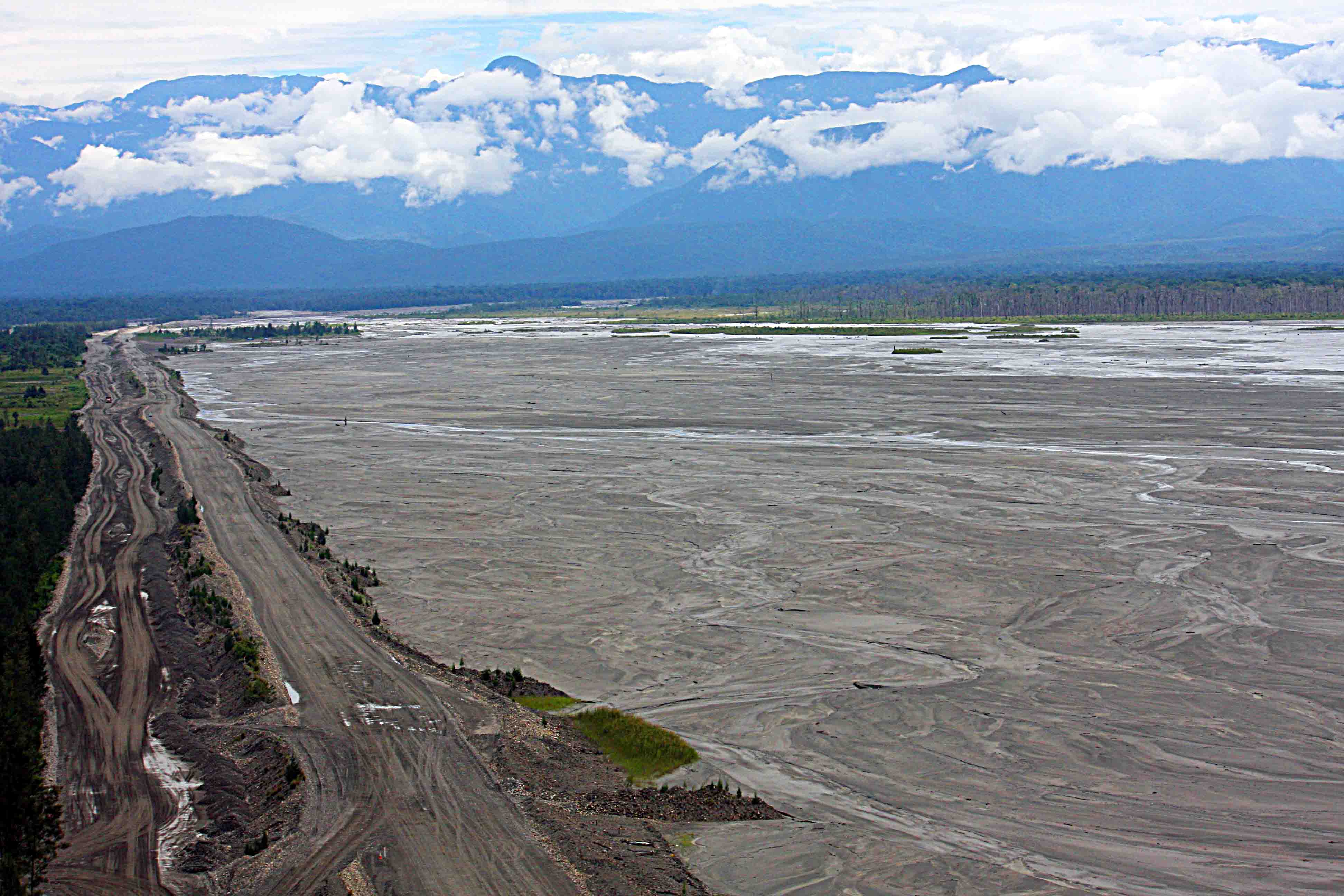
Freeport's contribution to Papua's welfare - Riverine tailings pollution

To judge by the recent “100 Best Corporate Citizens List”, all it takes to finesse a long and controversial record of human rights abuses is to come up with a piece of high-minded rhetoric, then carry on as usual.

Human rights advocates and those who have studied the record of Freeport McMoran in West Papua were startled to learn that Corporate Responsibility Magazine had named Freeport as the 24th-best corporate citizen in America (click for the full list). More startling still, the company scored well based mainly on a sixth-place ranking in the human rights category.

How is this possible? Well, the survey’s methodology seems to pay no heed to human rights performance. Only human rights rhetoric matters. And in that, Freeport excels. A strong written policy on human rights declares: “Freeport-McMoRan does not tolerate human rights transgressions.” It points to rights risks in West Papua, Peru, and the Democratic Republic of Congo, and adds that PT Freeport Indonesia policy is to “notify the direct commanders of the perpetrators” in cases where human rights allegations are made against Indonesian security forces. Since reputable human rights groups suggest that the top ranks of the security forces are implicated in widespread human rights violations in West Papua, this is hardly striking at the root of the problem.

As local people have pointed out, and researchers have confirmed, Freeport’s performance is a far cry from the written policies. The main trouble is intimate ties to Indonesian security forces.

Security forces may be implicated in the murder of American citizens near the Freeportmine, as Eben Kirksey and Andreas Harsono have reported.

Violence around the mine is used by security forces to target and scapegoat local people. In 2005, the New York Times revealed thatFreeport paid the security forces more than $10 million in 2001 and 2002. Payments are now made “in-kind” rather than in cash. The local Amugme people have long protestedFreeport seizure of their lands. Pictures of Freeport’s Grasberg mine from space (left) show the scale and environmental impact in the mountains that are home to the Amungme.

And lest all of this be hailed as “old news,” the Amungme filed a lawsuit last year sayingFreeport had taken their lands illegally. Meanwhile, the Indonesian army’s presence around Freeport, and the company’s close ties to Indonesian security forces, were reinforced this year. The continuing alliance between Freeport Indonesia and the Indonesian security forces is likely to exacerbate, rather than improve, the human rights situation.

None of these reports are taken in to account in the “100 Best Corporate Citizens List.” All the human rights indicators measure “human rights disclosure” and the sole source, according to the methodology details, comes from “Company public disclosures” – a corporation’s own information about itself.

The methodology, in other words, measures promises, not performance. There are parallels to the debate over whether companies accused of operating sweatshops overseas can be trusted to police themselves, or should accept independent monitoring. Thus the list cites the voluntary “Sullivan principles” first created under the Reagan administration and welcomed by companies resisting demands to divest from apartheid South Africa. AndFreeport boasts of adherence to the Voluntary Principles on Security and Human Rights, launched by the British and American governments in 2000.

The key word here is “voluntary.” As with the mining industry globally and with businesses jumping on the corporate social responsibility (CSR) bandwagon more generally, companies are happy to promise good performance, as long as no one will be looking over their shoulders.

So perhaps it’s no surprise to learn that Corporate Responsibility Magazine is in fact published on behalf of the Corporate Responsibility Officers Association, a body made up of many of the companies being judged, and steered by such firms as Domtar and KPMG.Freeport is listed as a “recent member” of the CROA. It’s advanced in the listings – it was ranked 83rd in 2010.

The problem here isn’t just the “corporate social responsibility” methodology, but the entire concept of “CSR”. It can all too often be used by companies to buy their way out of “corporate social irresponsibility.”

Freeport is no champion of the best values of corporate citizenship: For human rights activists, it’s long been a poster child for corporate irresponsibility. A list of good corporate citizens with Freeport winning laurels demonstrates more than flaws in the study. As George Monbiot has written of climate change credits, the lists offer corporations a new form of medieval European Catholic “indulgences,” forgiveness for any form of offence. Jeff Ballinger recently pointed out on this blog that companies like Nike are wrapping themselves in the CSR garment to burnish their corporate images, despite continuing disregard for many labor rights. Freeport, too, is now having itself measured for a fine CSR wardrobe.

—-

David Webster is an assistant professor of International Studies at the University of Regina inSaskatchewan, Canada. He is a former coordinator with the East Timor Alert Network/Canada.

see also

West Papua Report (monthly)

ETAN/WPAT: Statement on the operations of the Freeport McMoran Mine in West Papua, to the U.S. Senate hearing on Extracting Natural Resources: Corporate Responsibility and the Rule of Law

Create a website or blog at WordPress.com

Up ↑