http://www.wri-irg.org/node/12386
War Profiteer of the Month:
Merauke Integrated Food & Energy Estate (MIFEE)
– A Food Project Invasion in West Papua
18 Mar 2011 — javier
Rosa Moiwend
Background
 Papua is the western half of New Guinea, the world’s second largest island, located about 200 km from the north of Australia. When the Dutch colonised this territory, it called it Dutch New Guinea. The name of this territory has changed over time according to its political status. The Papuan political leaders then changed the name of Dutch New Guinea to West Papua when they prepared for the self-government of this territory in 1961. As soon as the Dutch left in 1962, Indonesia took over the territory, and then West Papua became one of the Indonesian provinces, called Irian Jaya. In 1999, the demand for independence from Papuans increased. In 2001 the Indonesian government granted a Special Autonomy status for Papua under law number 21, and accepted the original name of Papua. Yet, the autonomous status does not mean self-government. All development policies are still under the control of Jakarta, including the policy over investment in natural resources. Moreover, Papua is the only province of Indonesia which it is still identified as a conflict zone under the national defence policy after East Timor became an independent country in 1999 and after Acheh Province signed a Peace Agreement in 2008.
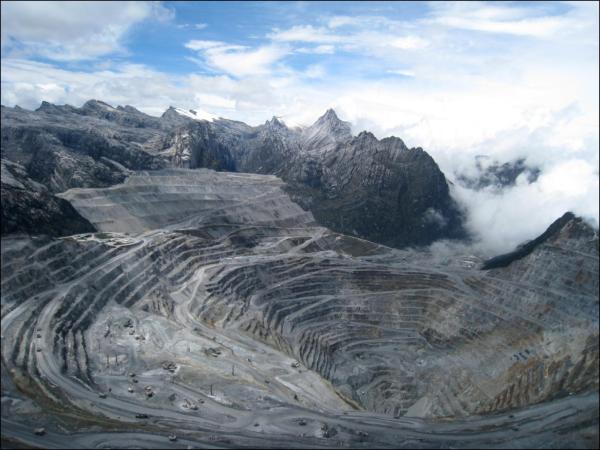
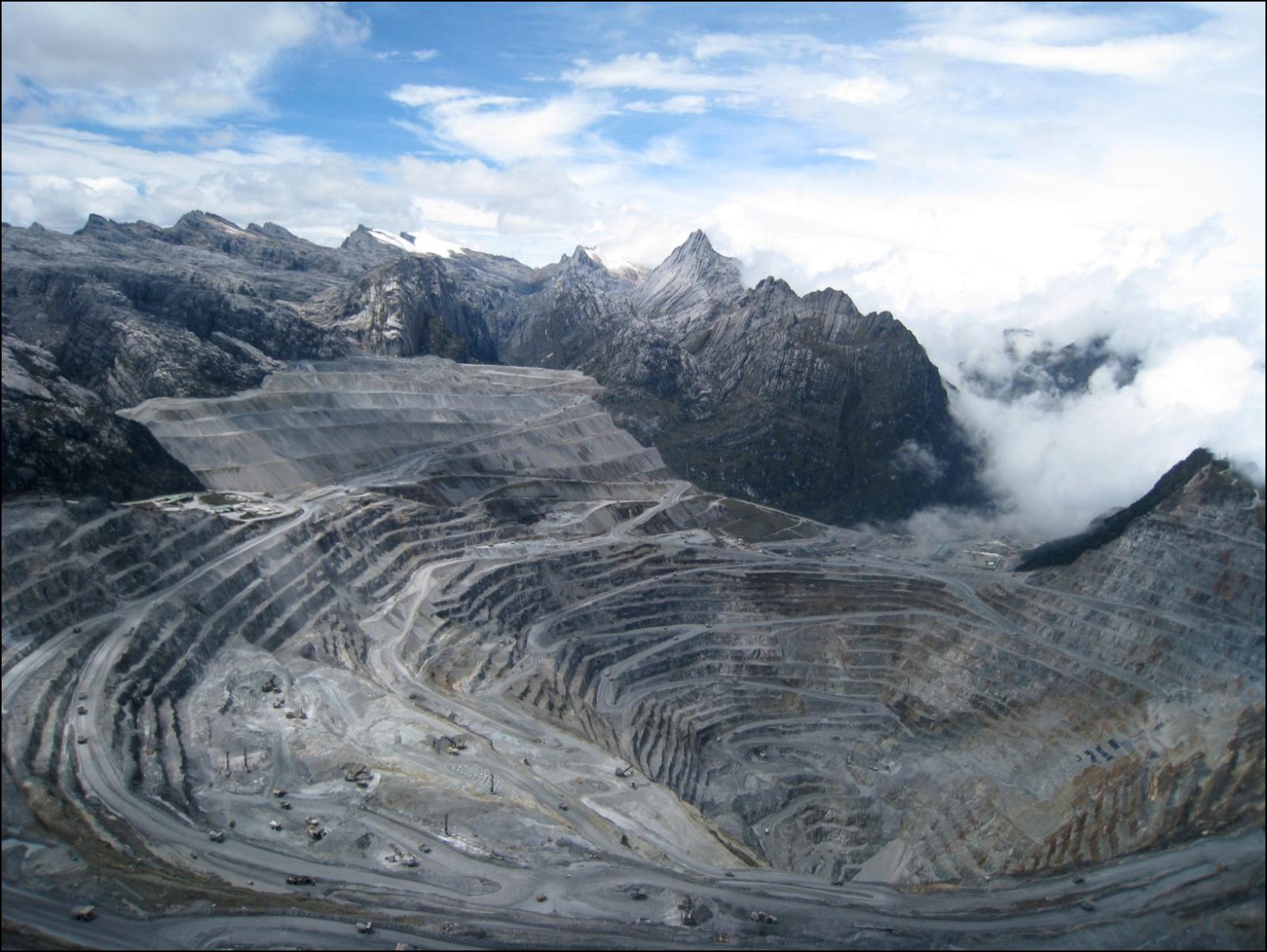
After nine years of Special Autonomy, Papuans realised that this status does not provide significant changes in many aspects of their life. Moreover, the Indonesian government controls the regulation of investment in natural resources by opening easy access for multinational companies to exploit the abundant minerals and forests. Some multinational corporations such as Freeport McMoran, a US giant mining company, plan long-term investment and spend huge amounts of money on security using Indonesian military from the Special Forces (Kopassus) and police. The UK/US company BP and some Korean and Chinese companies, are on the list of investors as well. The Indonesian government through its programme to save energy and deal with the world food crisis plans to open up a massive area of land in the southern part of Papua with a mega-project on food and bio-energy called MIFEE (Merauke Integrated Food and Energy Estate). Since the demand for independence and the various demands for indigenous people’s rights cause opposition to the investors, the government uses a military approach as the only way to stop the conflict. After Freeport McMoran, MIFEE would be the next disaster for Papua. This article will portray a small part of the struggle over Food and Bio Energy project in Papua.
Malind, one of the indigenous communities in Merauke
Merauke is the southern part of Papua, covered by swampy forest with many rivers flowing down, mixed with massive savannah. The ecosystem in this region is unique. According to WWF, Merauke is one of the important places in the New Guinea Trans Fly Eco-region with its abundant bio-diversity.
Local tribes who have been living in the region are the Malind, Muyu and Mandobo, as well as Mappi and Auyu. The Malin tribe is one of the tribes most affected by the Food and Energy project. Some missionaries and anthropologists such as EB Savage from London Missionary Society, AC Haddon and Van Baal from the Netherlands, wrote in the early of 19th century about the Malind people in the region1. Malind people identify themselves according to their Dema (ancestors). They believe that some places in Merauke are sacred, as Demas had visited that place on their journey. More than that, they believe that ancestors live there so they should protect that place and give their respect to it. If they disobey, they will get a customary sanction which bring bad things in their lives. These beliefs are transferred from generation to generation. Malind recognised each other according to the symbols of clans. There are six big clans with their own symbols; Gebze with coconut, Mahuze with the sagoo palm, Basik with a pig, Samkakai with a kangaroo, Kaize with a cassowary and Balagaise with a falcon bird. These symbols integrated with the customary rules that control and influence their lives. Losing one of the symbols in nature means losing their identity.
Malind people have their own mechanism for using their natural resources. Each clan has its own customary territory that functions as a hunting place, for gardening, as a fishing ground, and to settle. Each place has a boundary that doesn’tt appear on the government map of land rights. All explanations and knowledge of customary matters are found in their customary law. If the sacred places and boundaries are lost, it means that internal conflict between clans might happen. This is the reason for the importance of keeping the customary boundaries and sacred places.
Merauke Food and Energy Estate (MIFEE)
 In 2009, when a food and energy crisis hit the world in connection with global warming, the Indonesian President, Susilo Bambang Yudhyono, declared his goal of feeding “Indonesia and the world” by developing a food and energy estate in Merauke, Papua. As a mean of stabilising the security of Indonesia’s food, the project – called Merauke Integrated Food and Energy Estate, or MIFEE — covers 1.6 million hectares of commercial plantations. Merauke has been designated a national Special Economic Zone (SEZ) in order to attract the $8.6 billion of investment needed for the project. MIFEE is one of the priority programmes of the second term of his presidency (2009 to 2014).
To fulfill its ambition, the government of Indonesia has invited multinational companies from the Middle East, Asia, and the US, as well as from Indonesia. More than 30 companies confirmed their interest in this project and have already received concessions from the Indonesian government. Some, such as the Bin Laden Group from Saudi Arabia, announced their interest in spending 43 million dollars for 500,000 hectares of land on rice fields in Merauke. Then it was followed by some other companies from Qatar, Oman and the United Arab Emirates who also want to invest in agribusiness in Indonesia2. International Paper, based in Memphis, Tennessee, is also reported to have had exploratory talks with the Indonesian minister of forestry concerning developing a mill either in Kalimantan or in Merauke3. From Asia, a Japanese Corporation, the Mitsubishi group, the Wilmar group from Singapore, and LG International from Korea, also made commitments to this project though a joint venture with Indonesian companies. Companies such as Medco Group, owned by Arifin Panigoro; Artha Graha Network, owned by Tomy Winata; PT Bangun Cipta Sarana, owned by Siswono Yudhohusodo; Comexindo International, owned by Hasyim Djojohadikusumo; Sumber Alam Sutra; Korindo; PT Rajawali Nusantara Indonesia; Sinar Mas; PT Kertas Nusantara; PT Digul Agro Lestari as part of Astra Agro Lestari, and Sinar Mas Group4 are the Indonesian partners of these multinational companies. As well as investing in food plantations, many of them are interested in industrial timber plantation and cheap production.
MEDCO Group vs Malind
Medco International is an integrated corporation that invests in oil, gas, mining and energy sectors across Asia, Africa, and the US. It has 8 production blocks in the US and the Gulf of Mexico, 2 exploration blocks in Yemen, 2 blocks in Cambodia, 1 block in Tunisia, and 1 in Libya1. According to The Jakarta Post, Hilmi Panigoro, the presidential commissioner, stated that Medco Energy International will collaborate with the Libyan Investment Authority (LIA) for US$ 400 million investment on an oil facility in Libya. The investment will be shared fifty-fifty with LIA.2 In Indonesia, Medco Energy owns 10 blocks in total in Sumatra, Java, Kalimantan and Sulawesi.
In order to spread out its business, Medco Energy particularly shows an interest in bio-fuel and bio-energy. In Sumatra (Lampung), Medco is spending US$ 45 million for 13,000 hectares of Cassava plantations. Then in Merauke, Papua, Medco is investing in 170,000 hectares for an industrial timber plantation. MIFEE has one of its priorities as energy investment. It has been planning to operate using a similar model of corporate farming as in Brazil. According to Hilmi Panigoro, Brazil is a successful model of an integrated agriculture project regarding energy and food security. Panigoro said Brazil has switched 50% of its fuel consumption from only 1% of its fertile land. Moreover, he quotes the studies of the FAO in 2005 that suggested Indonesia has more potential for developing bio-energy than Brazil. 3
Medco has strong support from the Indonesian government and the local authorities in Merauke. Without consulting with the Malind people, the Indonesian government, with help from the local government, has split opinions in the area about forestry and agriculture.
In September 2009, LG International announced its partnership with Medco Group to obtain 1 million hectares of Papua’s forests for wood chips. For that reason, the Korean corporation spent about US$ 25 million on 25% of PT Metra Duta Lestari (Medco Group), with another 66% held by Medco.4
Local independent media, Jubi online, reported complaints from the Malind tribes’ leader Alberth Onoka Gebze Moiwend, in Merauke, about Medco’s activities. Alberth explained that Medco’s forest clearance was destroying hunting places, and firewood and food grounds of the Malind tribes who live in Bupu village. In addition, wastes from Medco’s pulp factory in Bupu village is polluting the river, which is the only water supply for the village. Yet Medco Group refuses to say that its activity affects deforestation. The company, is already producing large amounts of timber from natural forests, and has shipped several barges, mostly of acacia and eucalyptus trees for chips in Merauke. All the land will be cleared and then replanted with other seedlings of commercial timber. Moreover, Onoka Moiwend asserted that Medco activities could potentially bring the indigenous people in Merauke towards slow extermination.
The Malin people in Kaliki, a small village near the town, are waiting for their compensation from Medco. According to the local church, the PT Medco Papua (PT Medco) company entered Kaliki village in 2008 and promised to pay compensation to five clans (Mahuze, Kaize, Balagaize, Gebze, and Ndiken) who own the land. On 3 March, 2008, they organised a meeting with villagers. PT Medco promised to give them compensation for the use of land with 10 motorbikes for the Gebze family, who owned most of the land; and they promised to build houses for the villagers. Additionally, the company would provide each villager with their own bank account and provide a school and houses for the teachers. Also, there would be guaranteed scholarships and dormitory costs for children of Kaliki who continued their studies in the city. The company would facilitate a new road to Kaliki as well. Medco would provide jobs for villagers in order to improve their economic situation.
Nevertheless, the company created internal conflicts between clans in the village by signing an agreement with only the other four clans. In the meantime, Medco made another agreement with the Gebze clan who agreed to sell 20 hectares of their land with only a payment of 20 Million Rupiahs (approximately £1500). The four other clans complained to the company and the Gebze. Misunderstandings between those clans finally led to one of the Gebze members being a victim of a black magic practice that cause his death. Villagers and Gebze families believed that the black magic was sent by people from the other clans. For that reason, the clans are fighting against each other while the company continues to run its project. Just recently, the local church took an initiative to mediate between the Gebze and other clans to resolve their conflict. Finally, the villagers have decided to reject PT Medco and its activities in Kailiki.
It has been reported that there has been strong rejection of MIFEE by local people. Solidarity groups called SORPATOM and KOMALI have formed a resistance alliance. Protests and demonstrations had been organised by these groups. Furthermore, the customary leaders in Merauke wrote a letter of rejection to MIFEE and sent it to the UN Special Rapporteur for Indigenous People was facilitated by AMAN (The Indigenous People’s Alliance of Archipelago), the main Indonesian Indigenous People’s forum. AMAM delivered a statement of concern about human rights in Merauke in connection with the MIFEE project to the UN Permanent Forum on Indigenous Issues in New York, in April, 2010. AMAN in its statement categorises the MIFEE project as “a structural and systematic genocide of the West Papuan people” this was endorsed by 24 indigenous people’s organisations around the world5. The rejection of MIFEE has now gained big support from different organisations in Indonesia and Papua, and internationally as well.
The case of Kaliki is only one of many cases that have happened in the region. Not only Medco, but also some 30 other companies cause problems for the indigenous people there. However, the Indonesian government stays quiet and continues its interest in this mega-food project. At tge local government level, Merauke recently had a new head of authority who has a different perspective on this food project. Romanus Mbaraka, the new head has decided to postpone operating this project under the local legislation. However, he has no authority to influence national investment policy.
The question is for how long the indigenous people in Papua will resist the bombardment of investments threatening their existence in their ancestors’ land.
Notes
- 1) “A Small Paradise will be Annihilated”, an article by Rosa Biwangko Moiwend, publised in tabloid Suara Perempuan Papua (local newspaper) 2010.
- 2) www.gatra.com/2008-08-12/artikel.
- 3) Down to Earth No. 78, August 2008, page 2, Merauke mega-project raises food fears.
- 4) Bisnis International, No. 63/Vol. iX, 2000, hal. 30-40; Agrina, No. 100, Vol. 4, 1-14 April 2009; Globe Asia, Sept. 2008, hal. 62).
- 5) 9M10 Investor’s update, November 2010 at www.medcoenergi.com
- 6) The Jakarta Post, 11 March 2010
- 7) Public Discussion on MIFEE, Kompas Jakarta, 10 April 2009
- 8) http://www.lgicorp.com/jsp/eng/ir/ir_news/news_view.jsp?txtGubun=Q&txtSe…
- 9) http://papuaforesteye.blogspot.com/2010/05/statement-to-un-on-human-righ…



 West Papua Media Alerts