Three years of MIFEE (part 1): A Growing Movement Against Plantations in West Papua

Part 1: A Growing Movement Against Plantations in West Papua
First Published: October 23, 2013 by our friends at awasMIFEE

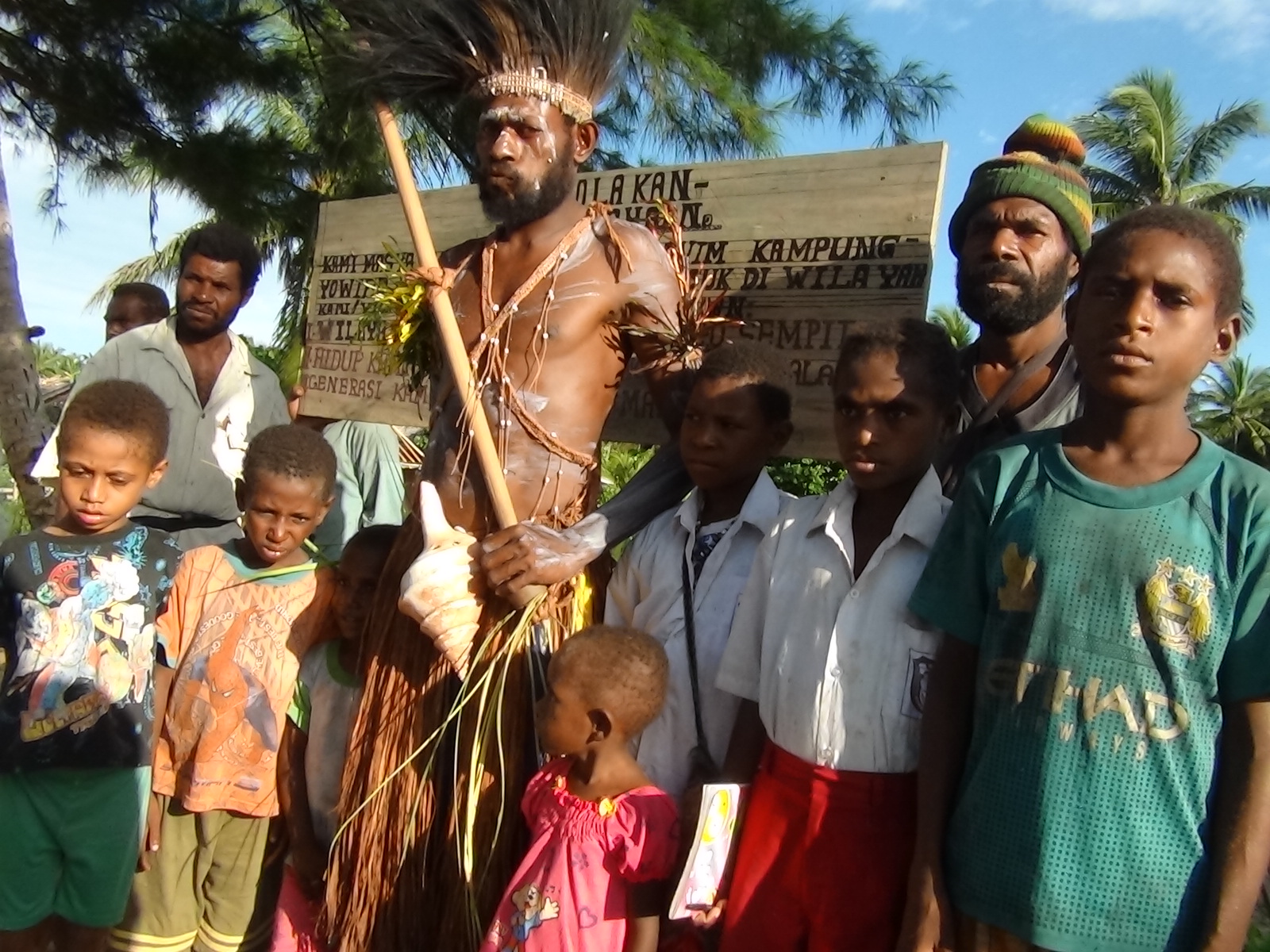
yowied

We, the indigenous people of Yowied Village reject corporations coming on to our land in Tubang District for the following reasons:

there is not so much land around Yowied Village.

Our lives are dependent on what our environment can provide.

Where will the future generations go?”

The sign is tied with coconut leaves, a signal that it is a ‘sasih’ marker, a traditional means to forbid passage. Similar signs can be seen in almost all villages in the area. They are backed up by an agreement between all villages in the area that no-one should give up their land, under pain of death. It’s a desperate first act of defiance to a modern world they know has no place for them. A plantations mega-project has been imposed on Merauke, West Papua, and 2.5 million hectares of forest, grassland and swamps – the ancestral lands of the Malind people – are being targeted for oil palm, industrial timber and sugar cane.

For now, the natural ecosystem in remote Tubang District is still in good condition, and the Malind Woyu Maklew people who live in the area can easily find all they need from the forest by hunting, gathering and fishing. The former chief of Yowied village has claimed that he could easily live on only $2 a month, which he would use to buy tobacco and betel nut – everything else could be got from the forest.

Throughout Merauke Regency in the southern part of West Papua, a land controversially annexed by Indonesia 50 years ago, indigenous communities are having to learn fast how to resist corporate manipulations. In 2009 ambitious local politicians proposed Merauke as Indonesia’s new centre for industrialised agricultural growth. This was in the aftermath of the 2008 global food crisis, when governments worldwide got preoccupied about national food security, prompting a wave of land-grabbing globally. The Merauke Integrated Food and Energy Estate (MIFEE), as it became known, was officially launched three years ago in August 2010. Around 50 provisional permits have been issued to around 20 corporate groups, mostly from Indonesia or South Korea.

Starvation and rebellion as the companies move in.

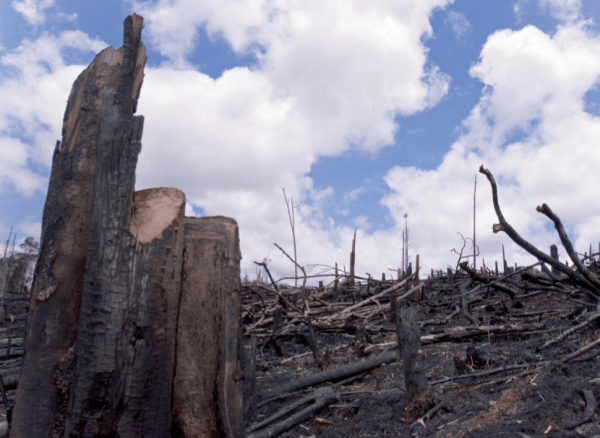
They claimed that MIFEE would ‘Feed Indonesia, then feed the world’. But in the end, it brought hunger. In Zanegi, one of the first villages to be caught up in MIFEE-related development, five children have died in the first half of 2013 from malnutrition and preventable diseases thought to be linked to pollution. Medco, the company involved, is not even producing food. Its industrial forestry plantation is currently turning the Zanegi people’s ancestral forest into wood chips. These are then loaded onto ships and exported to Korea by Medco’s joint venture partner LG International, to be burnt in power stations or turned into fibreboard.

Zanegi too has had to learn to resist. Villagers were tricked out of their land by Medco, who gave them a ‘Certificate of Appreciation’ and US$33,400. The people had no idea that they were signing away their forest, their means of subsistence, their identity. Then the company started taking away the timber, giving people a fraction of the price the logs were worth and breaking their promise to leave intact forest around sago groves and sacred sites. Eventually the people decided to block the company’s access. If they heard chainsaws then they would come running, and in this way they successfully managed to keep the company from operating on their land for over a year.

Despite their resistance, Zanegi has suffered. The forest is gone and the village is empty nowadays as people regularly abandon the village, staying in temporary camps to try to hunt the few remaining forest animals. Others work for the company, but their daily pay is only enough to buy a day’s food for a family. Swamps are poisoned with pesticide residues from the tree nurseries, fish swim erratically as if drunk and then die. People do not have enough to eat, especially the women who always feed their husbands and children before themselves. Traditional beliefs in this area mean that deaths are thought to be linked to black magic. This has led to a conflict which has left several community leaders imprisoned, accused of killing someone who was believed to be a sorcerer. Three of the men have died in prison in the last year, deaths which are also put down to black magic.

The story of Zanegi village has become well known around the Merauke area: it is a warning of what happens when villagers sell their land, and that prompts people in other villages to hold out against the companies. Another company, Rajawali, is trying to set up a sugar cane plantation near the coast. The company successfully bought up land belonging to Domande village, but other villages, Onggari and Kaiburze, have been resolute in their refusal to sell. This is despite intense pressure from the Rajawali corporation, which has also been accused of illegally felling trees on Onggari village’s territory.

In Domande Village, in June 2013, local people angry about unpaid timber compensation set up a blockade, and some days later ordered Rajawali’s loggers to leave the area. As in Zanegi, they had already been tricked out of their land, but were still fighting to get fair compensation for the trees at least. Previously the villagers had taken action after Rajawali cleared a burial ground. Living in the plantation zone means you must be on constant alert to companies overstepping the line.

Fear and conflict is only ever one step behind the company. Back in Yowied, company guards working for PT Mayora, the company which is trying to gain access to plant sugar-cane, accused people of being separatist rebels, fighting for West Papuan independence. Seeing that villagers were preparing to run to the forest in fear, some community leaders felt forced to sign a document PT Mayora were presenting them. In nearby Woboyu, villagers were scared a deadly conflict would break out after rumours spread that people from another village were collaborating with PT Astra to survey customary land boundaries. Both companies are planning sugar-cane plantations.

Local community activists involved in the SSUMAWOMA forum recorded video interviews in these two villages which they then took to Merauke city. After discussing the issue one Sunday afternoon, about 100 people decided to take action, and the next day occupied PT Mayora’s office in the city, demanding that if companies want to propose new plantations, they approach people in a reasonable way, and not just show up causing chaos, divisions, intimidation and confusion. The local regency leader agreed to meet with representatives after the action and agreed to order PT Mayora to temporarily leave the land, but it is known that the company is still looking for a new strategy to convince villagers.

The SSUMAWOMA Forum is a group that has emerged in recent months, made up mostly of university graduates who have roots in the western part of Merauke Regency. With the backing of the communities, they are articulating their opposition to all plantation plans, at least as long as the people lack the skills or experience to get meaningful employment with companies, meaning they end up marginalised on their own land. They bring the voice of the villagers to the public and government, showing how the people have nothing to gain from plantations and, at the same time, have so much to lose: their forest, their livelihood, their culture and their identity.

The Malind people are not just dependent on the forest for their daily needs. The forest defines every aspect of who they are. In Malind cosmology mortal humans are the third generation; the first two generations of their ancestors remain immortal in the environment around them, and the Earth is seen as mother. Each clan is intimately connected to their dema or totem – a part of the ecosystem: Gebze with coconut, Mahuze with sago, Basik-Basik with wild pigs, Samkakai with tree kangaroos. It is incomprehensible for Malind people that the forest might be gone, if it is their culture becomes no more than a sad symbol, their sense of being torn apart.

“The Malind Anim culture is not just a dance, a ritual or a carving. It is not a mere representation of a culture, decorated in mud, leaves and vines” (SSUMAWOMA forum)

When Oil Palm wears a Uniform

In the eastern part of Merauke is the border with Papua New Guinea. The area is militarised, under the pretext of protecting the border zone. For decades local people have had to live with constant intimidation from the troops at dozens of outposts strung along the border. Here traditional society has faced even more challenges; many women have been raped, and subsistence becomes more difficult when military personnel have hunted many of the forest animals.

The military is a source of terror and trauma in West Papua, having waged a war on its people over the last 50 years, protecting its own interests and Indonesia’s economic agenda. Shooting incidents are common, independence movements are brutally crushed, torture, imprisonment and random beatings are everyday hazards. Racist attitudes towards black-skinned Papuans prevail. The climate of fear and resentment has long been established throughout Papua. Even though Merauke has not been a zone of intense pro-independence activity recently, this is why living alongside the military still means constant tension.

All MIFEE companies use the military (or police mobile brigade) as security, adding to the pressure on people to hand over their land, but in this eastern strip, near the border, the military presence is felt more strongly. This area has been allocated for oil palm, with at least four corporate groups wanting to develop big plantations. Unsurprisingly, the companies have found it easier to gain access in this area, and several are now clearing the forest. Nevertheless, a few clans are still resisting, refusing to sell their land, and there have been blockades here too.

The going rate for compensating indigenous people for the annihilation of their world works out at about US$30 per hectare. This amount is pitiful if it is seen as a replacement for the many lifetimes which a forest could sustain, especially once that amount is shared out between different families. But at the moment when the cash is handed over for a few thousands of hectares, for the communities, as people who are desperately poor in terms of the money economy, it seems a huge amount In several cases, this cash handover has been the cause of conflict between villages, clans or individuals, wrenching the community apart.

Far away in Jakarta, Indonesia’s national development master plan still tells the official story: MIFEE is a well-planned and structured development which will provide food crops such as rice, corn, soybeans and beef for the nation. It totally ignores reality, which is that the land is being gobbled up by the same oil palm, sugar and forestry multinationals that have devastated many of Indonesia’s other islands. And as investment fever spreads, oil palm companies are also lining up to establish or expand their plantations elsewhere in West Papua.

Indigenous resistance sometimes seems desperate – what chance do forest people stand against multinationals and the military? But companies remain cautious about entering West Papua, fearing local anger, and many ambitious investment plans have failed here. Standing up to these companies costs the Malind so much, but really it is their only chance to survive as a people, and protect their land.

—-

This is the first of three essays written to give an overview of the MIFEE project, three years after it was officially launched on August 11 2010. The second article is a more in-depth analysis of how plantation companies have affected indigenous communities over the last three years.

The third article is a much longer analysis of the mismatch between the original plan of a food estate to “feed Indonesia, then feed the world” and the reality: vast oil palm, sugar cane and industrial forestry plantations. It also examines how this food estate myth has persisted,providing legitimacy to a national development plan which ignores communities, and to a policy for West Papua which is promoting development while doing nothing to address the underlying causes of West Papua’s problems.

List of key companies involved in MIFEE:

  • Medco (Indonesian oil and gas company)
  • LG International (Korean TNC, best known for its electronic products)
  • Rajawali (Indonesian business conglomerate)
  • Daewoo International (Part of South Korean Posco TNC)
  • Korindo (Korean business conglomerate with diverse businesses in Indonesia)
  • Wilmar International (Asian plantation and grain trading giant, and biodiesel producer, also owns the company which markets CSR Sugar in Australia)
  • AMS Plantations (The plantation company belonging to the younger brother of Wilmar’s co-founder)
  • Astra Agro Lestari (Indonesian plantations company, ultimately owned by British-registered corporation Jardine Matheson)
  • Mayora (Indonesian food company)
  • China Gate Agriculture Development (little known company, also South Korean)
  • Moorim Paper (Korean paper company)
  • Central Cipta Murdaya (Indonesian conglomerate – boss is in prison for paying bribes for plantation permits elsewhere but business goes on regardless)
  • Texmaco (Indonesian conglomerate focusing on forestry)

Sugar company Rajawali is destroying forest without permission in Malind district

by Ank @ Pusaka (Heritage) Foundation to empower community rights

15 April 2013

Merauke, Papua: Without the knowledge or consent of local landowners in Kampung Onggari, Malind district, Merauke, two subsidiaries of the Rajawali Group, PT Karya Bumi Papua and PT Cenderawasi Jaya Mandiri, are destroying ancestral forest, evicting areas of importance and swamps belonging to the people. It is believed that this has been occurring since the end of 2012.

Stephanus Gebze, a well-known figure and leader of one of the landowning clans in Kampung Onggari revealed that, “the Malind people of Kampung Onggari have never sat down and discussed this together, nor have we agreed to give permission or surrender our land to the Rajawali company”.

In 2010, the Rajawali company presented its project plans at the Malind district office, in Kampung Kaiburse, but community members from Onggari who were present stated their opposition to the company’s operations in Onggari, as they needed the forests and swamps to be able to support future generations of villagers. In 2011, Rajawali built a church in Onggari, but the people never agreed to give their forests and swamps over to the company. “We accepted the help to build the church as a contribution to us in Onggari. We cannot be coaxed into giving up our land just because a church was built for us”, said Paulinus Balagaize.

Several local people have already surveyed the site where clearing has taken place, known as Tiptidek, Kopti and Kandiput. They have found that their forests and swampland, known as Deg, Palee, Bob, have already been flattened. “These are the places we go hunting, fishing, collect wood and medicines. There are animal habitats and burial grounds of the Malind ancestors. The company has destroyed them all”, said Stephanus Mahuze, another prominent member of the Onggari community. expressing his disappointment with Rajawali for clearing the forest without permission.

The Onggari village government and other community leaders met with the leader of the Malind District, Martinus Dwiharjo, on Thursday 11th April 2013. They complained about how Rajawali was clearing the forest without permission. “This is harassment, and a violation of our traditional rights as Marind people”, said Stephanus Gebze.

The community is demanding that Rajawali’s activities are stopped until settlement is reached according to Marind customary law. There must be compensation for all the various losses the people suffer,  including for grasses and other plants and disruption to animal life. The community wishes that these problems can be resolved peacefully and according to the Marind people’s traditional mechanisms.

Martinus Dwiharjo said that he had no knowledge that Rajawali had been clearing people’s land in Onggari. Martinus has offered to facilitate a meeting to resolve the issue with Rajawali as soon as possible, on
Tuesday 16th April 2013. Martinus also wishes to lend his support to resolve any questions about the location of the boundary between land belonging to the clans of Kampung Onggari and Domande. The majority of Kampung Domande’s land has already been given over to Rajawali.

Who knows how often Rajawali has overstepped the line? In November 2012, the people of Kampung Domande, Malind district, imposed a penalty on Rajawali according to their customary laws because the company had
cleared land on the Sanggayas burial ground. Fransiskus Kaize, the village head, explained this penalty consisted of a seven million rupiah fine, one pig and twelve kava plants. The Sanggayas Burial ground has
now been cordoned off with a coconut leaf fence to show that it is forbidden to destroy the surrouding areas.

When a company clears forest without permission, it is grabbing land, insulting indigenous traditions and breaking the law. It is only right that the Malind people of Onggari take action to uphold their customary law against such companies.

Source:
http://pusaka.or.id/2013/04/perusahaan-tebu-rajawali-membongkar-hutan-tanpa-ijin-di-distrik-malind.html

Available in English at https://awasmifee.potager.org/?p=334

PT Selaras Inti Semesta’s Unkept Promises to Senegi Villagers

Tabloid Jubi

by Ans K @ Tabloid Jubi

January 4, 2013

The leader of the Merauke District Legislative Council (DPRD), Leonardus Mahuze, says that PT Selaras Inti Semesta, a company logging forest owned by the people of Senegi village in Okaba district, has not fulfilled the promises it made when it started its operations there.

Chairman DPRD Merauke, Leonardus Mahuze (Jubi/Ans)

That was how Leo described the situation to tabloidjubi.com, on Thursday (3/1).  He said that the company’s promise to provide education for Senegi village’s children, including providing college places, has still not happened.  Similarly the company has not provided new houses, electricity supplies or clean water either. As a result, the local people who are the customary landowners in the area, feel they have been exploited.

Until now, Leo related, the only thing which PT Selaras Inti Semesta has completed building has been a church. In the meantime they are logging the forest every day. “Yes, of course the local people are the victims in this situation. The council has received many complaints”, he said.

Leo added that in the near future he will summon PT Selaras Inti Semesta and local people to a meeting at the District Legislative Council, and draw up a memorandum of understanding between the two parties, witnessed by representatives of the people. This is in order to uphold the people’s rights.

(English translation: https://awasmifee.potager.org/?p=308)

The Impact of MIFEE presence at Bian River and Maro River, West Papua

http://tabloidjubi.com/?p=7575

Press Release from Indigenous Peoples Organization of Bian Enim

Extent of MIFEE estate (via Tabloid Jubi)

Jayapura, (21/12)—“The Lord Allah has given new land to create human-being, they  (human-beings) are given legs and hands to cultivate the land. We do not refuse any development and companies on our land, but we  want to get fully involved in it (development)”

The presence of company and investment development on our customary land has caused several impacts, which we face direct and indirectly. One of the impact that clearly occurs is water contamination which is followed with phenomenon of dead fishes,  turtles and other water animals, which people believes that these are affected by company’s waste where is located on the edge of Bian River. Moreover, the water from river and swamp that we have been using and consuming for our daily needs, e.g drinking, cooking, bathing, and others, can no longer be used by us anymore. The kids who baths in the river and swamp has got health problems on the skin, digest problems, coughs and other health problems. In compensation, we have to walk miles and miles to get fresh and clean water.

The company’s activities, which we see by ourselves, has demolished our customary land that we have been protecting, nurturing, and taking care of. The deforestation of our customary forest has also deprived any of traditional medicines that we have been using for all this time. It is harder for us to look for Sago, hunted animals, traditional clothes materials, and customary equipment which are only available in the forest. For us, customary forest that is destroyed equals to damaged and the loss of our culture.

The company came to the village without any detail, clear, and proved information given. The company does not involve indigenous peoples and land owners since the first time of investment plan on our land. As well as things related to policy and permits was not informed openly, clearly, and detail to us, including the potential impact of the land permits that might occurs on our land.

In the process of socialization, consultation, verification of clan owners, and negotiation which was conducted by companies, they never get the clan owners fully involved. The companies only engaged the head of clan, the community leaders, including local government to get involved on the land that is grabbed and destroyed. The involvement mentioned is related to involvement in EIA Preparation Process, consultation, and EIA assessment. The indigenous community’s organization which represents the indigenous peoples was not even involved in this process. Meanhile, on the side of community, the land owners whose land is not grabbed and destroyed were not engaged to get involved. This matter resulted to today’s situation where our demands and aspirations are not expressed well.

We feel that government who shall has duty and obligation to protect, respect, and bring forward our rights as indigenous community, has clearly become the company’s men as they are on the company’s side, and not on the side of the indigenous community and the land owners.

When the companies came to our land, they and the government mentioned that the land was only borrowed or contracted for 35 years and afterward the land will be returned to the customary land owners, and we believe that we will get our land back. Nowadays, we got information that one of the palm oil companies, PT Bio Inti Agroindo (BIA) who conducting operation on ou land and customary area has got their Land Use Rights / HGU. We realize that the end of land use rights would refer to the land be returned to the state, after 35 years been used by the companies. For us, this situation means that the companies has failed to protect our indigenous rights as the real land owners. This also means that the company has intentionally committed fraud, negligence and removal of our indigenous rights without our approval on the concession. For that matter, we urge that if the company wish to continue using our customary land, thus the company is obliged to seek for our approval as land owners and we also have make sure that the land will be returned to us, the clan owners, after the usage.

Demands and Aspiration
Based on the circumstances and the facts above, we are very aware that many losses that we have experienced will be sustained and the impact on the loss of life, dignity and our rights as indigenous peoples as well as our constitutional rights. Therefore we demand and urged the government to take actions to:
1. Revoke and cancel location permits off of our customary land
2. The Land use rights must be removed from the land and customary land and  clan’s land, and also to ensure the lands will be returned to our customary land owners
3. The Company shall be responsible to, and conduct recovery as well as to give compensation to the communities who lived along the coast of Bian River up to Kaptel
4. The government should take action and control of disruption and environmental pollution caused by gold mining company’s activities in the border between Indonesia and PNG, which has threatened communities in Maro River – Bian River
5. The government shall conduct an investigation, field observations and research on the situation in the Coastal Mandob-Bian-Mill and should involve communities and civil society organizations.

Merauke, 18 December 2012
Sincerely Yours,

No. Name, Village, Position
1.    David Kabaljai, Baidub, Clan Member
2.    Bertila Mahuze, Boha, Clan Member
3.    Willem Mahuze, Boha, Head of Village
4.    Markus Dambujai, Bupul, Clan Member
5.    Petrus Mekiuw, Bupul, Clan Member
6.    Bibiana Kodaip, Erambu, Clan Member
7.    Elvas Kabujai, Erambu, Clan Member
8.    Polikarpa Basik-Basik, Kindiki, Clan Member
9.    Sebastianus Ndiken, Kindiki, Leader of BianEnim Indigenous Peoples Organization
10.    Simon Mahuze, Kindiki, Village Officer
11.    Chriz Ungkujai, Kweel, Clan Mekiuw Leader
12.    Klemes Mahuze, Muting, Clan Member
13.    Maurits A. Mahuze, Muting, Clan Member
14.    Paustinus Ndiken, Muting, Secretary of Indigenous Peoples Organization
15.    Silvester Ndiken, Muting, Clan Leader
16.    Yanuarius Wotos, Muting, Clan Member
17.    Melkias Basik-Basik, Pachas, Clan Member
18.    Simson A. Basik – Basik, Pachas, Clan Member
19.    Susana Mahuze, Pachas, Clan Member
20.    David Dagijai, Poo, Leader of Yeinan  Organization
21.    Siprianus Kodaip, Poo, Clan Member
22.    Abner Mugujai, Tanas, Leader of Tanas Organization
23.    Carolina Mandowen, Tanas, Clan Member


MIFEE: Latest News Reports

via AWASMifee

January 7, 2013

Representatives of the Lembaga Masyarakat Adat (Customary People’s Association), together with other people affected by the MIFEE mega-agriculture project, made a visit to Papuan provincial capital Jayapura just before Christmas. In meetings with Papuan media, they explained the new problems local communities in the Merauke Area are facing as different companies rush to develop oil palm and sugar cane plantations.

Here is a selection of articles published in local media Tabloid Jubi and Alliance for Democracy In Papua(ALDP).  Amongst the issues the delegation raises are the companies’ broken promises about the facilities they said they would provide or the compensation for the land, pollution, lack of information about the legal status of the land and coercive behaviour from the military that back up the companies.
When they have accepted work in exchange for giving up their forests, wages have been too low to provide for daily needs. They also ask for all company permits to be revoked, as local people have not been involved in decisions about development.

Company’s promise to build education facilities were lies.

Source: http://www.aldp-papua.com/?p=8009

A company’s promise to build health and education facilities for local land owners around its investment site in Muting, Elkobel and Ulilin districts in Merauke Regency, has still not come to fruition.  “It was all lies, we’ve waited until now but there has been no answer. Blueprints have been drawn up, but they remain no more than sketches,” said the head of the Malind Bian Customary People’s Association (Lembaga Masyarakat Adat LMA), Sebastianus Ndiken in Jayapura last Friday.

According to him, when the company was informing the indigenous clans that own the land in Muting District of its plans some time ago, they had promised employment and also to improve education, including giving scholarships to local youth. “We have already asked when this will be, but the company has said not yet, we have no idea when it will actually happen, but they have been operating on our land for some time,” he said.

Mr. Ndiken related that one of the companies operating in Muting is PT Agriprima Cipta Persada (ACP) After about four months of operation, we are starting to see logging of the people’s forests in the area. “Look, here’s the plans I’ve brought with me. It shows plans for a school. The plans are well-drawn, but the school has never materialised,” he repeated.

Amongst the big companies that are developing oil-palm plantations in Merauke are PT Korindo Tunas Sawaerma, PT Bio Inti Agrindo, PT Berkat Cipta Abadi and PT Papua Agro Lestari.

When they move in, the companies say they are only borrowing the land on a 35 year contract, and after that it will return to its owners. “We believed that. But now we have found out that one oil palm company, PT Bio Inti Agrindo, has already obtained a permit for commercial use (HGU). We realised that in principle, HGU rights mean that after 35 years of commercial use the land will be returned to the state. To us this means that the company has failed to settle the issue of our customary rights as the true owners of the land”, he explained.

He is asking for the company to immediately fulfil it’s promises. “We don’t want problems, don’t let what happened in Mesuji occur in the land of Malind Anim. [awasMIFEE note: at least nine farmers, maybe more, have been killed in clashes with oil palm companies in the Mesuji area of Sumatra in the last two years]. We want progress, but progress that doesn’t deceive the people”, he concluded.

The most recent data from the Merauke government was that 10 of the 46 companies with investment plans were actively pursuing their operations in early 2012.

The project location is the local indigenous people’s only source of wood, animals and staple foods. Merauke Regency covers 4.7 million hectares, of which 95.3 percent is classified as forest.

Customary People’s Association wants big companies out of Merauke.
Source: http://www.aldp-papua.com/?p=8004

The Malind Bian Customary People’s Association (LMA) has requested the government to revoke and cancel all location permits of companies in the plantation sector in Merauke Regency, including oil palm.

“We have witnessed ourselves how companies are felling our customary forests that we have always protected and looked after. Destroying the forest has also caused the loss of several varieties of traditional medicine,” said the head of the Malind Bian LMA Sebastianus Ndiken on Friday.

He told of how it is becoming increasingly difficult for people to find sago, animals to hunt, materials for traditional clothing and other traditional items that had previously been found easily in the forest. For them, the damage to the customary forest is also the loss of the Malind Anim culture.

“Companies come to the village but never give us full, clear and true information. The company also doesn’t involve indigenous people and landowners from the outset. Similarly, information about regulations and permits is not given openly,  clearly and in detail, including information about the potential impacts to our  customary land that could arise from those company permits”, he said.

There has never been full involvement of all clans in the process of informing about plans, consultation and verification of which clans own which land, Mr. Ndiken continued. The company only talks to the clan chiefs and community leaders, including district government officials, so the customary lands can be evicted and destroyed. The kind of involvement the LMA would like to see would include attending the process of compiling environmental impact assessments, and consultations and evaluations about those environmental impact assessments.

“The LMA which is comprised of representatives of indigenous communities, has frankly not been involved. Neither have landowners whose land has not yet been evicted and destroyed. This means that not all our desires and aspirations have been properly conveyed”, he said.

According to him, the government, which should have a duty and obligation to protect, respect and advance the people’s rights, is not on the side of the indigenous landowners.

Amongst the large companies operating in the oil palm sector in Merauke are PT Korindo Tunas Sawaerma, PT Bio Inti Agrindo, PT Berkat Cipta Abadi and PT Papua Agro Lestari.

When the companies moved in, the government said that customary land would only be borrowed for 35 years and then returned to its owners. “We believed that. But now we have been told that one oil palm company operating on our land, PT Bio Inti Agrindo, has obtained a permit giving the company commercial use rights (HGU). We realised that in principle, HGU rights mean that land is returned to the state after 35 years of commercial use. To us this means that the company has failed to settle the issue of our customary rights as the true owners of the land”, he
explained.

He also said that this means that the company has deliberately deceived and disregarded the people and erased their customary rights by gaining agreement for commercial use rights. “So we must make clear that if the company wishes to continue using customary land then it must ask for our agreement as landowners and must ensure that the land will be returned to the clans that are the customary landowners once the company’s tenure is finished”, Mr Ndiken said.

He said that the LMA is also demanding the immediate cancellation of all location permits on customary land. The companies must also take responsibility for restoring the forest and giving compensation to people along the Bian river as far as Kaptel. “The government also needs to take action and start tackling the disruption and environmental pollution that the company’s activities have caused.

Yeinan People Reject Oil Palm Company
Source: http://tabloidjubi.com/?p=7652

The Yeinan ethnic group in Merauke Regency, Papua, reject the oil palm company which wishes to operate in their area. This oil palm company is part of the Wilmar Group.

A Yeinan man, David Dagjiay, said to reporters in Abepura on Friday (21/12) that he was currently negotiating with PT Wilmar Group that are trying to start an oil palm plantation in the Yeinan area. “We are still trying to agree some trade-off where we could agree to the company’s presence. On the whole people reject oil palm companies”, he said.

PT. Wilmar Group plans to plant 40,000 hectares with oil palm. However, until now they have not commenced clearing because local landowners have not agreed to surrender their lands. According to David, the Yeinan people inhabit six villages: Poo, Torai, Erambu, Kweel, Bupul and Tanas.  “Out of these six villages, two have agreed to release their land to the company. The other four have not yet agreed”, he stated.

The people don’t want to be lied to. The Malind people have learnt from the  experience of oil palm companies already operating on Malind Anim lands in Merauke. Now they (the Malind Anim people, which includes the Yeinan), are suffering as a consequence of oil palm. They have lost their livelihoods. It is difficult to hunt deer in a forest when the trees have all been cut down by the company. People can also not consume river water nearby because it is contaminated by waste from the oil palm company.

David stated that there was already one company operating in Yeinan, PT Hardaya, which is planting sugarcane. “For us, one company is enough, no need for any more. We accepted the sugar cane company because sugar cane does not need a long time to grow. Oil palm on the other hand, needs a long time. Then it depletes the land leaving it barren and dry”, he said.

State Security Forces are still backing up companies in Merauke.
Source: http://www.aldp-papua.com/?p=8037

To secure logging areas in Merauke Regency, several companies are using the services of Indonesian state security forces.

“And that’s been kept secret, and we want to let people know that. They are involved from the moment when plans are first presented to the people right up until the development starts in the field”, said Paustinus Ndiken, the Secretary of Malind Bian Customary People’s Association in Jayapura.

According to him, the involvement of security forces personnel has meant that it has been easier for the companies to persuade people to surrender their land. “There have been times when they have also been there asking the people to give their land over to the companies, a prominent community member was once even beaten up while the company was presenting its plans. The situation was tense at that moment, I don’t know why, and then a customary leader was suddenly struck by a member of the security forces”, he stated.

He added that the people didn’t agree with police or military intervention in the process of discussions to transfer land rights. “If they want to keep the area secure, fair enough, but don’t get involved in this process – that’s the business of  customary landowners, the government and the companies and no-one else”, he said.

The head of the Malind Bian LMA, Sebastianus Ndiken said that the companies had contracted their land at low prices. In 2007, land was released for 50,000 rupiah per hectare ($6), later it rose to 70,000 Rupiah ($8) and is now 350,000 rupiah per hectare ($40). “We are being very strongly affected. We demand the price rise to 5,000,000 rupiah per hectare ($600). But the company doesn’t agree”, he related.

He also said that the companies had promised to build health and education facilities. “But these agreements have not been met, promises are still just promises”, he said.

David Dagijay, a Yeinan man from Merauke, said that the Malind Anim people do not want to be lied to. “We doubt that the company will ever build a school. Meanwhile, the land contract lasts for 35 years. Don’t let it become the company’s property after that”, he concluded.

The Yeinan area includes Toray, Poo, Erambu, Tanas and Kweel villages.  Yeinan is part of the larger Malind Anim ethnic group.

Workers Frustrated because wages are insufficient.
Source: http://www.aldp-papua.com/?p=8047

Hundreds of employees of PT Berkat Cipta Abadi in Merauke are frustrated because the company is not paying a fair wage for the work they are doing.  Employees are working for a daily wage of 62,000 Rupiah ($6.40).

“That is extremely low, while we are working in the heat. We ask for wages to rise to 80,000 or 100,000 rupiah a day”, said Melkias Masik-Basik, an employee of Berkat Cipta Abadi, in Jayapura.

He said that he has been working in the tree nursery for six months, without being absent a single day. “But it’s physical work. Yeah, this is money we would use for our daily needs”, said the 27-year-old man.

According to him, the company should pay the wages that have been established by law. Only receiving 60,000 a day means that Melkias gets on average 1.8 Million Rupiah a month ($190). If compared with what the company management recieves, it is far less. “That’s what is so frustrating for us, we want a raise”, he said.

PT Berkat Cipta Abadi (BCA) is involved in the oil palm plantation business. Apart from BCA, PT Korindo Tunas Sawaerma, PT Bio Inti Agrindo and PT Papua Agro Lestari are also operational. For Example PT Korindo puts thousands of people to work on oil palm plantations covering tens of thousands of hectares. Korindo is a joint venture between Korea and Indonesia which controls land between Boven Digoel and Merauke Regencies [awasMIFEE note: PT Berkat Cipta Abadi is also a subsidiary company of Korindo].

Neles Tuwong, an activist with the Justice and Peace Secretariat of Merauke Diocese adds that it is the company’s responsibility to provide security for its workers. “This on its own is a problem which must be overcome. I believe that landowners should be getting a bigger share”.

Create a website or blog at WordPress.com

Up ↑