Tunisia… Egypt… Libya… Let’s look closer to home

by Daniel Scoullar

originally appeared at http://www.onlineopinion.com.au

The mass uprisings in Tunisia, Egypt, Libya and other nearby countries have put despotic rulers, human rights abuses and self-determination into our nightly news bulletins and daily conversations in a way that happens very rarely.

The seemingly contagious way these movements for freedom have spread from country to country makes them particularly fascinating, but there is another reason why they have captured the public imagination. It’s because Australians recognise the ‘fair go’ principle, which can also be put in terms of the human right for every person to be safe from harm, to have control over their lives and to have a say in how their country’s run – regardless of whether they live in Bundoora or Benghazi.

In turn, many of us would also be surprised to hear that we have state sponsored violence and political exclusion much closer to home. They would be further surprised to hear these abuses are taking place within Indonesia, a case study for positive social, economic and political reform.

Despite holidaying in Bali, seeing Jakarta on the news or even watching a wildlife documentary shot in the Sumatran jungle, you could be excused for never having heard of West Papua. It comprises the western half of the island of New Guinea (the eastern half belongs to Papua New Guinea) and a collection of small islands.

West Papua’s landscape is one of tropical islands, coconut strewn beaches, impenetrable rain forests and rugged snow capped mountain peaks. It is home to around three million people, including some of the last remaining humans still untouched by the modern world.

West Papua’s modern history is marked by exploitation and resilience. Colonial explorers claimed it as Dutch territory in the 1600s, the Japanese and Americans made it a key battleground of World War II and the newly independent Indonesian nation invaded and forcibly occupied the territory in 1962, just 13 years before they would do the same in East Timor.

In the 50 years since then, West Papua has been ruled as a country-apart within Indonesia. This is somewhat ironic given West Papua is physically, culturally and historically separate from the rest of Indonesia. Its traditional ties run east and south to Papua New Guinea, Melanesia, northern Australia and the Pacific.

Where military and police abuses were curtailed elsewhere, they were encouraged in West Papua. While ‘unity in diversity’ was the national motto, West Papuan traditional culture was violently suppressed and almost a million ‘transmigrants’ were shipped in and given the reigns of local government and the economy. Even as the post-Suharto human rights reforms resulted in greater freedom of speech for those in Jakarta, incarceration or death are still the standard penalties for raising the Morning Star flag in West Papua. An estimated 100,000 local people have been killed during the occupation.

In 2007 I travelled from East Timor through Indonesia, West Papua and Papua New Guinea on my way back to Australia. My lasting memories are of friendly West Papuans inviting me into their homes to practice English with their children and heavily armed military personnel/police stopping me in the street for seemingly random questioning. When I returned to Melbourne, I met members of the West Papuan refugee community here and learned more about the extent of the abuses taking place in their homeland.

A recent example captured on video and shared on the internet, shows two Papuan men being cruelly tortured by security forces, including one having his genitals burnt. Other examples include activists being shot at demonstrations – or just disappearing. Local prisons are full of political prisoners who have committed no crime other than raising their voice.

It is also important to differentiate this critique of state sponsored human rights abuses and a lack of self-determination from a more general attack on Indonesia as a nation or its culture.

As someone who speaks Indonesian moderately well and has lived and travelled in the region, I know first hand the beautiful diversity within Indonesia’s awe inspiring 17,500 island archipelago. The majority of its 240 million people are not disputing their place in this nation state and democratic, social, economic and political progress continues in most areas.

Nevertheless, acknowledging Indonesia’s strengths is not the same as writing a blank cheque to the worst elements within its military and government. After 24 years of silence, Australia finally found the moral and political strength to take a stand on behalf of the East Timorese people and this is what is needed again, not just from our Prime Minister Julia Gillard, but from other world leaders within our region and right across the globe.

We all know that international diplomacy can be a dirty business where economic and political interests take precedence over doing what is right. We should acknowledge that it is politics and economics that are the key barriers blocking the Australian government from advocating on behalf of the West Papuan people. There is no easy villain such as Muammar Gaddafi to hold up as a symbol of evil. It’s more complicated than that.

International diplomacy can also be a powerful force for improving lives. While East Timor remains poor, I didn’t meet a single person there who wanted to go back to Indonesian rule. Australia is a regional leader, particularly in the areas of good governance and human rights protection, and we should not shy away from this role. We have the power to make a difference in West Papua and, in turn, we carry the corresponding responsibility to do so.

If we simply cast our gaze to distant parts of the world, where people are paying with their lives for basic freedoms, we will overlook those closer to home paying with their own lives for those same freedoms.

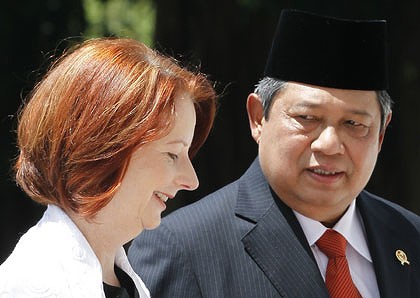
Australia must make a stand for West Papua

Article in the Sydney Morning Herald

As YouTube evidence of Indonesian soldiers burning the genitals of the West Papuan Tunaliwor Kiwo received its 50,000th viewer, the Indonesian military (TNI) was exposed holding a cynical mock trial to try to cover up systemic violence.

Julia Gillard was red-faced. When in Indonesia with Barack Obama last month, she had praised President Susilo Bambang Yudhoyono’s quick response and the coming trial. Soldiers from another, lesser ”abuse case” were then paraded and given soft sentences, while Kiwo’s torturers remain on active duty.

Despite the Australian embassy in Jakarta telling Indonesian officials of Australia’s “unhappiness with the military’s investigation”, the blatant contempt shown for Gillard and her officials creates little confidence.

Gillard bit her tongue again this week. ”The President of Indonesia,” she said, ”has made it absolutely clear he wants to see any wrongdoers brought to justice on this matter.”


Where’s the solidarity that lifted East Timor out of the geopolitical rubbish bin and into the minds of mainstream Aussies? In 1999 East Timor held a United Nations referendum, due in part to international and Australian pressure, and the Indonesian military tortured, raped and scorched its way back to Java.

In that year in West Papua I discovered the best kept secret in the Asia-Pacific region. Hiking among the highland farms of the Dani people, I heard stories of dispossession, detention, torture and murder. Yale University suggests that since the Indonesian military invaded in 1962-63, it has killed 400,000 West Papuans yet few Australians know anything about these killing fields.

I had lived and travelled on and off in Indonesia for 15 years but never heard even a whisper from West Papua. I departed shocked by the locals’ stories and with a growing suspicion that we were being lied to. The Australian government has always known what’s happening there but has chosen placation over human dignity and moral leadership.

Back in Australia, it was as if this province of 2.6 million had been erased. Why the silence? Where are the churches, students and humanitarian groups who fought for East Timor? Where are the unions who boycotted the Dutch in Indonesia and the regime in South Africa? Where are the conservatives who beat their chests after John Howard ”saved East Timor”?

History offers a clue. When General Suharto took power in Indonesia in 1965-66, he opened the floodgates to Western resource companies. Every Australian government since Menzies kowtowed to this murderous bully, partially to ward off the feared disintegration of this 18,000-island republic, but mainly to gain access to Indonesia’s vast natural resources.

The first Western company to do business with Suharto was the Freeport goldmine in West Papua. Partly owned by Australia’s Rio Tinto, it is the largest gold and copper mine in the world and Indonesia’s biggest taxpayer. Yet West Papuans live in poverty, experiencing the worst health, education and development levels in Indonesia.

Freeport’s $4 billion profit last year didn’t come easily. Dr Damien Kingsbury of Deakin University says the local Amungme people ”have been kicked out, they’ve been given a token payment and if they’ve protested, they’ve been shot”.

None of this would have been possible without Freeport’s paid protection from the TNI, which gets two-thirds of its military budget from its own private businesses. This conflict of interest is at the heart of the military’s ongoing human rights abuses. How can it serve the country while serving itself? West Papua has necessarily become a resource cash cow, a military fiefdom 3000 kilometres from Jakarta, full of tribally divided, uneducated farmers, sitting atop a new El Dorado.

Despite journalists still being banned, West Papua is no longer the secret it was in 1999. Gillard should not be placated by Indonesia’s mock trial of torturers nor train them, in the form of Kopassus. We should work with Jakarta to reform the military and open up West Papua to international scrutiny. It’s time for Australia to step up for our tortured and murdered neighbours to the north.

Charlie Hill-Smith is the writer-director of Strange Birds in Paradise – A West Papuan Story, which is nominated for four AFI Awards including best documentary.

West Papua deserves Barack Obama’s attention

The Guardian, UK

    brown In his autobiography Dreams from My Father, Barack Obama recalls a conversation with his stepfather who had just returned home after a tour of duty with the Indonesian military in West Papua. On asking him: “Have you ever seen a man killed?”, his stepfather recounted the bloody death of “weak” men. 

    Last month, video footage circulated online showing members of the Indonesian security forces brutally torturing Papuan civilians, including burning the genitals of an elderly farmer. It seems as far as West Papua is concerned, some things never change.

    Earlier this year, the US administration announced the re-establishment of military ties with Indonesia’s Kopassus special forces – the same forces implicated in the atrocities of East Timor. Leaked Kopassus documents released last week, have heightened fears that Indonesia’s claims of military reform – a condition of the US deal – are without foundation. The documents show that Kopassus continue to engage in “murder and abduction” and include a target list of “enemies of the Indonesian state”, including West Papuan church leaders, political and student activists.

    Last year I travelled to West Papua to film an undercover documentary about the independence struggle. I found a land where the remnants of the Suharto era very much live on into the modern day – far from the image of democracy that Obama painted in his speech to the Indonesian nation.

    Reports of human rights abuses by the security forces against the indigenous population have constantly trickled out of the territory. Human rights groups estimate that 100,000 Papuan civilians have been killed by the Indonesian security forces since West Papua was colonised in 1969. Papuans argue that the continued ban on foreign media and human rights groups from entering the region is evidence that the Indonesian authorities are hiding something far more sinister. Last year the International Committee of the Red Cross was expelled from West Papua, and it has not been allowed to return since.

    In West Papua it is not uncommon for people to receive prison sentences of up to 15 years for raising their national flag. Even events here in the UK can land Papuans a jail sentence. Last year, two men were jailed after taking part in a peaceful demonstration supporting the launch of a West Papua lobby group in the British parliament. Whatever definition of democracy the Indonesian government claims exists in West Papua, it is not one that any of us would be familiar.

    The challenges facing West Papua are vast. Despite being a land rich in natural resources, it remains the least developed and poorest part of Indonesia. Freeport, the world’s largest gold and copper mine, part-owned by British-Australian firm Rio Tinto, is located on tribal lands close to Puncak Jaya, the highest island peak in the world. BP also has its feet in West Papua, too, operating a natural gas plant in Bintuni Bay. It is an irony that in a land so rich, the Papuan people remain so poor.

    Obama’s refusal to publicly raise the West Papua issue during his visit to Indonesia disappointed many. The Indonesian government have shown no desire to enter into meaningful dialogue with the Papuan people, and bitterness and resentment are threatening to boil over. Many Papuans believe only UN intervention and a rerun of the 1969 referendum will solve the decades-long conflict.

    If the horrors of East Timor are to be avoided, then the US and other western governments need to give West Papua the attention it deserves. Obama’s mother, a cultural anthropologist who spent much of her life helping those marginalised in society, would expect nothing less.

Groups Urge Obama Administration to Reject Dino Patti Djalal as Indonesia's Ambassador

Groups Urge Obama Administration to Reject Dino Patti Djalal as Indonesia’s Ambassador

Contact: John M. Miller  (ETAN) 718-596-7668
Ed McWilliams (WPAT) 401-568-5845 (until Sept. 21), 575-648-2078 (after)

The East Timor and Indonesia Action Network (ETAN) and West Papua Advocacy Team (WPAT) are deeply concerned about the appointment of Dino Patti Djalal as the Indonesia’s Ambassador-designate to the United States. We urge President Obama to reject his credentials and urge Jakarta to send an Ambassador untainted by complicity with human rights violations and with greater credibility.

Ambassador Djalal was a defender of the Suharto dictatorship, and his career involved him in brutal repression. While defending the Indonesian security forces in East Timor (now independent Timor-Leste), he would often attack human rights investigators and organizations. He sought to portray the violence there as civil conflict among East Timorese, rather than resulting from repression of resistance to Indonesia’s illegal and brutal occupation.

The Suharto dictatorship and the Habibie government that followed promoted Djalal as Indonesia’s leading “expert” on East Timor. During that time, Djalal reportedly had close links with the Indonesian army’s intelligence agency.

In 1999, during and after East Timor’s historic UN-organized vote on independence, Djalal was based in East Timor as the spokesperson for the Satgas P3TT (the Indonesian “Task Force for Popular Consultation in East Timor”).  In that capacity he took the lead in the Task Force’s political initiatives.

As Task Force spokesman, Djalal quickly emerged as its leading political heavyweight, taking the lead in leveling false accusations against UNAMET (UN Assistance Mission for East Timor). In his official capacity Djalal also served as flack for the militias created and directed by the Indonesian military to terrorize the East Timorese population in the run-up to August 1999 vote. Those militias and their Indonesian security force allies repeatedly attacked East Timorese civilians, burning villages and assaulting churches in attempt to frighten the population into voting against independence. The militias also sought to intimidate the UN teams sent to prepare for the vote and the international media and humanitarian organizations in the country to monitor the process.

As international alarm over the excesses of the militias and their Indonesian military sponsors grew, Djalal played a key role in seeking to deflect criticism of the militias and the military.

Djalal denied the reality that militias were arming in the run-up to the vote and sought  to obscure militia and military atrocities against civilians in East Timor. He was a dogged critic of international journalists and human right organizations who sought to report these atrocities.

In the wake of East Timor’s overwhelming vote for independence, the Indonesian security forces and their militias rampaged throughout country exacting revenge for the people’s rejection of Jakarta’s rule. The militia and military attacks destroyed vital infrastructure and buildings. They targeted UN facilities and personnel, as well as international journalists, diplomats and other observers. Djalal was key in Jakarta’s unsuccessful efforts to deny the  reality of the which cost the lives of approximately 1,500 East Timorese, displaced two-thirds of its population, and destroyed 75 percent of East Timor’s infrastructure.

In diplomatic assignments in the U.S., Great Britain and Canada, Djalal focused on defending the role of the unreformed and abusive Indonesian military, including targeting of its foreign critics. More recently he has served as Presidential spokesperson.

Ambassador Djalal’s past as an apologist for the worst behavior of the Indonesian military and its minions augers poorly for international efforts, especially in the United States, to press for  justice and accountability for past human rights crimes and genuine reform of Indonesia’s security forces. As the situation in West Papua becomes increasingly tense, will Djalal serve as Indonesia’s Washington-based apologist for continued repression?

In the interest of promoting strengthened U.S.-Indonesian relations based on respect for human rights, ETAN and WPAT believe that the U.S. government should not accept Djalal’s credentials as Indonesia’s Ambassador to the United States.

http://etan.org/news/2010/09djalal.htm

Create a website or blog at WordPress.com

Up ↑
