Leaked Letter Reveals Indon Army Scare Tactics

Exclusive Copies of the Scanned Letter are available for download at the end of this article. (Please note, any attempts to block access will result in significant multiplication across the internet)

at NewMatilda.Com

By Alex Rayfield

EXCLUSIVE: A leaked letter from an Army General reveals Indonesia’s attempts to disband a West Papuan church with threats of “assertive action”

From the outside looking in, the latest church conflict in West Papua might look like just another example of factional Protestant politics. A little sordid perhaps, but irrelevant to all but the parties involved.

Dig a little deeper, however, and one finds something far more disturbing.

A leaked letter from the head of the Indonesian Army in Papua obtained by New Matilda reveals that far from being an internal church matter, the conflict between Kingmi Indonesia, a Protestant church that has parishes across Indonesia, and the breakaway Kingmi Papua Church, goes to the heart of the Indonesian government’s attempt to repress movements for cultural pride and autonomy in the country’s restive Pacific periphery.

In a nutshell, the conflict turns on whether Kingmi Papua has the right to separate from Kingmi Indonesia and set up an autonomous synod, reverting to an arrangement that existed prior to 1982.
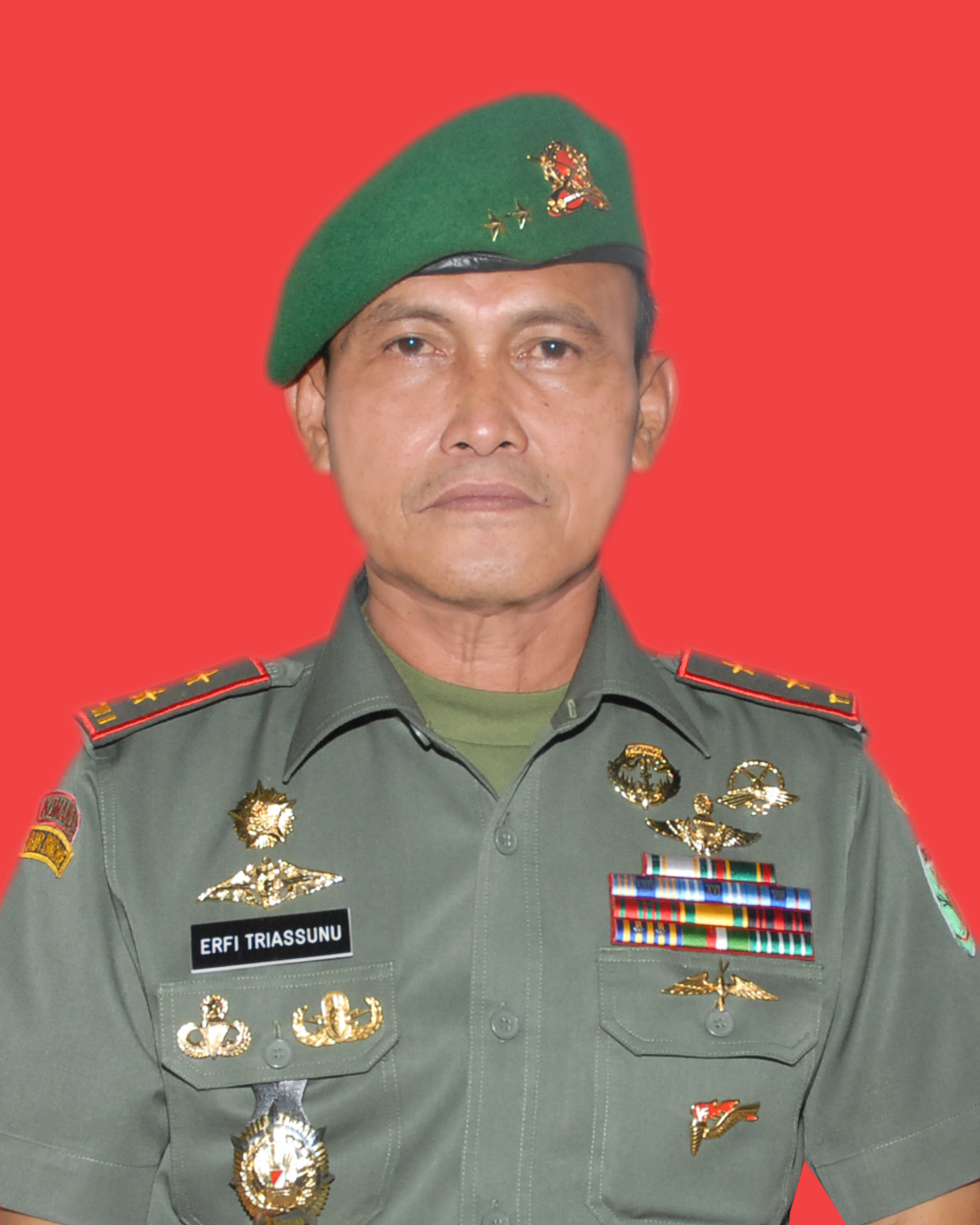
Major General Erfi Triassunu, TNI Chief, Kodam 17 (Papua) (photo discourtesy of TNI)

The question is this: why has the Indonesian Army become involved? Major-General Erfi Triassunu has waded into a conflict that he himself acknowledges is an internal church matter. In the letter (File Number: R/773/IV/2011) addressed to the Governor of Papua, Barnebus Suebu, dated 30 April 2011 and marked “secret”, Triassunu “respectfully requests” the Governor to arrange a meeting between Kingmi Indonesia and Kingmi Papua. The General also offers himself as a mediator.

The letter continues: “if the conflict cannot be resolved through discussion then assertive action must be taken”.

Let me translate “assertive action”. In East Timor when the Indonesian Army took “assertive action” against the Church, they murdered church workers, massacred parishioners, raped women and burnt churches to the ground. In West Papua too the Indonesian Army has a history of killing pastors from the Kingmi Papua Church, as well as other churches. This dates back to 1 May 1963 when the Indonesian government took administrative control of the territory and has continued up to the present.

Last October a video filmed on soldiers’ mobiles phones and circulated widely on the internet, showed several soldiers from Kostrad, the Indonesian Army’s Strategic Command — Triassunu’s own division — torturing a Papuan church worker by burning his genitals with a stick.

In the letter, Triassunu, who previously served in Aceh, makes a number of accusations. He accuses Kingmi Papua of trying to access as much money as they can from the government’s Special Autonomy programme in order to create new churches. However, the real purpose of building a network of churches, Triassunu insists, is “to strengthen Papuan civil society aspirations for freedom”. He then argues that the Kingmi Papua Church’s desire to be independent of the Indonesian Church is “just an excuse” for “the church to become a political vehicle” that supports Papuan independence.

Triassunu then goes on to make a number of recommendations. He specifically says that Kingmi Papua pastors should stick to Biblical “dogma” and not stray into politics. The General is on solid ground here, following in the footsteps of numerous dictators from Marcos to Pinochet, all notorious for their attempts to stifle meddlesome priests. Triassunu specifically names Reverends Benny Giay (the current moderator of the Kingmi Papua Church), Seblum Karubaba (the former moderator) and Noakh Nawipa (the Rector of the Pos 7 Theological College) as malcontents, mentioning several seminars organised by the trio where “Papua Merdeka” (freedom) was discussed.

All this has echoes of Suharto who systematically depoliticised (read: violently repressed and disbanded) all independent organisations, including religious ones, for fear they could become bases for organised opposition against the regime. Indonesian democrats may have overthrown Suharto but West Papua is not part of a new democratic Indonesia. What is deeply concerning is that in the Papuan context the label “separatist” is regularly applied to Papuan leaders as a pretext for justifying extra-judicial action by security forces.

This is where the plot thickens.

According to the letter, the General decided to become involved in the Kingmi conflict after a Kingmi Indonesia pastor, Reverend Karel Maniani, personally asked the Army to protect his parishioners. But Reverend Maniani himself was previously a member of “Group Nine” of the Papuan Freedom Movement (or OPM). In the 1980s Maniani was jailed for four years in the notorious Kalisosok Prison. What happened to Maniani on the journey from freedom fighter to Army petitioner?

To make things stranger, the conservative US-based evangelical Christian Missionary Association backs Maniani and Kingmi Indonesia against Kingmi Papua. At stake is not only valuable church property and access to Special Autonomy funds, it is also over influence of a broad Papua base. Kingmi Papua has half a million members. Virtually all of them are indigenous Papuans from the fractious Highlands, around a third of the entire Papuan population.

When I asked Benny Giay about all this his reply was revealing. For years he said he was part of a church that was more concerned with “saving souls” than the day-to-day oppression of the Papuans. “The Kingmi church has been complicit with the suffering of the Papuans. We need to confess our sins and follow the narrow path of Jesus. This Gospel is very clear; we must stand with the oppressed and work to alleviate their suffering. I hope we can cast off our fear and stay firm to this path.”

Giay has a vision for an independent Papuan church; a uniquely Papuan church that makes space for Papuans to begin to articulate their own theology, one that sees God present in Papuan history and culture. Giay and his colleagues are slowly building up a church that commits itself to solidarity with the poor and oppressed; one that is led by the Papuans themselves. That may not sound much to a reader unfamiliar with Papuan politics, but in West Papua it is a big deal.

Just ask the General.

SCAN OF ORIGINAL LETTER SIGNED BY MAJ-GEN ERFI TRIASSUNU


Papuan students demonstrate outside UNCEN, Jayapura

Bintang Papua, 30 June 2011
An announcement on Thursday about the selection of students at the
state university led to a demonstration being held by students who also
blocked off the Cenderawasih university campus in Waena. The entry to
the campus was blocked off while a small bonfire was burning in the
middles of the road. The demo was organised by the chairman of the
Students Association of Tolikara, supported by students of the faculty
of law at the university.

Speeches were made and leaflets were stuck on the walls, with demands to
the rector of the university.

One of the leaflets said: ‘Why is it that year after year, indigenous
Papuans account for less than 20 percent of the total while the other 80
percent are non-Papuans?

‘We are asking the rector to account for this, bearing in mind an
earlier promise that Papuans would account for 80 percent,’ said Terius
Wakor, co-ordinator of the action. This was a promise made by the rector
of UNCEN, Prof Dr B Kambuya.

‘We indigenous Papuan students feel very disappointed about this
because the rector promised that priority would be given to indigenous
Papuans with 80 percent of the places. Yet what has happened is that
only 5 percent of the Papuans were accepted into the university.’

Another of the students, Thomas CH Syufi, who also took part in the
demo, said: ‘We as representatives of the Executive Board of the
Students, the BEM of the Faculty of Law, strongly support the views of
our colleagues.’

Following the announcement about the students who were selected, he said
that they hoped that the rector would take account of the views of the
indigenous Papuan students, in view of what the rector promised last
year. ‘We very much hope that the rector will take some action with
regard to the Papuan students who did not pass the selection test. He
suggested that there should be another round of testing for a second
group of students to be accepted to the university.

Meanwhile the deputy rector said that while no promises had been made,
there had been a commitment to increase the percentage of indigenous
Papuan students. He said that at this level (the SNMPTN), it was
difficult to have an effect on the selection of students. He told
Bintang Papua that not enough Papuans were available from the IPS, and
very few had registered with the IPA programme.

[Apologies for not knowing what these initials stand for. TAPOL]

Students press for action against widespread corruption in Papua

Bintang Papua, 27 June 2011
PAPUA A PARADISE FOR CORRUPT OFFICIALS

Students urge DPRP to adopt a regulation on combating corruption

Jayapura: Papua is a veritable paradise for people who corrupt the people’s money  while a number of top-level officials behave as if they are beyond the law,’ said Thomas Sugi, chairman of the Students Executive Board of the Faculty  of Law at Cenderawasih University. He was speaking at a demonstration of youth and students outside the  DPRP – Papua Provincial Legislative Assembly.

The students urged the DPRP to draft a regulation, known as a Perdasi, dealing with corruption and stamping it out. It has been estimated that as much as Rp. 28 trillion of OTSUS – special autonomy – funds were embezzled during the eight years from 2002 – 2010 following the adoption of the OTSUS law, according to the findings of the auditing body, BPK published on 18 April 2011.

Sugi said he hoped that such a regulation would act as a dis-incentive for officials of the province  who were thinking of embezzling money that belonged to the people. He said that the students fully support comments made about this problem on a number of occasions by the chief of police of the province, Drs Bekto Suprapto.

But he added that, should the law enforcement agency – the police – be shown to be seeking to protect the corruptors, then they would  press for the adoption of a non-confidence motion in the police chief for failing to keep his promise.

On the same occasion, the chief of police of Jayapura, AKBP Imam Setiawan SIK who had been pressed to support efforts to stamp out corruption in Papua declared that the aims of the demonstration were an inspiration to the law enforcement agencies. He said that they would act with all speed via the judiciary in cases where people in the community alleged that corruption had occurred.and would make regular reports to the general public on the matter.

‘The chief of police of the province also called on local police chiefs at the sub-district level to report at least three cases of corruption a year that were under investigation..’

And for the current year, he said, we would call for at least five cases to be handled.

Cabinet minister visits Merauke to promote the MIFEE project

JUBI: 27 June 2011

On his first visit to Merauke to see preparations for MIFEE, the Merauke Integrated Food and Energy Estate, Marie Pangestu, the Minister of Industry and Trade said that the customary rights of the local community should be dealt with first, by issuing certificates, in connection with the MIFEE project that is being developed in the district of Merauke. The land which will be used for planting must be suitable for whatever crops are to be grown there.

The minister was speaking to journalists after flying over the land that will be used for the MIFEE project.

‘I have been closely following the discussions and reports about this projects which have been taking place at the centre. And now, I have come to see things for myself at close range and I have come to the conclusion that the land is very suitable indeed for agricultural production. ‘

He also said that he had received a short account from the Merauke governmental chief about the plans being made for the project, as well as measures for its implementation and land usage. Companies planning to invest can now go ahead to acquire the necessary licences and start planting their crops.

He went on to say that it was now necessary to build the necessary infrastructure, in particular harbours to support the project once it gets underway. For instance, he said, investors who intend to establish palm oil plantations will need harbours of their own.

[COMMENT: The central government will clearly be investing huge sums of money to promote the interests of companies planning to invest in MIFEE. Not at all clear what is meant by issuing certificates to the local communities whose customary rights to the land will be sacrificed as investors are invited to grab their land with little regard for the loss of their livelihoods based on hunting and fishing. No mention either about whether the rightful owners of the land will be granted any compensation for the loss of their land and the destruction of their livelihoods. TAPOL]

More capital assistance for Papuan women, officials promise

Financial help to Papuan businesswomen seriously lacking

The press in Papua has recently reported extensively on the allocation
of OTSUS funds to assist Papuans in their business operations, in
particular Papuan women referred to as ‘mama-mama’

On 11 June 2011, the JUBI tabloid newspaper reported that most of the
allocation of OTSUS funds is concentrated on public infrastructure and
government assets but insufficient attention is being paid to local
Papuan traders, including ‘mama-mama.’ The problem was raised in
particular by the head of the Oadate Major Clan, in the district of
Yapen-Waropen, Yulinus Kowela.

He said that OTSUS funds were being allocated almost entirely to
government officials, the government elite, as he called them.
‘Meanwhile, local Papuan traders and indigenous Papuan women continue to
be impoverished and on the margins, because of the nature of the
development according to OTSUS,’ said Yulinus.

‘For many years, we have been saying that OTSUS funds should be used to
combat poverty and improve the living conditions of indigenous Papuans.
But up to the present day, this hasn’t happened, people are asking about
this, including people living in the interior.’

He said that the allocaton of OTSUS funds should take account of the
fate of indigenous Papuan traders and not just focus on building
infrastructure such as road-building and building bridges in all the
districts. ‘The allocation of OTSIS money should be fairer and be used
to improve the conditions of women traders. They need help to be able to
obtain better facilities for their business activities,’ he said.

On 22 June, JUBI reported that the district chief of Merauke, Romanus
Mbaraka spoke of the need to pay attention to the little people and pay
greater attention to their need for capital. He said that the government
was planning to provide capital to groups of businesses, amounting to Rp
500,000 for each group.

At a ceremony in Gedung Negara, he symbolically handed over the money to
one group of traders. He said that the money was being allocated to
groups of businesses because past experience had shown that this was
better than allocating it to individuals. ‘In this way,’ he said, ‘the
monitoring process can be more easily managed.’

He said that the money was not being allocated for free but the groups
would be expected to repay the money but in this way, the groups would
have greater motivation to run their businesses well.’

‘If a business is successful, its earnings will increase, which means
that the government will be willing to help them again. He also said
that teams will be set up to monitor the businesses run by the women
such as those selling crabs or vegetables. This would motivate the
mama-mama to run their businesses well,’ he said.

[COMMENT: It remains to be seen whether this grand promise will bear
fruit in terms of promoting the economic interests of indigenous Papuans
in their never-ending difficulties to compete with the business acumen
of the thousands of Indonesians who flood into Papua and set up
businesses. TAPOL]

Create a website or blog at WordPress.com

Up ↑
