AHRC: PAPUA – the military ignores agreed settlement with an assault victim

ASIAN HUMAN RIGHTS COMMISSION – URGENT APPEALS PROGRAMME

Urgent Appeal Case: AHRC-UAC-121-2011
12 July 2011

———————————————————————
INDONESIA: The military ignores agreed settlement with an assault victim

ISSUES: Military; indigenous peoples; impunity; threats and intimidation
——————————————————————–

Dear friends,

Two members of 756th Wimaneseli infantry battalion of the Indonesian National Military (TNI) in West Papua assaulted and threatened Yani Meage on 31 May, 2011 in the Kurima district, Yahukimo. After a quarrel between the victim and the TNI members, the soldiers threatened and attacked the victim by beating and kicking him which resulted in several injuries. The victim reported this incident with the support of a local NGO. While the deputy post commander (wadanpos) of the 756th Wimaneseli infantry battalion accepted responsibility for the violence in a statement letter, no further action has been taken against the perpetrators to-date. Impunity for military violence is widespread in West Papua.CASE NARRATIVE:At 2:15pm on 31 May, 2011, at the Kali Yeni area, Kurima district, Yahukimo regency in the Papuan highlands, Ms. Kallek Meage was travelling with her children. She asked her brother, Yani Meage (18) to take them home privately to the Kurima district since she could not afford the local motorbike transport service for them that afternoon. A member of 756th Wimaneseli infantry battalion, who was on duty at the Kurima Military Post and who was also using his motorcycle as a commercial transportation business in the Kurima area, saw this and assumed that Yani Meage was also running a motorcycle transport business and would take his potential customer.

The Indonesian National Military (TNI) member went to the victim on his motorcycle and started to argue with Yani Meage. The TNI member then threatened him and started slapping his face.

The TNI member reported the situation to his squad leader, who was nearby. Then both soldiers attacked Mr. Meage. The squad leader punched the victim’s stomach and struck him on the ears and sides of the body. The victim was unable to escape the assault as the TNI member held him. The squad leader continued to kick and punch the victim which resulted in several injuries.

On the following day, Yani Meage reported his incident to JAPH & HAM a local human rights organisation. One of the staff, Mr. Theo Hesegem was advocating this case and the commander of the 756th Battalion (danyon 756) pressured the human rights worker and intimidated him not to take any action regarding this case.

On 12 June 2011, Parloi Pardede, the deputy post commander of the 756th Wimaneseli infantry battalion, and Mr. Meage met for a dialogue at the Okhumiarek Asso hall at the 1702/Jayawijaya military district staff headquarters. Following the discussion the parties came to an agreement and commander Parloi Pardede together with the victim signed an

agreement, which stated 3 following actions:1. The members of the 756th Wimaneseli infantry battalion must be replaced.
2. The members of the 756th Wimaneseli infantry battalion cannot use their motorcycles as a commercial transportation service.
3. The members of the 756th Wimaneseli infantry battalion who conducted the violence must be punished in accordance with law.

The victim also agreed that he would never ask for compensation if the military executed the agreement. After the dialogue, the NGO representative asked to the 756th Wimaneseli infantry battalion commander to inform all parties, including the elders at the Kurima district about the replacement of the members of 756th Wimaneseli infantry battalion. However, to-date there has been no action regarding the execution of this

agreement. The local military also did not give a clear explanation when local NGOs questioned them regarding this case. There is serious concern that the local military will cover up the event without effective remedies being given to the victim. 

BACKGROUND INDORMATION:While the AHRC welcomes the agreement with the military commander, concerns about an effective execution of the agreement remain. The absence of effective justice mechanisms for victims of military violence often leave them with no other choice but to come into non-judicial agreements with the perpetrators. Since Papua took control of Indonesia the Indonesian government largely uses a military approach by reason of upholding state sovereignty and crushing the separatists. The military approach also affects civil society groups and communities who peacefully refuse the Indonesian control of Papua. The military often generalises by labeling Papuans as rebels in order to justify the violence they perpetrate on them. The AHRC notes that patterns of repression are often used by TNI members in Papua which results in a high level of violence.

SUGGESTED ACTION:
Please write letters to the authorities listed below asking them to intervene in the case immediately to ensure that all perpetrators are brought to a justice process in accordance with international human rightsnorms and receive adequate punishment.
Please be informed that the AHRC is also sending letters on this case to the Special Rapporteur on the rights of indigenous people.

SAMPLE LETTER:Dear _____,

INDONESIA: Military did tot take action regarding the settlement of military’s assaultName of the victim: Yani Meage (18)
Alleged perpetrators: The two members of 756th Wimaneseli infantry battalion who conducted the violence against Yani Meage
Date of incident: 31 May 2011
Place of incident: Kali Yeni area, Kurima district, Yahukimo regency, West PapuaI am writing to express my serious concern regarding the execution of the statement letter agreed upon by Parloi Pardede, the deputy post commander of 756th Wimaneseli infantry battalion regarding the settlement of the assault against Yani Meage by members of the TNI.

According to the information that I have received from Asian Human Rights Commission (AHRC), at 2:15 pm on 31 May, 2011, at the Kali Yeni area, Kurima district, Yahukimo regency in the Papuan highlands, Ms. Kallek Meage was travelling with her children. She asked her brother, Yani Meage (18) to take them home privately to the Kurima district since she could not afford the local motorbike transport service for them that afternoon. A member of 756th Wimaneseli infantry battalion, who was on duty at the Kurima Military Post and who was also using his motorcycle as a commercial transportation business in the Kurima area, saw this and assumed that Yani Meage was also running a motorcycle transport business and would take his potential customer

I am also informed that the Indonesian National Military (TNI) member went to the victim on his motorcycle and started to argue with Yani Meage. The TNI member then threatened him and started slapping his face.

I know that the TNI member reported the situation to his squad leader, who was nearby. Then both soldiers attacked Mr. Meage. The squad leader punched the victim’s stomach and struck him on the ears and sides of the body. The victim was unable to escape the assault as the TNI member held him. The squad leader continued to kick and punch the victim which resulted in several injuries.

I also wish to point out that the 756th battalion commander (danyon 756) attempted to pressurise Mr. Theo Hesegem, a staff member of the JAPH & HAM, the local human rights organisation who was advocating this case. The 756th battalion commander later called Mr. Hesegem and intimidated him not to take any action regarding this case.

I have also heard that on 12 June 2011 Parloi Pardede, the deputy post commander (wadanpos) of 756th Wimaneseli infantry battalion, and Mr. Meage met for a dialogue at the Okhumiarek Asso hall at the 1702/Jayawijaya military district staff headquarters. Following the discussion the parties came to an agreement. The deputy post commander together with the victim signed an agreement, which stated 3 following actions:

1. The members of the 756th Wimaneseli infantry battalion must be replaced.
2. The members of the 756th Wimaneseli infantry battalion cannot use their motorcycles as a commercial transportation service.
3. The members of the 756th Wimaneseli infantry battalion who conducted the violence must be punished in accordance with law.

The agreement is available at

http://www.humanrights.asia/news/urgent-appeals/pdf/AHRC-UAC-121-2011-01.pdf.I also realized that the victim also agreed that he would never ask for compensation if the military executed the agreement. After the dialogue, the NGO representative asked to the 756th Wimaneseli infantry battalion commander to inform all parties, including the elders at the Kurima district about the replacement of the members of 756th Wimaneseli infantry battalion. However, to-date there has been no action regarding the execution of this agreement. The local military also did not give a clear explanation when local NGOs questioned them regarding this case. There is serious concern that the local military will cover up the event without effective remedies being given to the victim.

So far, I am not aware of any action conducted regarding the execution of agreement stated in the letter. I urge you to seriously look into the victim’s allegations and take appropriate action against those found responsible. Appropriate action must also be taken against the authorities who–as far as I am aware–have continued to fail in taking intervention for the victim’s plight. We also urge you to give protection and security to Mr. Hesegem, one of the human rights defenders who is advocating this case.

Yours sincerely,

———————

PLEASE SEND YOUR LETTERS TO:1. Mr. Susilo Bambang Yudhoyono
The President of Indonesia
Jl. Veteran No. 16
Jakarta Pusat
INDONESIA
Tel: +62 21 3863777, 3503088
Fax: +62 21 3442223

2. Adm. Agus Suhartono
Headquarter
Tentara Nasional Indonesia (TNI)
Jakarta
INDONESIA
Tel: +62 21 8459-1244, 8459-1243
Fax: +62 21 845-6805

3. Mr. Kemal Azis Stamboel
The Chairman of the First Commission of House of Representative of Indonesia
Gedung DPR RI Nusantara II, Lantai 1
Jl. Jenderal Gatot Subroto
Jakarta 10270
INDONESIA
Tel: +62 21 5715518
Fax: +62 21 5715523

4. Ms. Harkristuti Harkrisnowo
General Director of Human Rights
Department of Law and Human Rights Republic of Indonesia
Jl. HR Rasuna Said Kav.6-7 Kuningan, Jakarta 12940
INDONESIA
Tel: +62 21 525 3006, 525 3889, 526 4280
Fax: +62 21 525 3095

5. Head of National Commission on Human Rights of Indonesia
Jalan Latuharhary No.4-B,
Jakarta 10310
INDONESIA
Tel: +62 21 392 5227-30
Fax: +62 21 392 5227
E-mail: info@komnas.go.id

6. Mr. Erfi Triassunu
Commander of Regional Military Command XVII Cendrawasih
(Kemiliteran Daerah Papua / Kodam Papua)
Jl. Polimak atas Jayapura Provinsi Papua
INDONESIA
Fax: +62 967 533763

Thank you.

Urgent Appeals Programme
Asian Human Rights Commission (

ua@ahrc.asia)

Breaking News: Troops seeking arrest of Bpk Terrianus Israel Yoku, WPNA

BREAKING NEWS – URGENT.

westpapuamedia.info

1340 AEST, Tuesday Juy 11, 2011

Information has just been received from credible sources in Serui, West Papua, that Indonesian Army (TNI) soldiers are occupying the village of Mantembu in preparation for the arrest of Reverend Terrianus Israel Yoku, the Chairman of the National Congress of West Papua National Authority.

According to witnesses in Mantembu, 30 armed soldiers from KODIM Serui entered Mantembu at around 9.30am asking the whereabouts of the President of Papua – meaning Chairman of national Kongress WPNA, Terry Yoku.  The witnesses described via SMS that the soldiers are wearing full combat equipment complete with rifles, and ammunition.  People in the village are very scared.

The West Papua National Authority is a key sector within the West Papuan resistance movement, and is styled as a Transitional Government.  It has played a leading role in the mass non-violent resistance movement across Papua.  Together with KNPB, this week it boycotted the Indonesian-sponsored dialogue process of Neles Tebay and LIPI.

Currently, the Indonesian Army are also attempting to capture the head of the TPN-PB armed resistance in Tingginambut, Puncak Jaya.

Mantembu is the area from which the late ex-political prisoner Yawan Wayeni came.  Wayeni’s death was captured on a Youtube video in 2009 after having been bayoneted and disembowelled by Brimob troops in a case that provoked international outrage, although no-one has been held to account for his treatment or death.

Please stay tuned for more information.

KONTRAS: Torture acts are not taken seriously

(WEST PAPUA MEDIA has edited this article for linguistic clarity)

Summary for International Day in Support of Victims of Torture

To commemorate International Day in Support of Victims of Torture (26 June), the Commission for the Disappeared and Victims of Violence (KontraS) published an annual report titled, “Torture: Cruel Acts That Are Not Taken Seriously”.  This report is a summary of several torture incidents that received broad public attention (both nationally or internationally) throughout July 2010 – June 2011, especially elaboration of various complaints on torture cases, which were handled directly by KontraS.

The report checks how far the state has implemented human rights standards in their policies and national regulations produced.

KontraS’ advocacy work regarding torture cases are still to become part of the main agenda and needs to be mainstreamed to the public.   This agenda, besides pressuring the state to proactively deliver positive outcomes in human rights protection through policies and regulation reform,  also will provide public education to keep pushing for maximum protections on non-derogable (inalienable) rights, in all spheres of life.

State  “stuttering”  in responding to torture incidents can be seen from the cancellation of President Susilo Bambang Yudhoyono’s visit to The Netherlands at the end of last year.  The cancellation was in response to a legal suit submission to  a Netherlands court by activists of South Maluku Republic (RMS) residing in the Netherlands.   The Lawsuit was a legal-political action against Indonesian National Police officers  who tortured alleged RMS activists after a Cakalele dance performed in front of SBY, present with many foreign diplomats and guests during their visit to Maluku in 2007.

The next failure continues at the end of 2010.  Two torture videos circulated freely and widely on Youtube website.  In the short video  shown several people in military uniform are committing brutal and inhuman treatment followed by intimidating interrogation questions.  The SBY regime responded swiftly, confirming torture practice (did occur) in Tingginambut, Puncak Jaya District, Papua Province.   Although in the end, the Military tribunal III-9 (of Military Command District Cenderawasih, Jayapura, Papua) fall short by giving only light sentences to the 7 defendants which were all military personnel.

Beside two case exposed above, KontraS documented at least 28 cases of torture done by Indonesian military and police.   Quantitatively, we believe torture practices have happened even more.   Difficulties occur in monitoring torture acts because often it occurs inside the military and police compound – and due to lack of victim’s courage to report any torture case because the perpetrators are the law enforcer itself.  Cases directly handled by KontraS, among others are:

(1) Torture case of RMS activists in Ambon,
(2) Torture of Hermanus in Maluku,
(3) Torture lead to fatal casualties of Charles Mali in NTT,
(4) Engineered case of Aan Susandhi in Artha Graha.

KontraS also highlighted other cruel, inhuman and degrading treatment including caning punishment in Aceh.

In particular, KontraS highlight Komnas HAM capabilities to investigate and uncover the patterns and causal roots of torture, especially of torture cases in conflict area such as Papua.   The degree of seriousness in torture cases often fit the requirement of a pattern that is widespread and systematic, but in several case (such as on the torture video and violence upon Reverand Kinderman Gire cases), torture is framed as an (isolated or) individual case , but is still a serious violation of human rights subject to the international law norm ‘Jus Cogens’.

Komnas HAM neglectfulness in resolving torture cases paves the way for further impunity and lack of respect of victims’ rights. From various complaint reports sent by KontraS together with victims’ family, not a single case has ended up with justice where the perpetrators are given a fair punishment.   These made worse by the absence of reparations toward victims of torture and their families. Those conditions are in line with the small numbers of torture cases resolved fully in trial. Torture in Indonesia is a typically a crime practiced with impunity.

Criminalization of perpetrators of torture must be done under a legal framework,  with respect of human rights, and by ensuring preventions so that similar cases will not repeat in the future.   Therefore, KontraS urge the state to highlight recommendations below:

1. Hasten criminalization of acts of torture – The Indonesian government, especially the Ministry of Law and Human Rights, must draft a special legislation on efforts in preventing and punishing acts of torture. Criminalization of torture will be an important benchmark for Indonesia in fighting future torture practice.   This effort will become an alternative step while efforts to enact a new Criminal Code procedure is yet to be fulfilled;

2. Indonesian Police and Military must have a vetting mechanism in their rank and file (promotions) process, that considers their officers track record as to who has committed torture, in order to further their members professionalism.

3. Police must increase their personnel capacity in conducting investigations and probes, whilst also maximizing effective and deterrent punishment for torture perpetrators. Torture cases continue to occur due to a lack of capacity for adequate investigation technique, thus Police resort to shortcuts in gathering evidence and gain confessions through torture;

4. Indonesian military must improve their internal accountability mechanisms by revising Military Tribunal Bill to ensure acts of torture are classified as criminal acts and receive maximum punishment.

5. National Commission of Human Rights must be able to resolve patterns and causal roots of torture practices, especially those committed by security forces, so they can provide adequate recommendations for relevant state institutions to make strategic policies to combat torture practices;

6. The government must implement recommendations from the UN Committee Against Torture; Follow up results from the country visits of the Special Rapporteur on Torture, Manfred Nowak in 2007; and the Universal Periodical Review (UPR) of 2008.

With the election of Indonesia to the United Nations Human Rights Council for the second time, the implementation of those recommendations is an indicator of Indonesia’s seriousness on human rights enforcement.

Jakarta, 26 June 2011

Executive Board

Haris  Azhar
Coordinator

Leaked Letter Reveals Indon Army Scare Tactics

Exclusive Copies of the Scanned Letter are available for download at the end of this article. (Please note, any attempts to block access will result in significant multiplication across the internet)

at NewMatilda.Com

By Alex Rayfield

EXCLUSIVE: A leaked letter from an Army General reveals Indonesia’s attempts to disband a West Papuan church with threats of “assertive action”

From the outside looking in, the latest church conflict in West Papua might look like just another example of factional Protestant politics. A little sordid perhaps, but irrelevant to all but the parties involved.

Dig a little deeper, however, and one finds something far more disturbing.

A leaked letter from the head of the Indonesian Army in Papua obtained by New Matilda reveals that far from being an internal church matter, the conflict between Kingmi Indonesia, a Protestant church that has parishes across Indonesia, and the breakaway Kingmi Papua Church, goes to the heart of the Indonesian government’s attempt to repress movements for cultural pride and autonomy in the country’s restive Pacific periphery.

In a nutshell, the conflict turns on whether Kingmi Papua has the right to separate from Kingmi Indonesia and set up an autonomous synod, reverting to an arrangement that existed prior to 1982.

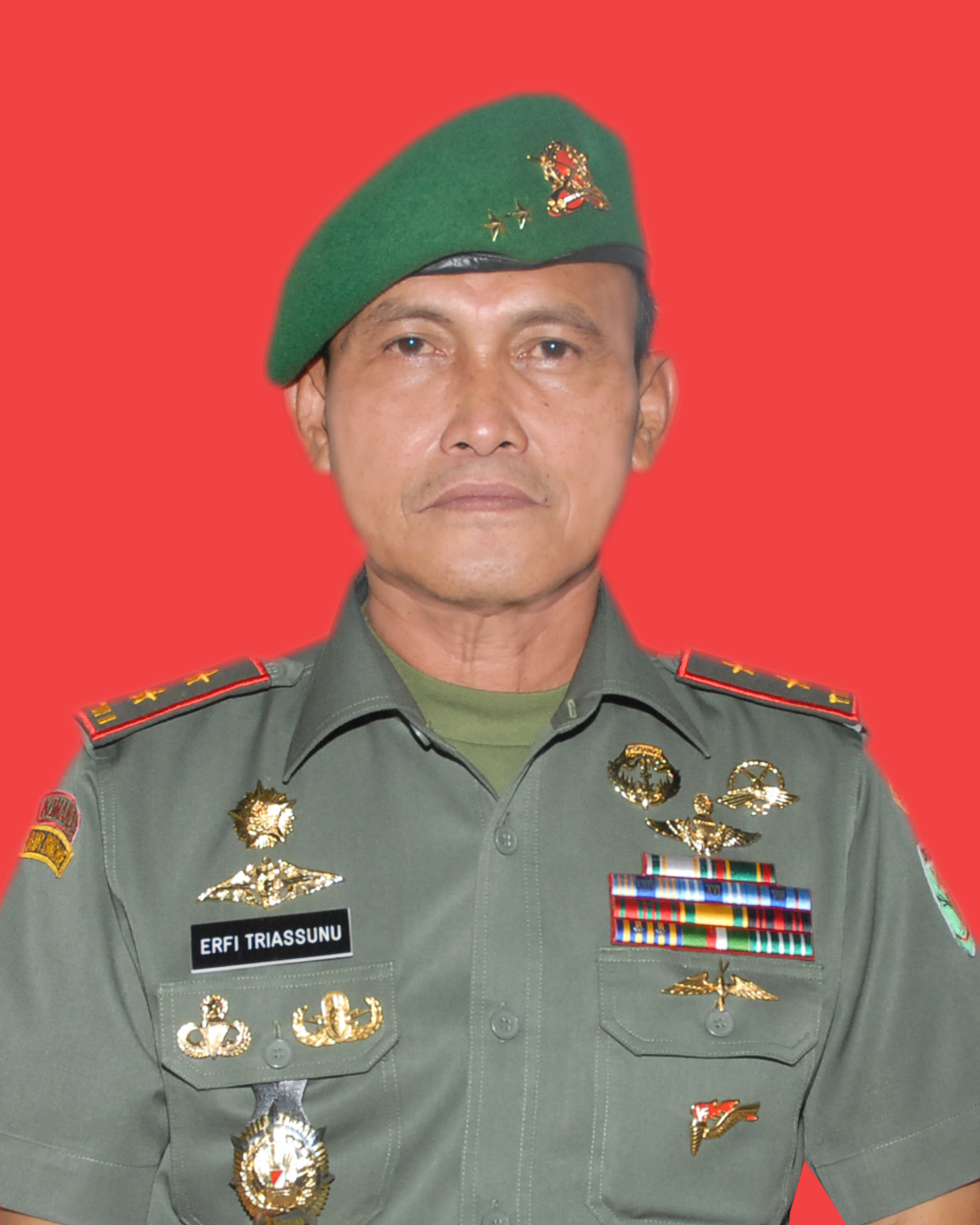
Major General Erfi Triassunu, TNI Chief, Kodam 17 (Papua) (photo discourtesy of TNI)

The question is this: why has the Indonesian Army become involved? Major-General Erfi Triassunu has waded into a conflict that he himself acknowledges is an internal church matter. In the letter (File Number: R/773/IV/2011) addressed to the Governor of Papua, Barnebus Suebu, dated 30 April 2011 and marked “secret”, Triassunu “respectfully requests” the Governor to arrange a meeting between Kingmi Indonesia and Kingmi Papua. The General also offers himself as a mediator.

The letter continues: “if the conflict cannot be resolved through discussion then assertive action must be taken”.

Let me translate “assertive action”. In East Timor when the Indonesian Army took “assertive action” against the Church, they murdered church workers, massacred parishioners, raped women and burnt churches to the ground. In West Papua too the Indonesian Army has a history of killing pastors from the Kingmi Papua Church, as well as other churches. This dates back to 1 May 1963 when the Indonesian government took administrative control of the territory and has continued up to the present.

Last October a video filmed on soldiers’ mobiles phones and circulated widely on the internet, showed several soldiers from Kostrad, the Indonesian Army’s Strategic Command — Triassunu’s own division — torturing a Papuan church worker by burning his genitals with a stick.

In the letter, Triassunu, who previously served in Aceh, makes a number of accusations. He accuses Kingmi Papua of trying to access as much money as they can from the government’s Special Autonomy programme in order to create new churches. However, the real purpose of building a network of churches, Triassunu insists, is “to strengthen Papuan civil society aspirations for freedom”. He then argues that the Kingmi Papua Church’s desire to be independent of the Indonesian Church is “just an excuse” for “the church to become a political vehicle” that supports Papuan independence.

Triassunu then goes on to make a number of recommendations. He specifically says that Kingmi Papua pastors should stick to Biblical “dogma” and not stray into politics. The General is on solid ground here, following in the footsteps of numerous dictators from Marcos to Pinochet, all notorious for their attempts to stifle meddlesome priests. Triassunu specifically names Reverends Benny Giay (the current moderator of the Kingmi Papua Church), Seblum Karubaba (the former moderator) and Noakh Nawipa (the Rector of the Pos 7 Theological College) as malcontents, mentioning several seminars organised by the trio where “Papua Merdeka” (freedom) was discussed.

All this has echoes of Suharto who systematically depoliticised (read: violently repressed and disbanded) all independent organisations, including religious ones, for fear they could become bases for organised opposition against the regime. Indonesian democrats may have overthrown Suharto but West Papua is not part of a new democratic Indonesia. What is deeply concerning is that in the Papuan context the label “separatist” is regularly applied to Papuan leaders as a pretext for justifying extra-judicial action by security forces.

This is where the plot thickens.

According to the letter, the General decided to become involved in the Kingmi conflict after a Kingmi Indonesia pastor, Reverend Karel Maniani, personally asked the Army to protect his parishioners. But Reverend Maniani himself was previously a member of “Group Nine” of the Papuan Freedom Movement (or OPM). In the 1980s Maniani was jailed for four years in the notorious Kalisosok Prison. What happened to Maniani on the journey from freedom fighter to Army petitioner?

To make things stranger, the conservative US-based evangelical Christian Missionary Association backs Maniani and Kingmi Indonesia against Kingmi Papua. At stake is not only valuable church property and access to Special Autonomy funds, it is also over influence of a broad Papua base. Kingmi Papua has half a million members. Virtually all of them are indigenous Papuans from the fractious Highlands, around a third of the entire Papuan population.

When I asked Benny Giay about all this his reply was revealing. For years he said he was part of a church that was more concerned with “saving souls” than the day-to-day oppression of the Papuans. “The Kingmi church has been complicit with the suffering of the Papuans. We need to confess our sins and follow the narrow path of Jesus. This Gospel is very clear; we must stand with the oppressed and work to alleviate their suffering. I hope we can cast off our fear and stay firm to this path.”

Giay has a vision for an independent Papuan church; a uniquely Papuan church that makes space for Papuans to begin to articulate their own theology, one that sees God present in Papuan history and culture. Giay and his colleagues are slowly building up a church that commits itself to solidarity with the poor and oppressed; one that is led by the Papuans themselves. That may not sound much to a reader unfamiliar with Papuan politics, but in West Papua it is a big deal.

Just ask the General.

SCAN OF ORIGINAL LETTER SIGNED BY MAJ-GEN ERFI TRIASSUNU


Papuan students demonstrate outside UNCEN, Jayapura

Bintang Papua, 30 June 2011
An announcement on Thursday about the selection of students at the
state university led to a demonstration being held by students who also
blocked off the Cenderawasih university campus in Waena. The entry to
the campus was blocked off while a small bonfire was burning in the
middles of the road. The demo was organised by the chairman of the
Students Association of Tolikara, supported by students of the faculty
of law at the university.

Speeches were made and leaflets were stuck on the walls, with demands to
the rector of the university.

One of the leaflets said: ‘Why is it that year after year, indigenous
Papuans account for less than 20 percent of the total while the other 80
percent are non-Papuans?

‘We are asking the rector to account for this, bearing in mind an
earlier promise that Papuans would account for 80 percent,’ said Terius
Wakor, co-ordinator of the action. This was a promise made by the rector
of UNCEN, Prof Dr B Kambuya.

‘We indigenous Papuan students feel very disappointed about this
because the rector promised that priority would be given to indigenous
Papuans with 80 percent of the places. Yet what has happened is that
only 5 percent of the Papuans were accepted into the university.’

Another of the students, Thomas CH Syufi, who also took part in the
demo, said: ‘We as representatives of the Executive Board of the
Students, the BEM of the Faculty of Law, strongly support the views of
our colleagues.’

Following the announcement about the students who were selected, he said
that they hoped that the rector would take account of the views of the
indigenous Papuan students, in view of what the rector promised last
year. ‘We very much hope that the rector will take some action with
regard to the Papuan students who did not pass the selection test. He
suggested that there should be another round of testing for a second
group of students to be accepted to the university.

Meanwhile the deputy rector said that while no promises had been made,
there had been a commitment to increase the percentage of indigenous
Papuan students. He said that at this level (the SNMPTN), it was
difficult to have an effect on the selection of students. He told
Bintang Papua that not enough Papuans were available from the IPS, and
very few had registered with the IPA programme.

[Apologies for not knowing what these initials stand for. TAPOL]

Create a website or blog at WordPress.com

Up ↑