MIFEE project violates human rights: Joint press release

Joint Press Release,

14 August 2011

Walhi, Pusaka, Sajogyo Institute, Sorpatom, Papuan NGOs Working Group, Sawit Watch, Aman, Huma,  JKPP, KPA, Kontras, Green Peace Indonesia, DtE

MIFEE Project Violates Human Rights

[Translated by TAPOL]

One year after the MIFEE (Merauke Integrated Food and Energy Estate) Project was launched by the central government, the situation of the people in Merauke  has become a matter of grave concern.  The indigenous Malind  people and the inhabitants in Merauke in general have been threatened and marginalised as a result of the conversion of their land and their ancestral forests by the MIFEE Project.

Research undertaken by Pusaka, called  ‘MIFEE does not reflect the aspirations of the Malind people’ drew the conclusion that the MIFEE Project was launched as the illegitimate offspring of the global food crisis for Food, Feed, Fuel and Climate Change (3F and 2C).  MIFEE is called the ‘illegitimate offspring’ because it is not a solution that serves the interests of the majority of the people but is the result of a conspiracy between capitalists and the government in search of economic rent side by side with cramped living conditions for the majority of the people. In the words of Emillianus Ola Kleden, a researcher for Pusaka Foundation, the MIFEE programme will have a number of negative impacts on the social and cultural fabric, the demographics, the social and economic conditions and the environment of the people. These negative impacts  will also worsen the living conditions of many groups living in the areas affected by the project.

Laksmi A Savitri, a researcher for the Sajogyo Institute, came across facts showing that MIFEE is a development model which makes no provision for improving the living standards  of the indigenous people in Merauke and is only focussed on the accumulation of corporate profits. There are three reasons for this, according to Laksmi:  firstly, it fails to respect the concept of land and identity  which is inseparable from the identity and dignity of the Malind people; secondly, it fails to understand the close links between the Malind people’s system of living and the natural resources and the forests, and assumes that the loss of forestry resources will be replaced by opportunities to work as day labourers for the companies; and thirdly, it pays no attention to the process of meaningful social transformation for the Malind people towards a better life in ways and forms that are defined by the Malind people themselves.

According to Billy Metemko, chairman of Sorpatom Merauke, the Merauke Project  has already caused significant damage  to  the social structure of the customary groups who have lost land where they are able to look for food and fulfil their social  needs, like what has happened in Zanegi Kampung in the operational area of PT Medco or Domande Kampung in the operational area of PT Rajawali and Nakias Kampung in the operational area of PT Dongin Prabhawa.  The destruction of these forests has resulted in the destruction of traditional symbols, the source of their livelihood, while in the longer term, it will lead to the wholesale destruction and extermination of traditional communities in Merauke.

Since 2010, Sawit Watch and the Justice and Peace Commission of the Diocese of Merauke (SKP-Merauke) have held a number of meetings in kampungs along the border region between Indonesia and Papua New Guinea in South Papua and have discovered that land has been allocated for palm oil plantations on a massive scale. In the district of Merauke, at least 380,887 hectares have been allocated to ten companies, and 320,000 hectares in the district of Boven Digoel where licences have been issued to eight palm oil plantation companies. Opening up the land to palm oil plantations  on such a large scale has resulted in forest areas in the south of Papua having been turned into mono-cultural  plantations  leading to ecological destruction and the permanent and irreversible loss of its vitally important diversity. The presence of traditional communities  and indigenous Papuan people whose lives still depend on the forests will eventually be uprooted and marginalised as a consequence of development schemes that fail to take account of local wisdom and culture.

Bearing these conditions in mind, civil society in Indonesia has warned the Indonesian government and parliament, the DPR RI, that this project is more harmful than beneficial. Nevertheless the government  seems to have refused to listen to reports about the destruction of the environment, the food culture of the traditional communities and their life spaces and the destruction of Merauke’s forests. Sorpatom (Solidarity of Papuan People Rejecting MIFEE) has on numerous occasions organised activities to reject the  presence of MIFEE. Komali (the Community of Traditional Communities) wrote to the Indonesian president last year expressing the same views about MIFEE.

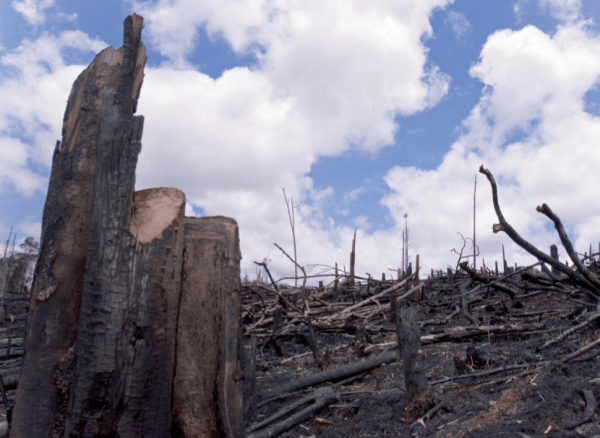
A field visit to Merauke by the environmental NGO WALHI in June 2011 discovered that during the course of the past year, at least one hundred thousand hectares of natural forest in Merauke have been cleared, including sago hamlets which protected food security  at all times, regardless of the season, and are very adaptable to changes in the climate. The marshlands are threatened  by drought, as a result of which  fish, birds  and deer  that have provided the local people with their source of protein will find it increasingly difficult to enjoy the necessary living space. Eventually, the Economic, Social and Cultural (ECOSOC)  rights will become ever more inaccessible to protection and provision by the state. Berry N. Forqan, the national executive director of WALHI, has stated that it is reasonable to say that the Indonesian government should be regarded as having caused the violation of basic human rights with the MIFEE Project.

Sinal Blegur, a member of the Working Group of NGOs in Papua, said that the violation of these ECOSOC rights will ultimately lead to the violation of  civil and political rights because MIFEE could potentially pave the way for the security forces  to enter the region on a massive scale to protect the operations of the companies.

In view of the above, dozens of local, national and international NGOs  have in the past month jointly produced a report to be submitted  to the Special Rapporteur of the UN on the Right to Food, drawing attention to threats to the right to food  of the traditional communities in Merauke. According to Abet Nego Tarigan, executive director of Sawit Watch, 22 NGOs  have so far signed  this document, representing the traditional communities in Merauke who are the victims or potential victims of the MIFEE Project The report has also been sent to the Committee on the Elimination of Racial Discrimination at the Office of the UN High Commissioner for Human Rights, and the Committee on Economic, Social and Cultural Rights  of the Human Rights Treaties Division.

This means that all civil society organisations which are concerned with the rights and living space for indigenous Papuan people should call on the government to immediately halt all MIFEE activities and Food Estates in general  in Indonesia that are  damaging the environment and forcing the  removal of traditional communities from their traditional land  and areas which they manage. The national, provincial and district governments must stop granting location licences  to companies and hold an inclusive dialogue, in which the Malind people are central, to discuss the allocation of land, the provision of space and development capital for agriculture, in conformity with social transformation that can bring the Malind people self-reliance and dignity.

All this is intended to ensure that similar operations that have resulted in the massive destruction of the environment which have occurred in Sumatra, Java, Kalimantan and Sulawesi  should not be repeated in Papua.

Contacts:

Islah, Manager   of the Water and Food Campaign, WALHI;

Frangky Samperante, Director of Psaka;

A Karlo Nainggolan, staff member of Advocacy, Policy and Legal Defence, Sawit Watch;

Laksmi Savitri, Sajogyo Institute;

Sinal Blegur, member of the Working Group of NGOs in Papua.

ETAN: Timorese students support West Papua. Three arrested in Dili.

 http://etanaction.blogspot.com/2011/08/timorese-students-support-west-papua.htmlWednesday, August 17, 2011


Timorese students support West Papua. Three arrested in Dili.

A friend in Dili tells ETAN that police recently broke up a demonstration in support of West Papua. As we get more information, we will post updates on ETAN’s blog here.

The morning of August 17, more than 30 Timorese students called for the right of West Papuan to self-determination and condemned human right violation by the Indonesian military and police against Papuans. The demonstration took place in front of Indonesia Embassy in Farol, Dili, on the 66th anniversary of Indonesia’s independence proclamation.

Timor-Leste Police (PNTL) arrested three of the protesters — Juventina Correia Ximenes, Domingos de Andrade and Letornino da Silva. All are currently studying at Timor-Lorosae National University, UNTL.

One of demonstrator, Nolasco Mendes, said that the PNTL treated the activists brutally. Police reportedly arrested the activist after the Indonesia Embassy asked the PNTL to stop the demonstration.

According to a T imornewsline report the pro-Papua protesters were members of the Students Solidarity Council (Dewan Solidaritas Mahasiswa Timor-Leste) which previously fought for Timor-Leste’s independence.

Timor-Leste has a strict law on demonstrations which among other things requires four days notice and bans them within 100 yards of a government or diplomatic building.

AlertNet: Indonesia re-thinks Papua food project – report

http://www.trust.org/alertnet/blogs/alertnet-news-blog/indonesia-re-thinks-papua-food-project-report

By Thin Lei Win

A member of the Koroway tribe walks up a ladder to his house at a forest near Merauke city in Indonesia's Papua province in this May 18, 2010 handout photo.A member of the Koroway tribe walks up a ladder to his house at a forest near Merauke city in Indonesia’s Papua province in this May 18, 2010 handout photo.

BANGKOK (AlertNet) –Indonesia’s government is considering moving its controversial food security project from Merauke, on the island of Papua, to East Kalimantan province, on Borneo island, due to lack of progress in the past two years, the Jakarta Globe reported.

Under MIFEE (Merauke Integrated Food and Energy Estate) plans, 1.63 million hectares of forest which form the basis of life for some 200,000 indigenous people in the Merauke area would be used to grow rice, palm oil, soya bean and corn among other crops.

Earlier this month, AlertNet reported criticism from rights activists that MIFEE threatens indigenous people and the forests and ecosystems in the area.

They also said the government has failed to sufficiently consult the native residents over the impact, which will include losing their customary lands, an influx of migrants from the rest of Indonesia and decreased quality of the ecosystems which people rely on for food and for their livelihood.

The minister of agriculture, Suswono, said on Monday that 200,000 hectares of land available in East Kalimantan could be used for agriculture, according to the Globe.

“The principle of the food estate is finding enough land for an agricultural zone. It doesn’t have to be in Papua,” the Globe quoted the minister as saying.

“[The East Kalimantan site] may not as big as Merauke, but it is more feasible. It has been two years since we floated the plan, but there has been no progress at all.”

Indonesia annually imports 2 million tonnes each of rice and soybean, and the nation needs to be able to feed its people without importing food, he added

The Age: Independence at threat from enemy within

Tom Allard

August 13, 2011

A Papuan protester addresses a crowd.Mako Tabuni, KNPB leader addresses a crowd on August 2

Papuans remain under Indonesia’s menacing grip, reports Tom Allard from Jakarta.

It would seem, to most observers, to be a singularly unremarkable venture. A group of American tourists visiting a cultural centre in the Papuan town of Abepura, just outside the capital Jayapura. On the agenda was an opportunity to view some historical artefacts and watch a traditional dance.

But, as the group of some 180 visitors toured the facility and enjoyed the performance, they were being watched. In the shadows was an informant for Indonesia’s elite special forces unit, Kopassus.

Advertisement: Story continues below
Indigenous traders sell produce in Jayapura, where migrants own many businesses.Indigenous traders sell produce in Jayapura, where migrants own many businesses.

In a report back to his handler, the informant observed the tourists had been warmly welcomed by the centre’s manager and been amused and entranced by the dance. The visit had lasted precisely 35 minutes, from 11.50am to 12.25pm, and had been ”safe and smooth”.

The informant warned there was no room for complacency, a point heartily endorsed by the Kopassus handler, Second Lieutenant Muhammad Zainollah.

”With visits from overseas tourists to Papua, there is the possibility of influencing conditions of Papuan society,” Lieutenant Zainollah wrote in his report to the local Kopassus commander. ”Politically, there needs to be a deeper detection of the existence hidden behind it all because of the possibility of a process of deception … such as meetings with pro-independence groups.”

<img src=”http://images.theage.com.au/2011/08/12/2554865/art-353-14-papua-1-200×0.jpg&#8221; alt=”Freedoms under surveillance … from left, Kopassus officer Lieutenant Muhammad Zainollah, author of many of the intelligence reports obtained by the Herald.” />Freedoms under surveillance … Kopassus officer Lieutenant Muhammad Zainollah, author of many of the intelligence reports obtained by the Herald.

The note is bizarre and even amusing. It is one of hundreds of intelligence briefs obtained by the Herald from Kopassus intelligence posts in Papua and part of a cache of 19 documents that includes a highly detailed analysis of the ”anatomy” of the separatist movement.

But it is also instructive of what the material in its entirety reveals: the Indonesian government runs a network of spies and informants in Papua that is staggering in its scope and range of targets. And infecting all the reporting and analysis is a deep paranoia that is both astonishing and disturbing.

In the easternmost reaches of Indonesia’s sprawling archipelago and located in the western half of the island of New Guinea, the resource-rich region of Papua is a running sore and source of angst and embarrassment for Indonesia, a country that has otherwise made substantial strides as a democratic and economic power.

Despite being granted special autonomy 10 years ago and targeted for accelerated economic development, its indigenous Melanesian people are the country’s poorest and many are deeply unhappy with Jakarta’s rule and a heavy security presence.

The documents, which date from 2006 to 2009, reveal that independence activists and members of the OPM-TPN, the small armed resistance, are under intense surveillance, but so too are many ordinary Papuans and civic leaders who do not advocate independence but are concerned about the advancement of their people or are influential in the community.

”Everyone is a separatist until they can prove they are not,” says Neles Tebay, a pastor and convener of the Papua Peace Network that is promoting dialogue with Jakarta. Around the capital, Jayapura, there are 10 Kopassus spy networks infiltrating ”all levels of society”, including the university, government agencies, the local parliament, hotels and the Papuan Customary Council.

A worker at a car rental agency tips off his Kopassus handler whenever a suspicious customer visits the establishment or talks about ”M”, shorthand for ”merdeka” or freedom. A phone shop employee ”often provides information on the phone numbers of people purchasing phone credits”.

Journalists, university students, bureaucrats, church leaders, teachers, motorcycle taxi drivers, clan leaders, village chiefs, farmers and forest workers are all on the books of Kopassus. One leader of the OPM-TPN has eight Kopassus informants within his network, including a 14-year-old family member.

Each of the informants, who cannot be identified to protect their safety, is described by temperament and motivation. The motivation is usually ”to make money”. Temperaments range from ”hard-working”, ”courageous” and ”quiet” to ”unstable”, ”explosive” and ”drunk”.

And the Kopassus intelligence documents are just a snapshot of the total campaign under way in Papua. Other units of the Indonesian military, known as the TNI, run similar operations, as do the police. There are also scores of agents in Papua from Indonesia’s national intelligence agency, known by its acronym BIN.

Benny Giay, a leader of the Gospel Tabernacle Church, is one of the civic leaders branded a separatist and targeted by Kopassus. For Dr Giay, the suffocating presence of the intelligence network is part of daily life, as is interference in the affairs of his church by the military.

”If someone joins the church, we always have to ask ourselves, ‘what did they come here for? Are they intels or worshippers?’,” he says.

And, given the disappearance and deaths of other leaders under the gaze of Kopassus, the surveillance leaves Giay constantly uneasy. ”I have to check my meals to make sure they are not poisoned and I have to be home by 7pm. If I walk around after then, I have to bring someone with me, always.”

Marcus Haluk, the secretary general of the Central Highlands Papuan Student Association, features heavily in the documents. It seems most of his meetings are attended by a Kopassus spy.

”I’ve lost count of the attempts to kill or threaten me,” he says. ”I’ve had guns pointed at my head, I’ve been thrown from a motorcycle. There are always SMS threats.”

Underpinning the spying is the view that most institutions in Papua are riddled with separatists. The documents outline a two-stage intelligence operation to address the perceived problem.

The first involves disrupting alleged separatist networks and the second is dubbed the ”diminishing dominant influence phase” or ensuring ”traditional institutions used for politics in Papua lose the trust of the indigenous peoples of Papua”.

In short, the objective is to discredit the institutions and arrangements introduced by the central government under Papua’s special autonomy deal introduced in 2001, the very policy supposed to give Papuans economic and cultural rights, dampen independence sentiment and secure national unity.

Agus Sumule, a long-term resident of Papua and adviser to Papua’s Governor, Barnabas Suebu, is an immigrant, a nationalist and was a key player in drafting the special autonomy laws which created a new legislative body to represent indigenous Papuans known as the Majelis Rakyat Papua (MRP).

Special autonomy has never had a chance, he argues, and much of that blame lies with Jakarta’s refusal to implement it properly.

Papua was divided into two provinces against the wishes of the MRP, Dr Sumule says. Moreover, the home affairs ministry interferes in the election of MRP candidates, and has banned people from taking their seats. Despite provisions in the special autonomy law for symbols of Papuan identity to be displayed, the cherished Morning Star flag has been outlawed. Those caught displaying it can be sentenced to 15 years in prison.

Some $3 billion in aid has flowed from the central government to the region in the past decade, but it is handed out haphazardly and most of it has been siphoned off by corrupt officials or wasted on bureaucracies to support the new province and dozens of new regencies in Papua.

Meanwhile, Papua has been swamped by migrants from other parts of Indonesia who dominate its economy. Explaining the economic disparity, one Kopassus report offered a plainly racist rationale. Indigenous Papuans ”lack the willingness to work and the willingness to make a better life, so their lives seem to be making no substantial progress”, it said. Migrants, in contrast, had a ”high spirit and work ethic”.

Asked about the extensive intelligence operations, Dr Sumule observed: ”On the one hand its paranoia, but it’s also much more than paranoia. It shows they don’t have a relevant policy for Papua, an understanding of Papua or what Papua should be in Indonesia. The problem with the intelligence is it’s not intelligent. They send so much wrong information for the people in Jakarta, and they make decisions on it. It’s very dangerous.”

Indeed, the major report on the Anatomy of Separatists had a detailed section on the alleged foreign support networks for a ”Free Papua” and it bears out Dr Sumule’s criticism of the quality of the intelligence.

The list of 32 Australians includes academics, politicians and religious leaders who could understandably be placed in the category. Others have simply shown an interest in Papuan affairs, raised concerns about human rights or are journalists.

The appearance of the former current affairs host Naomi Robson on the list is a stand-out.

The former Today Tonight host, now running a web-based dating service and TV show, presumably gets a mention because she entered Papua without media accreditation in 2006 to ”save” Wa-wa, the boy who was the subject of a story by rival program60 Minutes.

Famously, Channel Nine’s current affairs flagship alleged Wa-wa was destined to be consumed by his fellow Korowai tribespeople, who were cannibals, but after filming they left him behind to an uncertain fate.

Foreigners in Papua are viewed suspiciously, especially non-government groups. Indonesia has expelled several foreign NGOs from the territory in recent years. The International Committee of the Red Cross is banned from visiting more than 100 political prisoners. By contrast, the ICRC is allowed into Guantanamo Bay and could visit prisons in apartheid-era South Africa.

One part of the intelligence analysis that is presumably more accurate is the assessment of the strength of the OPM-TPN. It is reckoned to have 1129 fighters with mixed weapons totalling only 131, and grenades.

While the poorly armed resistance fighters do have some success in ambushing Indonesian military posts and are adept at hiding in Papua’s mountainous terrain, the low estimate of their strength calls into question why there is such a large military presence in Papua.

The Indonesian government will not release precise figures on its armed deployments in Papua, but since special autonomy was introduced in 2001, it has doubled the number of battalions from three to six. It has 114 posts along the border with Papua New Guinea alone.

Estimates put the military numbers at about 15,000, roughly 13 soldiers for every armed separatist.

As one Indonesian official told a US embassy staffer, revealed in cables released by WikiLeaks: ”The TNI has far more troops in Papua than it is willing to admit, chiefly to protect and facilitate TNI interests in illegal logging operations.”

The massive military and intelligence apparatus in Papua makes a lie of Indonesia’s insistence that it long ago junked its ”security” approach to managing Papua and it is now formulating policy under the rubric of ”development and prosperity,” says Neles Tebay.

”[The troops] are trained to see Papuans as the enemy,” he adds. ”I’m not saying all the troops are bad but if one group of them is threatening the indigenous people then it creates widespread fear. Also, they are always interrogating people. It’s very threatening.”

Neither the TNI or Kopassus would respond to questions for this article, sent to them two weeks ago. However, it has maintained human rights abuses such as that depicted last year in a video of a man being tortured by soldiers holding a burning stick against his genitals, revealed in the Herald, do not reflect policy.

It also says it devotes energy towards improving living conditions in remote villages. Certainly, the Kopassus documents include accounts of its officers going to hamlets in the remote central highlands region to help with health clinics, building bridges and homes as well playing sport and attending religious and cultural ceremonies.

But, as shown by mass protests in Papuan towns last week, special autonomy has not worked for Papua’s indigenous people or for the Indonesian government. Papuans such as Neles Tebay have called for dialogue and President Susilo Bambang Yudhoyono talked last year about embarking on ”constructive communication”.

Progress, however, has been painfully slow and, as the cache of documents reveals time and again, the security forces make no distinction between demands for dialogue and militant separatism. If a lasting settlement is to be achieved, many believe it will require a significant scaling back of the military in Papua, its policy influence in Jakarta and the spy networks that treat ordinary Papuans like criminals and worse.

Read more: http://www.theage.com.au/national/independence-at-threat-from-enemy-within-20110812-1iqur.html#ixzz1UtYnzIxc

Anatomy of an Occupation: The Indonesian Military in West Papua

Full Report is available for download and distribution as a pdf Anatomy of an Occupation: The Indonesian Military in West Papua

and the Secret report is available Here

By Jim Elmslie and Camellia Webb-Gannon, with Peter King

Report for the West Papua Project at the Centre for Peace and Conflict Studies (CPACS), The University of Sydney, August 2011

Executive Summary

This report deals with a series of Indonesian military documents that were passed to the West Papua Project (WPP) in early 2011.[1] The documents provide remarkable insights into how the Indonesian military (Tentara Nasional IndonesiaTNI), operates within the disputed territory of West Papua (disputed, that is, between the vast majority of Papuans and the Indonesian government), and how they view West Papuan civil society. The documents reveal the names and activities of Indonesian intelligence agents; describe how traditional Papuan communities are monitored; and include a detailed analysis of both the West Papuan armed guerrilla groups and the non-violent civil society organisations which promote self-determination. Identifying so many West Papuan leaders and others as “separatists”, these documents effectively show that support for independence is widespread and surprisingly well organised. West Papuans have long complained of living under an Indonesian military “occupation” and these documents go a long way to Anatomy of an Occupation: The Indonesian Military in West Papuasubstantiating this claim.

The authors of this report have sought to verify information contained in the documents where possible. Much of this information on individuals and Papuan organisations is already well known, although presented here more comprehensively in some respects than ever before. We can therefore be relatively confident that the documents are not fabricated or deliberately misleading, although they do contain inaccuracies, omissions and many obvious examples of false or misleading precision. Names of Indonesian intelligence agents, both Papuan and non-Papuan, are impossible to verify and have been left out of our report. We do believe, however, that the general modus operandi revealed in the documents is a fair representation of how the Indonesian military operates. As many diverse and disputed claims are made about the conflict in West Papua by the Indonesian and other governments, by international commentators and by the Papuans themselves, we believe that this information should be in the public sphere to increase understanding of this little-known, but intense, bitter and long-standing conflict.

The report is split into two sections. The first deals with the 97 slide PowerPoint presentation entitled, Anatomy of Papuan Separatists. The presentation itself can be viewed at http://sydney.edu.au/arts/peace_conflict/research/west_papua_project.shtml. This section acts as a running commentary on the slide show, explaining and contextualising what is an intriguing exposition of the West Papuan armed liberation movement and its non-violent civilian counterpart. The forensic details of the Anatomy leave the reader in no doubt as to the level of military scrutiny under which the Papuans live. It shows just how seriously the Indonesian forces take the threat of “separatism”, especially its attempts to reach out to an international audience. The presentation could accurately be renamed as an Anatomy of the Papuan Occupation.

The second section deals with an assortment of other leaked documents that flesh out the day-to-day reality of living under Indonesian occupation. In both images and text the daily tasks of security force members are outlined as they maintain a close surveillance on communities of traditional Papuans. Details of Indonesian agents  – who they are, where they work, what information they can provide – are listed as small links in the heavy chain mesh of an occupation which has at its core the modern practice of “psychological warfare”, PSYOPS. This pernicious system of social control has created a pervasive atmosphere of terror amongst the Papuan population as their lives are manipulated by state actions and threatened with “black operations”. Unsolved, indeed uninvestigated, killings, beatings and rapes occur against a background of a rapidly changing demography as hundreds of thousands of non-Papuan Indonesians move into the province. Predominantly Muslim, the newcomers are adding another layer of tension and fear, as the Muslim-Christian divide widens – taking its cue from the threatened growth of radical Islam in Java and elsewhere.

PSYOPS, as practiced in West Papua, is analysed initially from a general perspective and then from the personal experience of several individual Papuans. As a tool of social control it has been effective in dividing the Papuan people, some of whom now form a Papuan elite that has prospered economically under the bureaucratic “reforms” enacted by the Indonesian government, particularly the creation of two provinces and some 23 new administrative regencies in Papua. However, these documents show that, despite PSYOPS and divide-and-rule administrative policies, there is a high degree of cohesion and unity amongst the West Papuan nationalist majority. Indeed, looking at the Papuan individuals identified in these documents it can be seen that West Papuan nationalism is spread throughout civil society, in the churches, youth groups, customary bodies and political organisations. Far from the desire for self-determination dying out, the younger generation of Papuan leaders is now stridently demanding the rights to which they are entitled by Indonesian law, albeit increasingly as a non-violent, civil resistance movement.

These documents show that Indonesian rule over West Papua can be characterised as an ongoing military/police occupation. Inevitably this involves the systematic infliction of human rights abuses on a civilian population. Our report concludes that Australia should not be co-operating as it does with the TNI elite special forces, Kopassus, because it directly implicates the Australian army and taxpayer in the suffering of the Papuan people. And all Australian military aid to Indonesia should be seriously reconsidered while the military dominated system of occupation persists in Papua. The political and administrative reforms that have benefited so much of Indonesia since 1998 need to be properly implemented in West Papua. Until then West Papua will remain a blight on Indonesia’s international reputation and a place of suffering for its indigenous Melanesian population.


[1] The West Papua Project, at the Centre for Peace and Conflict Studies, The University of Sydney, has operated since 2000 as an academic think tank and research center examining the conflict in West Papua between the indigenous Melanesian people and the Indonesian state and its security forces. During this period the WPP has held many conferences, workshops and briefings, and its affiliates have produced a wide range of publications including books, scholarly articles and reports.

Introduction

This report is based on a series of documents recently leaked into the public domain that relate to military and intelligence operations in West Papua.[1] The most important is entitled Anatomy of Papuan Separatists and it gives observers unprecedented insight into how the Indonesian army views the situation there. Organised as a confidential briefing document, presumably for senior Indonesian military, political and government figures, it clarifies a situation that is generally regarded as opaque. Other documents relate to the use of Papuan and non-Papuan intelligence agents by the TNI and efforts by soldiers to socialise with Papuan village communities (these documents are analysed in the second section of this report). While the Indonesian government bans foreign journalists and researchers from Papua’s two provinces, now confusingly named Papua and West Papua, in an attempt to block information on the situation from reaching the outside world, here is a case where the Indonesians themselves are providing a frank and comprehensive assessment. While undated, the Anatomy document’s reference to US President Barack Obama suggests it was written, or at least finished, sometime after his election on November 4, 2008.

Anatomy of Papuan Separatists is an extraordinary document in the form of an extended PowerPoint presentation. Produced by the TNI,[2] it is a systematic and detailed analysis of the West Papuan political landscape, mapping who the various actors are and where they fit into a larger picture. Almost every leading West Papuan political and military player is included in this analysis – leaving one with the distinct impression that there is no other game in town except “separatism”. In fact the goal for most of the West Papuan leaders in this analysis is independence, which implies that this is also the desired outcome for the overwhelming majority of the Papuan people. So this document is both a study in “separatism” and a blueprint for a military occupation meant to combat that separatism. Separatism is shown to be not a rare sentiment held by the few, but rather the glue which binds together the West Papuan ethnic and political consciousness. We are given a valuable insight into how West Papua and its Indonesian occupation actually work.

The Anatomy file comprises 97 slides and methodically works through the various ways in which the West Papuans confront the Indonesian state. In broad terms the conflict is split between military and political spheres, with some overlap. Both of these spheres are explored in remarkably frank detail. The military analysis of the “separatist” movement is the most detailed ever undertaken, or at least revealed publicly, and shows just how extensive the armed opposition to Indonesian rule is. The Anatomy document provides details of 31 armed groups of the TPN (Tentara Pembebasan Nasional –the National Liberation Army), the military wing of the OPM (Organisasi Papua Merdeka—the Free Papua Movement) that are spread right across the two provinces (Papua and Papua Barat) that constitute the region referred to collectively in this report as West Papua. Rather than being the ragtag bunch of malcontents – which the OPM/TPN are usually portrayed as — this Anatomy shows them to be a relatively cohesive and deeply entrenched resistance army, highly committed to achieving their goal of independence from Indonesia, even though the Anatomy often seems to imply that all the dozens of groups it identifies across a 40 year period are still functioning pretty much as when first identified.

Before proceeding with analysis of the document we have three general comments.

First, we wish to highlight the pervasiveness of the phenomenon of “separatism” as seen from the (Indonesian military) author’s point of view. Demands for dialogue; the “return” of Special Autonomy to Jakarta, and for  demilitarisation, improved human rights, an end to discrimination, economic marginalisation and environmental devastation in West Papua — all amount to only “separatism” in the Anatomy. And separatism is viewed as a legitimate thing for the military to attack; separatists are enemies of the Indonesian state, and therefore enemies of the military and the police. There is no attempt to understand where this sentiment comes from, just to identify its existence to be targeted for destruction. That there are so many separatists does not seem to faze the author(s) of the Anatomy; just to reinforce his (their) sense of mission.

There is little discussion of those Papuans who are not separatists. There are undoubtedly Papuans who have thrown in their lot with Indonesia, one of whom is identified in the Anatomy, Franzalbert Joku. He is the only person of the hundreds listed who has “returned to Indonesia”. Joku is a well-known former independence activist who has given up the struggle as a hopeless cause and works hard to convince other “separatists” to do the same. Later in this report we will explore Joku’s views further as well as those of other prominent Papuans who have eschewed the struggle for freedom.

Second, it is noteworthy that there are so many “separatists” identified in the Anatomy, and that they include so many of the most prominent people from the three generations since the Indonesian takeover of Papua in 1962-3 is striking. While most outside observers dismiss the chance of achieving independence as remote if not impossible, given the power and determination of the Indonesian state and the comparative weakness of the Papuans, many Papuans do not. They are fully committed to the struggle. In fact these documents show that the younger generation, those in their 20s and 30s, are as committed as the older generations. Together the Papuans listed in this document represent most of the current leading figures in West Papuan society. The Anatomy shows how seriously the Indonesian state and military consider the threat of separatism, and indeed it places the people named under grave threat of targeted assassination. Some of them have indeed already been killed since the publication of the document (for instance OPM leader Kelly Kwalik). This has led some informed readers of the Anatomy to describe it as a “hit list” of people targeted for removal.

Thirdly, this document tells us how the Indonesian military views the West Papuan political structure. To an outside observer it is hard to grasp how all the multiple military, social and political Papuan groups relate to each other. Here this complex situation is laid out with surprising clarity: there are traceable lines of authority and engagement — even between various “factions” and geographically isolated groups. One reason that Jakarta has given for refusing to negotiate with the West Papuans over the myriad problems that beset the province is that “we do not know who to negotiate with”.[3] This document undermines that pretext.


[1] These documents have been referred to in a blog site on the internet dated January 30, 2011 at www.nokenlama.blogspot.com/2011/01/kisah-tentang-kekerasan-seksual.html in an entry entitled “Story About Sexual Violence in West Papua [By] Army Personnel”, which refers to “an article titled An Anatomy of Separatists in Papua, [by] Maj. D. Arm Fence”.  The article was published by the Secretariat for Justice and Peace, Archdiocese Merauke, Papua. Some others of these documents have been quoted previously (see allannairn.com), although many appear to be new, or at least to have received no public analysis; hence this report.

[2] The author of the Anatomy document is named as Major Arm Fence D Marani.

[3] Private conversation with senior Indonesian officials accompanying President Yudhoyono on his visit to Australia, Sydney University, 8 March, 2010.

Create a website or blog at WordPress.com

Up ↑
