It’s Time To Take A Stand On Papua

via NewMatilda.com

21 Oct 2011

It’s Time To Take A Stand On Papua

By Richard Di Natale

rudd and sby

The violence in West Papua this week is deeply worrying – and raises uncomfortable foreign policy questions for the Australian government, writes Senator Richard Di Natale

Yesterday afternoon news reached my office that unarmed Papuans — women, young people, church leaders, academics, tribal elders — and at least one Australian citizen, were being shot at by the Indonesian security forces.

We now know that at least four people are confirmed dead, scores severely wounded and hundreds have been detained at the police station in Jayapura, the capital of West Papua.

We are deeply concerned that a number of these people including Forkorus Yaboisembut, the Chair of the Papuan Customary Council, were beaten or tortured. Their crime? Reading an aspirational declaration of independence and meeting to discuss how West Papuans might peacefully secure basic freedoms that you and I in Australia take for granted.

It is not my place to get into the politics of independence. That is for the Papuans to decide. It must be said, however, that until there is a free and fair vote of all eligible Papuan citizens in the territory, any claim by the Indonesian government that there is democracy in West Papua will be highly contested.

The fact is that the Australian government and many other western countries were party to a fraudulent transfer of sovereignty during the 1960s. That is not hyperbole. It is fact. Professor Pieter Drooglever and Dr John Saltford have separately documented the travesty of justice that unfolded in West Papua during the transfer from Dutch to Indonesia rule. Less than 0.01 per cent of the population participated in the so-called Act of Free Choice in 1969 and those that did were forced to do so.

But this week’s peaceful gathering at Zaccheus Field in Abepura was not about the past. It was about the kind of future that West Papuans want. The Papuans’ desire for freedom is irrepressible. Many of the civil and political rights Papuan people want — like freedom of expression, the release of political prisoners, an opening up of the province to foreign media, and respect of land rights — could be realised within the framework of the Indonesian state. By shooting and jailing Papuans who peacefully demand these legitimate rights, the Indonesian government is creating a bigger problem and fuelling political instability.

These events in our nearest neighbour raise serious questions back home. We are we providing funds, training and equipment to the Indonesian Military (Tentara Nasional Indonesia, or TNI) and the Police force, including the counter-terrorism police (Detachment 88). There is mounting evidence that they are anything but a positive force for human rights in the region. By furthering our close military ties, we become complicit in acts of repression by the TNI such as that unfolding in West Papua today.

The Australian government has been secretive with regards to these links. We don’t know exactly what kind of military assistance is being supplied to the TNI and the police. The Australian government needs to come clean about the extent and nature of our level of defence cooperation with Indonesia. The shootings in West Papua — and indeed in other places in Indonesia — raise serious questions about what, if anything, the Indonesian military and police have learnt from East Timor. And whether our own government has learned anything, either.

One thing we do know from East Timor is that when violence like this occurs and political rights are continually repressed you can guarantee that West Papuan resistance will continue and eventually become a mainstream issue. West Papua is on our doorstep. I hope we can be good neighbours.

We can not ignore West Papua any longer, and we need to send the strongest possible signal to the Indonesian government that violent repression of peaceful meetings, people merely exercising their right to free speech and assembly, is totally unacceptable.

Indonesia insists it is a democracy. Its constitution guarantees all its citizens the right to free speech and free assembly. We should hold them to this promise by immediately suspending all military assistance to and cooperation with Indonesia. There is no compelling evidence that on the balance of things Australia’s military assistance in Indonesia has improved human rights. I fear that our anti-terrorism support is sometimes being used to harasses and intimidate human rights defenders.

I want to be a part of a Parliament that can encourage the Indonesian government and the West Papuan people to find peaceful and democratic ways to address the root causes of conflict in West Papua. Guaranteeing free speech and releasing political prisoners would be a good first step. The President has promised an open dialogue, and he must keep that promise.

In the meantime those of us in Parliament need to seriously reflect on the kind of relationship we want with Indonesia. For the sake of our West Papuan neighbours, and for Australia’s long-held commitment to human rights, we must be prepared to take a bold stand.

Suspend military ties with Indonesia: Greens

Home

Posted on 20. Oct, 2011 by RichardDiNatale in Media ReleaseWest Papua

Australian Greens Senator and spokesperson on West Papua, Richard Di Natale, is calling on the Australian government to suspend military cooperation with Indonesia.

Last night the Indonesian military (TNI) opened fire on the third West Papuan People’s Congress, arrested community leaders and hundreds more. There are reports from a single witness of nine delegates shot while trying to flee.

“This is the latest in a series of escalating acts of repression by the Indonesian military in West Papua,” said Senator Di Natale.

“The Australian government cannot sit on its hands while these appalling acts continue to occur.

“The Minister for Defence should immediately announce a suspension of defence cooperation with Indonesia, until this matter is properly investigated and the President has committed to open dialogue with Papuan leaders.

“The government should also pressure the Indonesian authorities to allow access by foreign journalists. The best protection the Papuans can hope for is the light of international scrutiny.

“In the meantime, the Australian government should send a fact-finding mission to the area and find out for itself what is going on.”

The Greens have sought full detail on the millions of dollars spent on Australia’s defence cooperation with Indonesia in the past.

“The government also needs to come clean on support for the Indonesian military. Australians would be horrified to know their money and their government supports human rights violations in West Papua, one of our nearest neighbours.”

Media contact: Andrew Blyberg 0457 901 600

AWPA letter to Foreign Minister re crackdown by security forces in West Papua

Press Release   West Papua
The Australia West Papua Association (Sydney)
 
AWPA letter to Foreign Minister re crackdown by security forces in West Papua
20 October 2011
AWPA has written  to the Foreign Minister Kevin Rudd re crackdown by the security forces on delegates at the Papuan People’s Congress.
Joe Collins of AWPA said “ the Foreign Minister Kevin Rudd should urgently raise the matter with the Indonesian President asking that he control the security forces in West Papua and urging the release of all those arrested for simply holding a meeting which is their democratic right” .

Australia West Papua Association (Sydney)

PO Box 28, Spit Junction, Sydney, Australia 2088

Ph/fax 61.2.99601698  email: bunyip@bigpond.net.au

The Hon Kevin Rudd MP
Minister for Foreign Affairs
Parliament House
Canberra
ACT 2600
 
20 October 2011
Dear Mr Rudd,
I am writing to you concerning the dangerously deteriorating situation in West Papua. Yesterday, the Indonesian security forces fired on delegates who were attending a peaceful Papuan People’s Congress which was between  the 17 and 19 October. West Papua’s military commander, Major-General Erfi Triassunu, confirmed the shooting although claimed they were only warning shots. However, it is difficult at this stage to know if there are casualties but one person is believed to have been killed with others injured. Reports also indicate that hundreds have been arrested including representatives from various civil society organizations including church groups.
Panic was caused amongst the delegates when hundreds of members of the security forces, accompanied by armored vehicles   surrounded the participants at the Congress. As well as live ammunition delegates reported that the security forces also used tear gas and rifle butts on the participants during the arrests.
We urge you to urgently raise the matter with the Indonesian President asking that he control the security forces in West Papua and urging the release of all those arrested for simply holding a meeting which is their democratic right.
Yours sincerely
Joe Collins
Secretary
AWPA (Sydney)
cc.Various human rights organisations
.

West Papua: A history of exploitation -Opinion – Al Jazeera English

West Papua was taken over by Indonesia in 1969, and a legacy of oppression and environmental devastation has followed.
Listen to this page using ReadSpeaker
”]

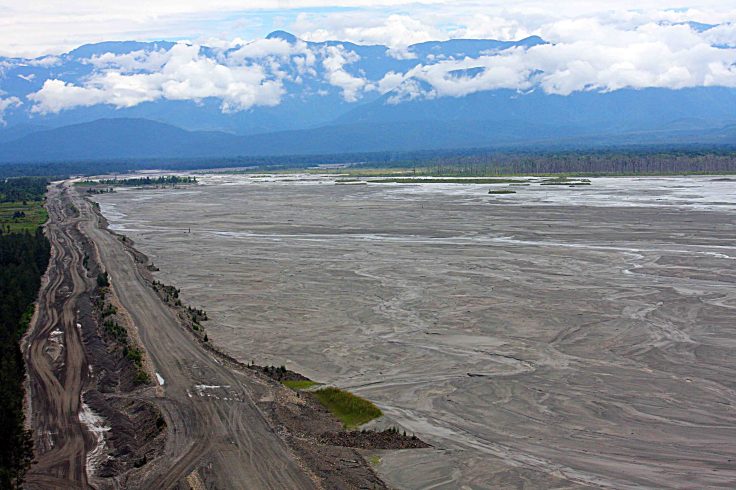
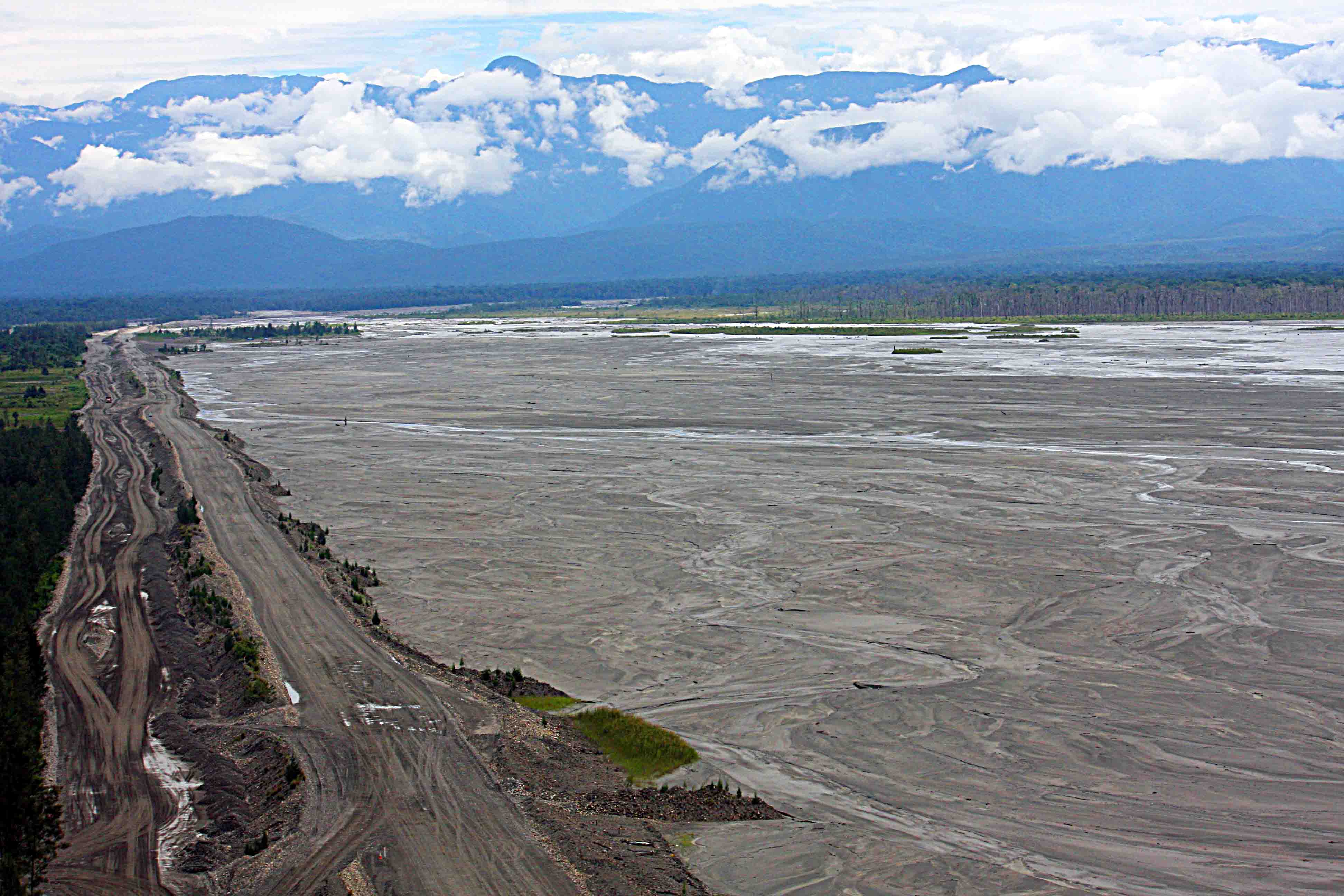
The Grasberg mine has damaged surrounding river systems, such as the Ajikwa river above [West Papua Media]

Investing in conflict-affected and high-risk areas is a growing concern for responsible businesses and investors. Companies based in developed countries often operate in lesser-developed foreign markets, where governance standards are lax, corruption is high and business practices are poor.

These pieces focus on one specific Anglo-Australian company and their American partner that jointly operate a mine in West Papua, one of the poorest provinces of Indonesia. The risks for the company include the potential to contribute to environmental and social damage in a foreign market. The risks for investors include financing a company that does not get its risk management right.

This is the second chapter of a four-part essay that examines how the Norwegian Pension Fund came to blacklist the mining giant Rio Tinto. The first part can be found here.

Part 2: A history of exploitation

New Guinea, geographically as well as historically, is Australia’s closest relative. Separated from the mainland during the last glacial period, the waters filled in what now separates them: about 152km of the Torres Strait.

While Australia and New Guinea both have enviable mineral stores, economic and political exploitation has left the latter as home to many of the poorest people on Earth. New Guinea is also an island of two histories.

The eastern half forms the independent state of Papua New Guinea – a status it has enjoyed since breaking from Australia in 1975. With its natural resources of oil and industrial metals, Papua New Guinea has long been exploited for its minerals at places like Ok Tedi and Bougainville.

Both projects ended in social and environmental disaster. The environmental impact of Ok Tedi was so great that, in 1999, Paul Anderson, then chief executive of Australian mining company BHP, conceded that the mine was “not compatible with our environmental values”. But it did serve the company’s pursuit of profit. It was not until the Ok Tedi environmental disaster three years later that the true impact of BHP’s mining practices came to the attention of the global public. BHP subsequently sold its interest, established a fund to restore the sustainable development of the affected people, and received immunity from further prosecution.

The western half of New Guinea has had a lesser-known but equally tragic history centred around the Jayawijaya Mountain, home to the Amungme, and farther downstream, the Kamoro people. As with much of East Asia, the indigenes were under Dutch rule when a geological expedition in 1936 located a significant ertsberg (ore mountain) deep in the southwestern highlands. World War II intervened, and the Japanese claimed Indonesia and some of the western parts of New Guinea.Following defeat in the war, the Japanese were marshalled back to their home territory, and Dutch colonialism resumed. Importantly, when Indonesian independence was obtained from the Dutch in 1949, few knew of the ertsberg (mineral ore) hidden deep in West Papua’s wilderness.The Dutch began a ten-year Papuanisation programme in 1957 that would see West Papua handed back to the indigenes, and would create the independent state of West Papua around 1972.Despite multiple territorial claims, the ore mountain lay dormant for over 20 years.On March 6, 1959, the New York Times reported the presence of alluvial gold in the Arafura Sea just off the coast of West Papua. Reminded of their earlier discovery, Dutch geologists were said to be returning to the ore mountain, now simply known as Ertsberg.Independence deniedThe indigenes, meanwhile, as part of their programme toward independence, established a Papuan National Council and provisional government as well as their own military, police force, currency, national anthem, and flag. At the time, West Papua’s independence was due before the United Nations Decolonisation Commission, and representatives took part in various cultural and political activities throughout the region. By December 1, 1961, the West Papuan “Morning Star” flag had been raised alongside the Dutch for the first time. Many assumed that independence was imminent.Unbeknown to both the indigenes and the Dutch, US mining company Freeport-McMoRan Copper and Gold was negotiating directly with Suharto – at the time an Indonesian army general – for a small group of its experts to prospect this ore mountain. The path into West Papua through Suharto promised to be fruitful for Freeport, since its board was stacked with the Rockefeller’s Indonesian oil interests who already were versed in the general’s way of doing business. An exploration agreement was reached, and soon after a geologist from Freeport was forging his way through the wilderness toward Ertsberg.West Papua was about to change hands again.Armed with Chinese and Soviet weapons, as well as an increasingly public friendship with the communists, Indonesia declared war on the Netherlands. To protect Western interests from the threat of communism, on August 15, 1962, the United Nations and the United States orchestrated a meeting between Dutch and Indonesian officials during which interim control of West Papua was signed over to Indonesia.Six years of UN interregnum followed, after which a plebiscite would decide whether to form a separate nation or integrate into Indonesia. All 815,000 West Papuans were to vote in an Act of Free Choice.To ensure a favourable outcome, the Indonesians worked to suppress Papuan identity. Raising the West Papuan flag and singing of the national anthem were banned, and all political activities were deemed subversive. Indonesia ruled through force, for self-interest. Alarmed by ongoing media reports, on April 5, 1967, in the British House of Lords, Lord Ogmore called for a UN investigation. By early 1968, with Suharto having assumed the presidency of Indonesia, a US consular visit almost unanimously agreed that “Indonesia could not win an open election” in West Papua.West Papua still wanted its independence.In a desperate attempt to secure West Papua’s right to self-determination, two junior politicians crossed the border into Australian-administered Papua and New Guinea on May 29, 1969. They carried damning evidence of Indonesian repression; the hopes of a yet-unformed nation rested on the politicians reaching the UN. As Australia and its allies were amenable to Indonesian control of West Papua, the two were imprisoned upon crossing the border until after the referendum. Their brave plea was silenced.Between July and August 1969, less than a quarter of one per cent of the population – some 1,026 West Papuans – signed the country’s freedom over to Indonesia. The election, held under the aegis of the UN, was far from an act of free choice. The following day West Papua was declared a military operation zone, the local people’s movement was restricted, and expression of their national identity banned under Indonesian law.Poor, neglected West Papua.Selling West PapuaControl of West Papua proved a lucrative business deal for the Indonesians. Two years prior to the Act of Free Choice – coincidentally on the same day the plight of Papua was raised in the House of Lords – Freeport signed a contract of work with the Suharto government entitling a jointly owned company, PT Freeport Indonesia (Freeport-Indonesia), full rights to the Ertsberg mine. In return, Indonesia would derive significant tax revenues and fees as well as a minority 9.36 per cent shareholding. Without the authority to do so, Indonesia nevertheless cut itself into a deal that sold large tracts of West Papua to the US company, intent on sifting it for copper and gold.Although Ertsberg fulfilled its promise, as production slowed in the mid-1980s, Freeport-Indonesia began to explore surrounding mountains and ridges for other reserves. As is often the case, the best place to establish a new mine is next to another. Sure enough, significant copper and gold reserves were located at Grasberg only a couple of miles southwest of Ertsberg.Grasberg has the largest recoverable reserves of copper and gold in the world. It’s also Indonesia’s economic beachhead.Observing the Grasberg mine via Google Earth, one sees a scar like no other: Located about 13,000 feet (4,000 meters) above sea level, open-pit (above ground) mining has bored a hole through the top of the mountain more than half a mile (1 km) wide. What they’re digging for is more than $40bn worth of copper and gold. Every day the operation discharges 230,000 tons of tailings (waste rock) into the Aghawagon River. This process is expected to continue for up to six more years, at which point exploration will go underground until there’s no value left. Freeport estimates that will occur by 2041.The operation is so large that it has shifted the borders of the adjacent Lorenz National Park. Listed as a World Heritage site by the UN’s Educational, Scientific, and Cultural Organisation (UNESCO) in 1999, the park is “the only protected area in the world to incorporate a continuous, intact transect from snowcap to tropical marine environment, including extensive lowland wetlands”. For the Amungme and Kamoro indigenes, corporate imperialism had replaced European colonialism.The ramifications are both environmental and social.‘Slow-motion genocide’The social and economic condition of the indigenous Amungme and Kamoro poses fundamental human rights concerns. Although Freeport-Indonesia directly or indirectly employs a large number of West Papuans and is regularly Indonesia’s biggest taxpayer, in 2005, the World Bank found that Papua remained the poorest province in Indonesia. With a marked rise in military personnel and foreign staff has come a number of social issues, including alcohol abuse and prostitution such that Papua now has the highest rate of HIV/AIDS in Indonesia.Indonesian control of West Papua has been characterised by the ongoing and disproportionate repression of largely peaceful opposition. Few sustained violent interactions have occurred; however, in one major conflict in 1977, more than 1,000 civilian men, women, and children were killed by the Indonesian military in Operasi Tumpas (“Operation Annihilation”) after a slurry pipe was severed and partially closed the Ertsberg mine.More recently, in 1995, the Australian Council for Overseas Aid reported that the Indonesian army and security forces killed 37 people involved in protests over the mine in the preceding seven-month period. While the level of violence is difficult to establish, academics at the Centre for Peace and Conflict Studies at the University of Sydney maintain that up to 100,000 West Papuans may have been killed since Indonesian occupation. They call what’s happening to West Papua “slow-motion genocide”.There are also two primary environmental concerns over Grasberg. The first is that the mine discharges 230,000 tons of waste rock a day into surrounding waterways; given the escalating rate of processing, this rate is arguably above that allowed by national law. Secondly, acid rock drainage – the outflow of acidic water – has resulted from the disposal of a further 360,000 to 510,000 tons a day of overburden and waste rock in two adjacent valleys covering 4 miles (6.5 km), up to 975 feet (300 metres) deep. The mine operators dispute both claims.Riverine methods of waste disposal are banned in every developed country on Earth. The World Bank no longer funds projects that operate this way, due to the irreversible ecological devastation, and the International Finance Corporation requires that rock be treated prior to disposal, which is not a practice carried out at Grasberg. Since the mid-1990s, a number of independent environmental assessments have found unacceptably high levels of toxicity and sediment as far as 140 miles away.Freeport and Rio Tinto maintain that riverine tailings disposal is the best solution, given the difficult terrain, the threat of earthquakes, and heavy rainfall.Grasberg’s reserves are so vast that extracting them is expected to create 6 billion tons of industrial waste.President Suharto, who is now recognised as one of the most corrupt and tyrannical leaders in history, renewed Freeport-Indonesia’s exclusive mining rights in 1991 for a further 30 years with an option of two 10-year extensions. The license included an option to prospect another 6.5 million acres (2.6 million hectares), as far as the Papua New Guinea border. “The potential is only limited by the imagination,” Freeport’s chairman, James Moffett, remarked to shareholders in March 1995. “Every other mining company wants to get into Irian Jaya [West Papua]. Bougainville and Ok Tedi don’t hold a candle to Grasberg.”Part 3 to follow next week.This is an extract of a chapter from the book, Evolutions in Sustainable Investing: Strategies, Funds and Thought Leadership, to be published by Wiley in December 2011. NAJ Taylor is a PhD candidate in the School of Political Science and International Studies at the University of Queensland, and casual lecturer in the Faculty of Law and Management at La Trobe University.Follow NAJ Taylor on Twitter: @najtaylordotcomThe views expressed in this article are the author’s own and do not necessarily reflect Al Jazeera’s editorial policy.Related articles

BHP Billiton acknowledged that its mine at Ok Tedi was ‘not compatible with our environmental values’ [GALLO/GETTY]
“Grasberg’s reserves are so vast that extracting them is expected to create 6 billion tons of industrial waste.”

Murdoch Refugee Bashing – ROCKING THE BOAT: THE FACTS & REBUTTAL

Louise Byrne, Australia West Papua Association (Melbourne)


This article was twice presented, twice ignored to The Australian Weekend Magazine ‘Letters’ section.

The 43 West Papuan asylum seekers canoe after landingnear Weipa, Cape York, Jan 2006 (Photo: Damien Baker, theangle.org)

Rocking the boat (The Weekend Australian Magazine 9/7/2011) attempts to bolster the legal case for diluting the post-asylum rights of unaccompanied minors to family reunion. The Murdoch journalist and her angry informants prosecute the offensive by nit-picking the effort of one West Papuan parent—whose sons arrived in a traditional outrigger canoe in 2006—to remove his twelve-year-old daughter from the war zone as well. This 3,500-word construct will be no doubt bower-birded by lawyers involved in the Supreme Court case in September. The reading public however needs to be aware that it is full of unfounded generalizations and misleading information, and succeeds, with Machiavellian ease, in lampooning the West Papuans long and costly struggle for human rights and democracy … and yes, indeed, their very survival.

The Papuan parent cited is heavily misrepresented as a ‘savvy, middle-class immigrant aided by lawyers’ who sent his sons to Australia as an ‘advance party to enhance the prospect of family reunion’. In fact, the documented intent of this parent in putting his children on the boat was to ensure their survival. He is a leading Protestant priest and independence leader who after years of incarceration as a political prisoner will never—short of independence—be free of the republic’s notorious intelligence agents. He and his wife, also a pastor, run a Christian college in the highlands, providing indigenous adolescents with a curriculum and standard of education otherwise unattainable. Their sons, on their own initiative, called upon family reunion principles to deliver their teenage sister from a militarized hellhole where the rape of Indigenous girls is almost a rite of passage. None of the other West Papuan refugees from 2006—whether unaccompanied minor or adult—have made application for family reunion.

The article imputes that the West Papuan who organized the canoe of asylum seekers in 2006 is a people smuggler (‘parents of children as young as 11 had paid for them to make the crossing’), and furthermore ‘coached’ them on how to report to Australian immigration officers. This Papuan is, in fact, another committed activist and independence leader, also with years of experience as a political prisoner. The article conveniently ignores the Howard Government’s People Smuggling Taskforce, which met on thirteen occasions between 16 January and 13 April 2006 before closing its investigation, satisfied that no money was paid to any organizers of the trip. (Hansard, 22 May 2006, which also mentions the taskforce included the Prime Minister and Cabinet, Australian Federal Police, Attorney-General’s Dept, Customs, Defence, Foreign Affairs and Trade, Immigration and Multicultural Affairs, Office of National Assessments). To the allegation of ‘coaching’, the fact of 564,126 West Papuans ‘missing’ since 1962 (Jim Elmslie, University of Sydney, 2007) would mean that few of the living need advice about persecution and human rights violations. (Any foreigners who do should consult the independent media portal www.westpapuamedia.info, or New York based blog West Papua: exposing a massacre (www.theactivistwriter.com), or the recent Australian documentary Strange Birds in Paradise).

Even if The Australian isn’t interested in the plight of the West Papuan people (who in 2010 have an annual growth rate of 1.84% compared to the non-Papuan of 10.82%), it should address issues that intersect with Australia’s national interest. The militarized Islamisation of the territory as a tool of intensifying colonization, for example, correlating with unprecedented levels of Wahabbist cash and Islamic investment that criss-crosses a nexus of radical Islam, the military-intelligence ‘security’ network, and clandestine cells of fundamentalism in the Indonesian civil service. Should we also not be concerned by the refusal of the Australian Federal Police to release its report into the assassination in July 2009 of Drew Grant, a young Australian employed at the Freeport mine? What about the AFP community-training squadron getting kicked out of Indonesia in 2009 (despite Australia’s contribution of $36.8m to the development of the Jakarta Centre for Law Enforcement Co-operation)? Then there’s the Indonesian government’s supply and training of PNG police and military since 2006, and its own commandos training in the jungles of Fiji since 2010.


—–

ROCKING THE BOAT

Rebuttal, Pam Curr, Asylum Seekers Resource Centre in Melbourne

 The article that appeared in this weekend’s The Australian is yet another negative asylum seeker story in typical Murdoch media fashion. I would like to straighten the record on a few factual errors. Murdoch media do not worry about such things but since they quote me, I do.

 I did not ring Frances Walton immediately after The Age published her letter on 8 June. I read the letter and thought—what a pity to write about a small group and one individual experience as if it was emblematic of all child asylum seekers experience. I knew how the letter would be received by those who wish to believe it or those who do not know otherwise, but it is a free country and we all have the write to speak our minds. End of episode.

Kate Legge rang me on the 20th June. At the same time I was alerted that the Australian was looking at running a story about boat children following a letter to The Age. I knew then that The Australian, never likely to overlook a potential negative line on refugees, had run Frances Walton to earth to run the boat children exposé and it was unlikely to be favourable.

It was only at this point that I rang Frances and asked her if she was aware that The Australian had a particular negative line on refugees and that her experience with a few children and families from one background would be likely to be written in such a way that it would generalise the experience of all unaccompanied minors.   I knew that Frances had experience only with the West Papuan children and none with Afghan Hazara teenagers or others. I made a point of saying that it was her right to say what she liked but to be aware that her words could be used against a broader group.

I told Kate Legge that I knew many teenagers who had come here as unaccompanied minors, particularly from Afghanistan, and that most of the boys I knew had no fathers and some no parents at all after Taliban and Pashtun attacks. I explained that they had come here after Mothers, Uncles or Family friends had helped them to escape because they were at risk. Clearly, since they were not reported, the experiences of this group of kids were not as interesting.

Create a website or blog at WordPress.com

Up ↑