Muridian Widjojo passes on: Papua Mourns.

by Elias Ramos Petege at Majalah Selangkah

March 8, 2014

Opinion

The people of West Papua are in mourning after hearing of the death

Muridan Widjodo at the International Coalition for Papua conference, World Council of Churches, Geneva, September 2013 (Photo: West Papua Media)

of Dr Muridian Satrio Widjojo, the Co-ordinator of the Papua Peace Network in Jakarta and also a senior researcher at the LIPI’s Political Studies Centre, focussing on National and Local Politics (especially Papua).

The West Papuan people and nation will greatly miss this skilled facilitator between the people of Papua and the Indonesian  government, who has long pushed for a Jakarta-Papua dialogue to be held.  We will greatly miss someone who has done the people of the Land of Papua a great service, and who has worked hard to bring about a dialogue between Jakarta and Papua.

He has also aided us through breaking down the fortresses that have for so long concealed the Papuan People’s suffering, and he was also the one to whisper in the ears of those who have an allergy to words such as ‘dialogue for peace’ as the right path to resolve the conflict between Jakarta and Papua.

Muridan always stood firm in his struggle for dialogue, despite threats.

Because of the persistence of his struggle for dialogue, groups that
didn’t want a dialogue to happen accused him of being a supporter of
Papuan independence.  He was even threatened with being killed because people judged him as meddling with the integrity of the Indonesian State.

On one occasion, when he had made a presentation about the importance of dialogue to resolve the Papuan conflict to a group of generals and ex-generals, he was accused of not being faithful to the Unitary State of Indonesia, and supporting Papua Merdeka.

But Muridan was not afraid of the threats and other challenges he had
to face in the struggle to bring about dialogue.

“As far as I’m concerned, I will never back down as a result of threats
until the two groups (the Indonesian Government and the Papuan people) that have long been in conflict, sit down together at one table to discuss and look for solutions to the Papuan conflict. I don’t speak of Papua Merdeka as the bottom line, or the unity of the Indonesian state as the bottom line, but instead work for the humanity and dignity of the Papuan people to be valued and respected”, he said in a short discussion in his workplace at the end of last year.

News of his death in Depok reaches Tanah Papua

On Friday 7th March 2014 (12:47:11 Jakarta time 14:47:11 in
Papua), Doctor Muridian breathed his last breath in the Mitra hospital
in Depok. The sad news was passed on by Dr. B Shergi, Deacon of the
Social Sciences Faculty of the University of Indonesia and the family
who were at the hospital, via a text message.

This is the message which came to my mobile phone: “Allow us to convey the news that Muridan passed away a few minutes ago, we send greetings of sorrow”.

“The next message came from Yoga, of the Political Study Centre:

Innalillahi wa inna ilahi roojiun, I just received a message from
Muridian’s wide that he passed away a few minutes ago. May Allah receive his soul and pardon his sins.”

Not long afterwards, I was called directly by his family from the Mitra
hospital, to say that Muridian would no longer be with us. This news was passed on straight away to all kinds of people throughout our homeland of West Papua, especially religious leaders, academics and human rights workers that supported and fought for a dialogue between Jakarta and Papua.

They also responded to share their condolences. Here are a few of the
messages I received.

The first message of condolence came from the Chair of the Executive
Board of the Fellowship of Baptist Churches in Papua, Reverend Sofyan Yoman. “We express our condolences at his passing and we pray for the family he leaves behind, that they will find comfort and strength from God.”

The deputy chair of the synod of the Evangelical Christian Church in the Land of Papua, Rev M. Adadikam also sent a message, “We express our sorrow at Muridian’s death, we pray that his soul will be received by God the Father in Heaven and that He will give strength and tenacity to the family he leaves behind.”

Another note of came from a young academic from Cenderawasih University, Yustinus Butu: “We express our grief at the passing of Muridian, respected researcher and facilitator of dialogue between Jakarta and Papua, now the people of Papua are in mourning but those that are opposed to the dialogue agenda will surely be happy about this news”, he said in tears.

Another message of sorrow came from Markus Haluk, a Papuan human rights activist, “We the people of Papua mourn the loss of Muridian, and pray that the Papuan people will accompany him and give strength to the family he leaves behind.”

Many more messages of sorrow were received from people from all corners of the Land of Papua.

Who was Doctor Muridian Widjojo?

His full name was Muridian Satrio Widjojo, Senior Researcher at the
Political Studies Centre of the Indonesian Institute of Sciences (P2P
LIPI) and observer of Papua, was born in Surabaya on 4th April 1967. He finished his doctorate at the University of Leiden in the Netherlands in 2007, with a thesis titled “Social Movements in Papua and Maluku”, after finishing a Masters degree in Anthropology in the University of Indonesia in 2001 with a thesis about the movement of the Amungme people. His first degree was in French literature in the University of Indonesia (1992)

He was active in writing opinion pieces for national and international
newspapers and magazines and spoke or facilitated international forums for example in the Philippines, Netherlands, Britain and Luxembourg. He is the author of two books: Trust building and Reconciliation in Papua (LIPI) 2006 and Papua Road Map (Negotiating the Past, Improving the Present and Securing the Future), 2009).

‘Selamat Jalan’ to a Hero of Humanity in Papua

We, the whole people of West Papua express our grief at your departure, you left us before dialogue could happen. We are very sorry to have lost your physical presence, but we are sure that your soul and your spirit will live on in the hearts of the Papuan people.

Our prayers, as the people of West Papua, are with you, and we hope that all-holy God will receive your soul and forgive all you sins and give strength and resilience to the family you leave behind. Rest In Peace.

Muridian, who was born on 4th April 1967 in Surabaya, died from
complications in a disease he had been suffering from for some time.

Elias Ramos Petege is a Papuan Human Rights Activist

Translated by awasMifee

Manokwari Tastes the Bitterness of Oil Palm

By Pietsau Amafnini at Jasoil
First Published: March 2, 2014

Little by little, people start to taste the bitterness of oil palm.

It came as a big shock to both the indigenous people and residents of the transmigration settlements in SP8 to SP10 Masni and Sidey, Manokwari regency. Heavy rain all night long eventually meant that by the morning of 16th February 2014 the calm atmosphere of the night before had been turned to panic. Nikson Kasi, a volunteer for Jasoil Tanah Papua, reported that in his village Mansaburi, floodwaters were assailing the village. The Wariori River, which passes through PT Medco Papua Hijau Selaras’s oil palm plantation, had burst its banks with the volume of water from the mountains upstream.

At least 139 houses in Mansaburi village, Masni District, Manokwari, West Papua Province were swept away by the floods. There were no fatalities, but damage to property is estimated at billions of Rupiah. Even sadder is the news that people’s crops and livestock were also washed away by the floods as they charged through the oil palm plantation.

According to Nikson’s account, the floodwaters rose at about 04.30 AM. The river’s levees were breached and a flash flood struck houses that lay behind them. The Mansaburi village head, Robert Gasang confirmed that 139 houses had been destroyed by the current. The 700-or-so residents were forced to evacuate to escape the rising waters of the Wariori river, as heavy rain continued for the next two days, even though the level of flooding receded.

“We’re just worried, what it next time the rain continues for two or three days? Well now we’ve tasted the bitterness of oil palm after this flood”, said Demmy Safe, an activist with Jasoil Tanah Papua whose home is also close to the site of the flooding. Nikson continued, “even though there were no fatalities, the flood has wiped out people’s gardens, including rice, chilli, beans, tomatoes and other plants. Farm animals were also swept away by the floods”

Local residents, who came as part of transmigration programs or on their own initiative, say that previously, when the only plantation was that of PTPN II Prafi, flooding wasn’t particularly often seen. Now flooding has become a constant threat to the people because forests have been cleared [by Medco] as far upstream as the mountains, and so people have started to be worried that the floods will keep coming back. Especially in the rainy season like now, we always have to be on our guard, because when the big disaster comes it will not give notice beforehand.

Translated by awasMifee

[translator’s note: this article claims that houses were swept away (hanyut) by the floods. I’ve kept that dramatic term in my translation, although would point out that other media accounts have said that houses were merely severely damaged. (rusak parah).]

Photo Essay: JPIC reveals abuses at Mam plantations of PT Dongin Prabhawa

A Report of a Visit to PT Dongin Prabhawa’s Plantation at Mam from our partners at AwasMifee and JPIC.

February 19, 2014

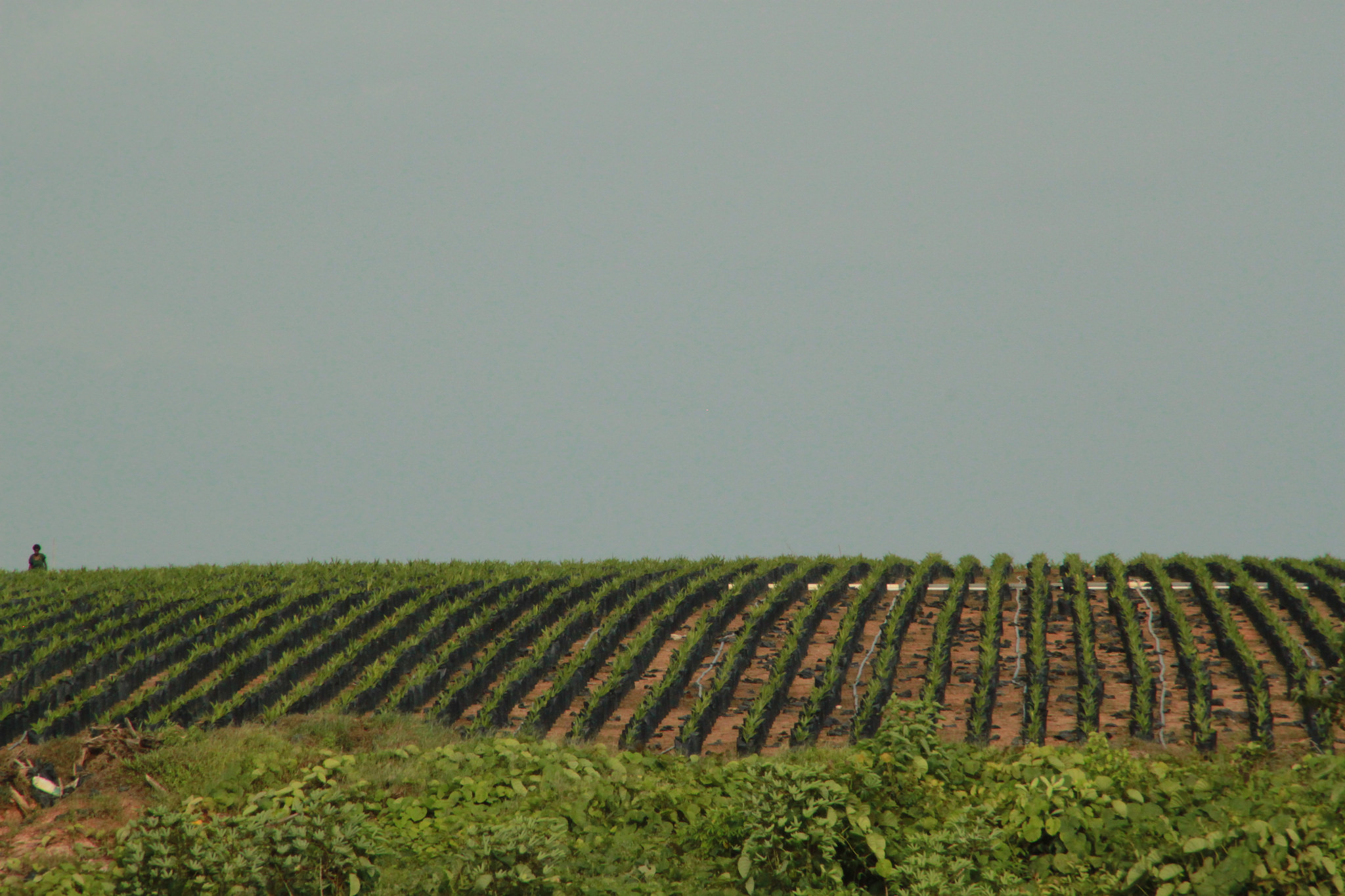
mam6A recent visit to Mam to monitor the latest developments around PT Dongin Prabhawa’s oil palm plantation near the south bank of the Digoel River in Merauke has revealed several concerns, from irregularities in the logging plan and ill-treatment of workers to human rights abuses.

PT Dongin Prabhawa is a subsidiary of the Korindo Group, which has several other oil palm and forestry businesses along the Digoel River.

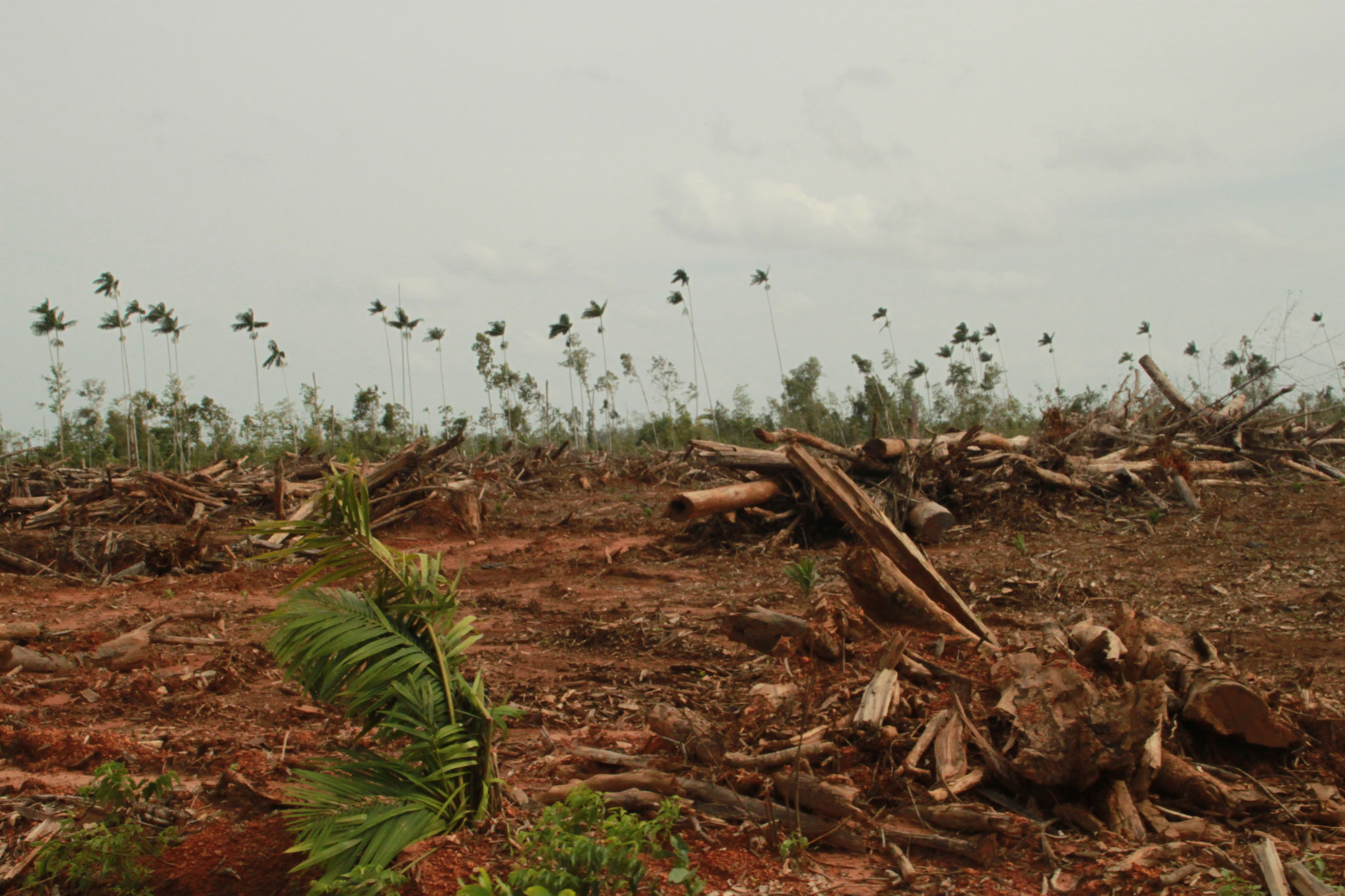
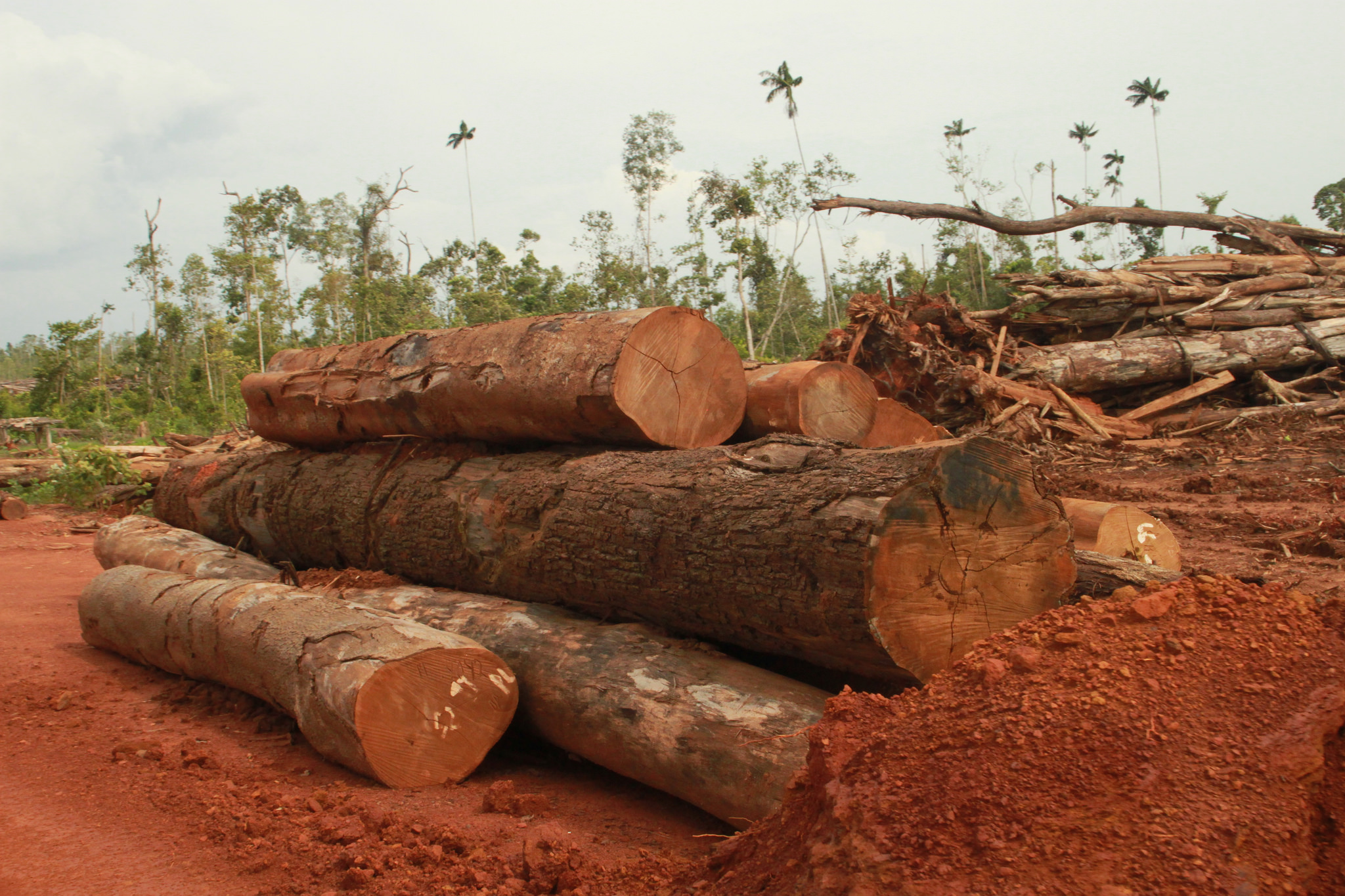
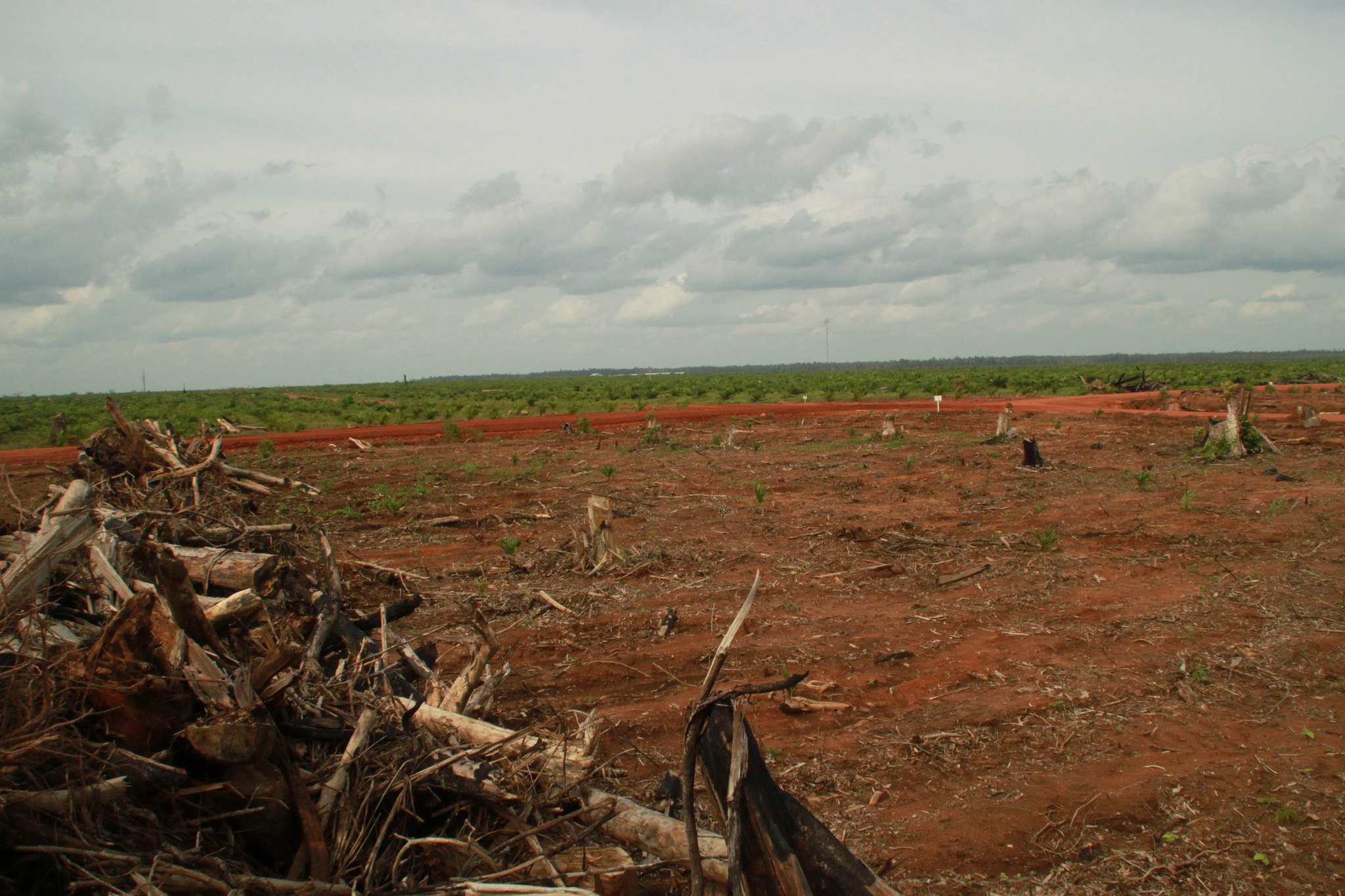
The monitoring by JPIC MSC Indonesia revealed that PT Dongin Prabhawa had been clearing the forest and taking the wood on barges to Korindo’s plywood factory upriver in Asiki.  An employee working as logging coordinator claimed that there were some irregularities in the work – the company was supposed to only log the areas assigned in its 2012 annual work plan during 2013, but actually logged the areas in the 2013 work plan as well. Although logging was not currently taking place at the time of the visit, logs were piled up in several places, including three log piles at the port. In other parts of the concession oil palm had already been planted.

The presence of police and military in the area were giving cause for concern. It was reported that on the 12th December 2013, two policemen from the Okaba police station who were assigned as security for PT Dongin Prabhawa at Mam, confiscated liquor from three local vendors after a search. The three local people were ordered to report regularly to the police station, but the police officers resold the alcohol to local customary landowners, also getting drunk with them.

Gambling with dice also takes place around the PT Dongin Prabhawa plantation and two police officers are involved in this. Addiction to gambling and alcohol often causes serious social problems in indigenous communities and so it is highly irresponsible of the police to promote such practices, and make money from them.

The Indonesian Army and Navy are stationed at Bade, a 30 minute speedboat ride away across the river. As has previously been reported, several young men, who may have been drinking, have recently been arrested and beaten up by the military in this area.

Another case of abuse by the military was reported on 13th February. It was claimed that the previous day a company employee originally from the Kei islands in South-East Maluku, was arrested in PT Dongin Prabhawa’s Division Two and tortured by a member of the Army.

There was also evidence of a worrying disregard for worker’s health and safety. Workers stationed at Division Two are drinking water from holes dug by diggers. The workers have complained about this. What is worse, chemical fertilizers are being used close to these water sources.

During the last three months (December to February) PT Dongin Prabhawa had not given either contracted nor casual workers the foodstuffs they were entitled to.

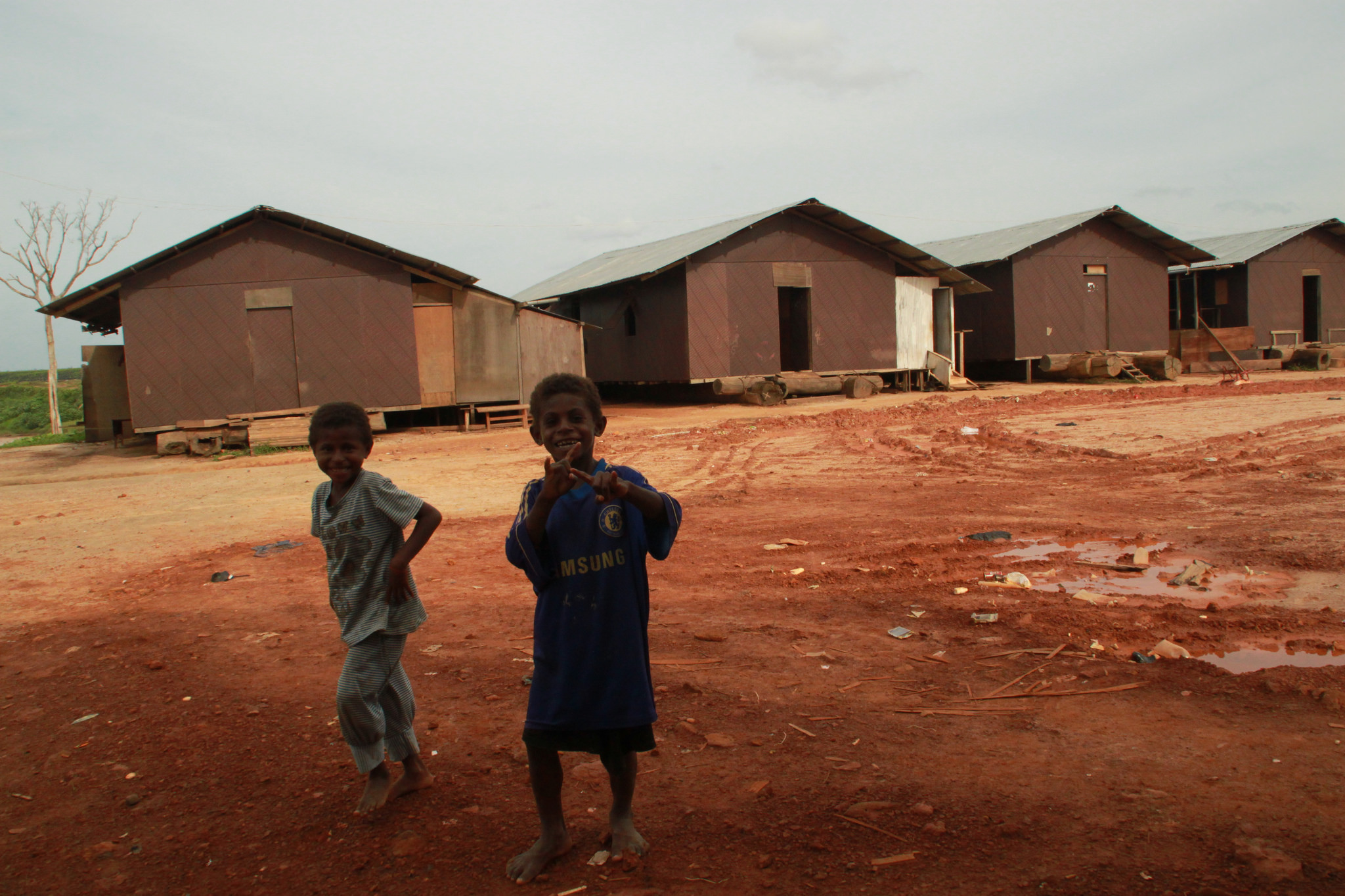
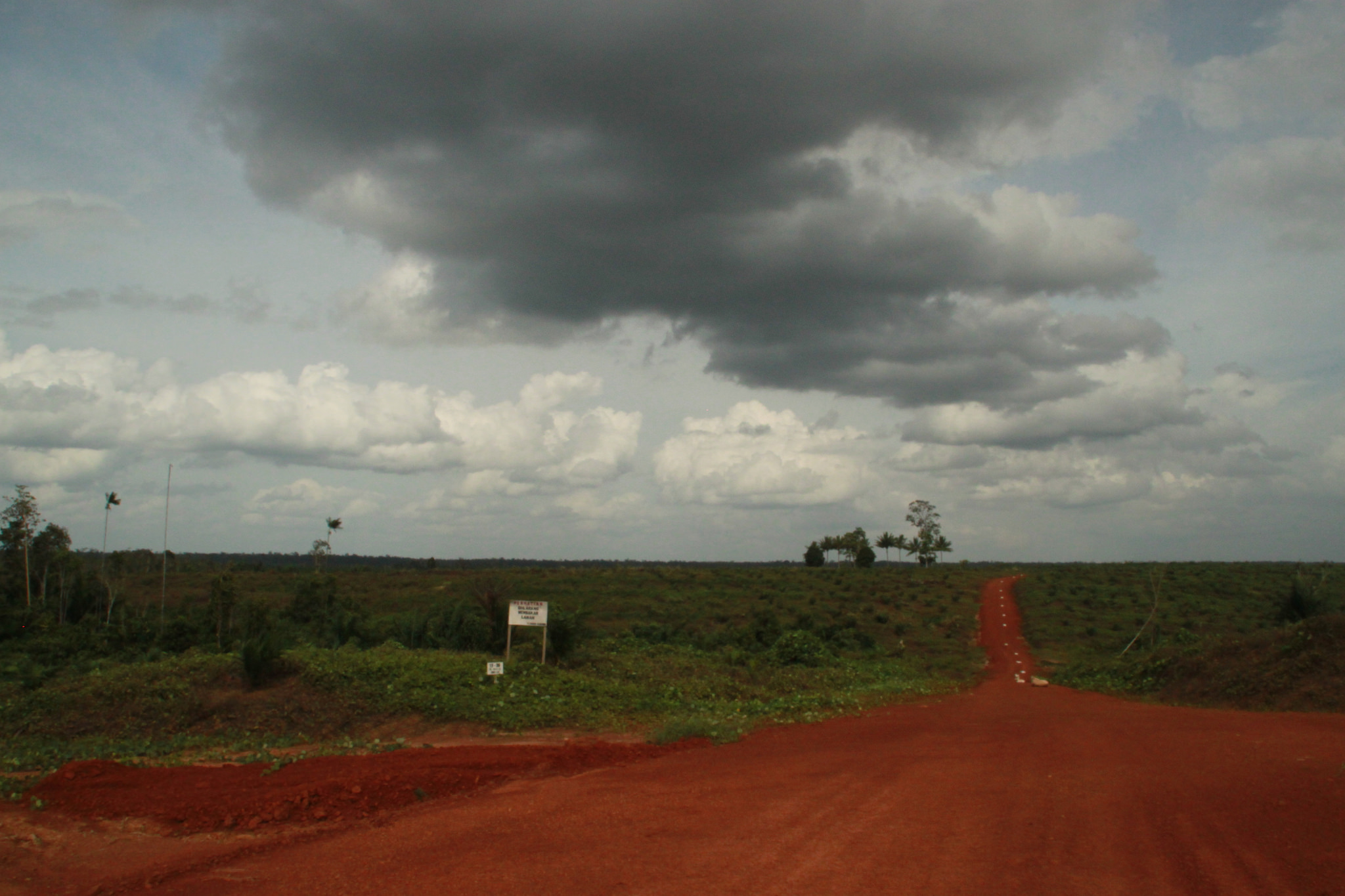
Some photos of the area are shown below, taken in January/ February 2014. All photos courtesy of WF from Papuan Voices and JPIC MSC Indonesia.

You can view the entire set here also at Flickr https://www.flickr.com/photos/103590506@N06/

mam5 mam4 mam3 mam2 mam1

SKP: An Oil Palm Plantation is Threatening the Kamoro People in Mimika

from Bintang Papua

February 15, 2014

The Justice and Peace Secretariat (Sekretariat Keadilan dan Perdamaian – SKP) of Timika Diocese in Papua are worried about how the environmental impacts of PT Pusaka Agro Lestari clearing forest for an oil palm plantation could affect the survival of the Kamoro people along the coast of Mimika Regency.

The co-ordinator of SKP in the Timika Diocese, Saul Wanimbo, told the Antara News Agency on Thursday that clearing the forest near to Iwaka and as far as the headwaters on the Timika-Paniai road to make way for PT PAL’s oil palm plantation could affect the Kamoro people’s survival.

The Kamoro people have always relied on sago palms, canoes and rivers, the key elements of their continued existence.

“I can’t imagine how it will be for the Kamoro people living along the shore in five to ten years time. They are bound to suffer as a result of the presence of oil palm upstream,” said Saul.

He said that the SKP Timika Diocese was in the process of compiling the necessary data and information to hold a seminar on the effects of oil palm investment in Mimika, to which they would invite experts and government bodies.

Based on the experience of Keerom, Jayapura, Manokwari and Sorong, where oil palm has been developed since the 1980s, he said, this industry brought absolutely no economic benefit to Papuan indigenous communities.

“We want to ask what benefits oil palm has brought to build up the economy of Papuan indigenous people over the years? Not one Papuan has seen a positive economic improvement as oil palm plantations have moved in,” said Saul.

According to him, the lack of economic benefits which indigenous Papuans have received from oil palm is due to the Papuan methods of farming, which are still very traditional if compared to other areas. Farmers in Papua, he says, are not yet familiar with techniques of permanent cultivation, and still keep shifting their cultivated plots from one area to another.

As well as this, he said, the majority of ethnic groups in Papua still rely foodstuffs that they obtain from the natural environment .

If forest areas are destroyed, felled in the interest of new oil palm plantations, then the ecosystem which supports the people’s livelihood will be damaged or even lost for ever.

“We are asking that local government act wisely and treat this problem seriously. Maybe the effects are not yet visible, but in a few years we will reap the problems. The government must be firm and put a stop to this investment if it doesn’t want the people to suffer”, said Saul.

He added that SKP groups throughout Papua have declared war on oil palm investment because it also provides no benefits for forest conservation.

Despite several workshops and seminars to which experts and decision-makers were invited, local governments in Papua seem incapable of taking on investment in the guise of oil palm.  According to data from the Mimika forestry service, PT PAL plan to develop a 38000 hectare oil palm plantation from Iwaka District to West Mimika District.

The company is in possession of a cultivation rights permit (HGU) from the government and a permit to operate from the Mimika Bupati since 2007.

English Translation by awasMifee

[awasMIFEE note: In 2011 PT Pusaka Agro Lestari was bought by the Noble Group, a company which trades in agricultural commodities, and has only recently started investing in oil palm plantations. PT Pusaka Agro Lestari is its second plantation in Papua, after PT Henrison Inti Persada in Sorong]

Medco in Manokwari: stepping up the pressure on land and community

From AwasMifee

January 20, 2014

Medco moved into Manokwari in 2008 to start an oil palm plantation. At that point it could still be counted as one of the pioneers of oil palm in West Papua.   A few years later, as large expanses of land for new plantations become increasingly hard to obtain in Sumatra and Kalimantan, more and more companies have been turning their eyes eastward to Papua’s vast forests. Yet given the huge inequalities in Papua, it is unlikely that any of these new plantation developments will be without its problems.

In the case of Medco, the new plantation has increased the pressure on land in a relatively densely populated agricultural area, potentially also increasing tensions between indigenous Papuans and transmigrants.

The land around Manokwari is mostly mountainous, except for one long broad plain stretching along the coast and into the interior. Much of this land was allocated for transmigration programs in the 1980s, and some of the migrants who came were employed as smallholders on the first oil palm plantation in Papua, run by the state-owned company PTPN II, which got its permit to operate in 1980.  Other  transmigrants farm food crops in this area, which is the only large area suitable for lowland agriculture near to Manokwari city. Many local Arfak people also live in the area, they are also farmers but tend to use the technique of shifting cultivation, while the transmigrants stick to their allocated two hectares.

This is the environment which Medco’s subsidiary PT Medcopapua Hijau Selaras moved into, occupying some of the forest areas unused by PTPN II and the transmigrants, and also westwards further along the plain. This agricultural environment and its mixed population structure is a very different context from some other areas where oil palm is expanding in Papua, such as the sparsely populated forests the Korindo and Daewoo groups chose for their plantations near Merauke.

Everywhere in Papua, the consent of local communities which hold customary land rights have to be obtained before a company can operate. However this is often treated as a formality, rather than giving communities a real choice to decide the future of their land. Medco has met this requirement by compensating traditional leaders at a rate of Rp 450,000 per hectare. The company also offers local Papuans smallholdings of two hectares of oil palm, which they would manage and then sell the fruit to the company.

450,000 per hectare is not much (around A$45 dollars). One place we visited told us that the chief had received 30 million Rupiah for the villages’ land (he wasn’t sure of how many hectares that was for). That meant signing away rights to the land for 35 years. However, in one year, he claimed, the farmers could make 30 million growing chilli on just a portion of that land. They felt cheated.

What’s more, negotiations and payment are made to the tribal chief only.  It is customary amongst the Arfak people that the chief receives all compensation paid to use the land, and does not share it with other families. However the whole community who lose their land to theplantation. In many places chocolate trees have been cleared, and the owner was not individually compensated. The Arfak people we spoke to did not make a problem of this however, or show any bitterness towards the tribal chief. Indeed they complained about how Medco had not followed through on its promises to build a new home for the tribal chief, seeing it as a betrayal of trust by the company.

In fact, it may be low, but 450,000 Rupiah is a higher level of compensation than any other oil palm plantation in Papua. The highest rate in the cluster of plantations around Merauke is Rp 300,000 per hectare, but some communities were convinced to sell for Rp 50,000 – 70,000 back in 2007. In Sorong, the Mooi people were cheated out of their land for Rp 6000 per hectare. However, in those other cases, the land is mostly forest. Medco’s area in Manokwari is either agricultural land or could be potentially used as agricultural land. If it were not being used for oil palm it would be used by small farmers to meet the food needs of this growing city. As a comparison, one hectare of paddy fields on Java would be sold for around two billion rupiah.

Before Medco came, there were existing tensions over land, which squeezing the communities yet further is likely to exacerbate. The problems arose because when the government originally brought transmigrants from other islands including Java and Timor, it didn’t seek agreement from the local customary landowners or provide compensation. Although it is now generally recognised that retrospective compensation must be paid, in many cases the cash is not forthcoming.

In some cases, the transmigrants have settled the issue themselves, paying off the required amount in monthly instalments.  Others quite rightly argue that the government brought them there, and so they are holding out for the government to meet its responsibility and pay up. But in that situation their future is very insecure, especially if they are smallholders on PTPN II’s plantation with just two hectares of palm trees which are rapidly becoming unproductive, and no clear title over the land.

The indigenous people are also in an increasingly precarious situation, in part because Medco has also taken so much land, making it harder to make a living from shifting cultivation as they have always done.

In general, the indigenous people and the transmigrants are aware of the other side’s difficult situation and endeavour to remain good neighbours without conflict breaking out. However it is inevitable that tensions are present, and without a resolution it could explode at any time.

The new plantation also brings environmental problems. Apart from clearing the lowland forest, the plantation is already causing severe problems with erosion and flooding. One river had widened by over 100m in just a few years since the forest was cut down and replaced with oil palm. Flooding has also intensified in a transmigration area between PTPN 2 and Medco’ s plantations, so much so that the government has erected flood danger notices along the edge of Medco’s concession. Floodwaters now regularly enter their houses.

Taking all the low lying land for an oil palm plantation means also that the Papuan farmers are moving into nearby mountainous land for their shifting cultivation plots. Clearing the forest on these steep slopes also increases the risk of flooding and landslides.

There are also a number of issues for the Papuan and transmigrant workers who are taken on by Medco as day-labourers. They are paid a flat 68,000 Rupiah per day, which is a low wage taking into account the high cost of living in Papua. Workers also reported that the company didn’t provide any safety equipment to day-labourers or small-holders who were
spraying weedkillers and pesticides.

Medco still wishes to extend the area it is cultivating, westwards towards Kebar district and eastwards back towards Manokwari city. However, it has reportedly met with opposition from indigenous people and also difficulty expanding the area of its permit: the original
location permit covered 13,850 hectares, but the land released by the forestry ministry was only 6,791 hectares, and in 2011 the company said it had paid compensation on 5930 hectares.

This article was first by our partners at awasMIFEE.

Create a website or blog at WordPress.com

Up ↑