Cafe Pacific: Indonesian ‘open door’ policy on West Papua ‘a lie’ as French journos still detained

first published Saturday, September 6, 2014

Two arrested French journalists, Thomas Dandois (centre) and Valentine Bourrat (left), from Franco-German television channel Arte, are photographed with an unidentified Indonesian immigration official in Jayapura in Papua province last week. Image: AsiaOne

by David Robie, Cafe Pacific

RECENT claims by Indonesian authorities that there was a fresh “open door” policy over inquisitive journalists wanting to enter West Papua and report “on the level” have turned out to be false.

Hopeful signs through insightful reports (long with intelligence minders) by SBS Dateline’s Mark Davis, Michael Bachelard of The Age and The Sydney Morning Herald’s Jakarta bureau and AAP’s Karlis Salna that the Indonesian government had indeed seen the light – or at least was having a serious rethink – have turned out to be nothing but a mirage.

In the latest July/August edition of The Walkley Magazine, a Bachelard article featured “Opening the doors to West Papua” about his experience in January 2013 as “the first foreign reporter (excluding travel writers) to be given entry for about 12 months, and the first Australian for significantly longer”. He wrote rather prematurely:

“I hope the Indonesian government sees that these stories have not caused the sky to fall in, because only then will they open up West Papua. Then perhaps, reporting there can become just like any other part of my job.”

However, the detention of two French journalists – who are facing charges of “treason” and “immigration crime” – and a West Papuan tribal leader early last month has made a mockery of the new Indonesian policy.

Thomas Dandois and Valentine Bourrat …
file pictures from Tabloid Jubi.

Even before these arrests, a leading West Papuan journalist, Tabloid Jubi publisher Victor Mambor (also chair of the West Papua branch of the Alliance of Independent Journalists), on a visit to New Zealand just a few days earlier, had warned journalists and civil society activists not to be seduced by Indonesian claims of “press freedom”.

Arrested on August 5 for working on tourist visas, Thomas Dandois, 40, and 29-year-old Valentine Bourrat  today remain in detention, along with Areki Wanimbo, an indigenous leader from Lanny Jaya, according to the Indonesian human rights group Tapol.

International condemnation has been mounting with many West Papuan human rights groups and media freedom advocates calling for their immediate release.

Not content with throwing the book of repression against all three detainees, Indonesian intelligence agents have been snooping around and harassing anybody who has been in contact with them, report New Zealand-based Pacific Media Watch’s Anna Majavu and Australian-based West Papua Media’s editor Nick Chesterfield.

In a report posted today on the Tapol website, it declared:

Indonesia continues to impose severe restrictions on access to Papua for foreign journalists and human rights workers. While most foreign journalists apprehended in Papua are swiftly deported to their home countries, in this case the pair have been charged with immigration offences and accused of trying to destablise Papua.
Papuan civil society has been quick to show their support and have demonstrated calling for the release of the journalists. The Jayapura branch of the Alliance for Independent Journalists in Indonesia has appealed for the pair to be released and deported rather than subjected to legal process.
A plethora of international rights organisations have condemned the arrests and issued statements calling for their release. On August 11, Reporters without Borders issued a statement confirming that the French couple were indeed journalists who had been reporting on Papua.

On August 25, the International Federation of Journalists called for the release of the two journalists, and on August 30, Amnesty International condemned the arrests and called for the journalists and Mr Wanimbo to be released. Several international NGOs have issued urgent appeals calling for the immediate release of the three detainees.
As the three detainees spend their 32nd night in jail tonight, human rights groups are united in their hope that upon his inauguration in October, President-elect Jokowi will act swiftly in honouring his promise to open up Papua to international journalists, observers, human rights and humanitarian workers.

Tapol has also posted an extensive outline of the case on its website as part of an appeal in support of the detained three. It also notes:

A conflict area where human rights violations are rampant, Papua has been strictly isolated by the Indonesian government from international journalists and bodies. A special permit from the government is required for international journalists and institutions to legally visit the area. No such permit is needed to visit other parts of Indonesia.

(West Papua Media editorial note:  As West Papua Media is accused by the Indonesian police of being a participant in this case, and its editor has also been threatened by Indonesian police with illegal extradition (rendition) for arrest under subversion and espionage charges; for ethical and security reasons, all reportage on this case is being done via our partners at the Pacific Media Centre and syndicated here.  We thank our partners for their continued support during this difficult time.)

PMC: Detained French journos may face five years in prison

French journalists Thomas Dandois and Valentine Bourrat. Image: Free West Papua Campaign

Wednesday, September 10, 2014

Item: 8952

JAYAPURA (Sydney Morning Herald / Pacific Media Watch / West Papua Media Alerts): Indonesian authorities want to jail two French journalists for five years for the “crime” of reporting from West Papua without journalists’ visas.

The Sydney Morning Herald reported yesterday that instead of deporting journalists Thomas Dandois, 40, and Valentine Bourrat,29, as is normal practice, Indonesian authorities want the maximum sentence.

The head of the Immigration Office in Papua, Garda Tampubolon, told Fairfax Media that the journalists would remain in jail until their trial started, which might be next month.

Dandois and Bourrat have already been in custody for a month.

The Sydney Morning Herald reported:

“Police spokesman Sulistyo Pudjo said the criminal subversion investigation was under way but ‘this is a very complicated case, it is not easy’. The charge carries a 20-year jail sentence. Police have indicated in the past that Dandois and Bourrat are under suspicion over an ammunition swap gone wrong in the Papua Highlands, during which two police officers were shot. However, the only evidence of their alleged involvement appears to be that they interviewed political separatists”.

It appears that Indonesia wishes to deter foreign journalists from reporting on their 50-year military occupation of West Papua because they are persisting with charging Bourrat and Dandois even though the journalists issued an apology for reporting without the correct visa.

Arte TV’s production house has also promised not to use any footage which “may discredit Indonesia’s reputation”, the Sydney Morning Herald reported.

Meanwhile, the West Papua Media news service reports that several West Papuans have been arrested for meeting with Dandois and Bourrat last month.

These are respected indigenous West Papuan leader, Areki Wanimbo, who met with the journalists on the day they were arrested, along with Deni Dow and Jornus Wenda who also attended the meeting.

Theo Hesegem and a Mr Logo, who accompanied the journalists to the meeting with Wanimbo, were also arrested.

Low, Wenda and Dow were interrogated for 24 hours before being released without charge, but Wanimbo remains in detention and has been charged with “complicity to misuse a permit” and “treason”.

The “treason” charge relates to Wanimbo collecting donations for a meeting to discuss West Papua’s membership application to the Melanesia Spearhead Groups (MSG).


(West Papua Media editorial note:  As West Papua Media is accused by the Indonesian police of being a participant in this case, and its editor has also been threatened by Indonesian police with illegal extradition (rendition) for arrest under subversion and espionage charges; for ethical and security reasons, all reportage on this case is being done via our partners at the Pacific Media Centre and syndicated here.  We thank our partners for their continued support during this difficult time.)

As President celebrates ‘Sail Raja Ampat’, one of his critics is abducted, killed and dumped at sea

(Apologies for the delay in Posting to the site (all news still is being delivered to journalists direct as it breaks). WPM has been under severe security threat from Indonesian agents in Papua and Australia, associated with the arrests of French journalists).

Reports from our network partners at AwasMifee

On 19th August, Martinus Yohame in his role as the chair of the Sorong Branch of the West Papua National Committee (KNPB) held a press conference, explaining his organisation’s opposition to the Indonesian President’s visit to the area to open the Sail Raja Ampat event aimed at promoting tourism to Papua. He also raised the issue of illegal logging. The next day he disappeared.

As friends and colleagues spent the subsequent days searching for him, President Susilo Bambang Yudhoyono opened the sailing regatta, where he once again promised extra funds to develop infrastructure for infrastructure in Papua, and also inaugurated a statue of Jesus Christ on Marsinam Island near Manokwari.

Then on the 26th, a fisherman found the body of Martinus Yohame floating by the shore in at Nana Island, near Sorong. He had been shot in the chest, his face smashed up, and with another wound in his stomach. He had been placed in a sack, with his arms and legs tied. His abductors remain unknown.

This story has not yet received widespread coverage in the Papuan media, and at the time of writing the KNPB had yet to issue a statement on its website. Tabloidjubi however has picked up the story – here is a translation of one of their articles:

Deceased Sorong KNPB Chair believed to have been disappeared.

Jayapura, 26/8 (Jubi) – Martinus Yohame, Chair of the Greater Sorong area branch of the West Papua National Committee (KNPB) was found found dead floating near the shore of Nana Island, in the Doom Island area of Sorong. He is believed to have been disappeared.

A spokesperson for the Papua-wide KNPB, Basoka Logo made this clear to tabloidjubi.com. He said that previously on the evening of Wednesday 20th August, the KNPB had received information that Martinus Yohame had been abducted.

“But we can’t be sure yet who his captors were. Now today we have heard the news that he has been found dead. We cannot yet say which group is responsible for his diasppearance.  At the current time we are
still unsure,” Basoka Logo said via his mobile phone on Tuesday (26/8).

He explained that the late Martinus Yohame was responsible for the Bird’s Head peninsula area of West Papua. He could not give any further information at the time as he had not received a full report from his colleagues in Sorong.

“Just now we only received a short report about the death of the Sorong KNPB Chair – what I know is that he was found near the Kota Baru area, and his body is currently lying at the Sorong KNPB secretariat”, he said.

At present, according to Logo, colleagues in Sorong are still collecting data and statements about the death of the Chair of the KNPB in Sorong. “Only when this is done will we be able to give a full statement. The First Chair of the KNPB central organisation, Agus Kosay just arrived in Sorong by plane. It was him that officially reported to us that it was true the Chair of the KNPB in Sorong had been found,” he said.

The chair of the KNPB in the Bird’s Head region, including Greater Sorong, Martin Yohame, was tragically found dead some time before, his body was discovered by a fisherman on Tuesday morning (26/8) at around 7.00 am local time floating near Nana Island, not far from the Doom Island area. When found, Martinus’s body had been tied up tightly in a sack. Both his legs and arms had also been tied, presumably hoping his body would sink to the bottom of the ocean.

According to the Sorong City General Hospital’s examination, a gunshot wound was found on the left side of his chest. The victims face was also smashed up by being hit by a hard object, “We found a gunshot wound in his left chest. His face was destroyed,” said Yori, a worker at the hospital.
The Sorong police chief Adjunct Commissioner Harri Golden Hart confirmed that a body had been found. “We are still in the process of identification, and finding out whether it is true that he was killed,” Harri said.

After the autopsy, the victim’s family and KNPB members brought the victim’s body to be laid out in the house of mourning in Malanu village, in the Papua Christian University complex.

From data collected by tabloid jubi, the external examination conducted at the Sorong City General Hospital revealed a hole in the left chest 1x1cm, and another in the right side of the stomach of around 2x3cm. The man’s height was 179 cm and he had dreadlocks.

Before his body was found, the KNPB had issued a statement with some further details of the press conference and what happened afterwards, along with their guesses for possible abductors and their motives. This is an excerpt from that statement, as published on umaginews.com:

We believe that the Sorong KNPB chair was abducted by Kopassus [army special forces] or BIN [state intelligence agency] because on the 20th he received a phone call from someone and went outside. Now five days have passed but he hasn’t been found.

Previously on 19th August Martinus Yohame and other KNPB officials held a press conference at 15.00 Papuan time in front of the Sorong Mayor’s office, attended by several reporters from the Sorong area, in connection with the Indonesian President Susilo Bambang Yudhoyono’s visit to Papua and in particular to the Sorong area to open the Sail Raja Ampat event in Waisai, on Saturday 23rd August 2014.

Martinus Yohame, supported by the deputy chair of the KNPB, Kantius H, invited journalists from several print media organisations to use information from the press conference in their reports about the president’s visit KNPB used the opportunity to express their opposition to President SBY’s visit to the land of Papua.

At the same time they expressed their opposition to illegal logging, exploiting Papua’s natural riches and developing Raja Ampat as a Global Marine Tourism centre, all of which they judge to be stealing from and destroying Papua’s ecosystems and forests with no benefit for the people of Papua as a whole who own the land and resources.

This is why the KNPB and the PRD (People’s Regional Parliament) are clear in their opposition. We believe he was abducted by the security forces or the intelligence agency as part of their efforts to secure SBY’s visit, which the KNPB opposes.

Just two minutes after the press meeting finished at 3.15, a woman telephoned the KNPB Sorong chair. This woman claimed to be from the National Human Rights Commission in Jakarta, and she wanted to meet.  Several moments later, she came to meet the KNPB chair and his group outside the mayor’s office in a red Avanza. Inside was a man with a large Canon video camera, and they invited Martinus Yohame to accompany them to the Sorong Mega Mall, at the 9km post. The woman then took them to eat in a cafe next to the Megamall, and while they ate they held a meeting, although it is not known what they spoke about in this meeting.

Before the meeting broke up, he and the woman exchanged mobile phone numbers. The woman then said that “the next meeting will take place on Wednesday 20th August and we will get in touch”.

Afterwards they maintained communication via telephone and text message, with the last message on Wednesday 20th at 12.00 Papua time. That night they told Martinus to leave his house and it was on the street that they abducted him. He has not been found until now….

Source: Umagi News

The West Papua National Committee is an organisation that believes West Papua should have the right to self determination. It was formed in around 2009, but after it gained prominence with a series of large demonstrations demanding a referendum on independence there was a major crackdown, with many leaders around Papua jailed or killed, especially in 2012.  Since that wave of repression, the KNPB has found it difficult to organise, as local leaders are often detained a day or two days before a planned demonstration or significant event.

If elements of the Indonesian State were indeed responsible for Martinus Yohame’s disappearance, it is likely that he was targeted for his pro-independence stance. However, it is worth remembering that in the press conference before he disappeared Martinus Yohame also spoke of the problems of illegal logging and the tourism industry, and he is not the first KNPB leader have raised the issues of natural resource development that marginalises the Papuan people.  At the same time, indigenous people are threatened by state security forces of being treated as separatists when they state their opposition to development projects. The climate of intimidation in Papua is not limited to the independence movement alone, but impacts all areas in which Papuan people need to assert their needs and desires for a more just future.

As Martinus Yohame was being brutally beaten, or maybe he was already dead by that time, President Susilo Bambang Yudhoyono was nearby on Raja Ampat celebrating the progress made in his development-focussed strategy for Papua, making statements such as “ lets keep going with the positive development that has already been achieved in Papua and West Papua”.  His audience of civil servants and tourism executives listened and watched as a flotilla of boats including 14 Indonesian navy ships as well as warships from the US, Australia and Singapore joined a sail past. Media hailed the event as a great success.

West Papua Media has highly credible but unconfirmed reports that Martinus Yohame was also targeted by Indonesian intelligence for potentially having contact with the two French Journalists still being detained in Abepura.  Many of our people are currently in danger because of this situation.

How Papua’s Green Areas are Increasingly being Destroyed


By Fr Santon Tekege

A portrait of oil palm companies in Wami & Sima Villages in Nabire)

Translation by AwasMifee

nb 2,6

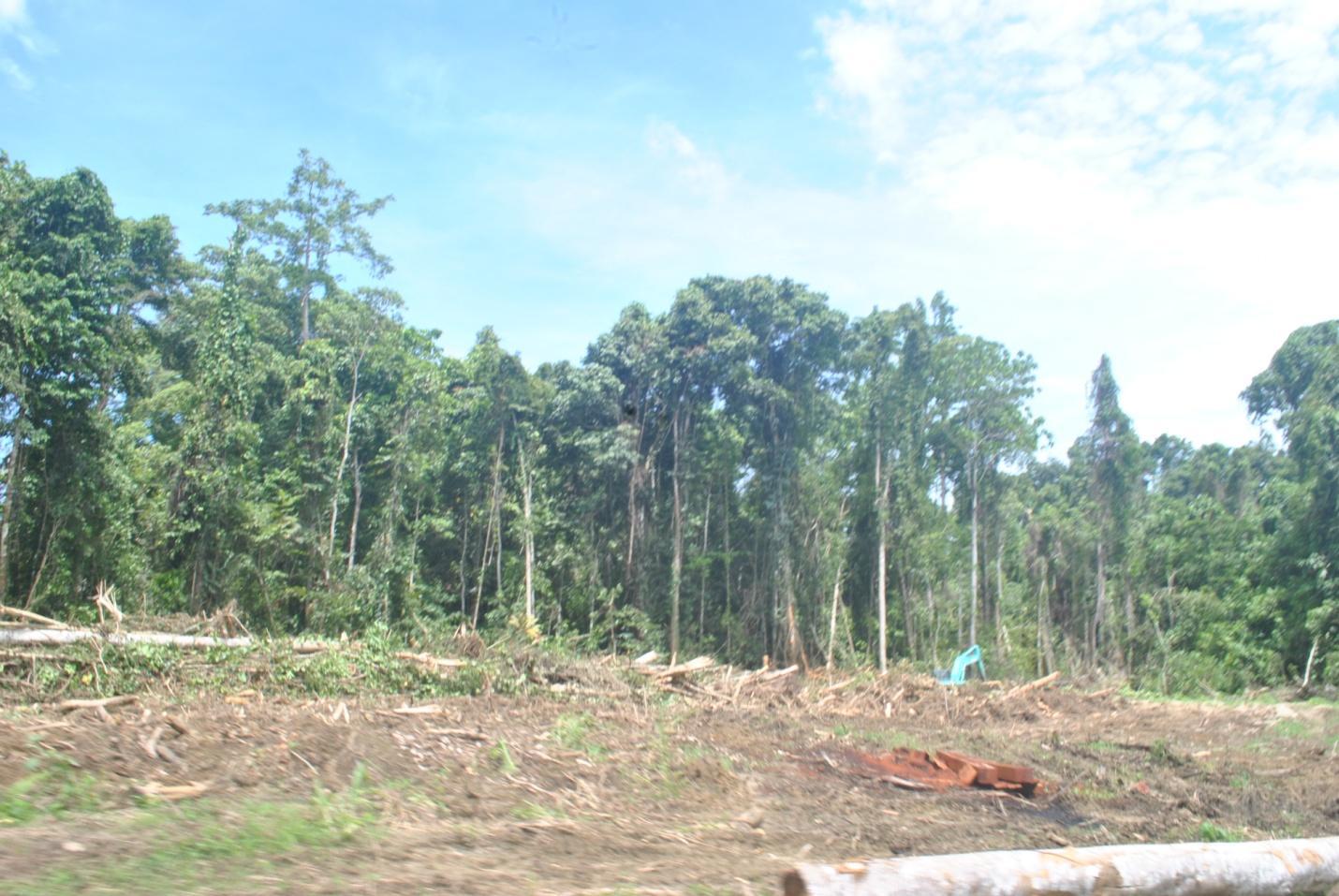
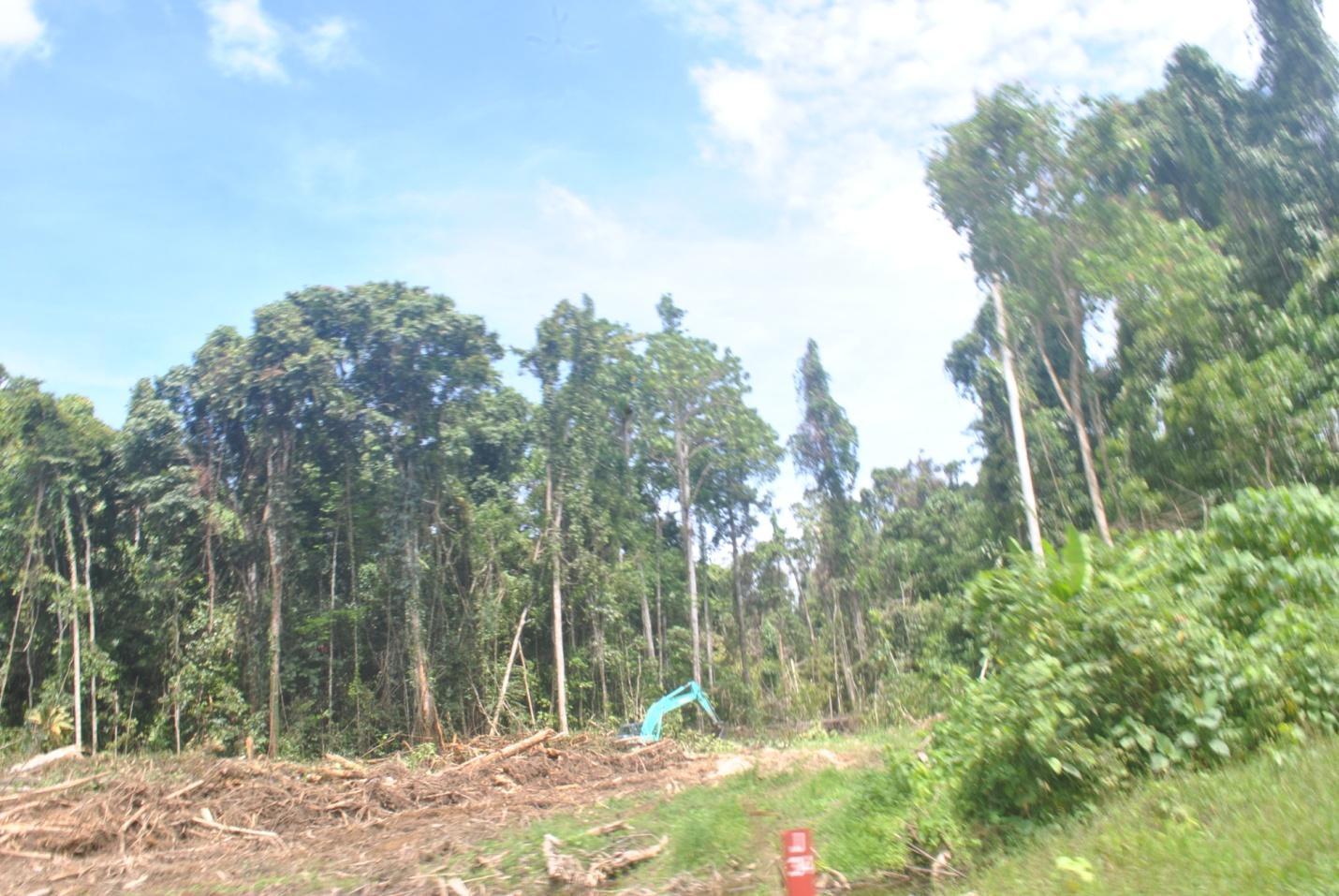
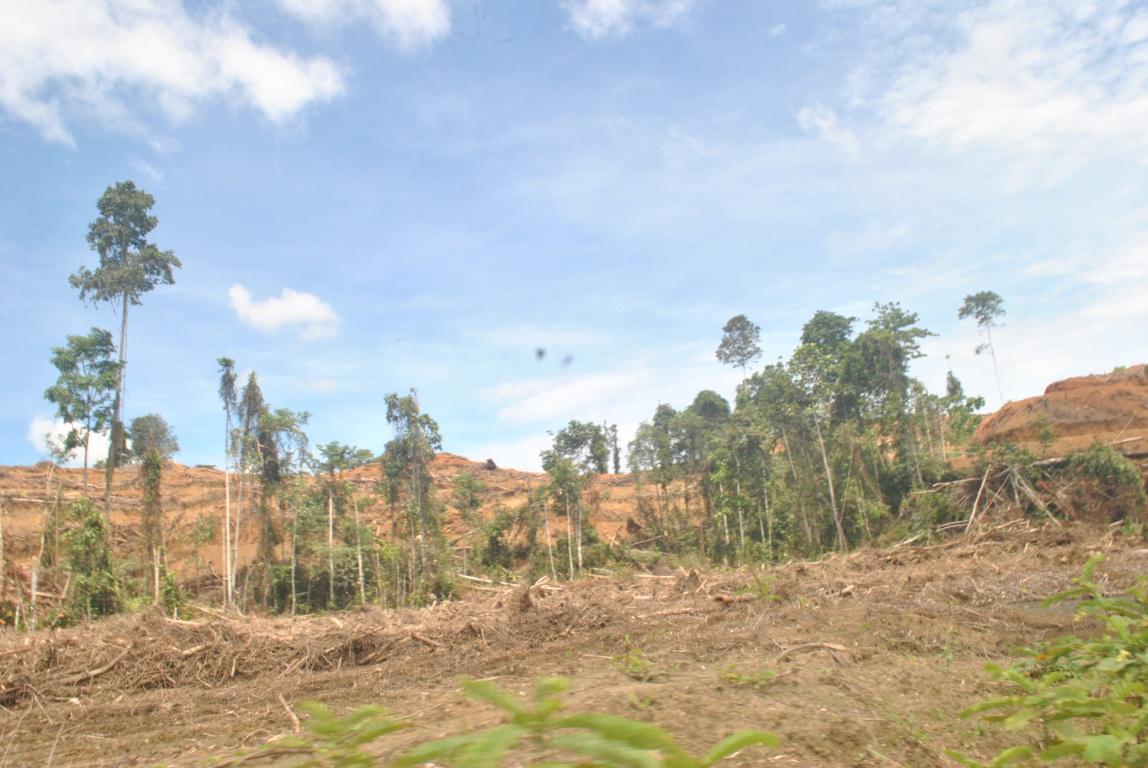
Throughout the Land of Papua, forest is being destroyed ever faster to feed the interests and profits of companies and provincial and local governments. Papua’s forests are becoming a target for investors from around the world, who treat the forest as if it were there merely to satisfy their personal desires. So Papua’s forest is being replaced with oil palm. The Papuan forest with all its diverse flora and fauna becomes a tasty snack for feudal overlords and the Indonesian Government. The provincial and local governments, without telling the people who live there, allow all kinds of companies to start operations in the land of Papua. This is why it is vital that such companies cannot just move in, including oil palm companies such as the one which is planning a plantation in Nabire Regency.

The companies must be rejected so that indigenous Papuans’ relationship with their local environment is not obstructed or severed. This means it is important that the government and all other concerned parties, including the church, pay attention to the increasing rate of forest destruction in the Land of Papua.

Papuans and their Forest

Papuans, as gatherers and forest gardeners, make use of nature’s riches as their source of livelihood. Whether they live near the coast or in the mountains, they find food directly in nature, such as sago, sweet potatoes, fish, animals to hunt like deer, kangaroo, wild pig or cuscus, and different kinds of vegetables. This situation is slowly changing. however – as more and more forest is felled, so Papuans find it harder to find sago and animals to hunt.

nb1,3

In general Papuans have a strong connection with their natural environment. Everything that can be found in the forest is seen as an integral part of human life. Forest is seen as the home of the ancestors. When the forest is destroyed, cracks appear in ths co-existance between the Papuan people and the forest/nature. Because of this, when people cut down the forest, it can be understood as an effort to weaken Papuan people’s relationship with the forest and natural environment. Papuans who live close to nature find themselves in a dilemma. Their forest has been cut down, and so the places they look for food, hunt or fetch clean water are all gone. Meanwhile they get no benefit from the oil palm plantations.

Investors currently think that the forests of Papua are going to be replaced with oil palm. Through their various forms of propaganda, the companies make wonderful promises to the communities which hold the customary land rights. that they will be given their own oil palm smallholdings. The companies say they will attend to community education and healthcare needs and even say they will guarantee increased economic security. Just like the oil palm company in Wami and Yaro villages in Nabire. However, in reality the indigenous people just suffer more and more. According to the National Central Statistics Bureau data from 2010 they are also the poorest. Indonesia’s two easternmost provinces (Papua 37.53% and West Papua 35.71%) have the highest levels of poverty nationwide, despite Papua’s abundant natural resources. The government needs to look and think whose fault this is? Or could it be that it is government policy which is to blame, and is disadvantaging the Papuan people?

Oil palm out of Papua

Policies are needed to manage and use natural resources in a balanced way, or one which is intended to benefit Papuan people. If this takes place then people’s economic security will also tend to increase. Forest doesn’t have to be replaced with oil palm to increase economic security. There are still many opportunities for businesses that will ensure a secure future for Papuans. It is not ethical to sacrifice forests which have intrinsic value with something which is to be used for a short time. We need to understand that Papuans are people who are one with nature so they have to defend it and pass it on to future generations. Don’t destroy the forest with all its wildlife and traditional medicines, we need to evaluate and simply refuse all companies, including oil palm companies in the Land of Papua, and Nabire in particular.

nb 2,0

When oil palm companies move in they will clear the forest. Take, for example, the case of PT Nabire Baru in Wami (Yaur District) and in Sima District, Nabire. According to local people in Wami, the company plans to clear 32,000 of forest. There would be another 8000 in Sima. Meanwhile the deacon of Nabire Bay says that the company plans to clear 17,000 hectares between Wami and Yaro. The Nabire Regency Administration has issued a permit to PT Nabire Baru to develop an oil palm plantation in order to stimulate the economy for the people of Nabire. The government believes that bringing PT Nabire Baru to Wami and Sima will bring economic security both to local indigenous communities and non-Papuans living in Nabire. The government didn’t consider the need to conserve the forest, trees and animals, but just gave the company a permit. By imposing forest conversion to oil palm, the ecosystem and all the animals living around Wami and Yaro villages will be destroyed. The use of pesticides and domestic waste will result in a reduction in the environmental support capacity. That is why it is important to reject oil palm in Wami and Sima.

nb 1,10

We have already watched closely how different areas of Papua have experienced oil palm companies. In each case the reality is that oil palm plantations never bring security to the people of Papua, so why do they still want to allow new oil palm plantations to start up across Papua, this time in Nabire? Oil palm plantations will actually bring new problems for Papuans because they will lose sources of food, medicinal plants will be wiped out and sacred places will be lost. Maybe it is to give job opportunities to immigrant workers from outside Papua? In this way, however, the number of new inhabitants will increase, and the existing inhabitants will just get poorer and never find economic security. Whose interest lies behind forest clearance for oil palm in Papua? Papua is being taken over by foreign companies, and the losers are the ordinary people. It is the ordinary people who will lose their work as farmers because they are not able to compete with big business, or even cannot adjust to working for a modern enterprise. The Papuan people live directly from nature. To get accustomed to modern methods takes a long time for indigenous Papuans. Local governments don’t supply indigenous Papuans with training. Therefore the local people are just considered stupid and unskilled, meaning it is very easy for companies just to bring in immigrants from outside of Papua to make up their workforce.

Conserving Papua’s forest has to be placed in a framework of saving the Papuan people. Papua’s forest should not be seen as a forest for it’s own sake only, but something which is correlated with the Papuan people’s identity. Thinking like this, forest is no longer an object to be exploited, but an integral part of the people of Papua and must be protected and conserved.

A Portrait of Oil Palm for Indigenous Residents of Nabire

The weak and the poor in Papua suffer if their land is gone. They will suffer the loss of traditional medicines and sacred places. Papuan indigenous people’s intimate knowledge of other communities is destroyed by companies that operate or want to operate in Papua. Those communities include the communities of living people and those who have died and are now spirits. Other communities include the water in rivers and lakes, trees, grasses and all rocks and soil that occur in Papua.

nb 2,8

If a company is able to destroy these communities, the indigenous people of Papua will experience a crisis of community and in their relationships and enter a state of chaos. If their deep understanding of nature and these communities is destroyed, they will also go through an inner crisis, disasters such as floods and starvation will increase, even leading to death. This is a clear statement that if a company wants to move into Papua, that company must pay for all the costs it will create, including for dozens of generations to come. If it is unable to pay, then it shouldn’t bother coming to Papua. For this reason, all destruction and forest clearing must stop. Because it is in contradiction with this deep connection with nature and all the communities which are found in Papua.

Portraying it in this way can illustrate how as Nabire experiences increasing levels of forest and environmental destruction, values of peace and justice and even living together as neighbours are fading out of Papuan people’s lives. The challenge set to any company that wants to come to Papua is to respect the indigenous people and their connection to nature. If a company values the forest and environment, it must show a high level of respect for the home of all the communities that exist around Wami and Yaro villages. Only from this can spring a life that of peace and justice, with the indigenous people in harmony with forest communities, in Papua in general and in Nabire in particular.

How the Church in Papua can be involved.

The basis for the how the Church’s can be involved and what position to take on this pastoral challenge can be found in the encyclicals Rerum Novarum (1891) and Guadragessimo Anno (1931). These two documents speak of the Church’s social stance towards workers and the poor, and even societal problems, in terms of the Church’s social and pastoral service. The documents of the Second Vatican Council offer a clear social theology viewpoint for a more comprehensive involvement of the Church, not just limited to workers and their problems, but more about the relationship between the Church and the wider world. In this reflection the Church provides a theological viewpoint on its political commitment as an integral part of its work, and its involvement and place within the social arena. The Church is fundamentally opposed to all forms of human oppression. The Church emphatically rejects that political authority should be placed above God’s authority. Due to this reflection, the Church is always involved in voicing humanitarian values around Indonesia and in Papua in particular. This involvement with society is clarified once more in Gaudium Et Spes art 1 which states: “The joys and the hopes, the griefs and the anxieties of the men of this age, especially those who are poor or in any way afflicted, these are the joys and hopes, the griefs and anxieties of the followers of Christ” In summary, these Church documents form a point on which to press for the Church’s involvement in various social issues in Indonesia, and especially in Papua, for the sake of the safety and freedom of humanity and the nature which was created for this earth. To respond to this aim, it is time for us to be open to getting involved and choose our position to be able to respond to the challenges that exist in Papua. That means that as forest and environmental destruction becomes more firmly established in Papua, the issue requires our collective attention and care.

Author: Pastoral Staff of Timika Diocese, Papua.

nb 2,1Photo: Trees being cut down. Iron wood trees are being consumed by PT Nabire Baru

nb2,2

Bulldozers destroy the Yerisiam people’s sacred lands around Wami and Sima villages

nb 1,11

Thousands of hectares of forest and hilly ground is being destroyed for oil palm by PT Nabire Baru in Wami and Sima villages, Yaur District Nabire,  West Papua

[awasmifee note: PT Nabire Baru is a subsidiary of Carson Cumberbatch, a Sri Lankan company, via its plantations business The Goodhope Company. Other linked subsidiary companies involved in Nabire are PT Sariwana Unggal Mandiri and PT Sariwana Adi Perkasa]


Evidence of death squads emerge after Youtefa market riot sparked by corrupt police shakedown of gamblers

In-depth Investigation from West Papua Media team, our stringers in Jayapura and local sources

July 15, 2014

  • Riot erupted after corrupt Police attempt shakedown of gambling den
  • Weapons seized from police by gangsters, who have mysteriously “disappeared”
  • Three dead civilians had nothing to do with gambling: witnesses
  • Three dead civilians allegedly targeted by security forces because of Yali tribal membership.
  • Another story of savagery from Indonesian security forces

Evidence has emerged of a savage and potentially premeditated hunt of highland students by Indonesian security forces in Abepura on July 2 after the stabbing death of a police officer sparked an allegedly brutal dispersal of civilians by security forces. Three civilians and an Indonesian police officer were killed around the Youtefa market in Abepura after a failed attempt at a shakedown by corrupt police on a gambling ring degenerated into a riot.

Full transparency of the events leading to the riot and behaviour by police in bringing it under control has been hard to verify, however eyewitness testimony gathered by West Papua Media (WPM) stringers have yielded new information that alleges death squads were operating simultaneously to the riot, targeting three students from a single tribal group who were uninvolved with the riot.

Over twenty innocent people were also taken into custody on July 2, after hundreds of uniformed and plainclothes security forces arrested civilians and beat bystanders, Papuan shoppers and particularly civilians from the Highlands, with many sustaining injuries, after unidentified persons in the crowd of gamblers earlier attacked and fatally stabbed the Indonesian police officer, and beat up his partner.

Eyewitness evidence has also confirmed that three young Yali men, Demi Kepno, Sabusek Kabak, and Yenias Wandikbo were beaten and killed well away from the riot and dispersal, by plain clothes police and Kopassus special forces soldiers. This is despite clear evidence that none of the victims were involved in either the gambling, or the subsequent riot.

The violence had its immediate roots in a daily illegal game of dice (Judi Dadu) played in an Indonesian gangster (preman) run gambling den at Pasar Youtefa, by a mixed crowd of over 100 Papuan and Indonesian colonist gamblers.  According to witnesses interviewed by a West Papua Media stringer, the dice gambling rings are part of an informal industry that served to provide daily living income for its organisers, but was usually tolerated by local police in return for a cut of proceedings to supplement their police salary.

Indonesian military and police have a long history of running highly lucrative illegal gambling operations on everything from raffles to chicken, dog and human fighting, to premiere movie tickets. Gamblers and street thugs lured to the easy money are often recruited as the muscle behind preman organisation Pemuda Pancasila, a Kopassus proxy militia front that had thrown its weight behind the Prabowo Presidential Election campaign,  casting a dark shadow of fear over Papua over recent weeks.

Just after 3.30pm local time on July 2, Police Brigadiers (equivalent to Chief Sergeant) Asriadi and Samsul Huda from Abepura’s Tanah Hitam motorcycle unit, were conducting their allegedly corrupt daily shakedown rounds to demand protection money (tax) from stallholders when they arrived at the Judi venue. It is still unknown why the officers decided to shakedown this particular venue given that preman and police usually have a sophisticated and lucrative system of payoffs.

Gamblers reported that the two police officers walked into the venue without paying admission, angering the Indonesian colonist doorman, whereupon the police drew weapons and demanded that all present (including Papuan and colonist spectators) pay a flat rate “tax” to the police.

Witnesses claimed that the two officers and a customer began arguing after some gamblers refuse to hand over any money, saying they were tired of being shaken down. One witness claimed that the “preman” (gangster) manager of the venue pushed the police officer, complaining that protection money had already been paid to a higher ranking officer, and the shakedown would be reported. The officer Asriadi then smacked another gambler, the relatives of whom retaliated by seizing his rifle and throwing chairs, bottles and other objects at the fleeing officers. None of these claims could be independently verified by WPM.

Unverified reports also claim that all the gamblers, both Papuan and Indonesian, then chased the officers through the markets.  An Indonesian colonist trader named Herman told the Jakarta Post that Brig Asriadi tripped, and “was mobbed and stabbed by the gamblers.”

Claims that the rioters had stoned the officers to death remain unverified and only alleged by Indonesian colonist traders. No Papuan witnesses could be found to confirm the claims independently of the official police version.

The commotion and cries for help from the bashed police were immediately responded to by over a hundred armed police, Brimob and members of the Australian trained counter-terror squad Detachment 88, according to witnesses who described how large groups of armed men came running from every direction within seconds of the initial chase. They in turn were joined by over 50 plain clothes intelligence, police and military, including scores of Kopassus ojek riders, in seizing and beating large groups of civilians randomly, including traders and shoppers.

Reports remain unconfirmed whether security forces opened fire directly on bystanders at the markets or fired into the air, but many gunshots were heard by various witnesses, causing Papuan civilians to flee from the area. Nine Papuan gamblers were taken into custody as suspects, however the perpetrators of the fatal beating and those who had seized weapons were allowed to escape by security forces. In addition, police and plain clothes agents arrested a further 14 Papuan bystanders, who were uninvolved in the affray. All apart from the nine were released by police late that night, most having sustained injuries from their beatings. The status of the nine Papuan gamblers who were undergoing interrogation through to the weekend were unable to be ascertained at time of writing.

The violence occurred as Papuans in Jayapura were on edge, as arbitrary arrests, shootings and unprovoked beatings on civilians by security forces intensified ahead of the July 9 Indonesian presidential election. Many Papuan civil society and pro-independence groups joined a boycott call challenging the legitimacy of Indonesia’s colonial regime. The boycott was met with calls from the Indonesian military commander in Papua, Maj-General Christian Zebua, to “shoot dead any person” distributing election boycott materials – a threat which had materialised throughout the Land of Papua.

Arbitrary murders

The deaths of the three young Papuan students, at a time when Indonesian police are almost exclusively targeting Yali student and civil resistance activists (who make up the bulk of the membership of the West Papua National Committee) in a nationwide crackdown on freedom of expression, will only reinforce perceptions of a premeditated Indonesian security force campaign to eradicate Papua of Yali people. “The TNI hate the Yali with a passion, as this is the tribe that Benny Wenda is from,” an observer told WPM during the investigation, referring to the high profile UK-based leader of the Free West Papua Campaign.

Certainly members of the families of the dead agree that their dead children and brothers are being unfairly targeted.

This slideshow requires JavaScript.

Sabusek Kabak (24) was a university student from the Yali village of Porongkoli in Yahukimo Papua. He passed through the Youtefa market at 8.00am from the Kilometre 9 post at Koya and continued on to the GKI Church students Hostel Liborang in Padang Bulan.

According to interviews with his younger brother Wemen, friends and witnesses, at 3.30pm on July 2 Sabusek went again to Youtefa, planning to return to Kilo 9 with Wemen.  After arriving at the Youtefa market he and his younger sibling didn’t have enough money to pay for the taxi back to Koya and went to look for a friend to borrow some money for their transport home.

As they were looking for taxi money, the riot broke out at the market. Some ran and there was the sound of gunfire, but Sabusek and Wemen were confused. Sabusek and Wemen agreed to go together and seek protection  at the Bank of Papua at the Youtefa market, without realising that there were “preman” plainclothed police manning a roadblock outside the bank.

They were then confronted and surrounded by the preman who were armed with sharp knives, machetes, and pistols, when Sabusek pushed his young brother behind him and told him to escape.   A transmigrant trader hid Wemen in their kiosk, however the preman police caught up and stabbed Sabusek with a bayonet through the heart, killing him instantly. Wemen and the trader witnessed the killing, as the preman walked away and left Sabusek’s body there. A woman from Biak, unknown to Wemen, told the migrant who had helped Wemen escape, “That is my child. Come my dear child let’s go home”. She then took Wemen to the protection of a Church hostel.

Sabusek’s body was not picked up by Police until the morning of 3 July 2014 by Police, who took his body to the Bhayangkara Hospital. The Kabak family were initially prevented from retrieving Sabusek’s body, and were forced to return with the Abepura Police Chief and District Head so the family could take the body. He was buried on 4 July 2014 at the public cemetery in Tanah Hitam, Abepura at 3.00pm by his family.

The Kabak family have demanded that the Papuan Police be held accountable for Sabusek Kabak’s death, and that there be an immediate arrest of those responsible and they face the process of law in the immediate future.

Unprovoked Savagery

Neither was the second victim involved in any form of opposition action against the police, yet he was savagely beaten until dead. Before the riot at the Youtefa market started, Yenias Wandikbo, a 20 year old Yali student, had been drinking alcohol together and relaxing with a friend during that day at the Engros Beach, until they ran out of drink in the early afternoon. Yenias and his friend then headed home from Engros via to the Youtefa market. In going there they reached the front of the YAMAS campus still unaware that there was a problem at the market, where they separated because of the everyday threat posed by security forces when buying alcohol. Yenias stumbled upon the riot area and straight into an ambush of plainclothes Indonesian preman – believed to be Kopassus soldiers by witnesses due to the impunity in which they moved. These preman then caught, beat and killed Yenias, witnessed by many in broad daylight less than one hundred metres away from the Youtefa market.

Yenias was beaten about the head with such extreme force that his brow, nose area, and rear of his skull was split apart. After Yenias was killed, his body was taken by the police to the Bhayangkara Hospital, where it was held until 3.20pm on July 4. Yenias’ family took him home to Nayak Hostel in Abepura, in order to transport his body to be taken back to Wamena.

Extrajudicial Execution

Demi Kepno, a 24 year old Engineering Student of Yali origin from Abenah District, Yalimo, was killed after being abducted by police in Abepura, at the same instance as the gambling ring was being broken up in Youtefa market, but some distance away from the market.

As with the two other victims, When Demi Kepno, together with several friends heard about the incident at the old market, they avoided returning to their homes. Demi was called by his girlfriend  – who it emerged was working as an intelligence agent – who wanted to meet with him, and he went to meet her in front of the Multi Crosir supermarket. Demi’s girlfriend ordered him to get in a black Avanza vehicle, without any idea he was getting in a car with plainclothes security forces

Demi was brought to the Yanmor Police station in Tanah Hitam just above Abepura, where he was interrogated by fully armed anti-terror police.  He managed to escape from the Police station, fleeing in the direction of Tanah Hitam Mountain. The police and plainclothes agents gave chase and Demi entered a house of a Butonese migrant, which was surrounded and searched by police, cornering Demi around 5.15pm local time, according to witnesses interviewed by WPM’s stringer.  Demi allegedly picked up a beam of wood in self-defence as police opened fire on him, hitting him in the abdomen. However, the gunshots did not kill him, so the plainclothes agents were seen to repeatedly stab Demi in the chest and neck with a bayonet, until he was dead.

His body was taken to the Bhayangkara Hospital, and the victim’s family took the body away at 4.35pm the following day to the family home at Tanah Hitam, and was buried in Abepura at the public cemetery on 5 July 2014.

Indonesian police in Abepura and Jayapura refused several attempts by WPM to provide a response to these allegations.

westpapuamedia

Create a website or blog at WordPress.com

Up ↑