Update from our partners, PapuansbehindBars.org

In brief
At the end of June 2015, there were at least 45 political prisoners in Papua.
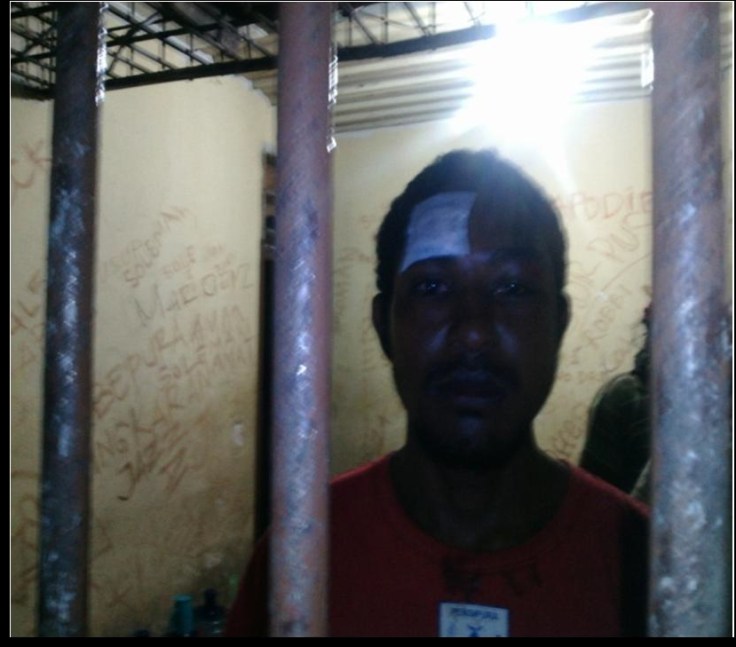
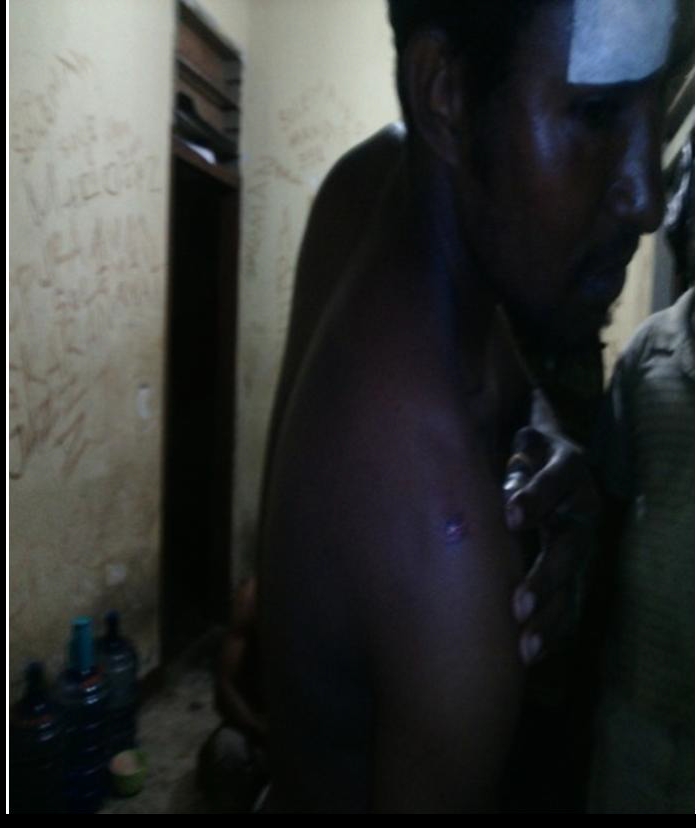
Information received from defence lawyers in Manokwari reported that three detainees who were arrested last month for their involvement in a peaceful demonstration were severely beaten in detention by police Mobile Brigade (Brigade Mobil, Brimob) officers. At least one of the three, KNPB member Alexander Nekenem, was tortured by Brimob officers who stubbed cigarettes out on him. Under instructions from the Head of the Manokwari Regional Police, AKP Tommy H. Pontororing, lawyers were denied access to their three clients following the escape of Narko Murib, a fourth detainee in the same case. Due to barriers to access, lawyers only found out about the torture and ill-treatment endured by the detainees several days after.
A second case involving arbitrary violence perpetrated by Brimob officers was that of the fatal shooting of Yoteni Agapa, a 19-year-old Papuan in Ugapuga village in Dogiyai Regency. Brimob officers shot Agapa when he started arguing with them regarding a confrontation that had occurred earlier in the day. This tendency for Brimob officers to respond in such a trigger-happy manner is not uncommon. Since the start of 2015, at least two people have died and seven have been injured as a result of excessive use of force and misuse of firearms by police in Papua. So far, there have been no independent investigations into these incidents and thus the perpetrators continue to enjoy total impunity.
Ongoing investigations by the National Human Rights Commission (Komisi Nasional Hak Asasi Manusia, Komnas HAM) into the ‘Bloody Paniai’ incident of December 2014 seem to have stalled, reportedly due to a lack of funding. Additionally, separate investigations conducted by the Ministry of Politics, Law and Security alongside the Papuan National Police, criticized by human rights observers as lacking credibility, seem to be complicating matters still further.
14 students were arrested in Abepura and Waena for fundraising in support of the Komnas HAM investigations into Bloody Paniai. This case echoes the Yahukimo arrests in March 2015, where more than a hundred people were arrested in relation to a week-long fundraising event for Cyclone Pam victims in Vanuatu. The arrests show that public rallies of any kind in Papua continue to be suppressed, even those for humanitarian purposes.
Arrests
KNPB Yahukimo member arrested in Sentani
Majalah Selangkah reported that on 15 June, Arnes Silak, a KNPB Yahukimo member, was arrested at Sentani Airport in Jayapura. Silak was on his way back to Yahukimo after seeking medical treatment in Jayapura. KNPB Yahukimo’s leader Marten Suhuniap stated in Majalah Selangkah that KNPB members in Yahukimo had previously received threats and were constantly followed by intelligence officers. It remains unclear what charges, if any, Silak is facing. He is currently being detained at the Papua Provincial Police Headquarters (Kepolisian Daerah Papua, Polda Papua).
23 people detained for 24 hours for participating in a peaceful political discussion
On 3 June at around 16:00 Papua time, 23 people were arrested for participating in a meeting held at the Sinapuk Indigenous Council Office (Kantor Dewan Adat Sinapuk) in Wamena. Information received from the Advocacy Network for Upholding Law and Human Rights (Jaringan Advokasi Penegakan Hukum dan HAM Pegunungan Tengah Papua, JAPH&HAM) reported that the purpose of the meeting was to hold a discussion on opening democratic space in Papua and to conduct an evaluation of a demonstration that was planned for 28 May but was disallowed by the Jayawijaya Regional police.
During the arrests, police reportedly confiscated items from the Sinapuk Indigenous Council, including 56 arrows, four bows, two axes, seven knives and a book on the United Liberation Movement for West Papua (ULMWP). The 23 detainees were brought to Jayawijaya Regional Police Station.
In reaction to these arrests, the following day on 4 June, hundreds of community members rallied outside the police station to demand the release of the 23 detainees. They were released at 16:00 Papua time.
ULMWP demo dispersed in Sorong; 1 KNPB member arrested
Papuan news site reported that on 16 June, Nando Kagoya was arrested in Sorong and questioned for several hours before being released without charge. Kogoya was arrested while on his way to participate in a KNPB-organised march in support of the ULMWP bid for membership of the Melanesian Spearhead Group (MSG). Protestors who took part in the march were forcefully dispersed by Sorong Regional Police. Kogoya was arrested at a roadblock where police stopped and searched motorists in the area. He was detained when police found a KNPB leaflet in his bag.
14 students arrested for collecting donations for Bloody Paniai investigation
On 22 June, 14 students were arrested in Abepura and Waena for collecting donations in support of investigations by the National Human Rights Commission (Komisi Nasional Hak Asasi Manusia, Komnas HAM) into the ‘Bloody Paniai’ incident that took place last December. Papuan media reported that the slow progress made by Komnas HAM’s Ad Hoc Team in charge of conducting investigations into the incident was due to a lack of funding. The 14 students, who were members of the Independent Students Forum (Forum Independen Mahasiswa, FIM), were detained for several hours at Jayapura Regional Police Station before being released without charge. According to a report by KontraS Papua (Komisi untuk Orang Hilang dan Korban Tindak Kekerasan Papua) and Unite for Truth (Bersatu Untuk Kebenaran, BUK), the students collected donations as an act of protest against Komnas HAM who have been criticised as slow and ineffective in their investigations into Bloody Paniai.
Releases
Two Pisugi detainees released pending appeal; two escaped
Lawyers with the Democracy Alliance for Papua (Aliansi Demokrasi untuk Papua, AlDP) reported that Jhoni Marian and Marthen Marian have been released following the end of their one-year prison terms. Whereas Yali Walilo and Ibrahim Marian reportedly escaped from prison at some point during the last month. Yosep Siep, who suffered psychological and physical ailments, has returned to his home village in Pisugi district. His trial is expected to be resumed once he receives medical treatment and is considered fit to stand trial.
Even though Jhoni Marian and Marthen Marian have been released, a ruling by the Jayapura High Court (Pengadilan Tinggi Jayapura) increasing their initial prison sentences from one to three years’ imprisonment means that they are still at risk of re-imprisonment. However, due to an appeal submitted to the Indonesian Supreme court by AlDP lawyers challenging this ruling, they are not required to remain in detention while the decision is being considered. The Supreme Court decision will determine whether the two men will be required to serve the increased prison sentence.
Previously, the Wamena District Court sentenced the Jhoni Marian, Marthen Marian, Yali Walilo and Ibrahim Marian to one-year imprisonment each under charges of conspiracy to endanger security under Articles 187 and 164 of the Indonesian Criminal Code. They were accused of making Molotov cocktail bombs in attempts to disrupt voting during the Presidential elections of July 2014.
Defence lawyers with the Democracy Alliance for Papua (Aliansi Demokrasi untuk Papua, AlDP) stated that the decision was taken despite witness testimony from police stating that the four men were not involved in the acts of arson of which they are suspected. Additionally, the four men were tortured while in detention in Jayawijaya Regional Police Station. During court hearings in March, they testified that they had been forced to confess to charges under torture.
As Jhoni Marian and Marthen Marian are still at risk of re-imprisonment and Yosep Siep remains at risk of standing trial, they will remain our list of political prisoners.
Political trials and cases overview
Three in Manokwari MSG demo case ill-treated in detention; one detainee escaped
Lawyers from LP3BH (Institute for Research, Investigation and Development of Legal Aid, Lembaga Penelitian, Pengkajian dan Pengembangan Bantuan Hukum) reported that Alexander Nekenem, Yoram Magai and Othen Gombo (alias Maikel Aso) have been ill-treated in detention following the escape of a fourth detainee in the same case, Narko Murib (alias Novi Umawak), from police Brimob Headquarters in Manokwari on 15 June.
On 20 May, Nekenem, Magai, Gombo and Murib were arrested for their involvement in a demonstration in support of a bid by the ULMWP for MSG membership. They were charged with incitement under Article 160 of the Indonesian Criminal Code.
On 1 June, Nekenem, Murib and Gombo were questioned regarding their involvement with the KNPB. When questioned, Murib stated that he had led a prayer session during the demonstration before it was forcibly dispersed. Following the dispersal of the demonstration, he returned to attend a class at the State University of Papua (Universitas Papua, UNIPA), where he is enrolled as a student. Murib later received word that his friends had been detained following the dispersal of the demonstration and that they were being denied food in detention. Upon hearing this, he decided to bring food to those detained at the Brimob Headquarters. However, when he arrived to the Brimob Headquarters, he was himself detained, as he had been seen being involved in the demonstration earlier in the day. On 9 June, the period of detention for the four men was extended to 19 July 2015.
On 15 June, LP3BH lawyers received information that Narko Murib had escaped from the Brimob Headquarters. The following day, lawyers met with the Head of the Criminal Investigation Unit (Kepala Satuan Reserse dan Kriminal, Kasat Reskrim) of Manokwari Regional Police, AKP Tommy H. Pontororing, and asked to meet with the three remaining detainees who had been transferred from the Brimob Headquarters to holding cells at Manokwari Regional Police Station. However, police informed lawyers that they were not allowed to visit the three detainees at that moment and told them to return the next morning.
Upon gaining access to Nekenem, Magai and Gombo the following morning, lawyers found that the three men had been severely beaten by four Brimob officers while in detention in the Brimob Headquarters. Nekenem was tortured by Brimob officers who stubbed cigarettes out on him. He also suffered a bruised jaw from heavy beatings. The three men are currently being held in an isolation cell in Manokwari Regional Police Station. They are reportedly not allowed access to proper sanitation or toilets and were only given plastic bags and bottles to use. The men are forced not to eat most of the food brought by their families due to the lack of access to proper toilets.
Cases of concern
Group of Papuan youth attacked by Brimob in Dogiyai Regency; one shot dead
According to information received from several human rights sources, on 25 June, a group of ten Papuan youths was reportedly attacked by Brimob officers in Ugapuga village in Dogiyai Regency. A report from a Nabire-based human rights investigator stated that the ten men were attacked by Brimob officers following a road accident which led to the injuring of a dog which belonged to one of the men. Angered by the accident, the group attempted to extract money from passing drivers. This was then reported by one of the drivers to the police, which led to Brimob officers arriving at the scene.
According to eyewitness accounts recorded by KontraS Papua, BUK and the Paniai Indigenous Council (Dewan Adat Paniai), Brimob officers arrived at around 22:00, in a Toyota Avanza car and confronted the group. When Yoteni Agapa, one of the men in the group, argued back, he was shot in the chest twice. He then attempted to run away, but was shot two more times in the right arm. A few seconds later he collapsed to the floor and died. One of the men in the group, Melianus Mote, was slashed in the arm with a bayonet blade when he started to run away. According to a report by Jubi, the eight other men in the group may also have suffered injuries when they ran away. Brimob officers reportedly continued to kick and beat Agapa with rifle butts even though he was already lifeless.
At around 00:00, Agapa’s body was taken back to his home village of Jigiugi in Ugapuga district. Community members in the area also found and kept the bullet casings from Agapa’s shooting. The following two days, on 26 and 27 June, the Ugapuga District police and Brimob officers visited Agapa’s family to ask their permission to conduct an autopsy on Agapa and to return the bullet casings found at the scene. Both requests were refused by the family.
News
House of Representatives rejects political prisoners pardon
The Jakarta Post reported that on 22 June, a proposal put forward by President Joko Widodo for a second, broader release of Papuan political prisoners was rejected during a hearing with Commission I of the Indonesian House of Representatives. There were concerns that releases “would go on to inflame separatism.” Commission I Deputy Chairman Tantowi Yahya told Indonesian press that “a comprehensive roadmap” would first need to be implemented before support would be given to the plan.
Following the Commission I meeting, Indonesian Military Chief General Moeldoko told Indonesian press that the military were considering “appointing guards to accompany foreign journalists” reporting in Papua.
Papua Itu Kita cultural event aims to destigmatise Papuans
On 13 June, activists from Papua Itu Kita (We are Papua), a campaigning movement based in Jakarta, held an event at the Ismail Marzuki Park (Taman Ismail Marzuki, TIM) aimed at spreading awareness of Papuan culture and issues through song, dance and storytelling. The day-long event was attended by hundreds of participants, including members of the public, Papuan activists and human rights groups based in Jakarta. Reverend Benny Giay, the leader of the Tabernacle Church in Papua (Kingmi Papua), who spoke at the event raised the issue of the history of violence in Papua and suggested a national day of mourning in Indonesia to remember victims of human rights violations in Papua.
June 2015 Papuan Political Prisoners
| No |
Prisoner |
Arrested |
Charges |
Sentence |
Case |
Accused of violence? |
Concerns reported re legal process? |
Prison/Place of detention |
| 1 |
Arnes Silak |
15 June 2015 |
Uncertain |
Police investigation pending |
KNPB Sentani Airport arrest |
Uncertain |
Uncertain |
Papuan Police Headquarters |
| 2 |
Yafet Keiya |
28 May 2015 |
Uncertain |
Police investigation pending |
MSG demo in Nabire |
Uncertain |
Uncertain |
Nabire |
| 3 |
Ottis Munipa |
28 May 2015 |
Uncertain |
Police investigation pending |
MSG demo in Nabire |
Uncertain |
Uncertain |
Nabire |
| 4 |
Wamoka Yudas Kossay |
22 May 2015 |
Article 160 |
Awaiting trial |
MSG demo in Biak |
Uncertain |
Uncertain |
Biak |
| 5 |
Apolos Sroyer |
20 May 2015 |
Article 160 |
Awaiting trial |
MSG demo in Biak |
Uncertain |
Uncertain |
Biak |
| 6 |
Dorteus Bonsapia |
20 May 2015 |
Article 160 |
Awaiting trial |
MSG demo in Biak |
Uncertain |
Uncertain |
Biak |
| 7 |
Alexander Nekenem |
20 May 2015 |
Article 160 |
Awaiting trial |
MSG demo in Manokwari |
Uncertain |
Yes |
Manokwari |
| 8 |
Yoram Magai |
20 May 2015 |
Article 160 |
Awaiting trial |
MSG demo in Manokwari |
Uncertain |
Yes |
Manokwari |
| 9 |
Othen Gombo |
20 May 2015 |
Article 160 |
Awaiting trial |
MSG demo in Manokwari |
Uncertain |
Yes |
Manokwari |
| 10 |
Ruben Furay |
1 May 2015 |
Uncertain |
Police investigation pending |
Kaimana 1 May 2015 |
Uncertain |
Uncertain |
Kaimana |
| 11 |
Sepi Surbay |
1 May 2015 |
Uncertain |
Police investigation pending |
Kaimana 1 May 2015 |
Uncertain |
Uncertain |
Kaimana |
| 12 |
Domingus Babika |
1 May 2015 |
Unclear |
Police investigation pending |
Manokwari 1 May 2015 |
Uncertain |
Uncertain |
Manokwari Regional Police Station |
| 13 |
Dr Don Flassy* |
14 April 2015 |
Articles 106, 55(1),53(1) |
On bail |
KIP treason arrests |
Uncertain |
Uncertain |
Bailed, city arrest, cannot leave Jayapura |
| 14 |
Dr Lawrence Mehue* |
14 April 2015 |
Articles 106, 55(1),53(1) |
On bail |
KIP treason arrests |
Uncertain |
Uncertain |
Bailed, city arrest, cannot leave Jayapura |
| 15 |
Mas Jhon Ebied Suebu* |
14 April 2015 |
Articles 106, 108(2), 55(1), 53(1) |
On bail |
KIP treason arrests |
Uncertain |
Uncertain |
Bailed, city arrest, cannot leave Jayapura |
| 16 |
Onesimus Banundi* |
14 April 2015 |
Articles 106, 108(2), 55(1), 53(1) |
On bail |
KIP treason arrests |
Uncertain |
Uncertain |
Bailed, city arrest, cannot leave Jayapura |
| 17 |
Elias Ayakeding* |
14 April 2015 |
Articles 106, 160 |
On bail |
KIP treason arrests |
Uncertain |
Uncertain |
Bailed, city arrest, cannot leave Jayapura |
| 18 |
Kelpis Wenda |
17 March 2015 |
Emergency Law 12/1951 |
On trial |
Lanny Jaya torture |
Yes |
Yes |
Wamena |
| 19 |
Kamori Murib |
9 December 2014 |
Emergency Law 12/1951 |
On trial |
Lanny Jaya torture |
Yes |
Yes |
Wamena |
| 20 |
Yosep Siep |
9 July 2014 |
Articles 187, 164 |
Supreme Court appeal being considered |
Pisugi Election Boycott |
Yes |
Yes |
Released pending appeal |
| 21 |
Marthen Marian |
9 July 2014 |
Articles 187, 164 |
Supreme Court appeal being considered |
Pisugi Election Boycott |
Yes |
Yes |
Released pending appeal |
| 22 |
Jhoni Marian |
9 July 2014 |
Articles 187, 164 |
Supreme Court appeal being considered |
Pisugi Election Boycott |
Yes |
Yes |
Released pending appeal |
| 23 |
Alapia Yalak |
4 June 2014 |
Uncertain |
Police investigation pending |
Yahukimo arrests |
Yes |
Yes |
Papua Police Headquarters |
| 24 |
Jemi Yermias Kapanai |
1 February 2014 |
Articles 106, 108, 110 and Emergency Law 12/1951 |
3.5 years |
Sasawa military raid arrests |
Yes |
Yes |
Sorong |
| 25 |
Septinus Wonawoai |
1 February 2014 |
Articles 106, 108, 110 and Emergency Law 12/1951 |
3.5 years |
Sasawa military raid arrests |
Yes |
Yes |
Sorong |
| 26 |
Rudi Otis Barangkea |
1 February 2014 |
Articles 106, 108, 110 and Emergency Law 12/1951 |
3.5 years |
Sasawa military raid arrests |
Yes |
Yes |
Sorong |
| 27 |
Kornelius Woniana |
1 February 2014 |
Articles 106, 108, 110 and Emergency Law 12/1951 |
3.5 years |
Sasawa military raid arrests |
Yes |
Yes |
Sorong |
| 28 |
Peneas Reri |
1 February 2014 |
Articles 106, 108, 110 and Emergency Law 12/1951 |
3.5 years |
Sasawa military raid arrests |
Yes |
Yes |
Sorong |
| 29 |
Salmon Windesi |
1 February 2014 |
Articles 106, 108, 110 and Emergency Law 12/1951 |
3.5 years |
Sasawa military raid arrests |
Yes |
Yes |
Sorong |
| 30 |
Obeth Kayoi |
1 February 2014 |
Articles 106, 108, 110 and Emergency Law 12/1951 |
3.5 years |
Sasawa military raid arrests |
Yes |
Yes |
Sorong |
| 31 |
Soleman Fonataba* |
17 December 2013 |
Articles 106, 110)1, 53, 55 |
1.5 years city arrest, appeal pending |
Sarmi 2013 Melanesian flag arrests |
No / not yet clear |
No |
On bail, cannot leave Sarmi |
| 32 |
Edison Werimon* |
13 December 2013 |
Articles 106, 110)1, 53, 55 |
1.5 years city arrest, appeal pending |
Sarmi 2013 Melanesian flag arrests |
No / not yet clear |
No |
On bail, cannot leave Sarmi |
| 33 |
Piethein Manggaprouw |
19 October 2013 |
Articles 106, 110 |
2 years |
Third Papuan Congress demo in Biak |
No |
Yes |
Biak |
| 34 |
Oktovianus Warnares |
1 May 2013 |
Articles 106, 110, Emergency Law 12/1951 |
7 years |
Biak flag-raising, 1 May commemoration |
Yes |
Yes |
Biak |
| 35 |
Yoseph Arwakon |
1 May 2013 |
Articles 106, 110, Emergency Law 12/1951 |
2 years and 6 months |
Biak flag-raising, 1 May commemoration |
Yes |
Yes |
Biak |
| 36 |
Markus Sawias |
1 May 2013 |
Articles 106, 110, Emergency Law 12/1951 |
2 years |
Biak flag-raising, 1 May commemoration |
Yes |
Yes |
Biak |
| 37 |
George Syors Simyapen |
1 May 2013 |
Articles 106, 110, Emergency Law 12/1951 |
4.5 years |
Biak flag-raising, 1 May commemoration |
Yes |
Yes |
Biak |
| 38 |
Jantje Wamaer |
1 May 2013 |
Articles 106, 110, Emergency Law 12/1951 |
2 years and 6 months |
Biak flag-raising, 1 May commemoration |
Yes |
Yes |
Biak |
| 39 |
Isak Klaibin |
30 April2013 |
Articles 06, 107, 108, 110, 160 and 164 |
3 years and 6 months |
Aimas 1 May commemoration |
No |
Yes |
Sorong |
| 40 |
Jefri Wandikbo |
7 June 2012 |
Articles 340, 56, Law 8/1981 |
8 years |
KNPB activist tortured in Jayapura |
Yes |
Yes |
Abepura |
| 41 |
Darius Kogoya |
1 May 2012 |
106 |
3 years |
1 May demo and flag-raising |
No |
No |
Abepura |
| 42 |
Wiki Meaga |
20 November 2010 |
106 |
8 years |
Yalengga flag-raising |
No |
Yes |
Wamena |
| 43 |
Meki Elosak |
20 November 2010 |
106 |
8 years |
Yalengga flag-raising |
No |
Yes |
Wamena |
| 44 |
Filep Karma |
1 December 2004 |
106 |
15 years |
Abepura flag-raising 2004 |
No |
Yes |
Abepura |
| 45 |
Yusanur Wenda |
30 April 2004 |
106 |
17 years |
Wunin arrests |
Yes |
No |
Wamena |
* While these detainees have been bailed and are not currently behind bars, they continue to face charges and are currently undergoing investigation. As they are vulnerable to re-arrest, we will continue to monitor any developments in these cases.






 West Papua Media Alerts